




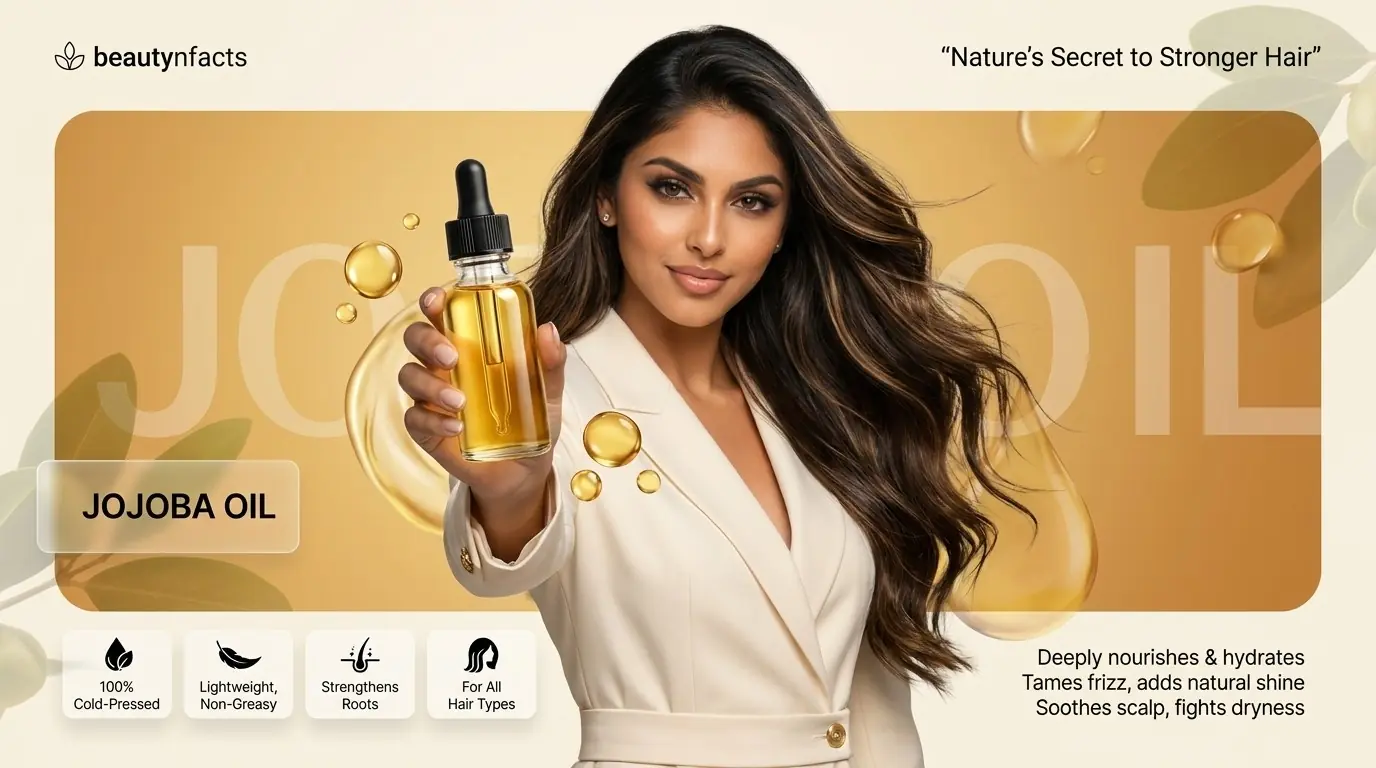
If your hair has been feeling dry, brittle, frizzy, or simply lackluster, there is a good chance your strands are crying out for one of nature's mos
If your hair has been feeling dry, brittle, frizzy, or simply lackluster, there is a good chance your strands are crying out for one of nature’s most extraordinary beauty ingredients. Jojoba oil for hair has quietly become the not-so-secret weapon inside countless high-performance shampoos, conditioners, serums, and scalp treatments, and there is a very good reason for that. Unlike many plant oils that simply sit on the surface of the hair shaft, jojoba has a molecular structure so strikingly similar to the sebum our scalp naturally produces that the hair and skin instantly recognize it, absorb it, and respond to it.
Extracted from the seeds of the jojoba plant, a resilient shrub native to the arid regions of Arizona, California, and northern Mexico, this golden liquid wax has been used for centuries by Indigenous peoples to protect skin and hair from harsh desert elements. The cosmetics industry caught on in the 1970s, and ever since, dermatologists and trichologists have championed its remarkable ability to moisturize without clogging, strengthen without weighing down, and soothe without irritation. Whether your hair is fine and limp, thick and coarse, curly, coily, color-treated, heat-damaged, or simply in need of a reset, this oil can transform the way your hair looks and feels.
In this complete guide, you will learn exactly what makes jojoba oil so special, how it works at a molecular level, the specific concerns it addresses, the correct way to apply it for different hair types, how to pair it with other ingredients, and the common mistakes that keep people from seeing results. By the end, you will have a practical, science-backed roadmap for softer, stronger, healthier hair.
What Jojoba Oil Actually Is and Why It Behaves Differently
Published · Updated
This biological mimicry is the foundation of nearly every benefit jojoba offers. When you apply it to the scalp, your skin does not flag it as a foreign substance. Instead, it integrates it, balances with it, and signals the sebaceous glands to regulate their own output. For people with oily scalps, this often means reduced greasiness over time, because the skin stops overproducing sebum to compensate for perceived dryness. For people with dry or flaky scalps, it means immediate nourishment that stays put long enough to repair and soothe.
The plant itself, Simmondsia chinensis, is so hardy that it can survive temperatures ranging from below freezing to well over 100 degrees Fahrenheit and can thrive on minimal rainfall. That resilience translates into the oil, which is extraordinarily shelf-stable. Properly stored, cold-pressed jojoba can last for years without going rancid, a claim that very few natural oils can match. This stability also means the oil stays active and bioavailable on your hair longer, delivering consistent benefits from application to rinse.
The Nutrient Profile That Powers the Results
Jojoba seeds are rich in vitamins and minerals that directly support hair health. Vitamin E acts as a potent antioxidant that neutralizes free radicals generated by UV exposure, pollution, and heat styling. Vitamin B complex supports the metabolic processes that keep follicles active and producing healthy strands. Vitamin C contributes to collagen synthesis, which is critical for the structural integrity of the scalp. Trace minerals, including zinc, copper, chromium, and selenium, play specific roles in keratin production, pigmentation, and follicle signaling. Together, these micronutrients create a nourishing environment where hair can grow stronger, shinier, and more resilient.
The Complete Benefits of Jojoba Oil for Hair
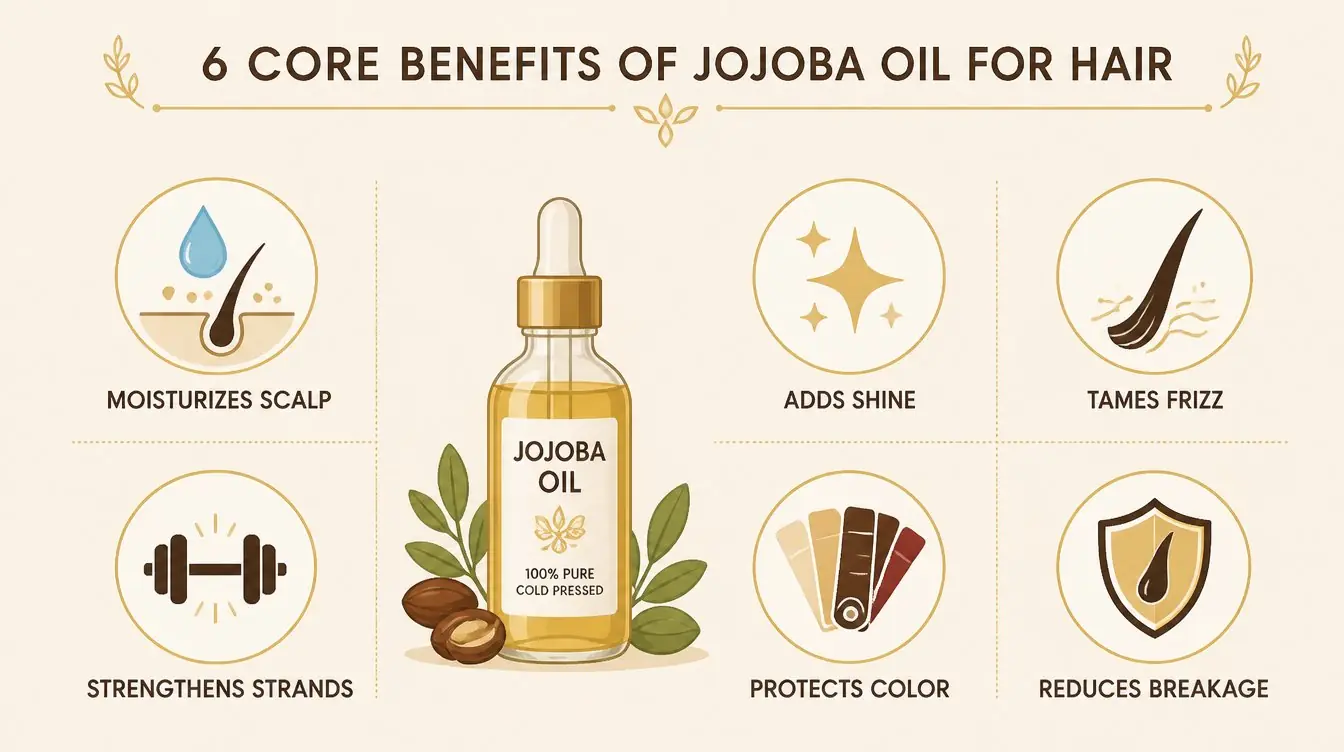
The reason jojoba has earned its reputation as a universal hair hero is that it addresses multiple concerns at once, often without the trade-offs you get from heavier or more specialized oils. Here is a deep dive into what it actually does for your strands and scalp.
Deep Hydration Without Heaviness
At the molecular level, jojoba creates a breathable, non-occlusive film around each hair shaft that seals the cuticle and locks in moisture. Unlike silicones, which achieve a similar visual effect but can build up over time, jojoba allows the hair to continue its natural exchange of humidity with the environment while preventing excessive water loss. This means your hair stays hydrated even in dry winter air or harshly air-conditioned rooms, and it does not swell and frizz when humidity rises. The result is hair that feels genuinely soft rather than coated, with a natural bounce and movement that heavier oils tend to flatten.
Breakage Resistance and Structural Strength
Research published by the Jundishapur University of Medical Sciences has highlighted jojoba’s ability to reduce protein loss from hair during washing and chemical processing. Hair is composed mostly of keratin, a protein that can be stripped away by surfactants, heat, and treatments such as bleaching, relaxing, or permanent straightening. When jojoba is applied before these stressors, it acts as a buffer, physically limiting how much protein can leach out of the shaft. Over time, this translates into fewer split ends, less mechanical breakage, and stronger hair that can grow longer without snapping off.
UV Defense for Color and Cuticle
The sun is one of the most underestimated enemies of healthy hair. UV radiation breaks down melanin, causing color fade in both natural and dyed hair, and it degrades the keratin structure, leading to brittleness and lack of shine. Jojoba oil contains natural compounds that absorb a portion of UV rays before they can damage the cortex of the hair, effectively acting as a gentle filter. While it is not a replacement for wearing a hat at the beach or using a dedicated heat-and-UV spray before styling, incorporating it into your routine adds a meaningful layer of protection over time.
Scalp Balance and Dandruff Support
Because jojoba so closely resembles sebum, it can help rebalance scalps that are either producing too much or too little oil. Dermatologists frequently recommend it as part of a gentle routine for people dealing with seborrheic dermatitis, mild dandruff, or an itchy, inflamed scalp. Its anti-inflammatory properties soothe redness and irritation, while its antibacterial and antimicrobial qualities, particularly when paired with tea tree oil, help keep the fungal and bacterial populations that contribute to flaking in check. A calm scalp is the foundation of healthy hair growth, and jojoba creates exactly that environment.
Shine, Softness, and Manageability
When the cuticle layers of your hair lie flat and smooth, they reflect light uniformly, producing that glossy, salon-finish shine everyone wants. Dry, damaged, or tangled hair has raised, rough cuticles that scatter light and look dull. Jojoba smooths those cuticles down, which instantly improves shine, reduces tangles, and makes detangling easier and less damaging. Many users report that after a few weeks of consistent use, their hair feels like a completely different texture: softer, silkier, and dramatically more cooperative under a brush or styling tool.
Supporting Healthy Growth
While no oil can magically sprout new hair where follicles have been lost, jojoba creates optimal conditions for the hair you do have to grow in healthy and strong. By unclogging follicles, reducing inflammation, and delivering nutrients to the scalp, it helps the growth phase of the hair cycle operate efficiently. People who massage jojoba into the scalp regularly often notice less shedding, improved density over time, and a healthier-looking hairline.
Who Should Use Jojoba Oil and How It Works on Different Hair Types
One of the reasons jojoba is so widely recommended is its remarkable versatility. Unlike heavier oils that suit only specific hair textures, jojoba adapts to nearly every hair type when used correctly. The key is adjusting the amount, the frequency, and the placement.
Fine and Thin Hair
Fine hair is easily weighed down, which is why many people with this texture avoid oils altogether. Jojoba is an exception. Because of its lightweight, wax-like structure, it absorbs quickly and does not leave a greasy residue when used sparingly. For fine hair, two or three drops warmed between the palms and smoothed only through the mid-lengths and ends are often enough to transform the feel of the hair without flattening it at the roots. A weekly pre-shampoo treatment works beautifully, and a tiny amount added to a leave-in conditioner can enhance softness without compromising volume.
Thick, Coarse, or Curly Hair
Thicker and more textured hair types, including curly, coily, and type 4 hair, can absorb far more jojoba without looking oily. These textures often struggle with chronic dryness because the scalp’s natural sebum has a harder time traveling down the twists and bends of the strand. Applying jojoba directly to the scalp and working it down through the length addresses that imbalance beautifully. Curls become more defined, frizz is reduced, and the hair stays hydrated between wash days. Many curly girls incorporate jojoba into the LOC or LCO method, using it as the oil step to seal in moisture.
Color-Treated and Chemically Processed Hair
Bleaching, highlighting, relaxing, and permanent coloring all compromise the structural integrity of the hair by opening the cuticle and altering the inner cortex. This makes the hair porous, thirsty, and fragile. Jojoba is a particularly smart choice for processed hair because it helps reseal the cuticle, extends color vibrancy by reducing UV damage, and replaces some of the lipids stripped out during chemical services. Using it consistently between salon visits can noticeably prolong the health and look of your color.
Oily Hair and Scalp
Counterintuitive as it may sound, jojoba is one of the best oils for people with oily scalps. Because it signals the sebaceous glands to slow down production, regular use can actually reduce greasiness over time. The trick is to apply it only to the scalp, massage thoroughly, leave it on for twenty to thirty minutes, and then shampoo thoroughly. Over several weeks, many people notice they need to wash their hair less frequently because their scalp stops overcompensating.
Damaged and Heat-Styled Hair
If you regularly use blow dryers, flat irons, curling wands, or hot rollers, your hair is likely experiencing cumulative thermal damage. Jojoba applied before heat styling forms a protective barrier that reduces moisture loss from the cortex, while jojoba applied afterward helps reseal the lifted cuticles. Over time, this dual-action approach can significantly reduce the visible signs of heat damage, including dullness, straw-like texture, and split ends.
How to Use Jojoba Oil on Hair: A Complete Application Guide
Knowing which product to buy is only half the equation. How you apply jojoba oil determines whether you see life-changing results or a mildly nice improvement. Below are the most effective techniques, broken down by goal.
The Pre-Shampoo Deep Treatment
This is arguably the most impactful way to use jojoba oil for most people. Start with dry or slightly damp hair. Warm two teaspoons to two tablespoons of the oil between your palms, depending on your hair length and density. Section your hair into four parts and apply the oil generously from the mid-lengths to the ends, then work whatever remains into the scalp with your fingertips using small circular motions. Cover your hair with a shower cap or warm towel to trap body heat, which helps the oil penetrate more deeply. Leave it on for at least thirty minutes, though you can leave it overnight for severely damaged hair. Shampoo twice to fully remove the oil, then condition as usual.
The Scalp Massage Ritual
Scalp massage improves circulation, delivers nutrients to follicles, and creates a meditative moment in your routine. Apply a few drops of jojoba directly to your fingertips and massage into your scalp for five to ten minutes, using firm but comfortable pressure. Focus on areas where you want to encourage growth or reduce tension, such as the hairline, crown, and the base of the skull. This is ideal to do two or three evenings a week before bed. If you prefer, you can rinse it out in the morning or leave it in if your scalp is particularly dry.
The Leave-In Anti-Frizz Finisher
On days when your hair feels dry or prone to flyaways, a tiny amount of jojoba applied to styled hair works wonders. Place one or two drops on your palms, rub them together to warm and disperse the oil, and then lightly skim your hands over the surface of your hair. Pay special attention to the ends, which are the oldest and driest part of your strands. This technique tames frizz, adds shine, and smooths split ends without making the hair look oily.
The Conditioner Boost
A simple way to integrate jojoba into an existing routine is to add a few drops to your regular conditioner or deep conditioner before applying. Squeeze the amount of conditioner you would normally use into your palm, add three to five drops of jojoba, mix well, and apply from mid-lengths to ends. Leave it on for the usual time and rinse. This instantly upgrades any conditioner with extra slip, moisture, and nourishment.
The Overnight Scalp Serum
For people dealing with dry, flaky, or itchy scalps, an overnight treatment can be transformative. Mix one tablespoon of jojoba with two or three drops of tea tree oil or lavender essential oil for added scalp benefits. Massage into a dry scalp, cover your pillow with an old towel, and sleep on it. In the morning, shampoo thoroughly. Done once a week, this ritual can dramatically reduce dandruff, itchiness, and product buildup.
Pairing Jojoba Oil with Other Powerful Ingredients
While jojoba is remarkable on its own, it also plays beautifully with other ingredients, amplifying their effects and creating targeted treatments for specific concerns. Because jojoba is such a stable carrier oil, it extends the shelf life and bioavailability of whatever you blend it with.
Jojoba and Tea Tree Oil for Dandruff
Tea tree oil is a well-documented antifungal and antibacterial essential oil that can be too intense to apply directly to the scalp. Diluting three to five drops of tea tree in one tablespoon of jojoba creates a potent yet safe anti-dandruff serum. The jojoba soothes inflammation and moisturizes, while the tea tree addresses the yeast overgrowth often associated with dandruff. Use two to three times a week as a pre-shampoo treatment for visible improvement within a month.
Jojoba and Rosemary Oil for Growth
Rosemary essential oil has been studied for its ability to stimulate circulation and support hair growth, with some research suggesting effects comparable to minoxidil in certain conditions. Combining two to three drops of rosemary essential oil with one tablespoon of jojoba creates an effective growth-supporting scalp treatment. Massage into the scalp three times a week for at least three months to evaluate results.
Jojoba and Castor Oil for Thickness
Castor oil is thicker and heavier than jojoba, and while it has a strong reputation for supporting lash, brow, and hair growth, it can be difficult to rinse out on its own. Mixing equal parts castor and jojoba gives you the benefits of castor with the spreadability and absorption of jojoba. This combination works particularly well as a weekly hot oil treatment for thinning edges or sparse areas.
Jojoba and Argan Oil for Shine
Argan oil is prized for its high vitamin E content and its ability to add gloss. Blending it with jojoba creates an all-purpose finishing oil that smooths frizz, adds mirror-like shine, and protects against heat. A few drops of this blend applied to damp hair before blow-drying gives a salon-quality finish at home.
Jojoba and Peppermint for Scalp Circulation
Peppermint essential oil creates a tingling, cooling sensation that increases blood flow to the scalp. When diluted in jojoba at a ratio of about two drops of peppermint per tablespoon of jojoba, it becomes an invigorating scalp treatment that feels refreshing and supports follicle activity. Be cautious not to overdo the peppermint, as too much can cause irritation.
Choosing the Right Jojoba Oil: Quality Matters
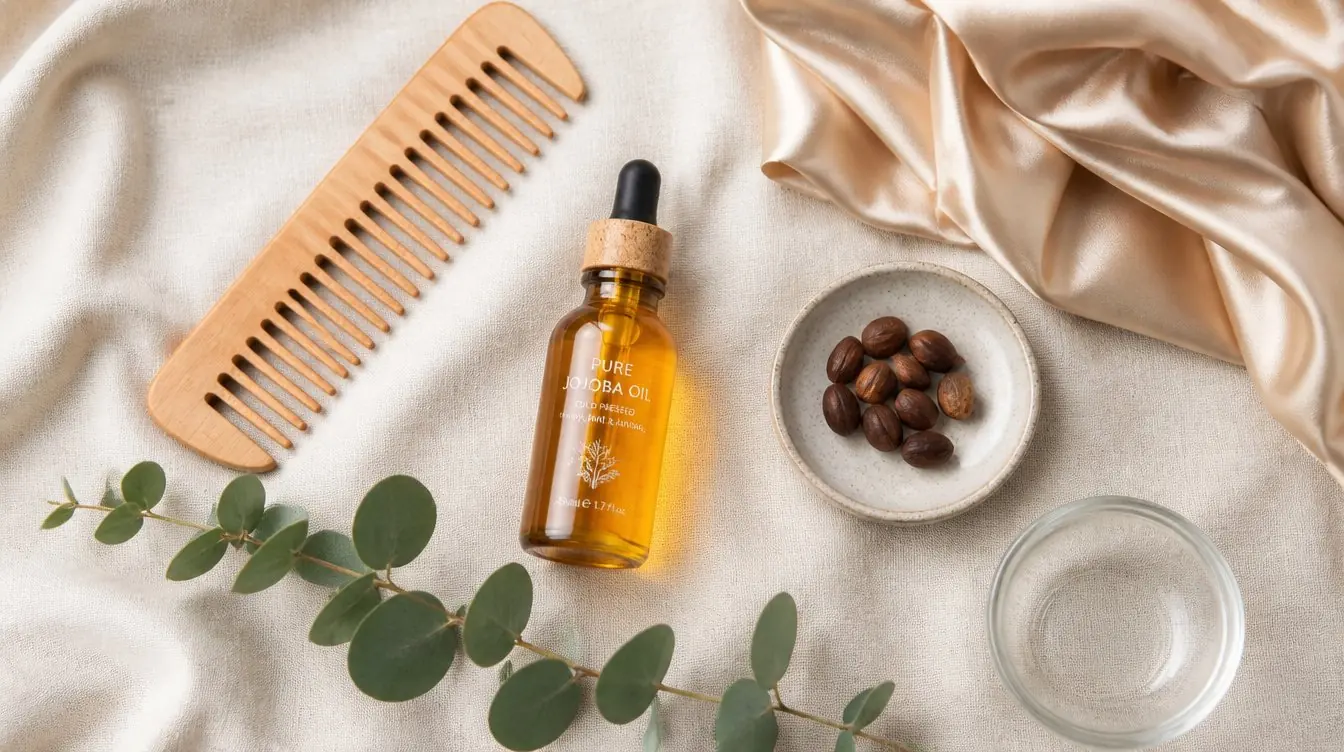
Not all jojoba oils on the market are created equal, and the quality of the oil you choose directly impacts the results you see. Understanding what to look for will save you money and disappointment.
Cold-Pressed Versus Refined
Cold-pressed jojoba is extracted mechanically without heat or solvents, preserving the maximum amount of vitamins, antioxidants, and beneficial compounds. It has a golden color and a faintly nutty scent. Refined jojoba has been processed to remove color and odor, which also removes a significant portion of its nutrient content. For hair and skin use, always choose cold-pressed, unrefined jojoba oil whenever possible.
Organic Certification
Organic certification means the jojoba plants were grown without synthetic pesticides or fertilizers, which reduces your exposure to potential contaminants and often correlates with higher quality. Look for certifications from reputable bodies when making your purchase.
Packaging and Storage
Jojoba should be packaged in dark amber or cobalt blue glass to protect it from light degradation. Avoid clear plastic bottles, which allow both light and potential plastic leaching. Store your oil in a cool, dark place away from direct sunlight and heat. Properly stored cold-pressed jojoba can last two to five years without losing its potency.
Red Flags to Avoid
Be wary of suspiciously cheap jojoba oil, which is often diluted with cheaper oils such as soybean or sunflower. Pure jojoba has a specific price point that reflects the care and effort required to extract it. If a bottle is significantly cheaper than comparable products, it is likely adulterated. Check ingredient labels for any additional oils or additives, as pure jojoba should list only Simmondsia chinensis seed oil.
Common Mistakes That Sabotage Your Results
Even with the best oil, certain habits and misconceptions prevent people from experiencing the full benefits of jojoba oil. Recognizing and correcting these mistakes can dramatically improve your outcomes.
Using Too Much
More is not better when it comes to hair oils. Applying too much jojoba leaves hair looking greasy, requires aggressive washing that undoes the benefits, and can weigh down fine or medium textures. Start with a conservative amount and add more only if needed. A few drops go much further than you might think.
Applying to Dirty Hair
Oil does not penetrate well through layers of product buildup, dust, and sweat. For pre-shampoo treatments, starting with relatively clean hair ensures the oil can actually reach the cuticle and scalp. If your hair has heavy buildup, consider a clarifying wash first, then apply the oil treatment to hair that has had a day or two to recover.
Skipping the Warm-Up
Cold jojoba oil does not spread evenly or penetrate as effectively as warmed oil. Taking thirty seconds to rub it between your palms or warm the bottle in a bowl of hot water makes a significant difference in how the oil performs. Never heat it in the microwave, which can create dangerous hot spots and degrade the oil.
Inconsistent Use
Like any beauty ritual, jojoba oil works best with consistency. A single treatment will feel nice, but lasting improvements in hair health, shine, and scalp balance come from weeks and months of regular use. Build it into your routine as a weekly or twice-weekly ritual and give it at least six to eight weeks to show its full effects.
Ignoring the Scalp
Many people apply oil only to the lengths and ends, forgetting that the scalp is where hair health begins. A well-nourished scalp produces better quality hair, and ignoring it means missing out on a huge portion of jojoba’s benefits. Make scalp application a priority at least once a week.
Realistic Expectations: What Jojoba Oil Can and Cannot Do
Part of building trust with any beauty ingredient is being honest about its limitations. Jojoba oil is remarkable, but it is not a miracle cure for every hair concern.
Jojoba can make your hair softer, shinier, more manageable, and better hydrated within a few uses. It can reduce frizz, tame flyaways, and improve the overall texture of your strands almost immediately. Over weeks and months, it can noticeably reduce breakage, support healthier growth, balance oil production, soothe scalp issues, and extend the life of color-treated hair.
However, jojoba cannot regrow hair in follicles that are no longer active, reverse genetic pattern baldness, or permanently repair severely damaged hair that is already broken. It cannot replace professional treatment for medical conditions such as alopecia, severe seborrheic dermatitis, or fungal infections. If you are experiencing significant hair loss, persistent scalp issues, or rapid changes in your hair quality, a consultation with a dermatologist or trichologist is always the appropriate first step. Jojoba can be a wonderful complement to professional care, not a substitute for it.
Integrating Jojoba Oil Into a Complete Hair Care Routine
For the best results, think of jojoba oil as one pillar of a holistic approach to hair health rather than a stand-alone fix. A thoughtful routine might look something like this on a weekly basis.
On the night before wash day, apply a generous pre-shampoo treatment with jojoba oil, focusing on the scalp and ends. Sleep on a silk or satin pillowcase to reduce friction. The next morning, shampoo twice with a gentle, sulfate-free cleanser to remove the oil without stripping the hair. Follow with a deep conditioner, optionally boosted with a few drops of jojoba, and leave on for the recommended time. Rinse with cool water to seal the cuticle.
Apply a leave-in conditioner to damp hair, then finish with one or two drops of jojoba on the mid-lengths and ends. Style as usual, using heat protection if you are using hot tools. Between wash days, use small amounts of jojoba to refresh dry ends or tame frizz as needed. Midweek, incorporate a scalp massage with jojoba to support circulation and nourish follicles.
Alongside this external routine, remember that hair is a reflection of internal health. A diet rich in protein, healthy fats, iron, zinc, biotin, and vitamins A, C, D, and E supports strong, resilient hair from the inside out. Adequate hydration, stress management, and quality sleep also play significant roles. Jojoba oil amplifies the effects of a healthy lifestyle, but it cannot fully compensate for nutritional gaps or chronic stress.
The Environmental and Ethical Side of Jojoba
Beyond the beauty benefits, jojoba has an interesting environmental profile worth considering. The plant grows in arid regions where few other commercial crops thrive, making it a sustainable choice in appropriate climates. It requires minimal water compared to many other beauty crop plants and does not need heavy pesticide use. The harvest process is also labor-intensive in a way that often supports local economies in growing regions.
Additionally, jojoba has played an important ecological role in replacing sperm whale oil, which was once used extensively in industrial and cosmetic applications. The ban on whale oil in the 1970s coincided with the rise of jojoba precisely because its chemistry so closely resembles the whale-derived product. Choosing jojoba is, in a real sense, choosing a cruelty-free alternative with a legacy of wildlife protection.
When buying jojoba, looking for brands that prioritize fair trade, sustainable farming practices, and ethical sourcing aligns your beauty routine with broader values. Many artisanal brands also offer traceability, meaning you can learn exactly where and how your oil was produced.
Frequently Asked Questions About Jojoba Oil for Hair
Can I leave jojoba oil in my hair overnight?
Yes, leaving jojoba oil in your hair overnight is not only safe but often highly beneficial, especially for dry, damaged, or chemically processed hair. The extended contact time allows the oil to penetrate more deeply, condition the cuticle thoroughly, and nourish the scalp. To prevent staining your pillow, wrap your hair in a silk scarf or sleep on an old pillowcase. In the morning, shampoo twice to fully remove the oil and follow with your regular conditioner. Most people find that overnight treatments once a week produce noticeably softer, shinier hair within a month.
Will jojoba oil make my hair greasy?
When used correctly, jojoba oil should not leave your hair greasy. The key is using the right amount for your hair length and texture and applying it primarily to the mid-lengths and ends rather than the roots for daily use. Because jojoba so closely mimics your scalp’s natural sebum, it absorbs more readily than heavier oils and tends to leave a natural, non-oily finish. If your hair does feel greasy, you likely applied too much or did not rinse it thoroughly after a treatment. Start with just a drop or two and build up only if your hair can handle it.
How often should I use jojoba oil on my hair?
The ideal frequency depends on your hair type and goals. For most people, a deep treatment once or twice a week paired with a small daily amount used as a leave-in finisher works beautifully. Very dry, coarse, or curly hair may benefit from more frequent use, while fine or oily hair types typically do best with weekly treatments. Listen to your hair; it will let you know if you are using too much or too little. Consistency matters more than intensity, so a little used regularly will outperform a lot used sporadically.
Can jojoba oil help with hair growth?
Jojoba oil supports hair growth indirectly by creating optimal scalp conditions. It unclogs follicles, reduces inflammation, balances sebum production, and delivers nutrients that support follicle health. While it will not grow hair in follicles that are no longer active, regular scalp massage with jojoba can improve circulation, reduce shedding, and help you retain the length you grow by minimizing breakage. For best growth-supporting results, combine jojoba with rosemary essential oil, maintain a balanced diet rich in protein and essential minerals, and be patient. Visible improvements in density and length typically take three to six months of consistent use.
Is jojoba oil safe for color-treated hair?
Jojoba oil is not only safe for color-treated hair; it is actively beneficial. It helps reseal cuticles that have been lifted during the coloring process, reduces UV damage that causes color to fade, and replaces lipids stripped out during chemical services. Many colorists actually recommend jojoba as a maintenance oil between salon visits. It will not strip your color or cause unwanted changes, and its protective effects can help your color stay vibrant longer. Apply it as a weekly deep treatment or as a daily finishing oil on damp hair for ongoing protection.
Can I use jojoba oil if I have dandruff or a sensitive scalp?
Yes, jojoba oil is one of the most scalp-friendly oils available and is often specifically recommended for sensitive, irritated, or flaky scalps. Its anti-inflammatory and antimicrobial properties soothe redness and itching, while its ability to balance sebum production addresses one of the root causes of dandruff. For more effective dandruff support, combine it with a few drops of tea tree oil. The likelihood of an allergic reaction is extremely low, but as with any new product, do a small patch test on your inner arm before full application if you have very sensitive skin or a history of allergies.
Does jojoba oil work differently on wet versus dry hair?
Yes, the way jojoba interacts with your hair depends on whether it is wet or dry at the time of application. On damp hair, jojoba helps seal in the water molecules, maximizing hydration and creating a smooth, frizz-resistant finish as the hair dries. This is ideal for post-wash styling. On dry hair, jojoba acts more as a surface treatment that smooths flyaways, adds shine, and conditions without rinsing. Both applications are valuable, and many people use both depending on the day and their hair’s needs. For deep treatments, dry hair is usually preferred because the oil can fully penetrate without competing with water for space in the cuticle.
Can I use jojoba oil on my beard or body hair too?
Absolutely. Jojoba oil is wonderful for beards, eyebrows, and body hair. It softens coarse beard hair, reduces itchiness during growth phases, conditions the skin underneath, and helps prevent ingrown hairs. For eyebrows, a tiny amount applied at night can condition the hairs and support fuller-looking growth over time. Because the oil is so similar to human sebum and has an extremely low likelihood of causing reactions, it is safe for use on nearly every type of hair on the body.
Your Path to Healthier Hair Starts Now
Jojoba oil has earned its reputation as one of the most versatile, effective, and gentle ingredients in the world of hair care, and the science behind it justifies every bit of the hype. Its unique molecular structure allows it to nourish where heavier oils cannot, balance where others simply sit on the surface, and deliver consistent results across virtually every hair type and concern. Whether your priority is taming frizz, reducing breakage, extending the life of your color, calming an irritated scalp, or simply enjoying softer, shinier strands, this golden liquid wax delivers on all fronts.
The key to getting the most out of it is approaching it with intention. Choose a high-quality, cold-pressed, organic oil stored in dark glass. Apply it thoughtfully and sparingly, paying attention to both your scalp and your ends. Pair it with other effective ingredients when your hair needs targeted support. Commit to consistent use over weeks and months rather than looking for overnight transformation. Support your external routine with a nutrient-rich diet, adequate hydration, and gentle handling of your hair.
Start small this week by adding a single pre-shampoo treatment or a nightly scalp massage to your routine. Observe how your hair responds, adjust your approach based on what you notice, and build from there. Within a month, you will likely see visible improvements in shine, softness, and manageability. Within three to six months, those improvements compound into genuinely healthier, stronger, more beautiful hair. That is the quiet magic of jojoba oil, and it is available to anyone willing to make it a regular part of their beauty ritual. Your softest, strongest, healthiest hair is not a distant dream. It is a few drops of liquid gold away.
RELATED ARTICLES:
Effortless Hair Detangling: Secrets to Smooth, Knot-Free Hair
Silk covers: the secret to waking up with the most beautiful hair ever
Glass Hair in 2026: The Products and Techniques for a Frizz-Free, Mirror-Like Finish That Lasts
MOB WIFE HAIR: HOW TO GET THE VOLUMINOUS, LIVED-IN LOOK EVERYONE’S OBSESSING OVER
5 Hair Mistakes While Sleeping
About The Author

COMMENTS