
Effortless hair detangling is the small step that quietly decides whether you grow length or break it off in the shower drain. Most of the damage long
Effortless hair detangling is the small step that quietly decides whether you grow length or break it off in the shower drain. Most of the damage long hair accumulates does not come from heat or color; it comes from yanking through knots with the wrong tool, in the wrong order, with dry hair. This guide breaks down effortless hair detangling section by section, with the right brush, the slip-step, and the order that keeps your hair smooth and unbroken every wash.
Reviewed by the BeautynFacts editorial team. Last updated: May 2026.
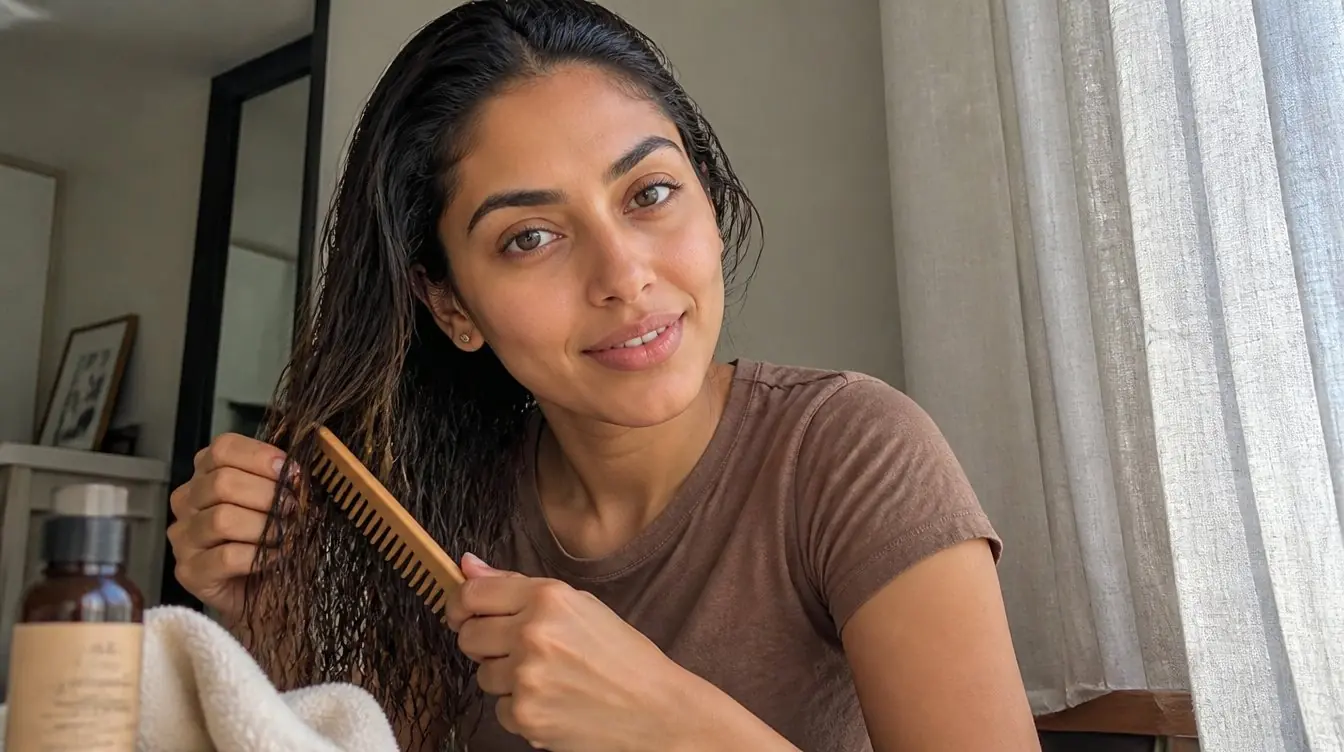
There is a moment most of us know all too well: you reach for your brush after a long day, run it through your hair, and suddenly meet a wall of resistance. What follows is a frustrating, sometimes painful battle against knots and tangles that can feel never-ending. Whether you have fine straight strands that mat overnight or thick coily hair that forms tight knots within hours of styling, the struggle with tangled hair is genuinely universal, and it deserves far more attention than a quick comb-through in the morning.
Hair detangling is both a science and an art. Done correctly, it preserves your hair’s integrity, reduces breakage significantly, and transforms your daily routine from a dreaded chore into a manageable, even enjoyable ritual. Done incorrectly, it can cause split ends, breakage along the hair shaft, scalp irritation, and long-term damage that accumulates invisibly over months. This guide exists to help you understand exactly why hair tangles happen, how different hair types respond to different approaches, and what products, tools, and techniques will give you consistently smooth, knot-free hair without the pain or the damage.
Over the next several thousand words, you will find a comprehensive, science-backed roadmap covering everything from the biology of a single hair strand to step-by-step detangling protocols for every hair texture. You will also find ingredient guidance, product recommendations, expert-informed perspectives, and a detailed FAQ section that addresses the questions most people are too embarrassed to ask. By the end of this article, tangles will no longer be the enemy they once were.
Understanding Why Hair Gets Tangled and Knotted
One detail people miss with effortless hair detangling: small inputs compound. Two careful changes today are worth more than ten half-followed ones, and effortless hair detangling rewards the people who show up consistently over weeks, not the ones chasing a single perfect product.
To solve a problem effectively, you need to understand its root cause. Hair tangling is not random, nor is it purely a matter of neglect. It is a predictable outcome of specific structural, chemical, and environmental conditions that interact with your unique hair biology in very particular ways.
The Science Behind Hair Structure and Tangling
Each strand of hair is covered by a layer called the cuticle, which consists of overlapping, scale-like cells arranged in a pattern similar to roof shingles. When hair is healthy and well-moisturized, these cuticle cells lie flat against the hair shaft, allowing strands to glide past one another smoothly. When hair is dry, chemically processed, heat-damaged, or simply exposed to everyday friction, those cuticle scales lift and roughen. Lifted cuticles are the primary mechanical reason hair tangles: the jagged edges of one strand catch on the jagged edges of another, and knots begin to form.
Curly and coily hair textures experience this more acutely because the hair shaft itself grows in a spiral or helical pattern. As the curl winds around itself, adjacent strands naturally overlap and interlock. The tighter the curl pattern, the more opportunities there are for strands to catch each other at multiple points along their length. This is why someone with type 4c hair can develop significant tangles within a few hours of styling, while someone with straight type 1a hair might go several days without noticeable knotting.
Hair porosity also plays a critical role. High-porosity hair, which has more gaps and holes in its cuticle layer due to damage or genetics, absorbs moisture quickly but loses it just as fast. The chronically dry, rough surface of high-porosity hair creates near-constant conditions for tangling. Low-porosity hair, by contrast, has tightly packed cuticles that resist moisture absorption, which means it can sit in conditions that encourage tangling without the protective buffer of internal hydration.
Environmental and Lifestyle Factors That Worsen Tangles
Beyond hair biology, everyday life contributes substantially to how quickly and severely tangles form. Wind is one of the most commonly overlooked culprits. When wind blows through your hair, it forces individual strands in multiple directions simultaneously, twisting them around each other in ways that are difficult to undo without patience and the right tools. High humidity compounds the issue by causing the hair shaft to swell unevenly, further raising the cuticle and increasing inter-strand friction.
Cotton pillowcases create considerable friction against your hair as you move during sleep, rubbing strands back and forth across a rough surface for six to eight hours. This friction lifts cuticles aggressively and creates the classic “morning bed head” tangled mess that can take significant time to resolve. Similarly, scarves, turtlenecks, and high collars create continuous friction at the nape of the neck and around the hairline, two areas notorious for chronic knotting.
Lifestyle factors including diet, stress levels, and hydration status affect hair quality in ways that directly influence tangling. Hair that is nutritionally deprived tends to be brittle and porous, breaking more easily and tangling more frequently. Chronic dehydration affects the moisture content of each hair strand from the inside out. Stress-related hair shedding increases the number of loose hairs in your mane, which wind around healthy strands and create additional knot formations. Understanding these interconnected causes gives you far more control over your detangling outcomes.
The Essential Tools for Effective Hair Detangling
Investing in the right tools is not an indulgence, it is a genuine act of hair care. Using the wrong tool on tangled hair is one of the fastest routes to unnecessary breakage, and even small amounts of daily mechanical damage add up over weeks and months into visibly thinner, weaker hair.
Combs, Brushes, and Their Specific Uses
The wide-tooth comb is the foundational detangling tool and deserves a permanent place in every bathroom. The wide spacing between teeth allows the comb to move through sections of hair without forcing strands to compress into tight spaces. This reduces the mechanical stress on each strand during detangling and allows knots to release gradually rather than being ripped apart. For maximum effectiveness, look for wide-tooth combs made from seamless materials, meaning combs that are molded as a single piece rather than assembled, which eliminates rough seam edges that can snag cuticles.
Detangling brushes represent a significant evolution over traditional paddle brushes or boar bristle brushes for knotted hair. Brands like Tangle Teezer and Wet Brush have engineered flexible, densely packed bristles that bend under pressure rather than pulling through knots with force. This flex-and-release mechanism distributes tension across multiple bristles rather than concentrating it at a single point, dramatically reducing hair breakage per stroke. These brushes work particularly well on wet, conditioned hair and are suitable for most hair textures from fine straight to medium wavy.
For very coily and kinky hair textures, a Denman brush offers directional control that helps define curl patterns while detangling simultaneously. The rubber cushion base allows for some give, and the nylon pins can be customized by removing rows to reduce tension. Many naturalistas with type 3 and type 4 hair swear by the Denman for the way it sections and detangles in a single pass when used with generous conditioner application.
Your fingers remain the most sensitive and arguably the most important detangling tool available to you. Finger detangling, the practice of using your fingers to gently separate knots before introducing any tool, gives you tactile feedback about where tension is building and how severe a tangle is. This prevents you from inadvertently forcing a comb or brush through a knot that needs gentler handling. For high-shrinkage, tightly coiled hair types, many hair professionals recommend beginning every detangling session with five to ten minutes of thorough finger detangling before touching any tool at all.
Sprays, Conditioners, and Oils That Add Slip
No tool works optimally on dry, rough hair. The key to painless detangling is slip, a term that refers to the reduced friction between hair strands that allows a comb or brush to glide rather than drag. Slip comes from the coating that certain products leave on each hair strand, creating a temporary lubricating layer that lets strands move past one another and past your tool’s teeth without catching.
Detangling sprays are lightweight, water-based formulas that add immediate moisture and a thin coat of conditioning agents to the hair. They are ideal for quick refreshes between wash days, for tackling dry tangles in the morning, or for fine hair that would be weighed down by heavier products. Look for sprays that contain ingredients like panthenol, hydrolyzed proteins, or lightweight silicones, all of which contribute measurably to slip and strand smoothing.
Leave-in conditioners provide a heavier, more durable layer of moisture and slip than sprays, making them the preferred choice for medium to thick, curly, and coily hair types. A quality leave-in conditioner contains humectants like glycerin or aloe vera that draw moisture into the hair shaft, combined with emollients like shea butter, mango butter, or plant oils that seal that moisture in and smooth the cuticle surface. When applied generously to sectioned hair before detangling, a leave-in conditioner can transform a difficult, 45-minute detangling session into something that takes a fraction of the time with far less breakage.
Natural oils including argan oil, jojoba oil, castor oil, and coconut oil each contribute different types of slip and benefit depending on hair type. Argan oil is particularly effective for fine to medium hair because it adds shine and reduces friction without heaviness. Coconut oil, with its small molecular structure, can actually penetrate the hair cortex to reduce protein loss during detangling, making it functionally one of the most protective oils available. Castor oil’s thick, viscous texture provides intense slip for very coarse, kinky hair. Applying a light coat of oil over your leave-in conditioner creates what is sometimes called a “double slip” effect that makes even the most stubborn knots significantly easier to work through.
Step-by-Step Guide to Painlessly Detangle Your Hair
Having the right tools and products is only half the equation. Technique determines the difference between detangling that strengthens your routine and detangling that slowly destroys your hair over time. The following protocol works across all hair types and can be adapted to your specific texture and density.
Preparing Your Hair Before Detangling
The single most important rule of detangling preparation is this: never begin on completely dry, product-free hair if you can avoid it. Dry hair is in its most fragile, high-friction state, and forcing a comb through dry tangles causes considerably more breakage than working on moisturized hair. If you are detangling on wash day, apply a generous amount of conditioner to your hair while in the shower and allow it to sit for at least three to five minutes before attempting to comb through. The heat and steam of the shower environment help open the cuticle slightly, allowing the conditioner to penetrate and create better slip.
If you are detangling outside of a wash day, apply a leave-in conditioner or detangling spray generously to your dry hair before beginning. For very thick, dense, or tightly coiled hair, some people find it helpful to lightly mist the hair with water first to restore some moisture, then layer a leave-in conditioner over the top. Allow the products to absorb for a minute or two before picking up any tool. This brief wait is not wasted time, it is the product working to coat and soften each strand at the microscopic level.
The Sectioning Method That Changes Everything
Attempting to detangle all your hair at once, especially if you have dense or long hair, is an almost guaranteed way to create more tangles than you started with. The sectioning method is one of the most transformative techniques you can adopt, and it is simpler than it sounds.
Using hair clips or hair ties, divide your hair into four to eight sections depending on your hair’s density and length. Thicker, longer, or curlier hair benefits from more sections, while thin or short hair may need only two to four. Start with the lower sections at the nape of your neck and work upward, as these areas tend to have the most friction-related tangles from clothing and sleep. Clip all other sections out of the way so they do not interfere with the section you are working on.
Within each section, hold the hair firmly between your fingers a few inches above the knot you are working through. This prevents tension from traveling up the entire length of the hair and pulling at the roots, which is a primary cause of detangling pain and breakage near the scalp. With your free hand, use your wide-tooth comb or detangling brush to work through the tangle starting at the very ends of the hair and gradually working upward toward the roots in short, deliberate strokes. Never start at the roots and drag downward, as this compacts knots further down the shaft and creates larger, more resistant tangles.
Once a section is fully detangled, gently twist it or clip it to keep it organized before moving to the next section. After completing all sections, do a final pass through your entire head with a wide-tooth comb or detangling brush to ensure consistency and to catch any remaining tangles.
Detangling Techniques for Every Hair Type
Hair texture exists on a wide spectrum, and the approach that works beautifully for one person can be completely wrong for another. Tailoring your detangling technique to your specific hair type is one of the highest-impact changes you can make to your overall hair health routine.
Straight and Wavy Hair Detangling Tips
Straight hair, while generally the least prone to tangling, is not immune to it. Fine straight hair in particular can develop significant static-driven tangles, especially during dry winter months when low humidity and indoor heating rob hair of its natural moisture balance. For straight hair, a lightweight detangling spray applied to slightly damp hair is usually sufficient before using a paddle brush or flexible detangling brush. Starting from the ends and moving upward in sections remains important even for straight hair, especially if it is long.
Wavy hair occupies an interesting middle ground. The gentle S-wave pattern means that adjacent strands can interlock at the curves of each wave, particularly when hair is dry or has been slept on. For wavy hair, a leave-in conditioner or detangling spray applied generously while hair is still damp from washing offers the best results. Finger detangling first helps separate wave clumps without disrupting the wave pattern, which is important for those who want to maintain their natural texture. Following up with a wide-tooth comb or a brush with flexible bristles completes the process without stripping out the natural wave definition.
Curly, Coily, and Kinky Hair Detangling Methods
Curly, coily, and kinky hair types require the most deliberate, product-heavy approach to detangling. The tighter the curl pattern, the more surface area is in contact between adjacent strands at any given point, and the more important it becomes to have thorough slip coverage before introducing any tool.
For type 3 curly hair, the most effective method is to detangle in the shower under running water with a generous application of conditioner. The conditioner provides slip, the water provides weight that gently elongates the curls slightly, and the running water helps rinse loosened shed hairs downward away from the hair mass rather than allowing them to wrap around other strands. A wide-tooth comb or Denman brush worked through each section from ends to roots under these conditions produces excellent results with minimal breakage.
For type 4 coily and kinky hair, dermatologists and trichologists consistently recommend beginning every detangling session with thorough finger detangling on product-saturated hair. Apply a generous amount of conditioner or a detangling butter to each section and use your fingers to gently separate large knots into smaller ones before touching a comb. The tactile feedback from your fingers allows you to feel resistance building and adjust your approach accordingly, something no tool can replicate. Once the major knots have been loosened by hand, a wide-tooth comb can follow for a more even result. Many people with type 4 hair find that detangling only on wash day, when hair is fully saturated with conditioner, produces significantly less breakage than attempting to detangle between wash days.
Shrinkage is a unique characteristic of coily and kinky hair that complicates detangling because the hair in its natural state can appear much shorter than its actual length. Working in a stretched state, whether using the tension method during blow-drying, braiding, or banding hair with elastic bands before detangling, can make the process considerably more manageable for very high-shrinkage hair types by providing better visibility and access along the length of each strand.
Wet vs. Dry Detangling: Which Is Better for Your Hair?
This question generates genuinely impassioned debate in the hair care community, and the answer is nuanced enough that it requires understanding what actually happens to hair in both states.
Hair is weakest when it is wet. When water enters the hair shaft, it causes the cortex to swell, and this swelling places the hair in a state of increased elasticity but reduced tensile strength. Wet hair can stretch significantly before breaking, but if stretched beyond its elastic limit, it breaks without the ability to spring back. This means that aggressive detangling on wet hair, particularly without adequate slip from conditioner, can cause irreversible stretch-breakage that results in the wispy, thin ends many people notice over time.
Dry hair, conversely, is less elastic but more brittle. It cannot stretch as far before snapping, which means that forcing a comb through dry tangles causes a different type of breakage: sharp, clean breaks along the hair shaft rather than stretch-related damage. Dry detangling without adequate product is genuinely more immediately damaging for most hair types.
The consensus among hair professionals is that wet detangling with adequate conditioner or leave-in product is safer for most hair types when done correctly, because the slip provided by the product dramatically reduces the mechanical friction that causes breakage. The key qualifier is “with adequate product.” Wet detangling on product-free hair is worse than almost any alternative. For straight and wavy hair types, wet detangling in the shower or immediately post-shower on conditioner-saturated hair is generally optimal. For highly textured hair, the same principle applies but with even more generous product usage.
Dry detangling with a detangling spray or oil does work effectively for some hair types, particularly fine or low-density hair that becomes overly fragile when wet, and for situations where a full wash is not practical. The quality of the product used and the care taken during the process determine the outcome far more than the wet-vs-dry question alone.
The Role of Hair Health, Nutrition, and Internal Factors
Chronic tangling that does not respond to improved products and technique is often a signal that something is happening internally that deserves attention. Hair is a non-essential tissue from the body’s perspective, meaning that when nutritional resources are limited, hair is one of the first places the body reduces its investment. The result is hair that grows out thinner, drier, weaker, and significantly more prone to tangling and breakage.
Iron deficiency is one of the most common nutritional contributors to hair tangle-prone states, particularly in women of reproductive age. Iron is required for the production of hemoglobin, which carries oxygen to hair follicles. Iron-deficient hair tends to be finer, drier, and more fragile than it would be with adequate iron stores, creating exactly the conditions that lead to chronic knotting. If you have noticed a significant increase in tangling without changing your hair care routine, asking your doctor for a ferritin level test is a worthwhile step.
Protein intake directly affects the structural quality of hair because each strand is composed primarily of a protein called keratin. Diets chronically low in protein produce hair that lacks structural integrity, becoming soft, mushy, and prone to breakage rather than firm and resilient. For most adults, ensuring adequate daily protein from whole food sources like eggs, legumes, fish, and dairy provides meaningful support to hair strength and texture quality.
Omega-3 fatty acids, found in fatty fish, walnuts, flaxseeds, and chia seeds, contribute to the scalp’s oil production and the hair’s natural moisture content. Chronically low omega-3 intake correlates with dry, dull, tangle-prone hair. Biotin, often marketed aggressively as a hair supplement, plays a genuine role in keratin infrastructure but is only meaningfully deficient in a small subset of the population. Most people with a reasonably balanced diet have sufficient biotin and will see limited benefit from supplementation, though it remains harmless to try. Vitamins A, C, D, and E all contribute to scalp health and hair follicle function in ways that affect the quality of hair that is ultimately produced.
Hydration is perhaps the most underestimated internal factor. Each hair strand contains water that contributes to its flexibility and pliability. Chronically dehydrated individuals often have noticeably drier, more brittle hair that tangles more easily and breaks more readily during detangling. Consistently drinking adequate water each day is genuinely one of the simplest and most impactful things you can do for your hair’s long-term manageability.
How to Prevent Hair Tangles from Forming in the First Place
Reactive detangling is necessary, but preventive strategies are where the real transformation happens. When you address the conditions that allow tangles to form, you spend significantly less time fighting them after the fact.
Nighttime Hair Care Routines
The average person moves between 40 and 50 times during the night, and every one of those movements creates friction between hair and the sleeping surface. Cotton pillowcases, though absorbent and comfortable against the skin, create a rough surface for hair that is actively damaging over time. The friction from cotton pillowcases lifts cuticles, creates frizz, and generates the kind of mechanical tangling that requires significant effort to undo in the morning.
Switching to a silk or satin pillowcase is one of the highest-return investments in hair care available. Both silk and satin create a smooth surface that hair glides across rather than catching on, dramatically reducing overnight friction. Genuine mulberry silk pillowcases offer the additional benefit of being less absorbent than cotton, meaning they do not draw moisture from your hair and skin during the night. Satin pillowcases made from polyester are a more budget-friendly alternative that provide most of the friction-reduction benefit.
For those with longer, thicker, or more textured hair, a silk or satin bonnet or hair wrap provides complete enclosure for the hair during sleep, offering maximum protection against friction and manipulation. Sleeping with hair in a loose, low pineapple bun secured at the top of the head, a technique popular among the natural hair community, keeps hair elevated and prevents it from being pressed against the pillow surface while you sleep on your side or back.
Braiding or twisting hair loosely before bed serves double duty: it keeps hair organized and tangle-free through the night while also creating gentle wave or curl definition that reduces the need for styling the next morning. This technique is particularly useful for medium to long hair in any texture category.
Daily Habits That Keep Hair Knot-Free
Regular, gentle brushing throughout the day prevents small tangles from compounding into large, resistant knots. For straight and wavy hair, a quick pass with a boar bristle or detangling brush in the morning and evening is usually sufficient. For curly and textured hair, frequent brushing is generally not recommended as it disrupts curl pattern and causes frizz, but occasional finger-detangling to separate clumps can prevent tangling from becoming severe between wash days.
Protective styling is a powerful long-term strategy for tangle prevention in textured hair types. Styles that keep hair ends tucked away and minimize exposure to environmental elements, such as braids, twists, bantu knots, flat twists, and updos, reduce the amount of friction-driven tangling that hair experiences during daily activities. The less your hair’s ends are exposed to wind, clothing friction, and movement throughout the day, the fewer tangles you will encounter at your next detangling session.
Trimming split ends every eight to twelve weeks removes the most tangle-prone portions of your hair. Split ends, where the hair shaft has separated into two or more frayed segments, catch on neighboring strands far more readily than a clean, healthy hair tip. Regular trims keep your ends smooth and prevent the split from traveling further up the hair shaft, which would compromise a greater length of each strand.
Limiting heat styling and chemical processing preserves the structural integrity of the cuticle layer. Each time hair is exposed to direct heat above approximately 300 degrees Fahrenheit, the keratin proteins within the hair shaft undergo irreversible changes that leave the cuticle rougher and more prone to tangling. Chemical services including coloring, bleaching, perming, and relaxing alter the hair’s disulfide bonds, which are the structural connections that give hair its strength and shape. Hair that has undergone significant chemical processing is almost universally more porous, more fragile, and more prone to tangling than its chemically unaltered counterpart.
Top Detangling Products That Deliver Real Results
The detangling product market is vast, and not every product performs equally across all hair types. Understanding what to look for in an ingredient list allows you to evaluate any product effectively rather than relying purely on marketing claims.
The Tangle Teezer Original Detangling Hairbrush remains one of the most widely recommended detangling tools across hair types because of its intelligent flexible bristle design. The two-tiered bristle system allows the longer bristles to engage with the hair first and begin loosening tangles while the shorter bristles follow behind for a smoother finish pass. Its compact dome shape fits comfortably in the hand and allows for good control during sectioned detangling. It is particularly effective on fine to medium hair textures and works exceptionally well on wet, conditioned hair.
Kinky-Curly Knot Today Leave-In Conditioner has achieved near-cult status in the natural hair community for good reason. Its formula is free from heavy oils and silicones, instead relying on a blend of organic ingredients including aloe vera juice and mallow extract to provide slip without buildup. This makes it a strong choice for low-porosity hair types that tend to accumulate product residue quickly, and it performs consistently well across type 3 and type 4 curl patterns. Applied generously to wet, sectioned hair, it reduces combing resistance dramatically.
The Wet Brush Original Detangling Brush uses IntelliFlex bristles that are designed to adapt to hair density and curl pattern, making it a versatile option for households where multiple hair types share one brush. It performs well across a range of textures and is gentle enough for use on children’s hair, which is particularly valuable for parents managing highly textured hair in young children where detangling sessions can easily become distressing.
For high-porosity, coarse, or kinky hair, a detangling butter rather than a liquid leave-in is often more effective because the denser formula provides longer-lasting slip and a richer moisture delivery. Products formulated with a combination of shea butter, avocado oil, and slip agents like cetyl alcohol are worth seeking out. Cetyl alcohol, despite its name, is not a drying alcohol but rather a fatty alcohol that acts as an emollient and provides significant slip.
Argan oil-based sprays, particularly those formulated without heavy silicones, are excellent for daily use between wash days to smooth the hair surface and reduce static-related tangling in straight and wavy hair types. A light spritz of argan oil spray followed by a gentle pass with a wide-tooth comb takes only a few minutes in the morning and substantially reduces the time needed at the next full detangling session.
Common Detangling Mistakes and How to Avoid Them
Even people who have been caring for their hair for decades make detangling mistakes that silently add up to significant damage over time. Identifying and correcting these errors is one of the fastest ways to see measurable improvement in your hair’s health and manageability.
Starting from the roots is probably the single most common and damaging mistake. When you insert a comb at the scalp and drag it downward, you are forcing every knot along the length of the hair to compact and intensify. By the time you reach the ends, you have created a tight, dense mass of tangled hair that requires far more force to resolve. Always begin at the ends and work in short upward strokes toward the roots, systematically freeing tangles from the bottom of the hair mass upward.
Rushing the process creates the illusion of efficiency while actually causing far more damage and often requiring more time to fix afterward. Forcing a comb or brush through resistance rather than pausing to work the knot loose with your fingers first causes hundreds of individual hair strand breaks per session. Those breaks accumulate into thinner, frailer ends over weeks and months. Giving yourself adequate time, particularly on wash day, to detangle slowly and methodically protects your investment in your hair’s growth and density.
Using too little product is a mistake that undermines every other correct technique you apply. Many people apply a small amount of leave-in conditioner and then struggle through the detangling process, attributing the difficulty to their hair type rather than product insufficiency. For medium to thick or highly textured hair, generous product application, the kind that feels like too much, is usually exactly the right amount. Hair that is thoroughly saturated with a conditioning product will always detangle more easily and with less damage than hair that is lightly misted.
Detangling with inappropriate tools is another widespread mistake. Using a fine-tooth comb on dense, curly hair, or using a boar bristle brush on heavily tangled hair, creates unnecessary breakage that would be completely avoidable with the correct tool. Matching your tool to your hair type and the severity of the tangle situation is a fundamental part of a responsible hair care routine.
Neglecting the nape of the neck is a specific oversight that causes localized chronic damage in many people. The nape area is subject to the most friction from clothing, and the hair in this region is often finer and more delicate than hair elsewhere on the scalp. Allowing tangles in this area to go unaddressed between wash days creates matted sections that can be very difficult to resolve without breakage. Giving extra attention and product to the nape area during every detangling session prevents this common problem zone from becoming a persistent source of hair loss.
Frequently Asked Questions About Hair Detangling
How often should I detangle my hair?
The answer depends entirely on your hair type, length, and lifestyle. Straight and wavy hair types generally benefit from daily or every-other-day detangling to prevent small tangles from compounding. Curly and coily hair types, particularly those with tight curl patterns, often do best with detangling only on wash days, which might be once or twice per week. Detangling coily hair too frequently can disrupt the curl pattern, cause unnecessary manipulation damage, and strip moisture from hair that needs to retain hydration between wash days. People who lead very active lifestyles, particularly those who exercise daily and sweat significantly, may need more frequent light detangling to prevent sweat-induced matting.
Is it better to detangle hair before or after washing?
This depends on your hair’s texture and density. For straight and wavy hair, detangling after washing with conditioner still in the hair is generally most effective because the conditioner provides excellent slip. For very thick, dense, or highly textured hair, detangling before washing can remove major knots and prevent hair from matting further in the shower, where wet hair and water movement can cause loose strands to tangle around each other. Many people with type 4 hair prefer pre-wash detangling as part of their pre-poo routine, applying a generous oil or conditioner treatment to dry hair and working through sections before shampooing. A practical approach is to try both methods and observe which one results in less breakage and more manageable post-wash hair for your specific texture.
Why does my hair always tangle at the nape of my neck?
The nape of the neck is uniquely vulnerable to tangling for several overlapping reasons. Hair in this area is typically finer and more delicate than hair at the crown or sides, making it more susceptible to mechanical damage. Clothing, particularly scarves, turtlenecks, coat collars, and even the rubbing of seat headrests, creates constant friction against this area throughout the day and night. When you sleep on your back or side, the nape region is pressed against the pillow and subjected to continuous rubbing motion. Additionally, sweat from exercise tends to pool at the nape, and as it dries it can cause hair to mat together. Addressing nape tangling specifically requires extra product application in that zone, protective styles that keep nape hair enclosed, a silk or satin pillowcase, and careful attention to collar friction from clothing.
Can I detangle my hair every day without causing damage?
For most hair types, daily gentle detangling is perfectly safe and actually prevents the accumulation of larger, more damaging knots. The critical factor is technique: daily detangling done gently, with appropriate products, using the ends-to-roots method, causes minimal damage and keeps hair manageable. Daily detangling done aggressively, on dry product-free hair, with inappropriate tools, causes cumulative damage that becomes evident over weeks to months. For highly textured hair types, daily detangling is generally not recommended because the repeated manipulation and potential disruption of the curl pattern creates more harm than benefit. Those hair types benefit from minimizing manipulation between wash days and focusing detangling efforts on properly prepared, well-conditioned hair at wash time.
What ingredients should I look for in a detangling product?
The most effective detangling products contain a combination of humectants, emollients, and slip-enhancing agents. Humectants like glycerin, aloe vera, honey, and panthenol draw moisture into the hair shaft, increasing its flexibility and reducing brittleness. Emollients like shea butter, mango butter, jojoba oil, and coconut oil coat the hair surface, smoothing lifted cuticles and reducing inter-strand friction. Slip agents including cetrimonium chloride, behentrimonium methosulfate, and certain silicones create a temporary lubricating layer that allows your comb or brush to glide through tangles with significantly reduced force. For low-porosity hair, lighter formulas with water-soluble ingredients are preferable. For high-porosity hair, richer formulas with more oils and butters provide the sustained moisture and surface coating needed for effective, low-damage detangling.
How do I detangle severely matted hair without cutting it?
Severely matted hair requires patience, the right products, and a willingness to invest significant time in the process rather than rushing. Begin by applying a generous amount of conditioner or a dedicated detangling product specifically formulated for severe tangles to the matted section. Allow it to penetrate for at least ten to fifteen minutes before attempting any manipulation. Use your fingers only for the first stage, working from the outer edges of the mat inward, gently teasing apart the loosest strands first and working progressively toward the tighter center. Never attempt to force a comb into a mat. As the mat loosens, introduce a wide-tooth comb very gradually, working from the freed outer edges inward. If the mat is particularly severe, multiple product application sessions over several days with gentle daily finger work can sometimes resolve it without cutting. However, if the mat involves significant hair around foreign debris, or if it shows signs of scalp involvement, consulting a professional stylist is strongly advisable.
Does brushing hair cause more damage than combing?
This question does not have a universal answer because it depends on the type of brush, the hair texture, and the technique used. A high-quality detangling brush with flexible, widely spaced bristles on wet, conditioned hair generally causes less damage than a fine-tooth comb on dry hair. A traditional boar bristle brush used on dry, tangled hair causes considerably more damage than either. Combs tend to be better for precise sectioning and for very curly hair where maintaining curl definition matters, while brushes tend to be faster and more ergonomic for daily use on straight to wavy hair. The universal principles that minimize damage apply to both: use with adequate slip-providing product, work from ends to roots, use gentle pressure, and choose a tool that matches your hair’s texture and density.
Is detangling hair before swimming important?
Detangling before swimming is genuinely important for reducing post-swim tangling, particularly in pool water. Chlorine in pool water strips the hair of its natural oils and roughens the cuticle, creating conditions that massively increase tangling and breakage during swimming. Before entering a pool, applying a generous coat of a leave-in conditioner or coconut oil to your hair creates a partial barrier that reduces how much chlorine is absorbed by the hair shaft. Braiding or twisting the hair before swimming keeps strands organized and prevents them from freely swirling and tangling in the water. After swimming, rinsing with fresh water immediately removes chlorine before it can continue damaging the hair, and applying conditioner before your detangling session helps address the roughened cuticle state that pool water leaves behind.
Conclusion
Smooth, manageable, knot-free hair is not the exclusive privilege of those with a certain hair type or access to expensive salon treatments. It is the predictable outcome of understanding how your hair behaves, equipping yourself with the right tools and products for your specific texture, and applying technique consistently and with care.
The foundation of effective hair detangling rests on three pillars: preparation, patience, and the right products. Preparing your hair with adequate moisture and slip before touching any tool reduces mechanical breakage dramatically. Working methodically through sections from ends to roots rather than attacking your hair from the roots downward prevents the compounding of tangles and protects the hair’s structural integrity. Using products formulated with ingredients that genuinely deliver slip, humectancy, and emolliency, rather than products that merely smell appealing, gives your tools a lubricated environment in which to do their job without damage.
Preventing tangles is as important as resolving them. Small changes to your nighttime routine, your nutrition, your protective styling choices, and your daily habits can collectively reduce tangling by a significant margin, freeing you from the time, frustration, and hair loss that chronic knotting produces. Sleeping on silk or satin, staying well hydrated, trimming split ends regularly, limiting heat and chemical damage, and using protective styles during high-friction activities are all accessible strategies that deliver real, measurable results.
Your hair deserves to be treated as the living, complex tissue it is. Each strand has a history recorded in its structure, from its growth conditions to the products it has encountered to the mechanical forces applied to it over time. When you approach detangling as a thoughtful, informed practice rather than an afterthought, you invest in the long-term health and beauty of your hair in a way that compounds over months and years into noticeably stronger, longer, more vibrant results. Start with one change today, whether that is switching to a wide-tooth comb, adding a leave-in conditioner to your routine, or finally replacing that cotton pillowcase. Small, consistent adjustments build the kind of hair care practice that genuinely transforms your hair from the inside out.
RELATED ARTICLES:
MOB WIFE HAIR: HOW TO GET THE VOLUMINOUS, LIVED-IN LOOK EVERYONE’S OBSESSING OVER
How to Sleep with Bangs: The Best Ways to Maintain Bangs While Sleeping
5 Hair Mistakes While Sleeping
Trim Split Ends Regularly for Healthier, Stronger Hair: The Exact Schedule That Works
Hair Care for the Outdoor Enthusiast: Field-Tested Tips to Protect, Style, and Recover Anywhere
The honest takeaway on effortless hair detangling: results come from consistency, not complexity. Build a few of these habits into your weekly rhythm, give your skin a real four-week window to respond, and effortless hair detangling becomes second nature rather than another thing on the to-do list.
About The Author

COMMENTS