
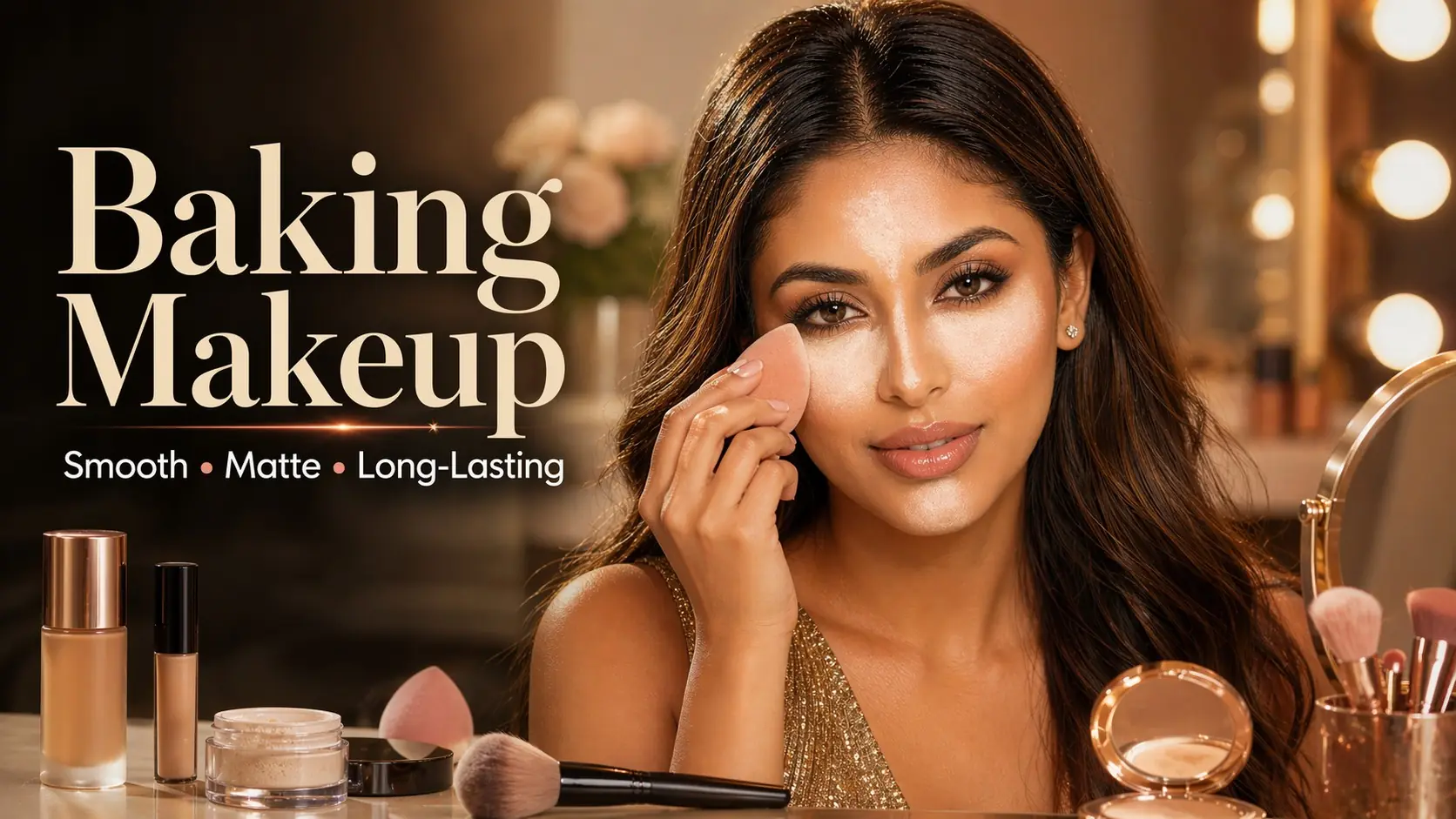
Borrowed from drag and now standard among professional makeup artists, baking makeup uses a heavy layer of translucent powder and the heat of your own
Borrowed from drag and now standard among professional makeup artists, baking makeup uses a heavy layer of translucent powder and the heat of your own face to set foundation and concealer into a crease-free, photo-ready finish that lasts for 12 hours. This guide breaks down the science of how heat fuses powder into a smooth layer, the products that work for every skin type, and a step-by-step baking makeup tutorial you can actually do without looking cakey.
Published · Updated
What Is Baking Makeup?
The Core Concept
Baking in makeup has nothing to do with an oven. The term describes a specific application method that uses body heat, time, and loose powder to press and set liquid or cream products firmly into the skin. You apply a thick, concentrated layer of translucent or tinted setting powder directly on top of freshly applied concealer or foundation. You leave it in place for five to ten minutes. During that time, your body heat warms the underlying product and the powder above it, causing them to bond together. When you sweep away the excess powder, what remains is a smooth, matte, long-wearing finish that standard powder setting cannot replicate.
The technique sounds deceptively simple. In practice, it requires the right products, the correct amount of powder, and a solid understanding of your skin. When all three elements align, the results are genuinely impressive. When they do not, the outcome looks thick and unnatural. Every variable gets covered in full below.
Origins in Drag Makeup Culture
Baking has deep roots in drag makeup culture. Drag performers require makeup that withstands intense heat from stage lighting, hours of continuous performance, sweat, and constant movement. Standard setting methods simply did not hold up under those conditions. Performers began packing thick layers of powder over concealer and foundation, particularly under the eyes, across the forehead, and on the chin. They left the powder in place while completing the rest of their look, letting body heat do the work.
The technique performed spectacularly under some of the harshest conditions imaginable. Word spread through performance and stage communities, and baking became a staple of professional drag and theatrical makeup. Its origins explain why it excels for long events, hot climates, and photography. The method was developed specifically for extreme longevity demands.
Baking crossed into mainstream beauty culture around 2015. YouTube and Instagram beauty influencers demonstrated it to millions of followers. Celebrity makeup artists publicly credited the technique for the all-day finishes on their red-carpet clients. Since then, it has become a recognised and widely practised step in both professional and everyday makeup routines around the world.
How Baking Differs from Regular Powder Setting
Standard powder setting involves dusting a thin, even layer of loose or pressed powder over finished makeup using a brush. The goal is to reduce shine and lock products in place. The powder sits on top of the skin without fully bonding to the layers beneath it. It works adequately under moderate conditions but breaks down faster under heat, oil, and extended wear.
Baking uses a fundamentally different approach. Instead of a light dusting, you pack a generous amount of powder onto specific areas with a damp beauty sponge. You press it in firmly and leave it. The moisture from the damp sponge, combined with your body heat, causes the powder to fuse with the concealer or foundation below. When you remove the excess, the result is more of a bonded finish than a surface coating. This fused layer resists oil, humidity, and friction far more effectively than a simple dust-on application.
The timing element is the key distinction. Baking requires patience. Those five to ten minutes are not optional. They are the entire mechanism by which the technique works. Rushing them produces an ordinary powder finish, not a baked one.
The Science Behind Baking Makeup
How Body Heat Activates the Process
Human skin sits at approximately 33 to 37 degrees Celsius on its surface, depending on the area of the face, ambient temperature, and individual physiology. That warmth is enough to cause significant changes in makeup formulas during the baking window. Concealers and foundations contain emollients, water, and film-forming polymers. Under heat, these components soften and become more pliable. The powder pressed against them fuses into the softened product rather than simply resting on top.
The process is similar in principle to heat-setting fabric dye. Temperature activates a chemical bond that would not form at room temperature. In makeup, the result is a film-like layer that adheres far more firmly to the skin surface. This is why baked areas resist creasing even around the eyes, where natural movement and expression normally break down makeup within hours.
The moisture from the damp sponge plays a secondary but important role. It briefly reactivates the top surface of the concealer, making it slightly tacky and receptive to the powder pressed into it. As body heat drives off that surface moisture over the baking window, the powder and the product beneath set together into a unified layer rather than two separate coatings.
Powder Chemistry and Skin Interaction
Not all setting powders perform equally in the baking process. Translucent setting powders designed for baking typically contain a combination of silica, talc, and starch. Silica acts as a blur agent, filling in fine lines and pores optically. Talc absorbs sebum and surface moisture. Starches such as tapioca or cornflour add a soft-focus finish and bind effectively to cream and liquid products under heat.
Banana powder, a warm yellow-toned loose powder popular in baking, contains additional brightening pigments that correct purple and blue undertones under the eyes. It addresses both setting needs and colour correction simultaneously. The warmth built into banana powder suits a wide range of medium, olive, and deeper skin tones. Fairer skin tones may find banana powder adds too much warmth. Testing on the inner wrist before full application saves time and product.
Fineness of milling matters more than brand reputation when selecting a baking powder. Finely milled powders bond more uniformly to the product below and remove cleanly without dragging. Coarser particle sizes create a more textured, uneven surface after removal. When choosing a setting powder specifically for baking, particle size should be your primary consideration.
Why the Finish Lasts Longer
Standard setting powder sits on top of the skin’s surface. Oil and moisture from below push through that surface layer within a few hours, breaking down the finish. The baked layer, having fused with the concealer or foundation beneath it, acts as a more cohesive barrier. Oil must penetrate a thicker, bonded film rather than simply dissolving a loose powder coating.
Baking removes excess moisture from the underlying concealer or foundation in a controlled way. Fresh concealer contains moisture that settles into fine lines and creases as it dries naturally throughout the day. Baking accelerates and controls that drying process up front, pushing moisture out quickly and setting the product in a smooth, flat state before normal wear can cause it to crease or slide.
The Right Products for Baking Makeup
Choosing Your Concealer
Your concealer choice significantly affects your baking results. Full-coverage, high-pigment concealers work best. They provide enough substance for the powder to bond with during the baking window. Sheer or light-coverage concealers often do not contain enough product to support the technique effectively.
Cream-based and liquid high-coverage concealers are the most compatible options. Look for thick, full-coverage formulas available in squeeze tubes or small pots. Avoid concealers that contain excessive amounts of oils or silicones, as these can prevent proper bonding with powder. Water-based and hybrid formulas tend to perform better under baking conditions.
Colour selection matters as much as formula. For under-eye baking, choosing a concealer one to two shades lighter than your foundation creates a natural brightening effect once the excess powder is swept away. Going more than two shades lighter risks a visible white cast, especially in photographs and flash photography.
Selecting the Right Setting Powder
Loose translucent setting powder is the standard choice for baking. It adds no colour, suits all skin tones, and bonds well with cream and liquid products. Finely milled loose powders from dedicated setting powder lines consistently outperform lower-quality alternatives in terms of finish quality and longevity.
Banana powder is the other primary option. Its warm yellow tone colour-corrects darkness under the eyes while setting the concealer. It works particularly well on medium, olive, and deeper skin tones. Fairer skin tones may find it adds excessive warmth. Translucent powder is always the safer starting choice if you are unsure which formula suits you best.
Pressed powders are not suitable for baking. They lack the loose, stackable texture needed to create a thick enough layer for this technique. They also do not bond to underlying products in the same way as loose powder. Always use loose powder when baking.
Tools That Make a Difference
The damp beauty sponge is non-negotiable for baking. You press powder into the skin rather than sweep it on. A dry sponge, a brush, or a powder puff does not achieve the same packing pressure or moisture interaction needed for the baking process. Dampen your sponge until it is thoroughly wet, then squeeze out excess water so it is damp throughout but not dripping. Press the damp sponge into the loose powder to pick up a generous amount. Then press that loaded sponge firmly onto the concealed area using a pressing and rolling motion.
For the removal step, a large fluffy powder brush works best. It sweeps away excess powder without disturbing the set layer beneath. A fan brush works too, though it requires a few more passes. Use light, sweeping motions that skim the surface rather than dragging through it. Avoid pressing the brush down into the skin.
A clean, dry beauty sponge is useful for final blending after removal. After sweeping away baked powder, slight edges or transitions sometimes appear where the baked area meets the rest of the makeup. A clean sponge, patted gently along those edges, blends them smoothly into the surrounding skin.
How to Bake Makeup: Step-by-Step Tutorial
Preparing Your Skin
Skin preparation is the most skipped and most impactful step in the baking process. Start with a clean, well-moisturised face. Apply your regular skincare routine and allow it to absorb fully. Wait at least five minutes after applying your moisturiser before starting your makeup. Applying primer over tacky, not-yet-absorbed skincare compromises adhesion at every subsequent step.
Choose a primer suited to your skin type. For oily skin, a mattifying, pore-filling primer creates a smooth base and reduces excess oil from the start. For dry skin, a hydrating primer with a luminous or satin finish prevents concealer from clinging to dry patches during baking. Apply primer with clean fingertips or a damp sponge, pressing it in rather than rubbing, to avoid pilling.
Allow primer to set for one to two minutes before applying foundation or concealer. This short wait allows the primer to form a slightly tacky surface that grips the products applied on top. Skipping this wait reduces the adhesion that makes the entire baking technique so effective.
Applying Concealer and Foundation
Apply your foundation first, before concealer. This allows you to see exactly how much coverage you still need under the eyes and in other target areas after your base is in place. Blend foundation across the entire face using your preferred method, pressing rather than dragging for the smoothest coverage and best adhesion.
Apply concealer to the areas you intend to bake. Under-eye application is the most common starting point. Use your ring finger to gently press and tap concealer into the skin, starting from the inner corner of the eye and blending outward and downward in an inverted triangle shape. This shape extends from the inner corner of the eye down to the top of the cheekbone. It brightens and lifts the midface, not just the immediate eye area.
Do not blend the concealer completely smooth before baking. Leave it slightly thick and slightly tacky. The baking process completes the smoothing. Over-blending before baking reduces the amount of product available for the powder to bond with, which weakens the final set.
The Baking Process from Start to Finish
Dampen your beauty sponge until it is thoroughly wet throughout. Squeeze out excess water so it does not drip. Press the damp sponge into your loose setting powder, loading it generously. Tap the sponge lightly against your hand once to release loose surface excess, then press the loaded sponge firmly onto the concealed area. Use a pressing and rolling motion, never a swiping one.
Build up a visible, thick layer of powder. You should see a clear white or tinted coating sitting on top of the skin. This is correct. Continue with the rest of your makeup: eye shadow, eyeliner, bronzer, blush, and brows. The powder sits and bakes while you finish these steps. This is the most efficient approach. You do not need a separate timer or a waiting period during which you sit idle.
After five to ten minutes, pick up your large fluffy powder brush. Using light, sweeping strokes, remove all excess powder from the baked areas. Brush outward and downward until no loose powder remains visible. The finish beneath is smooth, matte, and noticeably different in texture from the surrounding skin. Blend the transition edges with a clean damp sponge if needed. Finish with a hydrating setting spray to integrate all zones into a cohesive look.
Baking Makeup for Every Skin Type
Oily and Combination Skin
Oily skin benefits most from baking. The technique absorbs excess sebum and creates a matte finish that resists shine longer than any other setting method. For oily skin types, use a full-coverage, oil-free concealer and a silica-rich translucent setting powder. These ingredients absorb sebum at the surface throughout the day.
Focus baking on the T-zone: the forehead, nose, chin, and inner cheeks. These areas produce the most oil and show foundation breakdowns first. For combination skin, bake the oily zones while using a very light touch or standard powder dusting on the cheeks, which tend to be drier and do not need heavy setting.
Use a primer designed for oily skin before applying concealer and foundation. A mattifying primer with oil-control properties extends the life of everything applied on top, including your baked finish. Blotting papers throughout the day maintain the matte look without disturbing the set makeup underneath.
Dry and Mature Skin
Dry skin requires a modified approach to baking. Heavy powder application on dry skin emphasises texture, fine lines, and flakiness rather than smoothing them out. Hydration at every prep step is essential before baking begins.
Use a hydrating concealer with a satin or luminous finish rather than a matte formula. Apply a nourishing primer before your base. Load less powder onto your sponge than you think you need. For dry skin, the baking window should be shorter, around five minutes rather than ten. Remove the excess powder as soon as the window closes and apply a hydrating setting spray immediately to restore moisture to the skin surface.
For mature skin with visible expression lines, avoid baking directly over deep creases. Powder in these areas settles and deepens lines rather than blurring them. Limit baking to flat zones: the tops of the cheekbones, the centre of the forehead where the skin is smooth, and the bridge of the nose. The technique works beautifully in these areas on mature skin without aging the face.
Sensitive Skin and Rosacea-Prone Skin
Sensitive skin reacts to products that sit on the skin for extended periods. The baking window creates prolonged contact between powder and skin, which can irritate reactive complexions. Choose fragrance-free, mineral-based setting powders with minimal ingredients. Talc-free formulas with simple silica or rice starch bases are typically the safest choices for sensitive skin.
For rosacea-prone skin, apply a green colour-correcting concealer before your foundation to neutralise redness, then proceed with baking using a neutral-toned concealer on top. Baking with a non-irritating translucent powder locks in the colour-correcting step and prevents it from shifting throughout the day. Limit the baking window to five minutes and use light pressure when pressing powder. Heavy pressing on inflamed or reactive skin increases irritation and can worsen redness.
Where to Apply Baking Makeup on Your Face
High-Impact Zones
The under-eye area is the most universally beneficial zone for baking. The skin here is thin, prone to creasing, and often discoloured. Baking sets concealer firmly, prevents creasing caused by expression and movement, and brightens the entire eye area for hours.
The centre of the forehead is the second most common baking zone. It produces oil, catches direct light, and often shows foundation breakdown first. Baking here extends wear time noticeably. The bridge of the nose benefits similarly. Those with oily skin also see good results on the chin and centre of the lower face, which serve as the bottom anchor of the T-zone.
The tops of the cheekbones are ideal for those who highlight or contour. Baking over this area after applying a light-toned concealer or highlighter creates a dimensional, lifted look that lasts all day. The powder intensifies the brightening effect while setting it firmly in place.
Areas to Avoid
Never bake directly on or around smile lines and nasolabial folds. Powder settles into these creases immediately and makes them far more visible. If you need to set a foundation in this area, use only a light dusting with a brush. Never use the full damp-sponge packing method near these lines.
Avoid baking over the eyelids. The skin here is too delicate, and heavy powder disrupts eye shadow application. Set eyeshadow primer separately with a fine powder applied with a flat brush. Do not apply the damp-sponge baking method to the lid area under any circumstances.
Avoid baking over dry patches, eczema-prone areas, or zones with visible texture. Powder draws moisture away from dry areas and amplifies texture rather than blurring it. Treat dry patches with a targeted moisturiser before makeup, but skip baking in those specific zones, even if you bake elsewhere on the face.
Adapting Placement for Your Face Shape
Face shape influences where baking creates the most flattering result. For oval faces, standard placement works well: under the eyes, in the centre of the forehead, and on the tops of the cheekbones. For round faces, baking along the upper forehead near the hairline and at the very tops of the cheekbones elongates the face optically by drawing attention upward.
For square faces, softening the forehead corners with blended concealer before baking creates a more rounded appearance. Avoid baking precise, sharp lines at the jaw or temples, as definition in those areas draws attention to the angular points you are softening. For heart-shaped faces, baking under the eyes and on the chin balances a wider forehead against a narrower lower face by brightening and lifting the chin area.
Common Baking Makeup Mistakes and How to Fix Them
Using Too Much Powder Over Too Large an Area
The most common baking mistake is applying excessive powder across the entire face simultaneously. When powder covers cheeks, jaw, and forehead in thick layers at once, it creates a uniform, flat, artificial finish. The result stops looking like skin and starts resembling a mask. This is the cakey outcome that gives baking a poor reputation among those new to the technique.
Limit baking to targeted zones rather than the full face. Reserve the full baking method for the under-eye area, T-zone, and tops of the cheekbones. Apply a regular light dusting to the rest of the face with a brush. The contrast between the set zones and the naturally finished zones creates dimension and depth rather than flatness.
Skipping Skin Prep
Applying baking over inadequately prepped skin reliably produces poor results. Dry, dehydrated skin absorbs powder aggressively, leading to a patchy, flaky finish. Oily skin without primer allows sebum to interfere with the bonding process, reducing longevity significantly.
Moisturise and prime every time, regardless of how little time you have. Even a two-minute wait after primer application makes a visible difference in the final result. Without primer, a baked finish holds for three to four hours rather than eight to twelve. Prep is not optional. It is structural to the entire process.
Baking in the Wrong Locations
Baking directly over texture, lines, or dry areas does the opposite of what the technique promises. Instead of blurring and smoothing, it amplifies every imperfection by packing powder into them. New practitioners sometimes bake across the full under-eye area without accounting for fine lines at the outer corners of the eye. The result is deeply set lines that look more prominent than they did before any makeup was applied.
Study your face before deciding where to bake. Press a finger lightly against each intended zone. If you see immediate creasing or fine lines, use a simple brush, dusting on those spots instead. Reserve the full baking technique for areas where the skin is relatively flat, smooth, and capable of holding a set finish without the powder sinking into lines.
Baking Makeup for Photography and Special Events
Why Baking Works for Camera
Camera lenses amplify shine far more than the human eye does in person. A face that looks naturally dewy in a mirror can appear extremely oily in photographs or on video. The matte, shine-free finish that baking produces is uniquely suited to camera work. It eliminates the reflective surface that flash photography and bright studio lights exploit.
Baking also reduces the appearance of pores and fine lines on camera. The silica in setting powder scatters light rather than reflecting it directly back at the lens. This soft-focus optical effect translates especially well in photo and video formats where high resolution captures every surface detail. Many editorial and commercial makeup artists bake every client’s under-eye area and forehead before any shoot, regardless of skin type, precisely for this reason.
Wedding and Event-Day Baking
Weddings present ideal conditions for baking: long hours, mixed lighting, emotional moments that cause moisture, dancing, heat, and constant close-up photography. A baked finish handles all of these demands better than any other technique available.
For wedding-day makeup, bake under the eyes, across the forehead, and at the tops of the cheekbones. Set the rest of the face with a light powder dusting and finish with a setting spray for a cohesive, natural result. The combination of baked zones and a setting spray finish mimics the appearance of real skin while providing professional-grade longevity throughout the entire day and into the evening.
Events in warm or humid climates demand the same approach. Heat and humidity break down makeup from the inside out by accelerating oil production and perspiration. Baking creates a barrier thick enough to resist these conditions for significantly longer than conventional setting methods.
Adjusting for Different Lighting Conditions
Indoor fluorescent lighting is harsh and flat. It exposes every inconsistency in makeup and amplifies shine across the entire face. Baking keeps the finish controlled under these conditions. For fluorescent-lit environments such as offices or event halls, bake broadly across the T-zone and under the eyes for all-day control.
Natural outdoor light is more forgiving of texture but still picks up shine on oily zones. Under warm afternoon sunlight, baked areas read as smooth and controlled while non-baked areas can look naturally luminous. The combination works beautifully for outdoor events where a fully matt finish might appear flat or dull in photographs.
Candlelight and dim evening lighting are the most forgiving for makeup overall. In these settings, a heavy full-face bake with matte powder can look slightly dry. For evening events with warm, low lighting, use less powder when baking and apply a hydrating setting spray afterward to restore a slight natural sheen across the baked areas.
Frequently Asked Questions About Baking Makeup
Does baking makeup work on dark skin tones?
Yes. Baking works exceptionally well on dark skin tones. The technique originated in drag and performance culture, where performers across all skin tones used it regularly. The key is choosing the right powder. Translucent setting powder is the safest and most universal choice, as it adds no colour. Banana powder also suits medium to deep skin tones well, as its warm yellow tone complements the undertones in those complexions. White-tinted powders or heavily pigmented pressed powders can leave an ashy cast on deeper skin. Always test your chosen setting powder on your jawline before committing to a full application. A hydrating setting spray applied after baking helps the powder integrate naturally with the skin and eliminates any potential chalkiness.
How long should I leave the powder on when baking?
Five to ten minutes is the standard range. Five minutes is adequate for most skin types and everyday wear. Ten minutes suits very oily skin types or high-stakes events where maximum longevity is the priority. There is no benefit to leaving powder on longer than ten minutes. Beyond that window, the powder can dehydrate the skin excessively and create a flaky, over-set finish. Use the baking window productively by completing your eye makeup, blush, bronzer, and brows while the powder sits. This workflow makes baking time-efficient rather than time-consuming within your routine.
Can I bake with pressed powder instead of loose powder?
No. Pressed powder is not suitable for baking. Pressed powders are compacted with binding agents that prevent them from bonding to underlying products the way loose powder does. They also lack the particle fineness needed to pack into the skin effectively with a damp sponge. Using pressed powder in a baking attempt produces a cakey, uneven result. Always use finely milled loose setting powder. If you do not have loose powder available, set your concealer with a light dusting of pressed powder applied with a brush and skip the baking step entirely. Using the wrong product produces worse results than the standard setting would.
Will baking makeup make me look older?
Incorrect baking technique can add years to your appearance. Correct technique does not. The age-adding effect happens when powder bakes into fine lines, expression creases, and dry patches. The solution is strategic placement. Avoid baking directly over nasolabial folds, crow’s feet, forehead expression lines, and any area with notable skin texture. Bake only on flat zones: the top of the cheekbone under the eye, the smooth centre of the forehead, and the bridge of the nose. Using a hydrating concealer formula rather than a dry, matte one also reduces settling. Finishing with a hydrating setting spray after baking softens the matte finish and integrates it into the surrounding skin for a result that looks current, not heavy.
Can I bake my makeup every day?
Yes, daily baking is safe for most skin types when done with quality, skin-compatible products and followed by thorough cleansing each evening. Choosing a non-comedogenic setting powder and removing makeup completely each night prevents buildup in pores. Oily skin types benefit most from daily baking as a long-term oil and shine control measure. Dry or dehydrated skin types should use a hydrating concealer formula, limit the baking window to five minutes, and always follow with setting spray. Sensitive skin types may prefer baking two to three times per week rather than daily, alternating with lighter setting methods on other days to allow reactive skin to recover between applications.
what to remember and Next Steps
Baking is one of the most effective setting techniques in makeup. It delivers a finish that survives hours of wear, heat, humidity, and movement. The science is straightforward: body heat and surface moisture fuse powder to the products beneath it, creating a bonded film rather than a simple surface coating. The practice requires the right products, the right placement, and the five to ten minutes of patience that make the technique work.
Master your skin prep first. Choose a quality loose powder and a full-coverage concealer suited to your skin type. Practise targeted placement on flat zones of your face. Avoid areas of texture and expression lines. Sweep excess powder away with a light hand and finish with setting spray to integrate all areas into a seamless look.
Start with the under-eye area only on your first attempt. It is the zone where baking makes the most visible difference and the most forgiving area for learning the method. Once you see how effectively it works there, expand to the forehead and cheekbones. With a few practice sessions, baking becomes one of the fastest and most reliable steps in your entire makeup routine.
RELATED ARTICLES:
5 Skincare Trends to Watch Out for in 2026
Best Face Care Routine for Radiant Skin – Expert Tips & Skincare Secrets
5 Expert-Approved Skin Care Tips for Healthy, Radiant Skin Everyone Will Envy
Dry Skin Around Your Nose: Expert Tips for Dealing With It
Glowing Skin Made Easy: Beauty Tips and Natural Remedies
About The Author

COMMENTS