
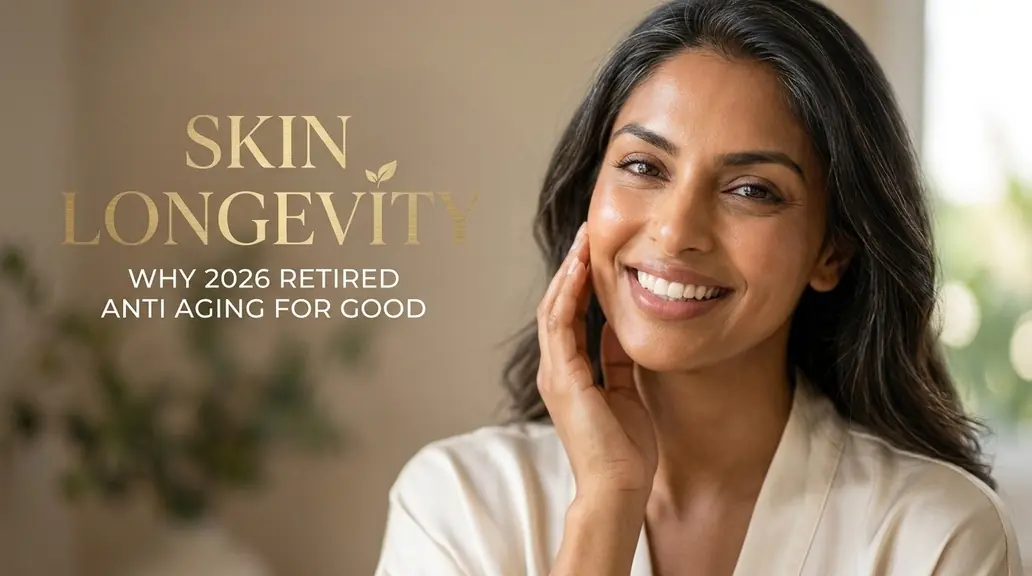
Skin longevity is the phrase that quietly retired anti-ageing in 2026, and the shift is bigger than a rebrand. The old goal was cosmetic: erase lines,
Skin longevity is the phrase that quietly retired anti-ageing in 2026, and the shift is bigger than a rebrand. The old goal was cosmetic: erase lines, chase a younger face, fight time. The new goal is functional. Skin longevity asks how well your skin works and how long it stays healthy across decades, not how young it looks in a single photo. Editors report that search interest has surged as shoppers grow tired of being sold fear. Dermatologists increasingly frame skin as an organ to maintain, the way you would maintain a heart or a set of teeth, through protection, consistency, and repair rather than aggression. This guide covers what skin longevity actually means, the three pillars that hold it up, the ingredients and habits that support it, the myths that muddy it, and a simple routine framework you can start using today.
Reviewed by the BeautynFacts editorial team. Last updated: July 2026.
What Skin Longevity Actually Means
Skin longevity is the practice of keeping skin functioning well over a lifetime rather than trying to reverse the look of age in the short term. The focus is health span, not just appearance. A barrier that holds water, a collagen supply that depletes slowly, and pigment that stays even are the real markers of skin that ages gracefully.
The difference sounds subtle, but it changes every decision you make. Anti-ageing asks what erases a wrinkle this week. Skin longevity asks what keeps your skin resilient in twenty years. One is reactive and cosmetic. The other is preventive and structural.
This framing borrows directly from the wider longevity movement in health and wellness. People stopped chasing quick fixes for the body and started thinking about lifespan and health span. Skin is simply the largest organ getting the same treatment, and 2026 is the year the language caught up.
Why 2026 Retired Anti-Aging for Good
Anti-ageing as a marketing idea always carried a problem. It framed ageing as an enemy and sold products through anxiety. That worked for decades, but younger shoppers grew sceptical of being told their own faces were flaws to correct.
A cultural rejection of fear-based beauty
The generation now driving beauty spending does not respond well to shame. They want skincare that reads as self-care and maintenance, not damage control. Skin longevity fits that mood because it is aspirational and neutral. You are building something, not fighting a losing war against a clock.
Science caught up with the language
Research on the skin barrier, the microbiome, and collagen turnover matured to the point where prevention became a credible strategy. Dermatologists increasingly frame daily sun protection and barrier care as the highest-return habits in any routine. That evidence gave the longevity idea a real foundation rather than a slogan.
The over-treatment backlash
The previous decade rewarded doing more: stronger acids, higher retinol, longer routines. The predictable result was a wave of inflamed, over-exfoliated skin. Skin longevity is partly a correction. It values restraint and consistency over intensity, which is exactly what damaged skin needs.

The Three Pillars of Skin Longevity
Every credible skin longevity approach rests on three pillars: protect, maintain, and repair. Get these three right, and the rest is refinement. Ignore them and no expensive serum will save you.
‘Protect’ means shielding skin from the things that age it fastest, above all ultraviolet light. ‘ Maintain’ means daily habits that keep the barrier and the collagen supply healthy. ‘Repair’ means the targeted actives that rebuild what damage and time take away. The order matters, because protection prevents the damage that repair later has to undo.
Pillar one: protect
Protection is the single highest-return move in skincare. Ultraviolet exposure drives the majority of visible skin ageing, from wrinkles to uneven tone to loss of firmness. Daily sunscreen is not a cosmetic step. It is the foundation of the entire longevity model.
Pillar two: maintain
Maintenance is the quiet, unglamorous work that compounds over years. It means a gentle cleanser that does not strip, a moisturiser that supports the barrier, and hydration that keeps skin plump and functional. These habits rarely produce dramatic before-and-after photos, but they are what keeps skin stable decade after decade.
Pillar three: repair
Repair is where actives earn their place. Retinoids, vitamin C, peptides, and barrier lipids rebuild collagen, even out pigment, and restore what the years wear down. Repair works best on skin that is already protected and maintained, which is why it sits third rather than first.
The Collagen Bank: Spend It Slowly
A useful way to think about skin longevity is the collagen bank. You are born with a rich supply of collagen, the protein that keeps skin firm and springy. From your mid-twenties onwards, you spend that balance down a little each year.
Some of that spending is unavoidable biology. But sun exposure, smoking, chronic inflammation, and blood sugar spikes all accelerate the withdrawals. The longevity strategy is to slow the drain and make small, steady deposits where you can.
You cannot fully refill the account, and any brand promising to is overselling. What you can do is protect the collagen you have and gently stimulate new production with proven actives. Slower withdrawals plus modest deposits are the whole game.
How Skin Longevity Differs From Anti-Aging
The two ideas overlap, and many of the same ingredients appear in both. The difference is philosophy and time horizon, and that difference reshapes how you buy and how you build a routine.
| Feature | Anti-Aging | Skin Longevity |
|---|---|---|
| Core goal | Look younger now | Stay healthy for decades |
| Time horizon | Short-term, visible results | Long-term function |
| Tone | Fear of ageing | Maintenance and care |
| Priority ingredient | Wrinkle-erasing actives | Sunscreen and barrier care |
| Mindset | Fixing flaws | Building resilience |
Neither approach is wrong about the ingredients. Retinoids and vitamin C matter in both. The shift is that skin longevity puts protection and consistency first and treats dramatic correction as the smaller part of the picture, not the headline.
Ingredients That Support Skin Longevity
The ingredient list for longevity is shorter and less trendy than the anti-ageing aisle would suggest. A handful of well-studied actives do most of the work, and chasing novelty tends to waste money.
Sunscreen, the non-negotiable
Broad-spectrum sunscreen is the one product that belongs in every longevity routine without exception. It prevents the ultraviolet damage that drives most visible ageing, protects your collagen bank, and lets every other active work on a stable canvas. If you do only one thing, do this.
Retinoids for collagen support
Retinoids remain the most evidence-backed active for stimulating collagen and smoothing texture over time. In a longevity model you use them for steady, long-term maintenance rather than aggressive short bursts. Start low, go slow, and treat them as a decades-long habit.
Antioxidants like vitamin C
Antioxidants neutralise some of the free radical damage from sun and pollution before it reaches your collagen. Vitamin C is the best studied, with the bonus of brightening uneven tone. Used in the morning under sunscreen, it adds a layer of daytime defence.
Barrier lipids and humectants
Ceramides, cholesterol, fatty acids, and humectants like hyaluronic acid and glycerin keep the barrier intact. A healthy barrier holds water, calms inflammation, and tolerates the actives you actually want to use. Barrier care is maintenance, and maintenance is most of longevity.
Lifestyle Factors That Age or Preserve Skin
Skincare in a bottle is only part of skin longevity. What you do the other twenty-three hours of the day shapes how your skin ages more than most serums do. The habits below either protect the collagen bank or drain it.
- Sleep, because skin does most of its repair work overnight, and short sleep shows up as dullness and slower healing.
- Diet, since chronic blood sugar spikes stiffen collagen through a process called ‘glycation’ and steady nutrition supports repair.
- Smoking and heavy alcohol, both of which accelerate collagen loss and dehydrate the skin.
- Chronic stress, which raises inflammation and can worsen barrier problems and breakouts.
- Movement, because regular exercise supports circulation that feeds the skin.
None of these are dramatic overnight fixes, which is the point. Skin longevity rewards the same boring consistency that the rest of long-term health does.
The Sun Protection Habit That Matters Most
If skin longevity has a single hero, it is daily sun protection. The evidence here is not subtle. Ultraviolet exposure is responsible for the large majority of visible skin ageing, and it is almost entirely preventable.
The habit that works is the one you can keep. A sunscreen you enjoy wearing, applied every morning as reflexively as brushing your teeth, beats an expensive formula that sits unused. Reapplication matters on long days outdoors, but consistency across years matters more than perfection on any single day.
Sun protection is also the cheapest anti-wrinkle strategy that exists. Every deposit you fail to make in sunscreen becomes a withdrawal from the collagen bank that no serum fully refunds later.
Consistency Beats Intensity
The hardest lesson in skin longevity is that steady, modest effort outperforms occasional intensity. A gentle routine followed every day for years does more than a punishing regimen abandoned after a month.
This is where the over-treatment backlash pays off. People who cycled through strong acids and high retinol percentages often ended up with damaged barriers and worse skin than when they started. The longevity approach trades peak intensity for durability. You want a routine you will still be doing in a decade.
Consistency also applies to expectations. Longevity results are cumulative and quiet. You will not see a transformation in a week, but you will see the payoff in how your skin holds up over years compared to skin that was neglected or over-treated.
Common Skin Longevity Myths
A new framing attracts new marketing, and not all of it is honest. A few myths are worth clearing before they cost you money.
The first myth is that expensive means effective. Price rarely tracks with results in skincare, and the highest-return products, sunscreen and a basic moisturiser, are often the cheapest. The second myth is that you can reverse ageing. You can slow it and improve skin quality, but no product turns back the clock, and any that claims to is selling fear. The third myth is that more actives equal more results. Past a point, stacking actives damages the barrier and sets you back rather than forward.
When to Start Thinking About Skin Longevity
The honest answer is now, whatever your age, because the strategy scales to every decade. Longevity is preventive, so the earlier the protective habits start, the more collagen you preserve.
In your twenties
The twenties are about protection and gentle maintenance. Daily sunscreen, a non-stripping cleanser, and a barrier-supporting moisturiser set the foundation. This is the cheapest, highest-leverage decade because you are preventing damage before it accumulates.
In your thirties and forties
Repair activities earn their place here. A retinoid for collagen support and an antioxidant for daytime defence fit alongside the protection habits you already have. The barrier still comes first, because actives only work well on skin that tolerates them.
In your fifties and beyond
Barrier function naturally declines with age, so maintenance becomes even more important. Richer moisturisers, continued sun protection, and gentle, continued use of proven actives keep skin comfortable and resilient. It is never too late to start protecting what you have.
Building a Skin Longevity Routine
A longevity routine is deliberately simple. The goal is something sustainable that hits all three pillars without overwhelming your skin or your schedule. The framework below works for most people and scales up or down with your needs.
- Morning: cleanse gently, apply an antioxidant serum such as vitamin C, layer a barrier-supporting moisturiser, and finish with broad-spectrum sunscreen.
- Evening: cleanse to remove sunscreen and grime, apply a repair active such as a retinoid a few nights a week, and seal it with a moisturiser.
- On non-retinoid nights, keep it simple with hydration and barrier support so the skin can rest and recover.
- Adjust seasonally, leaning richer in winter and lighter in summer, and always scale back activities at the first sign of irritation.
Notice what is not on the list: a dozen serums, weekly peels, or anything promising to reverse a decade. The routine is short on purpose, because short is what people actually keep doing.
Measuring Progress the Longevity Way
Anti-ageing measured success by wrinkles being erased. Skin longevity measures it differently, and learning to read the new signals keeps you from quitting a routine that is quietly working.
The markers to watch are functional. Does your skin feel comfortable rather than tight? Does it calm down quickly after irritation? Does it tolerate the actives you use without flaring? Is your tone staying even and your barrier staying intact through seasons and stress? These are the signs of skin that is ageing well, and they rarely show up in a dramatic single photo.
Think in years, not weeks. The real measure of a longevity routine is how your skin looks and functions a decade from now compared to where it would have been without the habits. That is a slow scoreboard, but it is the only one that matches the goal.
Why Skin Longevity Is Here to Stay
Trends that align with a broader cultural shift tend to outlast a single season, and skin longevity sits on top of the entire wellness longevity movement. As long as people think about lifespan and health span for their bodies, they will think the same way about their skin.
The framing is also more honest than anti-ageing ever was. It sets realistic expectations, rewards cheap high-return habits, and treats skin as an organ to care for rather than a flaw to fix. That durability is why editors and dermatologists expect the language to stick well beyond 2026 rather than fade like a passing ingredient fad.
Frequently Asked Questions About Skin Longevity
What is the difference between skin longevity and anti-ageing?
Anti-ageing focuses on reversing the visible signs of age in the short term, often through fear-based marketing about wrinkles and flaws. Skin longevity focuses on keeping skin healthy and functional over decades through protection, maintenance, and repair. The ingredients overlap, but the philosophy differs. Longevity puts daily sunscreen and barrier care first and treats dramatic correction as a smaller part of the picture. It is preventive and structural rather than reactive and cosmetic, which is why it resonates with shoppers tired of anxiety-driven beauty.
Can you really slow skin ageing?
You can meaningfully slow visible ageing, though you cannot stop or reverse it entirely. The single most effective step is daily broad-spectrum sunscreen, since ultraviolet exposure drives the majority of visible ageing. Barrier care, a proven retinoid, antioxidants, and healthy lifestyle habits like sleep and steady nutrition all help preserve collagen and skin quality over time. Anyone promising to turn back the clock is overselling. The realistic and achievable goal is slower decline and skin that stays comfortable, even, and resilient for far longer.
When should I start a skin longevity routine?
Now is the honest answer, whatever your age, because the strategy is preventive and scales to every decade. In your twenties the focus is protection and gentle maintenance, which is the cheapest and highest-leverage stage because you prevent damage before it builds up. In your thirties and forties, repair actives like retinoids join the protective habits. In your fifties and beyond, maintenance and barrier support become even more important. It is never too late to start protecting the collagen and skin quality you still have.
Is skin longevity just a marketing rebrand of anti-ageing?
There is marketing involved, but the shift is more than a new label. Skin longevity reflects real progress in barrier science, microbiome research, and understanding of collagen turnover, plus a genuine backlash against over-treatment and fear-based selling. The framing changes behaviour by putting protection and consistency first instead of dramatic correction. That said, some brands will slap the word on the same old products, so judge formulas by their ingredients and claims. A short list of proven actives beats any buzzword on the front of a bottle.
What is the most important product for skin longevity?
Broad-spectrum sunscreen, without close competition. Ultraviolet exposure is responsible for the large majority of visible skin ageing, and sunscreen prevents that damage before it reaches your collagen. It protects the collagen you have, lets every other active work on stable skin, and is often one of the cheapest products in a routine. The best sunscreen is the one you enjoy wearing enough to apply every single morning. Consistency across years matters far more than the price or the specific brand you choose.
Do I still need retinol for skin longevity?
Retinoids remain valuable because they are the most evidence-backed active for stimulating collagen and smoothing texture over time. In a longevity model, though, you use them for steady long-term maintenance rather than aggressive short bursts that damage the barrier. Start with a low strength, build up slowly, and treat retinoids as a decades-long habit used a few nights a week. They matter most once you have the protection and barrier basics in place, since actives only work well on skin that is already stable and tolerant.
RELATED ARTICLES:
- Anti-Aging Skincare Routine: The Steps That Actually Work
- Collagen Supplements and Skincare: What the Evidence Says
- Retinal vs Retinol: Which Retinoid Is Right for Your Skin
About The Author

COMMENTS