











Master gua sha lymphatic drainage at home. Learn the correct angles, strokes, and techniques to sculpt your face, reduce puffiness, and boost circulation naturally.
Gua sha lymphatic drainage is the at-home facial massage that drains puffiness and sculpts your features when done at the right angles. This guide breaks down the exact strokes and pressure for effective gua sha lymphatic drainage you can do in minutes each morning.
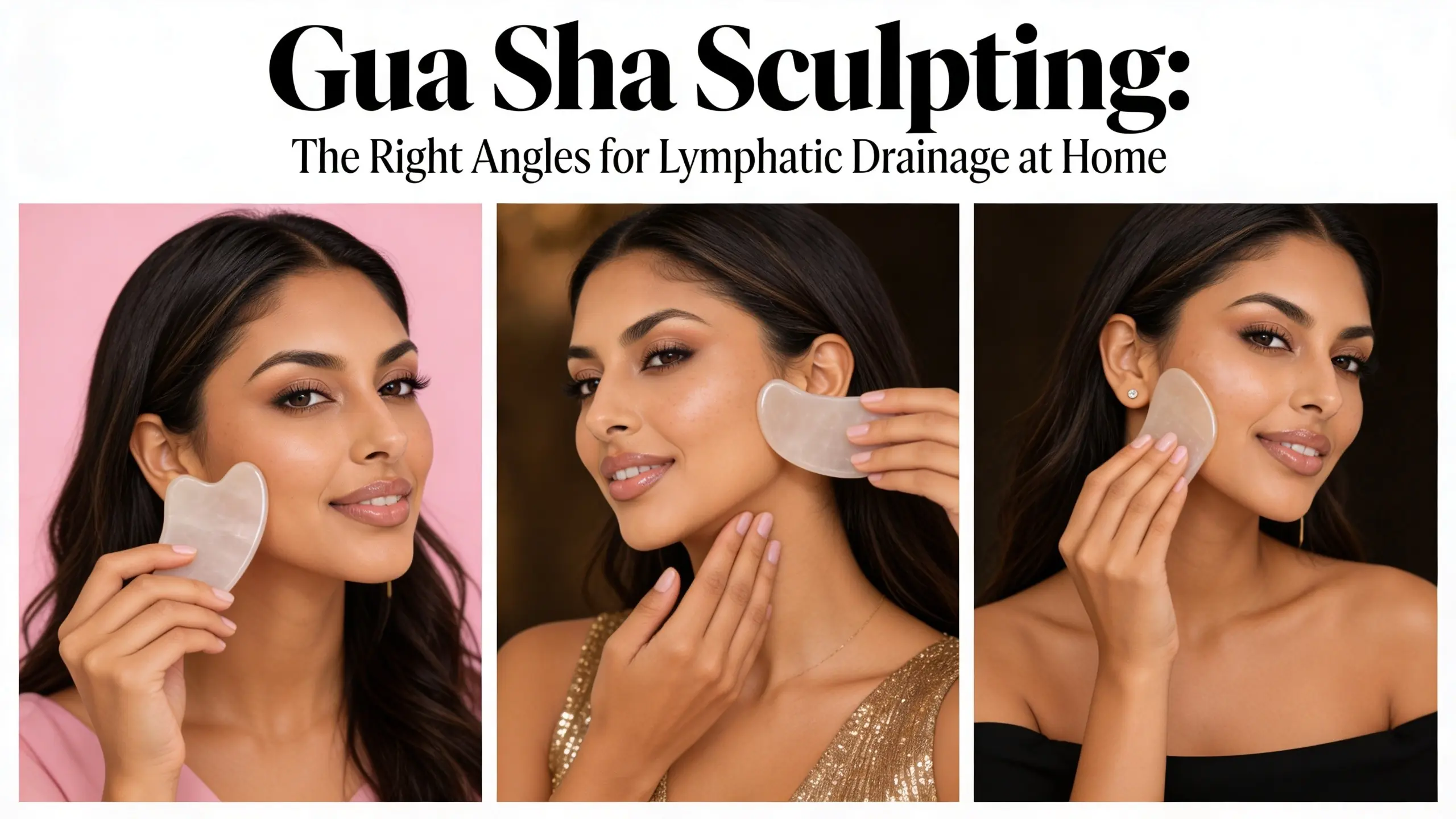
Gua Sha Sculpting: If you have ever wondered why your face looks puffy in the morning or why tension seems to settle into your jaw and temples by evening, the answer often comes down to lymphatic congestion and poor facial circulation. Gua sha lymphatic drainage is one of the most effective at-home techniques for addressing both of these concerns simultaneously. Gua sha is based on traditional Chinese medicine and is now supported by more scientific knowledge. It uses a smooth-edged stone tool to move fluid, release fascial tension, and help the skin regenerate from within. What determines the results, however, is not just having the tool. It is knowing the precise angles, stroke directions, and pressure gradations that allow the lymphatic system to respond correctly. This guide walks you through every angle, every sequence, and every nuance you need to make gua sha sculpting genuinely transformative.
What Is Gua Sha Lymphatic Drainage and Why Angles Matter
Gua sha is a manual therapy technique that involves dragging a flat, curved tool across the skin in controlled strokes. In traditional Chinese medicine, it was applied vigorously to the body to release heat and stagnation. The facial adaptation of this practice is significantly gentler, and its primary Western-understood mechanism is the stimulation of the lymphatic system.
The lymphatic system is a network of vessels and nodes that carries lymph fluid, a substance rich in white blood cells and metabolic waste, away from tissues and back toward the bloodstream. Unlike the cardiovascular system, the lymphatic system has no central pump. It depends only on movement, muscle contractions, and pressure from the outside to keep the fluid moving. When lymph stagnates, tissues retain fluid, leading to puffiness, dullness, and even acne from trapped bacteria and inflammation.
This is precisely where the angle of the gua sha tool becomes critical. The lymphatic capillaries in the face are extremely superficial, sitting just beneath the skin surface. When you press too deeply or at the wrong angle, you bypass these capillaries entirely, compressing them instead of encouraging flow. When you hold the tool at the correct angle with the right amount of pressure, you create a gentle vacuum-like effect that draws lymph through the capillary walls and into the larger collecting vessels.
Published · Updated
The direction of each stroke must always travel toward the nearest lymph node cluster. On the face, the primary drainage nodes sit in front of and behind the ears, along the sides of the neck, and at the collarbones. Every stroke should flow in the direction that delivers fluid to one of these stations.
Understanding Your Face’s Lymphatic Map
Before you touch the tool to your face, you need to understand the geography you are working with. The face has a layered network of lymphatic vessels that drain in specific directions, and working against these directions can push fluid into the wrong areas or cause temporary increased puffiness.
Primary Drainage Nodes and Pathways
The face drains primarily through the following clusters of nodes:
- Preauricular nodes: Located just in front of the ear, these collect lymph from the cheeks, temples, and outer eye area.
- Postauricular nodes: Sitting behind the ear, these receive drainage from the scalp and the area around the ear.
- Submandibular nodes: Found along the lower jaw and under the chin, these collect fluid from the mouth area, chin, and lower cheeks.
- Cervical nodes: Running down the sides of the neck, these are the superhighway that all facial lymph eventually drains through before reaching the collarbone and re-entering the bloodstream.
Knowing these locations lets you visualise where each stroke is heading. Think of your gua sha strokes as creating a gentle current, always flowing downhill toward the nearest node, and from there continuing down the neck to the collarbone.
Why You Must Clear the Neck First
One of the most commonly overlooked principles in gua sha lymphatic drainage is the importance of beginning every session on the neck rather than the face. If the neck nodes are congested or the vessels there aren’t primed to accept fluid, any fluid you move from the face will have nowhere to go. It can pool temporarily, creating the paradoxical result of increased puffiness immediately after a session.
Spend the first two to three minutes of every session working exclusively on the neck, using slow, gentle downward strokes from the jawline to the collarbone. This clears the pathway and creates the drainage capacity your face needs.
How to Hold the Gua Sha Tool Correctly
The way you grip and position the tool determines everything about the quality of contact you make with the skin. Many people grip the tool too tightly, which transmits tension through their hands into the stroke and disrupts the consistent pressure needed for lymphatic movement.
The Relaxed Grip Principle
Hold the tool between your thumb and the side of your index finger, with your middle finger providing light support on the back of the tool. Your grip should be firm enough to keep the tool from slipping, but relaxed enough that you could describe it as ‘effortless’. A tight grip engages the tendons in your forearm, which translates to micro-tremors in the stroke, creating uneven pressure rather than the smooth, consistent glide that the lymphatic system needs.
The 15 to 30 Degree Angle Rule
For lymphatic drainage specifically, you want the tool almost flat against the skin, ranging from 15 to 30 degrees. A helpful mental image is to think of the tool as a squeegee on a glass surface. You want it tilted just enough to lead with its edge, creating forward momentum of fluid rather than pushing it down.
For areas where more muscle release is desired alongside lymphatic benefits, such as the jaw or the brow, you can increase the angle slightly to around 30 to 45 degrees, but never beyond this angle for facial work. The moment you exceed 45 degrees, you shift from lymphatic drainage territory to deep tissue compression, which has different effects and different applications.
Which Edge to Use on Which Area
Most gua sha tools have multiple edges designed for different areas. The long, slightly concave edge is ideal for broad flat areas like the cheekbones and forehead. The curved notch, if your tool has one, cradles the jawline perfectly. The smaller curved edge at the top is designed for the eye area and the nose sides. Using the correct edge ensures the tool conforms to the contour of your face, maximising the contact surface and making strokes more effective.
Step-by-Step Gua Sha Technique for Lymphatic Drainage
A complete gua sha session for lymphatic drainage should take between 10 and 20 minutes. Rushing through strokes or applying too much pressure to compensate for time undermines the gentle, rhythmic nature that makes this technique effective.
Preparing the Skin
Always apply a generous layer of facial oil before beginning. The oil serves two functions: it allows the tool to glide without friction, preventing skin stretching or redness, and it creates a slight hydrophilic barrier that helps the superficial lymphatic capillaries stay plump and responsive. Start on cleansed skin, and apply enough oil that you can feel the tool sliding effortlessly without any dragging sensation.
The Neck Sequence
Begin with five to seven slow strokes on each side of the neck, moving from just below the jawline down to the collarbone. The pressure should be no more than the weight of the tool itself combined with the lightest possible additional pressure from your hand. Each stroke should take exactly two seconds to complete. After finishing both sides, use your fingers to gently press on the collarbone area, stimulating the thoracic duct and subclavian nodes where lymph re-enters the bloodstream.
The Jawline and Chin Sequence
Position the notched edge of the tool against your jawline at the chin. Hold it at a 30-degree angle and draw it slowly from the centre of the chin to just in front of the ear, following the curve of the jaw exactly. Use five to seven strokes on each side. After completing the jawline, redirect the flow with two strokes from the front of the ear down the neck to the collarbone, clearing the fluid you have just moved into the preauricular node area.
The Cheekbone and Midface Sequence
Place the long curved edge of the tool at the side of the nose. Hold it at a 15 to 20-degree angle and sweep it outward and very slightly upward toward the ear, following the natural contour of the cheekbone. The stroke should feel as though you are pressing a gentle wave of fluid outward. Perform five to seven strokes, then again redirect with two strokes down the neck. The midface drains to the preauricular nodes, so always end strokes near the ear and follow through to the neck.
The Under-Eye Area
The under-eye area is the most delicate region and requires the lightest touch of the entire sequence. Use the tool’s smallest curved edge or point, if it has one. Hold it nearly flat, at approximately 15 degrees, and begin at the inner corner of the eye near the nose bridge. Draw the tool outward along the orbital bone, staying on the bone itself rather than on the soft tissue directly beneath the eye. This keeps pressure off the fragile capillaries beneath the eye while still moving lymph along the orbital rim. Finish the stroke at the outer corner of the eye and continue briefly toward the temple. Use only three to four strokes here, and keep them exceptionally slow.
The Forehead Sequence
For the forehead, strokes should move both outward toward the temples and upward into the hairline. Start at the centre of the forehead between the brows and sweep outward to the temple with the long, flat edge of the tool held at 20 degrees. The temple area has lymphatic vessels that drain toward the preauricular node, so ending each stroke at the temple is anatomically correct. Then follow through from the temple with a stroke down the neck. Alternate between outward strokes and upward strokes from brow to hairline to address both the horizontal and vertical lymphatic channels in the forehead.
Specific Angles for Sculpting vs. Draining
Gua sha can be used for two overlapping but distinct purposes: active sculpting, which focuses on lifting and contouring by releasing muscle tension and fascial restrictions, and lymphatic drainage, which focuses purely on moving fluid. The angles differ subtly between these goals, and understanding the difference allows you to customise your session based on your specific needs that day.
Angles for Lymphatic Drainage
As established, lymphatic drainage work happens at 15 to 30 degrees. Strokes are slow, at approximately two seconds each, with minimal additional pressure beyond the weight of the tool. The primary direction is always toward the nearest lymph node, then down the neck. This is the appropriate angle and speed when you are dealing with morning puffiness, allergies causing facial swelling, or general water retention.
Angles for Sculpting and Lifting
Sculpting work can use angles between 30 and 45 degrees with moderate, consistent pressure. The slower the stroke, the more effective it is for fascial release, which gives the skin its lifted appearance by releasing the underlying connective tissue that holds expression lines and sagging patterns. Sculpting strokes on the cheek, for example, would follow the cheekbone at a 40-degree angle with deliberate, slow upward and outward pressure. This lifts the masseter and the underlying fascia without overstimulating the lymphatic capillaries.
The ideal session combines both: begin with pure lymphatic drainage strokes to clear the pathway and reduce fluid, then shift to sculpting strokes to address tissue architecture, and close again with light lymphatic strokes to clear any metabolic waste released during the sculpting phase.
Common Mistakes That Reduce Effectiveness
Even experienced practitioners make errors that significantly reduce the benefits of gua sha. Understanding these pitfalls helps you self-correct before they become habits.
Pressing Too Hard
The most common mistake in gua sha lymphatic drainage is using too much pressure. Unlike deep tissue massage, lymphatic work is intentionally superficial. The lymphatic capillaries that need stimulation are extraordinarily thin-walled and lie just beneath the dermis. Pressing hard collapses them. If you are pressing so hard that you see redness immediately after each stroke (other than very slight flushing), you are using too much pressure and shifting into a circulatory stimulation mode rather than lymphatic drainage. Back off until the redness disappears within 30 to 60 seconds of each stroke.
Going Too Fast
Rapid strokes create kinetic energy in the tissue that disperses fluid in multiple directions rather than channelling it toward the nodes. The lymphatic system responds to slow, rhythmic pressure. Each stroke should be deliberate, and you should be able to feel the tissue gently yielding beneath the tool. If you are completing strokes faster than one per two seconds, slow down.
Skipping the Neck
Skipping the neck preparation is perhaps the most structurally significant error. Lymphatic drainage from the face requires clear downstream pathways. If you move fluid from the face into congested neck nodes, the fluid stagnates there and can cause temporary increased puffiness in the lower face and neck. Always prime the neck first and incorporate neck-clearing strokes throughout the session every time you work a new facial zone.
Incorrect Direction
Stroking toward the centre of the face, moving fluid inward and downward rather than outward and toward the nodes, can push fluid into areas with fewer drainage vessels. Every stroke must have a clear destination that terminates at or near a node cluster. If you are uncertain about direction, the rule is to move outward toward the sides of the face and downward toward the neck.
Working on Inflamed or Broken Skin
Gua sha should never be performed over active breakouts, inflamed areas, sunburnt skin, or any areas with broken capillaries or open wounds. The mechanical movement can spread bacteria from breakouts, increase inflammation in sensitive areas, and rupture fragile vessels. Avoid these zones entirely until fully healed.
Reading Your Skin’s Response During a Session
Your skin will communicate with you during the session if you know what signs to look for. Learning to read these responses allows you to adjust your technique in real time.
Signs That Technique Is Correct
When your angle and pressure are right, you will notice a very slight rosy flush that fades within a minute, indicating healthy circulation is being stimulated. The skin will look slightly more luminous immediately after, and any visible puffiness in the treated area will visibly decrease during the session. You may also notice the skin looks slightly more defined along the cheekbones and jawline as fluid moves away from those areas.
Signs That Technique Needs Adjustment
Prolonged redness lasting more than a few minutes suggests too much pressure or too steep an angle. Increased puffiness that does not resolve during the session suggests strokes are going in the wrong direction or the neck has not been thoroughly cleaned. A scratching or dragging sensation means you need more oil on the skin. Any discomfort or pain is always a signal to reduce pressure immediately.
Frequency and Timing for Optimal Results
Gua sha lymphatic drainage is most effective when practised consistently, but the question of how often and when during the day matters for results.
Daily Practice for Maintenance
A daily session of 10 to 15 minutes is ideal for ongoing lymphatic health and sculpting benefits. Many people prefer morning sessions because the lymphatic system tends to be more congested after a night of reduced movement, and a morning session addresses this directly before the day begins. The visible depuffing effect that results from a morning session also means your skin will look its best throughout the day.
Evening Sessions for Recovery
Evening sessions have different benefits. The day’s accumulation of facial tension, particularly in the jaw from speaking, chewing, and stress, responds well to the slightly more angled sculpting strokes that can be incorporated into an evening practice. Evening sessions also support lymphatic processing during sleep, as the lymphatic system is particularly active during rest. Combining a full body lymphatic drainage sequence before bed with gua sha on the face creates a synergistic effect.
Intensive Sessions During Congestion or Swelling
During periods of increased puffiness, such as allergic reactions, hormonal water retention, or after long flights, you can perform twice-daily sessions focusing entirely on lymphatic drainage strokes at 15 degrees with minimal pressure. These intensive sessions can produce visible results within 24 to 48 hours of consistent practice. Do not increase pressure in an attempt to speed results. The lymphatic system responds to consistency and gentleness, not force.
Gua Sha Lymphatic Drainage for Specific Concerns
Different facial concerns benefit from modified approaches that adjust angle, sequence, and focus area.
For Under-Eye Puffiness
Begin with extended neck clearing, spending an extra two minutes on each side of the neck. Then work the under-eye area with the tool almost completely flat, using the smallest edge. Direct strokes from the inner corner outward along the orbital bone, then curve down toward the front of the ear. Follow each orbital stroke with two connecting strokes from the ear down the neck. The key for stubborn under-eye puffiness is patience and a nearly flat tool angle. Repeat this sequence three times on each eye per session.
For Jawline Definition
Jawline definition requires both lymphatic clearing of the jowl area and fascial release along the masseter. Begin with five pure lymphatic strokes along the jaw at 20 degrees, then shift to 40-degree strokes on the masseter muscle itself, working in slow upward directions. Follow these steps with five more clearing strokes at 20 degrees. This combination depuffs the area and releases the underlying tension that causes the jaw to appear heavier over time.
For Dull Complexion
Dullness often results from poor circulation combined with lymphatic congestion that prevents metabolic waste from clearing efficiently. For a dull complexion, prioritise the forehead and cheek sequences at a slightly elevated angle of 25 to 30 degrees to stimulate circulation and lymphatic flow. Follow the full session with a series of very light strokes over the entire face using the flat surface of the tool rather than the edge, which creates a flushing effect on the microcirculation.
For Facial Tension and Headaches
Facial tension, particularly around the temples, jaw, and brow, benefits from gua sha that bridges lymphatic drainage with gentle fascial work. On the temples, use circular motions with the edge of the tool at 30 degrees before directing fluid outward toward the hairline and down to the ear. On the brow, work in outward strokes from the centre, following the shape of the browbone, using a 30-degree angle and moderate pressure. The combination of fluid movement and fascial decompression in these areas can significantly reduce tension headaches with consistent practice.
Integrating Gua Sha into a Complete Skincare Routine
Gua sha lymphatic drainage produces its best results when positioned correctly within your broader skincare routine. Its placement matters both for effectiveness and for the health of the skin barrier.
Optimal Placement in Your Routine
Gua sha should follow cleansing and toning but precede the application of serums and moisturiser. The reason is functional: the gua sha strokes stimulate circulation and open the pores slightly through mild mechanical action. When you apply active serums immediately after a session, the skin is in an optimal state to absorb these ingredients deeply. Applying gua sha after serums, particularly active ones, can potentially push concentrated actives deeper than intended, which may cause irritation for sensitive skin types.
The Role of Facial Oil
The oil you use during gua sha is not incidental. It acts as both a lubricant and a treatment medium that is driven into the skin during the session. Oils that are high in linoleic acid support the skin barrier and help regulate sebum production, making them ideal for combination and acne-prone skin. Oleic acid-rich oils are deeply nourishing and ideal for dry or mature skin. Whatever oil you choose, applying it generously before the session and allowing the gua sha strokes to work it into the skin means you get the benefit of the oil along with the mechanical benefits of the technique.
Temperature Considerations
The temperature of the gua sha tool affects the type of response you get from the skin. A cool or room-temperature tool supports lymphatic drainage by keeping vessels slightly constricted, which encourages the pressure differential that moves fluid through the capillaries. A warm tool, having rested in warm water, stimulates circulation more aggressively and is better suited for the sculpting and tension-release portions of the session. Many experienced practitioners begin with a cool tool for the lymphatic drainage sequence and transition to a warmer tool for the sculpting sequence.
Building a Sustainable Gua Sha Practice
The transformative benefits of gua sha lymphatic drainage come from sustained practice, not from one or two intense sessions. Building a sustainable habit requires setting realistic expectations, creating a comfortable ritual, and understanding the timeline of results.
Realistic Expectations and Timeline
In the first week of daily practice, the most noticeable change will be reduced morning puffiness, which can appear within the first two to three sessions. After two to four weeks of consistent practice, you may begin to notice improved skin texture, better circulation evidenced by a more even skin tone, and initial improvements in jawline and cheekbone definition. After two to three months of daily practice, the cumulative fascial release and lymphatic optimisation begin to produce structural changes in facial contour that persist even on days when you skip the practice.
Creating Your Ritual
The most effective gua sha practitioners approach the practice as a ritual rather than a task. This means setting aside uninterrupted time, using lighting that allows you to see what you are doing, and bringing a quality of focused attention to each stroke. Distracted gua sha, performed while watching television or scrolling through a phone, results in inconsistent pressure and direction and significantly reduces effectiveness. The meditative quality of the practice, when approached with intention, also activates the parasympathetic nervous system, which further supports lymphatic function because lymph flow increases when the body is in a relaxed state.
Caring for Your Tool
Clean your gua sha tool after every session with mild soap and warm water and allow it to air-dry completely before storing it. Tools made from natural stone are porous and can harbour bacteria if not cleaned properly. Inspect the edges periodically for chips or cracks, as a damaged edge will create uneven pressure and potentially scratch the skin. Store the tool in a soft cloth or pouch to protect the edges from impact damage.
Frequently Asked Questions
How long does it take to see results from gua sha lymphatic drainage?
Results vary based on how consistently you practise and what concerns you are addressing. The most immediate result, visible within the first one to three sessions, is reduced puffiness, particularly in the morning. This happens because the lymphatic drainage effect is relatively fast-acting when the technique is correct. Longer-term results such as improved skin texture, a more defined jawline, and a reduced appearance of fine lines generally begin to appear after two to four weeks of daily practice. Structural changes in facial contour require consistent practice over several months before becoming noticeable.
Can gua sha lymphatic drainage be done every day?
Yes, gentle gua sha lymphatic drainage can and should be done daily for best results. The technique, when performed correctly at low pressure and shallow angles, is too gentle to cause tissue damage through frequency. In fact, the lymphatic system benefits most from rhythmic, consistent stimulation rather than occasional intensive sessions. The key to safe daily practice is maintaining the correct light pressure and shallow angles. If you ever notice prolonged redness, increased puffiness that does not resolve, or any discomfort, take a day off and reassess your technique.
What happens if I stroke in the wrong direction?
Stroking in the wrong direction, generally toward the centre of the face or away from the lymph nodes, does not cause permanent harm in most cases. What it does do is move fluid into areas with fewer drainage vessels, which can cause temporary increased puffiness in those areas. It also means you are not achieving the intended lymphatic benefit from those strokes. If you notice increased puffiness after a session, the most likely cause is incorrect stroke direction, followed by insufficient neck clearing. Reviewing the anatomical drainage map and ensuring every stroke terminates near a node cluster will correct these issues.
Should gua sha be painful?
Gua sha for lymphatic drainage should never be painful. Mild pressure sensations and the feeling of the tool moving across your skin are normal, but actual pain, whether sharp, burning, or throbbing, is a signal to stop immediately and reassess. Pain during gua sha usually indicates too much pressure; an incorrect angle that is compressing rather than gliding; working over a contraindicated area such as inflamed skin; or insufficient oil causing friction. Body gua sha, performed in traditional Chinese medicine, can involve more pressure and sometimes produce redness, but facial gua sha and facial lymphatic drainage specifically require a much lighter approach.
Why does my face sometimes look more puffy after gua sha?
Increased puffiness after a gua sha session is almost always a technique issue rather than a sign that gua sha does not work for you. The most common cause is not clearing the neck before working on the face, which means that fluid that moves from the face has nowhere to drain and pools in the neck and lower face. Other causes include stroking in the wrong direction, which moves fluid toward areas without adequate drainage, or using too much pressure, which collapses the lymphatic capillaries and disrupts flow. Returning to fundamentals, spending extra time on the neck, using a lighter touch, and confirming your stroke directions resolve this issue in most cases.
Can gua sha replace professional lymphatic drainage massage?
Gua sha is an excellent complement to professional lymphatic drainage massage, and for daily maintenance and minor concerns, it can produce meaningful results on its own. However, for significant lymphatic dysfunction, post-surgical swelling, or chronic conditions affecting the lymphatic system, professional manual lymphatic drainage performed by a trained therapist works on deeper lymphatic vessels and nodes that surface-level gua sha cannot reach. The best approach for serious lymphatic concerns is to work with a professional for deeper treatment while using gua sha at home for daily maintenance and to enhance professional results. For cosmetic concerns such as puffiness, contouring, and skin luminosity, consistent home gua sha practice produces results that are comparable to many professional treatments when technique is correct.
Conclusion
Mastering gua sha lymphatic drainage is genuinely accessible from home, but the results you achieve are entirely determined by your understanding of angles, directions, and pressure. Holding the tool at 15 to 30 degrees for lymphatic work, always clearing the neck first, directing every stroke toward the nearest node cluster, and practising with slow consistency rather than speed or force are the principles that transform gua sha from a wellness trend into a genuinely effective skincare practice.
The face is a complex landscape of superficial lymphatic vessels, facial muscles, and connective tissue, all of which respond to the intelligent application of the right techniques. When you approach gua sha with anatomical awareness and respect for the delicacy of the lymphatic system, you give your skin the conditions it needs to drain efficiently, regenerate effectively, and present its most sculpted, luminous version daily. Begin with the fundamentals, practise consistently, and allow the cumulative benefits to unfold over weeks and months. The time you invest in learning to do the technique correctly is returned many times over in the quality of your results.
RELATED ARTICLES:
Glycolic Acid for Skin: The Skincare Secret to Brighter, Smoother, and Healthier Skin
Saffron Skincare Secrets: Brighten, Hydrate & Achieve Flawless Skin Naturally!
Facial Care: The Right Daily Gestures for Healthy, Radiant Skin
Benefits of Walnuts for Achieving Smoother and Brighter Skin
How to Make and Use Lemon Scrub for a Brighter, Clearer Complexion
About The Author

COMMENTS