






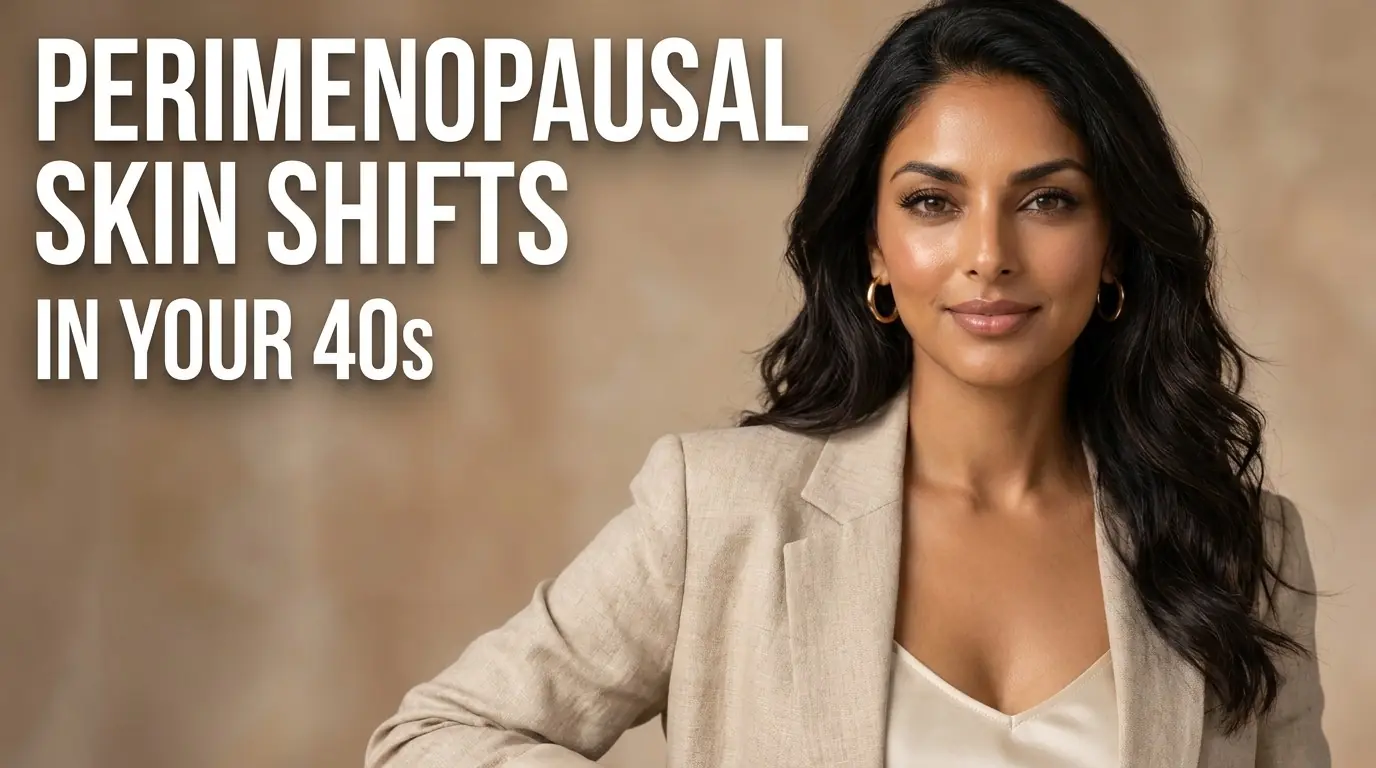
Understand perimenopausal skin care and how hormonal shifts in your 40s change your complexion. Get a complete skincare routine reset to address dryness, sensitivity, and loss of firmness.
Perimenopausal skin care becomes essential when your 40s arrive and your complexion suddenly changes. If your skin feels drier than usual, reacts to products it once tolerated, or loses the firmness it held a few years ago, you are not imagining it. Perimenopause can begin in your late 30s, and the hormonal shifts it triggers go far deeper than a moisturiser can fix. This guide resets your routine for the new chapter.
Your skin has been a reliable companion for decades, and then your 40s arrive and everything changes. If you have noticed your complexion feeling drier than usual, reacting to products it once tolerated easily, or losing the firmness it held just a few years ago, you are not imagining things. Perimenopausal skin care is one of the most important yet underaddressed topics in women’s health and beauty, and understanding what is happening beneath the surface is the first step toward reclaiming a routine that actually works. Perimenopause, the transitional phase leading up to menopause, can begin as early as your late 30s but most commonly takes hold in your 40s, and the hormonal shifts it triggers affect your skin in ways that go far deeper than what a simple moisturiser can fix. This guide walks you through every dimension of those changes and gives you a complete, evidence-informed approach to resetting your routine for this new chapter.
What Perimenopause Actually Does to Your Skin
To understand why your skin is behaving differently, you need to understand what perimenopause is doing inside your body. Perimenopause is defined as the years leading up to the final menstrual period, a window that can span anywhere from two to twelve years. During this time, the ovaries gradually produce less oestrogen and progesterone, and these hormonal fluctuations are anything but linear. Levels rise and fall unpredictably before trending downward overall, which is why perimenopausal skin symptoms can seem inconsistent and confusing.
Published · Updated
Progesterone and Skin Balance
Progesterone works alongside oestrogen to maintain hormonal balance, and as its levels also become erratic during perimenopause, the skin can experience confusing mixed signals. In some women, the relative dominance of androgens (male hormones that are always present in smaller amounts in women) becomes more pronounced as oestrogen declines, leading to unexpected adult acne, increased facial hair, and oiliness in some areas even while other areas become extremely dry. This hormonal seesaw is one of the defining challenges of perimenopausal skin care.
Research consistently shows that skin loses up to 30 percent of its collagen in the first five years after menopause, but the decline actually begins during perimenopause. The skin becomes thinner, more translucent, and less resilient. Fine lines that were once barely visible deepen. The jawline and cheeks lose definition. And the skin’s ability to recover from irritation, UV damage, or environmental stress diminishes significantly.
The Most Common Perimenopausal Skin Changes and What Causes Them
Women going through perimenopause often describe their skin as “not being itself,” and that is an accurate description. The changes are real, measurable, and rooted in biology rather than lifestyle choices. Understanding the specific mechanisms behind each change helps you target your routine with precision rather than guessing.
Dryness and Dehydration
As oestrogen declines, the skin produces less hyaluronic acid and ceramides, two of the most critical components of a healthy moisture barrier. The result is transepidermal water loss (TEWL), a process where water evaporates from the skin faster than it can be replenished. You may notice that your skin feels tight within minutes of cleansing, that it looks dull and papery, or that it absorbs moisturiser almost immediately without ever feeling truly hydrated. This is not about applying more product. It is about applying the right formulations that address the compromised barrier function.
Loss of Firmness and Elasticity
Collagen and elastin are the two structural proteins responsible for keeping skin taut and bouncy. Oestrogen directly stimulates fibroblasts, the cells that produce these proteins. As oestrogen falls, fibroblast activity slows, collagen production decreases, and existing collagen begins to break down faster than it is replaced. The result is visible sagging, particularly around the jawline, cheeks, and neck, along with deeper nasolabial folds and a general loss of the contoured look that characterises younger skin.
Increased Sensitivity and Reactivity
A compromised skin barrier is a reactive skin barrier. When the protective outer layer of the skin is not functioning optimally, irritants, allergens, and pollutants penetrate more easily, triggering inflammation, redness, and sensitivity. Many women in their 40s find that products they used for years suddenly cause stinging, flushing, or breakouts. This is not a sign that those products have changed. It is a sign that the skin’s tolerance threshold has shifted, and the routine needs to adapt accordingly.
Uneven Tone and Hyperpigmentation
Hormonal fluctuations can trigger an increase in melanin production, leading to dark spots, melasma, or an overall uneven complexion. This issue is compounded by the fact that cell turnover slows as oestrogen declines, meaning that pigmented cells linger on the surface longer than they did in younger skin. Sun exposure accelerates this process dramatically, which is why consistent sun protection becomes even more critical during perimenopause.
Adult Hormonal Acne
For women who had clear skin throughout their 30s, the appearance of adult acne during perimenopause can be particularly distressing. As oestrogen falls relative to androgens, the androgen-driven sebaceous glands become increasingly active. This can result in deep, painful cystic breakouts along the jawline and chin, a pattern very similar to teenage hormonal acne but with the added complication of concurrent dryness and sensitivity in other areas of the face.
Rethinking Your Cleansing Routine for Perimenopausal Skin
Cleansing is the foundation of any skincare routine, and for perimenopausal skin, getting this step right has an outsized impact on everything that follows. Many women continue using foaming cleansers or gel-based formulas that worked well when they had oilier, more resilient skin. During perimenopause, these formulas can strip away the very lipids and moisture-binding compounds the skin needs most.
Choosing the Right Cleanser Format
The most appropriate cleansers for perimenopausal skin tend to be cream-based, oil-based, or micellar formulas that remove impurities without disrupting the skin’s natural oils. Look for cleansers that contain skin-identical ingredients like ceramides, glycerin, or fatty acids. These not only clean the skin but also actively replenish components that the skin is no longer producing in sufficient quantities on its own.
Avoid cleansers with high concentrations of sulphates, alcohol, or synthetic fragrances. Fragrance, in particular, is a common trigger for the increased skin sensitivity that accompanies perimenopause. A gentle, fragrance-free cream cleanser used at night is typically sufficient for most perimenopausal skin types. In the morning, many women find that a simple rinse with lukewarm water, without any cleanser at all, is enough to refresh the skin without stripping it.
Water Temperature Matters
Hot water accelerates TEWL and can exacerbate redness and flushing, both of which are more common during perimenopause due to vasomotor instability (the same mechanism behind hot flashes). Using lukewarm water, patting the skin dry rather than rubbing, and applying moisturiser to slightly damp dermis are simple adjustments that make a meaningful difference in how the skin feels throughout the day.
Building a Perimenopausal Skin Care Moisturizing Strategy
Moisturising during perimenopause is not about applying more product. It is about applying a smarter product. The skin needs three distinct types of support: humectants to attract water, emollients to smooth and soften, and occlusives to seal everything in. A well-formulated moisturiser for perimenopausal skin will contain all three categories.
Humectants for Deep Hydration
Hyaluronic acid is the most well-known humectant, and it is particularly relevant for perimenopausal skin because it directly replaces what oestrogen decline takes away. When applied to damp skin, hyaluronic acid draws moisture from the environment and from deeper layers of the skin to the surface. Glycerin and panthenol are additional humectants with soothing properties that work especially well for reactive perimenopausal skin.
One important nuance: in very dry climates or during winter months, pure hyaluronic acid serums applied without an occlusive on top can actually draw moisture out of the skin rather than into it. Always follow a hyaluronic acid serum with a moisturiser rich in occlusives or emollients to lock in that hydration.
Emollients and Occlusives for Barrier Repair
Ceramides are lipid molecules that form a significant portion of the skin’s natural barrier structure. As oestrogen declines, ceramide production decreases, and the barrier becomes more porous. Moisturisers containing ceramides, along with cholesterol and fatty acids, actively repair the barrier rather than just sitting on top of it. Ingredients like squalane, derived from plants, provide lightweight but effective occlusive coverage and are well-tolerated even by sensitive perimenopausal skin.
For women who experience very severe dryness, particularly in winter, a heavier occlusive layer applied only at night, such as a balm or a rich cream, can provide the intensive repair the skin barrier needs during the hours when it is most actively regenerating.
The Role of Retinoids in a Perimenopausal Skin Routine
Retinoids, derived from vitamin A, are among the most extensively researched topical ingredients for aging skin, and they have particular relevance for perimenopausal skin care. They work by binding to retinoid receptors in skin cells and stimulating collagen production, accelerating cell turnover, and reducing the appearance of fine lines, hyperpigmentation, and uneven texture.
Understanding the Retinoid Spectrum
Retinoids exist on a spectrum from gentle to potent. Retinol, available over the counter, is converted by the skin into retinoic acid, the active form. Retinaldehyde is more potent than retinol but still available without a prescription. Tretinoin (retinoic acid itself) requires a prescription and delivers the most direct and robust effects. For perimenopausal skin that is already dealing with increased sensitivity, starting at the gentler end of this spectrum and building up slowly is a wise approach.
Many women in their 40s who try retinol for the first time are surprised by the initial adjustment period, sometimes called ‘retinisation’, during which the skin may experience dryness, peeling, and temporary redness. This phase is normal and temporary, but it can be minimised by starting with a low concentration used only twice a week, always at night, and buffering it between layers of moisturiser until the skin acclimatises.
Timing and Frequency for Perimenopausal Skin
Because perimenopausal skin is more sensitive than it was in earlier decades, a cautious, gradual introduction is essential. Begin using a retinoid product twice per week for the first month. If the skin tolerates it well, increase to three times per week in the second month, and then every other night in the third month. Many women find that using a retinoid every other night indefinitely is the best approach that delivers benefits without chronic irritation.
Retinoids should always be applied at night, as they make the skin more sensitive to UV light. This makes consistent sunscreen use during the day non-negotiable. Pregnant women or those planning pregnancy should not use retinoids and should consult a healthcare provider.
Vitamin C and Antioxidants: Protecting Perimenopausal Skin From Within
During perimenopause, the skin’s natural antioxidant defences weaken alongside its other protective mechanisms. Oxidative stress, which is caused by free radicals from UV exposure, pollution, and metabolic processes, speeds up collagen breakdown and leads to hyperpigmentation and dullness. Incorporating antioxidant-rich topical ingredients into a perimenopausal skincare routine helps neutralise this damage before it accumulates.
Vitamin C for Brightening and Collagen Support
L-ascorbic acid, the most active form of vitamin C in skincare, serves double duty for perimenopausal skin. It is a powerful antioxidant that neutralises free radicals and also directly stimulates collagen synthesis by activating the enzymes responsible for collagen production. Regular use can visibly brighten uneven skin tone, reduce the appearance of dark spots, and improve overall skin radiance.
The challenge with vitamin C is its inherent instability. It oxidises when exposed to light and air, which is why packaging is important. Opaque, airless pump bottles preserve potency best. For perimenopausal skin that is sensitive, a stabilised form of vitamin C, such as ascorbyl glucoside or sodium ascorbyl phosphate, may be better tolerated than pure L-ascorbic acid, which can sting on compromised skin.
Other Key Antioxidants
Niacinamide (vitamin B3) deserves a prominent place in perimenopausal routines. It strengthens the skin barrier, reduces redness, minimises the appearance of pores, and regulates sebum production, making it useful for the combination skin patterns that are common during hormonal transition. Resveratrol, vitamin E, and green tea extract are additional antioxidants that pair well with vitamin C and offer complementary protective mechanisms. Using a morning serum that combines several antioxidants provides broader protection than relying on any single ingredient alone.
Sun Protection: The Non-Negotiable Foundation of Perimenopausal Skin Care
If you could make only one change to your skin care routine during perimenopause, making daily broad-spectrum sunscreen use consistent and comprehensive would deliver more benefit than any other single intervention. UV radiation is the main cause of collagen breakdown, hyperpigmentation, and visible signs of ageing, and perimenopausal skin is much more vulnerable to UV damage than younger skin because its repair mechanisms are slower and less efficient.
Choosing the Right SPF for Your 40s Skin
Dermatologists consistently recommend a minimum of SPF 30, with SPF 50 preferred for daytime activities involving extended sun exposure. Broad-spectrum protection, covering both UVA and UVB rays, is essential. UVA rays penetrate deeply into the dermis and are responsible for collagen degradation and hyperpigmentation, while UVB rays cause surface burning. Both are active all year, even when it’s cloudy or when the windows are open.
For perimenopausal skin that tends toward sensitivity, mineral sunscreens containing zinc oxide or titanium dioxide are often better tolerated than chemical sunscreens, which work through UV-absorbing chemical reactions that can generate mild heat and trigger flushing in some women. Mineral filters sit on top of the skin and physically reflect UV rays, making them a gentler option that also doubles as a light-reflecting base for makeup.
Reapplication and Real-World Use
The most effective sunscreen is the one applied correctly and reapplied consistently. A common mistake is applying an insufficient amount. The standard test for adequate coverage is using about a teaspoon for the face and neck. Powder or spray sunscreens designed for reapplication over makeup are practical tools for midday touch-ups, making it realistic to maintain protection throughout the day without disrupting a full makeup look.
Targeted Treatments for Specific Perimenopausal Skin Concerns
A full reset of perimenopausal skin care also means addressing specific concerns with targeted treatments rather than relying on a single multitasking product to do everything. Layering targeted actives strategically allows you to address multiple concerns without overwhelming the skin.
Addressing Hyperpigmentation
Dark spots and uneven tone respond well to a combination of exfoliation and brightening ingredients used consistently over time. Alpha hydroxy acids (AHAs) like glycollic acid and lactic acid dissolve the bonds between dead skin cells, accelerating turnover and bringing fresher, more evenly pigmented cells to the surface. Lactic acid is a gentler option that also has humectant properties, making it particularly suitable for the drier skin common in perimenopause.
Ingredients like azelaic acid, kojic acid, and tranexamic acid work on the melanin production pathway itself, reducing the signal that tells melanocytes to produce excess pigment. These can be used alongside or alternating with AHAs for a comprehensive approach to hyperpigmentation. Because many brightening actives also increase photosensitivity, they are best used in the evening, always followed by sunscreen the next morning.
Managing Hormonal Breakouts
The dual challenge of adult hormonal acne alongside dryness and sensitivity requires a careful approach. Harsh acne treatments formulated for oily teenage skin, particularly those with high concentrations of benzoyl peroxide or alcohol, will exacerbate the dryness and sensitivity without effectively addressing the hormonal root of the breakouts. Instead, low-concentration salicylic acid applied only to breakout-prone areas, along with niacinamide to regulate sebum and reduce inflammation, tends to be better tolerated by perimenopausal skin.
Spot-treating active blemishes rather than applying acne treatments across the entire face avoids stripping moisture from areas that need it most. Consistent retinoid use also helps prevent future hormonal breakouts by normalising cell turnover and keeping pores clear, while simultaneously addressing the signs of aging that co-exist in perimenopausal skin.
Supporting the Neck and Decolletage
Skincare routines frequently neglect the neck and chest, but these areas are among the first to show visible signs of hormonal aging. The skin in these areas is thinner than facial skin and has fewer sebaceous glands, making it more prone to the dryness and crepiness associated with perimenopause. Extending your entire facial routine, including sunscreen, retinoid, and moisturiser, down to the neck and décolletage is one of the simplest and most impactful expansions you can make to your routine.
Lifestyle Factors That Amplify or Undermine Perimenopausal Skin Care
Topical skincare works most effectively when lifestyle choices support skin health from the inside out. During perimenopause, when hormonal turbulence creates additional physiological stress, these lifestyle factors become especially important.
Nutrition and Skin Health
The skin is a reflection of overall nutritional status. Adequate protein intake supports collagen production and skin repair. Omega-3 fatty acids, found in fatty fish, flaxseeds, and walnuts, help maintain the lipid structure of the skin barrier and reduce systemic inflammation that can manifest as skin reactivity. Antioxidant-rich vegetables and fruits provide internal protection against free radical damage that parallels what topical antioxidants do on the surface.
Phytoestrogens, plant compounds with mild oestrogen-like activity found in soy, flaxseed, and legumes, have been studied for their potential to support skin health during perimenopause. While the research is still developing, including a variety of phytoestrogen-rich foods in the diet as part of a balanced approach is reasonable and aligns with general health recommendations for this life stage.
Sleep and Skin Repair
The skin undergoes its primary repair and regeneration processes during sleep. Growth hormone, which stimulates cell renewal and collagen production, peaks during deep sleep. Perimenopausal women frequently experience sleep disruption due to night sweats and hormonal fluctuations, and this disruption has measurable effects on skin appearance and barrier function. Strategies that benefit both overall health and skin health include prioritising sleep hygiene, maintaining a cool sleep environment, and addressing night sweats with your healthcare provider when necessary.
Stress and Cortisol
Chronic stress elevates cortisol levels, and cortisol actively breaks down collagen. During perimenopause, when the skin’s collagen synthesis is already under hormonal pressure, chronic stress can make visible ageing happen much faster. Stress management practices, whether meditation, exercise, therapy, or social connection, support skin health as tangibly as any topical product.
Exercise and Circulation
Regular cardiovascular exercise improves blood circulation, delivering oxygen and nutrients to skin cells more efficiently. Studies have indicated that aerobic exercise performed consistently can even influence the structure of the skin, keeping it biologically younger than sedentary counterparts. Exercise also supports healthy cortisol regulation and sleep quality, creating a cascade of benefits that extend directly to the skin.
Building Your Complete Perimenopausal Morning Routine
A well-ordered morning routine for perimenopausal skin prioritises protection and hydration. Every product applied in the morning should contribute to maintaining the skin barrier and defending against the environmental stressors the skin will encounter throughout the day.
Begin with a gentle rinse or a very mild cream cleanser if you feel you need one. Follow immediately with a hydrating toner or essence that layers moisture onto the skin and helps subsequent products absorb more effectively. Apply a vitamin C serum or an antioxidant-rich serum while the skin is still slightly damp. Allow it to absorb for a minute before applying a moisturiser that contains hyaluronic acid, ceramides, and niacinamide. Finish with a broad-spectrum SPF 30 to 50 sunscreen applied generously over the entire face and neck.
If you experience hormonal flushing or redness in the morning, a cooling facial mist or a few minutes with a chilled facial roller before beginning your routine can help calm vasomotor reactivity and reduce baseline redness before product application.
Building Your Complete Perimenopausal Evening Routine
The evening routine is when the real repair work happens. The skin is in regenerative mode overnight, and the products applied before bed have extended time to work without the interference of UV exposure or environmental pollutants.
Begin with an oil-based or micellar cleanser to remove sunscreen, makeup, and daytime buildup. Follow with a gentle second cleanse using a cream or gel cleanser if you feel it is needed. Apply any exfoliating treatments, such as an AHA or BHA serum, two to three nights per week. On alternate nights, apply your retinoid after a light layer of moisturiser (the sandwich method) to help reduce potential irritation. Always finish with a generous layer of moisturiser to support overnight barrier repair. For very dry areas, a targeted application of a richer balm or facial oil on top provides additional protection against overnight moisture loss.
Consistency is the most important variable in any skincare routine. Even a simplified version of this routine, performed every night without exception, will deliver better results than an elaborate routine used sporadically.
When to Consult a Dermatologist or Healthcare Provider
Perimenopausal skin changes are normal, but some situations warrant professional evaluation. If you experience sudden, severe skin reactions, new lesions that do not resolve, extreme dryness that does not respond to topical treatment, or melasma that worsens significantly despite sun protection, consulting a board-certified dermatologist is the appropriate step.
A dermatologist can also discuss prescription options, including topical oestrogen preparations that have been studied for their effects on facial skin or prescription retinoids that offer greater potency than over-the-counter alternatives. For women experiencing significant perimenopausal symptoms, including those affecting skin, a conversation with a gynaecologist or menopause specialist about hormone therapy may also be relevant. The decision about hormone therapy is highly individual and should involve a thorough discussion of personal health history and risk factors, but for some women it has meaningful beneficial effects on skin health alongside other perimenopausal symptoms.
Frequently Asked Questions About Perimenopausal Skin Care
At what age does perimenopausal skin care need to change?
Most women begin noticing perimenopausal skin changes in their mid to late 40s, though for some women the transition can begin as early as the late 30s. The key signals are not age-specific but symptom-specific: if you notice increased dryness, unexpected sensitivity, new hormonal breakouts, or a visible loss of firmness that seems disproportionate to prior aging patterns, it is worth evaluating whether perimenopause may be contributing. Adapting your routine as soon as these changes appear, rather than waiting for a formal perimenopause diagnosis, is generally the most effective approach.
Can perimenopausal skincare reverse the signs of aging?
The word “reverse” is important to qualify carefully. Topical skincare cannot restore hormonal function or undo structural changes that have accumulated over decades. However, the right routine can significantly improve many of the most visible signs associated with perimenopausal skin. Researchers have shown that consistent use of retinoids measurably increases dermal collagen density over time. Regular sunscreen use prevents further UV-driven damage. Barrier-repairing moisturisers restore function to a compromised skin barrier, reducing the appearance of dehydration lines and dullness. The cumulative effect of a well-designed routine, applied consistently over months and years, is meaningful and visible, even if it does not turn back the biological clock entirely.
Is it safe to use multiple active ingredients in a perimenopausal skin routine?
Yes, but layering requires strategic planning to avoid interactions that reduce efficacy or cause irritation. The most important principle is not to use multiple exfoliating or potentially irritating actives simultaneously. Vitamin C in the morning and retinoids at night are a classic pairing that maximises benefit without overlap. AHAs and BHAs should not be used on the same night as retinoids. Niacinamide is exceptionally versatile and pairs well with almost everything. For perimenopausal skin that is more sensitive than it once was, introducing new actives one at a time, with a two-week interval between introductions, allows you to identify any reactivity before it becomes a compounding problem.
Why is my skin suddenly oily in some areas and extremely dry in others?
This is one of the most common and frustrating patterns of perimenopausal skin. The hormonal imbalance that occurs as oestrogen declines relative to androgens can cause the T-zone (forehead, nose, and chin) to produce more sebum while cheeks and the skin around the eyes and mouth become progressively drier. This combination skin pattern requires a targeted approach rather than a single product applied uniformly. Using lighter formulations on naturally oilier areas and richer, more occlusive products on dry areas is more effective than searching for a single product that claims to address both. Niacinamide is a particularly useful ingredient for combination perimenopausal skin because it helps regulate sebum in oilier zones while supporting barrier function in drier areas.
How long does it typically take to see results from a new perimenopausal skin care routine?
Realistic timelines vary by concern. Hydration and barrier improvement, along with reduced redness and sensitivity, are often noticeable within two to four weeks of consistently using the right cleansers and moisturisers. Vitamin C and AHAs usually start to work to brighten skin in six to eight weeks. Retinoid benefits, particularly for collagen support and deeper wrinkle reduction, generally require three to six months of consistent use to become clearly visible. Hyperpigmentation is among the slower concerns to address, often requiring six to twelve months of combined treatment with brightening actives and diligent sun protection. Patience and consistency are the most important factors in achieving results, particularly for the structural and pigmentation changes most associated with perimenopausal skin.
Should I change my skin care routine for perimenopausal skin seasonally?
Seasonal adaptation is a smart practice for all skin types but is particularly relevant for perimenopausal skin, which has less resilience to environmental extremes than it did in earlier decades. In winter, when cold air and indoor heating both deplete ambient humidity, the skin’s barrier comes under increased stress. Switching to a richer moisturiser, adding an overnight facial oil or balm, and using a humidifier in the bedroom during the winter months can significantly support barrier function during this period. In summer, when heat and humidity are higher, a lighter moisturiser and more frequent sunscreen reapplication may be more comfortable and appropriate. Adjusting your routine to support what the skin needs in each season, rather than using the same products year-round regardless of conditions, is a sign of a mature and responsive skincare approach.
Conclusion
Perimenopausal skincare is not about fighting aging or chasing an impossible standard. It is about understanding the biology that is reshaping your skin and responding with intelligence, consistency, and self-compassion. The hormonal shifts of perimenopause are real, their effects on the skin are documented and measurable, and the good news is that evidence-based skincare has never been more sophisticated or more capable of addressing these specific changes.
Your routine reset does not need to happen all at once. Begin by addressing the most pressing concern, whether it is dryness, sensitivity, or loss of firmness, and build from there. Focus on fixing barriers, using sun protection regularly, and slowly adding proven actives like retinoids and vitamin C. Also, support your topical routine with lifestyle habits that nourish the skin from within. And do not hesitate to work with a dermatologist or healthcare provider when the changes feel overwhelming or when professional guidance will help you make more targeted choices.
Your skin at 40 and beyond has its own beauty, and with the right knowledge and routine, it can continue to reflect your vitality for decades. The shift into perimenopause is not a decline. It invites you to know your skin more deeply and care for it with greater precision than ever.
RELATED ARTICLES:
2026 Skin Streaming Routine
Climate-Adaptive Skincare: Build a Weather-Proof Skin Care Routine
2025 Skincare Revolution: Morning & Evening Routine to Achieve Flawless Skin
The ONE Skincare Routine That Transformed Every Skin Type in 2025
The Ultimate Body Care Routine for Your Softest, Most Supple Skin Yet
About The Author

COMMENTS