


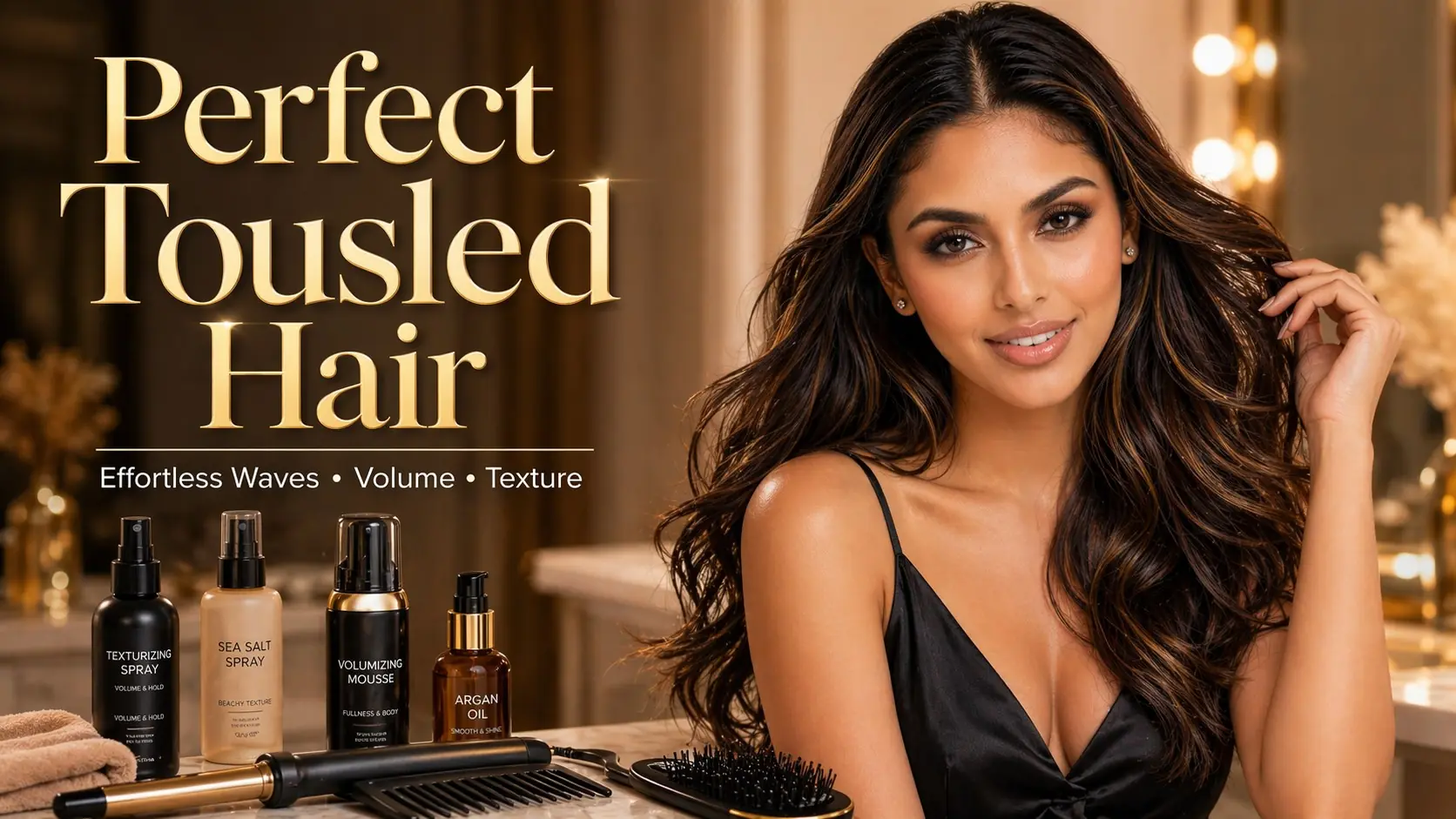
The Secret to Perfectly Tousled Hair: Tips, Techniques, and Products for Effortless Waves: Tousled hair sits at the intersection of effortless and int
The Secret to Perfectly Tousled Hair: Tips, Techniques, and Products for Effortless Waves: Tousled hair sits at the intersection of effortless and intentional. It looks undone, yet polished. It suggests you woke up this way, even though you almost certainly did not. That tension is precisely what makes this style so magnetic. Perfectly tousled hair gives any look a sense of movement, personality, and ease that rigid, over-styled hair simply cannot match.
Published · Updated
This guide covers everything. You will learn how your hair type shapes your approach, which ingredients to look for in products, how to apply heat without causing damage, and how to maintain your style beyond day one. By the end, you will have a clear, repeatable method for building and sustaining that effortlessly lived-in wave you have always wanted.
What Makes Perfectly Tousled Hair Work
The Science Behind Texture and Movement
Tousled hair works because of how light interacts with differently angled strands. When every hair lies flat in the same direction, it reflects light uniformly. That uniformity reads as flat and lifeless. When strands bend, wave, and cross one another, they scatter light. The result is dimension, depth, and the visual impression of thickness and health.
The structure of each strand matters too. The outermost layer of hair is the cuticle, a series of overlapping protein scales. When those scales lie flat, the strand looks smooth and reflective. When they are slightly raised, which happens naturally with texture and wave, the strand grips other strands. That grip creates a hold without product. It is the reason wavy hair holds a tousled style longer than fine, straight hair.
Humidity also plays a role. Atmospheric moisture causes hair to absorb water from the air. For curly and wavy hair types, this product amplifies natural texture. For straight hair types, it can cause frizz. Understanding this interplay helps you choose the right products to work with your hair, not against it.
Why the Style Flatters Every Face Shape
Tousled waves add width to narrow faces and soften angular jawlines. Volume at the roots draws the eye upward and lengthens round face shapes. Waves that fall past the collarbone elongate shorter necks. This adaptability is rare in a single style.
Most defined hairstyles, whether sleek bobs, tight updos, or sharp blowouts, suit a narrow range of face shapes. Tousled hair adapts because it is not rigid. You control where the volume sits, how defined the waves are, and how much texture you build into the roots. Those variables give you enormous flexibility.
The Role of Hair Porosity in Your Style
Porosity describes how readily your hair absorbs and retains moisture. It shapes how every product you apply will perform. Low-porosity hair has tightly closed cuticle scales. Products tend to sit on the surface rather than absorb quickly. High-porosity hair has gaps in the cuticle from chemical processing, heat damage, or natural structure. It absorbs products fast but also loses moisture fast.
For low-porosity hair, lightweight liquid-based products work best. Heavy creams and butters will coat the strand rather than penetrate it, leading to buildup and limp waves. For high-porosity hair, richer products containing shea butter, argan oil, or keratin help fill cuticle gaps and lock moisture in long enough for the style to set and hold.
Understanding Your Hair Type Before You Achieve Perfectly Tousled Hair
Straight Hair (Type 1)
Straight hair has no natural wave or curl pattern. Each strand grows from a round follicle, and the even shape gives no reason for the strand to bend. Straight hair tends to be smooth, shiny, and resistant to holding a style. It also shows grease faster because sebum travels freely down the shaft without wave patterns to slow it.
For tousled looks, straight hair needs help from tools and products. You will almost always use a curling wand, a flat iron used as a waver, or a braiding technique to introduce a wave. The advantage of straight hair is that it responds predictably to heat styling. You can control wave size and direction with precision.
Fine straight hair needs lightweight products. Anything heavy will flatten the style within hours. Thick straight hair needs stronger hold products and sufficient heat to create waves that genuinely last through the day.
Wavy Hair (Type 2)
Wavy hair grows from a slightly oval follicle. That asymmetry gives the strand its natural S-bend. Type 2 hair ranges from loose, barely-there waves at the 2A end of the spectrum to more defined medium waves at 2B to waves that nearly qualify as curls at 2C.
Wavy hair is the easiest starting point for a tousled style. Your natural pattern already provides texture and movement. The main challenge is frizz and inconsistency. Some sections may wave more tightly than others. Products that define and hold your natural wave will even things out considerably.
Wavy hair benefits from scrunching techniques rather than brushing. Brushing breaks up the wave pattern and creates frizz. Working product into damp hair and encouraging the wave with your hands gives a far better result than combing through after styling.
Curly and Coily Hair (Types 3 and 4)
Curly hair (Type 3) forms defined spiral curls, ranging from loose ringlets to tight, springy spirals. Coily hair (Type 4) forms tight, densely packed coils or zigzag patterns. Both types tend to be drier than straight or wavy hair. The bends in each strand make it harder for natural oils to travel from root to tip.
Tousled styling for curly and coily hair focuses on definition and frizz control rather than introducing wave artificially. The goal is to loosen the curl pattern slightly while keeping the hair hydrated, bouncy, and defined. Heavyweight creams, leave-in conditioners, and curl-defining gels are your core tools.
Coily hair in particular benefits from stretched styling techniques. Twist-outs and braid-outs create that tousled, textured look without any heat. They stretch the coil pattern into soft waves with visible movement and allow the natural texture to shine.
Prepping Your Hair for the Perfect Tousle
Building the Right Wash Routine
Your tousled style begins in the shower, not with your styling tools. The products you use to cleanse and condition your hair set the foundation for everything that follows.
Choose a sulphate-free shampoo. Sulphates are aggressive surfactants that strip the hair of natural oils. For wavy and curly hair types, the lack of moisture creates dryness and frizz before you even start styling. For straight hair, it can cause the scalp to overproduce oil, making your style fall flat faster than it should.
Use a conditioner matched to your porosity level. Low-porosity hair does better with lightweight, water-based conditioners that will not sit on the surface and create buildup. High-porosity hair needs richer conditioners with ingredients like shea butter or argan oil to fill cuticle gaps and lock in moisture.
Biotin is worth looking for in strengthening shampoos and conditioners. It supports the keratin structure of each strand, which reduces breakage during styling. Keratin-infused conditioners also help smooth the cuticle layer, reducing frizz and improving manageability before you reach for any tool.
Towel-Drying Without Disrupting Your Wave Pattern
The way you dry your hair after washing sets the tone for your entire style. Standard terrycloth towels are too rough for wet hair. Wet hair has a swollen, vulnerable cuticle. Rubbing it aggressively causes frizz, breakage, and mechanical damage that accumulates over time.
Switch to a microfibre towel or a clean cotton T-shirt. Both have smoother surfaces that absorb water without roughing up the cuticle. Press the towel against your hair in sections. Squeeze gently. Do not rub.
After blotting, your hair should be damp, not soaking wet. Applying products to soaking wet hair dilutes them and reduces their effectiveness. Applying them when hair is nearly dry means they will not distribute evenly. Damp hair is the ideal condition for most styling products.
Applying a Heat Protectant Correctly
If you plan to use any heat tools, applying a heat protectant is not optional. Heat above 150 degrees Celsius (300 degrees Fahrenheit) begins to break down the hydrogen bonds within the hair shaft. Repeated heat exposure without protection leads to split ends, dryness, and a loss of natural elasticity over time.
Spray your heat protectant onto damp hair before blow-drying. Work it through with your fingers or a wide-tooth comb to ensure even distribution. Do not skip the ends. They are the oldest, most fragile part of the strand and the first to show visible heat damage.
Look for heat protectants that contain silicones such as dimethicone or cyclomethicone. These ingredients form a thin, even coating over the cuticle that deflects thermal stress. Many formulas also contain argan oil, which adds shine and provides an additional barrier between your strands and the heat source.
Techniques for Achieving Perfectly Tousled Hair by Hair Type
Straight Hair: Creating Waves That Last All Day
Start by blow-drying your hair upside down. Flip your head forward and direct the airflow at the roots. This creates volume at the base that prevents the style from collapsing once your waves are in place.
Once your hair is dry, divide it into sections. Work with one-inch sections for tighter, more textured waves and two-inch sections for looser, more relaxed ones. Wrap each section around a curling wand barrel, leaving the ends out for a more undone finish. Hold for eight to ten seconds, then release. Do not brush the wave out immediately. Let it cool completely in your palm first, then release it. This cooling step is what makes the wave set into the strand properly.
Alternate the direction of each wave. Curl one section toward your face and the next one away from it. This prevents the waves from clumping together into a single defined curl and creates that multi-directional, tousled texture instead.
Once all sections are fully cool, flip your head forward again and shake gently from the roots. Mist a texturising spray over the entire head and scrunch upward with your hands. This breaks up any stiffness and separates the waves without creating frizz.
Wavy Hair: Enhancing What You Already Have
The goal with wavy hair is to encourage and define your natural pattern, not override it. Start by applying a lightweight mousse to damp hair, working it through from roots to ends. Mousse adds hold without weight, which is precisely what wavy hair needs to look full and bouncy without feeling heavy.
Scrunch the hair upward in sections with your hands. This motion encourages the wave to form before drying. Avoid touching the hair while it dries. Every time you run fingers through damp, wavy hair, you disrupt the wave formation in progress and introduce frizz at the surface.
Use a diffuser attachment on your hairdryer. A diffuser disperses airflow over a wide surface so it does not blast the hair and disturb the wave pattern. Hold the diffuser under sections of hair and pulse the heat in short bursts rather than keeping it on continuously. Diffuse until the hair is about 80 percent dry, then allow it to finish air-drying for the softest result.
Once completely dry, apply a small amount of argan oil to your palms, rub them together, and run them lightly over the surface of your waves. This adds shine and controls flyaways without disturbing the texture underneath.
Curly Hair: Defining and Loosening for Tousled Movement
Curly hair needs moisture above all else. Start with a generous amount of leave-in conditioner applied to soaking wet hair. Work it through section by section from root to tip before adding any other products on top.
Layer a curl cream over the leave-in. Look for creams that contain shea butter, coconut oil, or glycerin. These ingredients attract and retain moisture, keeping curls soft and defined throughout the day. Apply the cream using the praying hands method: smooth it down the outside of each section without scrunching, then scrunch upward to encourage the curl to form.
Diffuse on low heat until the curl is fully formed and dry. Applying a flexible gel on top of damp curly hair before diffusing creates a light cast that protects the curl as it dries. Once fully dry, scrunch the cast out with clean, dry hands. This reveals soft, defined curls with volume and bounce rather than a crunchy, stiff texture.
For a more tousled effect, gently pull individual curls apart at the ends with your fingertips. This breaks the definition slightly and creates a looser, more lived-in look without destroying the overall shape or causing frizz.
Coily Hair: Stretch and Release for Soft, Defined Waves
Coily hair tousles beautifully with a braid-out or twist-out technique. Apply a thick leave-in conditioner and a curl-defining cream to damp, freshly washed hair. Divide into large sections and twist each section into a two-strand twist. Secure the ends so they do not unravel overnight.
Allow the twists to dry completely, either overnight or under a hooded dryer. Fully dried twists release into far more defined waves. Unravelling them while still damp leads to frizz rather than the clean, textured wave pattern you are after.
Once fully dry, apply a small amount of a lightweight oil like jojoba or sweet almond oil to your fingertips and gently unravel each twist. Separate the sections with your fingers, not a comb, to maintain the soft wave pattern. The result is a stretched, tousled wave with visible texture and genuine movement through the length of the hair.
Heat Styling Tools and Damage Prevention
Choosing the Right Tool for Your Hair Type
The curling wand is the most versatile tool for tousled styling. A barrel diameter of one inch creates medium waves that work for most hair lengths. A larger barrel of one and a half to two inches creates loose, beachy waves better suited to longer hair. A smaller barrel of three-quarters of an inch creates tighter, more textured waves that suit short to medium lengths well.
The flat iron is an alternative that many stylists prefer for straight and wavy hair types. You can create soft waves by wrapping sections around the barrel at an angle rather than clamping them flat. This method gives you more control over the direction and tension of each wave, which results in a more natural finish.
For curly and coily hair, limit flat iron use. The straightening tension required to use a flat iron on tight curls demands significant heat and mechanical stress. Both causes accumulate into long-term damage with repeated use. Diffusers, hooded dryers, and stretch techniques are safer and more compatible choices for these hair types.
Temperature Settings That Protect Your Strands
Fine or colour-treated hair should never exceed 180 degrees Celsius (350 degrees Fahrenheit). Colour-treated hair already has a compromised cuticle and is more porous and fragile than untreated hair. High heat causes colour to fade faster and the strand to become brittle and prone to snapping.
Medium-texture hair handles temperatures between 180 and 200 degrees Celsius (350 to 390 degrees Fahrenheit) comfortably for occasional styling. Thick, coarse hair may need temperatures up to 220 degrees Celsius (425 degrees Fahrenheit) to hold a wave, but using such high temperatures should not become a daily habit.
Always start at a lower temperature and increase only if your waves are not holding. Jumping straight to maximum heat is one of the most common and most preventable causes of long-term hair damage.
Heat-Free Techniques Worth Learning
Several effective methods create tousled waves with zero heat exposure. The overnight braid method is one of the simplest. Dampen your hair slightly, apply a small amount of texturising cream, then divide it into two to four sections and braid each one loosely. Sleep on a silk pillowcase to reduce friction. In the morning, unravel the braids and separate the waves with your fingers.
Flexi rods and foam rollers create soft waves on all hair types without heat. Apply product to damp hair, roll each section onto the rod, and allow to dry completely before removing. The result is a bouncy, defined wave with no thermal damage at all.
Rag curls are a classic technique with very modern results. Tear soft fabric into strips, wrap damp hair sections around each strip, and tie them loosely in place. Leave overnight. The waves that form in the morning are loose, soft, and naturally tousled in a way that is difficult to replicate even with professional tools.
The Best Products for Perfectly Tousled Hair
Sea Salt Sprays and Texturizing Sprays
Sea salt spray is the most recognisable product in the tousled-hair toolkit. It mimics the effect of ocean water on hair. Salt swells the hair shaft slightly and roughs up the cuticle surface, creating grip and texture. The result is that effortlessly undone, beachy look that defines the style.
Apply sea salt spray to damp or dry hair, scrunch, and allow to air dry or diffuse. On straight hair, apply before using a curling wand for extra grip. On wavy hair, use it as a finishing spray to enhance and set the natural wave pattern.
Avoid using sea salt spray daily if your hair is already dry or damaged. The salt draws moisture out of the strand over time. Alternate with a hydrating texturising spray that provides grip without the drying effect. Many brands now offer salt-free texturising sprays that mimic the same gritty texture using ingredients like rice starch or tapioca powder instead.
Mousses, Creams, and Curl Enhancers
Mousse provides lightweight hold that works beautifully on wavy and fine hair. It adds body and keeps waves in place without making them stiff or crunchy. Apply to damp hair and diffuse, or allow to air-dry for best results.
Curl creams and butter-based products suit curly and coily hair. They provide the moisture and definition that tighter textures need to stay soft and defined. Look for creams containing shea butter, mango butter, or kokum butter. These plant-based fats melt into the strand and provide long-lasting softness and hold.
Curl-defining gels create structured hold. Apply over a leave-in conditioner or cream to build layered hold without stiffness. Gels containing aloe vera are particularly effective. Aloe vera contains enzymes and amino acids that strengthen the hair shaft while providing hold and a natural shine.
Finishing Oils, Glosses, and Smoothing Serums
Argan oil is the gold standard finishing product for tousled hair across all types. A few drops smoothed over the surface of your finished style add luminosity without heaviness. Argan oil is rich in oleic acid and linoleic acid, both of which penetrate the cuticle layer and improve elasticity and resilience over time.
For very fine hair, use a lightweight hair gloss or shine spray instead of an oil. These products deliver the same reflective finish without weighing fine strands down or making them look greasy.
Hair serums containing silicones sit on top of the strand rather than penetrating it, making them useful for coarse or frizzy hair types that need a smoothing barrier at the surface. Apply a small amount to the palms, rub together, and smooth over the outermost layer of your finished style for instant frizz control and shine.
Maintaining Your Tousled Style Overnight and Between Wash Days
Protecting Your Waves at Night
Friction is the biggest enemy of tousled waves overnight. Cotton pillowcases create friction that disturbs the wave pattern, creates tangles, and causes breakage at the cuticle level. Switching to a silk or satin pillowcase is one of the simplest changes you can make to protect your style and reduce morning frizz.
A loose pineapple works well for wavy and curly hair types by gathering all your hair loosely at the top of your head with a soft scrunchie. It preserves the wave pattern without flattening the roots or creating pressure points. For straight hair that has been heat-styled into waves, a single loose braid prevents the waves from dropping flat overnight.
Avoid tight elastic hair ties for overnight styles. They create creases in the hair shaft that are difficult to style out in the morning, especially on fine or chemically treated hair.
Refreshing Waves on Day Two and Day Three
Day two hair is often better than day one hair. The natural oils that have built up at the root add texture and grip that fresh-washed hair lacks. To refresh wavy or curly hair, mist lightly with water using a spray bottle. Scrunch in a small amount of your original styling cream or a refreshing spray designed specifically for second-day curls.
For straight hair that has been waved with heat tools, a light mist of texturising spray and a quick scrunch with your hands will revive the style without needing to restyle from scratch.
Dry shampoo applied at the roots on day two adds volume and absorbs excess sebum. Work it in with your fingers rather than a brush to avoid disturbing the wave pattern. A small barrel curling wand can touch up any sections that have dropped significantly without requiring you to redo the entire style.
Common Mistakes That Ruin the Tousled Effect
Over-Brushing and Over-Styling
Brushing finished waves is the fastest way to destroy them. A brush separates and flattens the wave pattern into a puffed-out cloud of frizz. For tousled hair, your fingers are always the right tool. Use them to separate and lift waves from the root, and to gently pull sections apart, not to detangle from root to tip after styling.
Over-styling, applying too many products in too many layers, weighs the hair down and makes it look greasy rather than textured. Stick to two or three products maximum, and choose products that are designed to work together as a system.
Touching the hair repeatedly while it is drying is another very common error. Every touch disrupts the wave formation and introduces frizz at the surface of the strand. Apply your products, scrunch once, and then leave the hair alone until it is completely dry before touching it again.
Using the Wrong Amount of Product
Too little product and the waves will fall flat by midday. Too much and the hair looks wet, stiff, or heavy. The right amount depends on your hair length, thickness, and porosity.
High-porosity hair absorbs product quickly and often needs more than low-porosity hair to achieve the same result. Start with the amount recommended on the product label and adjust from there based on what you observe. Product application is a skill that improves with consistent practice and honest observation of results.
Applying most styling products to bone-dry hair is rarely effective. Texturising sprays and finishing oils are exceptions, but products like mousse, curl cream, and gel all need some water in the strand to activate and distribute properly.
Skipping the Diffuser on Wavy and Curly Hair
Air-drying sounds like the gentler option, but for wavy and curly hair it can produce unpredictable results. Gravity pulls the hair downward as it dries, which stretches and distorts the wave pattern before it has set. The result is often flat, undefined waves rather than the full, tousled texture you are working toward.
A diffuser concentrates and supports the hair while it dries. It cups the wave from underneath and uses dispersed, indirect airflow that does not disturb the pattern. For wavy and curly hair types, the diffuser is one of the most effective tools available for achieving consistent, repeatable tousled texture with every wash.
Frequently Asked Questions
How long does perfectly tousled hair last?
With the right products and techniques, a tousled style can last two to three days. Wavy hair holds the style the longest naturally, especially when set with a flexible hold product and diffused rather than air-dried. Straight hair that has been heat-styled into waves typically holds well for one full day and can be refreshed on day two with a texturising spray and light scrunching. Curly and coily styles set via twist-out or braid-out often look their best on day two and can last up to three days with proper nighttime protection on a silk pillowcase.
Can I get tousled hair without using any heat tools?
Yes. Several techniques produce excellent tousled waves with no heat at all. Overnight braiding creates soft, natural waves on straight and wavy hair. On curly and coily hair, twist-outs and braid-outs create a defined, tousled texture. Foam rollers and flexi rods produce structured waves on all hair types when left in until the hair is completely dry. The key for all heat-free techniques is patience. The hair must dry fully before you unravel the style, or the result will be frizzy and undefined rather than wave-textured and smooth.
What is the best product for tousled hair?
The answer depends on your hair type. For straight hair, a sea salt spray or texturising spray applied before and after heat styling gives the best combination of grip and texture. A lightweight mousse, when applied to damp hair before diffusing, creates hold and definition for wavy hair without adding weight. For curly hair, a layered system of leave-in conditioner, curl cream, and aloe-based gel gives moisture, definition, and lasting hold. For coily hair, a rich leave-in conditioner paired with a heavy curl butter provides the moisture and slip needed for a successful twist-out or braid-out. Argan oil works as a universal finishing product across all four hair types.
How do I get tousled hair if I have fine or thin hair?
Fine hair is the most challenging hair type for tousled styling because it is prone to losing volume and becoming limp quickly. The key is to build volume at the root first. Blow-dry upside down before any other styling. Use only lightweight products, mousse rather than cream, and texturising spray rather than heavy oil. Smaller curling wand barrels create more textured, voluminous waves on fine hair than large barrels do. Avoid applying any product directly to the roots; focus the product from mid-length to the ends only. A root-lifting spray or volumising powder applied at the roots before flipping upright adds grip at the base without buildup.
Why does my tousled hair look frizzy instead of wavy?
Frizz instead of waves is almost always caused by one of four things. First, the hair may lack moisture. Dry hair always frizzes because the cuticle reaches outward for moisture from the air. Increase hydration in your wash routine with a richer conditioner and add a leave-in before styling. Second, you may be touching the hair too much while it dries. Leave it completely alone during the drying process. Third, you may be using the wrong towel. A rough terrycloth towel disrupts the cuticle immediately after washing and sets the hair up for frizz throughout styling. Switch to a microfibre towel or T-shirt. Fourth, you may be applying products to hair that is too wet or too dry. Damp hair, not soaking wet and not nearly dry, gives styling products the best chance to work properly and define the wave rather than fight it.
Conclusion
Achieving a truly great tousled look is a skill built on understanding your hair. Know your type, respect your texture, and choose products with ingredients that support your specific needs. Biotin and keratin strengthen and smooth the strand from within. Argan oil, shea butter, and aloe vera protect and define from the outside. Heat protectants give you the freedom to style without the long-term cost of damage.
Prep your hair correctly before you style it. Protect it during the process. Maintain it overnight so the work you put in does not disappear by morning. Avoid the common mistakes, over-brushing, over-loading with product, and disturbing the drying wave, and your results will improve dramatically from one wash to the next.
Tousled hair is not about perfection. It is about controlled, intentional imperfection. The goal is always movement, texture, and the kind of effortless confidence that comes from hair that looks like it is working with you. Start with the techniques and products suited to your hair type, refine your approach with each wash day, and that perfectly tousled finish will become your new normal.
RELATED ARTICLES:
Effortless Hair Detangling: Secrets to Smooth, Knot-Free Hair
Jojoba oil for hair: the secret to soft, strong and healthy hair
Silk covers: the secret to waking up with the most beautiful hair ever
About The Author

COMMENTS