







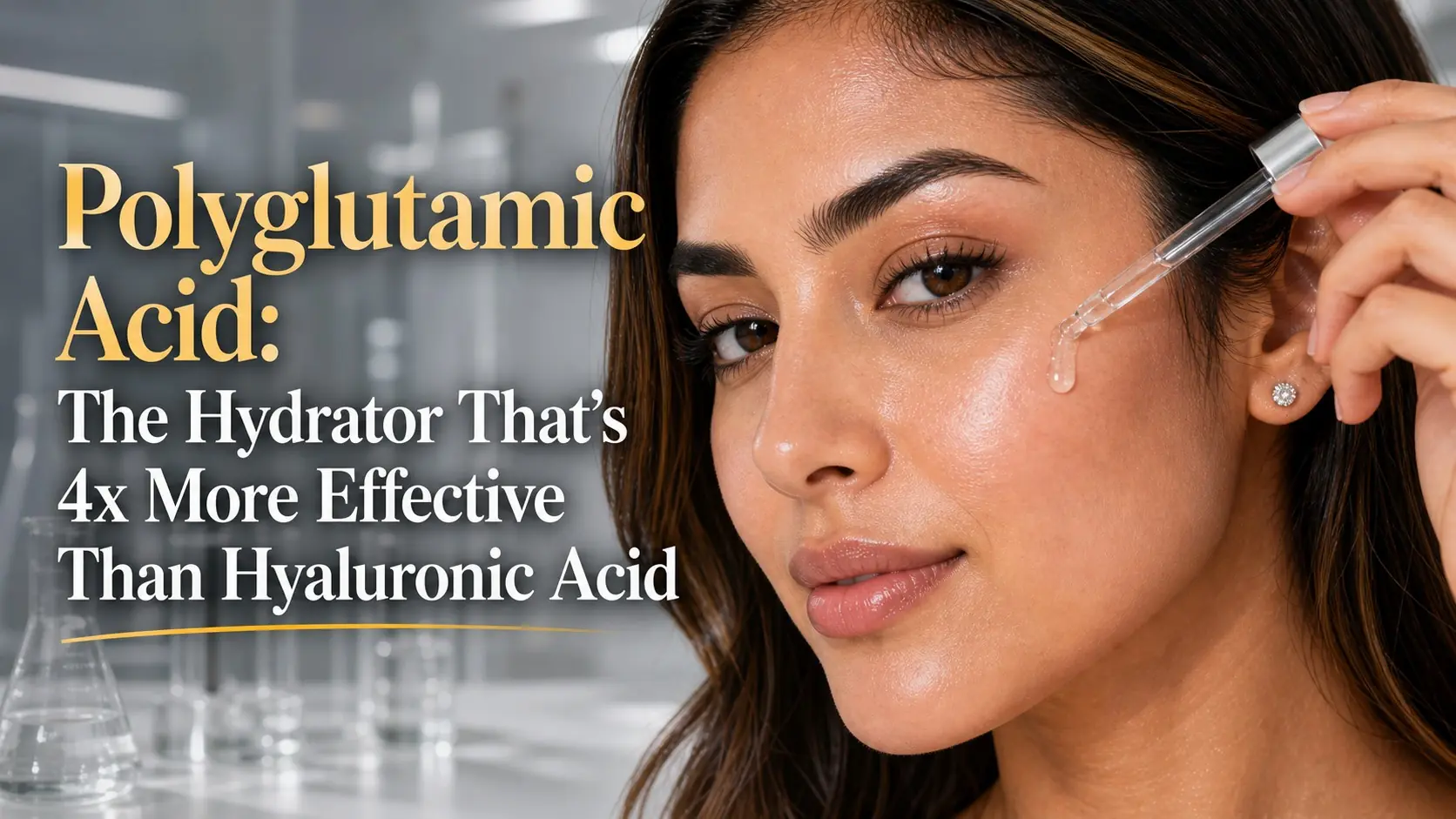
Discover polyglutamic acid for skin and why it outperforms hyaluronic acid in moisture retention. Learn the science, benefits, and how to use it in your daily skincare routine.
Polyglutamic Acid for Skin: The Hydrator That’s 4x More Effective Than Hyaluronic Acid
Polyglutamic acid for skin is the next-generation hydrator that holds up to four times more moisture than hyaluronic acid. This guide explains the science behind polyglutamic acid for skin, its benefits, and exactly how to layer it for plump, dewy, deeply hydrated skin.
If you have been searching for the ultimate hydration ingredient in skincare, polyglutamic acid for skin is one name you need to know. While hyaluronic acid has long been the leading ingredient for moisture-boosting formulas, a newer and more powerful humectant is quietly changing the way we think about skin hydration. Polyglutamic acid, a naturally derived polymer made from fermented soybeans, is capable of holding up to four times more moisture than hyaluronic acid, making it one of the most impressive ingredients to emerge from cosmetic science recently. This article breaks down everything you need to know, from the science behind its moisture-binding power to how to layer it with other actives for maximum benefit.
Whether your skin is dry, oily, combination, or sensitive, the mechanics of how polyglutamic acid works are relevant to every skin type. Hydration is not just about comfort. It directly affects barrier function, elasticity, texture, and even how your skin responds to active ingredients like retinol or vitamin C. Knowing why polyglutamic acid is better than hyaluronic acid at holding moisture and how to use it correctly can really improve the health and look of your skin over time.
What Is Polyglutamic Acid and Where Does It Come From?
Polyglutamic acid, or PGA, is a natural biopolymer made of glutamic acid units connected in long chains. It is produced through the bacterial fermentation of soybeans, specifically through a bacterium called Bacillus subtilis, which is the same microorganism responsible for creating natto, a traditional Japanese fermented food. This fermentation process yields a substance with exceptional water-attracting properties, far superior to many synthetic or naturally derived hydrating agents used in modern skincare.
Unlike hyaluronic acid, which is a glycosaminoglycan (a type of carbohydrate chain), polyglutamic acid is a polypeptide, meaning it is built from amino acids. This structural distinction is one of the reasons it behaves differently on the skin. Because of its significantly larger molecular size compared to hyaluronic acid, polyglutamic acid tends to remain on the surface of the skin rather than penetrating deeply into the epidermis. This is not a limitation. It is actually one of its most valuable traits, because it forms a breathable, moisture-trapping film on the skin’s surface that slows transepidermal water loss.
Published · Updated
The Molecular Architecture That Makes It Unique
The molecular weight of polyglutamic acid in skincare products typically ranges from 100,000 to 1,000,000 Daltons, which is considerably larger than most forms of hyaluronic acid used in serums. This large molecular size means the molecule rests on top of the skin, acting more like a surface-level humectant and film-forming agent. This property allows it to draw moisture from the surrounding environment and hold it against the skin without disrupting the natural microbiome or barrier function. Because it stays at the surface, it also creates an immediate plumping and smoothing effect that is noticeable rapidly after application.
Polyglutamic Acid vs. Hyaluronic Acid: The Science of Moisture Retention
One of the most frequently cited claims about polyglutamic acid for skin is that it holds four times more moisture than hyaluronic acid. This is not marketing language invented to generate hype. It is a finding supported by in vitro studies examining the water absorption capacity of these two molecules under controlled conditions. Hyaluronic acid, even at its most impressive, can hold up to 1,000 times its weight in water. Polyglutamic acid has been shown to hold significantly more, with some measurements placing its capacity at 5,000 times its weight in water.
The practical implication of this difference is significant. When you apply a polyglutamic acid serum to your skin, you are depositing a molecule that is not just attracting water from the environment and from deeper layers of the skin but doing so with greater efficiency and for a longer period. This sustained hydration benefit is one of the reasons formulators are increasingly turning to polyglutamic acid as either a complement to or a replacement for hyaluronic acid in their products.
How Each Molecule Behaves on the Skin
Hyaluronic acid is available in multiple molecular weights in skincare formulations. Low molecular weight hyaluronic acid can penetrate into the upper layers of the epidermis, delivering hydration deeper into the skin. High molecular weight hyaluronic acid stays closer to the surface. Polyglutamic acid, by contrast, primarily functions at the surface level regardless of its form, but this surface activity is where much of its power lies. By forming a thin, breathable film on the skin, it reduces the rate at which water evaporates from the skin, which is known as transepidermal water loss or TEWL.
Studies comparing the two ingredients have found that while hyaluronic acid provides faster initial absorption and a lighter, more watery texture, polyglutamic acid provides longer-lasting surface hydration and greater reductions in TEWL over extended wear. The two molecules complement each other beautifully in formulations, which is why many of the most effective hydrating products contain both.
The Role of NMF Stimulation
One additional advantage of polyglutamic acid that goes beyond simple moisture retention is its ability to stimulate the production of natural moisturising factors, or NMFs, within the skin itself. NMF is a collection of water-soluble compounds, including amino acids, pyrrolidone carboxylic acid, urocanic acid, and lactic acid, that are naturally present in the corneocytes of the stratum corneum. These compounds help keep the outer layer of skin adequately hydrated from within. Research suggests that polyglutamic acid can upregulate hyaluronidase inhibition, which means it may slow the breakdown of the skin’s own hyaluronic acid, extending its moisture-holding effects internally as well.
The Full Spectrum of Polyglutamic Acid Benefits for Skin
Beyond its exceptional moisture-retaining capacity, polyglutamic acid for skin offers a wide range of benefits that make it valuable in nearly any skincare routine. Its effects are not limited to surface hydration. The downstream benefits of keeping skin consistently well-hydrated touch on almost every aspect of skin health and appearance.
Barrier Strengthening
A well-hydrated skin barrier is a stronger skin barrier. When the stratum corneum is adequately moisturised, the lipid bilayers that hold skin cells together remain intact and functional. A compromised barrier allows irritants, allergens, and bacteria to penetrate the skin while water escapes more rapidly. By consistently reducing TEWL and keeping the outermost layer of skin hydrated, polyglutamic acid supports the integrity of the skin barrier over time. This is particularly beneficial for people with eczema, rosacea, or sensitive skin who are prone to barrier disruption.
Anti-Aging and Plumping Effects
Much of what we perceive as skin aging is related to the loss of moisture, elasticity, and volume in the skin. When skin cells are dehydrated, fine lines appear more pronounced and the skin looks dull and slack. Polyglutamic acid addresses these issues directly by delivering intense surface hydration that visibly plumps the skin, smooths the appearance of fine lines, and restores a more supple, healthy look. With consistent use, this plumping effect can contribute to a more youthful appearance without any invasive procedures.
Improved Skin Texture
Rough, uneven skin texture is often a symptom of dehydration and compromised barrier function. When the skin is properly hydrated, cells can complete their natural turnover cycle more efficiently, and the surface of the skin appears smoother and more refined. Polyglutamic acid contributes to this effect by maintaining optimal hydration levels in the stratum corneum, which supports a more even and polished skin texture over time.
Compatibility With Active Ingredients
One of the underappreciated benefits of using polyglutamic acid in a skincare routine is that it helps the skin tolerate potent actives more effectively. Retinol, vitamin C, alpha hydroxy acids, and other transformative ingredients can cause dryness and irritation, particularly during the initial adjustment period. Applying a hydrating layer of polyglutamic acid helps buffer these effects by keeping the skin barrier supported and reducing the inflammatory response triggered by dryness. This makes it an ideal pairing ingredient for anyone using a comprehensive anti-ageing or brightening routine.
How Polyglutamic Acid Works at the Cellular Level
To truly appreciate what polyglutamic acid does for the skin, it helps to understand the mechanisms at play beneath the visible surface. The skin’s hydration system is a complex network that involves water movement between skin cells, lipid bilayers, aquaporin channels, and the natural moisturising factors mentioned earlier. Polyglutamic acid interacts with this system in several distinct and complementary ways.
First, it acts as a classic humectant, attracting water molecules from the environment and binding them to the skin’s surface. This is the same basic way that hyaluronic acid and glycerin work, but polyglutamic acid does it better. Second, it forms a film on the skin that slows the evaporation of water from the skin’s surface, functioning similarly to an occlusive but without the heavy, greasy feel of traditional occlusives like petrolatum or mineral oil. Third, as mentioned above, it has been shown to inhibit the enzyme hyaluronidase, which breaks down the skin’s naturally occurring hyaluronic acid. By slowing this breakdown, polyglutamic acid helps the skin maintain its hydration reserves for longer.
Interaction With the Skin’s Aquaporin System
Aquaporins are specialised protein channels embedded in cell membranes that regulate the flow of water in and out of cells. Research in dermatology has highlighted the role of aquaporins, particularly aquaporin-3, in maintaining skin hydration. Some studies suggest that ingredients that support or upregulate aquaporin activity can enhance the skin’s intrinsic ability to maintain moisture. While more research is needed to fully characterise polyglutamic acid’s relationship with aquaporins specifically, its broader effects on skin hydration are well-documented and consistent with mechanisms that support overall hydration biology.
Antioxidant Properties
An often overlooked dimension of polyglutamic acid’s benefits is its mild antioxidant activity. Oxidative stress from ultraviolet radiation, pollution, and metabolic processes contributes to premature skin aging by damaging proteins, lipids, and DNA within skin cells. Polyglutamic acid, by virtue of its amino acid composition, has demonstrated some capacity to neutralise free radicals. While it is not a primary antioxidant ingredient and should not replace dedicated antioxidant actives like vitamin C or niacinamide, its ancillary antioxidant properties add another layer of protection to skin that is consistently hydrated and better able to defend itself.
Who Should Use Polyglutamic Acid for Skin?
One of the most appealing qualities of polyglutamic acid is its broad suitability across skin types and concerns. Unlike some powerful actives that require careful introduction and are inappropriate for sensitive or reactive skin, polyglutamic acid is generally gentle and well-tolerated by virtually every skin type.
Dry and Dehydrated Skin
For people with dry or chronically dehydrated skin, polyglutamic acid can be genuinely transformative. Its exceptional water-binding capacity means that skin receives and retains more moisture than it would from other humectants alone. When layered under a good moisturiser, it creates a powerfully hydrating system that can dramatically improve the look and feel of dry skin within just a few weeks of consistent use. Dry skin types may benefit most from applying polyglutamic acid to slightly damp skin, maximising the amount of water available to bind.
Oily and Acne-Prone Skin
A common misconception among those with oily or acne-prone skin is that they do not need to focus on hydration. In reality, dehydrated oily skin often overproduces sebum as a compensatory mechanism, which can worsen the appearance of shine and clogged pores. Polyglutamic acid is lightweight, non-comedogenic, and absorbs without leaving a greasy residue. It provides the hydration that oily skin needs without adding any oil to the skin, making it an ideal hydrating ingredient for this skin type.
Sensitive and Reactive Skin
Because polyglutamic acid comes from natural sources, does not irritate the skin, and does not have the common problems caused by fragrances, acids, and alcohols, it is very suitable for sensitive skin. Its barrier-supporting properties especially benefit skin that environmental stressors or skincare ingredients easily trigger. It can help calm and soothe reactive skin by maintaining the structural integrity of the skin barrier and reducing the transepidermal water loss that often accompanies sensitivity and inflammation.
Mature Skin
As skin ages, its natural capacity to produce hyaluronic acid and other moisturising factors declines. The skin becomes thinner, drier, and more prone to the fine lines and textural changes associated with aging. Polyglutamic acid is a great ingredient for mature skin because it directly makes up for the decrease in natural moisture production. Its ability to inhibit hyaluronidase and slow the breakdown of the skin’s own hyaluronic acid makes it especially effective for ageing skin that is already having trouble staying hydrated.
How to Use Polyglutamic Acid in Your Skincare Routine
Getting the most out of polyglutamic acid for skin requires understanding where it fits within a layered skincare routine and how to use it in a way that maximises its hydrating benefits. Like all skincare ingredients, the context in which you apply it matters enormously.
Step-by-Step Application
Polyglutamic acid is most commonly used as a serum and should be applied after cleansing and toning but before heavier moisturisers and facial oils. The general principle of layering skincare from the thinnest to the thickest consistency applies here. Here is a practical framework for incorporating it into your routine:
- Cleanse your skin thoroughly and pat it until it is slightly damp rather than completely dry.
- Apply any water-based toners or essences that form part of your routine.
- Apply your polyglutamic acid serum to the face and neck, pressing it gently into the skin with your palms rather than rubbing.
- Follow with any other serums, such as vitamin C or niacinamide, then your moisturizer to seal everything in.
- In the morning routine, finish with a broad-spectrum sunscreen.
The slightly damp skin approach is particularly effective because polyglutamic acid draws water into itself and into the skin. Starting with some surface moisture gives the molecule something to work with immediately, amplifying the hydrating effect.
Frequency of Use
Polyglutamic acid can be used both morning and evening without any concern about overuse or sensitivity. It does not sensitise the skin to sunlight, does not require any adjustment period, and does not interact negatively with UV exposure. This makes it one of the most versatile and worry-free ingredients in a skincare routine. Daily use, morning and evening, will yield the best and most consistent results.
Amount to Use
Because polyglutamic acid has natural film-forming properties, a small amount goes a long way. Typically, two to three drops or a pea-sized amount of serum is sufficient to cover the entire face and neck. Using more than this amount does not necessarily increase efficacy and may leave a slightly tacky or sticky feeling on the skin’s surface, which is a normal characteristic of the ingredient but one that can feel uncomfortable if too much product is applied.
Layering Polyglutamic Acid With Other Skincare Ingredients
Polyglutamic acid is a highly compatible ingredient that plays well with the vast majority of other actives and formulations. Understanding the best ingredient combinations can help you build a routine that maximises the effectiveness of every ingredient.
Polyglutamic Acid and Hyaluronic Acid Together
Rather than viewing these two ingredients as competitors, they are best understood as partners with complementary mechanisms. Hyaluronic acid draws moisture from the deeper layers of the skin and the environment, while polyglutamic acid seals that moisture at the surface and provides an additional reservoir for water retention. Using them together, either as part of the same product or applied sequentially, provides the skin the benefits of both deep hydration and surface moisture retention. This combination is particularly effective for very dry or dehydrated skin.
Polyglutamic Acid and Retinol
Retinol is one of the most effective anti-ageing ingredients available without a prescription, but it can be very drying and irritating, especially in the early stages of use. Applying a polyglutamic acid serum before your retinol product creates a buffer that supports the skin barrier and reduces the dryness and peeling that often accompany retinol use. This approach, sometimes called the sandwich method, can make retinol much more tolerable for beginners and help people with sensitive skin use it consistently without experiencing significant irritation.
Polyglutamic Acid and Vitamin C
Vitamin C is an antioxidant that brightens skin, evens tone, and supports collagen synthesis. It can occasionally be drying or irritating, particularly in its most stable and effective form as L-ascorbic acid. Pairing it with polyglutamic acid helps maintain skin comfort and hydration, allowing the vitamin C to do its work without compromising the skin barrier. Apply vitamin C first, allow it to absorb for a minute, then follow with polyglutamic acid for a seamless combination.
Polyglutamic Acid and Niacinamide
Niacinamide is a multi-tasking ingredient that reduces pore appearance, controls sebum, brightens skin, and supports barrier function. It is entirely compatible with polyglutamic acid and can be used in the same routine without concern. Together, they create a deeply hydrating and barrier-strengthening combination that benefits every skin type, particularly those dealing with enlarged pores, uneven texture, or excess oiliness.
What to Avoid Layering With Polyglutamic Acid
Polyglutamic acid has very few incompatibilities, but there are a couple of considerations worth noting. Very high concentrations of acids, such as straight glycollic acid or salicylic acid at low pH, may affect the stability or texture of polyglutamic acid on the skin. It is generally best to apply polyglutamic acid after any exfoliating acids have absorbed or to use them at different times of day, for instance, acids in the evening and polyglutamic acid in the morning. This avoids any potential interaction and ensures each ingredient performs optimally.
Clinical Evidence and Dermatological Support for Polyglutamic Acid
The skincare industry is not always known for rigorous science, and claims about ingredients can range from well-supported to completely unfounded. Polyglutamic acid for skin stands on firmer scientific ground than many trendy ingredients. A growing body of research supports its efficacy as a humectant, film-forming agent, and hyaluronidase inhibitor.
Studies published in peer-reviewed dermatology and cosmetic science journals have examined polyglutamic acid’s water absorption capacity, its effects on transepidermal water loss, and its role in stimulating the skin’s natural moisturising factors. One particularly compelling area of research involves its ability to inhibit hyaluronidase, the enzyme that degrades hyaluronic acid in the skin. By slowing this enzymatic degradation, polyglutamic acid effectively extends the lifespan of the skin’s own hyaluronic acid, which is a fundamentally different mechanism from simply adding more hyaluronic acid topically.
What Dermatologists Say
Dermatologists and cosmetic chemists who have evaluated the ingredient note several consistent themes in how they describe its benefits. It is frequently praised for being gentle enough for sensitive skin while delivering meaningful hydration results. Its non-comedogenic profile makes it appropriate for acne-prone patients who traditionally struggle to find hydrating ingredients that do not clog pores. Its compatibility with other actives means it can be integrated into complex, multi-step routines without causing interactions or instability.
The dermatological community also highlights the ingredient’s particular value in supporting the skin during and after procedures such as chemical peels, laser treatments, and microneedling, where the skin barrier is temporarily compromised and intensive hydration is critical for healing and minimising post-procedure irritation.
Long-Term Benefits With Consistent Use
Short-term studies on polyglutamic acid have shown measurable improvements in skin hydration, elasticity, and TEWL within four to eight weeks of consistent use. Longer-term use is expected to yield cumulative benefits as the skin’s barrier becomes stronger and its natural hydration mechanisms are better supported. Unlike some ingredients that deliver dramatic but short-lived results, polyglutamic acid appears to build its benefits over time, making it a worthwhile long-term investment in skin health rather than a quick fix.
Common Myths and Misconceptions About Polyglutamic Acid
As with any ingredient that generates excitement in the beauty and skincare world, polyglutamic acid has attracted its share of myths and misunderstandings. Addressing these directly helps you make more informed decisions about incorporating it into your routine.
Myth: Polyglutamic Acid Is Just a Trend
While polyglutamic acid has gained significant mainstream attention in recent years, the underlying science has been studied for decades. The ingredient’s use in food science and industrial applications long predates its adoption in cosmetics, and the research into its skin benefits has been growing steadily. It is not a passing trend but rather an ingredient with a solid scientific foundation that is being increasingly validated by both academic research and clinical observation.
Myth: It Is Only Useful for Dry Skin
This is one of the most pervasive misconceptions about humectant ingredients in general. Every skin type benefits from adequate hydration, including oily and combination skin. Polyglutamic acid is particularly valuable for oily skin because it provides the hydration the skin needs without adding any oil, which can help regulate sebum production and reduce the compensatory oiliness that comes from dehydrated skin. All skin types can benefit from its use.
Myth: Bigger Molecules Cannot Do Anything Useful for the Skin
There is a persistent belief in skincare communities that molecules must penetrate deeply into the skin to be effective. Polyglutamic acid’s large molecular size means it primarily acts at the surface, but surface-level hydration and film formation are genuinely effective mechanisms with real, measurable benefits. The reduction of TEWL, the improvement of surface smoothness, and the stimulation of NMF are all valuable outcomes that do not require deep dermal penetration. Surface activity is not inferior activity.
Myth: It Replaces Moisturizer
Polyglutamic acid is a serum ingredient, not a moisturiser replacement. It excels at drawing moisture to the skin and slowing water loss, but it does not provide the occlusive or emollient functions of a proper moisturiser. For best results, always follow a polyglutamic acid serum with a moisturiser that contains emollients and, ideally, some occlusives to create a complete hydration system. Skipping the moisturiser step means the skin will not be as effectively sealed, and the long-term hydration benefits will be diminished.
Sustainability and Safety Profile of Polyglutamic Acid
As consumers become more conscious of the environmental and safety implications of the ingredients they use, polyglutamic acid has a notably favourable profile on both counts.
Safety and Tolerance
Polyglutamic acid has an excellent safety profile with a very low incidence of irritation or adverse reactions. It is not a known allergen, is not sensitising, and does not have the photosensitising properties associated with some actives like retinol or certain acids. It is generally considered safe for use during pregnancy and breastfeeding when applied topically, though individuals should always consult their healthcare provider for personalised guidance. Patch testing before introducing any new skincare product is always a reasonable precaution, but the risk of reaction to polyglutamic acid specifically is very low.
Environmental Considerations
Because polyglutamic acid is derived from the bacterial fermentation of soybeans rather than from animal tissues or petrochemical sources, it is considered a more sustainable and ethically produced ingredient than many alternatives. Its biodegradability means it does not persist in the environment in the way that some synthetic polymers do. For consumers who prioritise sustainability and ethical sourcing in their skincare choices, polyglutamic acid is a favourable option.
Vegan and Cruelty-Free Status
Polyglutamic acid is produced through microbial fermentation, making it entirely vegan. It does not involve any animal-derived starting materials, and its production process does not require animal testing. This makes it compatible with vegan and cruelty-free skincare philosophies, which is an increasingly important consideration for many consumers.
Building a Complete Hydration-Focused Skincare Routine Around Polyglutamic Acid
To get the most from polyglutamic acid for skin, it helps to think about your entire routine as an ecosystem of ingredients that work together rather than as individual products acting independently. Here is a framework for building a hydration-focused routine that places polyglutamic acid at the centre.
Morning Routine
Begin with a gentle, non-stripping cleanser that removes overnight buildup without disrupting the skin barrier. Follow with a hydrating toner or essence to begin restoring moisture lost during cleansing. Apply your antioxidant serum, such as a vitamin C formula, and allow it to absorb. Then apply your polyglutamic acid serum to damp skin and press it in gently. Follow with a lightweight moisturiser appropriate for your skin type and finish with a broad-spectrum SPF. This sequence delivers antioxidant protection, deep hydration, surface moisture retention, barrier reinforcement, and UV defence in a logical, complementary order.
Evening Routine
Cleanse thoroughly, using an oil cleanser or balm first if you wear sunscreen or makeup, followed by a water-based cleanser. Apply your toner or essence. In the evening, this is where you would use your exfoliating acid if you include one, such as a glycollic, lactic, or salicylic acid product. Allow it to absorb fully before proceeding. Then apply polyglutamic acid, followed by any treatment serums such as retinol. Finish with a richer, more occlusive moisturiser or a facial oil over your moisturiser to create maximum overnight hydration and barrier support. This evening sequence focuses on cellular renewal, intensive hydration, and repair, all of which are most effective during the skin’s natural overnight regeneration cycle.
Weekly Additions
Supplementing your daily routine with a hydrating mask containing polyglutamic acid one to two times per week can provide an intensive boost on days when your skin feels particularly stressed, dehydrated, or dull. This is also a valuable practice during seasonal transitions, when temperature and humidity changes challenge the skin’s ability to maintain adequate hydration levels.
Signs That Your Skin Is Responding Well to Polyglutamic Acid
When polyglutamic acid is working effectively in your routine, the signs are usually visible and tactile. Understanding what to look for helps you track your skin’s progress and make adjustments if needed.
In the short term, within the first few days of use, you may notice that your skin feels more plump and supple immediately after application. Fine lines may appear softened, and the overall texture of your skin may feel smoother to the touch. The skin should have a healthy, reflective appearance rather than a dull or flat look.
Over the medium term, within four to eight weeks of consistent use, you may notice that your skin requires less moisturiser to feel comfortable, that redness and sensitivity are reduced, that your skin bounces back from environmental stressors more readily, and that the overall tone appears more even and luminous. These are all signs that the ingredient is doing its job and that your skin barrier is strengthening in response.
If you are not noticing improvements within this timeframe, it may be worth evaluating whether you are applying the product correctly, whether the concentration in your specific product is adequate, or whether other factors such as diet, hydration, or environmental dryness are counteracting the ingredient’s benefits.
Frequently Asked Questions About Polyglutamic Acid for Skin
Is polyglutamic acid safe for all skin types?
Yes, polyglutamic acid is considered safe and well-suited to all skin types, including sensitive, oily, dry, combination, and mature skin. It is non-comedogenic, non-irritating, and free from common sensitisers. Its gentle nature and broad compatibility make it one of the most universally appropriate hydrating ingredients in skincare. Even people with highly reactive or allergy-prone skin tend to tolerate it without issue, though a patch test before full application is always a sensible precaution when introducing any new ingredient.
Can I use polyglutamic acid every day?
Absolutely. Polyglutamic acid can be used twice daily, morning and evening, without any risk of overuse or adverse effects. It does not build up in the skin in a problematic way, does not cause photosensitivity, and does not require a rest period. In fact, consistent daily use is the best approach for achieving and maintaining its cumulative hydration benefits. Think of it as a fundamental part of your hydration routine rather than an occasional treatment.
How does polyglutamic acid compare to glycerin as a humectant?
Glycerin and polyglutamic acid are both humectants, but they operate somewhat differently. Glycerin is a small, simple molecule that is highly effective at drawing moisture from the environment and from deeper skin layers. It is one of the most well-researched and cost-effective humectants available. Polyglutamic acid, as a large polypeptide, provides greater water-holding capacity and adds the additional benefit of film formation and hyaluronidase inhibition that glycerin cannot offer. The two ingredients are entirely compatible and work well together, with glycerin providing immediate moisture and polyglutamic acid providing longer-lasting retention and surface protection.
Will polyglutamic acid make my skin feel sticky?
A slight tackiness immediately after applying polyglutamic acid is normal and is a characteristic of its film-forming properties. This sensation typically resolves within a minute or two as the product fully absorbs and as subsequent layers of skincare are applied. Using the correct amount of product (two to three drops or a pea-sized amount) minimises this effect. If the tackiness persists and bothers you, try applying the product to slightly damp skin, which can help it spread more evenly and absorb more smoothly.
Can polyglutamic acid help with acne or breakouts?
While polyglutamic acid is not a direct acne treatment and does not have antimicrobial or sebum-regulating properties in the way that niacinamide or salicylic acid do, it can indirectly support acne-prone skin in several ways. By maintaining adequate skin hydration, it can help prevent the compensatory sebum overproduction that sometimes triggers breakouts in dehydrated oily skin. Its barrier-supporting properties can also help reduce the inflammation and irritation that worsen acne-prone skin. It is non-comedogenic and will not clog pores, making it safe to use alongside dedicated acne treatments.
How long does it take to see results from polyglutamic acid?
Many people notice an immediate improvement in skin plumpness and softness from the very first application, as the surface hydration effect is quite rapid. More significant and lasting results, including improvements in skin texture, reduction in fine line appearance, and stronger barrier function, typically develop over four to eight weeks of consistent daily use. The cumulative benefits continue to build with ongoing use, so patience and consistency are key. Like most effective skincare ingredients, the best results come to those who incorporate polyglutamic acid as a permanent part of their routine rather than as a temporary experiment.
Conclusion
Polyglutamic acid for skin represents one of the most compelling advances in hydration science that the skincare industry has seen in years. Its ability to retain moisture at four times the capacity of hyaluronic acid, combined with its film-forming, barrier-supporting, and hyaluronidase-inhibiting properties, makes it a genuinely multi-dimensional ingredient that benefits every skin type and concern. Whether you are battling chronic dryness, trying to support sensitive skin, managing the irritation that comes with powerful actives, or simply looking for the most effective way to maintain youthful, well-hydrated skin, polyglutamic acid deserves a place in your routine.
The science supporting this ingredient is solid and growing; the safety profile is excellent, and the practical benefits are visible and measurable. Unlike many trendy skincare ingredients that promise more than they deliver, polyglutamic acid for skin has earned its reputation through a combination of rigorous research and real-world results. As you build or refine your skincare routine, consider polyglutamic acid not as a replacement for other hydrating ingredients but as the cornerstone of a comprehensive hydration strategy that works in harmony with your skin’s natural biology. The result, with consistent use, is skin that is healthier, more resilient, and genuinely more beautiful from the inside out.
RELATED ARTICLES:
Glycolic Acid for Skin: The Skincare Secret to Brighter, Smoother, and Healthier Skin
Unclog Your Pores and Prevent Breakouts with Salicylic Acid
Unveiling the Secret to Radiance: Tamarind Extract in Skincare
Skincare-infused makeup: Why your 2026 foundation should double as a serum
PDRN Skincare: The K‑Beauty Ingredient That Went From Clinics to Your Vanity
About The Author

COMMENTS