








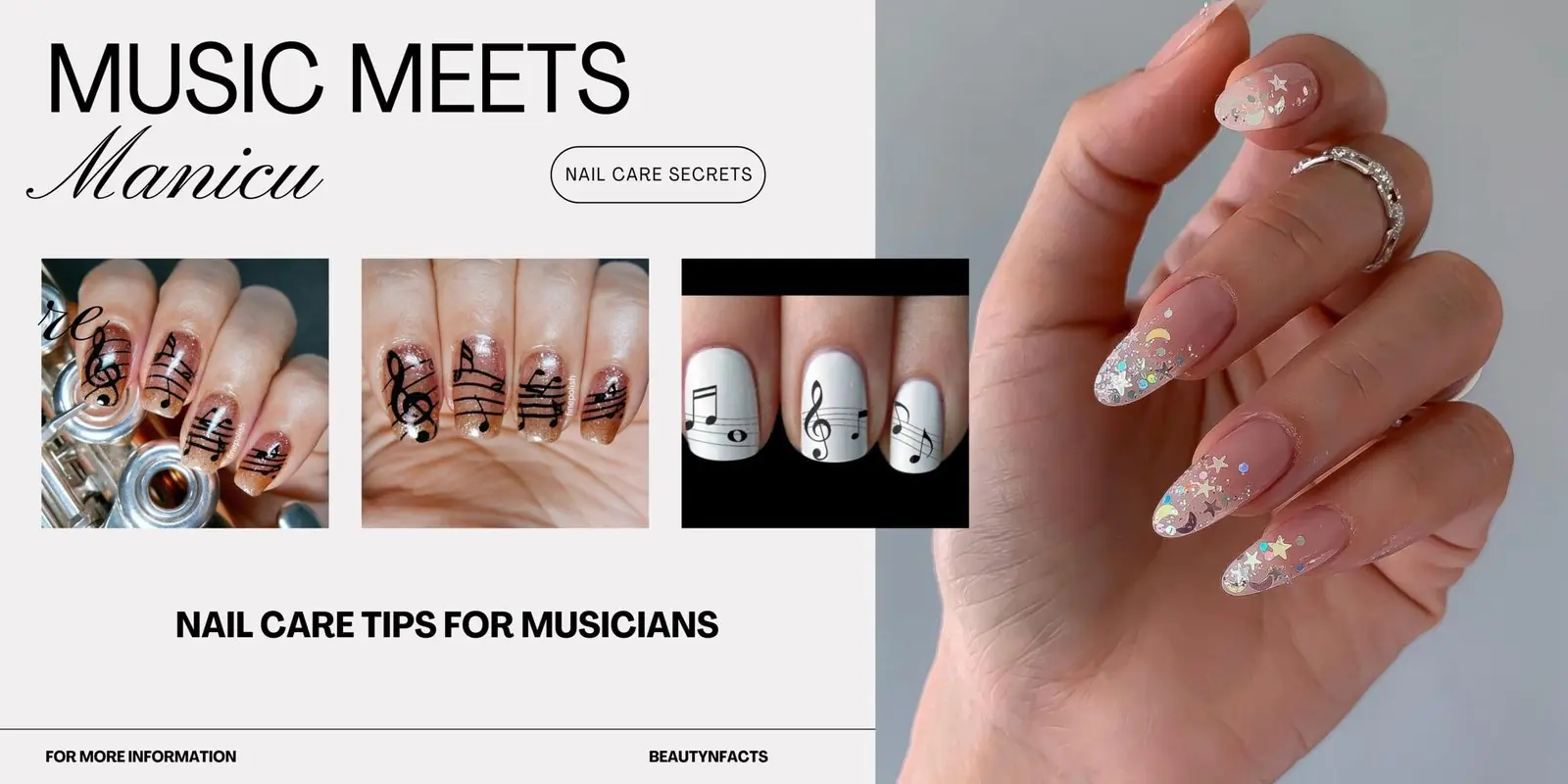
Nail care for musicians is its own discipline, because the same nails that photograph beautifully can quietly sabotage your tone, finger speed, and ca
Nail care for musicians is its own discipline, because the same nails that photograph beautifully can quietly sabotage your tone, finger speed, and callus development. A classical guitarist needs length on the picking hand and almost-bare nails on the fretting hand; a pianist needs nails short enough not to click. This guide walks through the length, shape, and strength routine each instrument really demands.
Published · Updated
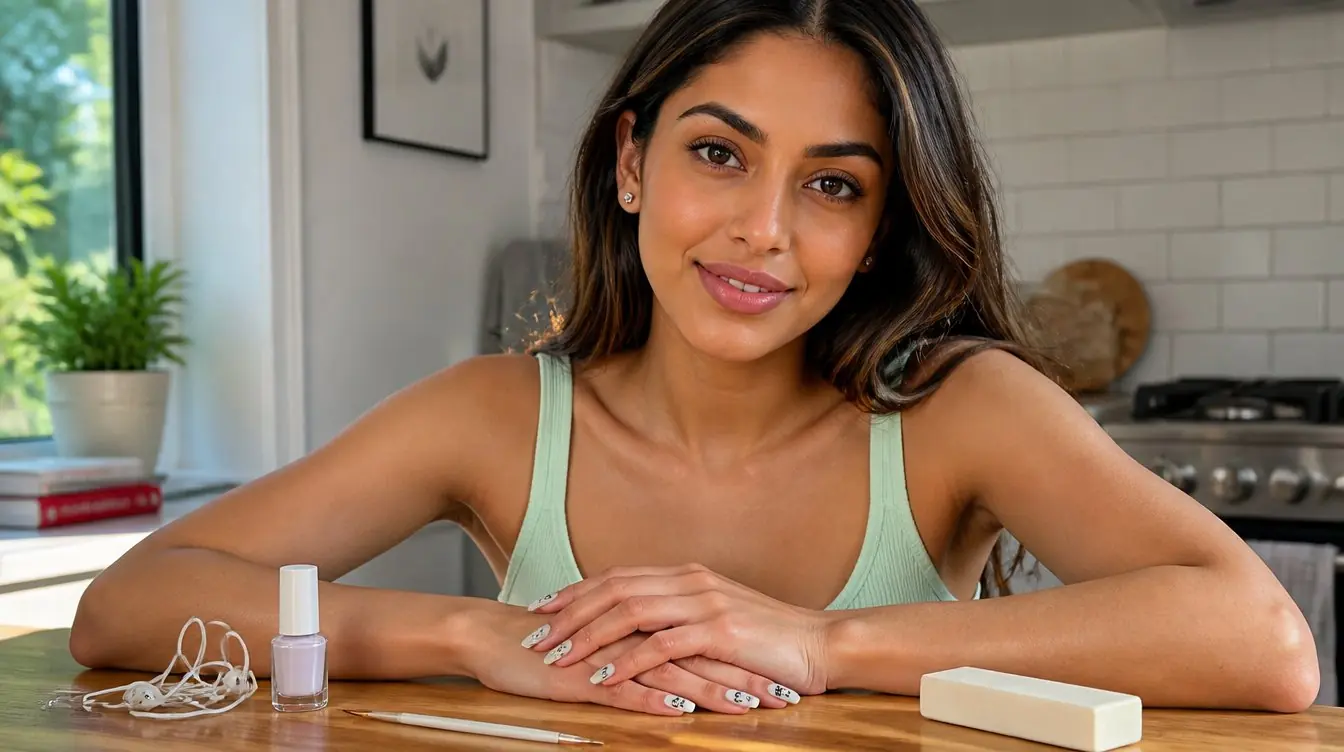
Music Meets Manicure: Nail Care Secrets Every Musician Needs to Know
Your nails are instruments too. Most musicians spend years perfecting technique, investing in quality gear, and studying theory. Nail care stays an afterthought for many players. That gap costs them. Poorly maintained nails affect tone, slow technique, and invite painful injuries. Music meets manicure at the point where performance and self-care overlap, and that intersection matters far more than most players realise. This guide covers everything from the biology of your nails to instrument-specific routines for guitarists, pianists, string players, and wind musicians. You will learn how to shape, strengthen, and protect your nails so they serve your music rather than hinder it. Whether you are a beginner building your first care routine or an intermediate player refining your approach, you will leave with practical, science-backed steps you can start using today. Healthy nails improve your sound, reduce injury risk, and extend your playing career. Every section below builds on the last, giving you a complete picture of nail health designed specifically for the demands of making music.
Why Nail Health Is a Performance Issue
The detail most guides skip on nail care for musicians: results compound only when small habits stack. Two careful choices today are worth more than ten half-followed ones, and nail care for musicians rewards consistency over weeks, not chasing a single perfect product.
Most musicians treat nail problems as cosmetic inconveniences. A broken nail before a performance, a split tip mid-practice, a jagged edge that catches on strings – these feel like minor annoyances. They are not. Nail health is directly tied to how you produce sound, how comfortable your technique feels, and how long you can play without discomfort or injury. Ignoring your nails is like ignoring your posture. The damage accumulates quietly until it becomes a serious problem.
How Nails Shape Tone and Attack
A nail acts as a mediating surface between your fingertip and your instrument. For guitarists, the nail edge is the primary point of string contact. Its shape and smoothness determine whether you produce a warm, rounded tone or a thin, scratchy one. A nail that is too short removes the nail entirely from the equation, forcing the flesh alone to contact the string. That produces a softer, less defined sound. A nail that is too long creates excessive use on the string, reducing control and increasing the risk of breakage.
Pianists face the opposite challenge. For them, nails that are too long force the finger to tilt sideways on the key. That reduces control at the fingertip and creates the familiar clicking sound on ivory or plastic keys. The clicking is not just annoying. It signals that the nail, rather than the finger pad, is bearing the contact load. Over time, this distorts finger posture and builds tension in the hand.
String players, particularly violinists and cellists, must manage nails on both hands independently. The fretting hand needs very short nails to press cleanly against the fingerboard. Long nails on that hand prevent full finger depression and create intonation problems. The bowing hand has more flexibility, but nails that are uneven or jagged affect bow grip stability.
The Biology Behind Nail Strength
Nails are made primarily of keratin, a fibrous structural protein. The same protein forms hair and the outer layer of skin. Nail keratin layers stack tightly together, giving nails their hard, protective quality. When those layers separate or weaken, nails become brittle, peel, or break.
Nail growth originates at the matrix, the tissue hidden beneath the skin at the nail base. The matrix produces new keratin cells continuously, pushing older cells forward. Those older cells flatten, harden, and become the visible nail plate. Healthy matrix tissue produces dense, evenly layered keratin. Damage to the matrix from injury or nutritional deficiency produces weak, ridged, or discoloured nails.
Moisture balance is critical to nail integrity. Nails that are too dry become brittle and crack. Nails that are repeatedly soaked and dried swell and contract, which eventually separates the keratin layers and causes peeling. Musicians who wash their hands frequently or who sweat heavily during performance face both extremes. Managing that moisture cycle is a central part of any musician’s nail care routine.
Common Nail Problems That Hurt Your Playing
Brittle nails are the most common complaint among musicians. They snap under the lateral pressure of plucking strings or tapping keys. Splitting occurs when nails crack lengthwise, usually from the free edge toward the nail bed. This is often caused by dehydration or overfilling.
Hangnails develop when the skin around the nail edge dries, tears, and lifts. They snag on strings, clothing, and instrument cases. They also create open entry points for bacteria and fungal organisms. Infections around the nail bed, called paronychia, cause swelling, redness, and intense tenderness that makes playing impossible until the infection clears.
Nail fungus, while less common, is a real risk for musicians who perform in humid environments or share instrument cases and accessories. Fungal infection discolours the nail yellow or white, thickens the nail plate, and causes it to crumble at the edges. Early treatment is essential. A severely infected nail may separate entirely from the nail bed, which takes months of recovery.
Music Meets Manicure: The Foundation Every Musician Needs
If there is a single takeaway from nail care for musicians, it is that simple rituals beat complicated ones. nail care for musicians works because it is repeatable, not because it is impressive.
Before addressing instrument-specific needs, every musician must establish a universal baseline routine. These habits apply regardless of what you play. They form the foundation on which instrument-specific care is built. Skipping this foundation and jumping straight to speciality tips produces inconsistent results.
Cleanliness and Hygiene for Musician Nails
Clean nails resist infection. Wash your hands with lukewarm water and a gentle, sulphate-free soap. Hot water strips the natural oils from your skin and nails faster than lukewarm water does. Dry your hands completely after washing, including beneath the free edge of each nail. Trapped moisture under the nail is one of the primary conditions that allows fungal organisms to establish themselves.
Use a soft nail brush to clean under your nails during your wash. Do this gently. Aggressive scrubbing under the nail plate can lift the nail from the nail bed, a condition called onycholysis. Once separation begins, it progresses easily and takes months to grow back fully.
Sanitise your nail tools regularly. Files, clippers, and cuticle pushers harbour bacteria and fungal spores. Wipe metal tools with isopropyl alcohol before and after use. Replace disposable nail files every two to four weeks. Sharing nail tools with other musicians is a direct route to infection transfer.
Trimming and Filing Techniques That Prevent Damage
Always file or trim dry nails. Wet nails are softer and more prone to tearing rather than cutting cleanly. Use sharp nail clippers or small, sharp nail scissors. Dull clippers compress and crush the nail edge before cutting, which creates micro-fractures that grow into full splits.
File in one direction only. Sawing back and forth across the nail edge frays the keratin layers and accelerates splitting. Start at one side of the nail, sweep toward the centre, and repeat from the other side. Use a fine-grit file, around 180 to 240 grit, for shaping. Coarser files remove material too aggressively and roughen the nail surface.
Finish every filing session with a buffing block. Buffing smooths the free edge and seals the exposed keratin layers. A smooth nail edge catches less on strings, clothing, and cases. It also reduces the surface area available for cracks to propagate from.
Moisturizing Cuticles and Fingertips
Cuticle oil is not optional for musicians. Apply it to the cuticle and nail base at least once daily, ideally before bed. Cuticle oil penetrates the nail plate and the surrounding skin, restoring flexibility and reducing brittleness. Look for formulas containing jojoba oil, vitamin E, or sweet almond oil. These absorb quickly without leaving a greasy residue that would interfere with playing.
Hand cream applied after washing seals moisture into the skin and reduces the drying effect of repeated hand washing. Choose a fragrance-free, non-greasy formula. Thick creams with lanolin or shea butter are ideal for overnight treatment. For daytime use between practice sessions, a lighter lotion absorbs faster and keeps your grip stable on your instrument.
Pay special attention to the fingertips themselves. Pianists and guitarists put repetitive pressure on the tip skin. That skin can crack during dry seasons or in heated indoor environments. A small amount of cuticle oil massaged into the fingertip skin daily prevents cracking without softening calluses that string players and guitarists rely on.
Nail Care for Guitarists
Worth pausing on with nail care for musicians: the products matter less than the order and timing. The same shelf can deliver visible nail care for musicians results or flat ones depending on the layering.
Guitar playing demands more from nails than almost any other instrument. The mechanics of tone production, whether through fingerpicking or flatpicking, depend on nail condition in ways that directly translate to sound quality. Guitarists must think of their nails as part of their instrument setup, maintained with the same attention they give to their strings or action.
Fingerstyle and Classical Guitarists
Fingerstyle guitarists, and especially classical guitarists, rely entirely on the right-hand nail to produce tone. The nail edge makes contact with the string just before the flesh of the fingertip takes over the release. That combination of nail and flesh produces the warm, projecting tone characteristic of classical guitar.
The ideal nail length for a fingerstyle player extends approximately one to two millimetres beyond the fingertip when viewed from the palm side. The exact length varies by finger and by individual anatomy. Index, middle, and ring fingers typically carry slightly different ideal lengths. The thumbnail is usually shaped differently, with a slightly longer leading edge on the left side to account for the angle of thumb attack.
Shape matters as much as length. The nail profile should match the natural curve of the fingertip when viewed straight on. An asymmetric nail, angled on one side to produce a smooth glide across the string, is preferred by many classical players. The goal is a nail profile that allows the string to slide cleanly off the nail edge without catching or dragging.
Use progressively finer abrasives to achieve a polished nail edge. Start with a 180-grit file to set the shape. Move to a 240-grit or higher file to refine it. Finish with a nail buffer or a small piece of ultra-fine sandpaper to produce a glass-smooth playing surface. A rough nail edge creates unwanted string noise and accelerates string wear.
Flatpick Guitarists
Flatpick players use a pick as their primary attack tool, which means the right-hand nails play almost no role in tone production. However, nail care still matters. Nails that are uneven or jagged on the picking hand can snag on strings during fast passages. They can also affect pick grip if they press against the pick at an awkward angle.
Keep the picking hand nails short and uniform. File them flat or with a very slight curve. There is no need for length on this hand. Focus instead on smoothness and uniformity across all five fingernails.
The fretting hand presents a different issue. Long nails on the fretting hand prevent fingertips from pressing cleanly onto the strings. They raise the finger pad away from the fretboard, reducing the area of contact and increasing the force required to produce a clean note. Keep fretting hand nails trimmed close to the fingertips. A slight white edge is acceptable. Anything longer than that interferes with clean fretting.
Nail Enhancements for Guitar Players
Some fingerstyle guitarists have naturally weak or thin nails that break repeatedly despite good care. Nail enhancements offer a practical solution. Acrylic overlays or gel extensions can be shaped precisely to the guitarist’s preferred nail profile and resist breakage far better than natural nails.
Silk wrap, a thin layer of silk fabric bonded to the nail with adhesive, is another option. It adds strength without significantly altering the nail’s natural feel or sound quality. Many professional players use silk wraps as emergency repairs when a natural nail breaks close to a performance.
Ping-pong ball nail tips, a technique common among classical guitarists, involve glueing a thin slice of ping-pong ball material to the natural nail. The material matches the acoustic properties of natural nail closely and can be filed to any shape. It is a low-cost, effective option for players who perform frequently and cannot afford extended recovery time from a broken nail.
Nail Care for Pianists and Keyboardists
One more practical note on nail care for musicians: small day-to-day choices compound, and nail care for musicians rewards the people who stick with the basics for a few weeks.
Piano playing demands a fundamentally different nail philosophy from guitar playing. Where guitarists build nail length, pianists eliminate it. The keyboard rewards firm, vertical finger contact with the key surface. Anything that redirects that contact away from the fingertip pad introduces inefficiency and, over time, injury risk.
Ideal Nail Length and Shape for Piano
The standard recommendation for pianists is to keep nails trimmed so no white edge is visible when the hand is viewed palm-side up. That level of trim ensures the nail does not contact the key before the fingertip does. Some pianists prefer a very slight white edge, perhaps half a millimetre, which is acceptable if it does not produce any clicking on the keys during normal playing.
Shape the nails in a slightly rounded square. A fully squared edge is prone to catching on key edges during lateral hand movements. A fully rounded edge can become too narrow and may weaken the nail structure. A rounded square, sometimes called a squoval, provides a clean shape with good structural integrity and no sharp corners that could catch or snag.
Check nail length regularly by tapping on a flat, hard surface with your fingertips in playing position. If you hear or feel the nail making contact before the fingertip pad, the nail is too long. Trim and check again. This simple test takes under a minute and should become part of your pre-practice routine.
Hand Flexibility and Skin Care for Pianists
Pianists spend long hours in sustained positions that can dry and tighten the skin of the hands. Dry skin loses elasticity, and inelastic skin restricts finger movement and increases injury risk. Moisturise consistently, particularly during winter months when indoor heating accelerates skin dehydration.
Warm up the hands before every session. Cold hands have reduced circulation and reduced tissue flexibility. Gentle hand stretches, including finger fans, wrist rotations, and knuckle flexions, prepare the soft tissues for the demands of playing. Do not stretch to the point of discomfort. Light movement and gentle heat are sufficient.
Avoid playing through hand pain. Pain is a warning signal, not a challenge to overcome. If your fingertips feel sore or your nail beds ache after practice, reduce intensity and address the underlying cause. Persistent pain around the nail bed after piano practice sometimes indicates that the nails are still slightly too long, causing repetitive impact stress on the matrix tissue.
Protecting Pianist Nails Between Practice Sessions
Pianists face nail damage risks outside of practice. Household tasks, from washing dishes to handling rough packaging materials, chip and break nails quickly. Wearing gloves for wet household tasks protects both the nail and the surrounding skin. Rubber-lined cotton gloves are ideal. They protect against water exposure while keeping the inner skin dry.
Use a nail hardener if your nails chip frequently. Look for formulas containing calcium or hydrolysed wheat protein. Apply a thin coat to clean, dry nails and allow it to cure fully before playing. Reapply every three to four days. Avoid formulas containing formaldehyde or toluene, as both can dry and weaken the nail plate with repeated use despite their short-term hardening effect.
Nail Care for String Players
Violinists, violists, cellists, and double bassists face a unique challenge. Their two hands serve completely different functions, and each requires a different nail care approach. The fretting hand operates in close contact with the fingerboard. The bowing hand controls the bow. Both hands matter, but in entirely different ways.
The Bowing Hand vs the Fretting Hand
The fretting hand, also called the left hand in standard string instrument playing, must press fingertips directly onto steel or gut strings against a hard fingerboard. Long nails on this hand make that contact physically impossible. They prevent the fingertip from reaching the string, forcing the player to adapt with angles that produce intonation problems and tension in the hand and wrist. Keep the fretting hand nails trimmed as short as possible without cutting into the nail bed.
The bowing hand has more latitude. Nails on the bowing hand do not typically contact the instrument directly. However, the grip on the bow requires the fingers to curl naturally around the bow stick. Nails that are too long on the bowing hand force the fingers into an unnatural extended position that reduces bow control. Aim for a moderate, neat length on the bowing hand, enough to appear tidy but short enough not to disrupt bow grip.
Managing Calluses Alongside Nail Health
String players develop calluses on the fretting hand fingertips through regular playing. These calluses are protective adaptations. They thicken the skin at the point of contact with the strings, reducing pain and allowing longer practice sessions. Callus health and nail health must be managed together.
Do not attempt to remove calluses. They serve a protective function, and their removal forces the player to rebuild them from scratch, which is painful and time-consuming. Instead, keep callused fingertips lightly moisturised to prevent cracking. Calluses that dry and crack can split painfully at the base, which creates open wounds directly adjacent to the nail bed.
The balance between nail length and callus function is important. A nail that is too short on the fretting hand can expose the very edge of the callus to string contact at awkward angles. Aim for a nail trimmed flush with the fingertip so the callus bears the full load of string contact without interference from nail structure.
Protecting String Player Nails During Practice
Extended practice sessions place repetitive stress on the nail bed tissue. If you practise more than two hours daily, incorporate brief breaks every thirty to forty-five minutes. Shake out your hands gently, apply a small amount of cuticle oil to the nail base, and massage the surrounding skin. This brief interruption maintains circulation and reduces cumulative stress on the matrix tissue.
Apply a clear nail strengthener to the bowing hand nails during periods of heavy practice. The fretting hand nails are too short to benefit significantly, but the bowing hand nails are exposed to friction from rosin particles and sweat, both of which degrade nail keratin over time. A thin protective coat preserves nail integrity through long performance seasons.
Nail Care for Wind and Percussion Players
Wind and percussion musicians are often overlooked in nail care discussions. The assumption is that their instruments do not involve the nails directly. That assumption is partially wrong. While nails rarely contact the instrument itself, nail health still affects playing comfort, instrument hygiene, and overall hand health for every musician.
Wind Instrument Players
Flautists, clarinettists, oboists, and saxophonists use their fingers to cover toneholes and operate key mechanisms. Long nails change the angle at which the fingertip meets the key or tonehole. On instruments like the flute, where finger angle is critical to maintaining an airtight seal over the embouchure and toneholes, even a slight nail-induced tilt can affect intonation and response.
Keep wind instrument nails short and uniformly shaped. The fingertip pad must be the primary contact surface with every key. Nails that are too long redirect the contact point and create uneven key coverage. Some players experience repetitive pressure soreness on the side of the nail bed as a result of sustained key contact at an angle caused by excessive nail length.
Brass players, including trumpeters, trombonists, and horn players, use their fingers primarily on valve buttons and slides. Nail length matters less for these players than for woodwind players, but hygiene is critical. The hands contact the instrument constantly during the performance. Dirt and bacteria trapped under long nails transfer to valve casings, which can corrode internal parts over time.
Drummers and Percussionists
Drummers subject their nails to intense mechanical stress. Stick gripping creates repetitive compressive force on the nail bed of every finger used to hold the stick. Long nails on drummers are particularly vulnerable. The force created by a long nail during forceful stick impact can cause the nail to flex backward sharply, which risks nail bed injury or complete nail avulsion in extreme cases.
Keep drumming hands’ nails very short. File the free edge smooth so no sharp points exist that could dig into the palm during stick grip. Apply a strengthening treatment to the nails regularly, as repeated impact gradually weakens the nail plate structure even without visible damage.
Hand percussionists, including cajón players, congueros, and djembe players, strike drum surfaces directly with the palms and fingers. Their fingertips and nails take direct impacts. Long nails on a hand percussionist crack on impact and can cause painful nail bed bruising. Trim all nails close to the fingertip and keep them well-moisturised to maintain resilience against impact stress.
Strengthening Nails from the Inside Out
External nail care treats the nail plate you already have. Internal nutrition determines the quality of the nail plate your matrix produces next. The two approaches work together. Neglecting either one produces incomplete results. Musicians who eat a nutrient-poor diet will continue producing weak nails regardless of how many strengthening treatments they apply externally.
Nutrition That Builds Stronger Nails
Biotin, a B-group vitamin, is the most studied nutrient for nail strength. Clinical evidence supports biotin supplementation for improving nail thickness and reducing brittleness in people with documented biotin deficiency. Foods high in biotin include eggs, salmon, almonds, sweet potatoes, and spinach. If your diet is varied and includes these foods regularly, additional supplementation may not provide a measurable benefit. If your diet is restricted, a daily biotin supplement of 2,500 to 5,000 micrograms is generally considered safe and may improve nail quality over several months.
Protein is the structural raw material for keratin. Insufficient protein intake impairs nail growth and reduces nail density. Aim for adequate protein from varied sources: lean meats, legumes, dairy, eggs, and nuts. Vegetarian and vegan musicians should pay particular attention to meeting protein requirements, as plant-based proteins require more deliberate combination to provide complete amino acid profiles.
Zinc supports keratin synthesis and contributes to nail hardness. Deficiency in zinc produces characteristic white spots on the nail plate and increases brittleness. Foods high in zinc include oysters, beef, pumpkin seeds, chickpeas, and cashews. Iron deficiency produces spoon-shaped nails, a condition called koilonychia, and general nail fragility. Women musicians, particularly those with heavy menstrual cycles, are at elevated risk for iron deficiency and should monitor their levels through routine blood work.
Topical Nail Treatments and Strengtheners
Nail strengtheners create a protective film over the nail plate that temporarily reduces moisture loss and provides mechanical reinforcement. They are useful tools, but they work best as part of a complete routine rather than as standalone solutions.
Calcium-based strengtheners add mineral density to the outer nail layer. Apply them to clean, bare nails and allow them to cure fully before applying any other product. Use them in cycles: two weeks on, one week off. Continuous use without breaks can paradoxically make nails too hard, which increases brittleness at the free edge.
Keratin-based treatments penetrate the nail plate and fill micro-gaps in the keratin structure. They are gentler than calcium-based hardeners and suitable for nails that are peeling or layering rather than brittle. Apply it as a base coat under any nail colour or as a standalone treatment on bare nails.
Cuticle oil applied to the nail plate itself, not just the cuticle, adds flexibility to the keratin layers. Flexible nails resist breaking under lateral force better than rigid ones. This is particularly relevant for fingerstyle guitarists, whose nails experience significant lateral loading from string contact during each note.
When to Consider Nail Enhancements
Nail enhancements are appropriate when natural nails cannot meet the demands of your instrument despite consistent care. For fingerstyle guitarists who break nails repeatedly, enhancements provide reliable length and surface quality. For musicians whose nail growth is slow due to health conditions or nutritional issues, enhancements bridge the gap while underlying health is addressed.
Choose enhancements that your nail technician can apply thinly and precisely. Heavy acrylic extensions add bulk that can alter the feel of your playing. Thin gel overlays or silk wraps add strength with minimal additional thickness. Always inform your nail technician that you are a musician and that nail feel and precision matter more than cosmetic nail length.
Remove enhancements regularly and give your natural nails a recovery period. Extended continuous use of acrylic or gel products, particularly with repeated harsh removal, can thin the natural nail plate. Schedule removal every three to four weeks and allow at least a few days of natural nail breathing time between applications.
Building Your Weekly Musician’s Nail Care Routine
Knowledge without routine produces inconsistent results. Musicians who understand nail care but have no structured routine find themselves reacting to problems after they occur rather than preventing them. A simple, repeatable schedule removes the guesswork and ensures every element of nail care receives attention at the right interval.
Daily Habits That Make a Difference
Apply cuticle oil every morning and every evening. Massage a drop into each nail base and the surrounding skin. This takes under two minutes total and represents the single highest-return nail care habit you can build. Consistent daily oil application improves nail flexibility within two to three weeks.
Apply hand cream after every hand washing. Keep a small, portable hand cream in your instrument case, at your practice station, and by your bathroom sink. Making it convenient removes every barrier to consistency. Choose fragrance-free formulas that absorb within two minutes so your grip is not compromised during practice.
Inspect your nails before every practice session. Look for any chips, cracks, or rough edges that could snag on your instrument. A thirty-second visual check and a quick pass with a fine-grit file if needed prevent small damage from becoming a mid-performance crisis.
Weekly Maintenance Steps
Set aside ten to fifteen minutes each week for dedicated nail maintenance. Begin by removing any existing nail treatment products with an acetone-free nail polish remover. Acetone-based removers dissolve nail keratin and strip moisture aggressively. Acetone-free formulas take slightly longer to remove product but cause far less drying damage.
Soak your fingertips in warm water for two to three minutes to soften cuticle skin. Do not soak longer than this. Extended soaking over-hydrates the nail plate and causes it to become temporarily soft and prone to damage. After your brief soak, gently push back cuticles using a rubber-tipped cuticle pusher. Do not cut living cuticle tissue. The cuticle is a protective seal between the nail plate and the skin. Cutting it creates an entry point for infection.
File and shape each nail according to your instrument-specific requirements. Apply a fresh coat of strengthening treatment or cuticle oil. Finish with hand cream massaged into the full hand, including the wrists and the spaces between the fingers.
Monthly Check-Ins and Professional Help
Once a month, assess the overall state of your nails with a more critical eye. Look for signs of recurring problems: nails that break in the same location repeatedly, persistent discolouration, unusual ridging, or areas where the nail is separating from the nail bed. These patterns indicate systemic issues that topical care alone will not resolve.
Book a professional manicure every six to eight weeks. A trained nail technician can identify early signs of infection, properly address overgrown cuticles, and apply professional-grade strengthening treatments. Inform your technician that you are a musician before they begin. Specify your instrument and your nail length requirements. A good technician will adapt their approach accordingly rather than applying a standard cosmetic nail shape.
See a dermatologist if you experience persistent nail problems despite consistent care. Chronic nail brittleness, repeated infections, nail separation, or unusual colour changes can indicate underlying health conditions, including thyroid dysfunction, nutritional deficiencies, or dermatological conditions like psoriasis. A dermatologist can order targeted blood work and recommend specific treatments suited to your situation.
Frequently Asked Questions
Can I wear nail polish as a musician?
Yes, with some considerations. Nail polish adds a thin protective layer over the nail plate, which can actually reduce chipping and cracking for musicians who do not rely on nail contact with strings. Pianists, wind players, and drummers can wear nail polish without any impact on their technique. Fingerstyle guitarists should test any nail colour carefully, as some polishes affect the acoustic quality of the nail edge and may produce a slightly different tone. Classical guitarists often prefer clear strengthening treatments over coloured polish to maintain the acoustic properties of the nail. If you use nail polish, always apply a base coat first to prevent staining and nail dehydration from the pigments.
How long does it take to grow my nails to the right length for fingerstyle guitar?
Fingernails grow at an average rate of approximately three millimetres per month, though this varies by individual, season, and overall health. Growing nails from very short to the playing length required for fingerstyle guitar takes between four and eight weeks for most people. Growth is typically faster in summer months and slower in winter. During the growing phase, protect emerging nail length by applying cuticle oil daily, avoiding excessive hand washing, and wearing gloves for household tasks. Use a nail strengthener during this period to reduce the risk of breakage before your nails reach their target length.
What should I do if I break a nail right before a performance?
For guitarists who rely on the nail, several emergency options exist. A silk wrap repair involves applying a small piece of silk wrap material over the break, bonding it with nail adhesive, and filing the repaired surface smooth. This takes about ten minutes and can hold reliably through a full performance. A thin slice of ping-pong ball material bonded with nail glue is another proven emergency repair for classical guitarists. For pianists, a broken nail presents less of a functional crisis. Smooth any sharp edge with a fine-grit file, apply a coat of nail hardener, and proceed normally. For string players, a broken nail on the fretting hand is typically a non-issue since those nails are kept very short. A break in the bowing hand should be filed smooth and a clear nail strengthener applied to prevent further propagation of the break.
Are gel manicures safe for musicians?
Gel manicures can be safe for musicians when applied and removed correctly. The curing process involves UV or LED light exposure, which poses minimal risk with occasional use. The greater concern is removal. Improper removal, particularly peeling or forcibly lifting gel products off the nail, strips the top layers of the nail plate and leaves nails thin, soft, and prone to breakage for weeks afterward. Always have gel products removed by soaking in acetone under foil wraps for the recommended time, and never peel or force them off. For musicians who rely on nail quality for their technique, a period of natural nail recovery between gel applications is advisable. During recovery, use a keratin-based treatment to rebuild nail plate density.
Does diet really affect my nails as a musician?
Diet has a direct and measurable effect on nail quality. The nail matrix requires a steady supply of protein, vitamins, and minerals to produce dense, healthy keratin. Restrictive diets, crash dieting, or diets lacking in key micronutrients produce visibly weaker nails within a few weeks of deficiency onset. The connection between diet and nail quality is so reliable that dermatologists use nail appearance as one indicator of nutritional status. For musicians, this means that periods of poor eating, such as tour schedules with limited food access or high-stress periods that disrupt eating habits, can produce nail problems weeks after the dietary disruption occurs. Building consistent, nutrient-dense eating habits is one of the most durable investments you can make in your nail health and, by extension, your instrument technique.
Conclusion
Nail care is not a vanity practice for musicians. It is a technical discipline with direct consequences for sound quality, playing comfort, and long-term physical health. The principles in this guide apply whether you play guitar, piano, violin, flute, or drums. Each instrument makes specific demands on your nails and your hands. Meeting those demands requires consistent daily habits, weekly maintenance, and an understanding of what your nails need at a biological level.
Start with the foundation: daily cuticle oil, consistent moisturising, proper filing technique, and regular inspection. Build your instrument-specific routine on top of that foundation. Support your external routine with adequate nutrition, particularly protein, biotin, zinc, and iron. Schedule professional nail appointments every six to eight weeks. Act quickly on any signs of infection, persistent breakage, or unusual nail changes.
Your hands are your most essential musical tool. Every practice session, every rehearsal, every performance passes through them. Treat them accordingly. The investment in time is small. The return in performance quality and playing longevity is significant. Start your musician’s nail care routine today, and your instrument will thank you for it.
RELATED ARTICLES:
DIY Rosemary Oil Tonics: Science‑Backed Ways to Boost Growth
Russian Manicure: What It Is and Is It Safe
Trendy Wedding Nails 2026: The Ultimate Guide to Fashionable Bridal Manicures
The Influence of Celebrity Nail Trends: Uncovering the Power of A-List Manicures
Transform Your Nails with Acrylic Manicure
The honest bottom line on nail care for musicians: consistency beats complexity. Build a few habits into your weekly rhythm, give your skin and hair a real window to respond, and nail care for musicians becomes second nature.
About The Author

COMMENTS