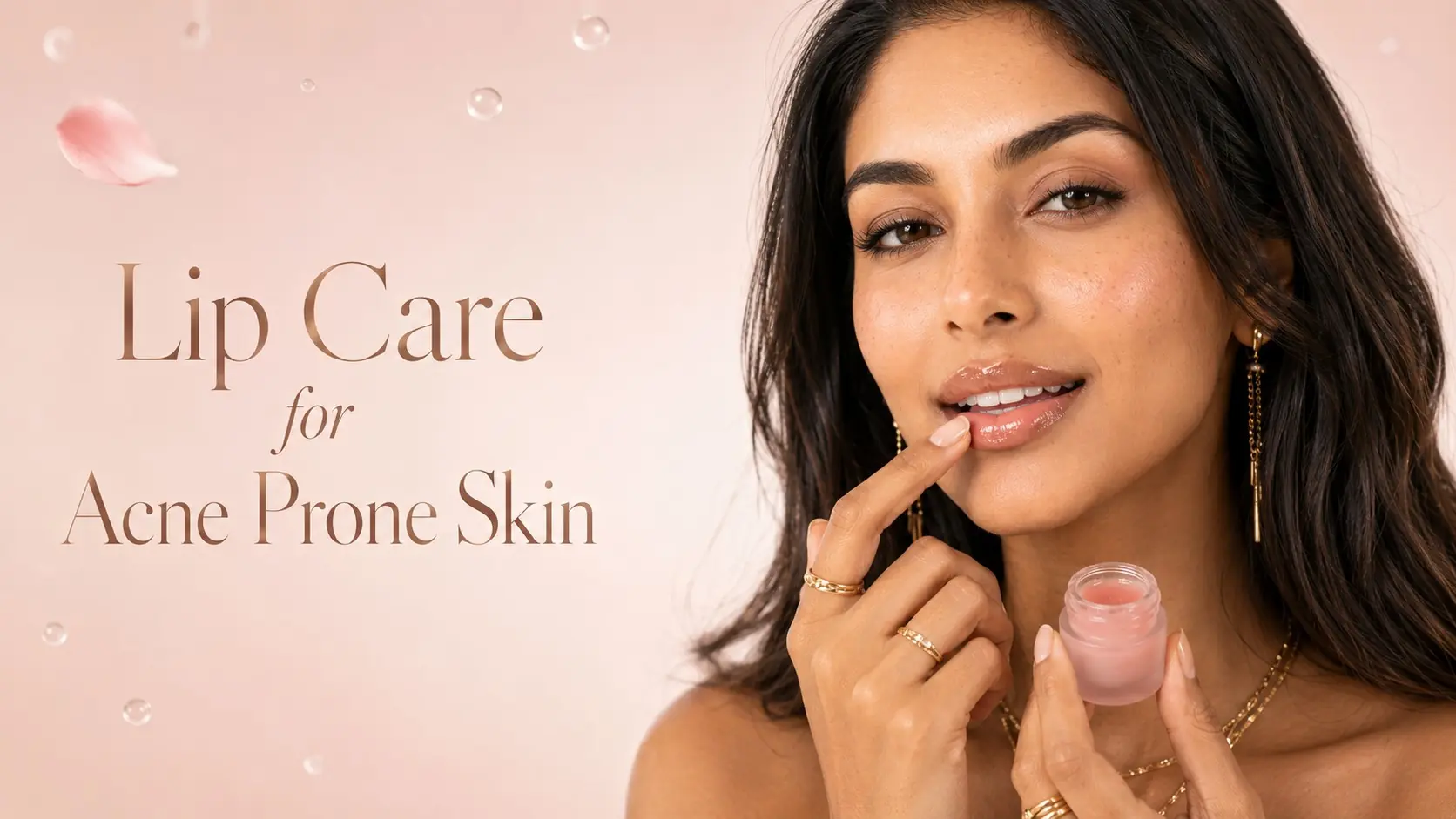
The Top Lip Care Tips for People with Acne-Prone Skin: A complete Guide to Maintaining Healthy Lips Lip Care for Acne Prone Skin: Smart lip care for
The Top Lip Care Tips for People with Acne-Prone Skin: A complete Guide to Maintaining Healthy Lips
Lip Care for Acne Prone Skin: Smart lip care for acne-prone skin is about more than choosing a gentler balm. The wrong gloss, an overly fragrant ointment, or an aggressive scrub can all trigger breakouts in the perioral area, the delicate skin that frames your lips. This guide breaks down the ingredients to avoid, the non-comedogenic balms dermatologists actually recommend, and a complete routine that keeps both your lips and your complexion clear.
The good news is that with the right knowledge, your lips can stay soft, smooth, and nourished without ever irritating your skin. This guide covers everything you need to know about lip care for acne-prone skin. You will learn which products to reach for and which to retire permanently. You will understand the science behind why certain formulas cause problems around the mouth. You will also get practical steps for managing dryness, feathering, and fading, three of the most frustrating lip concerns for anyone dealing with reactive skin. Whether you wear bold color every day or prefer a bare, healthy pout, the strategies ahead will help you care for your lips without compromise. Read on for a complete, science-backed approach that puts both lip health and skin clarity first.
Understanding Why Acne-Prone Skin Reacts Differently Around the Lips
The Biology of Perioral Skin
The skin around your mouth, known as the perioral region, is thinner and more sensitive than the skin on your cheeks or forehead. It contains a high concentration of sebaceous glands, the tiny oil-producing structures responsible for keeping skin lubricated. In people with acne-prone skin, these glands are often overactive. They produce excess sebum, which mixes with dead skin cells and bacteria to form blockages inside the follicle. These blockages result in the whiteheads, blackheads, and inflammatory papules that define acne.
The lip area adds another layer of complexity. The vermilion border, the defined edge where lip skin meets facial skin, is a transition zone with unique properties. It lacks hair follicles and sweat glands but is rich in sensory nerve endings. This makes it highly reactive to certain ingredients. When occlusive products sit on or near the vermilion border for extended periods, they can trap dead cells and oil beneath the surface, creating conditions where bacteria thrive.
Understanding this anatomy explains why a product that works beautifully on someone else may cause you to break out. Your skin produces more oil in this zone than theirs does. Your follicles respond more aggressively to pore-clogging ingredients. This is not a flaw. It is biology, and it has practical solutions that work consistently when applied correctly.
How Lip Products Migrate to Surrounding Skin
Most people assume lip products stay on the lips. They do not. Lip gloss, lipstick, and even lip balm spread to the perioral area through talking, eating, drinking, and routine facial movement throughout the day. Thick, occlusive formulas tend to migrate further and linger longer on the surrounding skin. A heavily emollient balm applied at noon may still be sitting on the skin around your mouth hours later.
This migration matters enormously for acne-prone individuals. When a comedogenic lip product spreads onto the perioral skin, it deposits pore-clogging ingredients directly into the area where breakouts are already most likely. The result is a characteristic pattern of small, clustered pimples along the lip line that many women misattribute to hormones or diet when the real culprit is the balm or gloss sitting in their bag.
Applying products with precision helps, but it does not eliminate migration entirely. The real solution lies in choosing formulas that are safe for the surrounding skin from the start. No matter how carefully you apply a high-comedogenic product, some of it will reach the perioral skin. Formula choice matters more than application technique.
The Comedogenic Scale and Why It Matters for Lip Products
The comedogenic scale rates ingredients from zero to five based on how likely they are to clog pores. A rating of zero means the ingredient does not clog pores at all. A rating of five means it is highly comedogenic and should be avoided by anyone with acne-prone skin. Dermatologists generally recommend avoiding ingredients rated three or above in everyday products used near the face.
Many popular lip care ingredients fall into the problematic range. Coconut oil, a beloved natural ingredient found in countless balms and glosses, carries a comedogenic rating of four. Cocoa butter sits at four as well. Lanolin, found in many therapeutic lip balms, can rate as high as four depending on the grade and processing method. These ingredients are effective moisturizers in their own right, but they present real risks for skin that is already prone to congestion.
Knowing the comedogenic scale lets you read ingredient labels with confidence. You do not need to memorize every compound. You simply need to identify the most common high-rated offenders and avoid them when selecting lip products. The sections ahead identify the safest and most problematic ingredients by name so you can shop with clarity.
Lip Care Acne-Prone Skin: Identifying the Products That Work
Non-Comedogenic Lip Balms: What to Look For
A non-comedogenic lip balm is the cornerstone of any solid lip care routine for acne-prone skin. These formulas moisturize without blocking pores. They use ingredients with low comedogenic ratings, typically zero to two, and avoid the heavy waxes and oils that sit on the skin surface and trap debris against the follicle opening.
When reading labels, prioritize these low-comedogenic ingredients. Jojoba oil carries a comedogenic rating of two and closely mimics the skin’s natural sebum. This makes it an excellent emollient that nourishes without disrupting the skin’s own oil balance. Castor oil rates at one and provides both deep moisture and a smooth, comfortable texture. Shea butter in small quantities generally rates at zero to one, though this varies by processing method. Beeswax rates at zero to two and forms a protective barrier without deeply penetrating or clogging follicles.
Look for products explicitly labeled non-comedogenic. This label is not pharmaceutically regulated, but reputable brands do conduct formal testing before applying it. Prioritise brands that disclose their full ingredient lists and avoid proprietary blends that obscure what you are actually putting on your skin. A short ingredient list is almost always a positive sign for acne-prone skin.
Healing Ingredients That Protect Without Clogging Pores
Beyond basic moisture, certain ingredients actively support lip health without posing any comedogenic risk. Vitamin E, listed on ingredient decks as tocopherol, is an antioxidant that protects delicate lip tissue from environmental damage. It rates between zero and two on the comedogenic scale depending on its concentration and carrier. It also supports cell repair, which helps chapped lips heal faster after periods of dryness or irritation.
Hyaluronic acid, widely recognized as a skincare powerhouse, also benefits the lips significantly. It draws moisture into the tissue from the surrounding environment and holds it there throughout the day. Applied to the lips, it produces a plumping, hydrating effect without any comedogenic risk. Its rating is zero. Several newer lip balm formulas now include hyaluronic acid as a primary active ingredient rather than a secondary one, and these products tend to perform well for dry, acne-prone skin types.
Ceramides are lipid molecules naturally present in the skin’s protective barrier. When applied topically, they reinforce the barrier function of lip skin, reducing moisture loss and protecting against external irritants. They carry zero comedogenic risk and are particularly valuable for women whose lips become dry and cracked during winter months or due to retinoid use elsewhere on the face.
When a Medicated Lip Treatment Is the Better Choice
Some women with acne-prone skin also experience perioral dermatitis or eczema on or near the lips. In these cases, a basic moisturizing balm is insufficient. A medicated treatment is the appropriate choice. Products containing one percent hydrocortisone can calm inflammation and reduce redness around the mouth. Use them sparingly and for short periods only, not as a daily maintenance product, since prolonged topical steroid use thins the skin over time.
Zinc oxide, a common ingredient in mineral sunscreens, also appears in certain lip balms as an anti-inflammatory and healing agent. It carries a comedogenic rating of zero and provides broad-spectrum sun protection for the often-neglected lip area. Sun damage worsens post-inflammatory hyperpigmentation, a common concern for women who experience repeated breakouts near the lips, so SPF protection in this zone provides real long-term benefit beyond general comfort.
If you use prescription topical retinoids or benzoyl peroxide for facial acne, discuss lip care with your dermatologist directly. Some prescription treatments can be carefully applied just outside the lip line to manage perioral breakouts, but this requires professional guidance. Never assume your facial acne treatment is safe for the delicate perioral skin without confirming with a qualified provider first.
Ingredients That Trigger Breakouts in Lip Products
Comedogenic Oils and Waxes Found in Common Formulas
Knowing which ingredients to avoid is as valuable as knowing which ones to seek out. Coconut oil is perhaps the most widely discussed comedogenic ingredient in lip care. Its rating of four gives it a high likelihood of clogging pores and causing breakouts around the mouth. It appears in countless natural and organic lip balms, often as the primary ingredient. If you notice breakouts along your lip line, check your current balm for coconut oil immediately.
Cocoa butter presents a similar problem. It is deeply nourishing and creates a beautiful, rich texture, but at a comedogenic rating of four, it is not suitable for daily use by acne-prone skin. The same applies to wheat germ oil, which rates at five, the highest possible score on the scale. Soybean oil rates are at three to four. Linseed oil rates at four. These appear in products marketed as intensely moisturizing, and while they deliver on hydration, they deliver breakouts alongside it for susceptible skin types.
Lanolin deserves its own consideration. Some grades of lanolin are more purified than others, and purer lanolin tends to be less comedogenic. Most drugstore lip balms use standard lanolin, which can rate as high as four. Ultra-purified lanolin, sometimes labeled ‘acetylated lanolin’ on ingredient decks, rates around one to two. If you appreciate the texture of lanolin-based products, seek out formulas that specify ultra-purified or acetylated lanolin to get the benefit without the comedogenic risk.
Fragrances, Dyes, and Synthetic Additives
Fragrance is one of the most common causes of skin irritation across all cosmetic product categories. In lip care, fragranced products, which include mint, vanilla, citrus, and floral extracts, can irritate the perioral skin, trigger contact dermatitis, and worsen existing acne. The inflammation caused by fragrance often looks identical to an acne breakout, making it difficult to identify without systematic product elimination testing over several weeks.
Dyes in tinted lip products carry a similar risk profile. Synthetic dyes, particularly red dyes such as Red 40 and Red 27, are known irritants for sensitive skin types. They can cause contact allergic reactions that manifest as inflammation, dryness, and breakouts concentrated around the lips. Natural dyes derived from fruit or vegetable pigments are generally safer options but are not always clearly labeled as such on packaging. When in doubt, look for iron oxide pigments, which are mineral-based and well-tolerated by sensitive skin.
Flavor additives in lip balm deserve special scrutiny. Products flavored with peppermint oil, menthol, cinnamon, or citrus extracts can be highly irritating to the perioral area. Menthol produces a tingling sensation that many users interpret as a sign of effectiveness. That tingling is actually a mild irritation response. Repeated use of mentholated lip products disrupts the skin barrier over time and contributes to chronic dryness and inflammation rather than relieving them.
Preservatives and Hidden Irritants
Preservatives keep lip products shelf-stable and free from bacterial contamination. Most preservatives used in cosmetics are safe for the majority of users. However, certain preservatives carry a higher risk of sensitisation for people with reactive or acne-prone skin. Phenoxyethanol at higher concentrations can cause irritation around the mouth. Benzyl alcohol, used as both a preservative and a fragrance component, is a recognised sensitiser in some individuals.
Propylene glycol, found in many glosses and liquid lip products as a humectant and texture agent, can cause contact dermatitis in people with sensitive skin. It is not comedogenic in the traditional pore-clogging sense, but the inflammation it triggers can mimic and worsen acne. If you have tried switching balm formulas without resolving your perioral breakouts, propylene glycol is worth investigating by specifically choosing products that omit it.
When evaluating products, fewer ingredients generally mean fewer potential triggers. Simple, short-ingredient-list formulas give you fewer variables to evaluate and fewer potential sensitizers to rule out. Some of the most effective lip balms for acne-prone skin contain only four to six ingredients in total. Complexity in a formula is not a sign of superior performance. For reactive skin, simplicity is a genuine advantage.
Lip Exfoliation Without the Breakout Risk
Physical Exfoliation: Technique and Frequency
Exfoliation removes dead skin cells from the lip surface, improves texture, and allows moisturizing ingredients to absorb more effectively. For acne-prone skin, the key principles are gentleness and restraint. Over-exfoliation is a common mistake that strips the skin barrier, triggers inflammation, and creates conditions that worsen both dryness and breakout activity around the mouth.
Physical exfoliation using a lip scrub or a soft-bristled toothbrush should happen no more than once per week for acne-prone skin. If you currently exfoliate more frequently and experience persistent dryness or irritation, scale back immediately and allow the barrier a full two weeks to recover before resuming. Use gentle circular motions and apply only light pressure. The goal is to lift loose, dead cells, not to scrub the skin aggressively. After exfoliation, apply a non-comedogenic lip balm immediately while the skin is still slightly damp. This seals in moisture and accelerates barrier recovery.
Pay attention to technique near the vermilion border. That transition zone where lip skin meets facial skin is particularly thin and reactive. Keep the primary scrubbing motion centered on the main lip surface and ease off with decreasing pressure as you approach the outer edge. This delivers the benefits of exfoliation without creating micro-tears in the fragile border skin that would otherwise invite irritation and potential infection.
Chemical Exfoliation for the Lip Area
Chemical exfoliation uses acids or enzymes to dissolve the bonds between dead skin cells, removing them without physical friction. For lips, carefully chosen chemical exfoliation is generally gentler than physical scrubbing when used within the correct parameters. Alpha-hydroxy acids such as lactic acid and glycollic acid are the most commonly used options in lip-specific products. They improve cell turnover and smooth texture and can gradually address dark spots or hyperpigmentation along the lip line.
Some lip masks and overnight treatments contain low concentrations of lactic acid or fruit enzymes. These are designed to work during a defined treatment period rather than sitting on the skin indefinitely. They are appropriate for acne-prone skin when the base formula is also fragrance-free and does not include high-comedogenic carrier ingredients that would undermine the benefit.
Do not apply standard facial AHA treatments to the lip area without confirming they are formulated for that use. Facial exfoliants often contain concentrations far higher than lip-specific products. They can cause significant irritation on lip skin, which is thinner and more permeable than the skin on your cheeks or forehead. Begin with products specifically designed for lip exfoliation before exploring whether your general facial exfoliant is safe to use near this zone.
Safe DIY Scrub Recipes for Sensitive, Acne-Prone Skin
If you prefer making your own lip scrub, keep the formula minimal and choose only low-comedogenic ingredients. A mixture of fine white sugar and raw honey is an effective option. White sugar provides gentle physical exfoliation. Raw honey is a natural humectant with mild antibacterial properties, which makes it genuinely useful for acne-prone skin rather than simply a pleasant carrier. The combination leaves lips soft without introducing comedogenic risk.
A second option is fine brown sugar combined with a few drops of jojoba oil. Jojoba oil rates at two on the comedogenic scale and provides slip and moisture during the exfoliation process. Brown sugar offers slightly less abrasion than white sugar, making it appropriate for very sensitive or easily irritated skin. Use only enough oil to bind the sugar particles loosely together.
Avoid adding coconut oil, cocoa butter, or essential oils to any homemade scrub. These ingredients appear in countless online beauty recipes but pose real risks for acne-prone skin as detailed in the previous section. The simplest formula you can make is always the safest one for reactive skin. Mix fresh, use once weekly, follow immediately with your non-comedogenic balm, and expect your lips to visibly improve in texture within two to three weeks of consistent use.
Hydration and Lip Prep: The Foundation of Lip Care for Acne-Prone Skin
Why Moisture Retention Matters More Than Moisture Application
Many women focus on applying moisture to their lips without paying equal attention to retaining it. Occlusive ingredients create a physical barrier on the lip surface that slows water loss through transepidermal evaporation. Humectants draw water into the lip tissue from the air and from deeper skin layers. Emollients fill the microscopic gaps between skin cells and smooth the surface texture. A complete lip care approach uses all three categories in the correct order for maximum benefit.
The standard layering sequence is humectant first, followed by emollient, then sealed with a light occlusive ingredient. Hyaluronic acid or glycerin serves as the humectant. A jojoba-based or castor oil-based balm serves as the emollient. A small amount of beeswax or a non-comedogenic barrier creates the final occlusive seal. This layering method dramatically improves how long moisture stays within the lip tissue compared to applying a single product in isolation, even a very good one.
Petroleum jelly, also known as petrolatum, carries a comedogenic rating of zero to one. It is an extremely effective occlusive agent that rarely triggers reactions, making it one of the safer top-coat options for acne-prone skin. A tiny amount applied over your balm at night creates a serious barrier against moisture loss and can transform dry, chapped lips within three to five days of consistent use.
Overnight Lip Treatments That Work While You Sleep
Nighttime is the most effective window for intensive lip hydration. During sleep, your skin enters a repair and regeneration cycle marked by increased cellular activity and reduced environmental exposure. Applying a nourishing lip treatment before bed allows ingredients to work without competition from food, drink, sun exposure, or constant product migration from talking and facial movement. The body’s elevated repair activity during sleep also means moisturizing ingredients penetrate more deeply and produce better results than the same products applied during the day.
Choose overnight lip masks or sleeping lip treatments with non-comedogenic formulations. Look for products that combine hyaluronic acid with peptides or ceramides for maximum barrier support during the hours when your skin is most receptive. Apply a thicker layer than you would during the day. The goal is to create a nourishing cocoon around the lip tissue that prevents moisture loss throughout the night and delivers active ingredients over an extended contact time.
If a dedicated lip mask is not currently in your budget, a combination of one drop of rosehip seed oil, which rates at one on the comedogenic scale, mixed with a small amount of petroleum jelly and applied with a clean fingertip produces excellent overnight results. Rosehip seed oil contains vitamin A precursors and essential fatty acids that support cell renewal. This makes it particularly useful for lips that are rough, hyperpigmented, or recovering from previous irritation or extended sun exposure.
Internal Hydration and Its Direct Effect on Lip Health
No topical product fully compensates for inadequate internal hydration. Dehydration manifests first and most visibly in the thinnest skin on the body, and the lips are among the earliest areas to show signs of insufficient fluid intake. When your daily water intake is too low, your body redirects water toward vital organs and away from peripheral areas. The lip tissue suffers quickly. The result is a tight, cracked, or dull appearance that no amount of balm completely resolves.
Eight glasses of water per day is a starting point, not a ceiling. Active women, women in hot or dry climates, and women whose diets include significant sodium or caffeine require more. Urine color is a practical, reliable hydration indicator. Pale yellow indicates adequate hydration. Dark yellow or amber indicates a need for more water without delay. Use this check first thing in the morning before your lip care routine to get an accurate baseline reading.
Certain nutritional factors affect lip health directly and are often overlooked. Vitamin B2, also called riboflavin, deficiency causes cheilitis, a condition marked by cracked lip corners and persistent dryness. Foods rich in riboflavin include eggs, dairy, lean meats, and leafy greens. Vitamin B3, or niacin, deficiency produces similar symptoms. Iron deficiency anemia, extremely common among women in both the US and the UK, also manifests as lip pallor and stubborn dryness that does not respond to topical treatment alone. If your lips remain chronically dry despite excellent topical care and adequate water intake, consider whether a nutritional gap is the underlying cause.
Navigating Color Products: Gloss, Tinted Balm, Liner, and Liquid Lip
Lip Gloss: The Pore-Clogging Risk Explained
Lip gloss is one of the most popular lip products globally, but it also poses one of the highest risks for acne-prone skin. The glossy effect comes from thick emollient bases, typically combinations of polybutene, various oils, and waxes. Polybutene, a synthetic polymer used as a primary thickener in many gloss formulas, can sit heavily on the perioral area and contribute to pore congestion over time. Many popular glosses also include fragrance, synthetic dyes, and preservatives that increase irritation risk further.
This does not mean gloss is permanently off limits. Look for glosses formulated with silicone-based ingredients such as dimethicone or cyclopentasiloxane as their primary base. Silicone creates the glossy visual effect without the same occlusive heaviness of traditional oil-based formulas. It carries a comedogenic rating of one and creates a smooth, light-reflective surface without penetrating into pores or migrating aggressively onto the perioral skin.
Apply gloss precisely and reapply only when necessary. The longer a thick formula sits on the skin, the more opportunity it has to migrate and interact with the sebum and bacteria already present around the mouth. Remove gloss thoroughly before bed using a gentle micellar water, pressing the saturated cotton pad gently against the lip area for a few seconds to dissolve the formula before wiping. Pay close attention to the skin just outside the lip line during this removal step.
Tinted Lip Balms vs. Traditional Lipstick for Acne-Prone Skin
Tinted lip balms occupy a useful middle ground for acne-prone skin. They deliver sheer colour while simultaneously moisturising the lips. Many tinted balms use lighter emollient bases than traditional lipstick and contain fewer synthetic dyes. For women who want visible colour without a heavy product load, a well-chosen tinted balm is often the safest everyday colour option available.
When selecting a tinted balm, verify that the pigment comes from mineral sources rather than synthetic dyes. Mineral pigments including iron oxides and titanium dioxide are less likely to irritate the skin and carry no comedogenic risk. They also tend to deposit more evenly on the lips than synthetic dyes, which means less reapplication throughout the day and therefore less repeated contact with the perioral skin.
Traditional lipstick formulas vary significantly by finish. Cream lipsticks use rich, emollient bases similar to balms and carry comparable comedogenic risks. Satin-finish lipsticks often have lighter, less occlusive bases. Matte lipsticks typically contain less emollient content and higher proportions of powder-based pigments, making them a lower-comedogenic-risk choice for daily wear. Matte formulas do tend to be more drying, so thorough lip prep is especially important on days when you plan to wear them for extended periods.
Lip Liner and Liquid Lip Formulas: Use Cases and Precautions
Lip liner serves two important functions for acne-prone skin beyond simple definition. First, it creates a physical barrier along the vermilion border that limits how far lip color migrates onto the surrounding skin. This directly reduces the contact time between potentially comedogenic color products and the perioral area. Second, applied correctly, it prevents the feathering that carries product outward into fine lines, which is addressed in the next section.
Choose wax-based lip liners over oil-based formulas. Wax-based liners grip the lip border firmly without spreading and contain minimal emollient content that could migrate onto the perioral skin. Avoid liners that feel very creamy or apply with no resistance, as these tend to have higher emollient concentrations. A slight firmness during application usually indicates a lower-comedogenic wax base that will stay where you place it throughout the day.
Liquid lip formulas, including transfer-proof liquid lipsticks and lip stains, deserve careful evaluation but can be excellent choices for acne-prone skin when selected correctly. Long-wear liquid formulas typically use film-forming polymers for their staying power rather than heavy oils. These polymers carry very low comedogenic ratings and show significantly less migration than gloss or cream lipstick. However, many liquid lip products contain fragrance and drying alcohols that irritate the perioral area. Check ingredient lists carefully and choose fragrance-free versions wherever available. Lip stains, which deposit color into the top layer of lip skin, generally represent the lightest product load and the lowest perioral contact of any color format.
Solving the Three Biggest Lip Problems: Dryness, Feathering, and Fading
Combating Chronic Lip Dryness in Acne-Prone Skin
Chronic lip dryness in acne-prone individuals often has a specific, identifiable cause beyond simple dehydration. Many women use topical retinoids or benzoyl peroxide for facial acne, and both treatments cause significant dryness when they come into contact with the lip area. Retinoids dramatically accelerate cell turnover, leading to peeling and flaking at the lip border. Benzoyl peroxide disrupts the skin barrier and strips natural oils from skin it contacts.
If you use either of these treatments, apply them precisely and actively avoid the perioral zone. Many dermatologists recommend stopping application at least two centimeters from the lip border as a minimum precaution. Despite this, some product spreading is inevitable during sleep. Applying a thick, non-comedogenic occlusive over the lips before bed creates a protective buffer that limits how much retinoid or benzoyl peroxide reaches the lip tissue overnight and dramatically reduces the dryness associated with these treatments.
Habitual lip licking makes chronic dryness significantly worse and is one of the most common self-sabotaging behaviours in lip care. Saliva contains digestive enzymes that break down delicate lip skin with each exposure. When this happens repeatedly throughout the day, the cumulative damage is substantial. Breaking this habit and immediately applying a non-comedogenic balm whenever you notice the urge to lick produces dramatic improvement within ten to fourteen days for most women. Keeping balm accessible at all times, in your pocket, at your desk, and on your nightstand, removes the friction from building this substitute habit.
Preventing Color Feathering Around the Lip Line
Feathering occurs when lip color bleeds outward into the fine lines and pores surrounding the lips. It is most common with gloss and cream formulas and far less common with matte or satin finishes. For acne-prone skin, feathering creates a dual problem. It produces an untidy visual appearance and carries lip product ingredients further into the perioral area, where they contribute to the breakout cycle discussed throughout this guide.
Effective prevention uses three sequential steps. First, prepare the lips with a smooth, non-comedogenic balm and allow it two full minutes to absorb before applying any colored product. Applying color over freshly applied balm causes both products to blend together, reduces color adhesion, and dramatically increases migration risk. Let the balm settle completely before proceeding. Second, apply a wax-based lip liner to the full lip border, slightly overlapping onto the surrounding skin by a fraction of a millimeter. This creates a physical waxy barrier that stops softer formulas from traveling outward. Third, blot any excess product from the lip surface after initial application using a single-ply tissue. Excess product volume is the primary driver of feathering in normal wear conditions.
Setting lip color with a very light dusting of translucent powder over the lips and liner further reduces feathering throughout the day. Use a clean, small brush to apply powder precisely along the outer lip edge where migration typically begins. This technique works particularly well for women who wear cream or satin formulas and prefer not to switch to a drier matte finish to control bleeding.
Making Lip Color Last Without Layering Heavy Products
Long-lasting color without heavy product accumulation is achievable with a deliberate layering method. Start with clean, well-moisturized lips that have been prepped and allowed to absorb their balm fully. Apply your lip liner first, then fill in the entire lip surface with liner before adding your color on top. Liner has a gripping, waxy texture that gives liquid and cream formulas something to adhere to, extending wear time significantly without increasing product weight on the skin.
Apply your color in a thin first layer, blot with a single-ply tissue, then apply a second thin layer on top. This two-coat method with a blot between applications lasts considerably longer than a single heavy application of the same product. It also reduces total product transfer to the perioral area because each individual coat is thin enough to stay precisely where it was applied rather than spreading outward under its own weight.
Remove lip color thoroughly at the end of every day. Use micellar water or a dedicated lip makeup remover on a soft cotton pad. Press the pad gently against the lips for several seconds to dissolve the product before wiping. Avoid scrubbing color off with rough tissues or makeup wipes. Harsh removal irritates both the lip skin and the surrounding perioral area. Thorough, gentle removal each evening prevents product residue from building up in the perioral area overnight, eliminating one consistent source of the pore congestion that drives breakouts in this zone.
Building Your Complete Daily and Weekly Lip Care Routine
Morning Routine Steps
Begin your morning lip routine after cleansing your face but before applying any other makeup or skincare products. Start by assessing whether your lips feel dry or rough from the previous night. If they do, gently remove residual overnight product using a soft damp cloth and proceed from there. If your lips feel smooth and comfortable, move directly to your protection step without unnecessary intervention.
Apply a thin layer of your chosen non-comedogenic balm. Allow it two to three minutes to absorb before applying any color. This waiting period is important. Applying lip color over freshly applied balm causes the two products to intermix on the lip surface, reducing color adhesion and increasing the likelihood of migration onto the perioral skin throughout the day. Let the balm settle into the lip tissue before proceeding to color application.
Apply lip liner first on any day you wear color. Choose a shade close to your natural lip tone or one that complements your chosen lip color. Fill in the entire lip surface with liner, not only the border, to create a uniform gripping base. Apply your lip color on top in a thin first layer, blot, then add a second thin layer as needed. On days with extended sun exposure, prioritize an SPF-containing lip product as your base over color, since cumulative UV damage on the lip area contributes to long-term hyperpigmentation and barrier damage.
Evening Routine Steps
The evening routine is where active lip recovery happens. Begin by removing all lip products using micellar water or a dedicated gentle lip cleanser. After removal, check the perioral area carefully for any signs of emerging irritation, redness, or small new breakouts. Early detection allows you to adjust products before a full-scale breakout develops and spreads.
If this is your scheduled weekly exfoliation day, perform your gentle lip scrub at this point in the routine. Follow with lukewarm water to rinse, then pat the lips dry with a clean, soft cloth without rubbing. Apply your humectant layer first. Glycerin or a hyaluronic acid serum applied directly to the lips works well as a starting layer. Follow immediately with your emollient balm. Seal with a light occlusive top layer such as a small amount of petroleum jelly applied with a clean fingertip.
On non-exfoliation nights, skip the scrub and proceed directly from cleansing to your moisturizing steps. Consistency matters more than intensity in lip care. Applying your evening routine every single night produces better long-term results than occasional intensive treatments separated by stretches of neglect. Keep your products on your nightstand where they are visible and easy to reach as part of your existing skincare routine.
Weekly Treatments and Patch Testing Protocol
Once per week, perform your gentle lip exfoliation followed by a nourishing lip mask or an intensive overnight treatment. This weekly treatment slot is also the right time to assess your current products and whether they are serving your skin well. Keep a brief note on your phone tracking any breakouts that appear around your lips and which products you used in the preceding 48 hours. Clear patterns become visible over two to four weeks of consistent tracking and allow you to make targeted product changes rather than eliminating everything at once in frustration.
Patch testing is a non-negotiable protocol before introducing any new lip product. Apply a small amount of the product to the inside of your wrist or the crook of your elbow. Leave it for 24 hours without washing. If no redness, itching, or swelling appears, perform a second test on the skin just below your ear, which more closely mimics the sensitivity profile of your facial skin. Wait another 24 hours. Only if both tests show no reaction should you use the product on your lips and around your mouth.
This two-stage patch test takes 48 hours total. That feels like an inconvenience compared to immediately trying a new product. It is far less inconvenient than two weeks of perioral breakouts from a product you could have identified as problematic before a single application near your mouth. Build patch testing into your routine as a standard practice for every new lip product regardless of brand reputation, marketing claims, or recommendations from others with different skin types.
Frequently Asked Questions
Can lip balm actually cause acne around my mouth?
Yes, it can. Lip balm is a common but frequently overlooked cause of perioral breakouts. When a balm contains comedogenic ingredients such as coconut oil, cocoa butter, or certain waxes, these ingredients migrate onto the surrounding skin during normal use throughout the day. Once there, they sit on the surface, trap dead skin cells and sebum inside the follicle, and create exactly the blocked-pore conditions that lead to acne. If you notice a consistent pattern of small pimples clustered along your lip line or on the skin just above or below your lips, your current lip balm is the first product to examine. Switch to a formula with a short ingredient list and no high-comedogenic-rated ingredients. Monitor your skin for three to four weeks after making the switch. Many women find that this single change dramatically reduces their perioral breakouts without any other modifications to their skincare routine.
What is the best lip balm ingredient for acne-prone skin?
The best ingredients for acne-prone lip care moisturize effectively while carrying a low comedogenic rating. Jojoba oil, with a rating of two, is among the most effective choices. It closely mimics the skin’s own sebum, which means it nourishes the lips without disrupting the natural oil balance of the surrounding skin. Castor oil rates at 1 and provides deep moisture with a comfortable texture. Beeswax rates at zero to two and forms a strong protective barrier without deeply clogging follicles. Hyaluronic acid rates at zero and delivers significant hydration through moisture attraction rather than occlusion. Ceramides, also rated zero, reinforce the barrier and are particularly valuable for skin that is compromised by prescription acne treatments. A balm combining two or three of these ingredients in a fragrance-free, dye-free formula covers all bases without introducing unnecessary risk.
How often should I exfoliate my lips if I have acne-prone skin?
Once per week is the appropriate frequency. More frequent exfoliation strips the lip barrier, causes micro-inflammation, and can trigger increased dryness and breakout activity in the perioral area. If you currently exfoliate two or three times weekly and experience persistent lip irritation, reducing to once weekly will likely produce noticeable improvement within ten days without any other changes to your routine. Use a gentle formula with light pressure and always follow immediately with a non-comedogenic moisturizing product while the skin is still slightly damp. Skip exfoliation entirely during any week when your lips are already cracked, actively inflamed, or showing signs of irritation. Exfoliating already-compromised lip skin worsens the barrier damage rather than improving texture. Wait until the skin has fully calmed before resuming your weekly exfoliation schedule.
Is it safe to use lip gloss if I have acne-prone skin?
Lip gloss is safe in specific formulations, but not all glosses are equal for acne-prone skin. Traditional gloss formulas use thick oil and wax bases with high comedogenic ratings and significant migration onto the perioral skin. If you want to wear gloss, look specifically for formulations that use silicone-based ingredients such as dimethicone as their primary base. Silicone creates the glossy visual effect without the pore-clogging heaviness of oil-based alternatives. Prioritise fragrance-free and dye-free options in this category. Apply gloss precisely with an applicator rather than your finger and remove it thoroughly before bed with micellar water, paying attention to the skin just outside the lip line where migration accumulates. If you find that even careful gloss use consistently triggers breakouts, switch to a satin-finish lipstick or a mineral-pigmented tinted balm as a lower-risk way to achieve a similar luminous look.
Why do my lips stay dry even when I apply lip balm constantly?
Constant reapplication without improvement points to one of three likely causes. First, your current balm may contain irritating ingredients such as menthol, camphor, or fragrance. These create a cooling or tingling sensation that feels immediately soothing but actually disrupts the lip barrier with each application. Repeated use worsens chronic dryness over time rather than resolving it. Switch to a plain, fragrance-free formula for two full weeks and assess the difference before drawing conclusions. Second, you may be habitually licking your lips between balm applications. Saliva deposits digestive enzymes that break down lip skin with every contact. This habit counteracts even the best topical care. Third, the dryness may have an internal cause, including dehydration, a vitamin B deficiency, iron deficiency anemia, or a medication side effect. Certain antihistamines, blood pressure medications, and acne treatments, including oral isotretinoin, cause significant lip dryness as a primary side effect. If topical changes do not resolve persistent dryness within three to four weeks, discuss it with a healthcare provider to rule out an underlying systemic cause.
Conclusion
Caring for your lips with acne-prone skin requires a targeted, informed approach rather than trial and error with whatever products are marketed most aggressively. The right formulas, applied in the correct order with consistent technique, make an enormous difference in both lip quality and perioral skin clarity. Choose non-comedogenic formulas. Read ingredient lists actively. Avoid fragrance, highly rated oils, and synthetic dyes. Exfoliate once weekly with a gentle hand. Hydrate deeply from the inside and lock that moisture in with layered topical products. Use lip liner to control color migration. Remove all products thoroughly before bed. Patch test every new product before it touches the skin around your mouth.
These steps are not complex. They require consistency over two to four weeks to produce visible, lasting change. Start with your current lip balm, assess its ingredient list against what you have learned here, and replace it if necessary. That one change alone often resolves breakouts that women have lived with for months or years without identifying the cause. From that foundation, build your full daily and weekly routine at your own pace. Give your skin the time and the right products it needs to respond, and it will.
RELATED ARTICLES:
Lip Sunscreen: Why Your SPF Routine Stops Too Soon
What lip colour suits you best according to the tone of your hair? Find Out!
Milk Tea Lips & Blurred Edges 2025: The Work-Ready Lip Care Look That Lasts Through Coffee
Lip Oils vs. Lip Gloss: Which One is the Best for You?
How to Keep Your Lips Looking Young: Anti-Aging Lip Care Tips
About The Author

COMMENTS