
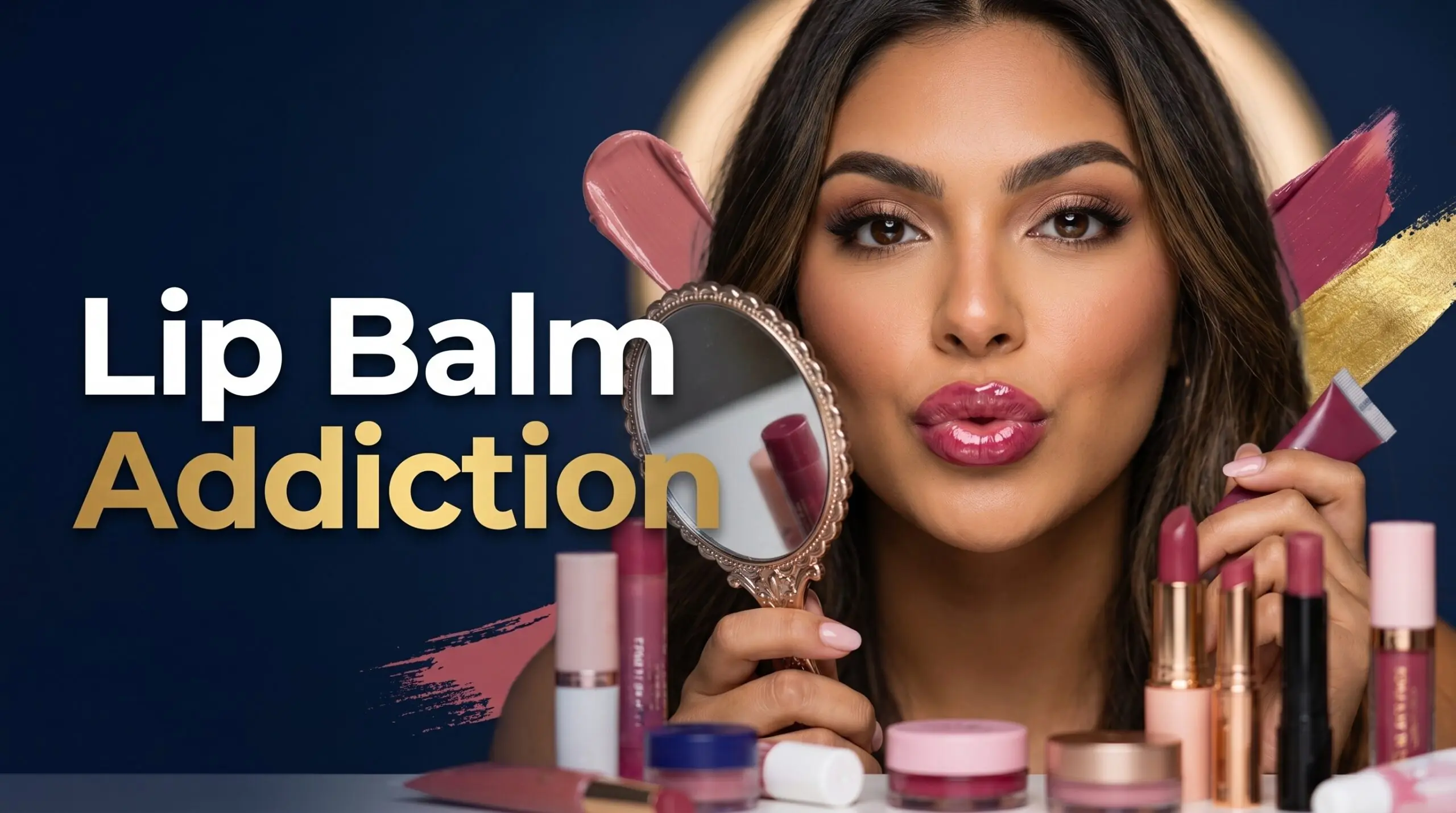
The Connection Between Lip Balm Addiction and Your Lip Care Routine: Breaking the Cycle for Healthier LipsThe phenomenon known as lip balm addictio
The Connection Between Lip Balm Addiction and Your Lip Care Routine: Breaking the Cycle for Healthier Lips
Published · Updated
What Is Lip Balm Addiction? Understanding the Cycle
The Science Behind the Perceived Dependency
Lip balm addiction is not recognized in medical literature as a true addiction. There is no chemical dependency involved in the way alcohol or nicotine creates dependency. However, the behavioral cycle it produces is strikingly similar to other compulsive habits. When you apply a lip balm, it creates an occlusive barrier on the surface of your lips. This barrier traps existing moisture and temporarily prevents water loss. Your lips feel smooth and comfortable almost immediately.
The problem is that this relief is temporary. Many popular lip balms use occlusive agents like petrolatum or dimethicone that sit on top of the skin rather than penetrating it. Once the product wears off or you lick your lips, the barrier disappears. Your lips may feel drier than before because your skin has not been prompted to produce its own moisture. You apply the balm again. The cycle continues.
Dermatologists call this pattern lip balm dependency. The more you rely on a product to manage moisture, the less your lips are stimulated to manage moisture independently. Over time, the interval between applications grows shorter. You may find yourself reaching for the product every fifteen to twenty minutes rather than once or twice a day.
How the Overuse Cycle Begins
The cycle often starts innocently. Winter air strips moisture from lips. You buy a lip balm to fix the dryness. The balm works immediately, so you use it often. If the balm contains certain irritating ingredients, your lips may feel dry sooner after each application. You interpret that dryness as a sign you need more product. Frequency increases.
Habitual behavior also plays a role. You apply lip balm before a meeting because you want your lips to look polished. You apply it while watching television because your hands need something to do. You apply it when you feel anxious because the act itself is soothing. None of these motivations have anything to do with actual dryness. Yet each application reinforces the habit and deepens the sense that your lips cannot function without the product.
Social reinforcement matters too. Beauty culture places enormous emphasis on smooth, plump, glossy lips. Women encounter images of perfectly hydrated lips constantly. This creates anxiety around any visible dryness, no matter how minor. That anxiety drives more frequent application, sometimes far beyond what lips actually need.
Is Lip Balm Addiction Real or a Myth?
The short answer is both. The physiological addiction is largely a myth. Your lips are not chemically dependent on lip balm. However, the behavioral dependency is very real. If your lips feel consistently dry and uncomfortable without lip balm, and if you apply it more than six to eight times per day, you have likely developed a cycle of overuse worth breaking.
Some researchers point to specific ingredients as the true culprits. Menthol, camphor, phenol, and salicylic acid are commonly found in lip balms. All of these cause mild irritation or exfoliate the lips slightly, which makes them feel drier after the cooling or tingling sensation fades. Your nervous system registers that sensation as comfort, so you keep returning to recreate it. This sensory loop is the closest thing to a genuine lip balm addiction cycle that science currently describes.
Why Some People Develop Lip Balm Addiction
Problematic Ingredients in Common Lip Balms
Not all lip balms are created equal. Some are genuinely healing and protective. Others create or worsen the very problem they promise to solve. Understanding ingredients is the most powerful tool you have for breaking the cycle.
Menthol and camphor give a cooling, tingly sensation that feels intensely soothing in the moment. Both are mild irritants. Used frequently, they disrupt the outer layer of lip skin, making it more vulnerable to moisture loss. The more disrupted your lip barrier becomes, the more frequently you feel the need to apply product.
Salicylic acid appears in some exfoliating lip products. In small amounts and used occasionally, it removes dead skin cells. Used daily, it over-exfoliates and leaves lips raw and hypersensitive. Fragrance and artificial flavors are another concern. Citrus, vanilla, and berry scents are common in lip balms marketed to younger women. Many of these fragrance compounds are mild allergens. Repeated exposure can cause contact dermatitis, which presents as persistent dryness, redness, and peeling that feels exactly like chapped lips.
Phenol is found in some medicated lip products. It has a mild anesthetic quality that numbs discomfort. It is also a known irritant. Products containing phenol can damage the lip surface with repeated use, creating the very chapping they are supposed to treat.
Habitual and Behavioral Triggers
Lip balm application becomes habitual the same way nail biting or hair twirling does. The behavior starts in response to a real trigger like dryness but quickly expands into a self-soothing mechanism that activates in many different situations. Stress, boredom, concentration, and social anxiety are all common triggers for compulsive lip balm use.
For many women, the tube or pot of lip balm lives in a pocket, a desk, or a handbag. The physical proximity makes it easy to reach for without conscious thought. You may not even register that you are applying it. This automatic behavior makes the habit very difficult to break without a deliberate strategy.
Habitual use also responds to environmental cues. You may automatically apply lip balm every time you sit at your desk, every time you check your phone, or every time you step outside. These context-triggered habits become deeply ingrained and persist even when lips are not actually dry.
Psychological Factors and Comfort Seeking
The feeling of smooth, soft lips is genuinely comforting. Many people describe applying lip balm as a small act of self-care that provides a moment of calm in a busy day. This psychological reward is not a problem in itself. It becomes a problem when it overrides your ability to assess whether your lips actually need moisture.
Body image also plays a role. Women who feel self-conscious about the appearance of their lips may apply product compulsively in an effort to look their best at all times. This is especially common among women who wear lip color regularly. The fear of visibly dry or peeling lips drives application rates far beyond what is necessary for lip health.
In some cases, excessive focus on lip sensation and appearance can be linked to broader anxiety or body-focused repetitive behaviors. If you feel genuine distress at the thought of not having lip balm available, it may be worth speaking with a mental health professional alongside addressing the physical habit.
The Science of Lip Skin: Why Lips Dry Out
How Lip Skin Differs From Facial Skin
Your lips are structurally different from the rest of your facial skin, and those differences make them inherently vulnerable to dryness. Regular facial skin has approximately fifteen to sixteen layers of the stratum corneum, which is the outermost protective layer. Lip skin has only three to four layers. The barrier function of lip skin is significantly weaker as a result.
Lip skin also lacks sebaceous glands. The rest of your face produces sebum, a natural oil that lubricates and protects the skin surface. Your lips produce none. They have no built-in oil supply to draw from when conditions become harsh. Lips also lack melanin-producing cells in significant numbers, which means they have minimal natural sun protection.
The mucous membrane transition zone at the border of the lips, called the vermilion border, is particularly thin and delicate. This area is prone to moisture loss, cracking, and irritation. It is also the zone most affected by habitual licking, which is one of the most common and overlooked causes of chronic chapping.
The Role of Natural Lip Moisture
Even without sebaceous glands, healthy lips maintain some moisture through transepidermal water loss regulation. The cells of the lip surface contain natural moisturizing factors, including amino acids, lactic acid, and urea, that attract and hold water. When the lip barrier is intact, these factors keep lips reasonably soft and comfortable without any external products.
The problem is that the lip barrier is easily disrupted. Frequent licking introduces saliva enzymes that break down the delicate surface. Cold, dry air accelerates water evaporation. Wind physically damages the outer cells. Sun exposure degrades the structural proteins that hold the barrier together. Once the barrier is compromised, those natural moisturizing factors escape with the evaporating water, and dryness accelerates rapidly.
Excessive use of certain lip balms can also disrupt this natural regulation. When an occlusive product does all the work of moisture retention for an extended period, the lips become less efficient at regulating moisture independently. This is the physiological basis for the dependency cycle.
Environmental and Lifestyle Factors That Worsen Dryness
Several everyday habits and conditions worsen lip dryness and increase the likelihood of over-relying on lip balm. Mouth breathing, especially during sleep, exposes lips to constant airflow that dramatically accelerates moisture loss. If you wake up with severely dry, cracked lips every morning, mouth breathing may be the primary cause worth addressing first.
Diet plays a meaningful role. Deficiencies in vitamins B2, B3, B6, and B12 are associated with lip dryness and cracking, particularly at the corners of the mouth. Iron deficiency and zinc deficiency can also present as persistent lip problems. If your lips are chronically dry despite a reasonable skincare routine, a blood test to check nutrient levels is worthwhile.
Dehydration is a straightforward but often overlooked factor. Lips are among the first places where systemic dehydration becomes visible. If you are not drinking enough water throughout the day, no amount of topical product will fully compensate. Caffeine and alcohol both accelerate dehydration and are common in the daily routines of many women.
Certain medications cause lip dryness as a side effect. Retinoids, antihistamines, diuretics, and some antidepressants all reduce moisture throughout the body, including at the lips. If you started a new medication and noticed your lips became significantly drier afterward, speak to your prescribing doctor about this side effect.
Consequences of Lip Balm Overuse on Lip Health
Irritation, Sensitivity, and Allergic Reactions
Frequent application of lip balm increases your skin’s exposure to every ingredient in that product. Even ingredients that are safe in occasional use can cause problems with repeated daily exposure. Fragrance compounds are among the most common contact allergens in cosmetics. A lip balm applied ten times a day exposes your lip skin to far more fragrance than a product used once or twice.
Contact cheilitis is the medical term for lip inflammation caused by contact with an irritant or allergen. It presents as persistent redness, swelling, peeling, and dryness at the lip surface, including just beyond the lip border. Many women mistake contact cheilitis for ordinary chapped lips and respond by applying more of the product that is causing the problem. This makes the condition progressively worse.
Patch testing is the only reliable way to identify a lip balm allergen. A dermatologist applies small amounts of common allergens to the skin and observes the reaction over several days. If you have persistent lip irritation that does not resolve with product changes, patch testing is the logical next step.
Disrupting Natural Lip Moisture Production
When an occlusive film covers the lip surface around the clock, the skin receives a signal that moisture management is being handled externally. Over time, this can reduce the activity of the natural moisturizing factors within the lip cells. The lips become increasingly dependent on the external barrier and less capable of maintaining their own hydration.
This is not a permanent change. The lip barrier is remarkably resilient and can recover its function when given the chance. However, recovery requires a period of reduced product use, which feels uncomfortable because the lips genuinely are drier during the transition. Understanding this helps you push through the discomfort of breaking the cycle rather than interpreting it as proof you need the product more than ever.
Worsening Chronic Lip Conditions
Several medical conditions affect the lips and are worsened by inappropriate product use. Angular cheilitis, which causes cracking and sores at the corners of the mouth, is caused by a fungal or bacterial infection. Applying a rich, occlusive lip balm over angular cheilitis provides a warm, moist environment that accelerates microbial growth. Medical treatment with an antifungal or antibiotic cream is necessary. A lip balm cannot fix this condition and may actively worsen it.
Actinic cheilitis is a pre-cancerous condition caused by chronic sun exposure. It presents as dry, scaly, pale, or discolored patches on the lower lip. This is not ordinary dryness. No amount of moisturizing will reverse it. Any persistent discoloration or unusual texture on the lips that does not respond to two weeks of consistent care warrants a dermatology appointment without delay.
Eczema can affect the lips, causing intense dryness, itching, and cracking. Many lip balm ingredients aggravate eczema. If you have eczema elsewhere on your body and your lips are chronically problematic, a fragrance-free, hypoallergenic ointment like plain petrolatum is likely your safest option for the lips as well.
Choosing the Right Lip Care Products: Balms, Glosses, Liners, and More
Lip Balms vs. Lip Gloss vs. Lip Oil: Which to Use and When
Not all lip products serve the same purpose. Choosing the right product for the right situation makes a significant difference in both appearance and lip health over time.
Lip balms are designed primarily for moisture and protection. A good lip balm combines humectants that draw water into the skin, emollients that soften the skin surface, and occlusives that seal moisture in. For daily therapeutic use and lip barrier repair, balm is usually the best choice. Look for formulas containing hyaluronic acid or glycerin as humectants, shea butter or jojoba oil as emollients, and beeswax or petrolatum as occlusives. Avoid added fragrance, flavor, menthol, and camphor.
Lip gloss delivers shine rather than moisture. Most glosses contain oils or synthetic polymers that create a reflective, plumping effect on the surface. They are not designed to repair or protect the lip barrier. Using gloss on dry, compromised lips often makes dryness more visible rather than less. Apply gloss over a hydrating base for the best results, and avoid wearing gloss as a substitute for actual lip care.
Lip oils sit between balm and gloss in both texture and function. A quality lip oil combines the aesthetic appeal of a gloss with genuinely nourishing ingredients. Jojoba oil, rosehip oil, and vitamin E oil all penetrate the upper layers of the lip skin rather than simply sitting on the surface. Lip oil is an excellent choice for daytime wear when you want a comfortable, natural-looking finish alongside real moisture benefits.
Liquid Lip Products and Liner: Managing Dryness and Feathering
Liquid lipsticks and long-wear lip colors are among the most drying products in the lip care category. Most are formulated with film-forming polymers and high concentrations of pigment that grip the lip surface tightly. This creates the long-wear effect, but it also extracts moisture from the lip skin during wear. If you rely on liquid lip products regularly, lip prep and post-wear care are essential parts of your routine.
Always apply a moisturizing base before a liquid lip product. Allow a thin layer of lip balm to absorb for five to ten minutes, then blot away any excess before applying your lip color. This hydrates the lip surface without creating a slippery base that causes the product to slip or feather. After removing a liquid lip product ultimately,apply a generous layer of overnight lip treatment to replenish the moisture lost during wear.
Lip liner addresses two common issues: feathering and fading. Feathering happens when lip color bleeds into the fine lines around the mouth. A lip liner creates a waxy barrier that stops color migration. Choose a liner that closely matches your lip color or your lipstick shade. Apply it just outside your natural lip border to contain color and slightly define the lip line.
For fading, liner applied across the entire lip, not just the border, creates a long-lasting base for lipstick or gloss. The pigment in liner is typically more concentrated than in lipstick, so it stays put even as the lipstick wears away. This technique dramatically extends the wear time of any lip color formula without requiring touch-ups every hour.
Ingredients to Seek and Ingredients to Avoid
Reading lip product labels takes practice but delivers enormous benefits for your lip health. Here are the categories that matter most.
Seek these ingredients for genuine moisture benefits:
- Hyaluronic acid: Draws moisture from the environment into the skin. Works best in humid conditions or applied over a damp surface.
- Glycerin: A powerful humectant that is well tolerated by almost all skin types and consistently effective.
- Shea butter: Rich in fatty acids that closely mimic the skin’s natural lipids. Softens and strengthens the lip barrier with regular use.
- Ceramides: Lipid molecules that are a structural component of the skin barrier. Products containing ceramides actively repair barrier function rather than just managing surface moisture.
- Vitamin E (tocopherol): An antioxidant that protects the lip surface from oxidative damage and supports healing.
- Squalane: A lightweight, non-comedogenic oil that absorbs quickly and helps balance moisture without heaviness or greasiness.
- Beeswax: A natural occlusive that seals in moisture without the heaviness of petroleum-based products.
Avoid or minimize these ingredients, especially if your lips are chronically dry or irritated:
- Menthol and camphor: Cause a cooling sensation but disrupt the lip barrier with frequent use.
- Salicylic acid: Appropriate for occasional exfoliation only. Daily use over-exfoliates and sensitizes.
- Fragrance and artificial flavors: Common allergens that cause or worsen contact cheilitis in susceptible individuals.
- Phenol: A mild anesthetic and known irritant found in some medicated lip products.
- Alcohol (ethanol or isopropyl alcohol): Found in some matte lip formulas and aggressively drying on the lip surface.
- Artificial dyes: Certain synthetic colorants cause reactions in sensitive individuals and contribute to chronic irritation.
Breaking the Lip Balm Addiction Cycle: A Step-by-Step Plan
Gradually Reducing Application Frequency
Cold turkey is rarely successful for behavioral habits. Gradually reducing application frequency works better than stopping abruptly. Start by tracking your current usage for two or three days. Count every application honestly. Most people discover they are applying lip balm far more frequently than they realized, sometimes fifteen to twenty times a day.
Set a target reduction schedule. If you currently apply twelve times a day, reduce to eight times in week one, five times in week two, and three times in week three. Three applications per day, morning, midday, and before bed, is a reasonable and healthy maintenance frequency for most people. Do not allow yourself an extra application just because your lips feel slightly uncomfortable. That discomfort is your lip barrier beginning to relearn its own moisture management function, and it is a necessary part of recovery.
Replace the compulsive reach for lip balm with a different small action. Drink a sip of water, take a slow breath, or gently press your lips together and release. The goal is to interrupt the automatic chain that leads from trigger to application without creating a new compulsive behavior in its place.
Replacing Problem Products With Healing Alternatives
During the reduction phase, switch to a completely clean lip balm formula. Eliminate any product containing menthol, camphor, fragrance, or flavor. Plain petrolatum is actually one of the most effective and research-supported occlusive lip treatments available. It contains zero potential allergens in its pure form and forms an excellent moisture barrier at a very low cost.
If you want a more aesthetically pleasant option, look for a balm with a short ingredient list built around beeswax, shea butter, and a humectant like glycerin. Fragrance-free baby balms often meet this standard and are effective for adults too. Switching products removes the sensory trigger associated with your old product and ensures your lips are exposed only to genuinely helpful ingredients.
Consider adding a lip mask to your routine two or three times per week. Lip masks are thicker, more occlusive treatments that penetrate more deeply with extended contact time. Apply a generous layer before bed and allow it to work overnight. This intensive hydration accelerates barrier recovery during the reduction phase and shows noticeable results within the first week.
Building New Habits to Support Lip Health
Breaking the overuse cycle is only half the work. Building habits that support genuinely healthy lips prevents the cycle from restarting. The most important new habits are internal rather than topical.
Drink adequate water throughout the day. If your urine is pale yellow, your hydration is likely sufficient. If it is dark yellow, you need more water. Start each morning with a large glass of water before coffee and keep a bottle accessible at your desk throughout the day.
Stop licking your lips. Saliva contains digestive enzymes, including amylase, that are mildly corrosive to the delicate lip surface. Every time you lick your lips, you remove a thin layer of natural moisture and introduce enzymes that further degrade the surface. Breaking this habit alone often resolves persistent chapping within two to three weeks. When you notice the urge to lick, take a sip of water instead.
Breathe through your nose as much as possible, particularly during exercise and sleep. If nasal obstruction makes nose breathing difficult, addressing the underlying cause, whether seasonal allergies, a deviated septum, or chronic sinusitis, will benefit your lip health alongside your overall respiratory health.
A Complete Lip Care Routine for Healthier, Hydrated Lips
Daily Lip Prep: Exfoliation and Priming
Lip exfoliation removes the layer of dead, flaking cells that make lips look dull and rough and prevents lip color from applying smoothly. It should be done no more than two to three times per week. Daily exfoliation is excessive and strips the lip surface before it has time to recover and rebuild.
A gentle lip scrub made from fine sugar mixed with a small amount of honey or coconut oil is effective and safe for most people. Apply a small amount to your lips, rub gently in circular motions for thirty seconds, then rinse thoroughly. Your lips will feel immediately softer and will absorb any subsequent product more effectively. You can also exfoliate by dampening a soft toothbrush and brushing the lips gently, which achieves the same result with no product required. After exfoliation, apply your balm or lip mask immediately while the skin is still slightly damp for maximum absorption.
Before applying lip color, priming is important. A thin layer of lip balm applied five to ten minutes before lipstick creates a smooth, hydrated base. Blot away excess before applying color to prevent slipping or feathering. A colorless lip liner applied lightly across the entire lip before lipstick provides additional grip and extends wear time without adding visible color.
Daytime Hydration and Sun Protection
Sun damage is among the most underappreciated causes of chronic lip problems. Lips have minimal natural UV protection, and sun exposure degrades both collagen and the lip barrier over time. Daily use of a lip product with SPF 30 or higher is a simple, high-impact change for long-term lip health that most women overlook entirely.
Tinted lip balms with SPF combine color, moisture, and protection in a single step. They are an excellent choice for everyday wear. If you prefer to wear lipstick without visible SPF formulas, apply a separate SPF lip balm as a base layer under your color, especially during outdoor activities or when spending extended time near windows.
Throughout the day, resist the urge to constantly reapply lip color or balm. One or two applications of a quality product should provide comfort and protection for two to three hours in normal conditions. If you feel persistent dryness much sooner than that, it is a signal either to switch to a more nourishing product or to examine whether the application compulsion is behavioral rather than driven by genuine need.
Overnight Repair and Deep Moisture Treatments
Night is when the most effective lip repair happens. Your body is in a recovery state during sleep, and applying a rich, occlusive treatment before bed allows ingredients to work on your lips for six to eight hours without being worn away by talking, drinking, or eating.
An overnight lip mask should be noticeably thicker than your regular balm. Look for products that contain ceramides, shea butter, lanolin, or a combination of oils and waxes. Apply a generous amount, enough that you can feel a substantial film on your lips. Do not rub it in aggressively. Gently press it onto the lip surface and allow it to sit and absorb throughout the night.
If you deal with severely cracked or compromised lips, a layer of pure petrolatum applied at night is extremely effective. It creates an almost impermeable barrier that prevents moisture loss during sleep. After two to three weeks of consistent overnight petrolatum use, most cases of chronic dryness show significant, visible improvement.
Humidifying your bedroom also supports overnight lip recovery. Indoor heating systems dry the air significantly, which accelerates moisture evaporation from the lips during sleep. A bedroom humidifier set to maintain forty to fifty percent relative humidity reduces the moisture burden your lips need to manage overnight and makes a noticeable difference within a week.
When to See a Dermatologist About Your Lips
Signs That Dryness Is More Than a Habit
Most cases of lip dryness respond to simple changes in habit and product choice within two to four weeks. If yours does not, a dermatologist can identify whether an underlying condition is contributing. Seek professional advice if you experience any of the following:
- Persistent dryness, cracking, or peeling that does not improve after two weeks of consistent clean-product use
- Sores or cracks at the corners of the mouth that do not heal within a week
- Swelling, redness, or blistering of the lips
- A change in lip color, texture, or surface appearance not explained by a new product or habit
- Scaling or crusting that extends beyond the lip border onto the surrounding skin
- Any persistent lump, bump, or sore on the lip that does not resolve within two to three weeks
Common Lip Conditions and Their Treatments
Angular cheilitis affects the corners of the mouth and is caused by a bacterial or fungal infection, often in combination with nutritional deficiency or poorly fitting dentures. Treatment involves a topical antifungal or antibacterial cream prescribed by a doctor. Improving iron and B vitamin levels often supports and speeds recovery.
Contact cheilitis requires identification and elimination of the causative allergen. Patch testing identifies the specific ingredient responsible. Topical corticosteroids are sometimes used short-term to reduce inflammation. Complete avoidance of the allergen is the only reliable long-term solution.
Exfoliative cheilitis is a chronic condition characterized by continuous peeling and scaling of the lip surface. Its exact cause is not fully understood, but stress, nutritional deficiency, and bacterial colonization are all implicated. Treatment is tailored to the individual and may include antifungals, topical steroids, or phototherapy depending on the pattern and severity.
Actinic cheilitis requires medical evaluation without delay. Treatment options include topical chemotherapy agents, laser therapy, photodynamic therapy, or surgical removal of affected tissue. Early identification dramatically improves outcomes, which is why any unusual lip change warrants a prompt appointment rather than another coat of lip balm.
Frequently Asked Questions
Is lip balm addiction a real medical condition?
Lip balm addiction is not recognized as a clinical diagnosis in medical literature. There is no chemical dependency involved. However, the behavioral pattern of compulsive overuse is very real for many women. The cycle is driven partly by ingredients that cause mild irritation, making lips feel drier after the initial effect fades, and partly by habitual behavior that becomes automatic over time. Addressing both the product choice and the behavioral habit breaks the cycle effectively for most people. If the compulsion causes genuine distress or interferes with daily life, speaking with a therapist who specializes in body-focused repetitive behaviors is a reasonable step alongside changing your skincare routine.
How many times per day is it appropriate to apply lip balm?
For most people, two to four applications per day is sufficient for comfortable, healthy lips. Applying before bed, in the morning, and once midday covers the situations where lips genuinely benefit from a moisture boost: overnight repair, morning protection, and midday maintenance. If you are applying more than six times per day, the frequency is likely driven by habit or by a product that irritates rather than heals. Switching to a fragrance-free, clean-formula balm and gradually reducing applications usually resolves this within two to four weeks. Keep a count for a few days to establish your current baseline before starting your reduction plan.
What is the best lip balm ingredient for genuinely dry lips?
No single ingredient wins universally, but the most effective formulas combine all three types of moisturizing agents. A humectant like glycerin or hyaluronic acid draws water into the skin. An emollient like shea butter, jojoba oil, or squalane softens and smooths the surface. An occlusive like beeswax or petrolatum seals everything in place. Ceramides add an extra layer of benefit by actively repairing the lip barrier rather than simply managing moisture on top of a compromised surface. For severely dry or irritated lips, plain petrolatum applied generously at night is one of the most clinically supported options available and costs very little. Avoid fragrance, flavor, menthol, and camphor, especially if your lips are already irritated.
Can licking my lips make dryness worse?
Yes, significantly. Saliva contains digestive enzymes, including amylase, that are designed to break down organic matter. When you lick your lips, these enzymes are deposited on the delicate lip surface, where they mildly degrade the outer layer of cells. Additionally, as saliva evaporates from the lip surface, it takes existing moisture with it, leaving lips drier than before. Habitual lip licking is one of the most common and most overlooked causes of persistent chapping. It often masquerades as a lip balm problem when the actual driver is the licking habit itself. Stopping this habit alone produces dramatic improvement in lip condition within two to three weeks for most people. When you notice the urge to lick, press your lips together gently or take a sip of water instead.
How do I stop lip color from feathering and fading throughout the day?
Feathering and fading have different causes and different solutions. Feathering happens when lip color bleeds into the fine lines around the mouth. Apply a lip liner in a shade matching your lipstick to the border and very slightly just beyond your natural lip edge. The waxy texture of the liner creates a physical barrier that stops color from migrating. For fading, use the lip liner across the entire lip surface as a base before applying lipstick. This provides a pigmented undercoat that maintains color even as the top layer wears. Setting lipstick with a light dusting of translucent powder through a single-ply tissue also locks color in place and significantly extends wear time. For liquid lip products, allow the formula to dry completely before pressing your lips together or drinking, as friction during the drying stage is the most common cause of uneven wear and premature fading.
Conclusion
The relationship between lip balm and lip health is more nuanced than most product marketing suggests. Lip balm itself is not the problem. The wrong ingredients, excessive frequency, and habitual use without genuine need are the problems. Understanding what is actually happening at the skin level makes it possible to intervene effectively rather than cycling through products without improving the underlying condition.
The what to remember are clear. Choose products built around clean, effective ingredients and remove anything that irritates. Reduce application frequency gradually rather than abruptly. Stop licking your lips. Stay hydrated. Exfoliate no more than three times per week. Apply a rich treatment every night. Protect your lips from the sun every day. If your lips do not respond within a few weeks, see a dermatologist to rule out a medical cause.
Your next steps are concrete. Audit your current lip products this week. Check every ingredient list and remove anything containing menthol, camphor, fragrance, flavor, or phenol. Switch to a clean balm with beeswax, shea butter, glycerin, and ceramides. Set a daily application limit of four times and track it for two weeks. Add an SPF lip product to your morning routine. Introduce an overnight lip treatment before bed. Healthy, comfortable lips are genuinely achievable without dependency on any single product. The goal is a routine that supports your lips, not one that substitutes for them.
RELATED ARTICLES:
Lip Sunscreen: Why Your SPF Routine Stops Too Soon
What Lip Color Suits You Best According to the Tone of Your Hair? Find Out!
Milk Tea Lips & Blurred Edges 2025: The Work-Ready Lip Care Look That Lasts Through Coffee
Lip Oils vs Lip Gloss: Which One is Best for You?
How to Keep Your Lips Looking Young: Anti-Aging Lip Care Tips
About The Author

COMMENTS