Lip sunscreen is the step almost everyone forgets, even after a full face of SPF, leaving delicate lips exposed to burning, ageing, and cancer risk. T
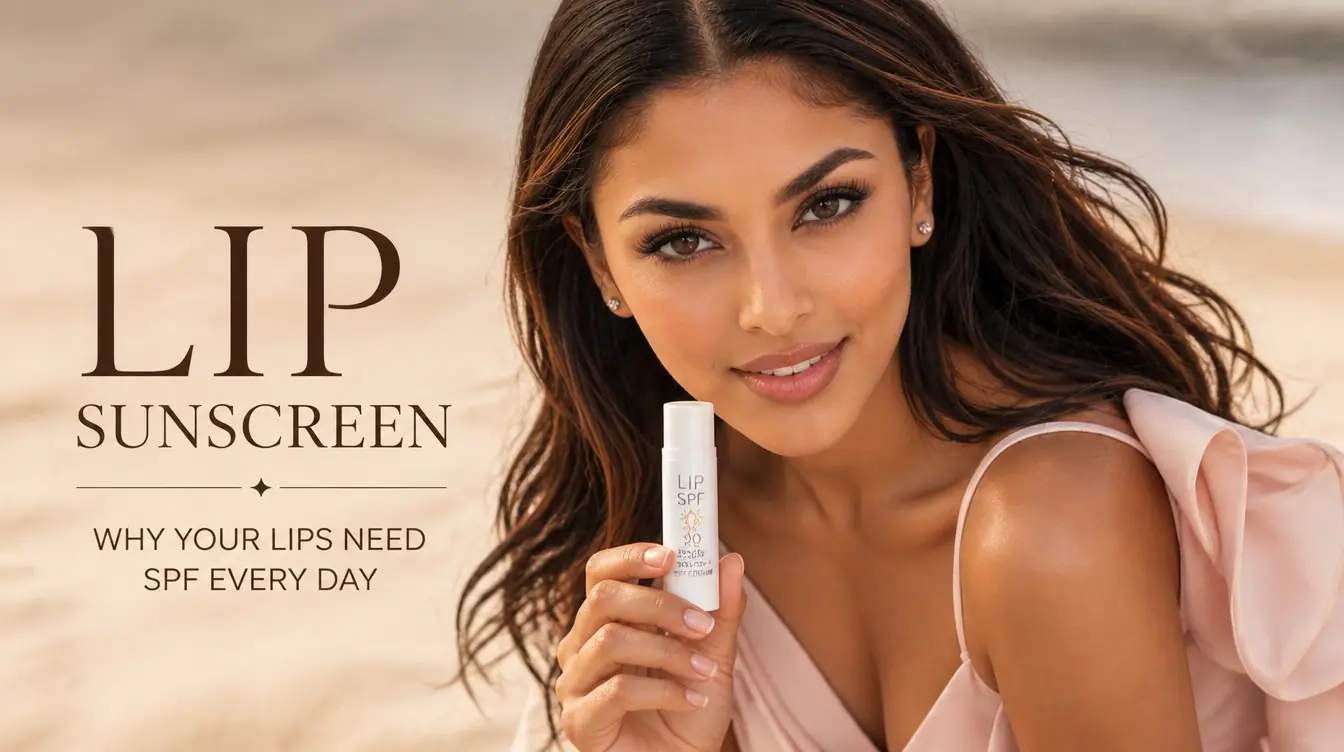
Lip sunscreen is the step almost everyone forgets, even after a full face of SPF, leaving delicate lips exposed to burning, ageing, and cancer risk. This guide explains why lip sunscreen matters and how to protect your lips from UV every single day.
You cleanse, tone, apply vitamin C serum, moisturise, and finish with a broad-spectrum SPF 50 sunscreen every single morning. Your skincare routine is meticulous, your dedication admirable, and your knowledge of UV protection genuinely impressive. But here is the uncomfortable truth: the moment you skip lip sunscreen, you are leaving one of the most sun-vulnerable areas on your face completely undefended. Your lips absorb ultraviolet radiation just as readily as the skin on your cheeks or forehead, and in many ways they are far more susceptible to damage. The habit of stopping your SPF routine at the lip line is not just a minor oversight. It is a gap that accumulates over years, contributing to premature aging, pigmentation changes, and a meaningful increase in the risk of a particularly serious form of skin cancer.This guide covers everything you need to know about protecting your lips from the sun: the biology behind why lips burn and age faster than facial skin, the science of UV radiation and how it damages lip tissue, how to choose the right SPF product for your lips, how to layer it with lip colour, when to reapply, and what ingredients to look for or avoid. Whether you are brand new to the concept of lip sun protection or you have been using a tinted SPF balm for years and want to optimise your routine, this is the deep dive your lips deserve.
Reviewed by the BeautynFacts editorial team. Last updated: May 2026.
The Anatomy of Your Lips: Why They Have Almost No Natural Sun Defense
To understand why lip sunscreen matters so profoundly, you need to understand what makes lip skin fundamentally different from the skin elsewhere on your face and body. The lips are covered by a special tissue called the vermilion border, which is a thin area between the outer facial skin and the inner mucous membrane of the mouth. This tissue is dramatically thinner than regular skin, and that thinness comes with a set of biological consequences that make the lips uniquely vulnerable to sun exposure.
Melanin: The Skin’s Built-In SPF
Your skin’s primary natural defence against ultraviolet radiation is melanin, the pigment produced by specialised cells called ‘melanocytes’. Melanin absorbs UV radiation and dissipates it as heat, preventing it from reaching and damaging the DNA in deeper skin cells. The more melanin your skin produces, the greater your natural protection against UV-induced damage. This is why people with deeper skin tones have a higher baseline level of natural UV protection compared to those with lighter complexions, though it is critically important to note that no skin tone is immune to UV damage or skin cancer.
The vermilion zone of the lips contains dramatically fewer melanocytes than the surrounding facial skin. Even in individuals with very deep skin tones who have high concentrations of melanin throughout the rest of their face, the lip area has a relatively sparse melanocyte population. This means that regardless of your natural skin tone, your lips are providing themselves with significantly less natural UV filtering than the skin on your cheeks, forehead, or nose. Your lips are, in effect, working without the SPF advantage that the rest of your skin enjoys around the clock.
Thin Stratum Corneum, Thin Defense
The stratum corneum is the outermost layer of the skin, composed of dead skin cells that form a protective barrier. On most parts of the body, this layer is reasonably thick and provides physical protection against environmental damage, including UV radiation. On the lips, the stratum corneum is exceptionally thin. Some areas of lip skin have a stratum corneum that is only a few cell layers deep, compared to the much thicker layers found on the palms or even the forehead. This thinness is what provides lips their translucent quality and allows the underlying blood vessels to show through, giving them their characteristic reddish or pinkish hue. But that same thinness removes a crucial layer of physical protection from UV radiation.
No Sebaceous Glands, No Oil Layer
The skin on most of your face and body contains sebaceous glands that produce sebum, the natural oil that keeps skin moisturised and helps maintain the skin barrier. The vermilion area of the lips has no sebaceous glands at all. This means lips cannot produce their own moisturising oil layer, which is why they tend to dry out and chap more easily than other skin does. It also means they lack even the minimal UV scattering effect that a healthy skin oil layer can provide. The lips are entirely dependent on external products for both moisture and sun protection.
UV Radiation and What It Does to Your Lips
Ultraviolet radiation from the sun arrives at your skin in two primary forms that are relevant to daily sun protection: UVA and UVB radiation. Understanding the difference between these two types of radiation is essential for choosing an effective lip sunscreen and understanding why broad-spectrum protection matters.
UVB Radiation: The Burning Ray
UVB radiation has a shorter wavelength and carries more energy per photon than UVA radiation. It is primarily responsible for sunburn, the visible reddening and inflammation of skin that occurs after acute UV overexposure. UVB radiation is most intense during the midday hours, particularly between 10 a.m. and 4 p.m., and its intensity varies with the seasons. The SPF number on a sunscreen product specifically measures protection against UVB radiation. When your lips become chapped and red after a day at the beach, UVB is doing significant damage. On the lips, UVB exposure causes direct DNA damage in the lip cells and triggers inflammation that, over time, contributes to structural changes in the lip tissue.
UVA Radiation: The Aging Ray
UVA radiation has a longer wavelength and penetrates more deeply into the skin than UVB. It is present at relatively consistent levels throughout all daylight hours, across all seasons, and even on cloudy days. UVA passes through window glass, which is why dermatologists often mention that sun damage can occur even when you are sitting indoors near a window. On the lips, UVA radiation penetrates into the deeper layers of lip tissue, breaking down collagen and elastin fibres. This structural breakdown is responsible for the loss of lip fullness and definition that occurs with age. Broad-spectrum lip sunscreen, which protects against both UVA and UVB, is therefore essential for addressing both immediate burning risk and long-term aging concerns.
Actinic Cheilitis: The Precancerous Condition You Need to Know About
Chronic sun exposure on the lips can lead to a condition called ‘actinic cheilitis’, sometimes referred to as ‘farmer’s lip’ or ‘sailor’s lip’ due to its historically higher prevalence among people who work outdoors. Actinic cheilitis is a precancerous condition that affects the lips, most commonly the lower lip, which receives more direct sun exposure due to its angle and position. It presents as persistent dryness, scaling, and a blurring or loss of definition of the vermilion border. The lip tissue may appear pale, white, or slightly grey and may feel rough or leathery to the touch.
Actinic cheilitis is not simply dry lips that need more balm. It represents actual dysplastic cellular changes in the lip tissue caused by cumulative UV damage. Without treatment and sun protection intervention, actinic cheilitis can progress to squamous cell carcinoma of the lip, a form of skin cancer that carries a higher metastatic risk than squamous cell carcinoma on other areas of the body. Studies have found that squamous cell carcinoma arising from actinic cheilitis has a significantly higher rate of spreading to the lymph nodes compared to the same cancer arising on other sun-exposed skin.
Squamous Cell Carcinoma of the Lip: Understanding the Risk
Squamous cell carcinoma of the lip accounts for a substantial proportion of all oral cancers, with the lower lip being affected far more often than the upper lip. The risk factors for lip cancer include cumulative lifetime UV exposure, outdoor occupation, tobacco use, and fair skin. However, it is important to recognize that anyone can develop lip cancer regardless of skin tone or lifestyle. The relative scarcity of melanin in lip tissue means that even individuals who have high natural UV protection on their facial skin remain at elevated risk on their lips.
The mortality rate for lip cancer is lower than for many internal cancers when caught early, but the local tissue destruction and surgical consequences of treatment can be significant. Lips that develop carcinoma often require surgical removal of affected tissue, which can affect speech, eating, and appearance. Prevention through consistent use of broad-spectrum lip sunscreen represents one of the most straightforward and effective strategies for reducing the risk of lip cancer over a lifetime.
UV-Induced Lip Pigmentation Changes
In addition to the risk of cancer, UV exposure changes the colour of the lips, which many people find unattractive. Chronic sun exposure can lead to darkening of the lips, uneven pigmentation, and the development of small dark spots on the vermilion surface. While hyperpigmentation on the lips can have multiple causes, including hormonal changes, certain medications, and nutritional deficiencies, UV exposure is a major contributing factor that is entirely preventable. In some individuals, UV-induced melanin activity in the lips presents as diffuse darkening, while in others it creates discrete spots of discolouration.
Perhaps less obvious but equally significant is the effect of UV exposure on the structural proteins of lip tissue. As UV radiation breaks down collagen and elastin over years of cumulative exposure, lips lose their natural volume, definition, and the subtle convexity that characterises youthful lips. The vermilion border becomes less crisp, lip lines develop above the upper lip, and the overall plumpness of the lips diminishes. Unprotected sun exposure substantially accelerates many of the lip ageing concerns that drive people toward fillers and other cosmetic interventions.
Decoding SPF Ratings for Lip Products
The SPF system was designed to measure UVB protection, and understanding what the numbers actually mean will help you make more informed choices when selecting a lip sunscreen product.
What SPF Numbers Really Mean
SPF stands for Sun Protection Factor. The number indicates how much longer skin protected with the sunscreen can withstand UVB radiation before beginning to burn compared to completely unprotected skin. SPF 15 filters approximately 93 percent of UVB rays. SPF 30 filters about 97 percent. SPF 50 filters approximately 98 percent. The differences between these numbers become smaller as SPF values increase, which is why dermatologists often recommend SPF 30 as the practical minimum for adequate daily protection, with SPF 50 being the preferred choice for prolonged outdoor exposure.
For lip sunscreen specifically, most dermatologists and photobiologists recommend a minimum of SPF 30, with SPF 50 being the more protective choice, particularly for outdoor activities, sunny climates, or individuals with a history of sun sensitivity. The lip-specific concern is that lips are in almost constant indirect sun exposure throughout the day, even in urban settings, simply from reflected light off surrounding surfaces.
Broad-Spectrum: The Non-Negotiable Feature
An SPF number alone only tells you about UVB protection. Broad-spectrum coverage, which is required for products labelled as ‘broad-spectrum’ by regulatory standards, means the product also provides meaningful protection against UVA radiation. When evaluating lip sunscreen options, broad-spectrum designation is not optional. A product with SPF 50 but no UVA protection would block UVB burning effectively while leaving your lips completely exposed to the collagen-destroying, aging, and DNA-damaging effects of UVA radiation. Always check that your lip SPF product carries a broad-spectrum label.
Water and Transfer Resistance
Unlike sunscreen applied to the arms or back, lip sunscreen faces an almost continuous assault from eating, drinking, talking, and the natural habit of licking lips. This means that even a water-resistant formula will require significantly more frequent reapplication than sunscreen on other body parts. Look for water-resistant formulas for their additional durability, but always plan to reapply regardless of the formula type, particularly after eating or drinking.
Formats Matter: Balm vs. Stick vs. Gloss With SPF
Lip sunscreen comes in several different formats, and each has distinct advantages and trade-offs. Choosing the right format for your lifestyle and preferences significantly affects how consistently you will actually use it.
SPF Lip Balm
The traditional SPF lip balm is the most familiar format and typically comes in a small tube or pot. Balm formulas tend to have a higher concentration of emollient ingredients like beeswax, shea butter, or plant-based waxes that create a protective, conditioning layer on the lips. They are generally the most effective at delivering consistent sunscreen coverage because their waxy texture helps the product stay on the lips for longer without transferring immediately to drinks or food.
For those who already have a lip balm habit, transitioning to an SPF lip balm is the simplest possible upgrade. The application is identical, and the texture is familiar. The main limitation of balm formats is that they are typically clear or very lightly tinted, so they do not replace lip colour for those who prefer a more polished look.
SPF Lip Stick
SPF lipsticks bridge the gap between pure sun protection and lip colour. They are firmer than balms, offer effortless and precise application, and many come in shades that range from barely-there tints to deeper, more saturated colours. The stick format tends to have a slightly thicker feel on the lips than traditional lipstick, which is a trade-off of including the sunscreen actives and emollients necessary for protection.
For those who want colour and protection in a single step, an SPF lipstick is an excellent solution. The key is checking the SPF rating before purchasing, as some tinted lip sticks marketed as SPF products offer only minimal protection in the SPF 8 to 15 range, which is below what most dermatologists recommend as a baseline.
SPF Lip Gloss
SPF lip glosses appeal to those who prefer a high-shine, less waxy finish. They tend to be more comfortable and lightweight on the lips, and the gloss finish is fashionable and youthful. However, glossy lip products have an important downside from a sun protection perspective. The shine of a gloss can actually amplify the amount of UV radiation reaching the lip surface by reflecting and focusing light. A clear or lightly tinted gloss with an inadequate SPF could theoretically provide less net protection than wearing nothing whatsoever.
For this reason, if you prefer a gloss finish, choosing a formula with at least SPF 30 broad-spectrum protection is even more important than it would be with a matte or satin formula. Several reputable sunscreen-focused beauty brands now offer glosses in the SPF 30 to 50 range that deliver adequate protection along with the aesthetic finish you prefer.
Mineral vs. Chemical Sunscreen Filters in Lip Products
Sunscreen products use either physical (mineral) filters, chemical filters, or a combination of both. The primary physical filters are zinc oxide and titanium dioxide. Chemical filters include avobenzone, octinoxate, homosalate, and others. Each approach has different characteristics on the lips.
Mineral filters sit on top of the skin and reflect UV radiation. They are generally considered appropriate for sensitive skin and are not absorbed into the body in the way that some chemical filters are. On the lips, mineral-filter products can sometimes leave a white cast, though cosmetic formulations have improved significantly, and many modern mineral lip sunscreens leave a minimal white cast. Mineral filters are also the recommended choice for those concerned about ingesting sunscreen actives, as the lips are inevitably subject to some incidental ingestion.
Chemical filters work by absorbing UV radiation and converting it to heat. They tend to have a more elegant, less heavy feel on the lips and are less likely to create a white cast. For individuals without sensitivity concerns and who are comfortable with chemical filter use, they represent a perfectly valid and widely used option in lip sun protection.
How to Layer Lip SPF With Lip Color
One of the most common questions about lip sunscreen is how it fits into a full lip-makeup routine. The answer requires understanding a bit about how sunscreen actives work and what disrupts their effectiveness.
The Sunscreen-First Approach
For the most reliable protection, applying a dedicated SPF lip balm before any lip colour is the most straightforward strategy. Apply the SPF balm, allow it to settle for a minute or two, and then apply your lip liner and lipstick over it. This creates a base layer of protection beneath your lip colour. The limitation of this approach is that as your lip colour wears off throughout the day, the sunscreen layer underneath comes with it, meaning protection diminishes with wear.
All-in-One SPF Lip Color
For many people, the simplest and most compliance-friendly approach is to use a lip colour product that incorporates SPF protection, such as a tinted SPF lip balm, an SPF lipstick, or an SPF-containing tinted lip oil. When protection and colour are combined in a single product, every reapplication of your lip colour also reapplies your sun protection, creating a much more practical, real-world routine.
Layering Considerations
If you prefer traditional lipstick over an SPF lip base, be aware that lip colour itself does not provide meaningful UV protection, regardless of its depth of colour or opacity. Darker pigments do scatter some light, but the protection is far below what even a low-SPF product provides. Similarly, a lip liner applied around the edges does not create a sun-protective barrier. Your strategy should always include a dedicated SPF product applied to the full lip surface, not just the surrounding area.
If you love a complex lip look with liner, lipstick, and gloss layered together, consider making the final gloss layer an SPF-containing gloss. This puts the protective layer on the outermost surface where it can intercept incoming UV radiation most effectively before it penetrates to the lip tissue below.
How Often to Reapply Lip Sunscreen
Reapplication is where lip sun protection most often breaks down in practice. Dermatologists recommend reapplying sunscreen to sun-exposed skin at least every two hours under normal circumstances, and more frequently after sweating or swimming. For lip sunscreen, the reapplication window is actually shorter in practice because of the activities that naturally remove the product.
The Real-World Reapplication Schedule
Eating a meal removes virtually all lip product, including any SPF you applied. Drinking a beverage, particularly anything warm, accelerates product removal. Talking, smiling, and general mouth movement all contribute to lip product wear. During a realistic full day, especially one that includes meals and time outdoors, you may find that your lips lose their sun protection much more quickly than the two-hour standard suggests.
A practical approach is to think of lip sunscreen reapplication the way you think of lip balm reapplication. Keep it in your bag, at your desk, or in your car, and reapply whenever your lips feel dry or your lip colour fades. After any meal or substantial snack, reapplication should be automatic. If you are spending an extended time outdoors, set a reminder for every 90 minutes rather than every two hours to compensate for the higher rate of product removal on lips compared to skin.
Morning Commute and Incidental Exposure
Many people underestimate the UV exposure that occurs during the daily commute. If you drive to work, the windscreen exposes your lips to UV radiation during your commute. Although standard automotive glass blocks most UVB radiation, a significant amount of UVA radiation still passes through. This means that even your driving time contributes to cumulative UV lip exposure. Applying lip sunscreen before leaving the house in the morning, not just before planned outdoor activities, is the habit that provides ongoing protection from this chronic low-level exposure.
Key Ingredients to Look for in Lip Sunscreen
Selecting an effective lip sunscreen means looking beyond just the SPF number and evaluating the full ingredient list. The best products combine effective UV filters with ingredients that nourish and protect the delicate lip tissue.
Broad-Spectrum UV Filters
Look for zinc oxide, titanium dioxide, avobenzone, or Tinosorb (the latter is more common in European and Australian formulations) as your primary UV-filtering ingredients. Zinc oxide is especially valued in lip products because it offers broad-spectrum UVA and UVB protection in one ingredient and is generally recognised as safe by major regulatory bodies worldwide.
Emollients and Moisturizing Agents
Since lips lack the ability to moisturise themselves, effective lip SPF products combine sun protection with substantive moisturising ingredients. Shea butter provides rich, non-greasy moisture and contains natural compounds that complement UV protection. Vitamin E (tocopherol) is a potent antioxidant that helps neutralise free radicals generated by UV exposure. Castor oil creates a smooth, comfortable film on lips and helps the formula adhere. Beeswax provides structure and helps the protective layer remain on the lips for longer.
Antioxidants
UV radiation generates free radicals, unstable molecules that cause cellular damage in lip tissue. Including antioxidant ingredients in your lip sunscreen adds a secondary layer of protection that addresses the oxidative damage that UV filters cannot completely prevent. Vitamin C (ascorbic acid or its derivatives), green tea extract, resveratrol, and niacinamide are all antioxidants that are often included in high-quality lip SPF formulations and provide important extra photoprotection.
Hyaluronic Acid for Lip Volume
Hyaluronic acid is a humectant that attracts water molecules to the area where it is applied. In lip products, it provides a plumping effect by hydrating the lip tissue. As a supporting ingredient in a lip sunscreen, it helps counteract the drying effect that some chemical UV filters can have and contributes to a more comfortable, fuller-feeling lip.
Ingredients to Avoid in Lip Sunscreen
Since people inevitably ingest small amounts of lip products throughout the day, the scrutiny of ingredients in lip sunscreen should be higher than that for sunscreens applied to other body parts.
Certain Chemical UV Filters
Octinoxate and oxybenzone are two chemical UV filters that have received increased scrutiny recently. Both have been detected in blood samples after topical application and in breast milk, raising questions about systemic absorption. The FDA has noted that these and several other chemical UV filters need more safety data. While the dermatological consensus is that the risk of sun damage outweighs theoretical filter safety concerns, many consumers prefer to avoid these specific filters in lip products given the ingestion factor. Zinc oxide and titanium dioxide do not have the same absorption concerns and are considered the safest option for lip-applied sunscreens.
Highly Fragrant Formulas
Fragrances and flavour compounds in lip products can cause contact sensitivity reactions on the lips, leading to irritation, swelling, and inflammation. When the lips already experience UV-related irritation, or the sun has sensitised them, a fragranced formula can compound the irritation. Fragrance-free formulations are the recommended choice for lip sunscreen, particularly for those with sensitive skin or any history of lip sensitivity reactions.
Potential Irritants in Damaged Lip Skin
Camphor, menthol, and eucalyptus are commonly used in lip products for their tingling, cooling sensation. However, these ingredients can irritate lips that sun exposure, chapping, or dryness have already compromised. The sensation of tingling is sometimes mistaken for a sign of efficacy, but in reality these ingredients are simply stimulating nerve endings and can disrupt the lip skin barrier over time. Particularly during periods of heavy sun exposure or if you are dealing with existing lip irritation, these ingredients are best avoided.
Winter vs. Summer: How Your Lip SPF Needs Shift
A persistent myth in sun protection is that sunscreen, including lip sunscreen, is only necessary during the summer months or in warm weather. This misunderstanding leads many people to use SPF lip products only during beach seasons while abandoning the habit entirely in autumn and winter.
UV Radiation Is a Year-Round Reality
UVB radiation does decrease in intensity during the winter months at temperate latitudes, which is why sunburn is less common in winter. However, UVA radiation, which is responsible for the majority of photoaging and DNA damage in lip tissue, remains present at significant levels throughout the year and is not substantially reduced by cloudy weather. The clouds that make a winter day feel dark and cool do not meaningfully filter UVA radiation. Your lips receive UV exposure on grey December days just as they do on clear July days, but with a different spectrum composition.
Snow and Reflection: The Winter Amplification Effect
Snow is one of the most reflective natural surfaces on Earth, bouncing back up to 80 percent of UV radiation that strikes it. Spending time in snowy environments—whether skiing, snowboarding, hiking, or simply walking through a snowy urban landscape—dramatically amplifies UV exposure on all exposed skin, including the lips. Mountain winter environments rank among the highest UV-exposure settings that most people ever encounter due to the combination of high altitude (which reduces the atmosphere’s UV-filtering effect) and snow reflection. Using a high-SPF lip sunscreen product in winter outdoor settings is not optional for adequate protection.
Winter Lip Skin: Different Needs, Same Protection Requirement
Cold weather, low humidity, and indoor heating all work together to strip moisture from lip tissue, leaving lips more chapped and compromised in winter. A damaged lip barrier from chapping is even more permeable to UV radiation and environmental irritants than healthy lip skin. For winter lip care, prioritising a richer, more emollient SPF lip balm formula that addresses both the moisture deficit and the UV exposure challenge is the ideal approach. Formulas containing heavier emollients like lanolin, cocoa butter, or shea butter alongside adequate SPF protection provide dual-action winter lip care.
Summer Lip SPF Priorities
In summer, the concerns shift somewhat. Higher UVB intensity means a greater risk of acute burning damage to lip tissue, making the SPF rating of your lip sunscreen more critical. Heat and humidity increase the rate at which lip products wear off, requiring more frequent reapplication. And activities like swimming, which are more common in summer, rapidly remove lip sunscreen, necessitating application after every water exposure, regardless of the product’s water-resistance claims.
During summer outdoor activities, applying a stick or balm format rather than a gloss or oil may provide better practical durability on the lips. The heavier wax base of a stick or balm transfers less readily to towels, water, and food than the lighter formulas of oils and glosses. For days at the beach or pool, the most reliable strategy is to treat your lips like any other exposed skin area and reapply every time you apply your body sunscreen.
Building Lip Sun Protection Into Your Existing Routine
The most effective lip sunscreen is the one you actually use consistently. Understanding what works requires looking at where lip SPF fits naturally into your existing habits rather than treating it as an entirely separate task.
The Morning Routine Integration
For those who follow a morning skincare routine, lip sunscreen applies after lip balm if you use one, or as the final step before lip makeup. Applying SPF lip balm immediately after applying your facial sunscreen creates a natural habit pairing that reinforces the lip protection step. If you wear makeup, transitioning to a tinted SPF lip product as your primary lip colour means you get protection and colour in the same step, with zero additional time investment.
The No-Makeup Approach
For days when you are not wearing any lip colour, a clear or lightly tinted SPF balm is both undetectable and highly effective. Several brands offer formulas so lightweight and sheer that they are indistinguishable from a regular lip balm in appearance while delivering full broad-spectrum SPF 30 or 50 protection. These products are particularly valuable for those who prefer a natural look but still want the underlying protection.
Making Reapplication Automatic
Strategic product placement is the simplest behaviour design tool for improving reapplication habits. Keeping an SPF lip product in every bag you regularly carry, at your desk at work, in your car’s centre console, and in your gym bag means that the product is always available at the moments when you would naturally reach for a lip balm. Reducing the friction of access is the single most reliable way to increase reapplication frequency in real life.
Frequently Asked Questions About Lip Sunscreen
Does regular lipstick protect my lips from the sun?
Standard lipstick does not provide meaningful, reliable sun protection, even though the pigments in deeply coloured formulas do scatter some light. The amount of UV protection provided by the pigments in regular lipstick is far below even SPF 15 and cannot be relied upon as your primary sun protection strategy. If you want sun protection from your lip colour, you need a product that specifically includes broad-spectrum UV filters and has an SPF rating on the label.
Can I use my regular facial sunscreen on my lips?
Technically, yes, many facial sunscreens can be applied to the lips and will provide sun protection. The practical limitation is that most facial sunscreens are not formulated for the lip environment. They may feel uncomfortable on the lips, have a strong taste or smell, and transfer quickly from the lips to food and drinks. A dedicated lip sunscreen formulated with lip-appropriate textures and ingredients will be both more comfortable and more likely to be used consistently. However, in the absence of a lip-specific product, applying your regular facial SPF to your lips is far better than no protection at all.
Is SPF 15 enough for my lips?
Most dermatologists consider SPF 15 to be the bare minimum for any meaningful sun protection and recommend SPF 30 as the practical daily standard. Given that the lips receive constant UV exposure throughout the day, are frequently cleared of sunscreen products through normal activities, and have no natural melanin defence, SPF 30 should be considered the minimum for lip sunscreen. SPF 50 provides the highest commonly available protection and is the preferred choice for extended outdoor time, water activities, or high-UV environments.
How do I know if my lips are already showing sun damage?
Early signs of UV damage on the lips include persistent dryness that does not respond well to regular moisturising balm, a loss of definition at the vermilion border, patchy or uneven pigmentation on the lip surface, and a rough or slightly scaly texture. More advanced sun damage presents as the pale, greyish, leathery appearance of actinic cheilitis. Any persistent change in the colour, texture, or surface of your lips that does not resolve within a few weeks warrants evaluation by a dermatologist, as early intervention is most effective for precancerous lip conditions.
Does a higher SPF mean I need to reapply less often?
No. The SPF rating measures the degree of protection provided, not the duration. All sunscreens, regardless of their SPF value, break down with time, exposure to light, heat, and physical removal through eating and drinking. A lip sunscreen with SPF 50 offers more protection per application than SPF 30, but it still requires the same reapplication frequency. Every two hours under normal conditions, and after every meal or substantial drinking, is the standard recommendation regardless of SPF value.
Are lip sunscreen products safe during pregnancy?
This is a question that is worth discussing with your healthcare provider, as individual circumstances vary. As a general principle, mineral lip sunscreens containing zinc oxide and titanium dioxide are the preferred option during pregnancy because they are not absorbed through the skin in the way that some chemical UV filters are. Zinc oxide in particular has an excellent safety profile and is widely used in diaper rash creams and other products designed for sensitive skin. Dermatologists commonly advise avoiding chemical filters like oxybenzone and octinoxate during pregnancy until more complete safety data is available.
Do I need different lip SPF products for my upper and lower lips?
No, the same product applied to both lips is appropriate. However, it is worth noting that the lower lip receives significantly more direct sun exposure than the upper lip due to its angle relative to incoming solar radiation. When applying a stick or balm, giving the lower lip an extra pass for comprehensive coverage is a worthwhile practice, especially during outdoor activities.
Can lip sunscreen cause breakouts around the mouth?
Certain topical products, including sunscreens and emollient lip products, can trigger or worsen perioral dermatitis, a rash that appears around the mouth. If you develop redness, bumps, or irritation around the lip area after starting a new lip sunscreen, discontinue use and consult a dermatologist. Mineral formulas are generally less likely to cause this type of reaction than heavily fragranced or richly emollient formulas. Applying the lip product carefully to the lip surface only, while avoiding the skin immediately surrounding the lips, can also help minimise this type of reaction.
What is the best lip sunscreen for dark skin tones?
Individuals with deeper skin tones often prefer chemical filter formulas for lip sunscreen because mineral filters, particularly titanium dioxide, can leave a visible white cast on deeper skin tones. Several newer mineral formulations have addressed this issue with tinted zinc oxide formulas that blend seamlessly across a range of skin tones. Chemical filter lip SPF products with SPF 30 to 50, or hybrid formulas that combine small amounts of mineral filters with chemical filters, tend to perform best cosmetically across all skin tones. Darker skin tones still benefit fully from lip sun protection despite having higher natural melanin levels in facial skin, since the lips themselves remain melanin-deficient regardless of overall skin tone.
How early should children start using lip sunscreen?
The lip skin of children has the same UV vulnerabilities as adult lip skin, and cumulative UV damage begins in the first years of life. Sun protection recommendations for children generally follow similar principles to those for adults, with added care to use gentle, mineral-based formulas. Many paediatric dermatologists recommend applying SPF lip balm to children from the time they are old enough to tolerate lip products, typically from toddler age onwards. Establishing lip sun protection habits in childhood creates a lifetime pattern that significantly reduces cumulative UV damage and long-term skin cancer risk.
The Cumulative Argument for Lip Sunscreen
The case for lip sunscreen is not primarily about a single dramatic sun exposure incident. It is about the mathematics of cumulative UV exposure over a lifetime. Consider that from the time you are old enough to spend time outdoors, your lips receive UV radiation every single day that you are outside, whether for five minutes or five hours. Without protection, that exposure accumulates over decades into a substantial total UV dose absorbed by tissue that has virtually no natural defences.
A small daily habit can substantially shift that lifetime equation. Applying broad-spectrum SPF 30 or 50 lip sunscreen every morning, reapplying after meals and outdoor activities, and reaching for your SPF lip balm as automatically as you reach for any other lip product represents an investment of perhaps thirty seconds per day. That thirty seconds, consistently applied over years, is the difference between lips that age on a UV-accelerated timeline and lips that maintain their natural structure, pigmentation, and health far into adulthood and beyond.
The popularity of lip fillers, lip treatments, and depigmentation procedures reflects how significantly lip aging and sun damage affect quality of life and self-perception for many women. Many of these cosmetic interventions address precisely the changes that UV exposure accelerates. Preventing the damage is always more effective, more economical, and more comfortable than correcting it after it has occurred.
Choosing Your Lip Sunscreen: A Practical Summary
Selecting the right lip sunscreen comes down to a few key criteria applied to your individual lifestyle and preferences. Choose a product with a minimum SPF 30, and opt for SPF 50 if you spend significant time outdoors. Confirm that the product carries a broad-spectrum designation, ensuring UVA and UVB coverage. For those who prefer to minimise chemical UV filter ingestion, choose a mineral formula with zinc oxide as the primary active ingredient. Select a format, whether balm, stick, or gloss, that fits naturally into your existing lip care and makeup habits, since the best product is the one you will use consistently every day. Prioritise formulas that include moisturising and antioxidant-supporting ingredients for comprehensive lip care, and avoid heavily fragranced formulas or those that contain unnecessary irritants, such as camphor or menthol.
Your lip sunscreen does not need to be complicated, expensive, or inconvenient. It needs to be consistent. The gap in your SPF routine at the lip line is the most straightforward gap in your entire sun protection strategy to close, and the benefits of closing it are both immediate and lifelong. Your lips are part of your skin and deserve the same thoughtful daily UV protection you already give the rest of your face.
RELATED ARTICLES:
How to use sunscreen to prevent the appearance of spots?
Skincare-infused makeup: Why your 2026 foundation should double as a serum
PDRN Skincare: The K‑Beauty Ingredient That Went From Clinics to Your Vanity
Skin Tints That Work For a Natural Base
2026 Skin Streaming Routine
About The Author

COMMENTS