



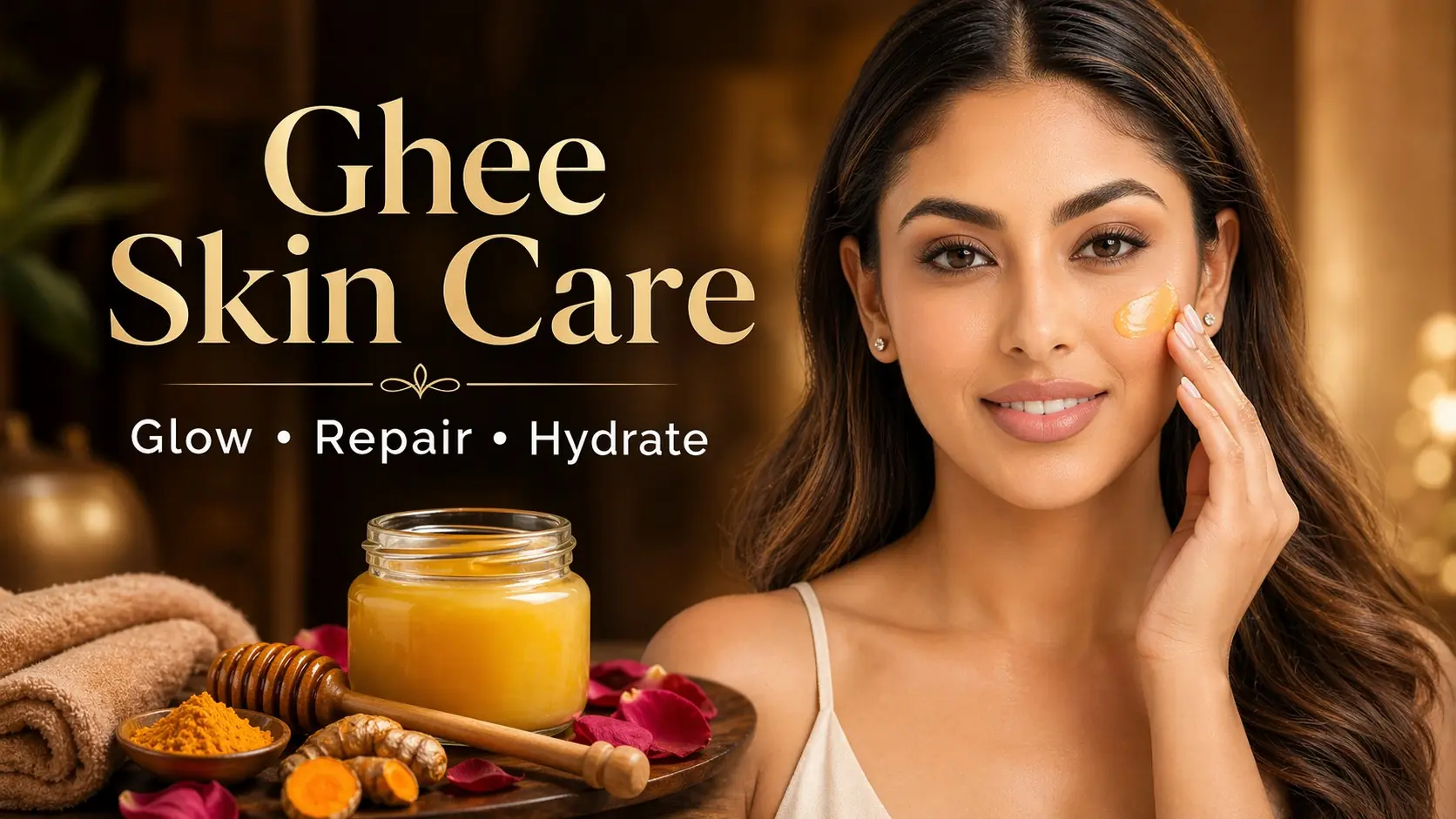
Ghee skin care has been trusted in Ayurveda for thousands of years, and modern dermatology is finally catching up. Its fatty-acid profile closely mirr
Ghee skin care has been trusted in Ayurveda for thousands of years, and modern dermatology is finally catching up. Its fatty-acid profile closely mirrors your skin’s natural sebum, its vitamin A supports cell turnover, and its rich emollient feel locks in moisture without clogging pores. This guide explains the science, shares the safest DIY masks for every skin type, and shows exactly how to work ghee into your existing routine.
Published · Updated
What is ghee, and how is it made?
The Ancient Origins of Ghee
Ghee originates from South Asia, where it has served as a cornerstone of Ayurvedic medicine and traditional cooking for at least five thousand years. The word “ghee” derives from the Sanskrit term “ghrita”, which translates roughly as “sprinkled” or “bright”. Ancient Ayurvedic texts describe ghee as the finest of all fats and prescribe it for a wide range of conditions, from digestive disorders to inflammatory skin diseases and wound care.
The Charaka Samhita, one of the foundational texts of Ayurvedic medicine, lists over one hundred medicinal uses for ghee. The Sushruta Samhita, which focuses on surgery and wound management, documents specific topical applications for burns, abrasions, and chronic inflammatory skin conditions. These texts were composed between 400 BCE and 200 CE, yet the practices they describe align closely with what modern biochemistry now confirms about ghee’s composition.
Ghee was also deeply embedded in spiritual and cultural life across South Asia. It was offered in fire rituals called “havan” or “yagna”, used to anoint newborns, and applied to brides before wedding ceremonies in a ritual called “ubtan”. This pre-bridal treatment mixed ghee with turmeric, sandalwood, and other botanicals to create a luminous, even complexion. The tradition continues in many Indian households today, passed down through generations as living knowledge.
The modern Western rediscovery of ghee began with the rise of paleo and ketogenic dietary movements in the early 2010s. As these communities rehabilitated saturated fat and sought ancestral food sources, ghee entered mainstream grocery stores. Skincare enthusiasts followed. Beauty brands now incorporate ghee into serums, balms, body butters, and eye creams, reflecting a broader consumer shift toward single-ingredient, heritage-backed formulations.
The Clarification Process Explained
Ghee is not simply melted butter. It is butter that has undergone a careful clarification process to remove water, milk proteins, and lactose, leaving behind pure butterfat. This process changes both its chemistry and its cosmetic performance. Understanding how ghee is made helps you choose the right product for your skin and confirms why it outperforms plain butter in topical applications.
The process begins with high-quality, ideally grass-fed, unsalted butter. The butter is placed in a heavy-bottomed pot and heated gently over low to medium heat. As the temperature rises, three things happen in sequence. First, the water in the butter evaporates, causing audible bubbling. Second, the milk solids separate from the fat, sinking to the bottom of the pot and turning golden brown. Third, a foam forms on the surface, which is skimmed away.
After approximately 20 to 30 minutes, the liquid fat becomes clear and golden. The browned milk solids at the bottom contribute a mild, nutty aroma. The finished ghee is strained through cheesecloth or a fine mesh strainer to remove all solids. What remains is a pure, shelf-stable fat with a higher smoke point, a longer shelf life, and a richer concentration of fat-soluble nutrients than the butter it came from.
Grass-fed ghee is widely considered superior for both culinary and cosmetic purposes. Cattle that graze on pasture produce milk with significantly higher levels of conjugated linoleic acid, beta-carotene, and fat-soluble vitamins. These compounds transfer directly into the ghee and into your skin when you apply it topically. When selecting ghee for skincare, prioritise organic, grass-fed, unsalted products and avoid any that contain added flavours, salt, or preservatives.
How Ghee Differs from Butter and Other Oils
Butter and ghee begin as the same ingredient, but the clarification process creates meaningful differences in composition. Butter contains approximately 80 percent fat, 16 percent water, and 3 to 4 percent milk solids, including lactose and casein. Ghee contains over 99 percent fat with virtually no water or milk solids remaining. This distinction matters enormously for topical use.
Milk proteins can trigger inflammatory responses in individuals with dairy sensitivities. Because ghee contains essentially no casein or lactose, it is far less likely to cause reactions when applied to the skin. The absence of water also makes ghee a more stable product that resists bacterial growth and oxidation without refrigeration, a stability that plain butter cannot offer.
Compared to plant-based oils, ghee occupies a unique position. Oils such as argan, rosehip, and jojoba are rich in polyunsaturated fatty acids, which are beneficial but also prone to oxidation. Ghee is dominated by saturated and monounsaturated fats, which are more chemically stable. It also carries fat-soluble vitamins, particularly vitamins A, D, E, and K2, at levels most plant oils cannot match. This combination of stability and nutritional density gives ghee a distinct edge as a topical ingredient.
The Science Behind Heres’ Ghee Skin Benefits
Fatty Acid Profile and Barrier Function
The skin barrier, also called the stratum corneum, is a layered structure of dead skin cells embedded in a lipid matrix. This matrix is composed primarily of ceramides, cholesterol, and free fatty acids. When the barrier is intact, it prevents moisture loss, blocks environmental irritants, and maintains the skin’s optimal pH. When it is compromised, the results include dryness, sensitivity, redness, and accelerated aging.
Ghee is rich in several fatty acids that directly support barrier function. Oleic acid, a monounsaturated fat making up roughly 28 percent of ghee’s fatty acid profile, is particularly effective at penetrating the deeper layers of the stratum corneum. It softens the lipid matrix, improves skin flexibility, and enhances the absorption of other active ingredients. Palmitic acid and stearic acid, both saturated fats in ghee, help keep the skin barrier strong by filling gaps in the lipid structure and reducing transepidermal water loss.
Butyric acid is one of ghee’s most distinctive fatty acids. It represents approximately 3 to 4 percent of ghee’s total fat content, a proportion unusually high compared to most other fats. Butyric acid is a short-chain fatty acid with proven anti-inflammatory effects. Research published in the Journal of Nutritional Biochemistry shows that butyrate inhibits the activity of NF-kB, a transcription factor that drives inflammatory signalling in skin cells. This mechanism explains why ghee can calm reactive and inflamed skin with consistent topical use.
Fat-Soluble Vitamins: A, D, E, and K2
Ghee is one of the richest food-derived sources of fat-soluble vitamins, and these nutrients retain their biological activity when applied to the skin. Because ghee’s lipid matrix closely resembles the skin’s own lipids, it acts as an effective delivery vehicle, carrying compounds past the outer layers of the epidermis and into the dermis below.
Vitamin A in ghee exists primarily as retinol and its precursor forms. Retinol is the leading anti-ageing ingredient in modern dermatology. It speeds up cell turnover, boosts collagen production, reduces fine lines and dark spots, and normalises sebum production in oily skin types. Unlike pharmaceutical retinoids, the retinol in ghee is delivered in a buffering fat matrix, which means it usually causes less irritation than isolated retinol serums. This makes ghee a gentler entry point for those new to vitamin A skincare.
Vitamin E, present in ghee as tocopherol, acts as a lipid-soluble antioxidant. It neutralises free radicals generated by UV exposure and pollution. Free radicals fragment collagen fibres and oxidise membrane lipids, accelerating the visible signs of aging. Vitamin E also supports wound healing by reducing inflammation and promoting new skin cell formation. When paired with vitamin C from another source, vitamin E’s antioxidant capacity is substantially amplified through a regeneration reaction between the two molecules.
Vitamin K2, found in grass-fed ghee at meaningful levels, plays a less well-known but important role. K2 activates proteins that regulate calcium deposition in soft tissue. In the skin, the protein helps prevent the calcification of elastin fibres, which contributes to sagging and loss of elasticity. Emerging research also suggests that vitamin K2 may reduce dark circles by improving capillary wall integrity and reducing visible pooled blood beneath thin periorbital skin.
Butyric Acid and the Skin Microbiome
Butyric acid deserves a more profound discussion because it is one of the most compelling scientific reasons to use ghee on inflamed or sensitised skin. In the gut, butyrate is produced by beneficial bacteria and is well-documented as a modulator of inflammatory pathways. Topically, the same mechanisms appear to operate in skin tissue.
Skin conditions such as eczema, rosacea, contact dermatitis, and psoriasis are all characterised by elevated inflammatory signalling. In eczema, a compromised barrier allows allergens and irritants to penetrate, triggering an immune cascade that produces redness, itching, and scaling. Butyric acid interrupts this cycle in two ways. First, it inhibits NF-kB activation, reducing the production of pro-inflammatory cytokines, including IL-6 and TNF-alpha. Second, it supports barrier repair by promoting the synthesis of tight junction proteins that hold skin cells together.
Butyrate also appears to positively influence the skin microbiome. The skin hosts a complex system of bacteria, fungi, and viruses. When this system disrupts, opportunistic organisms can proliferate, worsening inflammatory conditions. Butyrate creates a microenvironment that favours beneficial bacteria over pathogenic ones, supporting long-term skin health beyond its immediate anti-inflammatory effects.
Here are the benefits of ghee skin, categorised by skin type.
Dry and Dehydrated Skin
Dry skin lacks sufficient sebum production. Dehydrated skin lacks water content. Both conditions leave the complexion looking dull, feeling tight, and developing fine lines more readily than well-moisturised skin. Ghee addresses both concerns directly.
Its high oleic acid content makes it an exceptional emollient. Emollients fill the microscopic gaps between skin cells, creating a smooth surface and preventing water from evaporating. Unlike water-based moisturisers that hydrate temporarily, ghee creates a semi-occlusive layer that locks in moisture for extended periods. Research on occlusive moisturisers indicates that even partial occlusion can diminish transepidermal water loss by 40 to 60 percent, resulting in quantifiable enhancements in skin hydration within two to three weeks of regular application.
For very dry skin or conditions such as ichthyosis, ghee can be applied to skin immediately after bathing while it is still slightly damp. This “soak and seal” technique is recommended by dermatologists for severely dry skin. It works by trapping existing water within the epidermis before the occlusive layer seals it in. Ghee performs this function while simultaneously delivering its fat-soluble vitamins and anti-inflammatory fatty acids.
Oily and Acne-Prone Skin
Applying fat to oily skin sounds counterintuitive. Many people with oily or acne-prone skin avoid all face oils out of fear that they will clog pores and worsen breakouts. The reality is more nuanced. Oily skin is not necessarily well-moisturized skin. Many people with surface oiliness are actually dehydrated at a cellular level, causing their sebaceous glands to overproduce sebum in compensation.
Used in small amounts, ghee can help regulate this overproduction. When skin receives adequate lipid nourishment from the outside, the sebaceous glands reduce their output over time, leading to less surface shine and smaller-appearing pores. The vitamin A content in ghee also supports sebum regulation. Retinol reduces the size and activity of sebaceous glands, which is the same mechanism exploited by prescription retinoids like tretinoin in acne treatment.
That said, ghee carries a comedogenicity rating of approximately 2 to 3 on the standard 0 to 5 scale, placing it in the low-to-moderate range. People with highly acne-prone skin should use ghee sparingly, primarily as a targeted spot treatment or overnight mask, rather than as an all-over moisturiser. A patch test on the jawline before applying to the full face is strongly recommended for anyone with a history of clogged pores.
Sensitive and Mature Skin
Sensitive skin reacts to a wide range of ingredients with redness, stinging, or itching. The most common cause is a compromised skin barrier, which allows irritants to penetrate past the protective outer layer. Ghee’s combination of barrier-repairing fatty acids and anti-inflammatory butyrate makes it particularly well-suited to sensitive skin types.
Because ghee contains no synthetic fragrances, preservatives, emulsifiers, or surfactants, it eliminates the most common irritants found in commercial skincare. It is also free of alcohol, which dehydrates and disrupts the barrier, and of essential oils, which are a leading cause of contact dermatitis. For skin that reacts to almost everything, ghee’s simplicity is one of its greatest advantages.
Mature skin benefits from ghee in multiple ways. As skin ages, sebum production decreases, cell turnover slows, and the lipid matrix in the stratum corneum becomes thinner and less effective. Collagen and elastin production decline, and the dermis loses volume and firmness over time. Ghee helps with these changes because it has vitamins A and K2, which support collagen and elastin integrity; vitamin E, which protects against free radical damage; and emollient fatty acids that replace some of the lost lipid content in aging skin.
How to Incorporate Ghee into Your Skincare Routine
Choosing the Right Ghee for Your Skin
Not all ghee products deliver equal results, and the differences matter when you are applying them to your face. Start with organic, grass-fed, unsalted ghee. Grass-fed ghee has significantly higher beta-carotene, CLA, and fat-soluble vitamin content than ghee made from conventionally raised cattle. The absence of salt is non-negotiable for topical use, as it can irritate sensitive skin and draw moisture out of the epidermis.
Look for ghee that is golden in colour and has a pleasant, mildly nutty aroma. Very pale ghee may indicate low beta-carotene content, which correlates with lower vitamin A precursor concentration. Ghee with an off or rancid smell has oxidised and should never be used on the skin. Oxidised fats generate free radicals on contact with the skin, which directly counteracts ghee’s antioxidant benefits.
If you cannot find a suitable commercial product, making ghee at home from high-quality grass-fed butter is straightforward and takes less than thirty minutes. Home-made ghee gives you full control over the source and allows you to infuse herbs such as calendula or rose petals during clarification for additional skin-soothing properties.
Step-by-Step Application Methods
There are several effective ways to use ghee as part of a daily or weekly skincare routine. The method you choose depends on your skin type, your specific concerns, and how you prefer to work new products into your regimen.
For general moisturising, apply a pea-sized amount of ghee to clean, slightly damp skin after cleansing. Warm it between your fingertips until it liquefies, then press it gently into the skin using upward strokes. Avoid rubbing, which stretches the skin. Allow it to absorb fully before applying makeup or sunscreen.
For an overnight treatment, apply a slightly more generous layer to clean skin before bed. This allows the fatty acids and vitamins to penetrate fully while the skin undergoes its natural overnight repair cycle. Growth hormone secretion peaks during sleep, driving accelerated cellular renewal. Delivering lipid nutrition during this window amplifies the skin’s repair process considerably.
For targeted treatments, apply ghee directly to specific problem areas: dry patches on the cheeks or forehead, rough elbows and knees, cracked heels, chapped lips, or dry cuticles. The lip skin and perioral area respond particularly well to ghee’s emollient properties because they lack sebaceous glands and depend entirely on external moisture sources.
Layering Ghee with Other Skincare Products
Ghee integrates well into existing skincare routines when you follow the correct layering order. Apply products from the thinnest to the thickest consistency. Water-based serums and essences go on first, followed by ghee, followed by heavier creams or sunscreen if needed.
Ghee pairs particularly well with hyaluronic acid serums. Hyaluronic acid is a humectant that draws water to the skin’s surface. Without an occlusive layer on top, that water can evaporate into the dry ambient air. Applying ghee over hyaluronic acid seals in the moisture it has drawn to the surface, creating a dual-action hydration system that outperforms either ingredient used alone.
Ghee should not be used under chemical sunscreens, as its occlusive nature can interfere with even absorption and reduce SPF efficacy. Opt for a mineral sunscreen (zinc oxide or titanium dioxide) if you plan to use ghee in a daytime routine. Alternatively, reserve ghee exclusively for your evening routine, where its regenerative properties can work without interference.
DIY Ghee Skincare Recipes
Ghee and Turmeric Brightening Mask
Turmeric contains curcumin, a polyphenol with potent anti-inflammatory and antioxidant properties. Combined with ghee’s fatty acids and vitamins, a turmeric mask addresses uneven tone, dullness, post-inflammatory hyperpigmentation, and early signs of sun damage. This combination has roots in the traditional Indian ubtan ritual and is supported by modern dermatological research on curcumin’s effect on melanin regulation.
To prepare this mask, combine one tablespoon of organic grass-fed ghee, half a teaspoon of high-quality turmeric powder, and half a teaspoon of raw honey. Mix thoroughly until the ingredients form a smooth paste. Apply an even layer to clean skin, avoiding the eye area. Leave the mask on for fifteen to twenty minutes, then rinse with lukewarm water and follow with a gentle cleanser. Apply your usual moisturiser afterwards.
Use this mask once or twice per week. Expect mild temporary staining from turmeric, particularly on fair skin. This fades within a few hours. If staining is a concern, add a small pinch of chickpea flour to the mixture. Its mild exfoliating action helps prevent staining while also removing surface dead skin cells and improving the absorption of the other ingredients.
Ghee and Honey Moisture Balm
Raw honey is a natural humectant and antimicrobial agent. Its high sugar content draws moisture to the skin, while its hydrogen peroxide content provides gentle antibacterial action. Combined with ghee, it creates a powerful occlusive balm suitable for extremely dry skin, chapped lips, dry patches, and minor cuts or abrasions.
Melt two tablespoons of ghee gently in a small pot or double boiler. Remove from heat and stir in one tablespoon of raw honey and one teaspoon of beeswax pellets if you want a firmer texture. Pour into a small glass jar and allow to cool at room temperature until it is set. Apply a small amount to dry lips, cuticles, or intensely dry skin areas as needed throughout the day.
This balm can be stored at room temperature for up to three weeks. For a more fluid texture, omit the beeswax and store in the refrigerator. The cooled mixture will solidify slightly but softens immediately on contact with warm skin.
Ghee Eye Treatment and Overnight Face Oil
The skin around the eyes is approximately three to five times thinner than the skin elsewhere on the face. It has few sebaceous glands, making it prone to dryness, fine lines, and puffiness. The periorbital area is also where aging and sleep deprivation show most visibly. Ghee’s vitamin K2 content makes it particularly appropriate for this area, as K2 supports capillary wall integrity and may reduce the appearance of dark circles caused by poor local circulation.
For an eye treatment, warm a tiny amount of ghee, less than a pea-sized quantity, between your ring fingers and gently pat around the orbital bone before bed. Use your ring finger because it applies the least pressure of any finger, reducing the risk of tugging delicate skin. Avoid applying ghee directly to the waterline or eyelid margin.
For an overnight face oil, warm one teaspoon of ghee and mix in two drops of rosehip oil and one drop of frankincense essential oil, unless you are sensitive to essential oils. Apply over clean skin at night. This combination provides retinol precursors from both the ghee and the rosehip oil, as well as boswellic acids from frankincense, which are known to have anti-inflammatory and anti-ageing effects in dermatological literature.
Ghee for Anti-Aging and Skin Repair
Collagen Support and Vitamin A Connection
Collagen is the structural protein that gives skin its firmness and thickness. The skin contains primarily type I and type III collagen, arranged in a matrix that provides mechanical resistance to stretching and sagging. From the mid-twenties onwards, collagen production declines at approximately one percent per year. UV exposure, smoking, and chronic inflammation accelerate this loss considerably.
Vitamin A is the most evidence-backed topical ingredient for stimulating collagen synthesis. It turns on retinoic acid receptors in fibroblasts, which are the cells that make collagen. This activation increases the genes that make collagen precursor proteins and at the same time stops matrix metalloproteinases (MMPs) from breaking down existing collagen. The retinol naturally present in grass-fed ghee initiates this same cascade, though more gently than isolated retinol or prescription-strength tretinoin.
For those new to retinol skincare or those who find synthetic retinol products too irritating, ghee offers a useful introduction. Regular use builds tolerance and begins to deliver measurable improvements in skin texture, firmness, and fine line depth over eight to twelve weeks. Those who later wish to progress to more concentrated retinol products will find their skin better prepared and less reactive after this foundational practice.
Oxidative Stress and Antioxidant Defense
Oxidative stress occurs when free radicals outnumber the antioxidant defences available to neutralise them. Free radicals are unstable molecules produced by UV radiation, air pollution, metabolic processes, and inflammatory reactions. They attack collagen, lipids, and DNA within skin cells, contributing to wrinkles, hyperpigmentation, and a loss of radiance.
Ghee counters oxidative stress primarily through its vitamin E content. Tocopherol intercepts free radical chain reactions by donating an electron to stabilise the reactive molecule before it can damage cellular structures. Ghee also contains trace amounts of beta-carotene, a carotenoid that acts as a free radical scavenger and contributes to the golden colour characteristic of high-quality grass-fed ghee.
Another antioxidant compound that is present in significant amounts in grass-fed ghee is CLA, or conjugated linoleic acid. Research indicates that CLA reduces markers of lipid peroxidation in skin tissue, protecting the cell membranes that confer skin its plumpness and resilience. CLA also has mild protective properties against UV-induced cellular damage, though this area of research continues to develop.
Healing Scars, Stretch Marks, and Rough Patches
Ayurvedic and traditional medicine have long used ghee to heal wounds, and modern research backs this up. The saturated fatty acids in ghee strengthen cell membranes and promote the proliferation of keratinocytes, the cells that resurface damaged skin. Vitamin A accelerates the resolution of post-inflammatory hyperpigmentation by speeding up cell turnover and normalising melanin distribution.
For scars and stretch marks, consistency of application matters more than quantity. Apply a small amount of ghee to the affected area once or twice daily, using gentle circular motions to stimulate microcirculation. On body areas, combine the body oil with dry brushing before application to exfoliate dead skin cells and improve penetration. Results on older scars develop slowly over several months, but improvements in texture, colour uniformity, and pliability are achievable with patient use.
For rough, thickened patches on the elbows, knees, or heels, combine ghee with coarse sugar or sea salt to create a simple exfoliating scrub. Massage into the affected area in circular motions, then rinse and seal in residual moisture with a final application of pure ghee. Repeat this treatment two to three times a week for noticeable softening in two to four weeks.
Potential Risks and How to Use Ghee Safely
Patch Testing and Allergy Considerations
Although ghee contains virtually no milk proteins after clarification, it is not entirely risk-free for individuals with severe dairy allergies. Trace amounts of casein and whey proteins can survive an imperfect clarification process, particularly in commercially produced ghee. Anyone with a diagnosed dairy protein allergy should consult a dermatologist before using ghee topically.
For everyone else, patch testing before full facial application is a sensible precaution. Apply a small amount of ghee to the inside of the wrist or behind the ear. Leave it for 24 hours without washing the area. If redness, itching, swelling, or irritation develops, discontinue use. If no reaction occurs, proceed with a test on a small section of facial skin, such as the jawline, before applying all over the face.
Ghee should also be avoided around open wounds or active infections unless used under medical supervision. While butyric acid has antimicrobial properties, applying any occlusive substance over an infected area can trap bacteria and worsen the infection. Use ghee only on intact, clean skin.
Comedogenicity and Pore Concerns
Ghee’s low-to-moderate comedogenicity rating means it can clog pores in susceptible individuals. The risk is higher in people with oily or combination skin who are already prone to blackheads or closed comedones. The oleic acid in ghee, while excellent for dry skin, can slow the natural desquamation process in oilier skin types, allowing dead cells and sebum to accumulate inside follicles over time.
To minimise the risk of pore-clogging, use ghee sparingly on your face. A thin layer applied to clean skin is far less likely to cause issues than a thick application. Double cleansing, which involves using an oil-based cleanser followed by a water-based cleanser, helps prevent product buildup when you use ghee regularly. Incorporating a gentle exfoliant such as a mandelic acid toner two to three times per week also helps prevent congestion from forming.
If you develop milia after starting ghee, reduce frequency of use or switch application to body areas only. Milia caused by heavy occlusive products typically resolve on their own within four to eight weeks once the offending product is discontinued.
Storage, Shelf Life, and Quality Control
Ghee’s stability is one of its practical advantages. Because it contains virtually no water and no milk solids, it resists bacterial growth without refrigeration. Store ghee in a clean glass jar with a tight-fitting lid, away from direct sunlight and heat sources, which degrade vitamin content and accelerate oxidative rancidity.
At room temperature, high-quality ghee remains fresh for two to three months. Refrigerated ghee keeps well for up to a year. Rancid ghee has a sharp, unpleasant smell similar to old butter. Never apply rancid ghee to the skin. Oxidised fats generate free radicals on contact with the skin, directly counteracting the antioxidant benefits of ghee.
Keep a separate jar of ghee for skincare if you also use it for cooking. Introducing food particles, water, or cooking vapours into your skincare ghee reduces its shelf life and introduces potential irritants. Use clean, dry utensils every time you scoop ghee from your skincare jar.
Ghee Versus Other Natural Skin Moisturisers
Ghee vs. Coconut Oil
Coconut oil is the most widely used natural skincare fat, but ghee surpasses it in several important respects. Coconut oil is approximately 90 percent saturated fat, dominated by lauric acid, which has strong antimicrobial properties but also a comedogenicity rating of 4 out of 5. This makes coconut oil a poor choice for facial use in most people, particularly those with oily or acne-prone skin.
Ghee’s fatty acid profile is more balanced, combining saturated fats with oleic acid in a ratio that supports both barrier function and absorption without overwhelming sebaceous follicles. Ghee also delivers fat-soluble vitamins A, D, E, and K2, which coconut oil lacks entirely. For dry body skin, both oils perform comparably as emollients. For facial use or any anti-ageing application, ghee’s nutritional profile gives it a meaningful advantage.
Ghee vs. Shea Butter
Shea butter is an excellent moisturiser derived from the fat of the shea tree nut. It is rich in stearic and oleic acids and contains triterpene alcohols, including lupeol, that carry anti-inflammatory properties. Shea butter has a comedogenicity rating of 0 to 2, making it safer than ghee for acne-prone skin. It is also completely dairy-free, which is an advantage for vegans or those with confirmed dairy allergies.
Ghee outperforms shea butter in vitamin content and in the presence of butyric acid, which shea lacks entirely. For individuals focused on anti-ageing, skin brightening, or managing inflammatory conditions, ghee’s vitamin A and K₂ content makes it a stronger choice. For purely emollient, soothing applications with no anti-ageing intent, shea butter and ghee perform at comparable levels.
Ghee vs. Rosehip Oil
Rosehip oil is a popular anti-ageing ingredient because it has a lot of trans-retinoic acid (a naturally occurring retinoid), vitamin C precursors, and linoleic acid. Linoleic acid is an omega-6 fatty acid that is particularly beneficial for acne-prone skin, as people with acne tend to have lower linoleic acid levels in their sebum. Rosehip oil has a low comedogenicity rating and absorbs quickly without greasiness.
Ghee and rosehip oil are highly complementary rather than competitive. Ghee provides barrier function, fat-soluble vitamins, and anti-inflammatory fatty acids. Rosehip oil contributes linoleic acid, natural retinoids, and rapid absorption. Combining a drop of rosehip oil with ghee in an overnight treatment delivers the benefits of both ingredients and addresses a wider range of skin concerns than either can achieve alone.
Frequently Asked Questions About Ghee Skin Care
Can I use ghee on my face every day?
Yes, you can use ghee on your face daily, but the right frequency and amount depend on your skin type. Dry and mature skin types benefit from daily application, ideally as part of an evening routine. Oily, combination, and acne-prone skin types should start with three times per week and monitor for any increase in breakouts or congestion before increasing frequency. Always apply a thin layer rather than a thick one. The skin can only absorb a limited amount of fat at a time, and excess ghee sitting on the surface is more likely to clog pores than to penetrate and provide benefit. A pea-sized amount is sufficient for the entire face in most cases.
Does ghee help with dark circles and under-eye puffiness?
Ghee can contribute to improving the appearance of dark circles over time, particularly those caused by poor circulation and capillary fragility rather than genetics or pigmentation. Vitamin K2, found in significant amounts in grass-fed ghee, activates proteins that help keep capillary walls strong and may reduce the pooling of blood that can be seen through the thin skin around the eyes. The moisturising effect also plumps fine lines around the eyes, making shadows appear less pronounced. Puffiness caused by fluid retention responds better to cold compresses or lymphatic drainage massage than to topical fat application. Ghee does not address puffiness directly, so set realistic expectations for that specific concern.
Is ghee suitable for people with lactose intolerance or dairy allergies?
Ghee is generally well-tolerated by people with lactose intolerance. The clarification process removes virtually all lactose from the finished fat. Most lactose-intolerant individuals can also consume ghee internally without issue, and topical use carries even less risk since ghee does not enter the digestive system. For dairy protein allergies, particularly casein allergies, the situation is less straightforward. Commercial ghee may contain trace amounts of casein, and some highly sensitive individuals react to these traces. If you have a confirmed casein allergy, perform a thorough patch test and consult your allergist or dermatologist before incorporating ghee into your skincare routine.
How long does it take to see results from using ghee on skin?
The timeline for results depends on what you are trying to achieve. Improvements in skin hydration and softness typically appear within one to two weeks of consistent daily use. Reductions in redness and inflammation may take two to four weeks. Anti-ageing benefits, including improvements in fine line depth, skin firmness, and tone evenness, develop more gradually. Expect to wait eight to twelve weeks of consistent use before evaluating anti-ageing outcomes. Ghee works with the skin’s own biology rather than forcing rapid surface changes. This means results are more subtle in the short term but more durable in the long term than many synthetic alternatives.
Can I use ghee as a makeup remover?
Yes, ghee is an effective makeup remover, particularly for long-wearing or waterproof formulas. Lipids dissolve other lipids, so ghee breaks down the silicones, waxes, and pigments in most cosmetics quickly and gently. Apply a small amount to dry skin and massage in gentle circular motions for thirty to sixty seconds. The makeup will lift and emulsify. Rinse with lukewarm water, then follow with a gentle water-based cleanser to remove all residue. This method is gentler than most commercial makeup removers, which often contain alcohol, fragrance, or surfactants that strip the barrier. It is particularly suitable for removing eye makeup, as it is non-irritating and delivers vitamin K₂ to the periorbital area during the removal process.
Conclusion
Ghee is far more than a kitchen ingredient revived by wellness culture. Its chemical composition gives it a genuinely powerful profile for topical skin health. Fatty acids, including oleic acid and butyric acid, repair and maintain the skin barrier, reduce inflammation, and regulate sebum. Vitamins A, D, E, and K2 deliver antioxidant protection, collagen support, and cellular renewal. Grass-fed sourcing and proper storage are critical to unlocking these benefits in full.
Dry, mature, and sensitive skin types benefit most from regular ghee use, though oily and acne-prone types can use it strategically in small amounts with excellent results. The DIY recipes in this guide give you practical starting points at every level of commitment. The comparisons with coconut oil, shea butter, and rosehip oil position ghee accurately: not as a universal replacement for your entire routine, but as a versatile, evidence-backed addition that works exceptionally well for specific purposes.
Start with a patch test. Use a pea-sized amount on clean skin in the evening. Please give your routine eight to twelve weeks of consistency before judging the results. Track how your skin responds and adjust frequency accordingly. For best results, combine ghee with a complementary humectant serum and protect with mineral SPF in the morning. The science is there. The history is there. Your next step is simply to begin.
RELATED ARTICLES:
Best Face Care Routine for Radiant Skin – Expert Tips & Skincare Secrets
How To Get Rid Of Ashy Elbows: Expert Tips
Acne Treatments for Pregnancy: Expert-Approved and Safe Options
Myth vs. Fact: Can Mangoes Cause Acne? Expert Reveals
Easy and simple Catrina makeup: 5 ideas to look pretty even if you are not an expert
About The Author

COMMENTS