
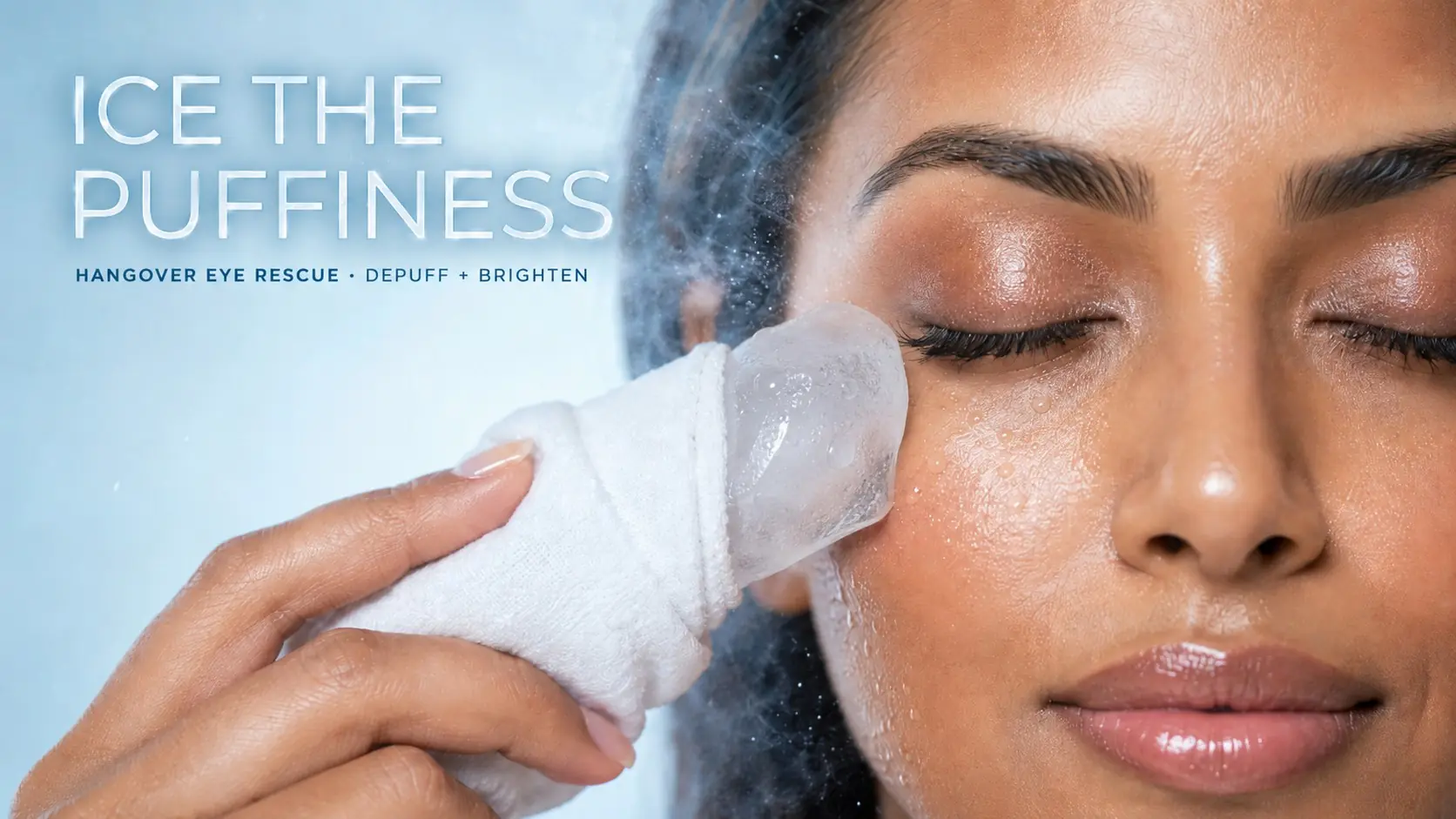
Ice for Under Eye Puffiness There is something almost universal about that bleary-eyed morning-after moment when you catch your reflection and barely
Ice for Under Eye Puffiness There is something almost universal about that bleary-eyed morning-after moment when you catch your reflection and barely recognise the puffy, shadowed face staring back at you. After a night of celebrating, drinking, or simply staying up far too late, the skin beneath your eyes shows the effects of everything your body went through. It swells. It darkens. It looks exhausted in a way that no amount of concealer seems capable of fully disguising. If you have ever stood in your bathroom desperately searching for a quick, effective fix, you are far from alone, and the solution might be sitting in your freezer right now.
Using ice to reduce puffiness under your eyes after a hangover is one of the oldest and most scientifically sound beauty remedies available. It costs almost nothing, requires no prescription, and delivers visible results within minutes of correct application. But understanding precisely why it works, how to apply it safely, what forms of cold therapy are most effective, and what complementary approaches can amplify the results makes the difference between a half-hearted attempt and a genuinely transformative morning-after ritual.
This guide dives deep into the physiology behind hangover-related eye puffiness and dark circles, explains the biological mechanisms that make cold therapy so effective at a cellular and vascular level, walks through multiple practical application methods, shares dermatologist-aligned guidance, and provides a full step-by-step morning protocol you can follow the next time you need your eyes to recover fast. Whether you had a glass too many at a celebration or a sleepless night took its toll, what follows will give you everything you need to understand and use one of beauty’s most powerful and underappreciated tools.
Why Hangovers Leave Your Eyes Puffy and Dark in the First Place
Reviewed by the BeautynFacts editorial team. Last updated: May 2026.
To use ice intelligently, you first need to understand what alcohol actually does to the tissue around your eyes overnight. The causes of hangover puffiness and dark circles are multiple, interconnected, and rooted in measurable physiological changes rather than vague tiredness.
Alcohol is a diuretic, meaning it suppresses the production of antidiuretic hormone (ADH), which is the hormone your kidneys use to signal how much water to retain versus excrete. When ADH levels fall, your kidneys push out significantly more fluid than they would otherwise. Despite the increased urination during a night of drinking, the dehydration that follows is uneven across the body. When you wake up, your body responds to its overall fluid deficit by entering a conservation mode, retaining water in peripheral tissues and particularly in areas of loose, thin skin. The skin beneath your eyes is among the thinnest on the entire body, measuring roughly 0.5 millimetres compared to approximately 2 millimetres on most other areas of the face. This extreme thinness makes the under-eye area extraordinarily susceptible to visible fluid accumulation, which is precisely why swelling there becomes the most noticeable symptom of a hangover morning.
Alcohol simultaneously causes blood vessels to dilate, a process called vasodilation. When the blood vessels beneath the eyes widen throughout the night, blood flow to that fragile area increases substantially. The heightened blood pressure against the thin walls of the capillaries in this region, combined with the natural permeability of those capillary walls, allows plasma proteins and fluid to leak into the surrounding interstitial tissue. This fluid accumulation in the tissue, medically called oedema, creates the characteristic puffiness that makes your face look inflamed and overtired the morning after drinking.
Dark circles have a related but somewhat distinct explanation. The pigmentation that creates dark circles under the eyes can come from two primary sources after drinking. The first is the discolouration caused by deoxygenated blood pooling in the capillary network that lies just beneath the transparent under-eye skin. The second effect is the shadowing created by structural changes, specifically the swelling casting shadows onto the inner cheek and lower orbital area. Alcohol also fundamentally disrupts sleep architecture. While drinking initially induces drowsiness, it severely suppresses REM sleep, which is the most physiologically restorative phase of the sleep cycle. When REM sleep is reduced or eliminated, the skin does not receive the overnight repair it depends on. Cell turnover slows, microcirculation beneath the skin becomes sluggish, and the deoxygenated blood sitting in those dilated capillaries shows through the thin under-eye skin as a blue-purple or brownish tint depending on your skin tone.
Beyond sleep disruption, alcohol metabolises into acetaldehyde in the liver, a compound that triggers a systemic inflammatory response. This inflammation extends to the skin, increasing the release of cytokines, which are chemical messengers that promote further swelling, redness, and tissue irritation. Salt intake during a night out, whether from snacks, food, or the mixers used in cocktails, compounds the problem by encouraging further fluid retention. Sodium binds water in the tissues, and when your sodium levels are elevated after an evening out, your body draws water into the surrounding cells to restore balance. Under the eyes, this manifests as the kind of persistent swelling that resists ordinary morning routines.
The Science Behind Cold Therapy: How Ice Interacts with Skin and Vascular Tissue
Cold therapy, clinically referred to as cryotherapy in medical contexts, has been studied extensively for its effects on inflammation, fluid management, pain modulation, and vascular response. When a cold surface comes into contact with skin, the body initiates a rapid physiological cascade that directly targets the same mechanisms responsible for hangover-related puffiness and dark circles.
The primary and most immediate effect of ice on skin is vasoconstriction. When tissue temperature drops, the smooth muscle cells surrounding blood vessels contract. This narrowing of the vessels reduces blood flow to the area, which in turn decreases the volume of fluid that can leak from the capillaries into the surrounding tissue. For someone dealing with hangover-related puffiness, this vasoconstriction is the most important and direct effect of cold application. It physically reduces the swollen appearance by limiting the fluid available to accumulate beneath the skin, and it works within the first sixty to ninety seconds of contact.
Simultaneously, cold temperatures reduce the enzymatic activity of inflammatory mediators. Cytokines and prostaglandins, the chemical signals that sustain inflammatory responses, are temperature-sensitive. When tissue is cooled, the biochemical activity that produces and releases these compounds slows significantly. This is the same principle that leads athletic trainers and physiotherapists to recommend ice application after muscular injuries: the cold is not merely numbing discomfort but actively interrupting the inflammatory process at a molecular level. For post-hangover skin, this principle translates into a real reduction in the redness, irritation, and general tissue swelling that alcohol-induced inflammation generates.
Cold also exerts a mild analgesic effect by reducing nerve conduction velocity. The sensory nerves in the face slow their signalling when cooled, which is why applying ice to the headache tension or facial discomfort that often accompanies a hangover can provide genuine temporary relief. While this effect does not directly reduce dark circles, it contributes to an overall sense of physical improvement that makes consistent use of the technique much easier to maintain.
One of the more nuanced and beneficial aspects of cold therapy is what happens after the cold source is removed. The application of cold activates cutaneous receptors that prompt a reflex increase in local microcirculation once the temperature returns to normal. This rebound effect, sometimes called reactive hyperaemia, means the skin receives a brief flush of fresh, oxygenated blood shortly after icing. This flush of new blood can temporarily brighten the under-eye area and visibly reduce the bluish or brownish discolouration caused by deoxygenated blood pooling beneath transparent skin.
Vasoconstriction and the Reduction of Fluid Accumulation
Vasoconstriction is the mechanism that most directly explains why ice reduces puffiness, and its effects are worth understanding in precise terms. The capillaries and small venules beneath the eyes are already under added stress after alcohol consumption because alcohol has widened them throughout the night. When you apply ice to the skin surface, temperatures at the tissue level can drop from a typical 33 to 34 degrees Celsius to as low as 15 to 20 degrees Celsius within the first minute of contact. This temperature change is sufficient to trigger meaningful arterial and venular constriction throughout the superficial dermal layers of the under-eye skin.
In practical terms, less blood volume moving through those vessels means reduced pressure against the capillary walls, which means less fluid forced out into the interstitial space. The fluid that has already accumulated begins to reabsorb more efficiently as the lymphatic system, now managing a reduced incoming fluid volume, can process the backlog and return the excess to general circulation. This is precisely why the puffiness under the eyes visibly reduces during and after icing rather than simply compressing temporarily and why the improvement persists for a meaningful period after the ice is removed.
Lymphatic Drainage and the Role of Cold Therapy
The lymphatic system plays an underappreciated but critical role in the development and resolution of under-eye puffiness. Unlike the cardiovascular system, which has the heart as a dedicated pump, the lymphatic network relies entirely on muscle contractions, breathing, body movement, and internal pressure gradients to move fluid. In the delicate skin around the eyes, lymphatic drainage is naturally slow because the area involves very little large muscle activity and minimal movement during sleep. After alcohol consumption, the body’s lymphatic load is elevated because systemic inflammation from acetaldehyde exposure creates a high volume of waste products and excess fluid that the lymph nodes must process.
Cold therapy supports lymphatic function by encouraging interstitial fluid to shift toward lymphatic capillaries, from which it can be cleared more readily. When icing is combined with very gentle outward massage from the inner to the outer corner of the eye, the effects on lymphatic drainage are considerably enhanced. This mechanical action physically moves stagnant fluid toward the lymph nodes located just in front of the ear and along the jaw, where it enters the lymphatic chain and is eventually eliminated. Practising this technique consistently, always working from the inner to the outer corner and then downward toward the neck, can produce noticeably faster resolution of morning puffiness compared to cold application alone.
How Ice Specifically Targets Hangover-Related Dark Circles
Dark circles are among the most persistent and frustrating beauty concerns, and while they have many causes ranging from genetics and ageing to sun damage and pigmentation disorders, the ones that appear or worsen dramatically after a night of drinking are primarily vascular and circulatory in nature. These are the dark circles that ice can address most effectively in the short term, because they share the same root cause as the puffiness: dilated, leaky capillaries and disrupted blood flow.
When alcohol dilates blood vessels and disrupts the restorative phases of sleep, the deoxygenated blood that pools in the capillary network beneath the very thin under-eye skin creates a visible tint. This tint varies meaningfully by skin tone, appearing blue-purple in lighter complexions and brownish or grey-green in deeper ones. Because the skin over the under-eye area is so thin and often somewhat translucent, even a moderate increase in the volume of blood sitting in those capillaries creates a visible colour change at the surface.
Ice application constricts those capillaries and reduces the volume of dark, deoxygenated blood pooling in them. Less blood volume means less pigmentation showing through the skin surface. Following the cold application, the reactive hyperaemia cycle encourages fresh, oxygenated blood to move through the area, temporarily replacing the dark deoxygenated blood with brighter, redder blood. While this mechanism does not offer a permanent correction to dark circles rooted in chronic vascular problems or genetic pigmentation, it makes a meaningful and real visual difference on the morning after drinking.
The reduction in swelling that ice provides also contributes indirectly to the appearance of dark circles through a straightforward geometric mechanism. When the under-eye area is significantly puffy, the raised tissue casts shadows onto the inner cheek and the lower eye area, and those shadows read visually as additional darkness. By reducing the swelling, ice eliminates the shadow, which makes the dark circles appear lighter even when their underlying vascular cause has not fully resolved. This combined effect, less actual discolouration plus less shadow from swelling, can make the under-eye area look dramatically more normal within fifteen to twenty minutes of correct cold therapy application.
Methods of Applying Ice to the Eye Area After a Hangover
One of the strengths of cold therapy is its flexibility and accessibility. You do not need to purchase specialised equipment or invest in expensive tools to use it effectively. Several reliable application methods exist, each with its advantages depending on what you have available, how sensitive your skin is, and how quickly you need results.
Ice Cubes and Cold Compresses
The most straightforward method is wrapping two or three ice cubes in a soft, clean cloth such as a thin cotton flannel, a clean handkerchief, or even a folded section of an old t-shirt, and applying the bundle gently to the closed eyelid and the skin beneath the eye. The cloth acts as a critical barrier between the ice and the skin. Direct ice-to-skin contact for more than a few seconds can cause cryogenic burns, capillary damage, or exacerbate irritation, particularly on the already sensitised and compromised skin around the eyes. The cloth provides insulation that keeps the temperature cold enough to be therapeutically effective while preventing injury to the surface layers of the skin.
Cold water compresses, made by soaking a clean flannel in a bowl of iced water, wringing it out firmly, and pressing it gently against the eye area, offer a gentler alternative that is particularly suitable for very sensitive skin. The temperature is less extreme than direct ice contact, and the dampness of the cloth feels especially soothing on dehydrated, post-hangover skin. Cold compresses can be reapplied multiple times within a single session, simply re-soaking the cloth in the iced water each time it warms against the skin. This repeated application extends the total duration of cold exposure without requiring you to increase the intensity of the cold itself.
Frozen Spoons, Gel Masks, and Specialised Tools
Two metal teaspoons placed in the freezer for fifteen to twenty minutes become perfectly shaped, naturally contoured tools for the orbital eye area. Their curved shape fits the orbital bone and lower eye socket naturally, and metal conducts cold exceptionally well, allowing the temperature to transfer efficiently and immediately to the skin on contact. Press the back of each chilled spoon gently against the closed eye and hold for thirty to sixty seconds. Then move the spoon outward toward the temple and hold it there again. This gentle movement from the inner to the outer corner also helps lymphatic fluid move a little, addressing both the vascular and lymphatic causes of puffiness at the same time.
Reusable gel eye masks, designed to be stored in the refrigerator or freezer, offer a hands-free option that allows you to lie flat and elevated while both eyes are treated simultaneously. Most gel masks cover the entire eye area, including the brow bone and temples, providing a broader area of therapeutic cold. For the morning after a night out, when comfort and convenience are especially valued, gel masks are a particularly practical choice. Keep one in the freezer permanently so it is always ready without any preparation time.
Frozen green tea bags deserve specific mention as a dual-action option. Green tea contains epigallocatechin gallate, a powerful antioxidant with documented anti-inflammatory properties, as well as caffeine, which independently constricts blood vessels and is used as an active ingredient in many clinical under-eye formulations precisely for this reason. Brewing two tea bags, allowing them to cool, then freezing them briefly before placing them over the eye area combines the vasoconstriction of cold with the vasoconstrictive and anti-inflammatory effects of the tea compounds. The result is a notably more comprehensive treatment than cold alone.
Cryo-globes, which are small chilled glass or metal spheres designed specifically for facial massage, have gained significant popularity in the skincare community and represent a sophisticated cold therapy tool. These can be rolled gently and slowly from the inner corner of the eye outward and then downward along the orbital bone, combining the vasoconstriction of cold with the mechanical benefit of massage. The rolling motion helps reduce puffiness by promoting lymphatic drainage and improves dark circles by stimulating blood flow, making cryo globes one of the best tools for post-hangover eye recovery.
A Step-by-Step Morning Protocol for Post-Hangover Eye Recovery
Having a clear and consistent protocol transforms a well-intentioned idea into a reliable, results-producing practice. The following sequence is designed for the morning after a night of drinking and incorporates everything discussed above in a logical, effective, and physiologically sound order.
Begin by drinking a large glass of water, at least 500 millilitres, before doing anything else. Rehydration is foundational to every step that follows. When your body has adequate circulating fluid, it is less aggressive about retaining water in peripheral tissues, and the processes that clear interstitial fluid and support lymphatic function work significantly more efficiently. This does not produce instant visible results, but it creates the internal physiological conditions that make every topical and external step considerably more effective.
Wash your face gently with cool or lukewarm water, absolutely not hot. Hot water dilates blood vessels and directly counteracts the vasoconstriction you are about to encourage with cold therapy. A gentle, fragrance-free cleanser removes any residual alcohol metabolites, salt, or makeup from the skin surface without stripping the already compromised and sensitised skin barrier. Pat, never rub the face dry with a clean, soft towel.
Apply your cold therapy of choice. Using a cloth-wrapped ice pack, two chilled metal spoons, a frozen gel mask, or iced green tea bags, apply cold to the eye area for a total of eight to twelve minutes. Begin with two minutes of held, stationary pressure on the under-eye area. Then make three slow, deliberate sweeping movements from the inner corner of the eye outward toward the temple. Pause for thirty seconds, re-cool your tool if necessary, and repeat the sequence. This combination of stationary cold pressure and gentle directional movement engages both vasoconstriction and lymphatic drainage at the same time, which is the most efficient approach available.
After removing the cold application, immediately apply a small amount of a targeted eye cream containing caffeine, peptides, or vitamin K. The skin is primed after cold therapy to absorb topical active ingredients more efficiently due to the temporary changes in capillary pressure and tissue fluid dynamics. These specific ingredients support vascular constriction, skin firmness, and capillary wall integrity, respectively. Use your ring finger, which naturally applies the least mechanical pressure of any digit, to tap the product gently around the orbital bone. Never drag or pull the skin in this area.
Elevate your head throughout the morning whenever you are resting. Lying flat encourages fluid to settle under the eyes through gravity. Sitting upright or propping yourself with additional pillows allows that fluid to drain downward and outward toward the lymphatic channels in the neck, supporting the resolution of puffiness from a structural position. This simple adjustment can meaningfully accelerate how quickly the swelling resolves on its own.
Throughout the morning, consume an electrolyte-rich drink such as coconut water or a prepared oral rehydration solution alongside continued plain water intake. Electrolytes, especially potassium and sodium in the right amounts, help the body control how fluids move between the inside and outside of cells, which reduces the signals that keep extra water stuck in the spaces between tissues. This internal rebalancing supports the resolution of puffiness from the inside while your topical cold therapy addresses it from the outside simultaneously.
Timing, Duration, and Frequency of Cold Therapy
Getting the timing right matters as much as the technique itself. Ice therapy is most effective for hangover-related puffiness when applied within the first two hours of waking, before the swelling has had time to fully stabilise and additional fluid has accumulated from continued lying down and the body’s ongoing fluid retention response. The longer you delay cold therapy, the more entrenched the puffiness becomes and the more time is required to resolve it meaningfully.
Each individual session of cold therapy should last no more than twelve to fifteen minutes on the delicate eye area. Sessions longer than this time frame carry the risk of cryogenic skin damage, excessive vasoconstriction that paradoxically triggers a strong rebound vasodilation, and increased redness as the skin works hard to rewarm itself rapidly. Eight to twelve minutes is the optimal range for most people, with those who have sensitive or reactive skin types keeping their sessions toward the shorter end of this window.
Two sessions spaced approximately one hour apart will often produce better cumulative results than a single extended session. In the first session, you trigger meaningful vasoconstriction and initiate the reduction of fluid in the under-eye tissue. During the intervening hour, the skin returns to its normal temperature, the reactive hyperaemia cycle brings fresh oxygenated blood to the area to support tissue recovery, and the lymphatic system continues its clearance work without interruption. The second session then extends the vasoconstriction phase and reinforces the lymphatic drainage initiated by the first application, producing improvements that compound rather than simply repeat.
For anyone dealing with significant dark circles alongside the puffiness, a brief third session in the early afternoon can help maintain the vascular constriction effect and keep the under-eye area looking its best throughout the day, particularly if work, an event, or a social commitment requires looking alert and well-rested despite the hangover.
As a regular practice beyond the hangover context, gentle cold therapy applied three to four mornings per week can produce modest but cumulative improvements in under-eye circulation, capillary integrity, and overall skin firmness over several weeks of consistent use. Many skincare enthusiasts keep a dedicated set of metal spoons in the refrigerator permanently for exactly this purpose, making the practice as automatic as cleansing or moisturising.
Complementary Remedies That Amplify Ice Therapy Results
While ice is a powerful and standalone tool for post-hangover eye recovery, combining it with other evidence-supported approaches significantly improves the results and addresses aspects of hangover-related eye appearance that cold therapy alone cannot fully resolve, particularly those related to dehydration, pigmentation, and skin barrier damage.
Caffeine, whether applied topically via a targeted eye cream or consumed as a cup of coffee or green tea, reinforces vasoconstriction both systemically and locally. Topical caffeine penetrates the skin and constricts dermal blood vessels directly at the site of application, which is why it features prominently as a primary active ingredient in many clinically developed under-eye serums. Consuming caffeine supports mental alertness and reduces the overall appearance of fatigue around the eyes even when some physical swelling persists, making the combined approach of topical and dietary caffeine particularly effective on post-hangover mornings.
Vitamin C applied topically supports the reduction of dark circles by brightening the skin surface and inhibiting excess melanin production. While alcohol-related dark circles are primarily vascular rather than pigmentary in origin, any pre-existing hyperpigmentation in the under-eye area becomes more visible when swelling and discolouration are already present. A lightweight vitamin C serum applied around the orbital area after cold therapy can address both the immediate vascular darkness and any underlying pigmentation contributing to the overall appearance.
Hydrating eye patches containing hyaluronic acid, niacinamide, or peptides can be applied after cold therapy for continued skin repair and moisture restoration throughout the morning. Hyaluronic acid draws moisture into the superficial skin layers, reducing the dehydrated, crepey, fine-line-emphasising look that alcohol-stripped skin often develops overnight. Niacinamide strengthens the skin barrier and has demonstrated meaningful improvements in microcirculation and dark circle appearance in controlled studies. Peptides signal the skin to produce collagen and elastin, gradually improving the structural support of the dermis beneath the eye area with consistent use.
Sleep, where possible, remains among the most powerful recovery tools available for any hangover symptom. Even a short recovery nap in the hours after waking allows the body to enter the restorative sleep phases that alcohol suppressed the night before. During sleep, the cutaneous lymphatic and blood flow systems regulate in ways that actively support skin repair and the resolution of inflammation. Pairing cold therapy sessions with periods of elevated rest between applications produces results that neither approach can achieve as effectively when used in isolation.
Staying consistently elevated while resting between cold therapy applications prevents fluid from re-accumulating beneath the eyes under the influence of gravity. Even an additional pillow makes a measurable difference in how quickly post-hangover puffiness resolves, and combining this positional strategy with periodic cold applications creates a continuous cycle of fluid clearance and vasoconstriction throughout the morning.
Dermatologist-Aligned Guidance for Safe and Effective Cold Therapy
The dermatological community has long recognised cold therapy as a legitimate and evidence-supported intervention for facial inflammation, vascular puffiness, and post-procedure oedema. Clinicians who specialise in aesthetic and medical dermatology routinely recommend cold compresses and frozen gel masks as part of post-treatment care following procedures like injections, laser resurfacing, and micro-needling, precisely because of how reliably cold reduces oedema and vascular leakage in facial tissue. This clinical validation establishes cold therapy as far more than a folk remedy.
Within the specific context of the under-eye area, practitioners universally emphasise the importance of a gentle application technique. The skin here is not only exceptionally thin but is supported by very little subcutaneous fat, which means the mechanical pressure of any applied tool or hand can itself cause microtears, bruising, or capillary damage if excessive force is used. The fingertip or tool should maintain consistent, gentle contact with the skin without pulling, dragging, or pressing firmly against the orbital bone. This is why the ring finger is consistently recommended for any eye area application: it exerts the least natural pressure of any finger.
The recommendation to always use a barrier between ice and skin is consistent across practitioners who work with facial oedema and cryotherapy. Direct ice contact can produce cryogenic burns in as little as five to ten minutes of sustained exposure, and the under-eye skin is especially vulnerable because its thinness means there is less thermal mass to absorb and distribute the extreme cold across the tissue. A soft cloth, thin flannel, or even a layer of moisturiser applied before icing provides sufficient insulation while still allowing for effective therapeutic cooling.
Dermatologists also consistently address the internal causes of post-hangover puffiness alongside recommending external cold therapy. Their guidance reliably combines topical interventions with oral rehydration, electrolyte replacement, and sleep optimisation, recognising that alcohol’s role as both a vasodilator and a diuretic creates a dual mechanism that requires management from both the outside and from within. No amount of topical treatment alone fully resolves puffiness and dark circles that are being actively perpetuated by ongoing dehydration and inflammation at a systemic level.
Safety Considerations and Situations Requiring Caution
Cold therapy is safe for the vast majority of people when applied correctly and in appropriate durations, but there are specific skin conditions, health circumstances, and individual sensitivities that warrant caution or require modification of the standard approach.
People with rosacea should approach cold therapy with particular care. Rosacea causes chronic vascular instability and flushing in the face, and while cold can temporarily suppress visible redness and swelling, repeated temperature cycling between cold application and the rewarming that follows can worsen vascular reactivity in the skin over time. If you have rosacea and wish to use cold therapy on the under-eye area, a moderately cool compress rather than a direct ice application reduces the temperature extreme while still providing some benefit without aggravating the condition.
Anyone with existing broken capillaries or visible spider veins near the eye area should also be cautious with freezing applications. While ice generally reduces capillary leakage in healthy vessels, extremely cold temperatures applied directly over already weakened or damaged vessel walls can cause contracting and expanding stresses that worsen the existing damage. A cool rather than icy temperature is advisable in these situations.
Cold urticaria is a condition in which cold exposure triggers an allergic reaction in the skin, producing hives, intense itching, pronounced swelling, and, in severe cases, systemic anaphylaxis. Anyone who notices welts, spreading redness, or intense itching during or immediately after cold application should discontinue treatment at once and consult a physician before attempting cold therapy again. This condition is relatively rare, but it is important to recognise.
For everyone, a simple and reliable safety rule applies consistently: if the skin beneath the cold application becomes white, mottled, or completely numb within the first few minutes of contact, the temperature is too extreme. Remove the ice; allow the skin to return to normal temperature at room temperature rather than applying heat to rewarm it; and resume with a less intense application by adding more insulating cloth layers between the ice and the skin or by switching from direct ice to a cool water compress.
Making Cold Therapy a Consistent Part of Your Skincare Practice
Treating hangover puffiness and dark circles with ice is most powerful when it forms part of an ongoing skincare practice rather than existing as a purely reactive, occasional measure. Regular and consistent cold therapy gradually changes how the vascular network in facial skin behaves, leading to benefits that last well beyond the morning after drinking.
When capillaries are regularly exposed to the controlled vasoconstriction induced by cold, they develop improved tone and reduced permeability over weeks and months of consistent application. This progressive strengthening is analogous to how cardiovascular exercise improves the efficiency and resilience of the heart and blood vessels throughout the body. The cold application is a gentle, controlled stressor that makes the walls of the capillaries stronger and the connective tissue around them stronger as well.
Incorporating cold therapy into a daily morning skincare routine, even on ordinary days without prior alcohol consumption, trains the skin to manage inflammation and fluid retention more efficiently as a baseline. Starting each morning with a brief cold application, whether a cool water face wash, chilled spoons from the refrigerator, or a stored gel eye mask, primes the skin to enter the day with reduced baseline puffiness, improved firmness, and brighter vascular circulation. People who keep this practice find that hangover-related puffiness goes away faster when it does happen, because their under-eye vascular network is already healthier from regular conditioning.
Skincare products formulated specifically for the eye area also work more effectively when combined with regular cold therapy application. Cold application temporarily increases skin permeability and improves microcirculation of reactive hyperaemia, allowing actives like retinol, caffeine, vitamin K, and peptides to penetrate more efficiently and reach their target tissue more reliably. Professional aestheticians incorporate cold tools into clinical facial treatments before applying concentrated serums precisely because they recognise this synergy and use it to maximise the delivery and effectiveness of topical actives. Bringing this same principle into your home routine, applying your targeted eye treatment immediately after cold therapy when the skin is primed and receptive, is one of the highest-leverage skincare strategies available.
Frequently Asked Questions
How quickly does ice reduce puffiness under the eyes after a hangover?
Most people notice a visible reduction in under-eye puffiness within five to ten minutes of correct cold therapy application. The initial vasoconstriction that narrows blood vessels and reduces fluid leakage into the tissue happens within the first sixty to ninety seconds of cold contact, and the visible reduction in swelling follows closely behind as the fluid already present begins to reabsorb and lymphatic clearance accelerates. A full eight- to twelve-minute session typically produces a meaningful and noticeable improvement. More significant swelling, particularly after a night of heavy drinking combined with salty food and poor sleep, may require a second session an hour later to achieve a satisfactory result, but improvement begins almost immediately after the first application.
Can I apply ice directly to the skin under my eyes?
Direct ice-to-skin contact is generally not recommended for the under-eye area, even though it feels intuitively like the most effective approach. The skin beneath the eyes is exceptionally thin, measuring approximately 0.5 millimetres, and direct sustained contact with ice can produce cryogenic burns, surface irritation, and damage to the already fragile capillary network within as little as five minutes. Always use a clean, soft cloth, a thin flannel, or another fabric barrier between the ice and the skin. This insulating layer maintains a therapeutic cold temperature that is effective for reducing puffiness and dark circles while protecting the surface layers of the skin from injury. Cool gel eye masks designed for skin contact are specifically formulated to deliver cold safely without a secondary barrier requirement.
How long should each ice therapy session last on the eye area?
Eight to twelve minutes per session is the recommended duration for the under-eye area specifically. This duration is sufficient to achieve meaningful vasoconstriction, initiate lymphatic drainage, and reduce inflammatory mediator activity in the tissue without exceeding the time threshold at which risks of cold-induced skin damage begin to increase. For people with particularly sensitive skin, or skin that is already irritated from alcohol exposure and overnight inflammation, keeping sessions to eight minutes is prudent. Extending a single session beyond fifteen minutes does not proportionally increase the benefit and introduces unnecessary risk. Two separate sessions of eight to twelve minutes, spaced an hour apart, are consistently more effective than one extended session of equivalent or greater total duration.
Does ice actually help dark circles or only puffiness?
Ice addresses both conditions, but through slightly different mechanisms and with different degrees of effectiveness depending on the underlying cause. For puffiness, cold therapy is highly effective because it directly constricts the blood vessels responsible for fluid accumulation and supports lymphatic clearance of the fluid already present in the tissue. For dark circles caused by hangover-related vascular changes, specifically the pooling of deoxygenated blood in capillaries beneath thin skin, cold therapy is meaningfully effective because it reduces the volume of blood in those vessels and subsequently prompts the reactive hyperaemia cycle to replace deoxygenated blood with fresh, brighter-coloured oxygenated blood. Dark circles caused primarily by genetics, bone structure, or chronic hyperpigmentation respond less immediately to cold therapy, though the reduction in puffiness that ice produces does reduce the shadow component of dark circles universally, regardless of their root cause.
What is the best ice application method for people with sensitive skin?
For sensitive skin, a cool water compress made from a clean flannel soaked in iced water and wrung out thoroughly is the most appropriate starting method. This delivers a moderately cold temperature that reduces puffiness and supports vascular constriction without the extreme cold of direct ice application. Frozen gel masks designed specifically for skin contact are another excellent option because they are engineered to deliver consistent, moderate cold across the entire eye area without temperature extremes. Chilled metal spoons kept in the refrigerator rather than the freezer offer a similar moderate temperature. The key principle for sensitive skin is that benefit comes from sustained, gentle cold rather than from intense cold applied briefly. Gradual, moderate cooling is both safer and often more comfortable, which means the application can be maintained for the full therapeutic duration without interruption.
Can ice on the eyes be used every morning, not just after a hangover?
Yes, daily or near-daily cold therapy on the eye area is safe and beneficial for most people when applied correctly and for appropriate durations. Regular cold therapy has been shown to progressively improve capillary tone, reduce baseline puffiness, and support the overall firmness and appearance of the under-eye skin over weeks of consistent use. Many dermatologists and aestheticians recommend incorporating cold therapy as a standard morning skincare step, particularly for people with chronically puffy or dark under-eye areas. The key parameters to maintain for daily use are the same as for post-hangover application: always use a barrier between ice and skin, keep sessions under fifteen minutes, use gentle pressure, and follow cold application immediately with a targeted hydrating or active eye treatment to take advantage of the enhanced skin permeability that cold therapy creates.
Does drinking water before applying ice help improve the results?
Drinking water before and throughout the process of cold therapy meaningfully supports and enhances the results. When the body is dehydrated, as it invariably is after a night of drinking due to alcohol’s diuretic effect, it actively retains water in peripheral tissues as a conservation mechanism. This fluid retention is a direct contributing cause of the puffiness ice therapy is working to address. By drinking water and rehydrating the body, you reduce the physiological signal driving that retention, which allows the fluid in the under-eye tissue to move more freely toward lymphatic clearance. Additionally, adequate hydration supports optimal lymphatic function, meaning the system clearing fluid from the under-eye area works more efficiently when the body is properly hydrated. The combination of internal rehydration and external cold therapy addresses the problem from both directions simultaneously, producing faster and more complete resolution of puffiness than either measure alone.
Are there any risks I should know about before using ice on my eyes?
The main risks of using ice on the eye area are cryogenic skin burns from direct or prolonged contact without a barrier, excessive stimulation of skin conditions like rosacea, and possible discomfort or allergic reactions in people with cold urticaria. All of these risks can be managed with the correct technique. Always use a cloth or gel barrier between ice and skin. Keep each session to twelve minutes or fewer. If the skin turns white, becomes mottled, or feels numb beyond a gentle coolness, remove the ice and allow it to rewarm naturally at room temperature. People with diagnosed vascular skin conditions, including rosacea, cold urticaria, or Raynaud’s syndrome, should consult their dermatologist before beginning cold therapy on the face. For the overwhelming majority of people without these specific conditions, cloth-wrapped ice or a gel eye mask used for eight to twelve minutes is entirely safe and produces no adverse effects beyond the intended and welcome reduction in puffiness and dark circles.
Conclusion
The connection between a hangover and the puffy, dark-circled eyes that follow it is rooted in clear and well-understood biology. Alcohol’s effects as a vasodilator and diuretic, combined with the sleep architecture disruption it causes and the systemic inflammation it generates through acetaldehyde metabolism, create a specific set of conditions that directly produce both fluid accumulation and vascular discolouration beneath the eyes. Cold therapy, applied correctly and consistently, addresses these conditions through vasoconstriction, reduced inflammatory mediator activity, lymphatic drainage support, and the brightening effect of reactive hyperaemia following application.
The practical takeaways from everything covered here are clear and immediately actionable. Always wrap ice in a clean cloth before applying it to the delicate under-eye area. Apply cold therapy in sessions of eight to twelve minutes rather than one extended application. Combine stationary cold pressure with gentle outward sweeping movements from the inner to outer corner to engage both vascular and lymphatic mechanisms. Follow each session immediately with a targeted eye treatment containing caffeine, peptides, or niacinamide to capitalise on the enhanced skin permeability that cold creates. Drink water before, during, and after your sessions. Elevate your head throughout the morning. And if possible, allow your body the additional rest it genuinely needs to complete the recovery process that alcohol interrupted.
The most important shift in perspective this article offers is perhaps this one: ice is not just a quick fix for a bad night. It is a scientifically supported, dermatologist-recognised tool for managing vascular and lymphatic function in the most visible and delicate skin on your face. Used consistently as a morning ritual, not only after drinking but as a regular practice, it produces cumulative improvements that make hangover recovery faster, daily puffiness less severe, and the overall appearance of the under-eye area measurably better over time. Your freezer has been holding one of the most effective beauty tools available. Now you know exactly how to use it.
RELATED ARTICLES:
How to hide eye bags with makeup
5 tips to say goodbye to bags under the eyes and dark circles
Gently Pat Your Skin Dry: The Key to Preventing Irritation After Washing
How to be beautiful after 50
After 40, what is the best beauty routine?
About The Author

COMMENTS