










Off-centre hair part styling is the quiet 2026 shift replacing the middle part as everyone's default. The change looks tiny on paper, barely an inch o
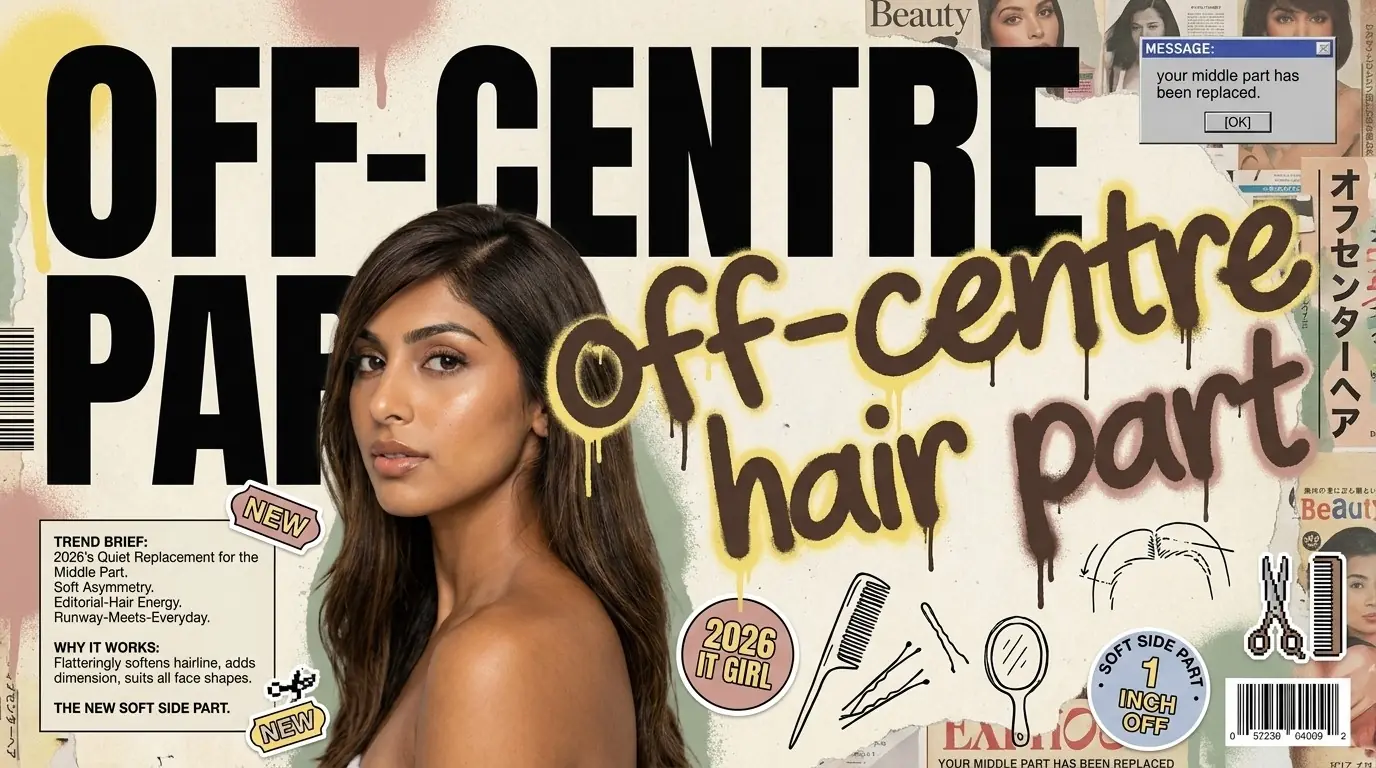
Off-centre hair part styling is the quiet 2026 shift replacing the middle part as everyone’s default. The change looks tiny on paper, barely an inch of repositioning, yet the effect on a face is anything but subtle. Editors call it the new soft side part, and salons are fielding more requests for it than for any single haircut this season. Here is how to wear it.
The off-centre hair part is the quiet 2026 hair shift, replacing the middle part as the everyday default. The change is small on paper, an inch of repositioning, but the effect on a face is anything but subtle. Editors are calling it the new soft side part; salon stylists are getting more direct requests for it than for any single haircut this season, and search demand for the look has climbed steadily across Vogue, Refinery29, and Allure coverage since the spring 2026 runways. This guide covers what the off-centre hair part actually is, why it flatters more faces than the middle part it replaces, how to style it at home, how to ask for the cut that holds it, and the answers to the questions every search engine is fielding right now.
Published · Updated

What an Off-Centre Part Actually Is and Why It Spread So Fast
An off-centre hair part is a parting placed about half an inch to an inch off the true middle of the head, with the front section swept softly across the brow rather than falling straight down the face. It sits between the surgical-straight middle part that defined hair from 2017 through 2024 and the deep side part that reads as ‘styled’ or ‘evening’. The off-centre part keeps the symmetry that made the middle part feel modern but adds a small asymmetry that softens the face, breaks up a heavy hairline, and provides the front sections something to do other than hang flat.
The reason the shift happened so fast is that the middle part had become a uniform. When everyone wears the same parting in the same place, the look stops feeling intentional and starts feeling like a default. Designers and editors looked for a way to keep the polish of a centre part without the rigidity, and the off-centre part did exactly that. It is the same vocabulary spoken with a slight accent, and that small change of accent is what made it land on every spring 2026 runway and every editorial shoot through early summer.
Who the Off-Centre Part Flatters and Why
The honest answer is almost every face shape, with the strongest results on round, square, and heart-shaped faces. A true middle part draws a vertical line straight down the centre of the face, which works on long oval faces but tends to widen round faces and emphasise the corners of square jawlines. Moving the parting an inch off-centre breaks that vertical line, redirects the eye diagonally across the face, and softens both effects at once. On heart-shaped faces with a wider forehead, the sweep of hair across the brow creates a horizontal counter-line that balances the proportions naturally.
For long oval faces, the off-centre part is still flattering, just with a slightly different effect: it adds movement and prevents the face from reading as elongated. For people with a strong widow’s peak or a cowlick, the off-centre part has another advantage, which is that the parting can be placed exactly where the hair naturally wants to fall rather than fighting the growth pattern. That alone is why many people who could never get a middle part to lie flat are finding that the off-centre version sits flat without product.
Quick rules by hair density
If your hair is fine or thin, an off-centre part adds the illusion of volume because the swept-over section sits slightly piled rather than flat at the crown. If your hair is thick, the off-centre part gives the front sections somewhere natural to fall and stops the hair from looking blocky. For hair of medium density that behaves itself, the off-centre part is foolproof and reads as the most flattering everyday option.
How to Find Your Best Off-Centre Position
The part’s position makes the difference between a flattering off-centre part and one that looks like an accident. Start by combing the hair straight back from the hairline, then walk the comb forward from the crown along the natural growth direction. Wherever the comb wants to drop is roughly where the hair has decided to part on its own. Most people have a natural parting that sits about half an inch off true centre, and that is the place to use.
If you want to choose a position rather than follow the natural one, the standard rule is to part on the opposite side from your dominant hand because that is the side most people instinctively sweep their hair away from. The other rule is to part on the side of the face you consider stronger, since the brow on the swept-over side is covered slightly, and the brow on the open side stays fully visible. Whichever side you pick, the goal is a parting line that runs cleanly from the front hairline back to the crown without zigzagging, which is what a tail comb is for.
How far off-centre is considered off-centre?
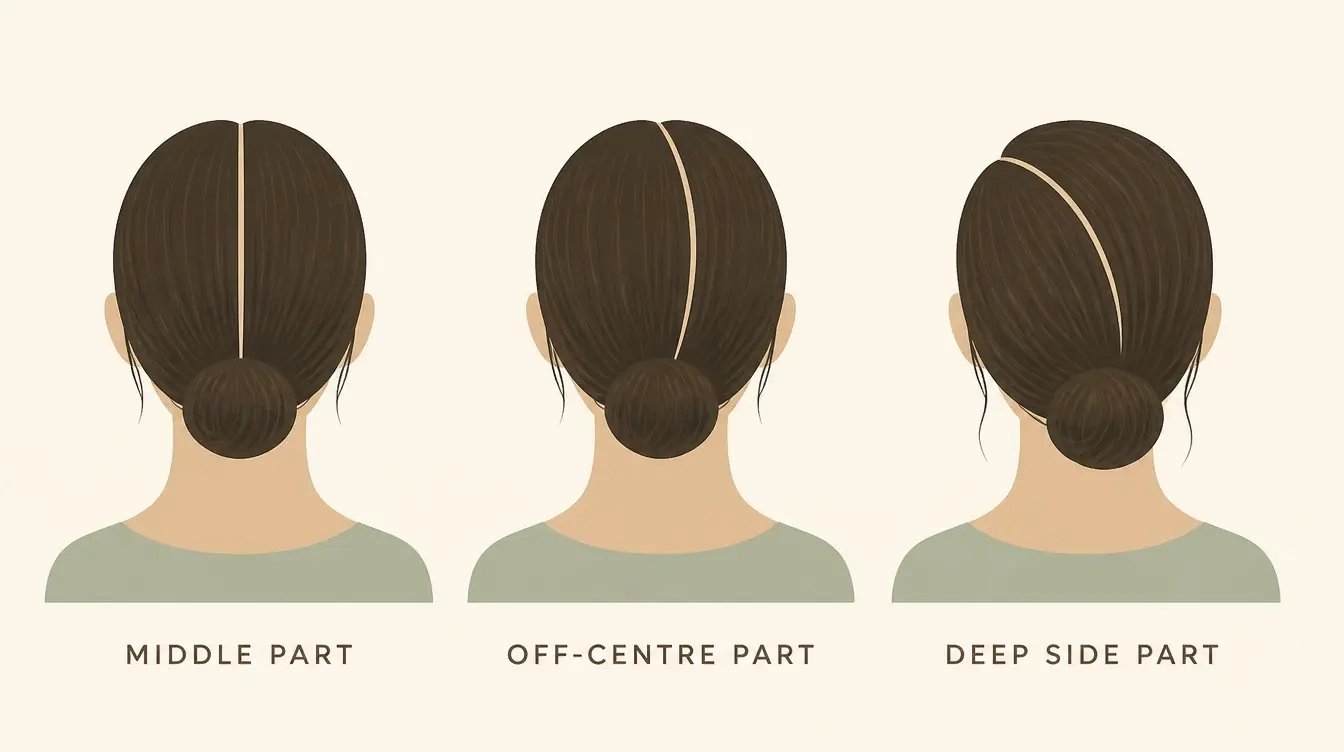
The sweet spot is between half an inch and one inch off the true middle of the head. Less than half an inch reads as a slightly crooked middle part rather than an intentional off-centre part. More than one inch starts to look like a deep side part, which is a different look with a different feeling. The trend clusters in that half-inch-to-one-inch band, which is why so many tutorials describe the parting as one finger-width off the centre line.
The Step-by-Step Way to Style an Off-Centre Part at Home
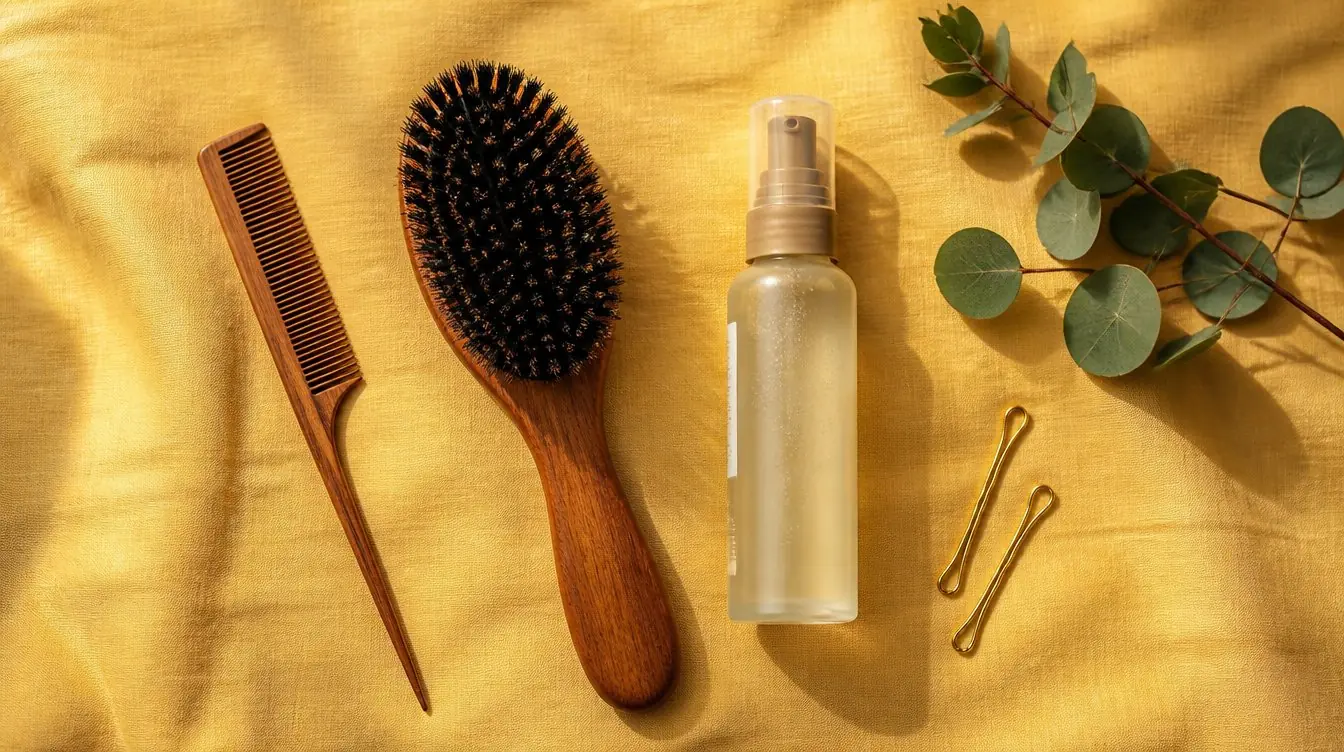
The home routine that gets closest to the editorial version uses three small tools and takes about five minutes once the hair is dry. Start with hair that is fully dry and brushed through, because wet hair sets in whatever shape it dries, and an off-centre part set in wet hair is hard to undo later in the day. Section the hair into a clean parting with a fine-tooth tail comb, dragging it from the front hairline straight back to the crown. The line should be one continuous stroke rather than a series of corrections.
Once the parting is set, lift the swept-over section at the root with the fingertips and direct it across the brow. A light mist of flexible hairspray at the root, not the length, holds the shape without making the hair stiff. If the section falls back into the middle, the fix is a thin layer of soft styling cream or mousse worked into the root before the spray, which gives the hair something to grip on. The final move is to comb the lengths through with a paddle brush so they fall smoothly rather than separating into chunky pieces.
Common at-home mistakes
The mistake that ruins more off-centre parts than any other is trying to set the line on damp hair. Damp hair holds the parting once it dries but loses the soft swept shape over the brow, which is the whole point of the look. The second common mistake is parting too far off-centre, which crosses the line into a deep side part and changes the feeling of the look entirely. The third is using a flat brush on the swept-over section instead of fingers, which presses the volume out at the root and leaves the front looking flat and middle-parted again by the end of the morning.
Salon Talk: How to Ask for the Cut That Holds an Off-Centre Part
At a salon, the cut that holds an off-centre part the longest is a long layered cut with face-framing pieces at the front, cut to fall around the cheekbone or jaw. A heavy one-length blunt cut can wear an off-centre part for a day, but the parting tends to migrate back to the middle by the end of it because the weight pulls the hair down rather than letting it sweep across. Layers give the hair the lightness to hold the swept shape without product. Ask the stylist for soft face-framing layers starting around the chin or the collarbone, with the parting set to your preferred side so the stylist can dry the cut to your exact off-centre line.
If you want a fringe with it
The fringe pairing for this trend is the soft-swept fringe, sometimes called a ‘curtain bang’ or a ‘French girl fringe’. It starts at the off-centre part and falls in two soft sections, one across the brow and one along the cheekbone on the open side. This is different from a blunt heavy fringe, which fights an off-centre part by cutting across the line that the parting wants to draw. Ask the stylist for a wispy curtain bang at the front, cut to brow length, with the longest pieces falling to the cheekbone.
Off-Centre Part for Thin or Fine Hair
Thin and fine hair gets one of the strongest visual upgrades from an off-centre part because the parting line breaks up the visible scalp that fine hair tends to expose. A middle part shows a stripe of scalp straight down the centre, which is the most visible position on the head. Shifting that stripe an inch off-centre moves it out of the direct line of sight and lets the swept-over section sit slightly piled above it, which reads as more volume on top. The home trick that compounds this effect is a root-lift mousse worked into the parting before drying, which keeps the swept section lifted at the base all day.
Off-Centre Part for Thick, Wavy, or Curly Hair
Thick, wavy, and curly hair often looks best in an off-centre part because the parting gives the heavy front sections somewhere natural to fall rather than crowding the face. On curly hair, the parting should be placed before the hair fully dries so the curls set around the shape and hold it through the day. The swept-over section on curly hair does not lie flat across the brow the way it does on straight hair, but a softer version of the look, where the curls sit just slightly to one side of the centre, has the same flattering effect and is what most curly editorial shoots are using right now.
Tools and Products That Hold the Part All Day
The small toolkit that makes the difference is a fine-tooth tail comb for the parting line, a flexible hairspray for the root hold, and either a soft styling cream or a light mousse for grip. Heavy waxes and pomades work against the look because they weigh the swept section down and pull it back toward the middle as the day goes on. Dry shampoo is useful as a refresh at the parting line because it adds back the slightly piled root volume that drops over the day, but a heavy application also pulls the hair flat, so a light dusting is enough.
The other piece of the toolkit is a smaller curved bobby pin or two for windy days, hidden at the crown behind the parting where they are not visible. The pin is not a styling product; it is an insurance policy for when a strong wind would otherwise blow the swept-over section back into middle territory.
Mistakes That Pull the Look Back Into Middle-Part Territory
Three habits push an off-centre part back into the middle part it was supposed to replace. The first is tucking the swept-over section behind the ear, which immediately reveals the parting line and reads as a side-tucked middle part rather than an off-centre look. Leave the front section across the brow. The second is brushing through the parting line after styling, which redraws the line and tends to centre it. Use fingers, not a brush, on the front sections. The third is pulling the hair into a ponytail or bun that drags the parting line back to the middle by the end of the day. Either commit to wearing the hair down with the part or pull the hair back from a smooth swept-over section so the parting line is hidden under the pulled-back hair.
Off-Centre Part Versus Middle Part Versus Deep Side Part
The three parts sit close on the head but read as three different looks. A true middle part runs down the exact centre of the head and reads as clean, modern, and architectural. A deep side part sits two to three inches off the centre line and reads as styled, even, or vintage. The off-centre part lives between them, half an inch to one inch off-centre, and reads as a flattering everyday look with a softer feel than the middle part and a more casual feel than the deep side part. If you want maximum versatility, choose the off-centre part. For a uniform editorial look, the middle part is your best choice. If you want a styled evening finish, choose the deep side part.
How to Train Your Hair to Sit on a New Off-Centre Part
If your hair has been parted in the middle for years, the scalp has a memory, and the part will keep migrating back to the centre for the first one to two weeks. The training move is to set the new parting every time the hair is washed and dried, including on days the hair goes up in a bun or ponytail, so the scalp learns the new line. After roughly two weeks of consistent placement the parting starts to hold on its own, and the swept-over section sits in shape without product. People who try the look for one day and decide it does not hold usually quit before the scalp has learnt the new line.
How Long This Trend Will Stay Relevant
Hair shifts that move the eye softly tend to last longer than dramatic ones because they integrate into the everyday rather than reading as a costume change. The off-centre part has the everyday quality that long-lasting trends share, and it is already pulling the next layer of styling in the same direction: soft swept fringes, face-framing layers, and slightly tousled blow-dries. Expect the off-centre part to define the rest of 2026 and carry into 2027, with the deep side part likely returning for evening and the middle part settling into a smaller niche than it has occupied for the last few years. It’s worth retraining your hair for, especially if the middle part you have been wearing was never quite flattering in the first place.
Frequently Asked Questions About the Off-Centre Hair Part
How do I find my natural off-centre part?
Comb the hair straight back from the hairline, then walk a fine-tooth comb forward from the crown along the direction the hair grows. Wherever the comb drops is where the hair naturally parts, usually about half an inch off the true centre line. Use that as your off-centre part. If you want to choose a side rather than follow the natural one, the standard rule is to part on the opposite side from your dominant hand, because that is the side most people instinctively sweep their hair away from.
What is the difference between an off-centre part and a side part?
The off-centre part is between half an inch and an inch off the true middle of the head, whereas a side part is two to three inches off-centre. The off-centre version keeps a hint of symmetry, which is why it reads as everyday and casual. The side part reads as styled, even, or vintage because the asymmetry is much more pronounced. The off-centre part is the in-between zone where the 2026 trend is concentrated, and it is what most search demand for soft-side parts is actually looking for, even when the keyword is “side part”.
Which haircut is best for an off-centre part?
A long layered cut with face-framing pieces around the cheekbone or jaw holds an off-centre part the longest. A heavy one-length blunt cut works for a day but tends to pull the parting back to the middle because the weight drags the hair down rather than letting it sweep. If you want a fringe with the part, ask for a soft curtain bang, also called a French girl fringe, starting at the off-centre line and falling in two pieces, one across the brow and one along the cheekbone on the open side. Avoid a blunt heavy fringe with this part, since the two lines fight each other.
Does an off-centre part work on thin or fine hair?
Yes, and it is one of the most flattering moves for thin hair specifically. A middle part puts a visible stripe of scalp straight down the centre of the head, which is the most exposed position. An off-centre part moves the stripe out of the direct line of sight and lets the swept-over section sit slightly piled above it, which reads as more volume on top. The home trick that compounds this effect is a light root-lift mousse worked into the parting before drying, which keeps the swept section lifted at the base all day without weighing the hair down.
How do I keep my off-centre part from going back to the middle?
If your hair has been parted in the middle for a long time, the scalp has a memory, and the part will keep migrating back for the first one to two weeks. The training move is to set the new parting every time the hair is washed and dried, including on days the hair goes up in a bun or ponytail, so the scalp learns the new line. After about two weeks, the parting will start to stay in place on its own. Other habits to fix during training: do not tuck the swept-over section behind the ear, do not brush through the parting line after styling, and use fingers rather than a paddle brush on the front section.
Is the off-centre part flattering on round and square faces?
Yes, it is one of the most flattering parts for both face shapes. A true middle part draws a vertical line straight down the centre of the face, which tends to widen round faces and emphasise the corners of square jawlines. Moving the parting an inch off-centre breaks that vertical line and redirects the eye diagonally across the face, softening both effects at once. The swept-over section across the brow also adds a small horizontal counterline that balances heavier jaws and rounder cheek widths. The result is a face that reads as longer and softer without changing anything about the underlying haircut.
RELATED ARTICLES:
- Perfectly Tousled Hair: Easy Guide With Expert Tips
- Hair Care Terms Decoded: A Complete Glossary Every Woman Should Know
- Hair Cycling Routine: Rotating Shampoos and Treatments for Balance
About The Author

COMMENTS