







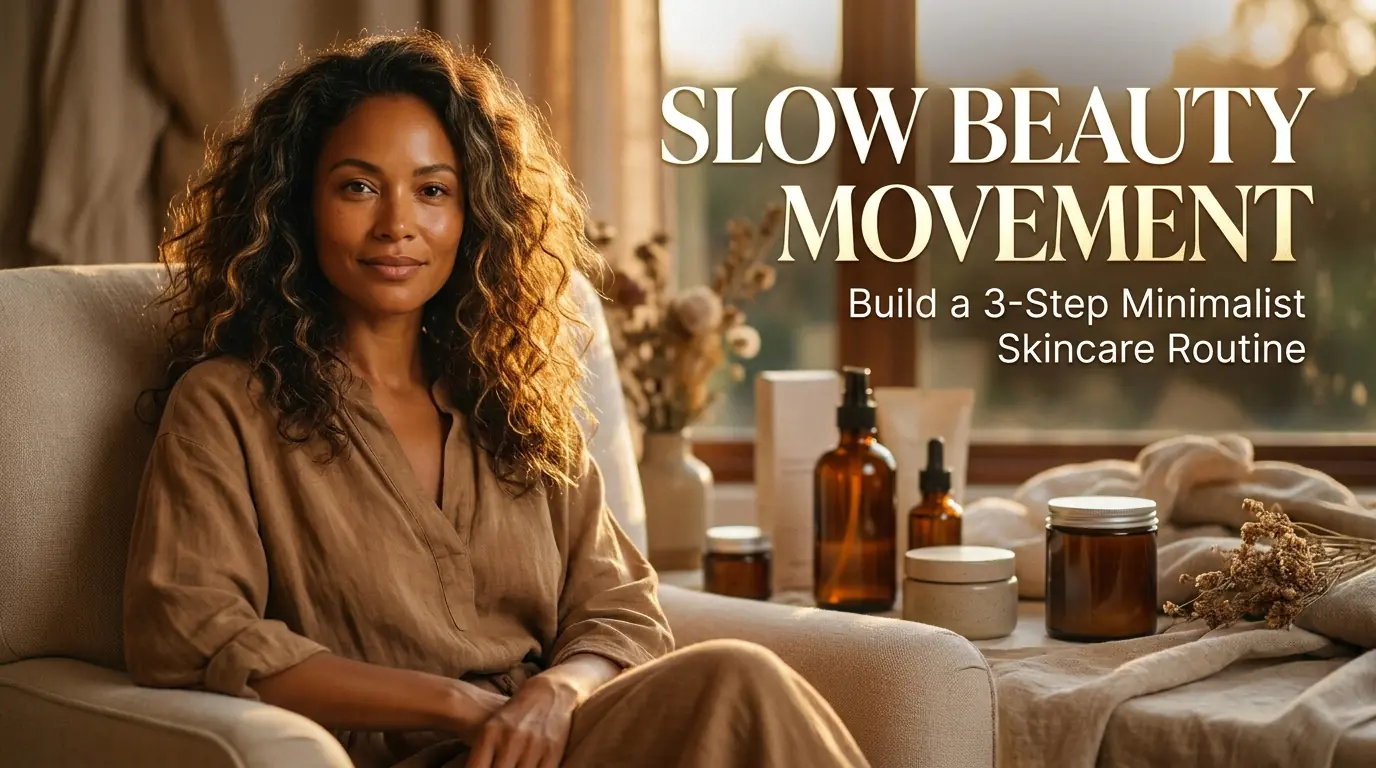
Join the slow beauty movement and build a minimalist skincare routine that actually works. Learn how 3 intentional steps can deliver better results than a 12-step regimen.
Slow beauty is the movement rejecting overcrowded shelves in favour of fewer, better products and mindful routines. This guide shows you how to embrace slow beauty with a simple, effective 3-step minimalist skincare routine that respects your skin and the planet.
How to Build a 3-Step Minimalist Skincare Routine
Published · Updated
What Is the Slow Beauty Movement and Why Is It Growing
The slow beauty movement is a philosophy rooted in intentionality, sustainability, and a deep respect for the skin’s own biology. It borrows its name and ethos from the slow food movement, which prioritised quality ingredients, traditional preparation, and mindful consumption over fast, processed convenience. Applied to skincare, the same logic holds: using fewer, better products consistently will benefit your skin more than constantly switching between trendy items.
The movement gained momentum as consumers began questioning the overwhelming volume of products being marketed to them. Beauty companies have historically profited from the idea that more is more, introducing new steps, new categories, and new problems to solve. Consumers found themselves buying toners, essence layers, ampoules, facial oils, sleeping masks, and multiple serums layered one atop another. The result was not necessarily better skin. For many people, it was reactive, congested, or sensitised skin that required even more products to manage.
The slow beauty movement rejects this cycle. Its core tenets include the following:
- Using fewer products with well-researched, effective ingredients
- Allowing time for each product to work before introducing something new
- Listening to the skin rather than chasing every new trend
- Reducing waste and choosing products with a longer shelf life and better environmental impact
- Prioritizing skin health over cosmetic quick fixes
What drives the growth of this movement today is a combination of factors including increased access to dermatological research, a broader cultural shift toward mindful consumption, and a growing body of evidence that skin barrier disruption is one of the most common and underdiagnosed causes of skin problems. As more people learn that their elaborate routines may actually be damaging their skin rather than helping it, the appeal of simplicity becomes undeniable.
How Overconsumption in Beauty Harms Your Skin Barrier
To understand why the slow beauty minimalist skincare routine works, you first need to understand what happens when you overload your skin with products. The skin barrier, also called the stratum corneum, is the outermost layer of the skin. It functions like a protective shield, keeping moisture in and environmental aggressors out. It is composed of skin cells embedded in a matrix of lipids including ceramides, cholesterol, and fatty acids. When this barrier is intact, skin looks plump, calm, and resilient.
When you layer multiple active ingredients on the skin every day, especially when those actives include exfoliating acids, retinoids, vitamin C, niacinamide, and peptides all at once, you risk stripping or damaging the very barrier you are trying to support. Signs of a compromised skin barrier include persistent redness, tightness after cleansing, increased sensitivity to products that used to be tolerated, flakiness, breakouts along previously clear areas, and a dull, uneven complexion.
The Role of pH and Active Ingredient Conflicts
Many active skincare ingredients work at specific pH levels, and layering them out of sequence or too frequently can render them ineffective or even counterproductive. Vitamin C is most effective at a low pH, while niacinamide works better at a slightly higher pH. Using them together or without proper intervals can cause a chemical reaction that reduces their efficacy and causes flushing. Exfoliating acids and retinoids used together can push the skin’s tolerance beyond its limit, leading to micro-tears and chronic inflammation.
None of this means active ingredients are dangerous when used thoughtfully. It means that more is not better. The slow beauty approach to actives is to choose one or two that address your actual skin concern and use them consistently over time rather than cycling through a library of treatments.
Inflammation as a Root Cause of Skin Aging
Chronic low-grade inflammation, sometimes called ‘inflammaging’, is now recognised as one of the primary drivers of premature skin aging. Using harsh or incompatible products on the skin causes inflammation, which over time breaks down collagen and elastin and speeds up the appearance of fine lines, uneven texture, and hyperpigmentation. By reducing the number of potential irritants, a slow beauty routine naturally lowers the skin’s inflammatory load and creates the conditions for genuine healing and repair.
The Science Behind a 3-Step Skincare Routine
A well-designed slow beauty minimalist skincare routine built around three steps is not just a lifestyle preference. It is backed by dermatological principles. The three core functions that a routine needs to perform are cleansing, moisturising, and sun protection. Every other step, while sometimes beneficial, is supplementary. When these three functions are performed correctly and consistently with the right formulations for your skin type, the majority of common skin concerns improve significantly over time.
Research consistently shows that consistent, gentle cleansing preserves the skin microbiome and barrier better than frequent, aggressive cleansing. Using an emollient-rich formula to moisturise twice a day has been shown to reduce transepidermal water loss, calm reactive skin, and support barrier repair. Daily broad-spectrum sun protection remains the single most evidence-backed intervention for preventing premature aging, hyperpigmentation, and skin cancer.
Why Three Steps Work Better Than Ten
When you use ten or more products, your skin is constantly adapting to new inputs. Some products cause temporary dryness, others create a temporary glow, and it becomes nearly impossible to identify which product is helping, which is irritating, and which is doing nothing whatsoever. The elimination diet principle from nutrition science applies equally here. By stripping back to three intentional steps, you give your skin a baseline from which to stabilise. Once the skin has calmed and balanced, you can genuinely assess what, if anything, additional steps might add.
Additionally, using fewer products reduces the cumulative fragrance load, the combined preservative load, and the total number of potential allergens your skin encounters daily. This reduction in overall chemical exposure has measurable benefits for people prone to contact dermatitis and sensitivity.
Step One: The Right Cleanser for Your Skin Type
Cleansing is the foundation of any slow-beauty, minimalist skincare routine. Its purpose is simple: to remove excess sebum, environmental pollutants, sweat, and any previously applied products without stripping the skin’s natural oils or disrupting the microbiome. The cleanser is not meant to be therapeutic. It should not exfoliate, treat, or transform. It should simply clean the skin gently and effectively.
The most common mistake people make with cleansers is choosing a formula that is too harsh for their skin. Foaming cleansers with sulphates can strip the lipid layer and leave skin feeling tight, which many people mistake for being “clean”. That tight feeling is actually a sign of barrier disruption. A gentle cleanser leaves the skin feeling comfortable, slightly hydrated, and balanced.
Cleansing for Different Skin Types
For dry or dehydrated skin, a cream or milky cleanser that does not foam at all is often ideal. These formulas cleanse without removing the natural oils that dry skin is already deficient in. For normal to combination skin, a gentle low-foam cleanser or a micellar formula, used without vigorous rinsing, works well. For oily or acne-prone skin, a gel cleanser with a mild foaming action can help manage excess sebum without over-drying, but even here, the formula should feel balanced on the skin, never stripped.
Double cleansing, the practice of using an oil-based cleanser followed by a water-based one, has merit for those who wear sunscreen or makeup. In a slow beauty routine, this remains an option for evenings only, not a mandatory daily double step. In the morning, many slow beauty practitioners skip cleansing entirely or use only water because they have not exposed their skin to environmental stressors overnight.
How Often to Cleanse
The slow beauty movement recommends cleansing once or at most twice per day. Over-cleansing, even with a gentle formula, repeatedly removes and forces the skin to replenish its natural oils, which can lead to rebound oiliness in oily skin types and chronic dryness in dry types. The skin has its own rhythm, and the slow beauty approach respects that cycle.
Step Two: Moisturizing to Support the Skin Barrier
Moisturising is the most universally important step in a three-step slow-beauty minimalist skincare routine. While cleansing removes impurities and sunscreen protects the skin, moisturiser restores moisture. It replenishes lipids and humectants that support barrier function, reduces transepidermal water loss, and creates a cushioned, supple environment for the skin’s repair processes to work most efficiently.
A complete moisturiser formula addresses all three layers of hydration. Humectants, such as hyaluronic acid and glycerin, draw water into the skin from the environment and from the deeper layers of the dermis. Emollients such as squalane, fatty acids, and plant-based oils fill the gaps between skin cells and create a smooth, soft surface. Occlusives such as shea butter, lanolin, or petrolatum form a physical barrier that slows water from evaporating off the skin’s surface.
Choosing a Moisturizer in the Slow Beauty Framework
In a slow beauty routine, the moisturiser does not need to be elaborate. It does not need to contain a dozen active ingredients. In fact, a simpler formula with a short ingredient list centred on proven barrier-supporting ingredients is often better tolerated and more effective over time. Look for formulas that contain ceramides, the lipids naturally found in the skin barrier, and that can be replenished topically. Peptides are also gentle enough to include in a moisturiser without causing conflict with other ingredients in a minimal routine.
One moisturiser applied in the morning and evening is sufficient for most skin types. The texture and richness of the formula should match the skin’s needs. Dry skin benefits from richer creams. Oily skin often does well with lighter gel creams or fluid emulsions. Combination skin may benefit from a medium-weight lotion. The goal is for the skin to feel comfortable throughout the day without needing touch-ups or additional product.
The Slow Beauty Approach to Serums
Many people ask whether they can include a serum in a three-step routine. The answer depends on whether the serum addresses a genuine, specific concern and whether it is formulated to be used long-term rather than as a short-term treatment. If including a serum, the slow beauty framework recommends choosing one, applying it after cleansing and before moisturising, and committing to using it consistently for at least twelve weeks before evaluating the results. This patience is central to the slow beauty mindset.
Step Three: Sun Protection as a Daily Non-Negotiable
In a slow beauty minimalist skincare routine, daily broad-spectrum sun protection is the third and final mandatory step. No single skincare product has more evidence behind it than sunscreen for preventing premature aging, hyperpigmentation, and skin cancer. The slow beauty movement embraces the practice of skin health preservation not as a cosmetic vanity step but as a genuine act of long-term skin health preservation.
The slow-beauty approach to sun protection is to choose one reliable formula that you enjoy using enough to apply every single morning, rain or shine, indoors or out. UV radiation penetrates glass and clouds. Choosing a formula that wears well under any other products you use removes the barrier to daily use.
Understanding SPF and Broad-Spectrum Coverage
Sun protection factor measures protection against UVB rays, which cause sunburn and contribute to skin cancer. However, UVA rays penetrate more deeply into the skin and are responsible for the majority of photoaging, including wrinkles, loss of elasticity, and uneven pigmentation. A broad-spectrum sunscreen addresses both UVA and UVB. For daily use, SPF 30 provides around 97% UVB protection, while SPF 50 provides around 98%. The difference is marginal for most people. Consistent daily use of an SPF 30 sunscreen will protect the skin far more effectively than inconsistent use of an SPF 50.
Chemical vs. Mineral Sunscreens in Slow Beauty
Chemical sunscreens absorb UV radiation and convert it to heat, which is then released from the skin. Mineral sunscreens, which contain zinc oxide or titanium dioxide, sit on the skin’s surface and physically scatter UV rays. Both types are effective when formulated well. In a slow beauty context, neither is inherently superior. The best sunscreen is the one you will use every day without hesitation. People with sensitive or reactive skin often prefer mineral formulas due to their lower potential for irritation, while those who dislike the white cast of minerals may prefer a hybrid or purely chemical formula.
Building Your 3-Step Routine: Morning and Evening Protocols
The slow-beauty minimalist skincare routine operates differently in the morning and in the evening because the skin’s needs and the environment it faces differ throughout the day. Understanding the process allows you to optimise each session without adding unnecessary steps.
Morning Routine
The morning routine focuses on preparation and protection. The skin has been in repair mode overnight. Waking skin needs gentle cleansing or rinsing with water, followed by a moisturiser to lock in that overnight hydration and finished with sun protection to shield against daytime UV exposure and environmental stressors. Some people include a vitamin C serum in the morning because antioxidants boost the protective effects of sunscreen and help neutralise free radicals generated by UV exposure. If you choose to include a single antioxidant serum, this is an appropriate time to use it.
The morning routine should take no more than five to seven minutes. If it takes longer, it is probably more complex than a true slow beauty routine requires.
Evening Routine
The evening routine focuses on cleansing and restoration. The skin is exposed to pollution, UV radiation, and sweat throughout the day. An evening cleanse removes all of the dirt and impurities effectively. Following cleansing, applying a richer moisturiser or a barrier-repair cream supports the skin’s natural nighttime regeneration processes. At night, there is no need for sunscreen. If you use any active ingredients, such as a retinoid or a gentle exfoliating acid, the evening is the appropriate time to use them, since many actives are photosensitive and work best when the skin is not exposed to light. In a true three-step routine, however, actives are used in rotation rather than daily, which allows the skin adequate recovery time.
The Mental and Lifestyle Dimensions of Slow Beauty
The slow-beauty minimalist skincare routine is as much a mindset as it is a product strategy. Its broader philosophy encompasses how you relate to your skin, your body, and the larger beauty industry. This mental dimension is what separates slow beauty from simple product minimalism.
Slow beauty asks you to notice your skin with curiosity rather than judgement. Instead of evaluating their reflection for flaws to fix, slow beauty practitioners learn to assess their skin’s current state with interest: Is it dehydrated today? Was last night’s sleep insufficient, and is that showing up in puffiness? Is the skin more sensitive because of hormonal changes? This observational approach gives you genuinely useful information that no product can provide.
Breaking Free from Product Accumulation
The beauty industry’s business model depends on creating perceived need. New launches, limited editions, and trend-driven formulas create a cycle of purchasing that rarely addresses the skin’s actual needs and instead generates constant churn. The slow beauty movement encourages stepping off this treadmill consciously. Before purchasing any new product, slow beauty practitioners ask whether the product addresses a genuine, current skin need, whether they have completed the current products in that category, and whether the product would simplify or complicate their routine.
This pause before purchasing is transformative. It saves money, reduces waste, and, most importantly, prevents the kind of routine creep that gradually turns a manageable three-step practice into a complex twelve-step ritual that is difficult to maintain consistently.
Slow Beauty and Stress Reduction
There is a meaningful connection between skin health and psychological stress. Chronic stress elevates cortisol, which suppresses immune function in the skin, increases sebum production, impairs barrier repair, and worsens inflammatory skin conditions such as eczema, psoriasis, and acne. The simplicity of a slow beauty routine reduces the decision fatigue and anxiety that a complex routine generates. When skincare becomes a brief, peaceful ritual rather than a labour-intensive project, it positively contributes to the mental state that supports skin health. The routine becomes a form of self-care in the truest sense.
How to Transition from a Multi-Step Routine to Slow Beauty
If you currently use eight, ten, or twelve products, the idea of paring back to three can feel daunting. The transition to a slow, beautiful minimalist skincare routine does not have to happen overnight. In fact, a gradual approach gives your skin time to adjust and provides you the data you need to identify which products are worth keeping.
Begin by doing a product audit. List every product in your current routine and categorise it by function: cleansers, moisturisers, sunscreens, exfoliants, serums, treatments, and tools. For each product outside the core three categories, ask what specific concern it addresses and whether you have seen measurable improvement in that concern since you started using it. If you cannot answer that question clearly, the product may not be earning its place in your routine.
The Elimination Method
The most reliable way to simplify a complex routine is to eliminate one product per week, starting with the most recently introduced items. This mirrors the advice dermatologists give when diagnosing contact dermatitis or product sensitivity. By removing one product at a time, you give your skin a chance to reveal whether that product was contributing to any existing concerns. Many people discover that a product they assumed was beneficial was actually causing the mild breakouts, redness, or congestion they had attributed to other causes.
During the transition period, expect the skin to go through an adjustment phase. Skin that you have over-stimulated with actives may temporarily look duller before it stabilises. After being over-cleansed, skin may produce more oil for a week or two before sebum production normalises. This adjustment is temporary and is a sign that the skin is recalibrating toward a healthier equilibrium.
When to Reintroduce Additional Steps
After running your three-step routine consistently for at least four to six weeks, you will have a clear skin baseline. From that baseline, you can make an informed decision about whether to reintroduce any single additional step. If you do, use just one item and stick with it for twelve weeks before evaluating. This slow, methodical approach means that if a problem arises, you know immediately which product is responsible. It also means that if an improvement occurs, you can attribute it accurately rather than guessing among a dozen variables.
Slow Beauty for Different Skin Concerns
One of the most common misconceptions about the slow beauty minimalist skincare routine is that it is only suitable for people with healthy, uncomplicated skin. In reality, the slow beauty framework accommodates every skin type and many specific concerns. The key is in selecting the right three core products for your individual needs.
Acne-Prone Skin
For skin that is prone to breakouts, the three-step slow beauty routine centres on a gentle, non-comedogenic cleanser, a lightweight moisturiser that does not block pores, and a daily sunscreen with a non-greasy finish. A targeted treatment such as a low-concentration salicylic acid or benzoyl peroxide can be used two to three times per week as an optional fourth step during flare-up periods and then paused when the skin stabilises. The slow beauty philosophy for acne is to avoid the temptation to layer multiple acne-fighting ingredients simultaneously, which commonly worsens barrier function and triggers more inflammation rather than resolving breakouts.
Hyperpigmentation and Uneven Skin Tone
For those concerned with dark spots or uneven tone, consistent daily sun protection is the most critical intervention. Without it, UV exposure continuously stimulates the pigmentation deposited in the skin, and it will not fade regardless of what brightening ingredients you apply. The slow beauty approach adds consistent, daily sunscreen as a genuine treatment, not just a cosmetic step. A single brightening ingredient such as vitamin C, azelaic acid, or tranexamic acid can be incorporated as the serum in a three-step-plus-one routine, used consistently over several months. Patience is essential because hyperpigmentation responds slowly but reliably to this kind of sustained, calm approach.
Dry and Dehydrated Skin
Dry and dehydrated skin responds especially well to the slow beauty minimalist skincare routine because these skin types are often worsened by the overuse of exfoliating actives that further compromise the barrier. A cream cleanser, a rich ceramide-containing moisturiser applied immediately after cleansing to damp skin, and a moisturising sunscreen formula create a simple yet highly effective system. Using a heavier barrier cream or facial oil overnight as an occlusive layer helps the skin repair itself while you sleep, without needing extra products during the day.
Sustainability and the Environmental Case for Slow Beauty
The slow-beauty minimalist skincare routine aligns naturally with sustainability goals. The beauty industry generates an enormous amount of plastic packaging waste each year. When consumers reduce the number of products they purchase, they directly reduce the volume of packaging they contribute to the waste stream. Fewer products also mean fewer manufacturing processes, fewer shipping miles, and less energy consumed in the supply chain.
Beyond packaging, the formulation of slow beauty products tends toward fewer ingredients overall, which generally means a smaller environmental footprint. Some synthetic ingredients in conventional skincare are persistent in waterways, and reducing the number of products used reduces the cumulative load of these compounds that rinse off skin and enter municipal water systems.
Slow beauty also encourages people to use products until they are completely finished rather than discarding them when a newer option appears. This practice, simple as it sounds, is one of the most environmentally meaningful things a consumer can do. A single tube of cleanser used completely before replacement has zero incremental waste. The same discarded half-used tube represents both financial and environmental loss.
Frequently Asked Questions
Is a slow beauty minimalist skincare routine suitable for all ages and skin types?
Yes, the slow-beauty minimalist skincare routine is appropriate for virtually every age and skin type. The core steps of cleansing, moisturising, and sun protection are universally beneficial. The specific products within each step are tailored to individual skin types and concerns. Teenagers with oily, breakout-prone skin select different formulas than a person in their fifties with dry, mature skin, but the three-step framework applies equally. In fact, people at either end of the age spectrum often benefit most dramatically from simplification because young skin can overcorrect with too many actives and mature skin is more sensitive to barrier disruption from complex routines.
Will a 3-step routine be enough if I have significant skin concerns like rosacea or eczema?
For inflammatory skin conditions like rosacea or eczema, dermatologists often recommend a simplified routine as part of the management approach. Both conditions are characterised by a compromised or reactive skin barrier, and reducing the number of potential irritants is a clinically sound strategy. The three core steps, performed with fragrance-free, minimal-ingredient formulas, address the barrier repair and hydration that are central to managing both conditions. Prescription treatments prescribed by a dermatologist remain separate from the cosmetic routine and do not conflict with the slow beauty framework. The slow beauty routine provides the stable, calm baseline that makes prescription therapies work more effectively.
How long does it take to see results from a simplified skincare routine?
Skin cell turnover takes approximately 28 to 40 days in younger adults and up to 60 days in older adults. This means that any meaningful changes to the skin’s appearance following a routine change will take at least four to six weeks to become visible. During the first two to four weeks, the skin goes through an adjustment phase where it may look about the same as before. By the six to twelve week mark, a consistent three-step routine will begin delivering visible improvements in texture, hydration, and overall clarity. The slow beauty philosophy emphasises this timeline as a feature rather than a limitation, as it cultivates the patience and consistency that are the real drivers of lasting skin health.
Can I still use exfoliants in a slow beauty routine?
Exfoliation has a place in the slow beauty minimalist skincare routine, but only when used with restraint and intention. Chemical exfoliants such as alpha hydroxy acids (AHAs) like glycollic or lactic acid, or beta hydroxy acids (BHAs) like salicylic acid, can be valuable for addressing texture, congestion, and dullness. The slow beauty approach uses them one to two times per week at most as an optional step that supports the core three rather than as a daily product. Physical exfoliation with scrubs is generally discouraged because it carries a higher risk of micro-tearing, which can worsen sensitivity and inflammation over time. When used sparingly and with the skin’s current tolerance in mind, gentle chemical exfoliation integrates seamlessly into a slow beauty framework.
Do I need different products for morning and evening in a slow beauty routine?
A true slow beauty minimalist skincare routine does not necessarily require separate morning and evening product lines. Many people use the same cleanser morning and evening and the same moisturiser and simply apply sunscreen only in the morning. If you choose to use any active ingredient such as a retinoid or AHA, those are typically reserved for evening use, but you do not need a completely separate evening product line. The morning and evening routines differ primarily in whether sun protection is applied and, in some cases, in the richness of the moisturiser that is chosen. A slightly richer cream at night can support repair processes without requiring a completely separate “night cream” if your morning moisturiser is already working well for you.
How do I know if a product is truly aligned with the slow beauty philosophy?
Evaluating whether a product aligns with the slow beauty minimalist skincare routine comes down to several questions. Does the product serve one of the three core functions clearly: cleansing, moisturising, or protecting? Does it have a relatively short, transparent ingredient list without excessive fragrance, unnecessary fillers, or trendy ingredients that have limited evidence behind them? Is the packaging designed to last and protect the formula, rather than being elaborate for purely aesthetic reasons? Could you commit to using the entire product before considering a replacement? If a product passes these questions, it is likely a good fit for a slow beauty routine. If it requires significant explanation for why it is necessary, or if its primary marketing appeal is novelty rather than function, it probably does not belong in a minimalist routine.
Conclusion
The slow-beauty, minimalist skincare routine represents a genuine paradigm shift in how we care for our skin. It asks us to trade the anxiety of constant optimisation for the quiet confidence of consistent, intentional practice. It asks us to trust that our skin, given the right basic support and freedom from chronic overstimulation, has a remarkable capacity to heal, regulate, and thrive on its own.
The three steps at the heart of this approach—cleansing gently, moisturising to support the barrier, and protecting daily with sunscreen—are not arbitrary. They are grounded in decades of dermatological research and supported by the lived experience of practitioners around the world who have found that their skin improved when they stopped doing so much to it. The slow beauty movement is not anti-product or anti-science. It is pro-evidence, pro-patience, and deeply respectful of the skin’s biological intelligence.
Whether you are beginning your skincare journey or looking to step back from a complicated routine that no longer serves you, the slow beauty framework offers a clear and compassionate path forward. Build your three steps with care, give each product adequate time to work, and approach your skin with curiosity rather than criticism. The rewards are real, lasting, and well worth the patience they require.
RELATED ARTICLES:
Unveiling the Secret to Radiance: Tamarind Extract in Skincare
2026 Skin Streaming Routine
5 Skincare Trends to Watch Out for in 2026, According to a Top Skin Expert
Retinal vs Retinol in 2025: The Fastest Path to Results for Your Skincare Goals
About The Author

COMMENTS