


Self tanners have moved from streaky, biscuit-toned formulas of 20 years ago to genuinely undetectable color in 2026, and the gap between great and ba
Self tanners have moved from streaky, biscuit-toned formulas of 20 years ago to genuinely undetectable color in 2026, and the gap between great and bad self tanners now lives in the formula chemistry and the application technique. The best self tanners on the wrong skin still streak; mediocre self tanners on well-prepped skin look beautiful. This guide walks through self tanners in detail, with the formula types, the prep-and-apply routine, and the picks worth your money for every skin tone.
Published · Updated
WHAT TYPES ARE THERE?
Self-tanners come in a surprising number of formats — and each one suits a different skin type, body area, and application skill level.
There are many different types of self-tanners, depending on the type of composition and the concentration of these products, which usually ranges from 1 to 15%, although the most common is 3 to 5%. Those that contain, in addition to DHA, erythrulose. The tanning process is slower or faster.
Depending on the mode of application:
in spray
They can be used at home, with the product already prepared in a bottle under pressure, or in professional booths where a product diffuser is used. They are quick and comfortable to use since the product dries very quickly; it is liquid, so you can get dressed right away without losing the effect of the product on your clothes, and it is not necessary to wear gloves.
Although the downside is that it dries the skin somewhat, it is important that it is well hydrated before applying it. If a very dark tan is desired, it will have to be applied more than once.
in foam
Like the spray, it is easy to apply, although it is necessary to wear gloves for it. The advantage, like the spray, is that it also dries very quickly; however, it does not dry out the skin as much since it does not usually contain alcohol in its composition. The effect is between a lotion/cream and a spray.
In lotion, cream or gel
This is perhaps the most cumbersome product to apply and the one that you will have to wait the longest for to dry before getting dressed. However, since it is applied as a cream or lotion, it will also contain moisturising active ingredients that will allow the self-tanner to remain in contact with the skin for longer. It is the one that gives the most intense and permanent colour.
It is important not to apply it without gloves since, in the same way that it will tan the skin where it is applied, it will also tan the palms of the hands in a more permanent way.
On a stick
The stick is also a cream that contains wax, as if it were lipstick.
In oil
It is applied directly and has the advantage that it has an immediate flash effect as well as a slight tanning effect. Although if you are looking for a more permanent tan, I do not usually advise it. This product is more suitable for areas that are not dressed, such as the neckline, legs or arms, since it takes a long time to dry and it is very likely that it will stain clothes.
in wipes
Both the sticks and the wipes are applied to the surfaces soaked in the liquid product. I prefer to advise this product as an emergency method, like the spray or the liquids; it contains some alcohol, so it will also dry the skin somewhat. It is equally very important to hydrate the skin.
Depending on the speed of action and permanence
Immediate bronzers
These products do not contain DHA itself or contain a small amount. This type of product is limited to one day’s action until the skin is washed off. It is like long-lasting makeup or dye. They are removed with soap and water. They usually carry carotenes, canthaxanthins and other types of dark dyes.
We can find them in the same form as the previous ones and also in powder form.
Gradual Self-Tanners
These products contain a very small amount of self-tanner, so it is necessary to apply it more often. This way the tone goes up, but it also lasts longer. It is ideal on the face since this is how we get the tone that we like the most and in spring when we do not want a more discreet tone and not so tanned-beach. Also for white skin.
Self-tanners
The classic self-tanners that we will apply every three or five days can be found in all the different forms that I have explained above.
Tan extenders
Many of these products contain, in addition to highly nourishing and moisturising active substances for the skin, a slight amount of self-tanner; with this, we maintain the tan for longer.
– Sunspots on the skin: how to treat them
HOW DOES IT APPLY?
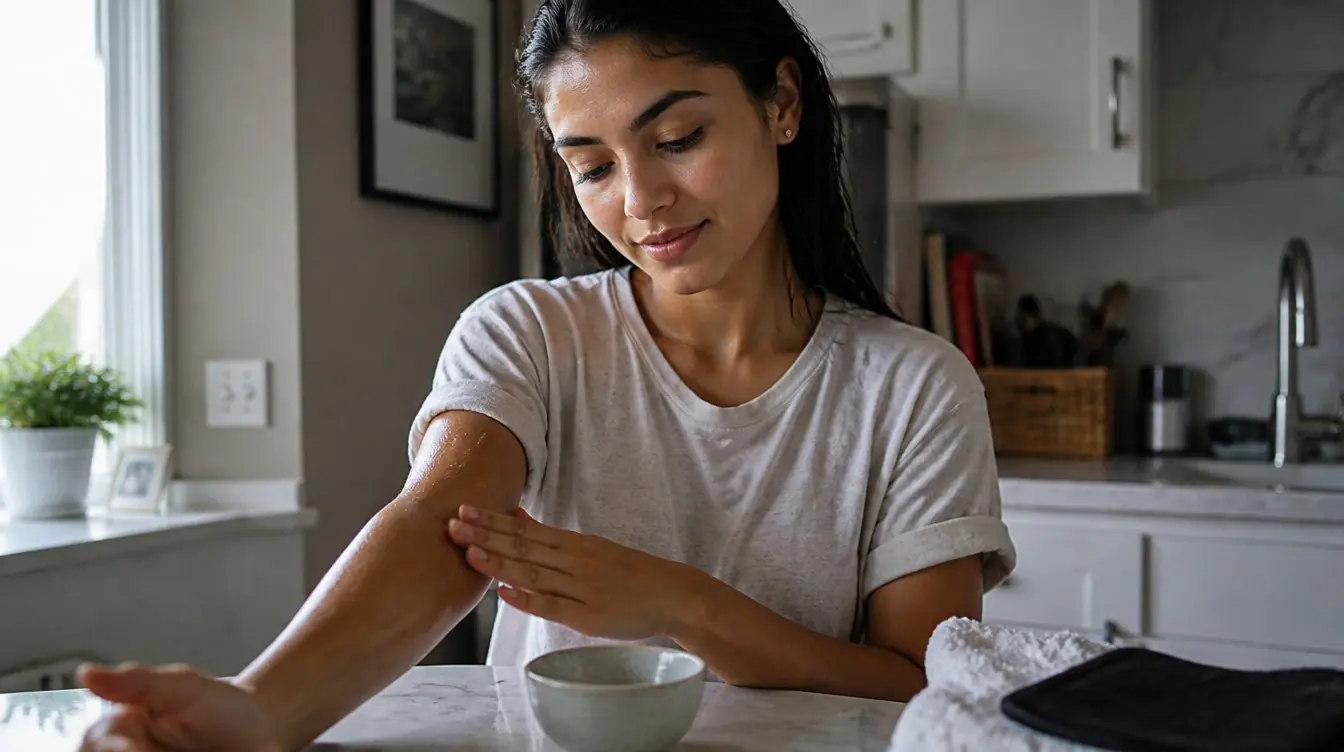
We have seen that the self-tanner binds to the outermost cells. In order for the self-tanner to last longer, the ideal is that before applying it we eliminate the cells that are already about to come off, so it is advisable to exfoliate the skin.
It is very important to insist on areas that naturally have more dead cells or drier areas, such as knees and elbows.
Later we are going to keep the skin hydrated; with this we will also achieve a more lasting effect since these cells that we are going to “dye” will remain longer in this layer of skin.
Finally, it is almost mandatory to use gloves to apply the self-tanner if we are going to use it at home and in another way different from the spray, since if we are going to apply it all over the body, the palms of the hands are the ones that spend the longest time doing so. to have the product applied, and naturally this area does not tan, so the brown palms of the hands will give us away and look very fake.
Once we have exfoliated and hydrated the skin correctly and with completely dry skin, we can begin to apply the product. Some self-tanners are easier to apply than others because they are coloured so you can see where they have been applied or not, unlike the colourless ones.
In the body
It is important not to leave areas without applying product since where we do not put it, it will remain without a tan. That is why the ideal is to always follow the same routine from bottom to top: starting with one leg and then the other. Then the torso, back and, finally, shoulders and neckline and down to the arms. You have to pay attention when we are applying the product to the feet and ankles, since it is easy for us to leave a line.
My advice is to apply it on the leg without pressing too much and spread it towards the foot irregularly. Without pressing, you can use a towel mitt, cloth or soft brush (which will only be used for this).
Personally, I prefer the foot to look a little less brown, so it looks striped between the toes or on the ankles. On the knees it is also necessary to apply it conscientiously and remove excess with the same cloth.
When we get to the arms, the same thing happens in the wrists and hands as with the feet; plus, we have gloves on. As we have left it for last, we can take off a glove and gently distribute the product down the wrist to the hand without pressing so that the effect appears more diffuse.
It is important not to dress until the product is completely dry.
A trick that I usually advise is to apply it at night before going to bed and sleep in some dark pyjamas. So the next morning after a shower, in which the excess is removed, the tan will be perfect. And it is only necessary to hydrate the skin a lot; you can use a product like body butter.
If we are going to apply it in a spray, it must be done quickly enough so as not to put more product in one place than in another and at the necessary distance to correctly distribute the product. It really is just a matter of a little practice.
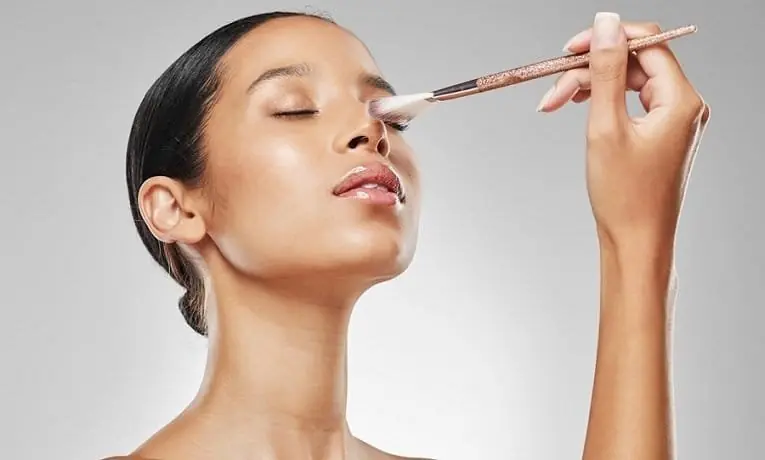
Face
It is also important not to leave areas without product, since this is where a white spot will remain, and to be homogeneous so that one area is not darker than another.
We will start, just like the body, with a good cleansing of the skin and a deep exfoliation, either with a scrub or even a cleansing brush.
The areas in which we must pay special attention are the hairline, eyebrows and nose wings, where there is usually a greater amount of dead cells and it is easier for more product to accumulate, leaving a darker halo that will not look good. To avoid it, we can apply the product, avoiding these areas, and then, carefully, as we have done on the feet and hands, spread it. You can also apply more moisturising cream; with this, we will prevent the self-tanner from accumulating.
It is preferable not to apply makeup if you have applied self-tanner at least four hours ago and have washed your face. Although you can put powders, like a blush.
It is essential to keep your tan beautiful and, for a longer time, to moisturise daily with a cream that is creamy enough or an oil.
DO THEY STAIN? WHAT ABOUT THE SMELL?
The spots on the skin only appear when the product has been applied incorrectly, when we have left unapplied areas or when we have put more product in one area than in another.
Therefore, in itself, spots or stripes will not appear.
When the product is removed and is not applied again, smears or traces that are darker than others may appear, so it is preferable to remove them with a scrub-type exfoliator; by dragging away the dead cells, the stained ones will also go away.
On clothing, from the moment it has been applied and while it remains until the first time we shower, stains are likely to appear, so it is preferable to wear dark and not very tight clothing. Subsequently, it does not stain, although as the dead cells gradually fall off, they can leave a slight trace, but just like that left by a natural tan.
About the smell: some brands have managed to eliminate the particular smell that DHA oxidation has. It fades as it takes more days to apply. Some leave more of a trace than others.
HOW TO DELETE THEM?
If it is a product for immediate use, it will be enough to wash with soap and water.
If it’s a self-tanner, you need to exfoliate your skin to remove it.
If we have stained ourselves when applying it, it is preferable to clean the skin as soon as possible; we must avoid having the product applied for as long as possible.
Hands must be washed carefully after application, and if necessary, a brush must be used.
WHICH TO BUY?
Many times we want a self-tan and we don’t know which one to opt for.
My advice is that, if the skin is fair, it is preferable to buy a gradual one or mix the lotion with a moisturising cream to reduce the tone that will result.
It is preferable to apply it twice rather than once, or it looks bad or artificial.
If we have dark skin (perhaps it is easier), anything will suit us. However, if we are experts, the lotion will be more economical.
The spray is faster but less intense; we need more applications. Therefore, it is one of the useful products for subsequent applications or to maintain the colour.
The foam is very easy to apply, so I recommend it when you are inexperienced.
I recommend the wipes only on legs and emergency areas, such as when we want to remove our stockings when wearing a skirt.
DO THEY PROTECT FROM THE SUN?
Although they tan us, they do not protect us from the sun; on the contrary, it is preferable not to sunbake during the first 24 hours, since some studies indicate that the skin is more sensitive during that time.
If we are going to sunbake and we are wearing a self-tanner, do not forget to apply a sunscreen since the colour is not the result of the natural protection of melanin but a much more external effect, and we can still burn.
PRECAUTIONS
It can cause contact dermatitis. If it has never been used, it is preferable to apply a small amount to an inconspicuous area and wait for a skin reaction after 24 hours.
Avoid contact with the eyes, mouth or mucous membranes.
The sprays can be inhaled, causing asthma.
Allergy to the product itself, or to the perfumes that contain it.
OTHER EFFECTIVE PRODUCTS
- Tanning accelerators
- Products containing tyrosine. This amino acid stimulates the formation of melanin, which promotes tanning.
- The carotenes. It is also applied both to self-tanners and to tanning stimulators.
- Athletes who compete in bodybuilding often use very dark tints and then heavily hydrate their skin to make it look bright and hydrated.
Frequently Asked Questions About Self Tanners
How do you apply self tanner without streaks?
To apply self tanner streak-free, exfoliate twenty-four hours before, shave or wax the day before rather than the same day, and moisturise dry areas like knees, elbows, and ankles with a thin layer of unscented lotion. Apply self tanner with a mitt in long, smooth strokes, blending in circular motions over joints. Use a fresh, dry mitt section for each limb to avoid streaking. Let dry fully before dressing, and avoid water, sweat, and tight clothes for six to eight hours. Reapply every five to seven days for maintenance.
How long does self tanner last?
Self tanner typically lasts five to seven days, depending on the formula, skin type, and exfoliation frequency. Mousse and lotion tanners often last longer than spray versions. The colour gradually fades as the top layer of skin sheds. Avoid long hot showers, chlorinated pools, and harsh exfoliants to extend the wear. To refresh, apply a thin layer every three to four days rather than letting the tan fade completely and reapplying from scratch. A gradual tanner moisturiser maintains the colour between full applications.
Which self tanner gives the most natural look?
The most natural-looking self tanners are mousse and water-based gel formulas with a subtle olive or beige undertone, avoiding orange-toned formulas. Brands frequently praised for natural-looking results include St. Tropez, Bondi Sands, Isle of Paradise, and Tan-Luxe. Apply to exfoliated, moisturised skin in thin layers and build colour gradually rather than going dark in one application. The depth of the tan should be one or two shades darker than your natural skin, never a noticeable jump that screams self-tan.
Is self tanner safe for sensitive skin?
Self tanner contains DHA, which reacts with the top layer of skin and is generally considered safe for sensitive skin in topical use. However, fragrance, alcohol, and preservatives in some formulas can irritate. Look for fragrance-free, dermatologist-tested options, and patch test on the inner arm twenty-four hours before full application. Avoid self tanner near the face for very sensitive or acne-prone skin, or choose a facial-specific formula. People with eczema, rosacea, or active breakouts should consult their dermatologist before applying self tanner.
How often should you exfoliate when using self tanner?
Exfoliate two to three days before applying self tanner to ensure smooth, even colour. Between applications, gentle daily moisturising keeps the tan looking fresh, but skip harsh scrubs until you want to remove the tan. Once the tan starts to fade unevenly, exfoliate thoroughly with a scrub mitt or AHA body lotion to reset for the next application. Daily light exfoliation with an exfoliating shower mitt can keep the colour even throughout the wear, but avoid heavy buffing in the first forty-eight hours after application.
Can self tanner cause breakouts on the face?
Yes, some self tanner formulas can clog pores and cause breakouts, especially on acne-prone skin. Choose a non-comedogenic, oil-free, fragrance-free self tanner specifically designed for the face. Apply with clean hands or a small face mitt and avoid the T-zone if you tend to break out there. Cleanse thoroughly the next morning and follow with your usual skincare. If you break out, switch to a gradual tanner facial moisturiser or apply only on the cheeks and jawline. Patch test any new formula first.
RELATED ARTICLES:
2025’s Best Natural Wrinkle Remedy: Garlic Skincare Hacks for Ageless Beauty!
The Ultimate Body Care Routine for Your Softest, Most Supple Skin Yet
Silicone Chest Pads: The Science Behind Why They Work & More
How to Care for Decolletage and Chest Wrinkles
Scalp Psoriasis: Best Treatment and Recommended Shampoo
About The Author

COMMENTS