



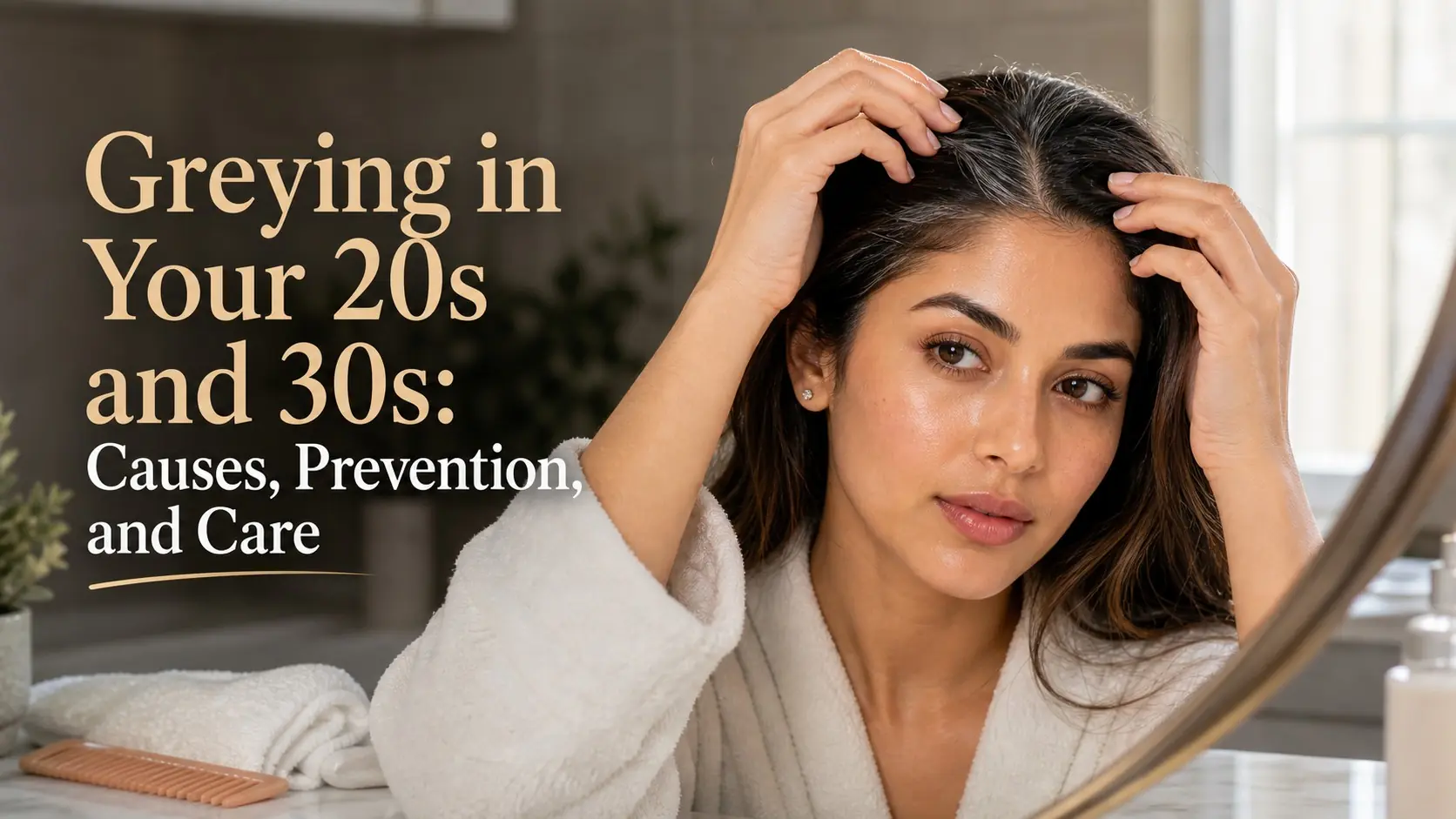
Discover the real premature greying causes and prevention strategies backed by science. Learn why hair turns grey early, which lifestyle factors accelerate it, and what you can do.
Greying in Your 20s and 30s: Understanding Premature Greying Causes and Prevention
Premature greying causes and prevention are top of mind the moment you spot a grey strand in your 20s or 30s. This guide breaks down the real premature greying causes and prevention strategies, from genetics and stress to the nutrients and care that help keep your natural colour longer.
Finding a grey strand in your 20s or 30s can feel alarming, but the reality is that premature greying causes and prevention have become one of the most searched topics in hair health today. More people than ever are noticing silver or white hairs appearing decades before they expected, and the questions around why this happens, what can be done about it, and whether it is reversible are more relevant than ever. This comprehensive guide unpacks the science behind early greying, examines every known contributing factor, from genetics to daily habits, and offers evidence-based strategies to slow the process and maintain the health and vitality of your hair at any age. Whether you spotted your first grey hair at 22 or are watching coverage spread in your mid-30s, understanding what drives this change puts you in a better position to respond wisely.
Published · Updated
Greying is considered premature when it occurs before the age of 20 in white individuals, before 25 in people of Asian descent, and before 30 in people of African descent. These benchmarks are based on large population studies and reflect the natural variation across ethnicities in when the greying process typically begins. In clinical settings, dermatologists and trichologists use these thresholds to distinguish premature greying from age-appropriate changes.
The Difference Between Grey, White, and Silver Hair
Many people use the terms ‘grey’, ‘white’, and ‘silver’ interchangeably, but they actually describe slightly different states. Truly white hair has no melanin at all. Grey hair typically contains some residual melanin, which gives it a darker or more muted tone. Silver hair often refers to the bright, lustrous sheen some people develop when grey and remaining pigmented strands mix together. The specific shade you develop depends on your original hair colour and how much pigment remains in individual follicles.
How Common Is It to Go Grey Early?
Research suggests that approximately 6 to 23 percent of the global population has at least half of their hair turn grey by age 50, with variation based on genetics and ethnicity. More significantly, studies conducted across multiple countries have found that visible greying before age 35 is increasing in frequency. Dermatology clinics report that consultations for premature greying have risen steadily over the past two decades, reflecting both increased awareness and what many researchers suspect is a genuine rise in early-onset cases linked to lifestyle and environmental changes.
The Biology of Hair Pigmentation: How Melanin Gives Hair Its Colour
To understand why hair goes grey prematurely, it helps to understand how it gets its colour in the first place. Hair colour is determined by two types of melanin: eumelanin, which produces black and brown pigments, and pheomelanin, which produces red and yellow tones. The combination and concentration of these two pigments in each strand determine whether your hair is jet black, chestnut brown, blonde, or auburn.
Melanocytes in the hair follicle bulb synthesise these pigments and transfer them to the keratinocytes that form each hair shaft. This is an active, energy-intensive process that depends on a healthy supply of nutrients, functioning cellular machinery, and a stable oxidative environment within the follicle.
The Role of Melanocyte Stem Cells
Hair follicles undergo repeated cycles of growth, regression, and rest throughout life. Melanocyte stem cells located in a region called the hair follicle bulge replenish the active melanocyte population during each new growth cycle. Research published in leading dermatology journals has established that as the body ages, or under conditions of chronic stress or oxidative damage, these stem cells become depleted or fail to migrate properly. Once the stem cell reservoir is exhausted, the follicle can no longer regenerate melanocytes, and new hair grows without pigment. This process is largely irreversible once it has progressed to a significant degree, which is why early identification of risk factors matters so much.
Oxidative Stress and Hydrogen Peroxide Buildup
One of the most well-documented mechanisms behind greying involves oxidative stress. Hair follicles naturally produce small amounts of hydrogen peroxide as a byproduct of normal metabolic activity. Under healthy conditions, antioxidant enzymes such as catalase break down this hydrogen peroxide before it can accumulate. However, research has shown that ageing follicles, and follicles under chronic stress, produce less catalase. This allows hydrogen peroxide to accumulate, where it bleaches the melanin from within the hair shaft and damages melanocyte DNA. This internal bleaching process is now recognised as one of the primary drivers of both age-related and premature greying.
Genetic Factors: Why Premature Greying Runs in Families
Genetics is the single strongest predictor of when you will go grey. If one or both of your parents greyed early, the probability that you will follow a similar timeline increases substantially. Researchers have identified several gene variants associated with hair greying, with a gene called IRF4 receiving particular attention in genomic studies. IRF4 plays a role in regulating melanin production and has been consistently linked to both hair colour and the rate at which colour is lost.
Beyond single gene effects, greying is considered a polygenic trait, meaning many genes contribute. Variants affecting melanocyte longevity, antioxidant enzyme production, DNA repair capacity, and the regulation of hair follicle cycling all influence the overall greying timeline. Epigenetic factors, changes in gene expression that do not alter the underlying DNA sequence, also play a role. Environmental influences like diet, stress, and toxic exposures can switch relevant genes on or off, explaining why identical twins sometimes grey at noticeably different rates despite sharing the same genome.
Ethnicity and Genetic Baseline
Ethnicity influences greying timelines in ways that extend beyond skin-deep variation. People of East Asian descent have been observed in multiple studies to have a later average age of onset for greying compared to white Europeans. People of African descent often begin to grey later still by population averages, though there is wide individual variation within all groups. These differences likely reflect variations in melanocyte density, follicle structure, and the specific gene variants prevalent in each ancestral population.
The Science-Backed Link Between Stress and Premature Greying Causes
For generations, people have described going grey after periods of intense stress, and science has now validated this observation in meaningful ways. A landmark study published in the journal Nature in 2020 demonstrated a direct mechanistic link between sympathetic nervous system activation, the fight-or-flight stress response, and the depletion of melanocyte stem cells in mice. When the researchers exposed mice to acute stress, norepinephrine released by sympathetic nerve fibres flooded the hair follicles, causing melanocyte stem cells to leave their resting state prematurely and differentiate. Once differentiated, these cells lost their ability to regenerate the melanocyte pool, leading to rapid, irreversible greying.
Critically, this process occurred remarkably quickly. In the mouse model, just a few days of intense stress depleted the melanocyte stem cell reservoir in multiple follicles. While human biology does not always translate directly from mouse models, the conserved nature of sympathetic nervous system signalling suggests the findings are highly relevant to human greying as well.
Chronic vs. Acute Stress
Both chronic, low-grade stress and acute, high-intensity stress appear to accelerate greying through related but distinct pathways. Chronic stress elevates cortisol levels over extended periods. Elevated cortisol has been shown to increase systemic inflammation and oxidative stress, both of which impair melanocyte function. Chronic stress also disrupts sleep, reduces nutrient absorption, and suppresses immune regulation, all of which create conditions unfavourable to melanocyte stem cell survival.
Acute stress, as demonstrated in the 2020 Nature study, acts more directly through sympathetic nerve activation. Anecdotal reports of people greying suddenly after major shocks, grief, severe illness, or trauma, a phenomenon historically called “Marie Antoinette syndrome”, may reflect this acute depletion mechanism. While overnight complete greying is not biologically possible for the entire scalp, rapid progression concentrated in newly growing hairs is consistent with what the research describes.
Nutritional Deficiencies That Accelerate Premature Greying
The health of hair follicles depends heavily on an adequate supply of specific micronutrients. Several nutritional deficiencies have been directly linked to premature greying in clinical literature, and addressing them represents one of the most actionable areas for those concerned about early hair colour loss.
Vitamin B12 and Folate
Vitamin B12 deficiency is among the most consistently documented nutritional causes of premature greying. B12 is essential for DNA synthesis, red blood cell formation, and the maintenance of myelin sheaths around nerve fibres. Within hair follicles, adequate B12 is required for melanocyte function and survival. Folate, or vitamin B9, works closely with B12 in one-carbon metabolism, a cellular process critical for DNA methylation and repair. Deficiencies in either nutrient have been associated with early greying in multiple studies, and correction of B12 deficiency has been observed to restore pigment in some younger patients, particularly when the deficiency is caught early.
People at elevated risk of B12 deficiency include strict vegetarians and vegans, who consume no animal products. They also include individuals with conditions such as pernicious anaemia, Crohn’s disease, or other malabsorption disorders. Those who have been on long-term metformin therapy are also at risk, as metformin interferes with B12 absorption. Older adults face increased risk as well, because gastric acid production declines with age, reducing the release of intrinsic factor needed for B12 absorption.
Iron Deficiency
Iron deficiency, the most common nutritional deficiency worldwide, has also been linked to premature greying. Iron is essential for the activity of ribonucleotide reductase, an enzyme involved in DNA synthesis, and for producing haemoglobin, which carries oxygen to follicle cells. Iron deficiency anaemia starves hair follicles of both oxygen and the enzymatic support they need for optimal melanocyte function. Women of reproductive age are particularly vulnerable due to monthly blood loss, and the connection between low ferritin levels and early greying is supported by clinical observations from multiple trichology practices.
Copper, Zinc, and Selenium
Copper plays a direct role in melanin synthesis. The enzyme tyrosinase, which converts tyrosine into melanin, requires copper as a cofactor. Low copper intake, whether from a diet low in nuts, seeds, and legumes, or from conditions affecting copper absorption, can impair melanin production at the biochemical level. Zinc deficiency disrupts hair follicle cycling and can trigger telogen effluvium, a form of hair loss that also correlates with follicle stress and potential accelerated greying. Selenium supports antioxidant defences through its role in glutathione peroxidase, and low selenium status has been associated with higher oxidative stress in follicle tissue.
Vitamin D
Emerging research points to vitamin D receptors within hair follicles as playing a role in follicle cycling and melanocyte function. While the connection between vitamin D deficiency and greying is less firmly established than that of B12 or iron, several studies have found lower vitamin D levels in patients with premature greying compared to age-matched controls. Given that vitamin D deficiency is extremely prevalent worldwide, maintaining adequate levels through safe sun exposure and, where necessary, supplementation, is a reasonable precautionary measure.
Thyroid Disorders and Autoimmune Conditions as Greying Triggers
Premature greying is frequently associated with thyroid dysfunction, particularly hypothyroidism, the underactive thyroid state. The thyroid gland produces hormones that regulate metabolism throughout the body, including within hair follicles. Thyroid hormones influence the duration of the anagen, or growth, phase of the hair cycle, and they also affect melanocyte activity. Hypothyroidism slows metabolic activity throughout the body, which can reduce melanin production and accelerate greying even in young adults. Graves’ disease, an autoimmune form of hyperthyroidism, has also been associated with early greying.
Autoimmune conditions more broadly are linked to premature greying through a phenomenon called ‘vitiligo of the hair’, sometimes referred to as ‘poliosis’. In these cases, the immune system mistakenly targets melanocytes within follicles, destroying them. Conditions such as alopecia areata, Hashimoto’s thyroiditis, type 1 diabetes, and pernicious anaemia all carry elevated associations with early greying. Anyone experiencing greying before age 30 should consider discussing thyroid function testing and a basic autoimmune panel with their healthcare provider, particularly if greying is accompanied by other symptoms such as fatigue, weight changes, or hair loss.
Vitiligo and Its Relationship to Hair Greying
Vitiligo is an autoimmune condition that destroys melanocytes in both the skin and hair follicles. When it affects follicular melanocytes specifically, the result is patches of white hair without any surrounding skin depigmentation. This is distinct from typical age-related greying and from the generalised premature greying discussed throughout this article. Identifying the root cause matters because the management approach differs, and some individuals with vitiligo-related depigmentation may respond to targeted treatments directed at immune regulation rather than nutritional or lifestyle interventions.
Lifestyle Factors That Speed Up Premature Greying
Beyond genetics and medical conditions, a range of everyday behaviours either accelerate or help buffer the greying process. Understanding these lifestyle factors is essential for anyone exploring premature greying causes and prevention strategies in depth.
Smoking and Its Direct Impact on Hair Pigmentation
Smoking is one of the most robustly documented lifestyle accelerators of premature greying. A study published in the Italian Dermatology Online Journal found that smokers were more than two and a half times more likely to develop premature greying than non-smokers after controlling for other variables. The mechanisms are multiple. Cigarette smoke introduces thousands of free radicals and toxic compounds into the bloodstream, dramatically increasing systemic oxidative stress. Nicotine constricts blood vessels, reducing blood flow to hair follicles and limiting their supply of oxygen and nutrients. The carcinogens in smoke also cause direct DNA damage in melanocytes. The combination of these effects creates a follicular environment hostile to sustained pigment production.
Poor Sleep and Circadian Disruption
Sleep is the period during which the body performs its most intensive cellular repair. Growth hormone secretion peaks during deep sleep, and this hormone plays a role in hair follicle maintenance. Chronic sleep deprivation elevates cortisol, increases inflammation, and reduces the antioxidant defences available to protect melanocytes. Shift workers and people with irregular sleep patterns show higher rates of many inflammatory conditions, and there is emerging evidence that chronic circadian disruption may accelerate hair ageing, including greying, through its effects on the cellular clock genes that regulate follicle cycling.
Excessive Sun Exposure and UV Damage
Ultraviolet radiation from the sun is a significant source of oxidative stress to all living cells, including those in hair follicles. While sunscreen protects the scalp skin, the hair shaft itself has no equivalent protective mechanism beyond its own melanin content. UV radiation generates reactive oxygen species that can damage melanocyte DNA and accelerate pigment cell depletion over time. People who spend prolonged periods in intense sunlight without head covering are exposing their follicles to cumulative UV-induced oxidative stress that may hasten greying, particularly in already-vulnerable follicles.
Hair Care Practices That May Contribute to Premature Greying
Certain hair care habits, while not primary drivers of greying in the way genetics or stress are, can worsen follicle health and create conditions that accelerate pigment loss in predisposed individuals.
Harsh Chemical Treatments
Bleaching, perming, and relaxing treatments involve aggressive chemical processes that penetrate the cortex of the hair shaft. Repeated chemical exposure can damage the follicular environment, particularly when chemicals seep into or irritate the scalp. Sodium hydroxide in relaxers, persulfates in bleach, and ammonia in permanent dyes all create oxidative and chemical stress at the level of the follicle. While occasional professional treatments at appropriate strengths are unlikely to cause greying, frequent or improperly applied chemical treatments may contribute to overall follicle health decline in those already prone to early greying.
Overwashing and Scalp Stripping
Washing hair too frequently, especially with harsh shampoos containing sodium lauryl sulphate and other aggressive surfactants, strips the scalp of its natural sebum. Sebum plays a protective role, maintaining the moisture balance and forming a mild antimicrobial barrier at the follicle opening. A stripped, dry, or inflamed scalp creates a less hospitable environment for healthy follicle function. While this is unlikely to cause greying directly, it contributes to the cumulative oxidative and inflammatory burden on follicle cells.
Heat Styling Without Protection
Chronic use of high-heat styling tools, applied directly to the scalp area or used at extreme temperatures, can cause localised thermal damage. Hair follicles sit within a few millimetres of the scalp surface, making them vulnerable to repeated heat stress. Heat stress has been shown to generate reactive oxygen species in biological tissue, and while the evidence connecting regular heat styling specifically to greying is limited, minimising unnecessary heat at the scalp level is consistent with overall follicle health best practices.
Can Premature Greying Be Prevented? Evidence-Based Strategies
Addressing premature greying causes and prevention honestly requires distinguishing between what science supports and what is wishful thinking. The genetic component of greying cannot currently be overridden by any lifestyle intervention. However, modifiable factors collectively represent a meaningful opportunity to delay onset or slow progression, particularly in people who have not yet reached their genetic threshold.
Optimise Nutritional Status
The most evidence-backed preventive strategy is ensuring adequate levels of the key nutrients implicated in greying. Regular blood testing for vitamin B12, folate, ferritin, vitamin D, and thyroid function provides a clear picture of where deficiencies may exist. Dietary adjustments to address shortfalls should always be the first approach. Animal proteins, particularly organ meats and fish, are rich sources of B12 and iron. Dark leafy vegetables, legumes, nuts, and seeds provide folate, iron, copper, and zinc. For those who cannot meet requirements through diet alone, targeted supplementation under medical guidance is appropriate.
Manage Stress Through Daily Practice
Given the now well-documented connection between sympathetic nervous system activation and melanocyte stem cell depletion, stress management is not a peripheral concern for hair health. It is central. Regular mindfulness meditation, yoga, breath-focused practices, adequate time in nature, and consistent physical activity have all been shown in research to lower cortisol, reduce sympathetic tone, and improve the overall hormonal environment. Sleep hygiene, structured boundaries around digital device use, and social connection also contribute to resilience against the biological effects of chronic stress.
Stop Smoking
For smokers experiencing early greying, cessation is one of the most impactful decisions they can make for hair health, alongside its well-documented benefits for cardiovascular and respiratory health. The oxidative damage that smoking inflicts on follicle tissue is cumulative and ongoing with each cigarette. Cessation does not reverse existing greying, but it removes one of the most significant ongoing accelerators of further melanocyte damage.
Protect Against Oxidative Stress Through Diet
A diet rich in antioxidants helps buffer the oxidative load on hair follicles from multiple sources. Foods with high antioxidant content include berries, leafy greens, cruciferous vegetables, orange and yellow produce, nuts, seeds, green tea, and dark chocolate. These foods supply vitamins C and E, polyphenols, carotenoids, and flavonoids that support the cellular antioxidant defences protecting melanocytes. Reducing ultra-processed foods, refined sugars, and trans fats, all of which promote systemic inflammation and oxidative stress, is an equally important dietary consideration.
Caring for Grey Hair: Keeping It Healthy and Vibrant
For those who have already developed significant grey coverage, shifting the focus from prevention to care makes practical sense. Grey hair has distinct structural characteristics that require adapted hair care strategies.
Understanding the Structure of Grey and White Hair
Grey and white hair is not simply pigmented hair that has changed colour. It often has a coarser texture, reduced elasticity, and higher porosity compared to pigmented hair. The medulla, the innermost layer of the hair shaft, may be less consistently formed in grey strands. These structural changes occur partly because melanin itself contributes to the physical integrity of the hair shaft, so its absence leaves the structure somewhat more fragile. Grey hair is also more prone to a yellowing effect caused by mineral deposits from hard water, environmental pollutants, and product residue, which is why purple or blue-toned care products have become so widely used in grey hair maintenance.
Moisturisation and Protein Balance
Because grey hair tends toward higher porosity, it absorbs moisture readily but also loses it faster. Maintaining a balance of both moisture and protein treatments is key to keeping grey strands smooth and resilient. Deeply conditioning treatments using natural oils and humectants help maintain moisture levels, while protein treatments can reinforce the hair shaft structure in hair that has become excessively porous or prone to breakage. Finding the right balance for your specific hair texture takes some experimentation, but over-reliance on either moisture or protein without the other tends to create new problems.
Scalp Health Remains Critical
Even for those fully embracing their grey hair, scalp health should remain a priority. A healthy scalp environment supports continued follicle function, maintaining the quality and density of whatever hair continues to grow. Regular gentle cleansing, scalp massage to stimulate circulation, and avoiding prolonged product buildup all contribute to a scalp that supports healthy hair at any colour stage.
The Question of Reversal: Can Grey Hair Regain Pigment?
One of the most frequently asked questions in this space is whether greying can be reversed naturally. The honest answer is nuanced. A case study published in the journal eLife in 2021 documented changes in grey hair pigmentation that appeared to correlate with stress reduction and physical recovery from illness in a small number of subjects. Using high-resolution photography to analyse colour along individual hair shafts over time, the researchers observed that some hairs that had become grey during periods of stress showed partial re-pigmentation as stress levels decreased. This suggests that in early-stage or stress-induced greying, before complete melanocyte stem cell depletion has occurred, some reversibility may be possible under the right conditions.
However, this finding applies most likely to recent or partial greying rather than long-established white hair. Once melanocyte stem cells are exhausted in a follicle, that follicle cannot regenerate pigment-producing cells without intervention. Current research in regenerative medicine is exploring several avenues, including melanocyte transplantation, stem cell activation, and topical treatments targeting the WNT signalling pathway, which governs follicle stem cell behaviour, but none of these are available as proven consumer treatments at this time.
Correcting nutritional deficiencies, particularly B12 and iron, in young people who greyed early due to those deficiencies, sometimes does restore pigment in newer hair growth. This is one of the clearest clinical examples of partial reversibility. It underscores again the importance of identifying and addressing modifiable causes in younger patients before assuming greying is purely genetic and irreversible.
Psychological Impact of Greying Early and How to Navigate It
Going grey in your 20s or 30s carries social and psychological weight in cultures that strongly associate grey hair with age. Research on body image and hair has found that premature greying can contribute to reduced self-esteem, anxiety about perceived ageing, and in some cases, social withdrawal or changes in professional confidence. These psychological effects are real and valid, and they deserve acknowledgement alongside the biological discussion.
The conversation around grey hair has shifted meaningfully over the past decade. Influential cultural figures openly embracing their grey hair have contributed to a broader acceptance of grey as a choice rather than a failing. The decision of whether to colour grey hair, embrace it, or explore available treatments is deeply personal and influenced by individual values, cultural context, and professional environment. What matters most from a health perspective is that the decision is made with accurate information and from a place of self-knowledge rather than anxiety about what others expect.
Consulting a trichologist or dermatologist who specialises in hair conditions can provide clarity about root causes and realistic options. Knowing whether your greying is nutritionally driven, stress-related, autoimmune, or primarily genetic changes the conversation entirely and prevents the frustration of pursuing interventions that are unlikely to address the underlying mechanism in your specific case.
Frequently Asked Questions About Premature Greying Causes and Prevention
At what age is greying considered premature?
Greying is generally considered premature when it begins before age 20 in white individuals, before 25 in people of Asian descent, and before 30 in people of African descent. These thresholds are based on population studies and are used clinically to distinguish premature greying from normal age-related colour change. However, significant individual variation exists within all groups, and these guidelines are used as starting points for investigation rather than strict diagnostic cutoffs. If you are greying well below these thresholds, it is worth discussing with a dermatologist or trichologist to rule out underlying medical or nutritional causes.
Is premature greying inherited from your mother or father?
Greying is a polygenic trait, meaning it is influenced by contributions from both parents’ genetic material and from multiple genes rather than a single dominant or recessive gene. Neither parent exclusively determines your greying timeline. The gene IRF4 has received the most research attention in relation to hair greying and colour loss, but many other gene variants also contribute. Looking at both sides of your family, including grandparents and siblings, gives a more complete picture of your likely genetic predisposition than focusing on one parent alone. Environmental factors can shift the timeline earlier or later relative to your genetic baseline.
Can stress really cause grey hair, and is the effect permanent?
Yes, stress can genuinely contribute to premature greying, and this has been confirmed by controlled research in animal models with highly plausible human relevance. The primary mechanism involves sympathetic nervous system activation during stress, which releases norepinephrine into hair follicles. This signal causes melanocyte stem cells to exit their protective resting state and differentiate prematurely, depleting the reservoir of cells responsible for replenishing pigment-producing melanocytes. Once this depletion occurs in a follicle, that follicle may permanently lose its ability to produce pigmented hair. However, in early or partial stages, and particularly in younger people, reducing stress may slow or partially arrest the progression, and some cases of stress-triggered greying have shown re-pigmentation following stress reduction.
Which nutrient deficiencies are most directly linked to early greying?
Vitamin B12 deficiency has the most well-documented and direct link to premature greying, with multiple clinical studies and case reports confirming that low B12 can cause early colour loss and that B12 correction can sometimes restore pigment in younger patients. Iron deficiency is the second most strongly supported deficiency. Copper deficiency has a direct biochemical link through its role as a cofactor for tyrosinase, the enzyme that produces melanin. Folate, vitamin D, zinc, and selenium deficiencies also contribute to follicle health and melanocyte function, though their evidence base is somewhat less robust than that for B12 and iron. A comprehensive blood panel assessing all of these nutrients is recommended for anyone experiencing greying before age 35.
Does hair dye or chemical treatment cause grey hair?
Hair dye and chemical treatments do not directly cause greying. Greying occurs at the level of the follicle, where melanocytes produce pigment, and hair dye only affects the existing hair shaft rather than the follicle. However, repeated harsh chemical treatments can damage the scalp and follicle environment, potentially contributing to overall follicle stress in people already at risk. Using ammonia-free or lower-strength formulations, spacing treatments appropriately, and maintaining scalp health during chemical processing minimises any potential negative impact on follicle wellbeing. If you notice accelerated greying after starting a new chemical treatment routine, it may be worth reassessing the formulations and frequency you are using.
Are there any proven natural remedies to prevent or reverse grey hair?
The honest answer is that no natural remedy has been definitively proven in large-scale controlled human trials to prevent or reverse grey hair. Several traditional remedies, including the use of certain botanical oils and herbal preparations, have been studied in small trials with mixed results. Some components of these preparations, such as antioxidant-rich plant extracts, may support follicle health through their antioxidant activity, but evidence that they specifically prevent melanocyte loss is limited. What has the most credible evidence base is correcting nutritional deficiencies, managing stress, stopping smoking, and protecting against oxidative damage through dietary antioxidants. These approaches address known mechanisms rather than unproven claims, making them the most defensible starting point for anyone seeking evidence-based premature greying prevention.
Conclusion: Taking a Whole-Body Approach to Premature Greying Causes and Prevention
Greying in your 20s or 30s is a multifactorial experience shaped by your genetics, nutritional status, stress exposure, lifestyle habits, and underlying health. While genetics set the broad trajectory, the science is clear that modifiable factors play a meaningful role in either accelerating or buffering the biological mechanisms that drive pigment loss. Understanding premature greying causes and prevention in genuine depth means moving beyond simplistic explanations and engaging with the full picture: the biology of melanocytes, the role of oxidative stress, the impact of chronic stress on stem cell reserves, and the profound influence of nutritional adequacy.
The most effective approach combines regular health monitoring, particularly for nutritional deficiencies and thyroid function, with daily practices that reduce oxidative stress and support cellular repair. This means prioritising sleep, managing stress through proven behavioural strategies, eating a diet rich in the specific micronutrients that follicle cells depend on, avoiding smoking, and being thoughtful about the hair care products and treatments you use. None of these changes come with guarantees, and for those with a strong genetic predisposition, greying may still occur earlier than average regardless of lifestyle choices. But the cumulative effect of reducing every modifiable risk factor creates a physiological environment where follicle cells can function at their best for as long as possible.
For those already living with grey hair, the focus shifts to care and confidence. Grey hair handled with knowledge and attention to moisture balance, scalp health, and structural integrity can be extraordinarily beautiful and healthy. Whether you choose to colour your grey, embrace it fully, or explore the evolving science of pigment restoration, making that choice from a place of informed self-awareness is the most empowering position of all.
RELATED ARTICLES:
Women’s hair loss causes
Glass Hair in 2026: The Products and Techniques for a Frizz-Free, Mirror-Like Finish That Lasts
MOB WIFE HAIR: HOW TO GET THE VOLUMINOUS, LIVED-IN LOOK EVERYONE’S OBSESSING OVER
5 Hair Mistakes While Sleeping
Trim Split Ends Regularly for Healthier, Stronger Hair: The Exact Schedule That Works
About The Author

COMMENTS