






Hair Steaming at Home: If your hair has been feeling dry, brittle, or perpetually thirsty no matter how many conditioners you layer on, the answer mig
Hair Steaming at Home: If your hair has been feeling dry, brittle, or perpetually thirsty no matter how many conditioners you layer on, the answer might not be a new product at all. It might be heat, specifically the gentle, penetrating kind that only steam can deliver. Hair steaming at home has quietly become one of the most effective moisture-boosting techniques in the hair care world, embraced by naturals, curlies, colour-treated clients, and straight-haired women alike. Unlike rinse-out conditioners that sit mostly on the surface, steam works from the inside out, opening the hair’s cuticle layer and allowing moisture to travel deep into the cortex, where lasting hydration actually lives. This comprehensive guide walks you through the science, the methods, the products, and the practical steps so you can bring this professional-grade treatment into your bathroom routine starting today.
Published · Updated
To understand why this matters, it helps to think of the hair shaft in layers. The outermost layer, the cuticle, is made up of overlapping, scale-like cells that lie flat when hair is healthy and hydrated. When these scales lie flat, the hair looks shiny, feels smooth, and retains moisture well. When the hair is dry, damaged, or subjected to chemical processing, those cuticle scales lift and become rough, allowing moisture to escape and making it harder for conditioning ingredients to enter. Steam changes that equation by creating a warm, humid environment around the strand. The heat causes the cuticle scales to swell and lift slightly in a controlled way, while the moisture from the vapour begins to fill in the spaces within the cortex. This is not the same as harsh heat damage. Steam operates at a much lower temperature than a flat iron or blow dryer, so it opens the cuticle gently rather than forcing it open aggressively.
The result is a hair shaft that is temporarily more receptive to receiving and holding water molecules, which is exactly the condition you want when applying a deep conditioner, hair mask, or moisturising treatment. Think of dry hair like a sponge that has been left out too long. A bone-dry sponge resists water initially, but once you run it under a warm tap for a moment, it absorbs eagerly and evenly. Steam does the same thing for your hair.
The Science Behind Steam and Cuticle Behavior
Hair is primarily composed of keratin, a fibrous structural protein arranged in a helical pattern within each strand. Keratin is naturally hydrophilic, meaning it attracts water, but over time exposure to heat styling, UV radiation, harsh detergents, chemical services, and environmental pollution compromises the integrity of the cuticle layer. When the cuticle is damaged, the cortex beneath it becomes vulnerable, losing moisture rapidly and leading to the symptoms so many women recognize: frizz, breakage, dullness, and elasticity loss.
Steam addresses this at a molecular level. Water vapour particles are significantly smaller than liquid water droplets, which means they can penetrate the cuticle more efficiently. When steam surrounds the hair shaft, those tiny vapour particles work their way between the lifted cuticle scales and begin to rehydrate the cortex from within. Simultaneously, the warmth of the steam increases the kinetic energy of the conditioning molecules in whatever treatment you are applying, helping those ingredients move more freely and penetrate more deeply than they would at room temperature.
Research in cosmetic science has consistently shown that heat aids in the absorption of conditioner into damaged hair. The thermally softened protein structure becomes more flexible and more receptive to bonding with moisturising agents like humectants, fatty alcohols, and emollients. This is why a deep conditioning treatment applied with steam delivers noticeably better results than the same treatment applied without it. The steam does not just add moisture on its own. It amplifies the effectiveness of everything you pair it with.
There is also a circulatory benefit worth noting. The warmth from steaming increases blood flow to the scalp, which can support a healthier scalp environment. A well-nourished scalp with good circulation is more likely to produce strong, healthy strands from the follicle up. Over time, regular steaming may contribute to an improvement in overall hair health at the root level, not just at the ends where dryness is most visible.
Benefits of Hair Steaming by Hair Type
Natural and Coily Hair
Highly textured, coily, and kinky hair types are among the biggest beneficiaries of regular steam treatments. The tight curl pattern of 4A, 4B, and 4C hair makes it structurally difficult for the scalp’s natural sebum to travel down the full length of the strand, which means these hair types tend to be inherently drier than looser textures. Steam delivers moisture directly to the shaft regardless of curl pattern, bypassing the challenge of sebum distribution entirely. Women with natural hair who incorporate steaming into their wash day routine often report dramatically softer, more defined curls, reduced shrinkage in terms of elasticity improvement, and a significant decrease in single-strand knots and tangles.
For natural hair, steaming works especially well as a pre-shampoo or as a deep conditioning step. Applying a rich butter-based or oil-infused treatment before steaming allows the steam to drive those heavier ingredients into the shaft rather than letting them sit on top as a coating.
Wavy and Curly Hair
For those with wavy to curly hair patterns (types 2C through 3C), steam is a powerful tool for enhancing curl definition and reducing frizz at the source. Frizz in curly hair is almost always a sign of unmet moisture needs. The outer cuticle is reaching for atmospheric humidity because the cortex is too dry, causing the strand to swell unevenly and lose its defined shape. Steam treatments infuse the cortex with water before that desperate seeking behaviour kicks in, giving curls the internal hydration they need to hold their shape without puffing out.
Wavy-haired women sometimes overlook steam because their hair does not appear as dry as coilier textures, but even subtle dryness and cuticle roughness can prevent waves from forming cleanly. A steam treatment followed by a light leave-in conditioner can transform limp, frizzy waves into structured, bouncy ones.
Straight and Fine Hair
Straight hair can absolutely benefit from steaming, though the approach needs to be calibrated carefully to avoid over-moisturising, which can lead to hygral fatigue in fine strands. For straight, fine hair, shorter steaming sessions of around ten to fifteen minutes with a lightweight treatment work best. The goal is to improve softness, add shine, and address any dryness or damage from heat styling without weighing the hair down or making it limp.
Women with colour-treated straight hair find steam particularly beneficial because the colouring process opens the cuticle and depletes the cortex of natural moisture. Regular steam treatments help restore what chemical processing takes away, keeping colour-treated hair looking glossy and feeling resilient longer between salon visits.
Color-Treated and Chemically Processed Hair
Any hair that has been through a chemical process, whether that is colour, bleaching, perming, relaxing, or keratin treatment, has a compromised cuticle layer. The chemicals required for these services intentionally disrupt the cuticle to alter the hair’s structure or pigment, and while the results can be beautiful, the aftermath is often dryness, porosity, and fragility. Steam is one of the gentlest, most effective ways to restore moisture to chemically processed hair without adding more stress through additional chemical treatments.
For high-porosity hair, which is very common in bleached and colour-treated strands, the cuticle has large gaps that let moisture in easily but also let it escape just as fast. Steam combined with a protein-moisture-balanced treatment helps temporarily seal those gaps and keep hydration locked inside longer. Following a steam session with a light oil or sealant helps extend the benefits even further.
DIY Hair Steaming Methods at Home
You do not need a salon appointment or an expensive professional steamer to enjoy the benefits of steam. There are several effective methods you can use with items you likely already have at home, and each has its own advantages depending on your lifestyle, budget, and hair type.
The Hot Towel Method
The hot towel method is the most accessible and budget-friendly way to steam your hair at home. It requires nothing more than a clean towel, hot water, and a few minutes of preparation. Start by applying your chosen conditioning treatment generously to clean, damp hair, sectioning if necessary to ensure full coverage from root to tip. Then, soak a clean hand towel or a small bath towel in very hot water. Wring it out thoroughly so it is not dripping but still warm and steaming. Wrap the hot towel around your head, covering all your hair, and leave it in place for fifteen to twenty minutes.
The heat and moisture trapped against your hair by the towel create a mini steam chamber around your strands. As the towel cools, it releases its warmth gradually into your hair and scalp. You can refresh the steam by reheating the towel in hot water once or twice during the session if you want to extend the treatment. Once the time is up, remove the towel, leave your conditioning treatment on for an additional five minutes if desired, and then rinse with cool water to close the cuticle and seal in the moisture.
The hot towel method works best for all hair types but is particularly convenient for women who want a simple, no-equipment approach. It is also gentle enough to use weekly on fine or low-porosity hair without worrying about over-processing.
Shower Steam Method
Your shower is already a steam machine if you use hot water. The shower steam method takes advantage of the natural humid environment of a hot shower to provide a passive steaming experience. Apply your deep conditioner or hair mask to your hair before stepping into the shower. Clip your hair up out of the spray if needed, and simply let the steam from the hot water fill the shower around you as you go through the rest of your shower routine.
The ambient steam in a closed bathroom with a hot shower running will warm and open the cuticle over the course of ten to twenty minutes, allowing your treatment to penetrate more deeply than it would if you simply applied it and sat in a cool room. This method is highly convenient because it adds no extra time to your routine. You are already showering, and the steam is already there.
To maximise this method, run the shower as hot as you can tolerate before stepping in, let the bathroom fill with steam for a minute or two first, and keep the bathroom door closed throughout. A shower cap over your treated hair can help trap additional warmth close to the strands, creating an even more effective steam environment.
Handheld Hair Steamer
A handheld hair steamer is a small, portable appliance specifically designed for at-home hair steaming. It works by heating water in a reservoir and releasing a fine mist of warm steam through a nozzle that you can direct at different sections of your hair. Handheld steamers are more precise and consistent than the towel or shower methods, and they allow you to control exactly how much steam each section of your hair receives.
To use a handheld steamer, fill the water reservoir, allow the unit to heat up for a minute or two, then slowly move the nozzle through your hair section by section, holding it a few inches away from the strand. You do not need to drench the hair. The goal is a warm, misty application that surrounds the strand without saturating it with liquid water. Work through your entire head systematically, then leave your conditioning treatment on for the remainder of your steaming time before rinsing.
Handheld steamers are ideal for women with thick, dense, or very long hair who need more targeted, even coverage than the towel method can provide. They are also excellent for those who steam frequently and want the consistency of a purpose-built tool.
Hooded Steamer or Bonnet Attachment
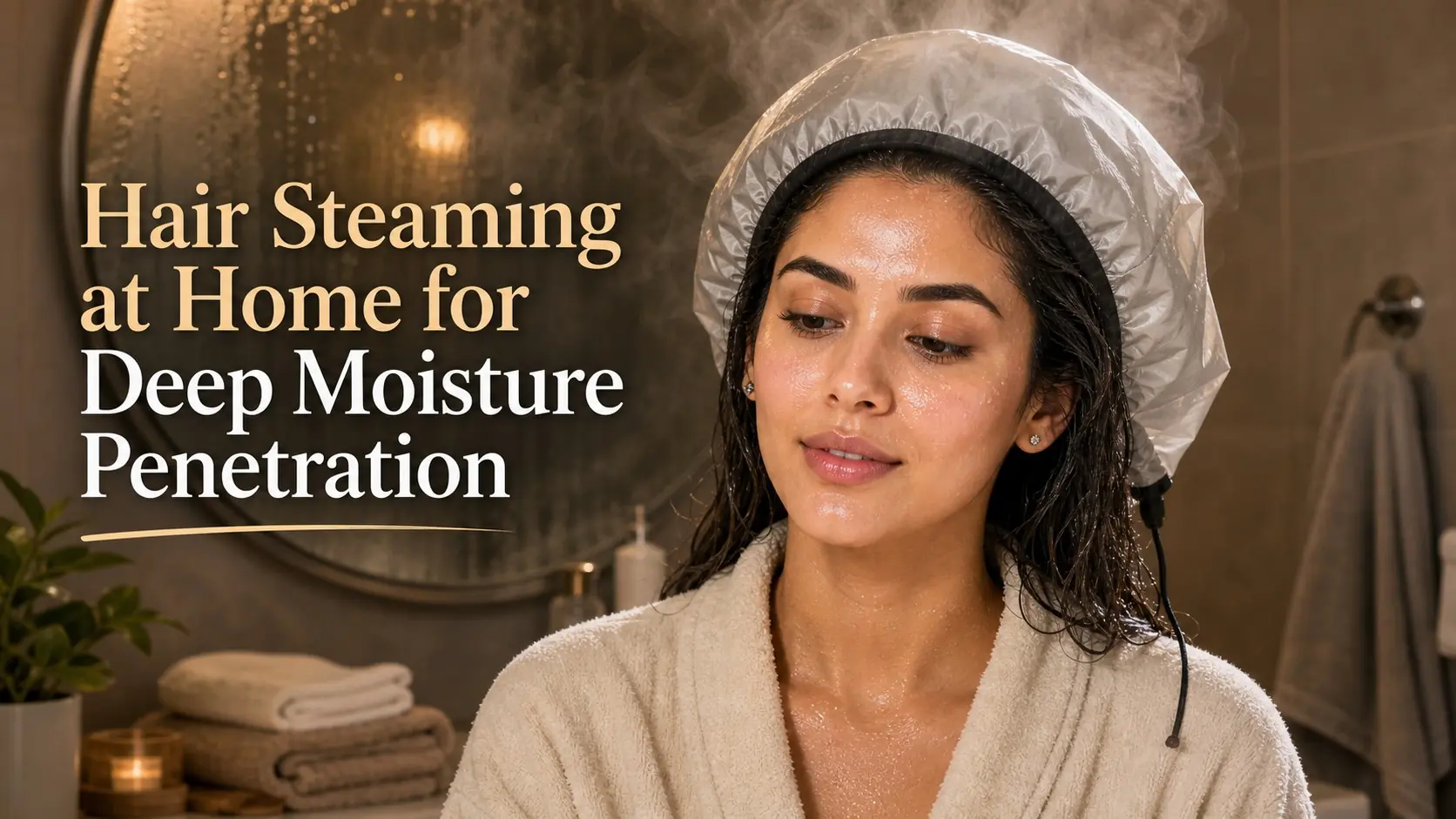
A hooded steamer, whether a stand-alone salon-style unit or a bonnet attachment that connects to a small steamer base, provides the most immersive at-home steaming experience. With a hooded steamer, you sit beneath a dome that fills with warm steam, surrounding your entire head and hair uniformly. This is the closest recreation of the professional salon steam treatment that you can achieve at home.
Bonnet attachments that connect to a handheld steamer base are widely available and significantly more affordable than full hooded steamer units. They allow you to apply your treatment, place the bonnet over your head, turn on the steamer, and simply relax for twenty to forty-five minutes while the steam does its work. Many women read, watch TV, or take care of other tasks during this time, making it a genuinely relaxing addition to their self-care routine.
Step-by-Step Guide to Hair Steaming at Home
Regardless of which steaming method you choose, following a consistent process will give you the best results every time.
Step 1: Start with Clean or Pre-Cleansed Hair
Steam is most effective on hair that has been cleansed or at least rinsed free of product buildup. Product buildup forms a barrier on the hair shaft that can prevent steam and conditioning ingredients from reaching the cuticle. If you are steaming on wash day, shampoo and gently squeeze excess water from your hair before applying your treatment. If you prefer to steam before washing, do a quick rinse or use a cleansing conditioner to remove surface buildup without stripping the hair of all its natural oils.
Step 2: Apply Your Moisture Treatment
Section your hair into four to six sections for manageability, especially if your hair is thick or long. Apply a generous amount of your chosen deep conditioner, hair mask, or moisturising treatment from root to tip in each section. Do not be shy with the product at this step. You want full, even coverage because the steam will help drive it in. Use your fingers or a wide-tooth comb to distribute the treatment evenly through each section.
Step 3: Protect Your Ends
Before steaming, pay extra attention to your ends, which are the oldest, most weathered part of your hair. Apply a slightly thicker layer of product to your ends, or add a few drops of a nourishing oil like argan, jojoba, or castor oil to the treatment on that section. The ends benefit most from the moisture boost that steam provides.
Step 4: Apply Steam
Choose your steaming method and apply steam to your hair for the appropriate amount of time based on your hair type. Fine or low-porosity hair does well with fifteen to twenty minutes. Normal porosity hair benefits from twenty to thirty minutes. High-porosity, very thick, or extremely dry hair can handle thirty to forty-five minutes. Do not exceed forty-five minutes in a single session, as prolonged exposure to excess moisture can cause hygral fatigue, where the hair shaft swells repeatedly and weakens over time.
Step 5: Rinse with Cool Water
Once your steaming time is complete, rinse your hair thoroughly with cool or lukewarm water. The cool water helps close the cuticle scales back down, sealing the moisture you just worked so hard to deposit inside the hair shaft. Avoid rinsing with very hot water after steaming because hot water will reopen the cuticle and allow moisture to escape immediately.
Step 6: Apply a Leave-In and Seal
After rinsing, apply a leave-in conditioner while your hair is still damp to maintain the moisture levels you just achieved. Follow with a light oil or butter to seal the cuticle and prevent the moisture from evaporating as your hair dries. This sealing step is critical for extending the longevity of your steam treatment, particularly if you live in a dry climate or have high-porosity hair.
Step 7: Style Gently
Your hair will be at its most supple and pliable immediately after steaming, which makes this an ideal time to detangle, braid, twist, or set a style. Use gentle handling and avoid rough towel-drying or aggressive brush strokes. Pat your hair with a microfibre towel or an old T-shirt to absorb excess water without disrupting the cuticle.
Best Products to Use During Hair Steaming
The products you pair with steam will largely determine how significant and long-lasting your results are. Steam dramatically enhances absorption, so choosing the right type of treatment matters.
Protein-Moisture Balanced Deep Conditioners
The best all-around partner for a steam session is a deep conditioner that balances both protein and moisture. Protein strengthens the hair shaft by temporarily filling in gaps in the cuticle and cortex, while moisture restores flexibility and softness. Look for conditioners that list hydrolysed proteins (such as hydrolysed keratin, hydrolysed wheat protein, or hydrolysed silk) alongside humectants like glycerin, aloe vera, or panthenol. This combination gives steam the most comprehensive set of ingredients to drive into the hair.
Heavy Butters and Oil Treatments
For very dry, coily, or high-porosity hair, a butter-based or oil-rich treatment applied before steaming can be transformative. Shea butter, mango butter, coconut oil, avocado oil, and olive oil are all deeply nourishing ingredients that the steam helps push past the cuticle. On their own, these heavy ingredients can sometimes just coat the outside of the strand. With steam, they penetrate more deeply and provide conditioning benefits that last for days rather than hours.
Aloe Vera Gel
Pure aloe vera gel is a superb steaming companion. Aloe is rich in water, vitamins, and amino acids that closely resemble the structure of hair’s natural proteins. It is also a humectant, drawing additional moisture from the air and from the steam itself into the hair shaft. Mixing a small amount of aloe vera gel into your deep conditioner before steaming can boost its performance significantly.
Scalp Treatments and Oils
If you are also addressing scalp health during your steam session, applying a lightweight scalp oil or treatment before steaming helps the active ingredients penetrate the scalp skin more effectively. Rosemary oil, peppermint oil diluted in a carrier, and tea tree oil blended with jojoba are all popular options for supporting scalp health, and the warmth of the steam helps them absorb quickly and work more efficiently.
What to Avoid During Steam Sessions
While steam amplifies the penetration of beneficial ingredients, it also amplifies the effects of anything harsh. Avoid applying products with high concentrations of alcohol, sulphates, or strong AHA/BHA exfoliants during a steam session. These ingredients can be drying or irritating on their own, and the enhanced penetration from steam could make them overly aggressive on the hair shaft and scalp.
How Often Should You Steam Your Hair?
Frequency is one of the most common questions women have when they first discover hair steaming, and the honest answer is that it depends on your hair type, its current condition, and your overall hair care goals.
For Dry, Damaged, or High-Porosity Hair
If your hair is significantly dry, damaged, or recovering from chemical processing, steaming once a week for the first month can produce noticeable improvements relatively quickly. Once your hair reaches a healthier baseline, you can taper to biweekly or monthly sessions to maintain that level of hydration. Think of this initial intensive phase the way you would think of a skincare routine: more frequent treatment when the issue is acute and maintenance mode once improvement is achieved.
For Normal or Balanced Hair
Hair that is in reasonably good condition can benefit from steaming once every two weeks, typically timed with your regular wash-day routine. This frequency keeps the cuticle well-hydrated, prevents moisture loss before it becomes a problem, and supports consistent softness, shine, and elasticity without risking over-moisturising.
For Fine, Low-Porosity, or Easily Weighed Down Hair
Fine hair and low-porosity hair can become limp, weighed down, and prone to hygral fatigue if steamed too often. Once or twice a month is usually sufficient for these hair types. Using lighter products during steam sessions and keeping the duration on the shorter end of the range will help you get the benefits without the drawbacks.
Seasonal Adjustments
Your steaming frequency may naturally need to increase during winter months when indoor heating systems pull moisture from the air and from your hair and decrease during humid summer months when the atmosphere already provides some of that moisture. Paying attention to how your hair feels and responds from season to season will help you find the right rhythm throughout the year.
Common Mistakes to Avoid When Steaming Your Hair
Even a beneficial treatment can produce disappointing results if it is applied incorrectly. Understanding what not to do is just as important as knowing the right steps.
Steaming Without a Product
Steam on its own provides temporary moisture but does not deliver long-term benefits because there is nothing present to seal the hydration in once the cuticle closes again. Always apply a conditioning treatment before or during your steam session. The steam is a vehicle for delivering the treatment, not the treatment itself.
Using Water That Is Too Hot
Extremely hot steam can cause the cuticle to expand too rapidly and aggressively, leading to damage rather than conditioning. If you are using a handheld steamer, do not hold the nozzle too close to your hair. Maintain a few inches of distance so the steam reaches your hair at a warm, not scalding, temperature. The goal is gentle warmth, not intense heat.
Skipping the Cool Rinse
Rinsing with hot water after a steam session undoes much of the work you just did by reopening the cuticle you were trying to close and seal. Cool water is non-negotiable for closing the cuticle and locking in everything the steam helped you deposit.
Steaming Too Frequently
More is not always better when it comes to steaming. Over-steaming can lead to hygral fatigue, a condition where the hair shaft repeatedly swells with water and then contracts as it dries, weakening the protein bonds within the cortex over time. Hair that has been over-moisturised becomes mushy, stretchy, and prone to breakage. Stick to the recommended frequency guidelines for your hair type and adjust based on how your hair responds.
Not Following Up with a Sealant
After steaming and applying your leave-in conditioner, skipping the sealant step is one of the most common reasons women feel like steam did not produce lasting results. The cuticle will close after you rinse with cool water, but it is not perfectly airtight. A light oil or butter seals the surface and dramatically slows the rate at which moisture escapes back into the air. Lightweight oils like argan, grapeseed, or sweet almond oil are excellent sealants for fine hair, while thicker options like castor oil, shea butter, or coconut oil work well for coarser, drier textures.
Steaming on Dirty, Product-Coated Hair
Trying to steam through a layer of old product buildup, dry shampoo, or styling residue will significantly reduce the effectiveness of your session. The buildup acts as a physical barrier between the steam and your hair shaft. Always start with clean or freshly rinsed hair for the best absorption results.
Building Steam Into Your Regular Hair Care Routine
The most effective approach to hair steaming is not treating it as an occasional rescue remedy but building it into your regular routine as a consistent, preventive care step. When you steam regularly, you are not just addressing dryness after it has become a problem. You are maintaining the hair’s moisture levels proactively, which means less breakage, less frizz, less tangling, and overall better hair health over the long term.
A practical approach for most women is to incorporate steaming into their wash day routine. On the days you shampoo, follow up with a steam deep-conditioning session before rinsing. This integrates the treatment naturally into a process you are already doing, which makes it easy to stay consistent without adding significant extra time to your schedule. If you wash weekly, consider steaming every two weeks by alternating between a steam deep conditioning session and a regular rinse-out conditioning session on alternate wash days.
Keeping a simple hair journal or note on your phone where you track how your hair feels after each steam session, what products you used, and how long you steamed can help you dial in the ideal routine for your specific hair needs. Hair is highly individual, and what works beautifully for one texture may need adjustment for another. Tracking your results over a few months gives you the data to refine your approach with confidence.
Hair Steaming and Scalp Health
While most of the conversation around hair steaming focuses on the strands themselves, the scalp benefits deserve equal attention. The scalp is skin, and like the skin on the rest of your face and body, it responds positively to warmth and hydration. A dry, tight scalp is a common companion to dry hair, and the two issues typically share the same root cause: insufficient moisture retention.
When steam reaches the scalp, it gently loosens dead skin cell buildup, making it easier for your scalp to shed naturally and for products to reach the skin surface. The increase in local circulation that comes from the warmth of the steam supports healthier follicle function by bringing more oxygen and nutrients to the base of each hair. Over time, a consistently well-hydrated scalp tends to produce hair with better structure from the point of growth, which means healthier new growth to work with as your hair journey progresses.
For women dealing with scalp conditions like dryness, mild flaking, or tightness (not to be confused with conditions like seborrhoeic dermatitis or psoriasis, which require medical attention), steam combined with a soothing scalp oil can provide meaningful relief. Applying a blend of carrier oil and scalp-supporting botanicals to the scalp before steaming allows those ingredients to absorb more fully, maximising their calming and nourishing effects.
Understanding Hair Porosity and Steam
Hair porosity refers to how easily your hair absorbs and retains moisture, and it is one of the most important factors in determining how steam will work for you and how to customise your approach.
Low-porosity hair has a tightly packed cuticle layer that resists moisture absorption. Products tend to sit on top of low-porosity hair rather than penetrating it, and it often takes a long time to get fully wet. For low-porosity hair, steam is particularly valuable because the heat is what opens those stubborn cuticles enough to let moisture in. Without steam, conditioning low-porosity hair can feel like an exercise in futility. With steam, the same products suddenly work much better. Keep sessions on the shorter side and use lightweight liquid-based products rather than heavy butters, which can overwhelm low-porosity strands.
High-porosity hair, whether naturally or from damage, has gaps and holes in the cuticle that allow moisture to enter quickly but also to leave just as quickly. Steam works well for high-porosity hair in the sense that moisture absorption is not the challenge. The challenge is retention. For high-porosity hair, focusing on the sealing steps after steaming is critical. A protein treatment used during the steam session can help temporarily fill in those cuticle gaps, and a good sealant afterward locks in the benefits.
Normal porosity hair sits in the middle and is the easiest to work with. Steam enhances moisture absorption without needing any special modifications, and the results tend to be consistent and straightforward.
Frequently Asked Questions About Hair Steaming at Home
Can I steam my hair every day?
Daily steaming is not recommended for most hair types. The repeated swelling and contracting of the hair shaft that comes with daily steam exposure can lead to hygral fatigue over time, weakening the hair and increasing breakage. Even for very dry hair, steaming more than two to three times a week is excessive. The hair needs time between sessions to stabilise and for the benefits of each treatment to fully take effect before the next one is applied.
Does hair steaming help with hair growth?
Hair steaming does not directly stimulate hair follicles to grow faster, but it supports the conditions necessary for healthy hair growth. By improving scalp circulation, reducing breakage, and maintaining the strength and integrity of existing strands, steam helps you retain the length your hair is already producing. In that sense, steaming contributes meaningfully to length retention, which is the practical equivalent of what most people mean when they say they want to grow their hair.
Is steam good for a sensitive scalp?
For most women with a sensitive scalp, steam is gentle and soothing rather than irritating. The key is to avoid using very hot steam directly on the scalp and to stick to fragrance-free, simple products during your session to minimise the risk of irritation. If you have a diagnosed scalp condition, consult with a dermatologist before incorporating steam treatments into your routine.
Can I use steam with a protein treatment?
Absolutely. Steam enhances the penetration of protein treatments just as it does with moisture-based conditioners. If your hair is feeling weak, stretchy, or prone to breakage, pairing a protein treatment with steam can help rebuild structural integrity more effectively than applying protein without heat. Be mindful not to overdo protein if your hair already has a good protein-moisture balance, as too much protein can make hair feel stiff and brittle.
What if I do not have a steamer?
You do not need a steamer to benefit from steam. The hot towel method and the shower steam method both provide meaningful moisture benefits with no special equipment required. Many women get excellent results with nothing more than a damp hot towel and a good deep conditioner, making steam treatments genuinely accessible to anyone regardless of budget.
How will I know if steaming is working?
Within the first one to two steam sessions, most women notice that their hair feels noticeably softer, more pliable, and easier to detangle than usual. Over several weeks of consistent steaming, the improvements become more visible: better curl definition, increased shine, reduced frizz, less breakage during styling, and overall hair that looks and feels healthier. If you are not seeing any improvement after four to six sessions, consider adjusting the products you are using, the duration of your sessions, or the frequency to better suit your hair’s specific needs.
Can steam damage my hair?
When done correctly, steam is one of the gentlest heat-based hair treatments available. It operates at far lower temperatures than any heat styling tool, and the moisture it delivers is protective rather than dehydrating. The main risk associated with steaming is hygral fatigue from overuse, which is why sticking to appropriate frequency guidelines for your hair type is important. As long as you are not steaming excessively and you are following up with proper sealing, steam is a very safe and beneficial treatment.
Should I steam before or after shampooing?
Both approaches have merit. Steaming after shampooing and before your final rinse is the most common method and works well for most women. You cleanse first to remove buildup, then apply your treatment and steam for maximum penetration, then rinse and seal. Some women prefer to steam before shampooing as a pre-poo treatment, applying an oil or butter and steaming to soften and protect the hair before the shampoo step. Both methods are valid. The post-shampoo approach tends to produce more noticeable immediate softness, while the pre-shampoo approach is particularly effective for protecting hair during the mechanical stress of washing.
Final Thoughts on Making Steam a Staple
Hair steaming at home is one of those rare hair care practices that delivers real, science-backed results without requiring expensive products, professional appointments, or complicated techniques. Whether you are dealing with chronic dryness, recovering from chemical damage, trying to improve your curl definition, or simply looking to take your hair health to the next level, steam offers a clear, accessible path forward.
The key is consistency. A single steam session will leave your hair feeling amazing, but the real transformation happens over weeks and months of regular treatments. Make it part of your wash day ritual, experiment with different methods to find what fits best into your lifestyle, choose products that complement the work the steam is doing, and pay attention to how your hair responds so you can adjust as needed.
Great hair is not built overnight, and it is rarely the result of one miraculous product. It is the cumulative effect of consistently nourishing your strands with what they actually need, and moisture, delivered deeply and effectively through the power of steam, is one of the most fundamental needs of all. Start with a hot towel and a good deep conditioner this weekend. Your hair will thank you for it.
RELATED ARTICLES:
Glass Hair in 2026: The Products and Techniques for a Frizz-Free, Mirror-Like Finish That Lasts
MOB WIFE HAIR: HOW TO GET THE VOLUMINOUS, LIVED-IN LOOK EVERYONE’S OBSESSING OVER
5 Hair Mistakes While Sleeping
What Lip Colour Suits You Best According to the Tone of Your Hair? Find Out!
Trim Split Ends Regularly for Healthier, Stronger Hair: The Exact Schedule That Works
About The Author

COMMENTS