


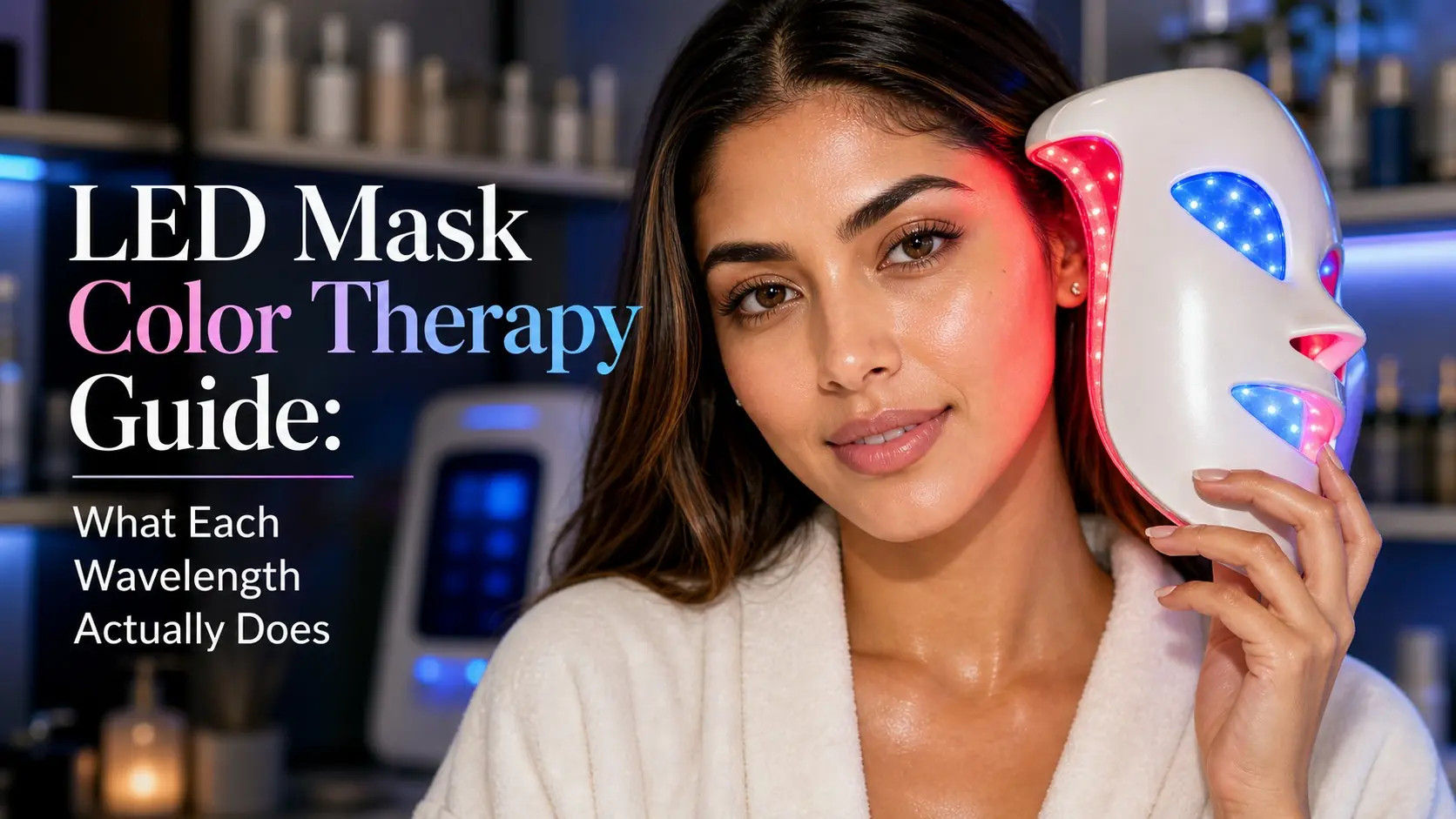
Your complete LED mask color therapy guide. Discover what red, blue, green, and near-infrared wavelengths do for your skin and how to use each light for maximum results.
LED mask color therapy sounds like a beauty gimmick until you understand the actual science: different wavelengths of light trigger different responses deep in your skin, from calming breakouts to boosting collagen. The glow is doing far more than it looks.
If you have ever wondered whether the colourful glow of an LED mask is doing anything beyond looking futuristic, you are not alone. LED mask colour therapy has moved from dermatology clinics into everyday bathrooms, and the science behind it is more substantial than most people realise. Each colour of light carries a specific wavelength, and each wavelength penetrates the skin to a different depth, triggering distinct biological responses in the cells it reaches. Understanding which colour does what transforms an at-home device from a novelty purchase into a targeted skincare tool. This guide breaks down the complete spectrum, from red and near-infrared to blue, green, yellow, and beyond, explaining what the research actually shows and how to build a practical protocol around your specific skin goals. Whether you are targeting acne, fine lines, hyperpigmentation, or general skin health, the answer starts with choosing the right wavelength.
The Science Behind LED Mask Color Therapy: How Light Affects Skin Cells
Light therapy for skin is not simply about warmth or ambient exposure. The mechanism is photobiomodulation, a process in which specific wavelengths of light are absorbed by chromophores inside skin cells, triggering biochemical changes without generating heat that damages tissue. Think of it as a key fitting into a lock: only certain wavelengths match certain cellular receptors, and when they do, a cascade of cellular activity begins.
The primary chromophore involved in most LED skin therapy is cytochrome c oxidase, a protein found in the mitochondria, the energy-producing centers of every cell. When red and near-infrared wavelengths strike this protein, it accelerates the production of adenosine triphosphate (ATP), the molecule that powers cellular repair, collagen synthesis, and inflammatory regulation. Blue wavelengths, by contrast, target porphyrins, compounds produced by acne-causing bacteria, and destroy them through a photochemical reaction.
The depth of penetration varies directly with wavelength. Shorter wavelengths like violet and blue reach only the outermost layers of skin, making them effective for surface-level bacterial concerns. Longer wavelengths like red and near-infrared travel deeper, reaching the dermis and even subcutaneous tissue where fibroblasts produce collagen and elastin.
Published · Updated
LED Versus Laser: Understanding the Difference
LED light is non-coherent, meaning the waves do not travel in perfect alignment, and it is non-thermal, meaning it does not raise tissue temperature significantly. This distinguishes it from laser therapy, which generates concentrated, coherent light that cuts or ablates tissue. The non-thermal nature of LED therapy is what makes it safe for daily or near-daily home use without trained supervision, as long as basic safety guidelines are followed, particularly around eye protection.
Red Light Therapy: The Collagen-Building Workhorse
Red light, typically in the 620 to 700 nanometre range, is the most studied wavelength in the LED therapy literature and for good reason. It penetrates to the dermis, approximately 2 to 3 millimetres below the skin surface, where fibroblasts reside. These cells are responsible for manufacturing collagen, elastin, and hyaluronic acid, the structural proteins that keep skin firm, plump, and resilient.
Multiple peer-reviewed studies have examined the impact of red light on aging skin. A 2014 study published in Photomedicine and Laser Surgery found that participants who received consistent red light therapy showed significant improvements in skin complexion, collagen density measured by ultrasound, and reduction in fine lines. The mechanism is well understood: ATP production spikes in fibroblasts after red light exposure, directly fuelling increased collagen synthesis and accelerating the natural cell turnover cycle.
What Red Light Targets
- Fine lines and wrinkles: Increased collagen production fills in shallow wrinkles over weeks of consistent use.
- Skin laxity: Elastin regeneration improves the bounce and firmness of skin that has lost elasticity with age or environmental exposure.
- Post-inflammatory healing: Red light accelerates repair of damaged tissue, making it useful after procedures or minor skin injuries.
- Dullness and uneven texture: By boosting cellular metabolism, red light supports faster turnover that brings fresher cells to the surface.
- Inflammation reduction: At the right dose, red light downregulates pro-inflammatory cytokines, calming reactive skin without drying it out.
Optimal Red Light Protocol
Most research supporting red light skin benefits used session times between 10 and 20 minutes, conducted three to five times per week. Consistency over at least eight weeks is necessary to observe meaningful structural changes like improved collagen density. Red light works best on cleansed skin without occlusive creams or serums that could block light absorption, though lightweight serums with active ingredients can be applied immediately after a session to maximise penetration through the temporarily stimulated skin barrier.
Near-Infrared Light: Going Deeper Than Visible Red
Near-infrared (NIR) light sits just beyond the visible spectrum, typically in the 700 to 1100 nanometre range, with 810 to 850 nanometres being the most therapeutically active band. Because it is invisible to the naked eye, some devices emit NIR alongside red light, and users only notice the red glow while the NIR works silently beneath the surface.
The depth of NIR penetration exceeds that of red light substantially. While red light reaches the dermis, NIR can penetrate 5 to 10 millimetres or more, reaching the subcutaneous fat layer, muscle tissue, and even bone in some studies involving skull penetration for neurological applications. For skin purposes, this deeper reach means NIR accesses areas of tissue that red light cannot, including the deeper dermal networks where blood vessels, nerve endings, and stem-cell-like dermal papilla cells reside.
Why Near-Infrared Stands Apart
NIR is particularly effective for accelerating wound healing, reducing deeper inflammatory processes, and supporting circulation. Improved microvascular circulation in the dermis brings more oxygen and nutrients to surface skin cells, creating an indirect brightening and plumping effect. Athletes have used NIR therapy for muscle recovery for years, and the same anti-inflammatory mechanisms apply to chronically inflamed skin conditions like rosacea, eczema, and psoriasis, though these conditions benefit most when treatment protocols are developed with dermatologist guidance.
Research into NIR’s role in cellular senescence, the process by which aging cells stop functioning optimally, is growing. Some studies suggest NIR exposure can partially restore mitochondrial function in senescent cells, effectively rejuvenating their energy output. This makes NIR one of the most compelling wavelengths for mature skin specifically, as it addresses aging at a more fundamental cellular level than surface-focused treatments.
Combining Red and Near-Infrared
Many clinical protocols pair red and NIR simultaneously, reasoning that their complementary depths of penetration provide a more comprehensive treatment of the full skin depth. Red handles the dermal fibroblast layer while NIR addresses deeper vascular and subcutaneous structures. When a mask offers both options, using them together during the same session is generally more time-efficient and is supported by clinical practice patterns seen in dermatology settings.
Blue Light Therapy: Targeting Acne at the Source
Blue light occupies the 415 to 455 nanometre range and has an entirely different primary target than red or NIR: Cutibacterium acnes, formerly known as Propionibacterium acnes, is the bacterium primarily responsible for inflammatory acne lesions. This organism produces porphyrins as metabolic byproducts, and when blue light at the right wavelength hits these porphyrins, a photochemical reaction generates reactive oxygen species that destroy the bacterial cell from within. The bacteria essentially become vulnerable to their own metabolic waste when exposed to blue light.
Clinical evidence for blue light in acne management is well-established. A Cochrane-reviewed body of research confirms meaningful reductions in papule and pustule counts following consistent blue light therapy. It is most effective against superficial inflammatory acne, including papules, pustules, and comedones with a bacterial component, rather than purely hormonal cystic acne that originates deep in the dermis.
Blue Light Limitations to Understand
Blue light therapy is not a replacement for a complete acne treatment approach. It addresses one of the contributing factors in acne, namely bacterial overgrowth, but not excess sebum production, hormonal triggers, or dead skin cell buildup that blocks follicles. Most dermatologists who recommend LED therapy for acne combine blue light sessions with appropriate topical ingredients that address these other factors.
There is also the matter of skin tolerance. Blue light at therapeutic intensities can sometimes cause temporary dryness or mild irritation in sensitive skin types. Starting with shorter sessions of 5 to 10 minutes and building toward full treatment duration gives skin time to adapt. Eye protection is particularly important with blue light, as it falls at the more energetically active end of the visible spectrum.
Blue and Red Combined for Acne
A widely used clinical protocol pairs blue and red light in the same session or on alternating days. The logic is straightforward: blue light kills the bacteria driving the breakout, while red light reduces the inflammation those bacteria caused and accelerates healing of existing lesions. Studies comparing this combination to blue light alone have generally shown superior outcomes for inflammatory acne reduction and faster resolution of post-acne redness.
Green Light Therapy: Addressing Pigmentation and Redness
Green light sits in the middle of the visible spectrum at roughly 520 to 560 nanometres, and its primary application in LED mask colour therapy is to target hyperpigmentation, vascular irregularities, and overall redness. It penetrates to the upper and middle dermis, interacting with melanocytes, the cells responsible for producing melanin, the pigment that creates dark spots, sun damage, and post-inflammatory hyperpigmentation.
The mechanism through which green light reduces hyperpigmentation involves interrupting the melanin synthesis pathway. When melanocytes absorb green light, studies suggest it temporarily inhibits tyrosinase, the enzyme that drives melanin production, while also breaking down existing melanin clusters. This dual action gradually fades existing spots and prevents the formation of new pigmentation in treated areas, though results develop slowly over multiple weeks.
Green Light for Rosacea and Vascular Concerns
The green wavelength is also absorbed by oxyhemoglobin in blood vessels near the skin surface, which is why it can reduce the appearance of diffuse redness, small broken capillaries, and the persistent flush associated with rosacea. This absorption allows green light to calm overactive surface vasculature without the thermal damage that laser treatments for vascular concerns require. The effect is more subtle than vascular laser treatments, but it is cumulative and carries no downtime.
Managing Expectations with Green Light
Green light therapy requires significant patience. Pigmentation changes are gradual, typically becoming visible after four to six weeks of consistent use, with optimal results appearing at the three-month mark. Using green light in combination with a topical ingredient that also addresses pigmentation, such as vitamin C or niacinamide, can accelerate visible progress since both the topical and the light approaches address melanin through complementary mechanisms.
Yellow Light Therapy: Circulation, Sensitivity, and the Lymphatic Connection
Yellow light, in the 570 to 590 nanometre range, is less frequently discussed than red or blue but holds genuine therapeutic value for specific skin concerns. Its primary targets are the superficial blood vessels and lymphatic capillaries that run just beneath the skin surface, making it particularly relevant for concerns tied to poor circulation, fluid retention, and sensitised skin.
By stimulating the microvascular network in the upper dermis, yellow light supports the delivery of oxygen and nutrients to the epidermis while simultaneously encouraging the drainage of cellular waste products through the lymphatic system. Skin that looks dull, puffy, or perpetually sallow often benefits from improved microcirculation, and yellow light addresses this at the cellular level rather than merely cosmetically.
Yellow Light for Sensitive and Reactive Skin
One of the most clinically interesting applications of yellow light is in managing skin reactivity and sensitivity. It has been used in dermatological settings to soothe rosacea-related sensitivity, reduce photosensitivity reactions, and calm skin that experiences persistent burning or stinging sensations without obvious irritation. The mechanism is not fully elucidated, but it appears to involve modulation of nerve fibre sensitivity in the superficial dermis alongside its vascular effects.
Because yellow light is among the gentlest wavelengths in the therapeutic spectrum, it is often well-tolerated even by skin that reacts to other treatments. If someone finds red light too stimulating for their reactive skin, yellow light can serve as a gentler alternative that still delivers meaningful circulation and anti-inflammatory benefits without as much cellular activation.
Cyan and Purple Light: The Emerging Wavelengths
Some advanced LED masks now include cyan light (roughly 490 to 520 nanometres) and purple light (a combination of red and blue wavelengths, sometimes marketed as a distinct mode). These are less established in the peer-reviewed literature but have theoretical and early clinical support for specific applications.
Cyan light sits between blue and green, and preliminary research suggests it may influence serotonin pathways in the skin, which could have implications for skin conditions tied to neurogenic inflammation. It is also being studied for its potential to support collagen synthesis through pathways distinct from red light, making it a possible complement rather than substitute.
Purple light is typically not a pure wavelength but rather a mode that combines red and blue LED activation simultaneously. The rationale is combining the anti-bacterial activity of blue with the healing and anti-inflammatory action of red in a single treatment, making it a convenient shorthand for the popular blue-red acne protocol. Understanding this distinction helps calibrate expectations: a purple mode is delivering both red and blue wavelengths, not a uniquely distinct third option.
White Light and Full-Spectrum Modes
Some masks offer a white light mode that activates all LEDs simultaneously. This creates a broad-spectrum exposure that delivers multiple wavelengths at once but at lower intensities for each individual wavelength. White mode is generally positioned as a general wellness or maintenance setting rather than a targeted treatment. It may be appropriate for days when you want some light therapy benefit but do not have a specific acute concern to address.
How to Build a Personalized LED Mask Color Therapy Protocol
The most effective LED therapy programmes are not random. They are built around a clear understanding of the skin concerns being addressed, the appropriate wavelengths for those concerns, and a consistent schedule that allows cumulative biological effects to develop. This section outlines how to think through building a protocol that works for your specific situation.
Identify Your Primary Skin Concern
Before choosing a colour sequence, define your primary goal. Most people have more than one skin concern, but leading with the most pressing issue helps structure the protocol logically.
- Active acne as the primary concern: Prioritise blue light for the bacterial component, use red light for inflammation and healing support, and consider a blue-red combination mode if available.
- Aging and loss of firmness are the primary concerns: Centre the protocol on red light with near-infrared if the device offers it, aiming for longer sessions focused on collagen stimulation.
- Hyperpigmentation and uneven tone as the primary concern: Lead with green light sessions, pairing them with topical vitamin C or niacinamide applied after the session.
- Redness, rosacea, or sensitivity as the primary concern: Rotate between yellow light and gentle red light sessions, avoiding blue light, which can sometimes irritate reactive skin.
Session Frequency and Timing
For most concerns, research supports three to five sessions per week as the optimal frequency for building cumulative benefits without exceeding what the skin needs. Daily use is not harmful for most wavelengths, but the marginal benefit of the fifth versus fourth session per week is minimal. What matters most is consistency across weeks and months rather than any individual session intensity.
Timing within your skincare routine matters too. Cleanse first to remove any barriers to light penetration. Apply LED therapy before actives like retinol or acids or on alternating evenings if those actives cause sensitivity. Save moisturisers and SPF for after the session. In the morning, applying SPF after a morning LED session is particularly important, since light therapy can temporarily increase photosensitivity.
Progressing Your Protocol Over Time
A common beginner protocol begins with single-colour sessions two to three times per week, adds a second wavelength after four weeks as skin adapts, and introduces multi-colour sessions or extended durations by the two-month mark. Reassess at the eight-week point, comparing photos taken at the start with the current skin condition. Adjustments based on observed results are more reliable than sticking rigidly to any preset plan that may not match your individual biology.
Safety Considerations and Who Should Exercise Caution
LED mask therapy has an excellent safety record when used as directed, but certain populations need to approach it thoughtfully rather than assuming universal safety across all circumstances.
Eye protection is non-negotiable.
The retina is sensitive to concentrated light exposure, and LED masks operate at intensities that can cause eye strain or damage over time without proper protection. All reputable devices include opaque goggles or eye shields. Wearing them is not optional, even if the mask has cutouts over the eyes rather than LEDs in those zones. Reflected and scattered light from surrounding LEDs is still sufficient to cause cumulative retinal stress.
Photosensitizing Medications Require Medical Guidance
Certain medications increase the skin sensitivity to light in ways that can turn a routine LED session into an irritant or injury. Medications commonly associated with photosensitivity include some antibiotics (doxycycline and tetracycline), certain diuretics, some antidepressants, and topical or oral retinoids at higher doses. Anyone taking photosensitising medications should consult their prescribing physician before beginning LED therapy.
Photosensitive Conditions and Active Skin Disorders
People with lupus, porphyria, or a documented history of light-induced allergic reactions should not use LED masks without explicit approval from their dermatologist. Similarly, individuals with active cold sore outbreaks should pause LED therapy, as light exposure can potentially trigger viral reactivation in herpes-family infections. Those with melanoma history or multiple atypical moles should have a dermatologist evaluate their candidacy for LED therapy before beginning.
Pregnancy Considerations
The evidence base on LED light therapy during pregnancy is insufficient to make definitive safety claims. While the therapy is non-ionising and non-thermal, the precautionary principle applies in the absence of strong safety data for pregnant individuals. Most dermatologists recommend pausing LED therapy during pregnancy and resuming postpartum.
LED Mask Color Therapy Versus In-Office Light Treatments
A common question is how at-home LED masks compare to professional light therapy administered in dermatology or medical aesthetic clinics. The comparison is meaningful, and the differences are real, though they imply at-home devices have value.
Irradiance and Energy Delivery
Clinical LED devices typically deliver irradiance, measured in milliwatts per square centimetre, at levels 10 to 50 times higher than consumer masks. Higher irradiance means more energy delivered to the skin per unit of time, which is why in-office sessions of 10 to 20 minutes can produce results comparable to weeks of at-home use. Consumer devices compensate for lower irradiance by requiring longer cumulative exposure time, which is achievable through regular home use.
The Compounding Value of At-Home Consistency
This is where at-home LED masks have a genuine practical advantage. An in-office LED treatment might be scheduled once a month due to cost and time constraints. An at-home mask used four times per week delivers far more total light energy over a month than a single professional session, even at lower per-session intensity. For wavelengths where cumulative exposure drives results, such as red light for collagen, consistent at-home use can meaningfully outperform infrequent professional sessions.
When to Prioritize Professional Treatment
For acute, significant skin conditions such as severe inflammatory acne, active rosacea, or post-procedure healing, professional settings with medical-grade devices remain the appropriate first-line approach. At-home LED therapy is ideally positioned as a maintenance and enhancement tool that extends and deepens the results of professional treatments, not as a replacement for clinical care when clinical care is genuinely needed.
What to Realistically Expect: Timeline and Results by Wavelength
Managing expectations is one of the most important aspects of LED mask colour therapy education. Many users abandon their devices prematurely because they expect results on a timeline that does not align with how photobiomodulation actually works. The biological changes being induced are gradual, cumulative, and rooted in cellular processes that unfold over weeks to months.
Short-Term Results (Weeks 1 to 4)
Within the first two to four weeks of consistent use, most users notice improved skin radiance and a subtle reduction in dullness. This reflects improved circulation and cellular metabolism rather than structural changes. Acne lesions may begin resolving faster than usual with blue light use, and existing redness may start to calm with red or yellow light. These early signs are meaningful signals that the protocol is working, even if dramatic before-and-after changes are not yet visible.
Medium-Term Results (Weeks 4 to 12)
The most significant changes in collagen-related concerns become visible between months one and three. Subtle filling of fine lines, improved skin texture, and a firmer feel to the skin reflect the weeks of collagen synthesis that have accumulated. Hyperpigmentation shows its first visible lightening in this window with consistent green light use. Acne frequency may decrease noticeably for users who have maintained a blue-red protocol alongside a suitable skincare routine.
Long-Term Results (Month 3 and Beyond)
Structural improvements like meaningful wrinkle reduction, significantly improved skin tone evenness, and sustained acne control become most apparent in the three-to-six-month range. At this point, many users shift from an intensive treatment schedule to a maintenance schedule of two to three sessions per week, which is sufficient to sustain the gains achieved during the initial treatment phase. Stopping LED therapy entirely will gradually allow results to fade as the additional collagen stimulus is removed, which is why integrating it as an ongoing habit rather than a finite course of treatment serves long-term skin goals best.
Frequently Asked Questions About LED Mask Color Therapy
Can I use multiple colours in the same session?
Yes, and for many skin concerns it is beneficial to do so. Using blue light followed by red light in the same session addresses both the bacterial and inflammatory components of acne simultaneously. Using red and near-infrared together covers a broader depth of the dermis. The practical limit is total session time: combining two wavelengths at 10 minutes each results in a 20-minute session, which is manageable but longer than a single-colour protocol. Most LED masks allow sequential colour selection, so you can complete one colour full time before switching to the next. Just ensure your total session fits into your routine realistically, because consistency over weeks matters more than any individual session duration.
How long will it take before I see results from LED mask colour therapy?
The honest answer is that meaningful visible results from LED mask colour therapy typically require a minimum of four to eight weeks of consistent use, with more significant changes appearing at the three-month mark. Acne users tend to see earlier improvement than those targeting structural aging concerns, because bacterial reduction occurs faster than collagen synthesis. Hyperpigmentation takes the longest to improve visibly, often requiring three to six months. This timeline reflects the biology of the changes we induce, and patience combined with consistency is the most reliable predictor of success.
Is LED light therapy safe for dark skin tones?
LED light therapy is generally regarded as safe for all Fitzpatrick skin types, including those with deeper skin tones. This is a major benefit over many laser and light-based treatments that pose melanin-related risks for darker complexions. However, some considerations apply. Blue light near the ultraviolet end of the spectrum can theoretically stimulate melanogenesis, so individuals with Fitzpatrick types IV through VI who are concerned about hyperpigmentation may want to limit extended blue light exposure and prioritise red or near-infrared sessions. Green light used for pigmentation concerns is safe across skin tones. As with any skincare treatment, monitoring how your specific skin responds during the first few sessions guides appropriate adjustments.
Should I apply skincare products before or after using my LED mask?
For the LED session itself, clean bare skin provides optimal light penetration without the interference of creams, oils, or thick serums that can partially block or scatter light before it reaches the target tissue. Cleanse thoroughly before your session. After LED therapy, the skin is ready to absorb active ingredients because cellular activity and microcirculation are higher, which may improve how well serums work when applied right after the session. Lightweight serums containing vitamin C, hyaluronic acid, or niacinamide are excellent post-LED choices. Reserve heavier occlusives and retinoids for after allowing 15 to 20 minutes post-LED for the skin to normalise.
Can LED mask colour therapy cause any skin damage?
When used according to guidelines, LED mask therapy does not cause the tissue damage associated with laser or thermal treatments. It is non-ablative, non-thermal, and does not generate ionising radiation. The most common adverse effects reported in research and consumer use are mild and temporary: slight warmth during treatment, occasional transient redness in sensitive skin types, and eye discomfort when eye protection is not used. Long-term or permanent skin damage from properly used consumer LED masks has not been documented in the peer-reviewed literature. The primary risk factors are using a device with unprotected eyes, using it in combination with photosensitising medications without medical guidance, or treating an active skin condition that requires medical attention rather than home therapy.
How does LED mask colour therapy compare to red light therapy panels?
Both deliver the same fundamental photobiomodulation mechanism, but the differences are practical and meaningful. LED face masks provide targeted coverage of the face and are designed for close-contact use, often making them more comfortable for facial-specific treatments. Full-panel red light devices cover larger body surface areas and are commonly used for systemic benefits including muscle recovery, joint inflammation, and mood support, alongside any facial benefits. Panels designed for total body use also typically deliver higher irradiance than wearable masks, which can reduce the session time needed for equivalent energy delivery. For users focused exclusively on facial skin concerns, a high-quality LED mask is efficient and practical. For users wanting broader body benefits alongside facial treatment, a panel combined with or replacing the mask may be more versatile.
Conclusion
LED mask colour therapy is one of the most scientifically grounded non-invasive skincare technologies available for home use today, precisely because its mechanisms are well-understood at the cellular level. Red light builds collagen and supports healing. Near-infrared reaches deeper to reduce inflammation and boost circulation. Blue light targets the bacteria driving acne. Green light fades pigmentation and calms vascular redness. Yellow light supports microcirculation and soothes sensitive skin. Each wavelength is not a different aesthetic or marketing gimmick but a genuinely distinct biological intervention.
To get real value from these devices, you need to match the wavelength to the concern, stick to a consistent protocol for the weeks and months it takes for cumulative cellular changes to show, and combine light therapy smartly with a broader skincare routine that uses complementary mechanisms to achieve the same goals. LED therapy does not replace other sound skincare habits, but it adds a clinically validated dimension to them that topicals alone cannot replicate.
As with any skincare investment, the most important step is beginning with realistic expectations grounded in an understanding of the biology, then trusting the process long enough to let the science do its work.
RELATED ARTICLES:
Pink clay mask: what it is for and how to make it
Ubtan Face Mask Benefits & How to Make Ubtan Face Mask for Instant Glow 2025
Red clay mask: Benefits and how to make it
Unveiling the Secret to Radiance: Tamarind Extract in Skincare
Skincare-infused makeup: Why your 2026 foundation should double as a serum
About The Author

COMMENTS