










A red clay mask is a skincare product that typically contains red clay as its main ingredient. Red clay is a type of clay that is rich in minerals suc
A red clay mask is a skincare product that typically contains red clay as its main ingredient. Red clay is a type of clay that is rich in minerals such as iron, magnesium, and potassium, which are known to be beneficial for the skin.
Red clay masks are used to help unclog pores, remove excess oil and impurities from the skin, and promote a clearer, brighter complexion. They are often used as a part of a regular skincare routine and can be applied once or twice a week to help maintain healthy, radiant-looking skin.
Red clay masks come in a variety of formulations, with different additional ingredients added to address specific skincare concerns. For example, some red clay masks may contain additional ingredients such as hyaluronic acid to help hydrate the skin or salicylic acid to help exfoliate and clear blemishes.
The use of clay for skin care dates back thousands of years, with evidence of clay masks being used in ancient Egypt, Greece, and Rome. Red clay in particular has been used for centuries in traditional Ayurvedic and Chinese medicine to treat a variety of skin conditions.
In North America, the use of red clay for skincare can be traced back to the indigenous people of the southwestern United States, who used it for both medicinal and cosmetic purposes. They believed that the high mineral content of the clay could help draw out toxins and impurities from the skin and promote healing.
In modern times, the use of red clay masks has become increasingly popular in the beauty industry. With the rise of natural and organic skincare products, many people are turning to red clay masks as a natural alternative to harsher chemical treatments.
Today, red clay masks can be found in a variety of formulations and brands and are used by people of all ages and skin types to help maintain healthy, glowing skin.
Published
- Detoxifies the skin: Red clay has natural absorbent properties that can help to draw out impurities and toxins from the skin. This can help to unclog pores, prevent breakouts, and leave the skin feeling refreshed and revitalised.
- Exfoliates and smooths the skin: Red clay contains fine particles that can help to gently exfoliate the skin, removing dead skin cells and leaving the skin looking smoother and more radiant.
- Improves skin tone and texture: The high mineral content of red clay can help to nourish and replenish the skin, improving its tone and texture over time.
- Reduces inflammation and irritation: Red clay has natural anti-inflammatory properties that can help to soothe and calm irritated skin, making it an ideal ingredient for those with sensitive or acne-prone skin.
- Promotes circulation: The gentle massaging action of applying a red clay mask can help to stimulate blood flow to the skin, which can improve its overall health and appearance.
- Regenerates the skin: the texture of the clay is essential to make a good, natural and soft exfoliant that is not aggressive to the skin. In this case, the red clay mask for the face removes excess dead skin on the face and helps the nutrients of said ingredient to penetrate and act more easily, cleansing the face in depth.
- Nourishes and hydrates: red clay has essential minerals such as aluminium, calcium and magnesium, among others, all of which are essential for nourishing the skin and helping it look naturally brighter. However, it is also worth mentioning the benefits of red clay for hair, as your hair can look much healthier, shinier and stronger due to this dose of moisture.
- Keeps the skin smooth and young: red clay is ideal for stimulating blood flow to the face, something that, added to the astringent properties of this ingredient, manages to protect the skin from external agents that often damage the skin and skin. They make you look older. If you want to reduce expression lines or wrinkles, as well as achieve smoother skin, the red clay mask for the face can be your best ally.
- Relieves inflammation: the antiseptic, draining and astringent properties of red clay are perfect for combating facial inflammation. Said inflammation may be due to an injury, acne problems, a lack of rest or irritated skin, among other reasons.
- Provides a natural shine: the revitalizing benefits of red clay make this ingredient a star product for mature skin that looks tired or dull. Once again, red clay for hair can also be beneficial due to these benefits, since being a product that eliminates toxins and nourishes deeply, it can make your hair look more radiant and soft.
- Fight acne marks: If you have some annoying blackheads, pimples or pustules and you want to eliminate them naturally, you should know that the red clay mask for acne is one of your best options. This is because this ingredient is perfect for regulating sebum and stimulating the healing process of the skin.
Overall, red clay is a versatile and effective ingredient that can provide a range of benefits for the skin, making it a popular choice for natural and organic skincare products. Regenerate response
How to make a red clay mask
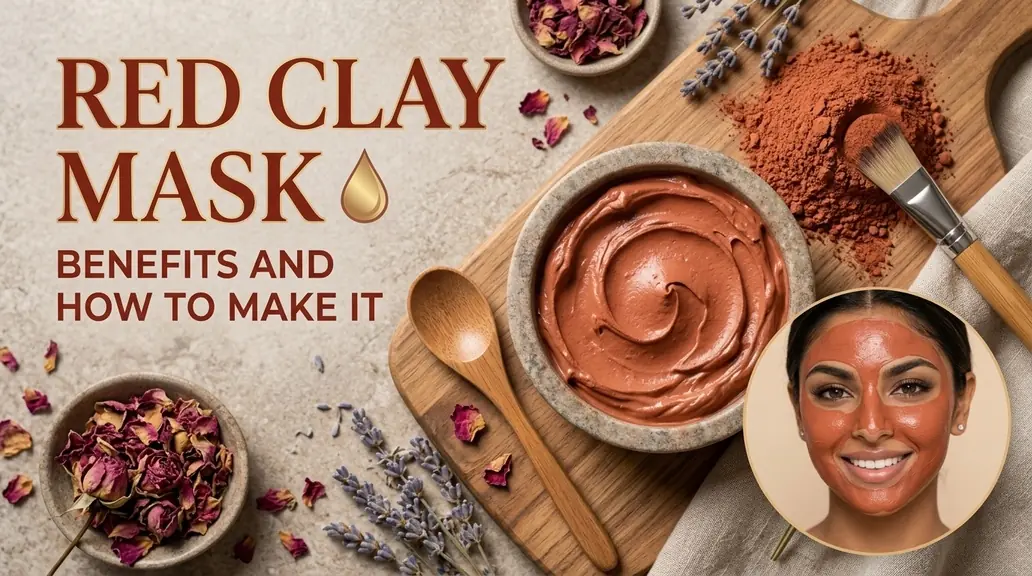
Making a red clay mask at home is easy and can be done using a few simple ingredients. Here’s a recipe for a basic red clay mask:
Ingredients:
- 2 tablespoons of red clay powder
- 2 tablespoons of water or rose water
- 1 teaspoon of honey (optional)
- 1 teaspoon of jojoba oil (optional)
Instructions:
- In a small bowl, mix the red clay powder and water (or rose water) together until a smooth paste is formed. You may need to adjust the amount of liquid to achieve the desired consistency.
- Add honey and jojoba oil to the mixture (if using) and stir well.
- Apply the mixture to your face using clean fingers or a brush, avoiding the eye area.
- Leave the mask on for 10-15 minutes, or until it has dried completely.
- Rinse your face with warm water and pat dry with a clean towel.
- Follow up with your regular skincare routine, such as toner and moisturiser.
- Red clay can stain clothing and towels, so be careful when applying and removing the mask.
- If you have sensitive skin, it’s a good idea to do a patch test before applying the mask to your entire face.
- You can adjust the recipe to suit your skin type by adding other ingredients such as aloe vera gel or essential oils.
How to apply the red clay mask
Here are some general steps to follow when applying a red clay mask:
- Start with clean, dry skin: Before applying the mask, make sure your face is free of makeup, dirt, and oil. Wash your face with a gentle cleanser and pat dry with a towel.
- Prepare the mask: Follow the instructions on the packaging to prepare the red clay mask mixture. If you’re making your own mask at home, mix the red clay powder with water or another liquid to form a smooth paste.
- Apply the mask: Use a clean brush, your fingers, or a beauty spatula to apply the mask evenly over your face, avoiding the eye and mouth areas. Be sure to apply a thick, even layer of the mask so that it can effectively absorb impurities and excess oil.
- Relax and wait: Once the mask is applied, relax and allow it to dry completely. This usually takes 10-15 minutes but may vary depending on the brand or recipe. During this time, you can lie down and listen to music, meditate, or simply enjoy a quiet moment to yourself.
- Rinse off the mask: When the mask is dry, use warm water and a washcloth to gently remove the mask. Be sure to rinse thoroughly to remove all traces of the mask, and pat your face dry with a clean towel.
- Follow up with skincare: After you’ve removed the mask, apply a toner and moisturiser to help soothe and hydrate your skin. You can also follow up with other skincare products, such as serum or eye cream, as desired.
Remember to use the mask according to the instructions, and avoid using it too frequently, as overuse can lead to skin irritation or dryness. Most people use a red clay mask once or twice a week as part of their regular skincare routine.
Frequently Asked Questions About Red Clay Mask
What does a red clay mask do for your skin?
A red clay mask draws excess oil, dirt, and impurities from the pores while delivering iron, magnesium, copper, and silica to the skin. The clay tightens the surface as it dries, which leaves a temporary toned feel, and the minerals support circulation and a brighter look once rinsed. Red clay is gentler than kaolin or bentonite and suits sensitive, dry, or mature skin that needs a detox without the tight, stripped feeling stronger clays leave behind.
How often should you use a red clay mask?
Most skin types do well with a red clay mask once a week. Oily and combination skin can push to twice a week, while sensitive or dry skin should keep it to once every ten to fourteen days. Daily clay masking is too much for any skin and tends to dehydrate the surface, which signals oil glands to produce more sebum and undoes the very effect the mask was meant to deliver. Less is more here.
Can a red clay mask help with acne?
Red clay mask supports acne management by absorbing excess oil and gently unclogging pores, but it is not a primary acne treatment. Pair the mask with a salicylic acid cleanser, a niacinamide serum, and a barrier-friendly moisturiser for a full routine. Skip the red clay mask during active cystic breakouts because pulling moisture out of inflamed skin can worsen the cyst. Use it on the rest of the face and avoid the active lesion until it settles.
How long should you leave a red clay mask on?
Apply a red clay mask for ten to fifteen minutes and rinse before it cracks. The common mistake is leaving the mask on until it dries completely, which pulls moisture out of the skin and triggers redness. Spritz the mask with a hydrating mist halfway through to keep it pliable, or remove it with a damp washcloth as soon as the surface tightens. Follow with a hydrating serum and moisturiser to lock in the freshly cleaned feel.
Can you make a red clay mask at home?
Yes. Mix one tablespoon of cosmetic-grade red clay powder with two teaspoons of water, rose water, or aloe vera juice until you get a smooth paste. Add a few drops of jojoba or rosehip oil for dry skin, or a pinch of green tea powder for oily skin. Skip essential oils until you have patch tested, and apply within ten minutes of mixing. Store the dry powder in a sealed jar and mix fresh each use to keep the minerals stable.
Is red clay mask safe for sensitive skin?
Red clay is one of the gentler clay options and usually works on sensitive skin, but always patch test on the jawline for forty-eight hours before a full face application. Use shorter contact times of seven to ten minutes, mix with chamomile water or aloe vera instead of plain water, and skip if your skin is mid-flare from rosacea, eczema, or fresh retinoid introduction. Follow with a ceramide moisturiser to support the barrier afterward.
RELATED ARTICLES:
Pink clay mask: what it is for and how to make it
Ubtan Face Mask Benefits & How to Make Ubtan Face Mask for Instant Glow 2025
2025 Skincare Revolution: Morning & Evening Routine to Achieve Flawless Skin
Skincare-infused makeup: Why your 2026 foundation should double as a serum
PDRN Skincare: The K‑Beauty Ingredient That Went From Clinics to Your Vanity
About The Author

COMMENTS