
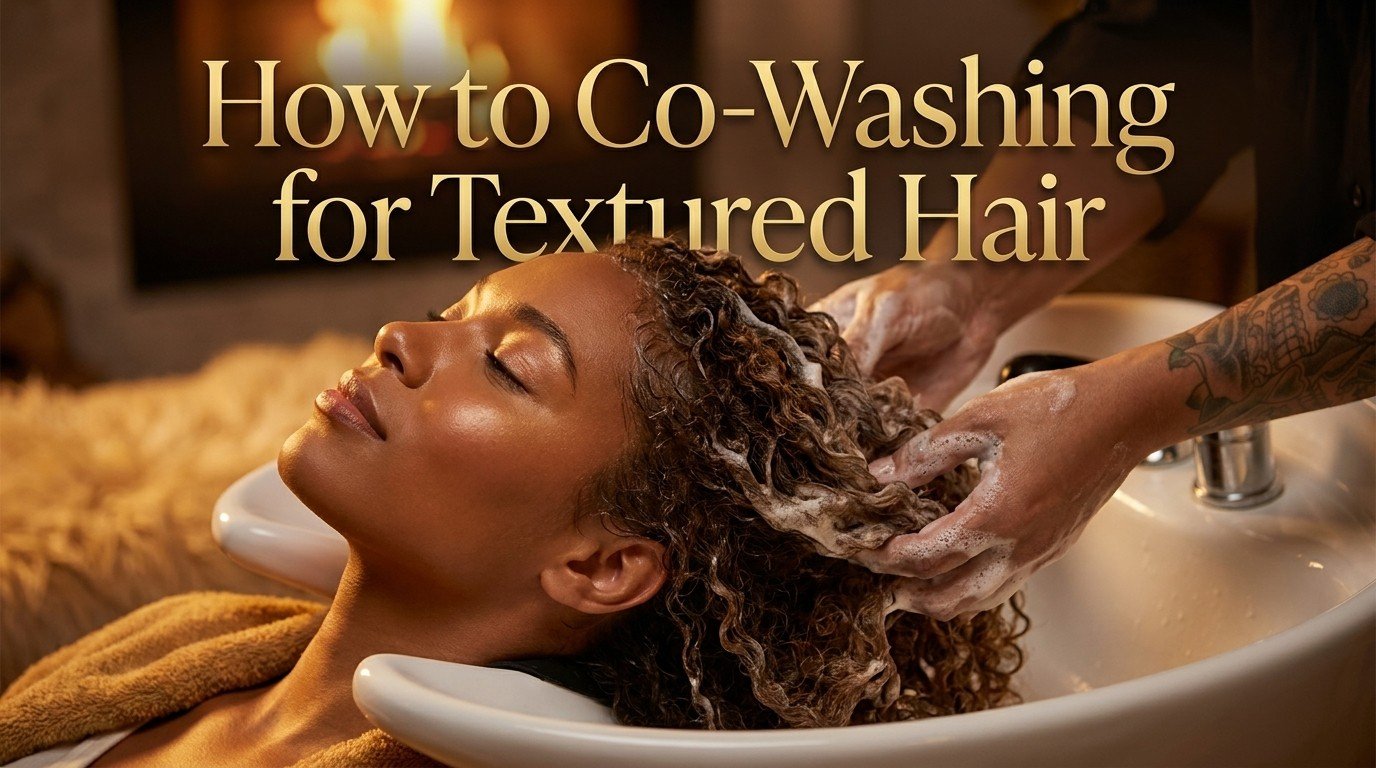
Master co-washing for textured hair with this complete step-by-step guide. Learn how to cleanse curly and coily hair with conditioner for maximum moisture retention and curl definition.
Co-Washing for Textured Hair: A Complete Step-by-Step Guide
Cowashing for textured hair has changed how many people with curly, coily, and wavy strands cleanse, swapping stripping shampoo for a gentler conditioner wash. If your hair feels dry and brittle the moment you leave the shower, this method preserves natural oils, tames frizz, and keeps your curl pattern intact. This guide explains what it is, why it works, and how to do it right.
Co-washing for textured hair has transformed the way countless people with curly, coily, and wavy hair types approach their cleansing routine. If you have ever struggled with dry, brittle strands that seem to lose moisture the moment you step out of the shower, co-washing may be the solution you have been searching for. This method, which involves using conditioner instead of traditional shampoo to cleanse your scalp and strands, preserves natural oils, reduces frizz, and keeps your curl pattern intact. In this guide, you will learn what co-washing is, why it works for textured hair, how to do it correctly, and how to avoid common mistakes. Whether you are brand new to the practice or looking to refine your technique, this step-by-step resource covers everything you need to build a routine that genuinely works for your hair.
What is co-washing, and why does it matter for textured hair?
Co-washing, short for conditioner washing, is the practice of using a rinse-out conditioner in place of shampoo to cleanse the hair and scalp. The term became widely recognised through the Curly Girl method, a hair care philosophy that encourages people with textured hair to avoid harsh surfactants in favour of gentler cleansing agents. However, the concept has existed in Black hair care communities for decades, where conditioning-based cleansing has long been a cornerstone of maintaining moisture balance in coily and kinky hair types.
Traditional shampoos often contain sulphates, which are powerful detergents that strip away not only dirt and product buildup but also the natural sebum your scalp produces. For straight hair types, the issue of sebum buildup is less of a concern because sebum travels down the hair shaft fairly easily. For textured hair, the natural oils produced by the scalp have a much harder time making their way along the twists and curves of each strand. This means that curly and coily hair types are already prone to dryness, and washing with a harsh shampoo amplifies that dryness significantly.
Co-washing addresses the issue of hair buildup by using the mild cleansing agents found in conditioners, which are effective enough to remove light buildup, sweat, and environmental residue without stripping the hair moisture barrier. The result is cleaner hair that retains far more of its natural oils, leading to better-defined curls, reduced frizz, improved elasticity, and overall healthier hair over time.
The popularity of co-washing has grown in step with the broader natural hair movement, which has seen more people reclaim their natural textures after years of chemical treatments and heat damage. For those making this transition, co-washing offers a practical, effective way to support hair health during a period when strands are often at their most fragile and moisture-deprived.
Reviewed by the BeautynFacts editorial team. Last updated: May 2026.
Who Benefits Most from Co-Washing?
Co-washing is particularly beneficial for people with type 3 and type 4 hair, which includes curly, coily, and kinky textures. These hair types have a naturally higher porosity and more complex structure that makes moisture retention a constant challenge. However, wavy hair types (type 2) can also benefit, especially those who experience significant dryness or frizz with regular shampoo use.
People who colour-treat their hair, use heat tools frequently, or live in dry climates often find that co-washing helps offset the additional moisture loss that comes with those practices. It is also an excellent option for anyone transitioning from chemically relaxed hair to their natural texture, as the strands during a transition period can be especially fragile and in need of extra care.
Understanding Hair Porosity Before You Start Co-Washing for Textured Hair
Before building a co-washing routine, understanding your hair porosity level will help you choose the right products and get better results. Porosity is your hair’s ability to absorb and retain moisture, and it is one of the most important factors in how your strands respond to any hair care practice. Getting this foundational knowledge right before diving into co-washing can save you weeks of trial and error.
Low porosity hair has a tightly overlapping cuticle layer that resists moisture absorption. This hair type tends to build up product on the surface rather than absorbing it, which means co-washing may require a slightly more thorough approach to avoid leaving residue behind. Using heat, such as washing with warm water or applying a heat cap after conditioning, can help open the cuticles and allow better product penetration.
High porosity hair has a more open cuticle structure that absorbs moisture quickly but also loses it just as fast. This type benefits greatly from the conditioning agents in a co-wash because it needs the moisture replenishment and the proteins that help fill in gaps in the cuticle layer. Using cool water to rinse helps seal the cuticles and lock in moisture after washing.
Medium or normal porosity hair is in the ideal range and tends to respond well to co-washing without needing as many adjustments. It absorbs and retains moisture at a balanced rate, making it the most forgiving hair type when experimenting with new routines. If you have medium-porosity hair, you have more flexibility in the products you choose and the techniques you apply, which makes the learning curve for co-washing considerably shorter.
How to Test Hair Porosity at Home
One popular method for testing porosity is the float test. Drop a few clean, product-free strands into a glass of water and wait two to four minutes. If the strands float, your hair is likely low porosity. If they sink immediately, your hair is likely high porosity. If they hover in the middle, you probably have medium porosity. While this test is not perfectly scientific, it provides a reasonable starting point. You can also assess porosity by noticing how quickly your hair dries after washing or how long it takes for water to fully saturate your strands.
Choosing the Right Conditioner for Co-Washing Textured Hair
Not every conditioner is suitable for co-washing. The ideal co-wash conditioner should have enough slip to detangle, enough cleansing ability to remove light buildup, and a formula free of heavy silicones that are not water-soluble. Silicones that cannot be rinsed away with water alone will accumulate on the hair shaft over time, eventually causing the same kind of buildup that shampoo was meant to address.
When evaluating a conditioner for co-washing, look for ingredients that provide gentle cleansing. Fatty alcohols like cetyl alcohol and stearyl alcohol are not drying like the short-chain alcohols found in some hair products. Instead, they contribute to slip and moisture retention, making them ideal co-washing formula ingredients.
Ingredients to seek out in a good co-wash conditioner include humectants like glycerin and aloe vera, which draw moisture into the hair shaft. Emollients like shea butter, avocado oil, and coconut oil help seal moisture in and smooth the cuticle. Proteins like hydrolysed wheat or silk protein can help strengthen the hair structure, especially for high porosity or damaged hair. A conditioner with a thoughtful blend of these ingredient categories will perform significantly better than one that relies on a single conditioning agent.
Equally important is knowing what to avoid. Non-water-soluble silicones are identifiable by names ending in “-cone”, “-conol”, or “-xane” that are not preceded by water-soluble or PEG-modified designations. Mineral oil and petroleum-derived ingredients can also contribute to buildup when used regularly without sulphate cleansing. Reading ingredient labels carefully before committing to a product will save you from the frustration of persistent buildup that undermines your entire routine.
Heavy vs. Light Conditioners for Co-Washing
The weight of your conditioner matters depending on your hair density and porosity. Fine or low-density hair generally does well with lighter conditioners that rinse out cleanly without weighing strands down. Thick, dense, or high porosity hair tends to benefit from richer, heavier formulas that deliver deep conditioning during the cleansing step itself. Experimenting with different consistencies will help you find the best match for your specific hair type and needs. Some people alternate between a lighter conditioner for mid-week refreshes and a richer one for their primary weekly co-wash session.
Step-by-Step Co-Washing Routine for Textured Hair
Following a consistent and thorough co-washing technique is key to getting the best results. Rushing through the process or skipping steps can lead to product buildup, scalp issues, or lacklustre results. This detailed walkthrough covers every step from preparation to post-wash care and is designed to be adaptable to all textured hair types.
Step One: Prepare Your Hair Before Washing
Begin by detangling your hair before getting it wet. Use your fingers or a wide-tooth comb to gently work through any knots, starting from the ends and working your way up toward the roots. Detangling dry hair can cause breakage for some hair types, particularly fine or high porosity strands. If your hair is too tangled to detangle dry, apply a small amount of oil or leave-in conditioner first to add some slip. Dividing the hair into four to six sections helps ensure you address every area evenly and makes the washing process easier to manage. This sectioning habit is one of the most impactful changes you can make to your routine, especially for longer or denser hair.
Step Two: Saturate Your Hair Thoroughly with Water
Step into the shower and saturate your hair completely with warm water. Textured hair can be resistant to water, especially if it is low porosity or has product buildup from previous styling. Take time to really soak every strand before applying the conditioner. Water is the primary source of moisture for your hair, and starting with a fully saturated base helps the conditioner work more effectively. Warm water also helps to open the cuticle slightly, allowing the conditioning agents to penetrate more deeply. Spending a full sixty to ninety seconds under the shower head before applying any product is a worthwhile investment in better results.
Step Three: Apply Conditioner Generously Throughout
Apply a generous amount of conditioner to your hair, working in sections if possible. Do not be conservative here. Textured hair needs more product than straight hair, and using too little conditioner will result in insufficient cleansing and minimal conditioning benefits. Apply the conditioner like shampoo, working it from roots to ends for even coverage. For very thick or dense hair, applying the conditioner in subsections within each larger section ensures complete coverage, particularly at the inner layers closest to the scalp.
Step Four: Massage the Scalp for Thorough Cleansing
Once the conditioner is applied, use your fingertips to massage your scalp firmly. This step is crucial and is something many people skip when co-washing. The massaging action is what physically dislodges dirt, dead skin cells, and product residue from your scalp. Spend at least two to three minutes massaging in circular motions, paying particular attention to areas where you tend to apply styling products, such as the hairline, nape of the neck, and crown. Your fingers are the most effective tool for this task because you can feel where tension or buildup exists and apply targeted pressure. A consistent, thorough scalp massage is one of the most underrated elements of a healthy co-washing routine.
Step Five: Detangle Again Under the Conditioner
With the conditioner still in your hair, take the opportunity to detangle each section from ends to roots. The conditioner provides excellent slip that makes detangling dry hair much easier and less damaging than trying to detangle dry hair. Use your fingers first to break apart larger knots, then follow with a wide-tooth comb, if needed. Working methodically through each section will leave your hair smooth, tangle-free, and ready for the next steps in your routine. This combined cleanse-and-detangle approach also saves time in your overall hair care routine and dramatically reduces the amount of manipulation your hair needs to endure, minimising breakage over time.
Step Six: Allow the Conditioner to Sit and Penetrate
After detangling, allow the conditioner to sit in your hair for five to fifteen minutes. This dwell time allows the conditioning agents to penetrate the hair shaft and deliver moisture, repair, and strength. Some people use this time to complete other shower tasks. If your hair is extremely dry or damaged, consider adding a shower cap or heat cap during this time to trap your body heat, which helps open the cuticle and allows deeper product penetration. Even without heat, allowing the conditioner to sit provides noticeably better results than rinsing immediately. Think of this waiting period as a mini conditioning treatment built right into your cleansing routine.
Step Seven: Rinse Thoroughly with Cool Water
Rinse your hair thoroughly with cool or lukewarm water. The rinse step is just as important as the application step. Incomplete rinsing leaves conditioner residue on the scalp and strands, which can cause buildup, weigh down your curls, and lead to scalp irritation. Use your fingers to continuously smooth through your hair as you rinse, ensuring water reaches every strand. Cool water helps to close the cuticle after washing, sealing in moisture and adding shine. Rinse until the water running off your hair runs clear and your hair feels clean but still moisturised. Thorough rinsing is one of the most important habits to develop for long-term co-washing success.
How Often Should You Co-Wash Textured Hair?
Frequency is one of the most debated aspects of co-washing. The right answer depends on your hair type, activity level, scalp health, and the styling products you use. For most people with type 3 and type 4 hair, co-washing once or twice a week is a reasonable starting point. If you exercise frequently, live in a hot or humid environment, or use heavy styling products, you may find that you need to co-wash more often.
It is important to note that co-washing should not completely replace shampoo in most cases. Most hair care professionals recommend incorporating a clarifying or sulphate-free shampoo into your routine at least once or twice a month. This helps clear away any accumulated buildup that conditioner alone cannot fully address, including mineral deposits from hard water, heavy styling products, and excess scalp oils. Failing to clarify periodically can lead to buildup that dulls your curls and clogs hair follicles, eventually undermining all of the benefits that consistent co-washing provides.
Seasonal adjustments to your co-washing frequency are also worth considering. During summer months, when heat and humidity cause more sweating, you may need to co-wash more frequently than in winter. Cold weather tends to increase dryness, which might make you want to wash less often to preserve moisture, but it can also mean more product use for styling, which may require more frequent cleansing to prevent buildup. Paying attention to seasonal changes and adjusting your routine accordingly helps keep your hair in optimal condition year-round.
Adjusting Frequency Based on Scalp Type
People with oily scalps may find that co-washing too often makes their scalp feel grimy and heavy. Conversely, people with dry or sensitive scalps may find that even using shampoo once a week is too harsh, making more frequent co-washing a better option. Listen to what your scalp is telling you. Itching, flaking, and excessive oiliness are signs that your routine needs adjustment. Start with once-a-week co-washing and observe how your scalp and strands respond before increasing or decreasing frequency.
Common Mistakes to Avoid When Co-Washing for Textured Hair
Even people who have been co-washing for years can fall into habits that undermine their results. Knowing the most common mistakes helps you avoid the frustration of a routine that isn’t working well.
Using too little conditioner is one of the most widespread errors. Textured hair is thirsty, and being conservative with product means neither adequate cleansing nor adequate conditioning. Use far more than you think you need, especially on dense, thick, or long hair. A common guideline is to use at least two to three times as much conditioner as you would shampoo for a comparable cleansing result.
Skipping the scalp massage is another common mistake. Without actively massaging the scalp, you are essentially just applying conditioner and rinsing it off. The mechanical action of your fingertips is what actually cleans the scalp, so this step cannot be skipped or rushed. A perfunctory one-minute massage is significantly less effective than a thorough two- to three-minute session with focused attention on each area of the scalp.
Not rinsing thoroughly enough is also a frequent problem. Many people assume that, because conditioner is moisturising, leaving some behind is beneficial. However, conditioner left on the scalp or accumulated over many washes creates buildup that can clog follicles, cause itching, and make your hair look dull and flat. The goal is clean, moisturised hair rather than conditioner-coated hair.
Neglecting to clarify is perhaps the most consequential long-term mistake. A co-washing routine without any periodic clarification will inevitably lead to buildup that diminishes the effectiveness of every product in your routine. Mark your calendar for a clarifying wash every three to four weeks to keep things fresh and functioning optimally.
Avoiding Product Buildup Over Time
Build-up is the biggest concern for people who co-wash regularly. To avoid it, incorporate regular clarifying sessions into your routine. A sulphate-free clarifying shampoo or even a diluted apple cider vinegar rinse can help reset the hair and scalp without the harshness of a full sulphate shampoo. Doing a clarifying wash once or twice a month keeps buildup in check and allows your co-washing routine to remain effective long-term. After clarifying, always follow up with a deep conditioning treatment, as clarifying can temporarily strip more moisture than a regular co-wash, and your hair will need replenishment.
Incorporating Co-Washing into a Balanced Textured Hair Care Routine
Co-washing works best when it is part of a well-rounded hair care routine rather than treated as a standalone solution. A balanced routine for textured hair typically includes regular deep conditioning, proper detangling practices, protective styling when appropriate, and periodic clarifying treatments. Understanding how each element of your routine supports the others helps you build a cohesive approach rather than a collection of disconnected steps.
Deep conditioning is a step that complements co-washing beautifully. While your co-wash conditioner provides surface-level moisture and detangling, a deep conditioning treatment penetrates more deeply and delivers more concentrated nourishment. Aim to deep condition once a week or every two weeks, depending on your hair’s needs. Apply the deep conditioner after your co-wash, cover with a shower cap or plastic wrap, and allow it to sit for at least twenty to thirty minutes before rinsing. Adding gentle heat during this time further amplifies the benefits.
Leave-in conditioner applied after rinsing out your co-wash helps to seal in the moisture your hair just absorbed. This is especially important for high-porosity hair, which loses moisture quickly. A light mist or cream leave-in applied to soaking-wet hair and then sealed with an oil or butter creates a moisture sandwich that keeps hair hydrated for days rather than hours. Sealing with an oil is particularly beneficial in cold or dry climates, where moisture evaporates from the hair more quickly.
Scalp care should also be an intentional component of your routine. Co-washing supports scalp health by reducing dryness and irritation, but you may still want to incorporate targeted scalp treatments if you deal with flaking, sensitivity, or slow growth. Scalp massages with a nourishing oil before your co-wash can stimulate circulation and provide an additional layer of care that keeps your foundation healthy and your follicles functioning well.
The LOC and LCO Methods for Post-Co-Wash Moisture
Two popular moisture-layering techniques, the LOC method (Liquid, Oil, Cream) and the LCO method (Liquid, Cream, Oil), work exceptionally well when applied after co-washing. In the LOC method, you first apply a water-based liquid or leave-in conditioner, then seal with an oil, then apply a cream to lock everything in. The LCO method reverses the final two steps, applying the cream before the oil. Whether LOC or LCO works better for you depends on your hair porosity and density. Experimenting with both approaches will reveal which keeps your hair moisturised longer. Many people with low-porosity hair prefer LCO, as applying oil before cream can help the cream penetrate more effectively in hair that resists absorption.
Co-Washing for Different Textured Hair Types
While the core co-washing technique remains consistent, some adjustments based on hair type can improve your results significantly. Understanding the specific needs of your curl pattern and hair texture helps you customise your routine to achieve the best possible outcome. A one-size-fits-all approach works less well with co-washing than it might with other hair care practices, so taking the time to tailor your technique is worth the effort.
Type 2 Wavy Hair and Co-Washing
Wavy hair types benefit from co-washing when dryness and frizz are concerns, but they also have a higher tendency toward greasiness, particularly at the roots. For type 2 hair, applying the co-wash conditioner mainly to the mid-lengths and ends rather than the roots can help prevent buildup and over-conditioning near the scalp. A lighter conditioner formula is generally better suited to fine or wavy hair. Rinsing with cool water is especially important for wavy textures to help define the wave pattern and reduce frizz. Type 2 hair also tends to need less dwell time than curlier textures, with three to five minutes typically being sufficient.
Type 3 Curly Hair and Co-Washing
Type 3 curly hair, which ranges from loose to tight corkscrews, thrives with regular co-washing. This hair type benefits from a generous application of conditioner throughout its entire length, including closer to the roots, and from an extended dwell time of five to ten minutes. Sectioning the hair into four parts during the co-washing process ensures every curl receives equal attention and thorough detangling. Type 3 hair generally responds very well to both lighter and heavier conditioners, so choosing based on your hair density is the key differentiator. Type 3c in particular, with its tighter curl pattern, may benefit from the richer formulas typically associated with type 4 care.
Type 4 Coily and Kinky Hair and Co-Washing
Type 4 hair, encompassing tightly coiled and kinky textures, benefits the most from co-washing given its naturally high tendency toward dryness. This hair type requires the richest, most moisturising conditioners and the most generous application. Using eight to ten sections during washing helps ensure complete coverage and effective detangling. The scalp massage step is particularly important for type 4 hair, which can accumulate product buildup faster due to the styling products needed to maintain it. Type 4 hair also benefits greatly from the steam or heat method during the dwell time, as heat helps the cuticle open and absorb moisture more effectively. Dwell times of ten to twenty minutes are entirely reasonable for this hair type, particularly for 4c textures, which have the tightest coil pattern and the greatest moisture needs.
Signs That Co-Washing Is Working for Your Textured Hair
Knowing what to search for helps you evaluate whether your co-washing routine is producing the results you want. Positive signs that co-washing is working include increased moisture retention, where your hair stays soft and hydrated for longer periods between washes. Improved curl definition, where your natural curl pattern becomes more visible, consistent, and bouncy, is another strong indicator. Reduced frizz, particularly in the days following your wash, suggests that your hair moisture balance is improving.
Less breakage is one of the most significant markers of an effective co-washing routine. When the hair is properly moisturised, it is more elastic and less likely to snap under tension during detangling or styling. You may notice less hair in the drain or on your comb as your routine becomes more established. The difference can be dramatic for people who previously experienced heavy breakage with traditional shampoo-based routines.
Scalp health also tends to improve, with less itching, flaking, and irritation as the scalp is no longer subjected to the stripping effects of harsh detergents. Many people who struggled with chronic scalp dryness find significant relief within a few weeks of switching to a predominantly co-washing routine. Improved scalp health, in turn, supports better hair growth and retention over time, creating a positive cycle of improvement that builds on itself.
Overall shine and manageability are also excellent indicators of progress. Hair that has better moisture balance tends to reflect light more evenly, creating a healthy sheen noticeably different from the dull appearance of consistently dry or damaged hair. Styling your hair should also become easier as moisture levels improve, with products blending in more smoothly and results lasting longer between wash days.
When to Reassess Your Co-Washing Routine
If your hair feels limp, greasy, or weighed down after several weeks of co-washing, it is likely time for a clarifying treatment and possibly a reassessment of how often you are co-washing. If dryness persists despite consistent co-washing, consider whether your conditioner is rich enough for your hair type, whether you are allowing sufficient dwell time, or whether hard water minerals in your tap water are interfering with the conditioning process. A filtered showerhead can make a significant difference in areas with particularly hard water, where calcium and magnesium deposits coat the hair shaft and prevent conditioner from penetrating effectively.
The Science Behind Why Co-Washing Works on Textured Hair
Understanding the science of co-washing helps explain why it is so effective for textured hair types and also clarifies the method limitations. At its core, conditioner-based cleansing works through a combination of mild surfactants present in conditioning formulas and the physical action of massaging the scalp.
Most conditioners contain cationic surfactants, which carry a positive charge. Because hair itself carries a negative charge when wet, these positively charged conditioning agents are attracted to the hair and adhere to the surface. This is what gives conditioners their smoothing and detangling properties. The slight surfactant activity in conditioners is enough to emulsify and lift away sweat, light sebum, and product residue without stripping the hair’s natural lipid layer.
The friction generated by scalp massage amplifies this effect. Mechanical agitation helps break apart and lift stubborn residue that the mild surfactants alone might not completely remove. This is why the quality and thoroughness of your scalp massage directly determines how effectively you have cleansed during a co-wash session. Research into surfactant chemistry shows that mechanical action greatly improves the cleansing effectiveness of even mild surfactant systems.
The structure of textured hair also plays a role in why co-washing is particularly effective for these hair types. Curly and coily hair has a helical and elliptical cross-section, which makes the surface naturally rougher and gives conditioning agents more places to stick. This means that each application can give more benefits. This same structural characteristic also means that moisture is lost more quickly, reinforcing the case for a gentler, more conditioning-forward cleansing approach.
Limitations of Co-Washing from a Scientific Perspective
Co-washing has real limitations that users should understand. Conditioner-based cleansing is not effective against heavy silicone buildup, heavy pomades or waxes, and mineral deposits from hard water. These require a stronger cleansing agent for removal. Additionally, people with scalp conditions such as seborrhoeic dermatitis may discover that co-washing alone is insufficient to keep their scalp healthy, as it may not provide adequate antimicrobial or antifungal activity. Consulting a dermatologist is advisable for anyone with persistent scalp concerns before committing to an exclusively co-washing routine. For most healthy scalps and hair types, however, the mild cleansing provided by a quality conditioner with thorough technique is entirely sufficient for regular maintenance.
Transitioning to a Co-Washing Routine from Traditional Shampoo
Switching from regular shampoo to a primarily co-washing routine is a transition that takes time and adjustment. Many people experience a phase during the first few weeks where the scalp seems oilier than usual or where hair feels different than expected. This is a normal part of the adjustment period as the scalp recalibrates its oil production after being regularly stripped by sulphates.
When the scalp has been washed with sulphates regularly over months or years, it often overproduces oil as a compensatory response. When you reduce or eliminate that stripping with co-washing, the scalp takes time to recalibrate. During this adjustment phase, which typically lasts two to four weeks, you may experience a period of apparent excess oiliness that resolves once the scalp normalises. Understanding that the adjustment period is temporary and expected helps people push through the adjustment without abandoning the routine too soon.
During the transition period, you may want to continue using a gentle sulphate-free shampoo once a week while incorporating co-washing on the other wash days. This gradual approach allows your scalp to adjust without completely stopping the use of cleansing agents. As your scalp settles and your hair moisture levels normalise, you can reduce your shampoo use to biweekly or monthly, using it only as a clarifying treatment.
Keeping a hair journal during this period can be very helpful. Note the products you use, how often you co-wash, how your hair feels after each wash, and any changes in scalp behaviour. This documentation makes it much easier to identify what is and is not working and to make targeted adjustments rather than overhauling your entire routine at once. Even simple notes on your phone can serve this purpose and give you valuable data over time.
Managing Expectations During the Transition to Co-Washing
It is important to approach the transition with realistic expectations. Co-washing is not a quick fix for severely damaged or extremely dry hair. While you may notice improvements within the first few weeks, the full benefits of a well-established co-washing routine, including significantly improved curl definition, elasticity, and moisture retention, often take two to three months to fully manifest. Patience and consistency are the most important tools in this process. Committing to the routine for at least eight weeks before evaluating its effectiveness gives your hair and scalp enough time to genuinely respond and for you to see meaningful results.
Frequently Asked Questions About Co-Washing for Textured Hair
Can co-washing for textured hair cause buildup on the scalp?
Yes, co-washing can cause buildup if done without periodic clarifying treatments. Conditioner-based cleansing is mild by design, which means it cannot remove heavy product buildup, silicones, or mineral deposits as effectively as a shampoo. To prevent buildup, incorporate a sulphate-free clarifying shampoo into your routine once or twice a month. Furthermore, make sure your conditioner does not contain non-water-soluble silicones, which accumulate on the hair shaft over time and cannot be removed by conditioner alone. Thorough rinsing after every co-wash session is also essential to minimise residue and keep the scalp clean between clarifying sessions.
Is co-washing suitable for all types of textured hair?
Co-washing is most beneficial for type 3 and type 4 hair textures, which are naturally prone to dryness. However, it can also benefit type 2 wavy hair, particularly for those who experience significant dryness or frizz. It is generally less suitable for fine, low-density hair as a sole cleansing method because heavier conditioning agents can weigh down fine strands. People with oily scalps or scalp conditions like seborrhoeic dermatitis should consult a dermatologist before switching to a co-washing-only routine. The key is to adjust the product’s weight, application method, and frequency based on what your hair communicates through its behaviour and condition over time.
How long does it typically take to see results from co-washing for textured hair?
Most people begin to notice improvements within the first two to four weeks of consistent co-washing. Initial benefits often include better detangling, improved softness, and reduced frizz. More significant improvements, such as pronounced curl definition, increased elasticity, and notably improved moisture retention, generally become apparent after six to twelve weeks of consistent practice. The timeline varies depending on your starting hair condition, how consistently you follow the routine, and how well your technique aligns with your hair-specific needs. People transitioning from heavily processed or heat-damaged hair may need to wait longer before seeing pronounced improvements, as the hair requires time to grow out healthier from the roots.
Should I co-wash before or after exercising?
Co-washing after exercising is generally the better approach. Exercise produces sweat, which contains salt, and over time this salt can contribute to dryness and scalp irritation if left in the hair. Co-washing post-workout helps rinse away sweat and its byproducts while replenishing moisture. If you exercise very frequently, such as daily, you do not need to do a full co-wash every time. On lighter workout days, a water rinse followed by a leave-in conditioner can refresh your hair without the full co-washing process. Reserve complete co-washing sessions for heavier workout days or when your hair genuinely feels like it needs a cleanse.
Can I co-wash my hair if I use heavy styling products?
Co-washing can be effective for people who use styling products, but the type and weight of those products matter significantly. Co-washing combined with thorough scalp massage generally removes water-based styling products, gels, and light creams well. Conditioner alone may not fully remove heavy butters, waxes, and products containing non-water-soluble silicones. If you regularly use heavier styling products, plan to incorporate a clarifying shampoo session before or after particularly heavy product-use periods. Being strategic about when you use heavier products and when you clarify keeps your routine balanced and your results consistent over time.
What is the difference between a co-wash and a deep conditioner?
A co-wash is a cleansing method that uses conditioner to clean the scalp and hair. It replaces or reduces shampoo use and is primarily focused on cleansing with the added benefit of conditioning. A deep conditioner, by contrast, is a treatment applied after cleansing whose primary purpose is to deliver intense moisture, protein, or repair to the hair shaft. Deep conditioners are typically left on the hair for a longer period, often under heat, to allow deeper penetration. Their formulas are also generally more concentrated than rinse-out conditioners used for co-washing. Both steps serve different but complementary purposes in a textured hair routine. You co-wash to cleanse and provide daily moisture maintenance, and you deep condition to treat and replenish on a more intensive level.
Conclusion
Co-washing for textured hair is one of the most effective ways to maintain moisture, preserve your natural curl pattern, and keep your hair healthy over the long term. By replacing or reducing harsh shampoo use with conditioner-based cleansing, you work with your hair natural structure rather than against it, giving your strands the gentle care they need to thrive. The key to success lies in choosing the right conditioner for your hair type, mastering the technique of thorough scalp massage and complete rinsing, and incorporating periodic clarifying treatments to prevent buildup.
As with any hair care practice, consistency and patience are your greatest assets. Your hair did not become dry or damaged overnight, and it will not fully recover suddenly either. Give your routine time to work, pay attention to how your scalp and strands respond, and make adjustments based on what you observe. Every person’s hair is unique, and the most effective routines are built through attentive observation and gradual refinement rather than through rigid adherence to a single formula.
Co-washing offers a science-backed, community-tested approach to cleansing that can genuinely transform the health and appearance of your textured hair, whether you are just starting your natural hair journey or looking to refine a routine you have had for years. Start with the steps outlined in this guide, commit to consistency, and give your hair the moisture-rich, gentle cleansing experience it deserves. The results, over time, will speak for themselves.
RELATED ARTICLES:
5 Signs You’re Not Washing Your Hair Enough
DIY Rosemary Oil Tonics: Science‑Backed Ways to Boost Growth
Glass Hair in 2026: The Products and Techniques for a Frizz-Free, Mirror-Like Finish That Lasts
MOB WIFE HAIR: HOW TO GET THE VOLUMINOUS, LIVED-IN LOOK EVERYONE’S OBSESSING OVER
5 Hair Mistakes While Sleeping
About The Author

COMMENTS