



The lip skin barrier is structurally different from the skin everywhere else on your face, and that single fact explains why so many lip-care routines
The lip skin barrier is structurally different from the skin everywhere else on your face, and that single fact explains why so many lip-care routines underperform. Thinner, lacking sebaceous glands, and exposed to constant friction and weather, the lip skin barrier breaks down faster and rebuilds more slowly than the cheek next to it. This guide walks through what the lip skin barrier actually is, why generic face products fail for lips, and the dedicated routine that genuinely repairs and protects it.
Published · Updated
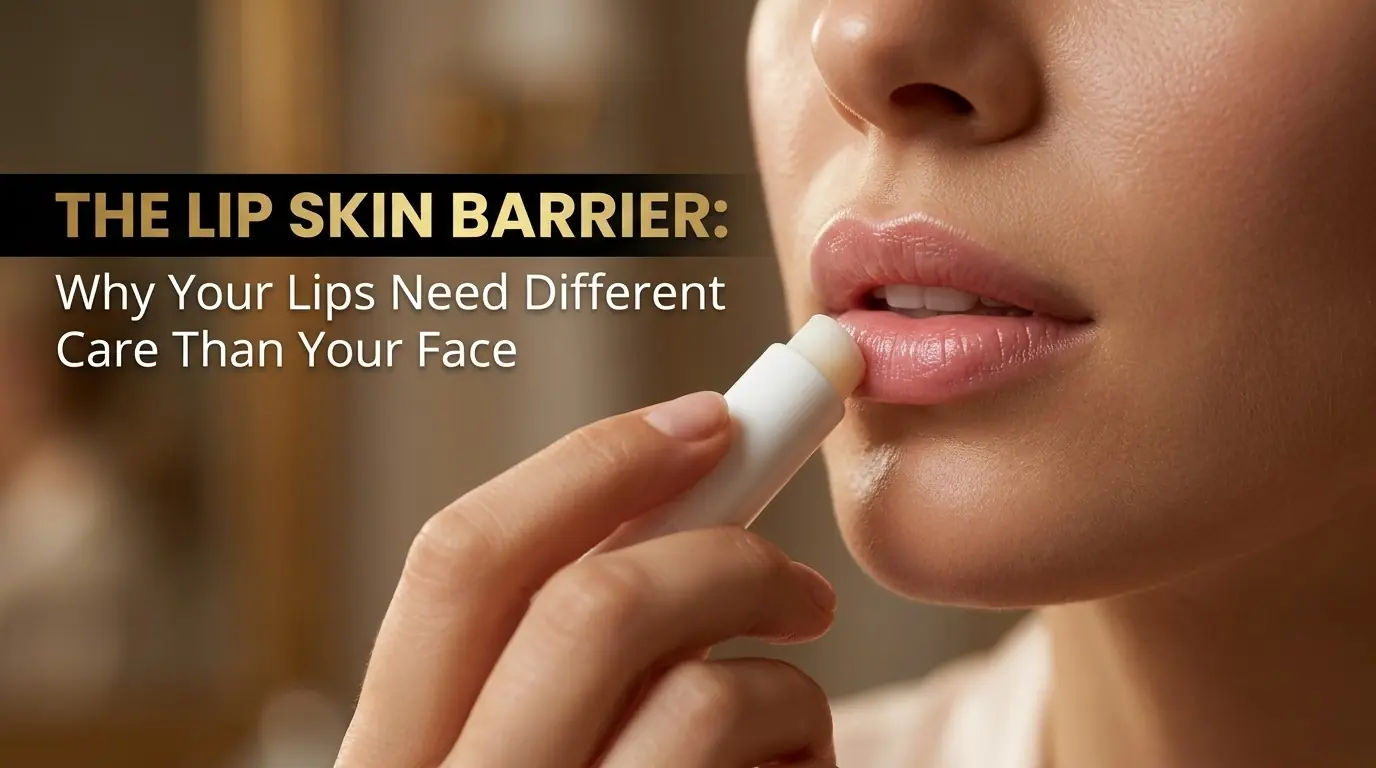
The Lip Skin Barrier: Why Your Lips Need Different Care Than Your Face
When people think about skincare, lips are often treated as an afterthought, a quick swipe of balm before bed and nothing more. But the truth is that the lip skin barrier is a genuinely unique biological structure, distinct from your facial skin in ways that demand a completely separate approach to care. Understanding what makes lip skin different at the cellular and structural level is not just interesting science. It is the foundation for choosing the right products, avoiding the wrong ones, and finally achieving lips that stay soft, smooth, and comfortable through every season.
This guide covers everything from the anatomy of the vermilion border to the ceramide science behind barrier repair, the daily habits that silently erode your lip barrier, and the precise routine steps that help rebuild it. Whether your lips are chronically dry, prone to flaking, or constantly chapped despite using balm every day, the explanation almost always comes back to the barrier. Once you understand it, everything else about lip care falls into place.
The Anatomy of Lip Skin Versus Facial Skin
The detail most guides skip on lip skin barrier: results compound only when the small habits are stacked correctly. A few thoughtful choices add up faster than a long list of half-followed ones, and lip skin barrier works best when you give the routine four to six weeks before you judge it.
To understand why lips need different care, you first need to understand exactly what makes them structurally different from the rest of your face. The differences are not minor variations on a theme. They are fundamental architectural distinctions that affect how your lips behave, how they lose moisture, and how they respond to products.
The Vermilion Border and Transitional Tissue
Your lips are defined by the vermilion zone, the red or pink area between the surrounding facial skin and the inner mucous membrane. This zone is a type of transitional tissue that is neither quite skin nor quite mucous membrane. It sits at the boundary between two very different biological environments and inherits both their properties and their vulnerabilities.
The vermilion border, the sharp outer edge where lip tissue meets facial skin, marks a dramatic transition in skin architecture. On the facial side, you have true skin with all its protective structures intact. On the lip side, almost everything that makes facial skin resilient has been stripped away by evolution. The vermilion zone has no hair follicles, no sweat glands, and critically, no sebaceous glands. That last point is essential to understanding almost every chronic lip problem people face.
The Absence of Sebaceous Glands
Sebaceous glands produce sebum, the skin’s natural oil. On your face, sebum plays a critical role in forming the lipid layer of the skin barrier. It coats the surface, slows transepidermal water loss, and gives facial skin a built-in self-moisturising mechanism. Your face produces this protective oil continuously, all day, every day.
Your lips produce none of it. There are no sebaceous glands in the vermilion zone. This means your lips have no natural oil production, no built-in lipid replenishment, and no self-sealing mechanism when the barrier becomes compromised. Every bit of lipid protection your lips have must come from external sources, whether from your lip products or from the inadvertent transfer of oils from your fingertips. This single anatomical fact explains why lips dry out so much faster than facial skin and why they need consistent, targeted product application to stay healthy.
The Missing Stratum Lucidum
Standard facial and body skin contains five layers in the epidermis: the stratum basale, stratum spinosum, stratum granulosum, stratum lucidum, and stratum corneum. The stratum lucidum is a translucent, protective layer found particularly in thick skin areas. It adds an extra dimension of barrier protection and waterproofing.
Lip skin does not have a stratum lucidum. The epidermis of the vermilion zone contains only three to four layers rather than five. This thinner architecture means there is simply less physical tissue standing between the environment and the living cells beneath. The stratum corneum on lip skin is also substantially thinner than on facial skin, providing less insulation and less protection against moisture loss, UV exposure, irritants, and temperature changes.
Reduced Melanin and UV Vulnerability
Lip skin contains fewer melanocytes, the cells responsible for producing melanin, the pigment that provides natural UV protection. Facial skin, even on lighter skin tones, has considerably more melanin activity than the vermilion zone. This reduced melanin content is part of why lip skin shows its colour differently and why lips are so much more vulnerable to UV damage, including sunburn, premature aging, and a higher risk of actinic cheilitis over time.
The Hydration Gradient Problem
Facial skin maintains a hydration gradient, with moisture levels highest in the deeper layers and tapering toward the surface. The barrier structure helps maintain this gradient, holding moisture inside the skin rather than letting it evaporate freely into the air. Lip skin struggles to maintain this gradient because the barrier itself is thinner and there is no sebum layer to reinforce it from the outside. The result is a tissue that is inherently prone to rapid dehydration.
What the Lip Barrier Actually Does
The skin barrier, in any location on the body, functions as a two-way checkpoint. It keeps moisture inside the skin and keeps irritants, pathogens, and environmental aggressors outside. On the lips, this function is just as vital but much harder to maintain because of the structural limitations described above.
The Brick-and-Mortar Model on Lips
Skin scientists use the “brick and mortar” analogy to describe the stratum corneum: corneocytes (dead skin cells) are the bricks, and a mixture of lipids fills the spaces between them like mortar. This lipid matrix is made up primarily of ceramides, cholesterol, and free fatty acids in a precise ratio. When this ratio is correct and the matrix is intact, the barrier holds moisture in effectively and prevents external agents from penetrating.
On lip skin, this brick-and-mortar structure exists but is thinner, has fewer layers of bricks, and receives no ongoing lipid replenishment from sebum. The mortar is therefore more easily depleted. When environmental stress, product misuse, or repetitive mechanical behaviours like lip licking strip away these lipids, the barrier weakens quickly and takes longer to recover than facial skin does.
Transepidermal Water Loss on the Lips
Transepidermal water loss, often abbreviated as TEWL, is the scientific measurement of how much water evaporates from the skin’s surface through passive diffusion. A healthy, intact barrier keeps TEWL low. A compromised barrier allows TEWL to accelerate, leading to dehydration of the tissue and the cycle of dryness and damage that so many people experience on their lips.
Studies have consistently shown that TEWL rates are higher on lip skin than on equivalent areas of facial skin, even when the lip barrier is considered healthy. This means lips are starting from a more vulnerable baseline. When the barrier is disrupted, whether by cold weather, wind, dehydration, or product damage, TEWL on the lips can increase dramatically, explaining why chapped lips can feel dry again just hours after applying balm. The underlying barrier is not holding moisture in. It is simply losing water faster than balm applied on top can compensate.
Immunological Function
The skin barrier is also an important first line of immune defence. Langerhans cells within the epidermis sample the external environment and trigger inflammatory responses when they detect threats. On lips, the thinner epidermis means these surveillance cells are closer to the surface and the environment, making lip skin particularly reactive to allergens, irritants, and contact sensitisation. This phenomenon is why allergic contact cheilitis, a form of lip inflammation triggered by ingredients in lip products, is relatively common compared to similar reactions elsewhere on the face.
Why Lips Lose Moisture Faster Than Facial Skin
The accelerated moisture loss that characterises lip skin is not a single-cause issue. It results from several converging factors, all of which stem from the structural differences discussed above and are further amplified by daily behaviours and environmental conditions.
No Natural Oil Seal
The most fundamental reason is the absence of sebum. On facial skin, sebum continuously replenishes the lipid layer, resealing small breaches in the barrier and maintaining a hydrophobic (water-repelling) surface that slows evaporation. Lips have no such system. Every application of balm is temporary because there is no biological mechanism to sustain the lipid seal between applications.
Thinner Stratum Corneum
With fewer cell layers in the stratum corneum, there is simply less thickness of barrier tissue to slow moisture diffusion. Think of the difference between a thick wool coat and a single layer of cotton: both provide some insulation, but one is vastly more effective. Facial skin, with its thicker stratum corneum and sebum layer, is the wool coat. Lip skin is the cotton layer, letting moisture escape more freely.
Constant Mechanical Stress
Lips are among the most mechanically active tissue on the face. Talking, eating, drinking, smiling, and countless micro-expressions create constant movement that stretches and compresses lip tissue repeatedly throughout the day. This mechanical activity disrupts the lipid matrix of the barrier more frequently than what facial skin endures in comparable areas. Every stretch and compression works to dislodge the carefully arranged lipid layers that form the mortar of the barrier.
Saliva Exposure
Even without deliberate lip licking, lips are exposed to saliva regularly through eating and drinking. Saliva contains digestive enzymes, including amylase and lipases, that are designed to break down food components. When these enzymes contact lip skin repeatedly, they also break down the lipid components of the lip barrier, accelerating the degradation of the very structures that hold moisture in. This is a significant and underappreciated contributor to chronic lip dryness that has nothing to do with product choices.
Signs of a Compromised Lip Barrier
Recognising when the lip barrier is damaged helps you address it intentionally rather than reactively. Many people apply more balm as a reflexive response to any lip discomfort, but if the balm itself is contributing to the problem (more on that below), this habit becomes a cycle that never resolves the underlying issue.
Persistent Dryness Despite Balm Use
If you are applying lip balm multiple times a day but still experiencing dry, tight, or uncomfortable lips within an hour or two of application, this is a strong indicator of barrier compromise. A healthy barrier holds moisture without constant external reinforcement. When balm stops working for more than an hour or two, the barrier is almost certainly not functioning effectively.
Flaking and Peeling
Flaking is the visible result of accelerated cell turnover at the surface combined with dehydration in the upper layers. When the barrier is compromised and TEWL is elevated, the cells at the surface dry out and die faster than they shed naturally, creating a buildup of dry, flaking tissue. Peeling this skin off manually, as tempting as it is, exposes fresh cells before they are ready to face the environment and worsens the barrier damage.
Redness and Inflammation
An inflamed, reddened appearance around the lip area, particularly at the vermilion border, suggests that irritants are penetrating the compromised barrier and triggering an immune response. This can appear as mild, generalised redness or as a more defined zone of irritation along the border between the lip and facial skin.
Tightness and Sensitivity
When the barrier is damaged, nerve endings that are usually protected by the barrier’s insulating layers become more exposed and reactive. This manifests as heightened sensitivity to temperature, wind, spicy food, or acidic beverages. Tightness after eating or drinking is a reliable signal that the barrier is not intact.
Cracking and Fissuring
In more severe cases of barrier compromise, lips develop cracks or fissures, particularly at the corners of the mouth (angular cheilitis) or along horizontal lines across the lip surface. These are not just cosmetic concerns. Open cracks represent actual breaks in the barrier, points of entry for bacteria and potential sites of secondary infection if left untreated.
What Damages the Lip Skin Barrier
Understanding the mechanisms of barrier damage gives you the ability to make changes that matter, rather than guessing at remedies. Several behaviours and ingredients are proven to contribute to lip barrier degradation.
Lip Licking: The Most Common Culprit
Lip licking is one of the most universally practised and consistently damaging habits for the lip barrier. The instinct feels logical: lips feel dry, and saliva provides temporary moisture; problem solved. But the reality is the opposite. When saliva evaporates from the lip surface, it takes with it some of the lipids and surface moisture that were already present, leaving lips drier than before. The enzymatic activity in saliva further breaks down barrier lipids with each application. People who lick their lips frequently are actively dismantling their barrier repeatedly throughout the day.
The temporary relief from lip licking is real but short-lived, and the net effect is barrier degradation that compounds over time. Breaking this habit is one of the single most impactful changes a person can make for long-term lip health, but it requires replacing the behaviour with a healthier alternative and addressing the underlying causes of lip discomfort.
Fragrance in Lip Products
Fragrance is a leading cause of allergic and irritant contact cheilitis. Because lip skin has a thinner barrier and is more permeable than facial skin, fragrance molecules penetrate more easily and come into contact with immune surveillance cells more readily. Both synthetic fragrance blends and natural fragrant ingredients, including essential oils like peppermint, spearmint, cinnamon, and citrus, are common sensitisers on lip tissue.
The cooling sensation many people associate with minty lip products and the plumping sensation from cinnamon-based products are both caused by mild irritation of the lip tissue. This irritation, while pleasant in the short term, signals that an inflammatory response is occurring and that each application compromises barrier integrity.
Exfoliating Acids
Alpha hydroxy acids (AHAs), such as glycollic acid and lactic acid, and beta hydroxy acids (BHAs), such as salicylic acid, are effective exfoliants for thick, resilient skin. On the thin, barrier-depleted tissue of the lips, they are frequently too aggressive. The pH of these acids, combined with their ability to dissolve the intercellular lipid matrix, can strip the already thin lip barrier effectively, causing more harm than benefit in most routine use cases.
Physical exfoliants, including sugar scrubs, are similarly problematic when used frequently on lips. While the occasional gentle exfoliation can help remove a buildup of flaking cells, vigorous or frequent physical abrasion disrupts the stratum corneum in the same way that rubbing rough fabric against the skin would. The goal should be supporting natural cell turnover through barrier restoration, not manually removing dead cells that are serving a protective function.
Long-Wear and Matte Lip Products
Long-wear liquid lipsticks and intensely matte formulas are designed to adhere to the lip surface and resist transfer. This staying power comes at a structural cost. These products typically contain high concentrations of film-forming polymers and silicones that coat the lip surface and are often quite drying. Many also contain high amounts of alcohol or astringent ingredients to control spreadability and set time. Worn frequently without adequate barrier support, they can leave lips significantly more dehydrated and more prone to flaking than non-long-wear alternatives.
Camphor and Menthol
Camphor and menthol are common ingredients in medicated lip balms and treatments. They create a sensation of relief and healing through temporary stimulation of cold receptors in the skin, but they do not actually repair the barrier and can, with repeated use, become mild irritants in their own right. People who feel “addicted” to certain lip balms, needing to reapply constantly for comfort, are frequently using products containing these ingredients. The perceived need is partly a conditioned response to the sensation and partly a result of ongoing mild irritation that the product is simultaneously creating and temporarily masking.
Sodium Lauryl Sulfate in Toothpaste
This condition is one of the least discussed but most consistent contributors to chronic lip irritation. Sodium lauryl sulphate (SLS) is a surfactant used in most conventional toothpastes to create foam. It is a known barrier disruptor. During brushing, SLS-containing toothpaste makes contact with the lips and surrounding tissue, and regular exposure has been linked to increased incidence of aphthous ulcers and chronic lip dryness in susceptible individuals. Switching to an SLS-free toothpaste is a simple change that can make a meaningful difference for people with persistently sensitive or reactive lips.
What Actually Repairs the Lip Barrier
Barrier repair on the lips follows the same principles as barrier repair on the face and body, but it has to deal with the structural limitations and unique exposures that make lip tissue more vulnerable. The core science focuses on replenishing the three lipid classes that form the barrier’s mortar layer.
Ceramides: The Foundation of Barrier Repair
Ceramides are the most abundant lipid class in the skin’s barrier matrix, accounting for roughly 50 percent of the lipid content of the stratum corneum. They are long-chain fatty acid molecules that form the backbone of lamellar bodies, the organised lipid layers that create the barrier’s water-resisting structure. When ceramides are depleted through damage, environmental exposure, or aging, the barrier becomes permeable and fragile.
Topical ceramides applied to compromised lip skin can be incorporated into the existing barrier structure, helping restore lamellar organisation and reduce TEWL. The most studied and effective ceramide types for barrier repair include ceramide NP (also labelled as ‘ceramide 3’), ceramide AP (ceramide 6-II), and ceramide EOP (ceramide 1). Products that include multiple ceramide types, mirroring the natural diversity of the skin’s own ceramide profile, tend to produce better barrier restoration outcomes than single-ceramide formulations.
Fatty Acids: The Structural Support
Free fatty acids, particularly linoleic acid and linolenic acid (omega-6 and omega-3 fatty acids), are essential components of the barrier lipid matrix. They help maintain the fluidity and organisation of the lamellar layers, allowing ceramides to pack correctly and the barrier to function as an effective seal. Fatty acid deficiency in the barrier, which can result from chronic dryness, poor diet, or over-stripping with harsh products, leads to a disorganized, leaky matrix that allows water out and irritants in.
Oils high in linoleic acid, including rosehip oil, evening primrose oil, sunflower oil, and sea buckthorn oil, provide meaningful barrier support when applied to lips. These differ importantly from oils high in oleic acid (such as coconut oil and olive oil), which, while moisturising in the short term, have been shown to be somewhat more disruptive to the barrier structure in sensitive skin when used as primary barrier-repair agents.
Cholesterol: The Often-Overlooked Third Element
Alongside ceramides and fatty acids, cholesterol is the third essential lipid class in the barrier matrix. It plays a critical role in regulating the fluidity of the lamellar layers, ensuring they remain permeable enough to flex with movement but organised enough to resist water loss. Formulations designed for serious barrier repair often include all three lipid classes in approximately physiological ratios, typically around a 1:1:1 molar ratio of ceramides, cholesterol, and fatty acids.
Cholesterol-containing ingredients in lip products include lanolin, shea butter, and certain plant-derived cholesterol sources. Lanolin in particular has a lipid composition remarkably similar to human sebum, making it one of the most effective barrier-supportive ingredients available for lip use.
Occlusives: Locking It All In
While ceramides and fatty acids rebuild the barrier structure, occlusives serve a different but complementary purpose: they form a physical layer on top of the lip surface that dramatically slows TEWL while the barrier is repairing itself. Without an occlusive, even well-formulated barrier repair ingredients struggle to work effectively because the skin continues to lose water faster than the barrier can regenerate.
Petrolatum (petroleum jelly) is the gold standard occlusive for this purpose. Studies have consistently shown it to be the most effective topical occlusive available, reducing TEWL by as much as 98 percent when applied correctly. Beeswax, carnauba wax, and candelilla wax also provide meaningful occlusion in lip balm formats and are the wax bases in most solid balm products. Shea butter provides both occlusion and fatty acid content, making it a particularly valuable ingredient for lip care.
Humectants: Drawing Moisture to the Surface
Humectants are water-attracting molecules that draw moisture from the deeper skin layers and, in humid conditions, from the air into the skin’s surface layers. Hyaluronic acid, glycerin, and panthenol (provitamin B5) are the most commonly used humectants in lip care. They increase the water content of the upper skin layers, temporarily plumping and softening the tissue.
Critically, humectants work best when used in combination with occlusives. When used alone on a damaged barrier in a dry environment, humectants can pull moisture from the deeper skin layers to the surface and then lose it to evaporation, making dehydration worse. For lips, the effective formula is a humectant to attract moisture, barrier lipids to restore structure, and an occlusive to seal everything in.
How to Build a Barrier-Focused Lip Routine
A barrier-focused lip routine is not complicated, but it does require consistency and the right product selection. The following framework can be adapted to different budgets, preferences, and seasonal conditions.
Step One: Cleanse Gently
Removing lip makeup and residue from the day is important, but the method matters. Oil-based cleansers and micellar waters are gentler on lip tissue than traditional soap-based formulas or makeup remover wipes that require heavy rubbing. Apply the cleanser with a soft cotton pad, allow it to dissolve makeup briefly, then wipe gently. Never scrub or pull at lip tissue during cleansing.
Step Two: Address Flaking Carefully and Infrequently
If you need to address flaking, limit the treatment to once a week at most and use the gentlest possible method. A damp, warm cloth pressed softly against the lips for thirty seconds allows some loosening of dead cell buildup without abrasion. If using a physical exfoliant, choose one with very fine particles and apply only the lightest possible pressure. Never exfoliate actively chapped, cracked, or inflamed lips. Allow the barrier to heal first, then address any residual roughness.
Step Three: Apply a Humectant Layer
A product containing glycerin, hyaluronic acid, or panthenol applied while lip tissue is still slightly damp from cleansing helps to lock in surface moisture before it evaporates. This does not need to be a dedicated lip product. A drop of glycerin serum or a hyaluronic acid product from your face routine applied to the lips works well. Allow it to absorb for a minute before the next step.
Step Four: Apply a Barrier-Repair Product
This is the cornerstone step. Choose a product that contains ceramides, fatty acids, and ideally cholesterol or a cholesterol-containing ingredient. A lip balm or treatment with shea butter, plant oils high in linoleic acid, and ceramides will provide meaningful barrier support. Apply a generous layer and allow it to sink into the tissue rather than just sitting on the surface.
Step Five: Seal with an Occlusive
At night especially, finishing with a layer of petrolatum-based balm or a thick layer of a beeswax formula provides the occlusive seal that keeps everything working overnight. While skin barrier repair is most active during sleep, locking in moisture with an occlusive during this window gives the barrier repair process the conditions it needs to be effective.
Ingredients to Avoid in Lip Products
Being able to read an ingredient list for red flags is as valuable as knowing which ingredients to seek out. Several commonly used lip product ingredients actively work against barrier health.
Alcohol (Denatured)
Denatured alcohol (listed as alcohol denat., SD alcohol, or ethanol) is used in lip products to adjust texture, speed drying, or help with application. It is a barrier-disrupting ingredient that dissolves surface lipids and increases TEWL. Its presence in any lip care product that you rely on for moisture or barrier support is counterproductive.
Synthetic Fragrance and Essential Oils
As discussed, fragrance is a leading sensitiser on lip tissue. The term “fragrance” or “perfume” on an ingredient list indicates a mixture of undisclosed compounds, any of which could be sensitising. Essential oils, including peppermint, spearmint, eucalyptus, lemon, orange, and cinnamon, are equally capable of causing contact sensitisation, despite being natural in origin. Fragrance-free formulations are far safer for regular lip barrier support.
Salicylic Acid
While salicylic acid is useful in targeted acne treatment, it is an inappropriate ingredient for routine lip care. Its keratolytic action (dissolving the top layers of skin cells) is too aggressive for the thin stratum corneum of the lips and disrupts the barrier rather than supporting it. Products marketed for lip exfoliation that contain salicylic acid should be used rarely, if at all, and never on compromised lips.
Synthetic Dyes and Color Additives
Certain synthetic dyes used to colour lip products, including some FD&C and D&C colourants, are known to have sensitisation potential. People with reactive or allergy-prone lips should pay attention to whether their reactions correlate with coloured products versus clear or lightly tinted ones.
Overly Astringent Plant Extracts
Witch hazel, tea tree oil, and high-tannin plant extracts are sometimes included in lip products for their antimicrobial or “purifying” properties. On the already vulnerable lip barrier, these astringent ingredients strip surface lipids and can contribute to ongoing dryness and irritation rather than healing it.
Morning Versus Night Lip Care
The needs of the lip barrier shift between daytime and nighttime, and a thoughtful routine addresses both windows differently.
Morning Lip Care
In the morning, the primary goals are protection against the day’s environmental exposures, including UV radiation, wind, temperature changes, and the mechanical stresses of eating and talking. Daytime lip care should focus on a product that provides both SPF protection and barrier support. Mineral SPF ingredients like zinc oxide are gentler on lip tissue than chemical UV filters such as avobenzone or oxybenzone, which can irritate sensitive lips. A tinted lip balm with SPF and a ceramide-containing base addresses protection, colour, and barrier support in one step for those who prefer a streamlined approach.
Layering a hydrating treatment under a lip colour during the day is also effective. A thin layer of a ceramide and fatty acid product underneath a lipstick or gloss provides a buffer between the film-forming product and the lip tissue itself, reducing the drying effect of the colour product over the course of the day.
Nighttime Lip Care
Night is the most valuable window for barrier repair. Cell turnover is higher, inflammatory cytokine activity that supports tissue repair is elevated, and lips are not being exposed to environmental stressors or mechanical food contact. The nighttime routine can use richer, more intensive formulas without worrying about how they feel under lipstick or how they interact with UV filters.
A dedicated overnight lip mask or a thick application of a ceramide-rich balm topped with petrolatum gives the barrier maximum support during the repair window. People with significantly damaged barriers can try the “lip slugging” technique, applying a generous layer of plain petrolatum as the final step in their nighttime routine, a method borrowed from the broader skincare slugging trend and well suited to the particular needs of lip tissue.
Seasonal Challenges to the Lip Barrier
The lip barrier faces different threats depending on the season, and adapting your routine accordingly helps prevent the cycles of damage and attempted repair that many people fall into.
Winter
Cold air holds less moisture than warm air, so winter brings lower ambient humidity that accelerates TEWL from lip tissue. Indoor heating compounds the problem by further drying the air inside homes and offices. Cold wind physically stresses the lip surface. The combination is the most challenging environment for lip barrier maintenance.
In winter, increasing the frequency and richness of occlusive application is the most effective response. Applying a petrolatum-based layer before going outside in cold or windy conditions creates a physical shield against wind and slows evaporative moisture loss dramatically. A small jar of petrolatum in your bag for on-the-go reapplication is a practical solution that costs very little and outperforms most expensive lip balms in terms of pure barrier protection.
Summer
Summer brings UV exposure as the primary threat, along with chlorine from swimming pools, saltwater exposure at the beach, and air conditioning that mirrors the drying effect of indoor heating in winter. SPF lip protection becomes essential, and the physical barrier damage from sun exposure requires consistent ceramide and fatty acid support.
People who spend significant time outdoors in summer often find that their lips need reapplication of barrier-supportive products more frequently due to the combination of UV exposure, physical wiping during activities, and sweating. Keeping SPF lip care accessible and reapplying it every two hours during sun exposure is appropriate practice.
Transitional Seasons
Spring and fall often cause confusion because temperature and humidity fluctuate significantly. Lips that were managing well in a stable winter routine may suddenly flare when warm, humid days alternate with cool, dry ones. The skin barrier, including on the lips, adjusts to sustained conditions, and rapid environmental changes can temporarily destabilise it. Being flexible with your routine during transitional seasons, increasing occlusive support on cold or windy days, and maintaining ceramide application consistently, regardless of the weather, help navigate this instability.
Special Considerations for Lip Barrier Sensitivity
Some individuals have constitutionally more reactive lip tissue that requires additional care beyond standard barrier maintenance. Understanding whether your lip sensitivity has a specific cause helps guide the approach.
Allergic Contact Cheilitis
Allergic contact cheilitis is an immune-mediated reaction to a specific ingredient in a lip product. It presents as persistent redness, swelling, itching, or scaling that does not resolve with standard moisturisation. Common triggers include fragrances; preservatives like methylisothiazolinone; certain dyes; lanolin (in people with a lanolin allergy); and sunscreen chemical filters. Patch testing by a dermatologist can identify the specific allergen and allow targeted avoidance.
If you suspect allergic contact cheilitis, a strategy of using only one extremely simple, minimal-ingredient product on your lips for several weeks can help clarify whether the reaction resolves with the switch. Plain petrolatum with no other added ingredients is a reliable first-line option during this elimination period because it is one of the least likely ingredients to trigger allergic responses.
Perioral Dermatitis
Perioral dermatitis is a distinct inflammatory condition that causes clusters of small papules around the mouth, including at the vermilion border. It is frequently triggered or worsened by topical steroids (even from steroid-containing products used on nearby facial skin), certain cosmetic ingredients, and fluorinated toothpaste. It is not the same as a damaged lip barrier, though barrier disruption can make the skin more susceptible. Treatment typically requires medical intervention, but eliminating potential triggers from lip products and switching to fluoride-free, SLS-free toothpaste can significantly reduce the severity of flares.
Actinic Cheilitis
Actinic cheilitis is a pre-cancerous condition caused by cumulative sun damage to lip tissue, almost always affecting the lower lip, which receives more direct UV exposure. It presents as persistent roughness, scaling, pallor, or loss of the sharp vermilion border definition. Given the reduced melanin and thinner stratum corneum of lip skin, people who have spent significant time in the sun without lip SPF protection are at meaningfully elevated risk. Anyone noticing persistent changes to the texture or appearance of their lower lip should seek evaluation from a dermatologist. Consistent SPF lip care from an early age is the most effective prevention.
Building a Minimal but Effective Lip Barrier Routine
Not everyone wants a multi-step lip regimen, and the good news is that a simple, consistent approach using the right core products can achieve excellent results. The following framework uses three products and two daily applications to cover all the essential bases without requiring significant time or investment.
Morning: apply one coat of a ceramide-containing lip balm with SPF. Choose one with a minimal ingredient list, no fragrance, and mineral UV filters if possible. Allow it to absorb briefly before applying any lip colour.
Night: Apply one generous coat of a ceramide and fatty acid lip treatment, then top it with plain petrolatum or a thick petrolatum-based balm. Leave the mixture in place overnight.
This two-application approach, maintained consistently, supports barrier repair during sleep, provides protection during the day, and eliminates the need for constant reapplication that indicates a compromised barrier. Most people with moderate barrier damage see significant improvement within two to three weeks of consistent application.
Frequently Asked Questions About the Lip Skin Barrier
Can the lip skin barrier fully recover once it has been damaged?
Yes, in the vast majority of cases. The lip barrier, like the facial skin barrier, has the capacity to regenerate when given the right conditions. The timeline for recovery depends on the severity of the damage, whether the triggering factors have been eliminated, and how consistently appropriate barrier-supportive products are applied. Mild damage from a single harsh winter or a period of overusing stripping products can resolve in one to two weeks of proper care. Chronic, longstanding barrier compromise may take six to eight weeks of consistent treatment to show significant improvement, particularly if sensitisation to specific ingredients also needs to resolve alongside the structural repair.
Is petroleum jelly actually safe to use on lips?
Cosmetic-grade petrolatum used in lip care products is highly refined and has an extensive safety record. The concerns about petroleum-derived ingredients are largely applicable to industrial-grade forms rather than the highly purified cosmetic grades required by regulatory standards. Petrolatum remains the most effective single occlusive ingredient available for lip care and is recommended by dermatologists for barrier repair in sensitive and compromised skin of all types.
Why do some lip balms seem to make lip dryness worse over time?
This effect is real and is usually explained by one of two mechanisms. The first is that the balm contains irritants, particularly fragrance, menthol, camphor, or alcohol, that create a mild ongoing inflammatory state that disrupts the barrier while the balm simultaneously provides temporary comfort. The second is that the balm is so effective at reducing the immediate sensation of dryness that it suppresses the signal to drink adequate water, leading to systemic dehydration that eventually manifests as worsened lip dryness. Switching to a fragrance-free, non-irritating balm and ensuring adequate water intake addresses both of these mechanisms.
Should I exfoliate my lips regularly as part of a barrier care routine?
No. Regular exfoliation is counterproductive when the goal is barrier repair. The stratum corneum on the lips is thin by nature, and regularly removing cells from it, whether physically or chemically, further compromises its ability to hold moisture and protect underlying tissue. The flaking that prompts most people to reach for a lip scrub is itself a symptom of barrier compromise, not a condition that requires exfoliation to treat. Address the underlying barrier deficiency with ceramides, fatty acids, and occlusives, and the flaking resolves on its own as the barrier heals.
Does drinking more water improve lip hydration?
Systemic hydration does play a role in skin hydration, including on the lips, but it is not a substitute for topical barrier support. The relationship between water intake and skin hydration is more nuanced than the common advice to “drink more water for better skin” suggests. Severe dehydration does affect skin hydration throughout the body. However, for most people who are reasonably well hydrated, increasing water intake beyond normal levels produces modest additional skin hydration benefits. Adequate water intake, combined with proper topical barrier care, produces better outcomes than either approach alone.
Are lip masks useful, or are they just a trend?
Overnight lip masks can be genuinely useful when they contain the right ingredients. A good lip mask with ceramides, fatty acids, and an effective occlusive keeps these barrier-supportive ingredients in contact with lip tissue for a longer time during the overnight repair window, which may give better results than a quick application that is then wiped off or licked away. However, many marketed lip masks contain mostly occlusives, along with fragrance and flavouring additives, which makes them less therapeutically useful and potentially irritating. Check ingredient lists carefully and prioritise ceramides, fatty acids, and fragrance-free formulations when selecting overnight lip treatments.
How do I know if I have contact cheilitis versus a damaged barrier?
Distinguishing between allergic contact cheilitis and simple barrier damage can be challenging because they share many visible signs: redness, scaling, dryness, and discomfort. The key differentiating feature is the presence of itching and swelling in contact cheilitis, which is less typical of straightforward barrier compromise. Contact cheilitis also tends to have a more defined pattern that correlates with exactly where a product was applied, and it does not improve with standard barrier-repair treatment. If your lips remain inflamed despite switching to minimal, fragrance-free products and applying barrier-supportive care consistently, a consultation with a dermatologist for potential patch testing is the appropriate next step.
The Bottom Line on Lip Barrier Care
The lip skin barrier is not simply a thinner version of facial skin. It is a structurally distinct tissue with unique vulnerabilities, no self-replenishing lipid system, and a significantly thinner stratum corneum that makes it inherently more susceptible to moisture loss and environmental damage. Treating it with the same products and the same level of attention as facial skin leaves it chronically under-supported.
The science of lip barrier care is well established. Ceramides, fatty acids, and cholesterol restore the lamellar lipid structure that holds moisture in. Occlusives seal the surface while repair happens. Humectants attract moisture to the tissue. Fragrance, alcohol, harsh acids, and habitual lip licking undo this work as fast as it is done. A consistent, twice-daily routine using barrier-supportive products without irritating ingredients resolves most cases of chronic lip dryness within weeks and maintains healthy lips indefinitely.
Understanding the biology makes it possible to stop cycling through product after product looking for a solution and instead build a routine grounded in what the lip barrier actually needs. The lips are one of the most expressive features on the face. They deserve more than an afterthought.
RELATED ARTICLES:
Skincare-infused makeup: Why your 2026 foundation should double as a serum
PDRN Skincare: The K‑Beauty Ingredient That Went From Clinics to Your Vanity
Skin Tints That Work For a Natural Base
Dolphin Skin Makeup
2026 Skin Streaming Routine
The honest bottom line on lip skin barrier: consistency beats complexity. Build a few of these habits into your weekly rhythm, give your skin and hair a real window to respond, and lip skin barrier stops feeling like a chore and becomes something you do without thinking.
About The Author

COMMENTS