








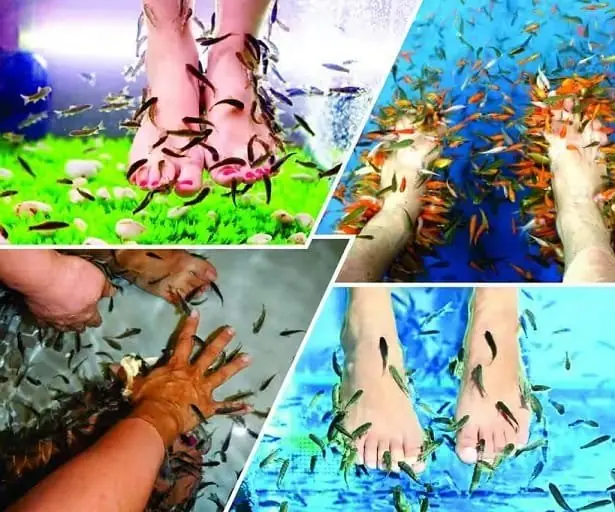
Fish pedicure treatments let hundreds of tiny fish gently nibble away dead skin, leaving your feet noticeably softer in about thirty minutes. Once a r
Fish pedicure treatments let hundreds of tiny fish gently nibble away dead skin, leaving your feet noticeably softer in about thirty minutes. Once a regional wellness tradition in Turkey and parts of Asia, the trend spread to spas in London, Los Angeles, and Dubai. This guide explains exactly what happens in a session, the biology behind the fish, the benefits, and the safety risks to weigh before you book.
What Exactly Is a Fish Pedicure?
Published
The Origins of the Treatment
The practice has roots in the hot spring pools of Kangal, a district in the Sivas province of Turkey. Locals had bathed in these mineral-rich springs for centuries, noticing that the small fish living in the water would feed on their skin. Over time, the springs gained a reputation for improving conditions like psoriasis and eczema. Turkish spa operators began formalising the treatment in the early 2000s, building dedicated tanks and charging for structured sessions. The concept spread rapidly through Asia, particularly in China, Japan, South Korea, and Thailand, where fish spas became mainstream wellness destinations. By the mid-2000s, fish pedicure salons had opened across Europe and North America, drawing curious customers and generating significant media coverage.
The Fish Involved: More Than Just Any Species
Not all fish species are used for this treatment. The overwhelming majority of fish pedicures rely on Garra rufa, a small cyprinid freshwater fish native to the river basins of the Middle East, particularly Turkey, Syria, Iraq, and Iran. A second species, Cyprinion macrostomus, is sometimes used and is often marketed interchangeably with Garra rufa, although the two are biologically distinct. Garra rufa typically grows to between four and fourteen centimetres and lives in fast-flowing, warm rivers. In their natural habitat, they feed on algae, plankton, and organic matter, including skin detritus on larger animals. Their mouths are adapted for scraping surfaces, which makes them effective at removing keratinised skin cells from human feet.
What Happens Inside the Tank
A reputable fish spa maintains its tanks at a water temperature between 30 and 34 degrees Celsius. This range keeps the fish healthy and active while remaining comfortable for human skin. Tanks are typically equipped with filtration systems and ultraviolet sterilisation units to reduce bacterial load. Customers wash their feet thoroughly before entering the tank. Once submerged, the fish are drawn to the warmth and the scent of softened skin. They congregate around the feet, particularly on the heels, the balls of the feet, and areas with callused skin. The nibbling sensation is described by most people as a mild, tickling vibration rather than a sharp bite. Sessions typically run from fifteen to thirty minutes, though some spas offer longer treatments of up to forty-five minutes.
The Biology of Garra Rufa Fish
Understanding the biology of Garra rufa helps explain both the appeal and the limitations of fish pedicures. These fish are not simply curiosities. They possess specific physiological and behavioural traits that make them uniquely suited to this role.
Feeding Behavior and Skin Preference
Garra rufa are opportunistic omnivores. In the wild, food sources can be scarce, so the fish have evolved to eat whatever organic material is available, including the dead skin cells that slough off larger animals wading in their habitat. Their mouths lack sharp teeth in the conventional sense. Instead, they have a specialised oral structure with a hardened lip used for scraping algae and organic matter from surfaces. This structure allows them to remove dead skin without penetrating living tissue. Garra rufa demonstrates a strong preference for keratinised, hyperkeratotic skin, which is the thickened, hardened skin characteristic of calluses and certain dermatological conditions. They show far less interest in healthy, intact skin, which partly explains why the treatment is considered gentle.
Secretions and Skin-Healing Claims
One of the most persistent claims about fish pedicures is that Garra rufa secretes an enzyme called diathanol, which is said to promote skin regeneration and healing. This claim has been repeated widely in spa marketing materials. The scientific evidence, however, is mixed. Isolating the fish’s contribution from other environmental factors remains methodologically challenging, and no peer-reviewed study has conclusively confirmed the existence or activity of a distinct healing secretion from Garra rufa in a standard spa setting.
Fish Welfare and Ethical Considerations
The welfare of Garra rufa fish in spa settings is an underexplored area that deserves attention. In commercial fish spas, the fish are often kept in conditions quite different from their natural habitat. Wild Garra rufa thrive in fast-moving rivers with substantial currents and large territories. Tank life restricts movement and social behaviour. Some animal welfare organisations have raised concerns that depriving the fish of adequate food to increase their motivation to feed on skin crosses an ethical line. Responsible fish spa operators ensure that the fish have access to supplemental feeding so that their participation in the treatment is incidental rather than the result of starvation. When choosing a fish spa, it is reasonable to ask the operator how the fish are fed and housed between client sessions.
The Benefits of Fish Pedicures
Marketing claims in the beauty industry often outrun scientific evidence. Fish pedicures are no exception. That said, there are several genuine benefits.
Exfoliation and Callus Reduction
The most direct and consistently reported benefit of a fish pedicure is the removal of dead, keratinised skin. The feet bear more mechanical stress than any other part of the body. Constant pressure from standing, walking, and footwear causes the skin on the heels, balls of the feet, and toes to thicken into calluses. Left untreated, thick calluses can crack, cause pain, and in some cases become infected. Garra rufa fish are selectively attracted to this hyperkeratotic tissue and remove it through sustained, gentle abrasion. Unlike a pumice stone or foot file, which exfoliates uniformly, the fish concentrate their attention precisely where the dead skin is thickest.
Improved Circulation and Sensory Stimulation
The feet contain a dense network of nerve endings and capillaries. The tactile stimulation produced by hundreds of small fish nibbling simultaneously activates sensory receptors throughout the foot, triggering localised increases in blood flow. Improved microcirculation in the feet has practical benefits. It accelerates the delivery of oxygen and nutrients to skin cells, supports the removal of metabolic waste products, and can temporarily reduce the sensation of fatigue and heaviness that many people experience after long periods of standing. Reflexology practitioners have long argued that stimulating specific zones of the feet produces systemic effects on the body. While the fish do not follow reflexology maps with any precision, the broad, distributed stimulation of a fish pedicure session may produce some of the circulatory benefits associated with foot massage.
Stress Reduction and Psychological Relaxation
The relationship between touch, tactile stimulation, and the nervous system is well established in psychophysiology. Light, repetitive touch activates the parasympathetic nervous system, which governs the body’s rest-and-digest response. Fish pedicures provide exactly this kind of stimulus. The sensation, which most people describe as playful and pleasantly surprising, tends to prompt laughter and a shift in focus away from daily stressors. Several spa operators and customers report that the novelty of the experience itself serves as a form of mindfulness. When your attention is fully occupied by the strange and fascinating sensation of fish nibbling your feet, it is difficult to ruminate on work deadlines or personal worries. This mechanism of involuntary present-moment awareness mirrors some of the psychological benefits attributed to mindfulness practices. While no large-scale clinical trials have measured the stress-reducing effects of fish pedicures specifically, the physiological pathway is plausible and consistent with the broader literature on tactile therapy and relaxation.
How a Fish Pedicure Session Works: Step by Step
Knowing what to expect before you walk into a fish spa eliminates anxiety and helps you get the most from the experience. The process is straightforward, but each stage matters.
Before You Enter the Tank
A reputable spa begins with a consultation. Staff should ask about your health history, any open wounds, cuts, or skin conditions on your feet, and whether you have recently used any foot products such as lotion, nail polish remover, or self-tanner. These products can harm the fish and compromise tank hygiene. You will be asked to wash your feet thoroughly with soap and water, and in many spas a foot soak in a mild antiseptic solution precedes the fish tank. Remove nail polish before your visit if possible, as the chemicals in polish can be toxic to Garra rufa. Shaved or waxed legs are not a barrier to fish pedicures, but fresh shaving should be avoided for at least forty-eight hours before a session, as tiny nicks in the skin can become entry points for bacteria.
During the Session
Once your feet are clean and dry, you lower them slowly into the tank. Most people experience an immediate, involuntary reflex to pull their feet out during the first thirty seconds. The sensation is distinctly unusual, and the brain’s threat-detection response often interprets unfamiliar tactile input as a warning signal. This reaction passes quickly for most people. After a minute or two, the sensation becomes familiar and is generally described as relaxing. The fish will move around your feet continuously, clustering on areas of thicker skin. You may notice them spending more time on your heels than on your arches. Some areas may feel more ticklish than others depending on your individual skin sensitivity. Many spas provide comfortable seating, soft music, and sometimes complimentary beverages to enhance the relaxation aspect of the treatment. Resist the urge to shake or kick your feet, as this disturbs the fish and reduces the effectiveness of the session.
After the Treatment
When the session ends, you remove your feet from the tank, and staff dry them with clean towels. This is the optimal moment to follow up with moisturiser, as the exfoliation process leaves the skin primed to absorb hydrating ingredients. Look for a moisturiser containing urea, lactic acid, or shea butter, all of which work well on freshly exfoliated foot skin. Many spas offer a traditional pedicure as an add-on service following the fish treatment, including nail trimming, cuticle care, and a foot massage. This combination is worth considering, as the fish pedicure leaves the skin in an excellent condition for the manual work of a conventional pedicure. Your feet should feel noticeably softer and smoother immediately after the treatment, and this effect typically lasts several days to a week depending on how quickly your skin regenerates.
Safety, Hygiene, and Regulatory Concerns
No beauty treatment should be pursued without understanding its safety profile. Fish pedicures have attracted genuine regulatory scrutiny, and the concerns raised are not trivial.
Infection Risk and Tank Hygiene
The central hygiene challenge of fish pedicures is one that no amount of goodwill can fully resolve: the tank water cannot be changed between individual clients the way tools can be sterilised in a conventional salon. Traditional pedicure tools, such as nail clippers and cuticle pushers, can be autoclaved or replaced. Tank water cannot be drained and replaced after every customer. This means that any pathogen introduced by one client remains in the water for subsequent clients, subject only to the effectiveness of the filtration and ultraviolet sterilisation system. The fish themselves can theoretically carry or transfer bacteria between clients. Several bacteria are capable of surviving in fish spa water, including Mycobacterium species, which are associated with skin and soft tissue infections. High-quality commercial spas invest in ultraviolet-C sterilisation units, ozone generators, and high-turnover filtration systems that reduce but do not eliminate this risk. When choosing a fish spa, ask to see documentation of their water testing schedule and filtration system specifications.
Legal Status in Different Countries and US States
The regulatory response to fish pedicures has varied dramatically across jurisdictions. In the United States, fish pedicures have been banned in at least fourteen states, including California, New York, Texas, and Florida. State cosmetology boards cite two primary reasons. First, existing licensing frameworks require that all implements used in pedicures be either sterilised or disposed of after each use. Live fish do not fit either category. Second, state health codes often prohibit animals in facilities where personal care services are performed. In Canada, several provinces have issued similar bans. The United Kingdom took a different approach, issuing guidance through the Health Protection Agency that allows fish pedicures to continue under specific hygiene conditions, including mandatory risk assessments, regular water testing, and detailed client screening protocols. In much of Southeast Asia and the Middle East, fish spas operate largely without specific regulation, relying on general business and health codes. Before booking, check the legal status of fish pedicures in your location and use legality as a rough indicator of regulatory oversight.
Bloodborne Pathogen Transmission: Understanding the Real Risk
A specific concern raised by public health authorities involves the potential for bloodborne pathogen transmission. If a customer has a small cut or abrasion, blood could enter the tank water. If a subsequent customer also has a break in their skin, theoretically a pathogen could be transmitted via the shared water. The UK Health Protection Agency noted that while this risk is theoretically possible, no confirmed case of bloodborne disease transmission via a fish pedicure tank had been documented at the time of their review. The risk is considered low but not zero. The practical implication for consumers is clear: never use a fish spa if you have any open wounds, cuts, sores, or active skin infections on your feet or lower legs. This precaution protects both you and other clients.
Who Should Avoid Fish Pedicures
Fish pedicures are not suitable for everyone. Several medical conditions and circumstances make the treatment inadvisable, and responsible spas screen clients before allowing them into the tank.
Medical Conditions That Increase Risk
People with diabetes should approach fish pedicures with particular caution. Diabetes frequently causes peripheral neuropathy, which reduces sensation in the feet, making it difficult to detect discomfort or injury during the session. Diabetes also impairs circulation to the extremities and compromises immune response, meaning that even minor skin trauma can lead to infections that are slow to heal and potentially serious. Diabetic patients should avoid fish pedicures. People with psoriasis, eczema, or other active inflammatory skin conditions face a dual dilemma. On one hand, fish pedicures may benefit psoriasis under specific conditions. On the other hand, active, broken, or weeping skin significantly increases infection risk and should not be submerged in a communal tank. Individuals with compromised immune systems, including those on immunosuppressant medications or undergoing chemotherapy, face a heightened risk from any potential pathogen exposure and should avoid fish spas entirely.
Pregnancy, Age, and Skin Sensitivity
Pregnant women are generally advised to avoid fish pedicures. The warm water temperature used in fish tanks can cause blood pressure changes, and the stress response from the unusual tactile sensation may be undesirable during pregnancy. Additionally, the standing and walking required to reach the tank area may be uncomfortable for women in later stages of pregnancy. Very young children should not participate in fish pedicures. Beyond the obvious challenge of keeping a small child still for fifteen to thirty minutes, children’s immune systems and skin barriers are still developing, and their risk profile for infection differs from that of adults. Elderly individuals with thinning skin, poor circulation, or reduced immune function should consult a physician before trying fish pedicures. Individuals with a known allergy to fish or fish-related proteins should also avoid the treatment, as direct skin contact with the fish could trigger an allergic reaction.
Nail Conditions and Foot Health Precautions
Active fungal nail infections represent a significant contraindication. A person with onychomycosis, the technical term for nail fungus, could introduce fungal organisms into the tank, potentially exposing subsequent clients. Conversely, a person with healthy nails could theoretically be exposed to fungal material from a previous client, though properly maintained filtration reduces but does not eliminate this risk. Ingrown toenails that are inflamed or infected, plantar warts caused by the human papillomavirus, athlete’s foot, and any form of open blister or wound are all reasons to postpone or avoid a fish pedicure until the condition has resolved. These are not arbitrary restrictions. They protect both the individual client and the broader pool of customers sharing the same tank.
Fish Pedicures Around the World: Cultural Context and Variations
The global spread of fish pedicures has produced fascinating variations in how the treatment is performed, marketed, and perceived across different cultures.
The Turkish Kangal Springs: The Original Experience
The Kangal Fish Spring, formally known as Balikli Kaplica, is the origin point of therapeutic fish bathing. The springs are located in a semi-arid landscape at an altitude of approximately 1500 metres. The water emerging from the ground is naturally heated to around 36 degrees Celsius and is rich in minerals including selenium, which itself has skin-conditioning properties. Visitors bathe in outdoor pools where thousands of Garra rufa fish live in their natural state and are not deprived of food to increase their appetite. The experience at Kangal is fundamentally different from a commercial fish spa. Clients soak for longer periods, often two to three hours daily over the course of a multi-day visit, and the combination of mineral water, natural sunlight, fish exfoliation, and altitude climate is credited for reported improvements in psoriasis and other chronic skin conditions.
Fish Spas in Asia: A Mainstream Beauty Ritual
Across Southeast Asia, fish pedicures have evolved into a mainstream, accessible beauty service rather than a medical treatment. In Thailand, Vietnam, Malaysia, and Indonesia, fish spas are common features in shopping malls, tourist areas, and dedicated beauty centres. Prices are significantly lower than in Western countries, making the treatment accessible to a broad demographic. The Asian fish spa industry has been responsible for much of the global popularisation of the treatment. Asian operators typically offer tiers of service, from basic foot dips to full-body fish spa experiences in larger pools. Some facilities house tens of thousands of fish and allow clients to submerge their entire bodies. The focus in these settings is primarily on entertainment, novelty, and relaxation rather than medical benefit.
Western Adaptations and the Luxury Spa Market
When fish pedicures arrived in Europe and North America, they were initially positioned as exotic, premium experiences. Upscale spas in London, New York, and Los Angeles charged significantly more for fish pedicure sessions than Asian counterparts, marketing them as cutting-edge wellness treatments backed by ancient tradition. The regulatory challenges discussed earlier forced many Western operators to close or pivot. Those that survived typically did so by investing in more sophisticated hygiene infrastructure and differentiating themselves through the quality of their overall spa experience. In the United Kingdom, where the treatment remains legal under specific guidelines, several dedicated fish spa chains have operated successfully for years. The European market tends to blend fish pedicures with conventional pedicure services, offering combination packages that deliver both the novelty of the fish treatment and the finishing touches of traditional nail care.
Fish Pedicures Versus Traditional Pedicures: A Detailed Comparison
Understanding where fish pedicures fit within the broader landscape of foot care helps you decide whether the treatment is right for you or whether a different approach would better meet your needs.
Exfoliation Methods Compared
Traditional pedicures rely on a combination of soaking, pumice stone abrasion, foot files, and sometimes chemical exfoliants like alpha hydroxy acid scrubs to remove dead skin. These methods are effective, widely available, and easily customisable to the client’s needs. They can also be too aggressive. Over-filing the heels or aggressive pumice use can remove healthy skin along with dead cells, weakening the skin barrier and making the feet more vulnerable to dryness and cracking. Fish pedicures offer a more selective form of exfoliation. As noted earlier, Garra rufa are naturally drawn to hyperkeratotic tissue and show limited interest in healthy skin. For clients with significant callus buildup, the fish may be more thorough in reaching difficult areas. For clients with mild calluses or sensitive skin, the gentleness of the fish approach may be preferable to the abrasion of a pumice stone. The limitation of fish pedicures in the exfoliation comparison is consistency. The results depend on the hunger and behaviour of the fish on a given day, the health of the individual fish population, and how much dead skin the client has available. A skilled pedicurist with a foot file delivers more predictable, controllable results.
Hygiene Standards: Fish Spas vs. Nail Salons
It is tempting to assume that conventional nail salons are automatically safer than fish spas, but this comparison deserves nuance. Traditional nail salons have their own documented hygiene failures. Improperly sterilised foot baths, reused single-use implements, and inadequate disinfection between clients have been linked to bacterial and fungal infections in nail salon settings. In states with strong licensing and inspection frameworks, conventional pedicure salons are held to high standards. In others, enforcement is inconsistent. A well-run fish spa with documented water testing, ultraviolet sterilisation, and rigorous client screening may actually maintain a higher standard of hygiene documentation than a conventional nail salon operating without oversight. The key variable in both settings is the commitment and competence of the individual operator, not the treatment type itself.
Cost, Accessibility, and Longevity of Results
Fish pedicures in Western countries typically cost between twenty and sixty dollars for a fifteen- to thirty-minute session. Conventional pedicures in mid-range salons cost a similar amount but often include nail care, cuticle work, and massage, making them a more comprehensive foot care solution for the same price. The results of a fish pedicure in terms of skin smoothness typically last between five and ten days, comparable to the longevity of a conventional exfoliation pedicure. Regular clients often schedule fish pedicures monthly, treating them as a maintenance treatment between more comprehensive nail salon visits. Fish pedicures do not address nail health, cuticle care, or cosmetic nail finishing. If these are priorities, a fish pedicure functions best as a complement to conventional pedicure services rather than a replacement for them.
Choosing a Reputable Fish Spa: What to Look For
If you decide to try a fish pedicure, choosing the right facility is the single most important factor in ensuring a safe and satisfying experience.
Questions to Ask Before Booking
A reputable fish spa should welcome questions about their hygiene practices. Ask how frequently the tank water is tested and what the accepted parameters for bacterial count are. Ask what filtration and sterilisation technology the tanks use and how often it is serviced. Ask how many clients share each tank and whether individual tanks are reserved for single clients. Some higher-end spas offer single-client tanks that are drained and refilled between uses, which significantly reduces cross-contamination risk. Ask how the fish are fed and cared for, as this gives you insight into the overall standard of operations at the facility. A business that takes the welfare of its fish seriously is likely to take hygiene and client safety seriously as well. Ask to see any health inspection certificates or water quality reports. A reputable operator should have these on file and be willing to share them.
Red Flags to Avoid
Avoid any fish spa that does not conduct a health screening before allowing you into the tank. If no one asks about open wounds, skin conditions, or recent foot treatments, the facility is not following basic safety protocols. Avoid tanks that appear cloudy, discoloured, or have a strong odour. Clean, properly filtered water should appear clear with no visible debris. Avoid facilities where the fish appear lethargic, sparse, or visibly unhealthy. Unhealthy fish may be harbouring pathogens and are less effective at the treatment. Avoid spas where multiple clients share a large communal tank simultaneously without individual separation. The more clients sharing the same water volume, the higher the potential pathogen load. Be cautious of extremely low-priced fish pedicures, as price is often a rough indicator of investment in hygiene infrastructure and fish welfare.
Post-Treatment Skin Care
Getting the most from a fish pedicure extends beyond the tank. In the hours following the treatment, your skin is freshly exfoliated and more receptive to topical products. Apply a generous amount of a foot-specific moisturiser or a thick emollient cream immediately after the session and again before bed that night. Products containing urea at concentrations between five and twenty percent are particularly effective for feet because urea works both as a humectant, drawing moisture into the skin, and as a keratolytic agent that continues to soften any remaining roughness. Wear clean cotton socks overnight to lock in the moisture. Drink adequate water on the day of your treatment to support the skin’s natural hydration from within. Schedule your next appointment before the exfoliation benefits fully wear off, ideally every three to four weeks, to maintain consistently smooth feet.
Frequently Asked Questions About Fish Pedicures
Do fish pedicures hurt?
For the vast majority of people, fish pedicures are entirely painless. The most common description is a tickling or vibrating sensation, particularly during the first few minutes of the session. Garra rufa fish do not have conventional teeth capable of piercing intact skin. Their oral structure is designed for scraping and suction, not biting. People with hypersensitive skin or a very low tolerance for tickling may find the sensation temporarily uncomfortable, but this typically fades as the brain habituates to the stimulus within the first two to three minutes. Children and adults with highly ticklish feet may find the sensation more challenging to tolerate. If the sensation becomes genuinely unpleasant at any point, you can simply remove your feet from the tank. There is no obligation to complete the full session.
How often should I get a fish pedicure?
Most people find that a fish pedicure every three to four weeks delivers the best results in terms of maintaining smooth, callus-free feet. This interval aligns roughly with the natural cycle of skin cell turnover in adults, which occurs approximately every twenty-eight days. Going more frequently than every two weeks is unlikely to provide additional benefit, as the fish will have relatively little dead skin to work with, and the skin barrier needs time to rebuild and stabilise between sessions. People with conditions that cause rapid skin thickening, such as certain inflammatory skin disorders or jobs that require prolonged standing, may benefit from slightly more frequent sessions. As with any beauty treatment, the optimal frequency is personal and based on how your skin responds. Start with monthly sessions and adjust based on your results.
Can fish pedicures cure or treat psoriasis?
The evidence connecting fish pedicures to psoriasis improvement is intriguing but not conclusive outside the specific conditions of the Kangal springs in Turkey. A thirty-minute session in a commercial fish spa does not replicate these conditions. The fish do remove the scale buildup associated with psoriatic plaques, which can provide temporary relief from itching and tightness. However, fish pedicures should be considered a complementary comfort measure rather than a medical treatment for psoriasis. Anyone with psoriasis should consult a dermatologist before trying a fish pedicure, as active lesions with broken skin increase infection risk significantly.
Are fish pedicures ethical?
The ethics of fish pedicures involve two distinct considerations. The first concerns fish welfare. Concerns centre on whether the fish are kept in humane conditions and whether they are deprived of food to increase their motivation to feed on skin. A responsible fish spa maintains the fish in adequately sized tanks, provides supplemental nutrition, and treats the fish as living animals rather than disposable consumables. The second consideration concerns environmental impact. The global demand for Garra rufa has led to large-scale wild capture and commercial breeding operations. In some regions, overharvesting has raised conservation concerns. Responsible operators source their fish from licensed, sustainable aquaculture operations rather than wild capture. Asking a spa where their fish come from is a legitimate question, and a transparent operator should be able to provide an answer. If you have strong concerns about animal welfare or environmental sustainability, these are reasonable grounds for choosing an alternative footcare treatment.
What should I do if my skin reacts badly after a fish pedicure?
Most adverse reactions following a fish pedicure are mild and resolve without medical intervention. Redness and slight irritation immediately after the session are normal and typically fade within one to two hours. If redness persists beyond twenty-four hours, or if you notice swelling, warmth, pus, or increasing pain in the days following a fish pedicure, seek medical attention promptly. These could be signs of a bacterial skin infection. If you develop a widespread rash, hives, or systemic symptoms such as fever or difficulty breathing shortly after the treatment, go to an emergency facility, as these could indicate a severe allergic reaction. Photograph any skin changes and note the date and location of the spa visit so you can provide this information to a healthcare provider. Report any suspected infection to the spa and to your local public health authority, as this information helps regulators monitor and improve safety standards in the industry.
Conclusion: Are Fish Pedicures Worth It?
Fish pedicures occupy a genuinely interesting space in the beauty and wellness world. They are part ancient tradition, part modern curiosity, part legitimate dermatological intervention, and part entertainment. When performed in a well-maintained facility with proper hygiene protocols and appropriate client screening, they offer real benefits: selective, gentle exfoliation of callused skin, improved local circulation, and a distinctive form of tactile relaxation that most people find enjoyable and memorable. The risks associated with fish pedicures are real but manageable. The key to minimising those risks lies in choosing a reputable, well-regulated facility and being honest about your own health status before entering the tank. People with diabetes, compromised immune systems, open wounds, or active skin infections should avoid the treatment or consult a physician first.
Here are the essential takeaways from this guide. Fish pedicures use Garra rufa fish, which selectively remove dead, keratinised skin without damaging healthy tissue. The treatment provides exfoliation, circulatory stimulation, and relaxation benefits. Safety depends entirely on the hygiene standards of the individual facility. The treatment is banned or restricted in several US states and jurisdictions due to the impossibility of sterilising live fish between clients. Certain medical conditions make fish pedicures inadvisable. The Kangal spring experience in Turkey differs significantly from a commercial fish spa session. Fish pedicures work best as a complement to, rather than a replacement for, conventional pedicure services.
If you are curious and healthy, with no contraindications, a fish pedicure at a well-vetted spa is a genuinely worthwhile experience. Go in with realistic expectations, ask the right questions, follow up with good moisturiser, and enjoy one of the most unusual, surprisingly relaxing treatments the beauty world has to offer. Your feet will thank you.
RELATED ARTICLES:
Transform Your Tired Feet with a Decadent Chocolate Pedicure
Pamper Your Feet with a Refreshing Margarita Pedicure
Pedicure with Hot Stones: A Luxurious Spa Experience for Your Feet
Traditional Foot Care: A Classic Pedicure for Healthy Feet
Athletic or Sports Pedicure: A Comprehensive Guide for Athletes and Sports Enthusiasts
About The Author

COMMENTS