








Nail care for children is a small but important corner of grooming that adults often handle the same way they do their own nails, even though kids' na
Nail care for children is a small but important corner of grooming that adults often handle the same way they do their own nails, even though kids’ nails are thinner, softer, and grow faster. The wrong clippers, file, or cuticle approach are common causes of painful hangnails and ingrown corners. This guide breaks it down by age, from toddler nails through the teen years, with the safe tools, technique, and frequency for each stage.
Published · Updated
Nail Care for Children: Unleash the Secrets to Healthy Nails for Children
Every parent knows the struggle. A wriggling toddler, a tiny pair of clippers, and a rapidly rising sense of panic. It is one of those parenting moments nobody prepares you for. Yet the stakes go far beyond avoiding an accidental snip. Children’s nails accumulate bacteria, harbour fungi, and grow faster than most parents realise. Ignoring proper nail maintenance leads to real health consequences: skin infections, painful ingrown nails, and injuries that could have been prevented entirely. Nail care for children is not an aesthetic task. It is a fundamental component of raising a healthy, comfortable child. This guide delivers everything you need to approach it with confidence. You will learn why children’s nails behave differently from adult nails, which tools are safest at each stage of development, and exactly how to trim fingernails and toenails without causing pain or distress. You will also discover the most common nail conditions children face, what triggers them, and how to treat or prevent each one. Beyond trimming, this guide covers nail-supporting nutrition, hydration, child-safe products, and the habits that set your child up for a lifetime of strong, healthy nails. Every stage from newborn to preteen is covered.
Why Nail Care for Children Matters More Than You Think
Hygiene and the Hidden World Beneath Small Nails
Children touch everything. Door handles, playground equipment, soil, food, and their own faces all receive the same hands within minutes of each other. The space beneath a child’s nail is warm, moist, and rich in organic debris. That combination creates an ideal environment for bacteria and fungi to multiply rapidly.
Research published in the American Journal of Infection Control confirms that the subungual space (the area directly under the nail plate) harbours significantly more bacteria than the surrounding skin surface. In children, who rarely wash their hands as thoroughly as adults, this bacterial accumulation is even greater. Keeping nails short drastically reduces the available surface area for pathogens to colonise.
Short, clean nails also reduce the risk of faecal-oral transmission, which remains a leading cause of gastrointestinal illness in young children. Children who bite their nails or suck their fingers face compounded exposure when nails are long and unclean. A single consistent nail-trimming routine removes this exposure point entirely.
Preventing Injuries From Overgrown or Jagged Nails
Overgrown nails crack, split, and break in unpredictable ways. A broken nail edge can cut the child’s own skin or scratch another child during play. Newborns and young infants are especially vulnerable. A newborn cannot control their hand movements and frequently scratches their own face. Parents of newborns often notice red linear marks on their baby’s cheeks within the first week of life, caused entirely by their own nails.
Long nails also catch on fabric, carpeting, and toys during normal play. That catching force can tear the nail away from the nail bed, an injury called traumatic nail avulsion. Even a partial avulsion requires medical attention and takes weeks to heal properly. Consistent trimming eliminates this risk entirely.
Jagged nails present a separate hazard. A nail that is cut unevenly or breaks naturally leaves a sharp micro-edge capable of cutting skin on direct contact even when the nail is not particularly long. Filing every nail after trimming removes these points and produces a smooth, rounded finish that cannot scratch.
Building Lifelong Nail Hygiene Habits Early
Children learn hygiene through repetition and modelling. When nail care becomes a consistent, calm weekly routine, it stops feeling like a battle and becomes simply a normal part of life. Children raised with regular nail maintenance are far more likely to continue those habits independently through adolescence and into adulthood.
Starting early also teaches children to treat their bodies with care and attention. The process of sitting still, cooperating with a parent, and understanding what is happening to them builds body awareness. Over time, children begin to notice when their nails need attention and will request help before problems develop. This self-awareness is a health skill that extends well beyond nail care.
Understanding How Children’s Nails Grow and Develop
The Science Behind Faster Growth in Young Nails
Children’s nails grow faster than adult nails. The average adult fingernail grows approximately 3 millimetres per month. A child’s fingernails grow at roughly 3.5 to 4 millimetres per month. This difference may appear small, but it means a child’s nails can progress from freshly trimmed to problematically long in under ten days.
This accelerated growth is driven by the same anabolic hormones that fuel overall childhood development. The nail matrix, the crescent of tissue at the base of the nail that produces new nail cells, is highly active during childhood. Cells divide rapidly, continuously pushing the nail plate forward at a steady pace.
Nail growth also responds to temperature, nutrition, and overall health. Children grow nails faster in warm weather than in cold. During significant illness, growth may temporarily slow. When growth resumes, it sometimes leaves a visible horizontal groove across the nail surface called a Beau’s line, a useful marker that the body experienced a period of stress.
Key Differences Between Fingernails and Toenails
Fingernails and toenails differ meaningfully in composition, growth rate, and vulnerability. Fingernails grow approximately four times faster than toenails. A child’s fingernails typically need trimming every seven to ten days, while toenails generally need attention every two to four weeks.
Toenails are thicker and more rigid than fingernails. They receive constant compressive pressure from footwear and repeated impact during walking and running. This pressure makes them more prone to ingrown edges and fungal colonisation. The enclosed, warm, and often slightly damp environment inside a shoe creates conditions that favour fungal growth.
Fingernails, by contrast, face trauma from direct impact: hitting hard surfaces, catching on materials, and the constant friction of hand use. Children’s fingernails tend to be thinner and more flexible than adult fingernails, which makes them easier to trim cleanly but also more prone to peeling or tearing when subjected to lateral force.
What Nail Appearance Reveals About Your Child’s Health
A healthy nail is smooth, gently curved, and pale pink with a white crescent, called the ‘lunula’, visible at its base. Any consistent deviation from this appearance can signal an underlying health condition worth discussing with your child’s doctor.
White spots (leukonychia) are common and usually harmless, typically caused by minor trauma to the nail matrix during growth. However, widespread white discolouration can indicate zinc deficiency. Yellow or brown nails suggest fungal infection. Dark longitudinal streaks running the length of the nail warrant immediate medical evaluation, as they can indicate melanoma or other serious conditions, even in children.
Spoon-shaped nails (koilonychia), where the nail curves concavely like a spoon, are associated with iron deficiency anaemia in children. Clubbed nails, where the nail curves dramatically around the fingertip, can signal chronic respiratory or cardiovascular conditions. Nail pitting (small depressions across the nail surface) is associated with psoriasis and alopecia areata. Routine nail care creates regular opportunities for these observations, making it a useful informal health checkpoint.
Choosing the Right Tools for Nail Care for Children
Clippers, Scissors, and Files: Selecting the Correct Tool
The tool matters as much as the technique. Using standard adult nail clippers on infant nails significantly increases the risk of cutting skin. The lever mechanism of adult clippers applies more force than a thin infant nail requires, and the wider jaw makes precise placement difficult on tiny fingertips.
Baby nail scissors with rounded tips and small blades are designed specifically for delicate nails and work well for infants under three months. For older infants and toddlers, small-jaw baby nail clippers offer improved control. The key feature to look for is a jaw opening sized to match the width of the nail, not the entire fingertip.
Glass nail files are significantly superior to emery boards for children. They create a smooth, sealed nail edge that resists splitting and fraying after use. Standard emery boards are coarser and can leave microscopic tears in the nail edge, which become starting points for peeling and breakage. Use a glass file with light, single-direction strokes for the best result. Electric rotary nail files designed specifically for babies are another excellent option for parents who find scissors or clippers too nerve-inducing with a moving child.
Sterilizing Tools and Preventing Spread
Nail tools carry bacteria, fungi, and viruses between uses. A tool used on an infected nail transmits the pathogen directly to the next nail it contacts. Sterilising tools between uses is essential, particularly in homes with multiple children or where a fungal or bacterial nail condition has already been identified.
Isopropyl alcohol at 70 percent concentration effectively disinfects metal nail tools. Submerge the blades for 30 seconds and allow them to air dry completely before using them. Do not boil metal clippers, as repeated boiling dulls the blade and can warp the spring mechanism. Replace emery boards after each use, as their porous surface cannot be effectively sterilised. Replace clippers and scissors when blades become dull, since dull blades crush rather than cut cleanly, increasing the likelihood of nail splitting and ragged edges.
Assign a dedicated set of tools to each child in the household. Colour-coded cases or labelled bags prevent accidental sharing. Fungal infections in particular are easily spread through shared tools, so this step is not optional in households where one child has a confirmed fungal nail infection.
Selecting Tools by Age and Stage
For newborns up to three months, a fine emery board or electric baby nail file is the safest approach. Many parents successfully peel or gently file infant nail tips rather than cut them at all during this stage. If clippers are preferred, select the smallest baby clippers available and work slowly with good lighting.
For children three months to two years old, small-jaw baby nail clippers or baby scissors work well. At this stage, the child is alert and may move suddenly. Using two adults, one to hold and gently distract the child and one to trim, improves both safety and speed. Post-bath timing, when nails are softened and the child is often calm and content, works particularly well.
For children two years and older, small standard nail clippers become appropriate. Children at this age can begin to understand what is happening and participate by holding their hand steady. By age six or seven, many children can learn to file their own nails under supervision, beginning a gradual transition to self-care that builds independence and reinforces the habit for life.
How to Trim Your Child’s Fingernails Step by Step
Preparing Your Child for a Calm, Cooperative Session
Preparation reduces resistance dramatically. Choose a time when your child is calm, well-fed, and not overtired. Post-bath timing is ideal because warm water softens the nail plate, making it more pliable and far easier to cut cleanly without splitting or cracking.
Engage your child before you begin. For toddlers, framing nail trimming as a special activity or a game increases cooperation significantly. For older children, explaining what you are doing and why helps them feel respected rather than managed. Children who understand the purpose of a task cooperate far more readily than children who experience it as something done to them without context.
For very young children, distraction is your most effective tool. A short video, a favourite song, or a novel toy can hold a toddler’s attention long enough to complete a trim quickly. For newborns and young infants, trimming while they sleep is often the easiest approach. A deeply sleeping baby does not flinch at the sensation, and the process can be completed in under two minutes.
The Correct Fingernail Trimming Technique
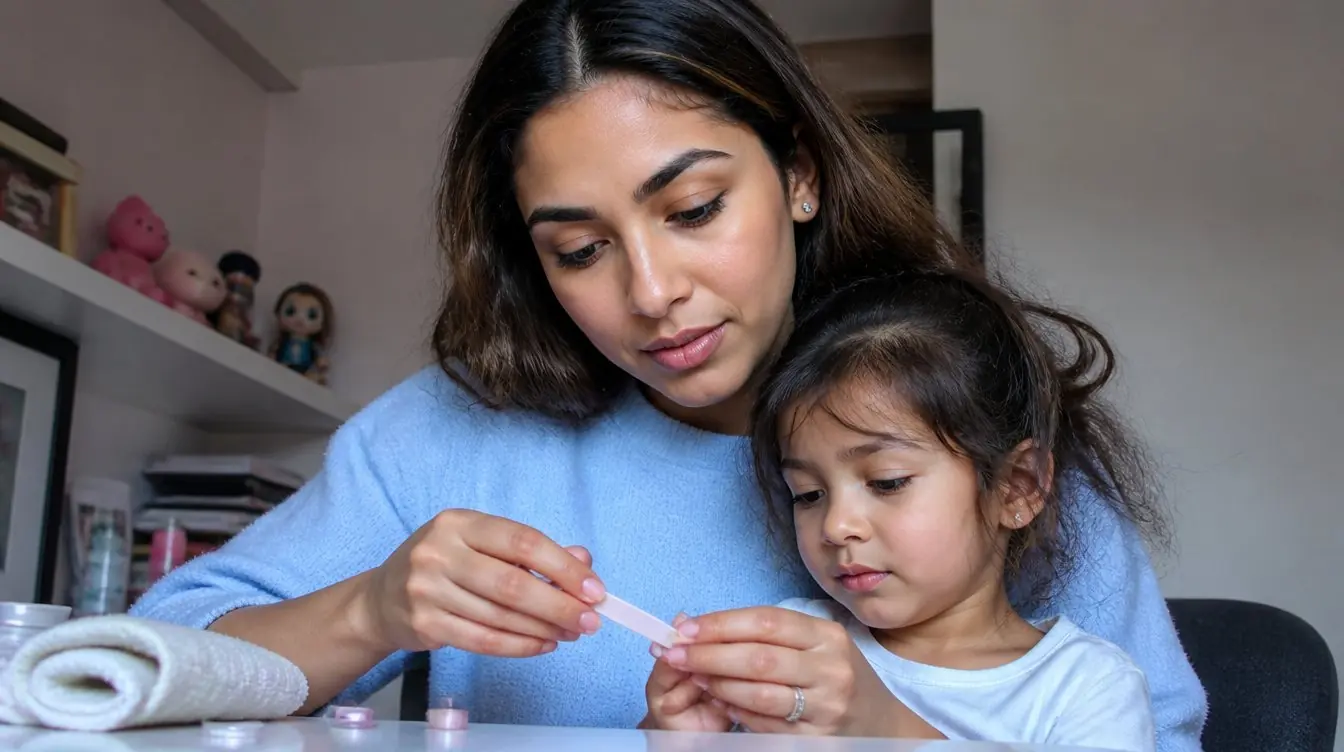
Seat the child comfortably in your lap or at a table across from you. Hold the child’s hand with your non-dominant hand and gently press the fingertip pad down and away from the nail. This action exposes the full nail edge clearly and creates a visible gap between the fingertip skin and the tool, substantially reducing the risk of accidentally cutting skin.
Cut in a single, smooth, confident motion straight across the nail. Do not saw back and forth. Leave a thin sliver of white nail visible beyond the nail bed. Cutting into the pink portion of the nail increases pain risk, bleeding risk, and infection risk significantly. Work through all fingers before moving to filing.
For a naturally curved fingernail shape, make two small angled cuts: one on each side of the nail, meeting at the centre tip. This technique avoids creating a sharp central point while still following the natural curve of the fingertip. It produces a cleaner result than trying to cut the entire curve in one motion with a small-jaw clipper.
Filing, Finishing, and Moisturizing
Filing removes micro-sharp edges that remain after cutting and smooths any irregular spots left by the clipper blade. Hold the glass file at a gentle 45-degree angle to the nail edge. Use smooth, deliberate strokes moving from the outer edge toward the centre. Avoid sawing back and forth, as this weakens the nail structure over time and can cause fraying at the nail tip.
After filing, run the pad of your thumb gently across each nail edge. Any sensation of sharpness means that edge needs one or two additional filing strokes. A properly finished nail feels uniformly smooth with no points or rough patches.
Apply a small amount of child-safe, fragrance-free moisturiser to the cuticle area of each finger after filing. The cuticle forms a waterproof seal between the nail plate and the nail fold, protecting the nail matrix from bacterial entry. Dry, cracked cuticles allow bacteria to enter and can lead to paronychia, a painful and sometimes serious infection of the tissue surrounding the nail. Daily moisturising keeps cuticles intact and resilient.
Trimming Toenails Correctly and Preventing Ingrown Nails
Why Toenail Trimming Requires a Different Approach
Toenail trimming is not simply fingernail trimming applied to a different digit. Toenails are thicker, subjected to constant directional pressure from footwear, and carry a fundamentally different risk profile. Rounding the corners of toenails, which looks neater and mirrors standard fingernail technique, is the single leading cause of ingrown toenails in children.
An ingrown toenail develops when the nail edge grows into the soft tissue on either side of the nail groove. The result is progressive pain, redness, swelling, and often bacterial infection. Children frequently cannot identify the precise source of their discomfort. They may complain of general foot pain, walk with an altered gait, or simply refuse shoes that previously fit comfortably. The big toe is affected in the vast majority of cases.
Tight footwear compounds the problem by compressing the toes and forcing the nail edges into the surrounding tissue even when the trimming technique is correct. Checking that your child’s shoes provide at least one centimetre of space beyond the longest toe is as important as proper trimming technique for preventing ingrown nail recurrence.
The Correct Toenail Trimming Technique
Soften toenails before trimming. A warm bath works well, or soak the feet in a basin of warm water for five minutes. Softened nails respond to the clipper cleanly and with far less applied pressure, reducing the risk of nail plate cracking or splintering during the cut.
Position your child sitting comfortably with their feet resting flat and relaxed on the floor. Hold the toe with your non-dominant hand, pressing the toe pad gently away from the nail edge. Using a toenail clipper with a slightly wider jaw than a fingernail clipper, cut straight across the nail in a single motion. Do not angle the cut at the corners. Do not dig the clipper tip into the corners. Leave the nail edges square.
The finished toenail should be straight across with square corners, should not extend visibly beyond the tip of the toe, and should not be cut shorter than the toe tip. After cutting, file the cut edge lightly to remove any sharpness, but do not shape or round the corners during filing.
Treating Early-Stage Ingrown Toenails at Home
Caught early before infection develops, an ingrown toenail can often be resolved at home. Soak the affected foot in warm water with a small amount of non-iodised salt for fifteen minutes, three times daily. Soaking softens the surrounding skin and reduces acute inflammation, making the next step easier and less uncomfortable.
After soaking, gently lift the ingrown nail edge with a clean, folded piece of cotton or a small piece of unwaxed dental floss. Tuck it carefully just above the skin surface at the ingrown corner. Secure the cotton with a small adhesive bandage. Repeat this process after each soak. This technique, called nail bracing or nail packing, redirects the growing nail edge away from the skin rather than into it.
Do not cut deeper into the nail corner to free the ingrown portion. This approach provides brief temporary relief but worsens the underlying problem by creating a shorter, sharper nail edge that re-enters the skin faster during the next growth cycle. If the area becomes red, warm, significantly swollen, or produces any discharge, seek medical evaluation promptly. Infected ingrown toenails in children require antibiotic treatment and sometimes minor surgical intervention to remove the offending nail edge.
Common Nail Conditions in Children and How to Address Them
Nail Biting and Picking: Causes, Consequences, and Solutions
Nail biting (onychophagia) affects approximately 30 to 40 percent of children between ages seven and ten and peaks during early adolescence before declining in most individuals. The behaviour is most commonly linked to anxiety, boredom, or ingrained habit rather than any underlying psychological pathology.
The health consequences extend well beyond cosmetic damage. Nail biters experience higher rates of paronychia because biting damages the cuticle barrier that normally protects the nail matrix from bacteria and fungi. Children who bite their nails also introduce the pathogens living beneath their nails directly into their mouths, measurably increasing gastrointestinal illness rates. Chronic nail biting can also damage the nail matrix, producing permanently irregular nail growth.
Addressing nail biting requires identifying the trigger. If the behaviour intensifies during stressful periods such as school transitions or family changes, addressing the underlying anxiety is the most effective intervention. For habitual biters without identifiable anxiety, bitter-tasting nail deterrent polish applied to nail edges can break the unconscious habit loop. Maintaining very short nails also reduces the available nail surface for biting and removes the tactile reinforcement of the habit.
Fungal Nail Infections: Recognition and Treatment
Fungal nail infections (onychomycosis) are less common in children than in adults but do occur with meaningful frequency, particularly in children who use shared swimming facilities or locker rooms. The infection typically begins as a white or yellow patch of discolouration at the free nail edge, progressing inward toward the nail root. The nail may gradually thicken, become brittle, and begin separating from the nail bed in more advanced cases.
The most common causative organism is Trichophyton rubrum, the same fungal species responsible for athlete’s foot. Children who walk barefoot in shared wet areas, share nail tools with an infected person, or share socks and shoes are at elevated risk. A child who has athlete’s foot that goes untreated can spread the infection from their skin to their toenails over time.
Treatment requires oral antifungal medication in most cases, since topical agents penetrate nail tissue poorly and rarely eradicate infection in the nail bed. A paediatrician must confirm the diagnosis by sending a nail clipping for laboratory culture before prescribing systemic antifungals. Treatment courses typically run six weeks to three months depending on severity. Prevention centers on consistent use of footwear in shared wet areas and never sharing personal footwear or nail tools.
Other Nail Conditions Worth Recognizing
Paronychia presents as a painful, red, warm, swollen area around the nail fold. Acute paronychia is usually bacterial in origin and responds to regular warm soaks and a short course of appropriate antibiotics. Chronic paronychia often has a fungal component and requires antifungal treatment alongside strict avoidance of prolonged moisture exposure.
Nail pitting, small rounded depressions scattered across the nail surface, is associated with psoriasis and alopecia areata in children. A child with significant nail pitting warrants dermatology evaluation. The pitting itself does not require local treatment, but it serves as a diagnostic clue to underlying conditions that may benefit from systemic management.
Beau’s lines (horizontal ridges crossing the full width of the nail) indicate that nail matrix activity was interrupted by illness, nutritional stress, or physical trauma during the growth period when that portion of the nail was formed. A single Beau’s line in an otherwise healthy child who recently recovered from a high fever is generally not concerning. Multiple lines, or lines recurring across repeated growth cycles, suggest a pattern worth investigating with the child’s paediatrician.
Nail Polish and Products: What Is Safe for Children’s Nails
Regular Polish Versus Child-Safe Formulas
Standard nail polish contains several chemicals of concern when used on children. The three most commonly cited are toluene (a solvent), dibutyl phthalate, or DBP (a plasticiser classified as an endocrine disruptor), and formaldehyde (a carcinogen and potent sensitiser). These chemicals are present in traditional nail polish formulas to improve durability, flexibility, and adhesion.
Children’s skin is more permeable than adult skin, and children inhale a proportionally higher volume of air relative to their body weight. Both factors increase exposure to volatile chemicals from nail products. The inhalation route is particularly significant because young children often hold their hands close to their faces and breathe in vapours directly during and after application.
Child-safe nail polishes labelled “3-free”, “5-free”, or “10-free” have progressively removed identified hazardous chemicals from their formulas. Water-based nail polishes go further by replacing the entire conventional solvent system with water, virtually eliminating volatile organic compound exposure. These polishes are the safest option for children and are widely available in bright, age-appropriate colours that children genuinely enjoy.
Gel, Acrylic, and Dip Products: Why Children Should Avoid Them
Gel nail polish requires curing under a UV or LED lamp. While the UV exposure per session is brief, it accumulates over repeated applications. Dermatologists have raised formal concerns about UV-induced DNA damage in nail-adjacent skin with regular gel-curing exposure, particularly for individuals who begin this exposure during childhood when the immune system is still developing its full range of protective responses.
Acrylic nail systems involve applying a combination of liquid monomer and polymer powder that hardens into an artificial nail extension. The liquid monomer, typically ethyl methacrylate or methyl methacrylate, is a potent contact sensitiser. Children exposed to methacrylates during early immune development carry a significantly elevated risk of developing a permanent contact allergy to this chemical class. That allergy can later prevent them from tolerating dental composite bonding agents and certain medical adhesives, creating problems that extend far beyond cosmetics.
Dip powder systems use a cyanoacrylate adhesive to bind coloured powder to the nail surface. Cyanoacrylates can produce chemical burns on direct skin and mucous membrane contact. The filing and buffing steps required during application and removal generate fine particulate matter that poses inhalation risks, particularly for children who are closer to the work surface. None of these systems, gel, acrylic, or dip, are appropriate for children’s natural nails at any age.
Safe Application and Removal of Child-Appropriate Polish
When applying water-based or 5-free polish on your child, always work in a well-ventilated space. Open windows and position a small fan to direct air away from the child’s face rather than toward it. Work efficiently to minimise the total vapour exposure time during application.
Apply polish in thin coats. Thin coats dry faster, produce less cumulative vapour, and chip less than thick coats, which remain tacky and fragile for longer. Allow each coat to dry completely before applying the next. Two thin coats always outperform one thick coat in both durability and safety.
Remove polish exclusively with an acetone-free nail polish remover. Acetone dries the nail plate and surrounding skin significantly, and this drying effect is more pronounced on the thinner, more porous nails of children. Acetone-free removers use ethyl acetate as the active solvent and are substantially gentler on young nails and cuticles. Immediately after removal, apply a small amount of fragrance-free moisturiser to the nails and cuticles to replace the natural oils stripped by the removal process.
Nutrition, Hydration, and Long-Term Nail Health in Children
The Key Nutrients That Build Strong Nails
Nails are composed primarily of keratin, a fibrous structural protein assembled from amino acids. The strength, flexibility, growth rate, and overall quality of a child’s nails reflect their nutritional status more directly than most other visible tissues because the nail matrix is continuously producing new cells and requires a consistent, reliable supply of building materials.
Protein is the foundational requirement. Children with inadequate dietary protein produce brittle, slow-growing nails that peel and break easily. Varied protein sources including eggs, dairy products, legumes, fish, and lean meat provide the full amino acid spectrum the nail matrix requires.
Biotin (vitamin B7) supports keratin synthesis and is the most widely recognised nail-specific nutrient. Most children obtain adequate biotin from a varied diet. Rich food sources include eggs, nuts, seeds, and whole grains. Biotin deficiency is uncommon but presents clinically with brittle, thinning nails and hair. Iron supports oxygen delivery to the nail matrix; deficiency causes pale, fragile, or spoon-shaped nails. Zinc supports active cell division in the nail matrix; deficiency produces white spots and slowed growth. Calcium contributes to nail hardness, while silica, found in oats, bananas, and green beans, supports the collagen framework that underlies nail plate structure.
Hydration and Moisturizing for Resilient Nails
The nail plate contains approximately 18 percent water by weight when healthy. When that water content drops below a critical threshold, nails become brittle and prone to horizontal splitting, a condition called onychoschizia. Children who spend extended time in heated indoor air or who frequently wet and dry their hands without subsequent moisturising lose nail moisture faster than their bodies can replace it.
Encourage adequate fluid intake throughout the day. General guidelines suggest approximately 1.5 to 2 litres of total fluid daily for school-age children from all sources, including food. Well-hydrated children consistently show more flexible, resilient nails than those with chronic mild dehydration.
Apply a light, fragrance-free moisturiser to your child’s hands and cuticles after handwashing, after bathing, and after every nail-trimming session. The cuticle is the critical waterproof seal between the nail plate and the nail fold. Cracked, dry cuticles admit bacteria and fungi and substantially increase infection risk. A simple daily moisturising habit maintains cuticle integrity and costs almost nothing in time or money.
Habits That Damage Nails and How to Correct Them
Prolonged water exposure from frequent handwashing or extended baths without subsequent moisturising causes repeated cycles of nail plate swelling and shrinking, which progressively weakens the nail structure. This pattern is particularly common in children who swim competitively or frequently. The resulting horizontal nail splitting can be prevented by applying a barrier moisturiser before swimming and reapplying immediately after drying off.
Using nails as tools to peel stickers, open packages, or scratch surfaces applies lateral force that the nail plate is not structurally designed to handle. This force causes splitting and can traumatise the nail matrix, leading to irregular growth patterns. Teaching children to use their fingertip pads for these tasks rather than their nails protects nail integrity over time.
Tight footwear compresses toenails and redirects their growth path toward the nail walls. Check your child’s shoe fit every three months for children under five years old and every six months for older children. Shoes should provide at least one centimetre of space beyond the longest toe. Breathable shoe materials reduce the moisture accumulation inside footwear that favours fungal colonisation of toenails.
Frequently Asked Questions About Nail Care for Children
How often should I trim my child’s fingernails and toenails?
Fingernails on children grow faster than on adults and typically require trimming every seven to ten days. Toenails grow much more slowly and usually need trimming every two to four weeks. However, every child grows at a slightly different rate. A more reliable approach than following a fixed calendar is to trim whenever you notice a nail extending visibly beyond the fingertip or when edges begin to feel rough to the touch. Post-bath trimming works well because the nail plate is softer and easier to cut cleanly at that point. Building a consistent weekly habit of checking nails, even if you do not trim every time, ensures you catch nails before they become problematically long.
Is it safe to use nail polish on a toddler or young child?
Standard nail polish formulas are not recommended for young children due to the presence of toluene, DBP, formaldehyde, and other volatile chemicals. However, water-based or “5-free” nail polishes remove the primary chemicals of concern and are considered safe for occasional use on children old enough to keep their hands still during drying. Always apply in a well-ventilated area, use thin coats, and remove with an acetone-free remover. Avoid gel, acrylic, and dip systems entirely for children, as these involve UV exposure, strong sensitising chemicals, and application processes that pose risks disproportionate to any cosmetic benefit. There is no established safe age for standard nail polish, but many parents wait until their child is at least three to four years old and can understand instructions to keep their hands away from their mouth during drying.
My child bites their nails constantly. What should I do?
Start by observing when the biting occurs. If it spikes during identifiable stressful situations (new school, family changes, academic pressure), the nail-biting is functioning as a self-soothing mechanism, and the underlying stress is the appropriate target for intervention. Talking with your child’s paediatrician or a child therapist may help. For habit-based biting without a clear anxiety driver, bitter-tasting nail deterrent polish applied to the nail edges can interrupt the unconscious habit loop effectively. Keeping nails very short also removes the physical reinforcement of the habit. Positive reinforcement for days without biting, such as a small reward or verbal praise, helps establish new patterns. Avoid shame or punishment, as these responses increase anxiety and typically worsen the biting behaviour. Most children naturally reduce or stop nail-biting as they move through adolescence.
What are the signs that my child has a nail infection?
The signs of a nail infection depend on the type of infection present. Bacterial paronychia presents as redness, warmth, swelling, and tenderness around the nail fold, often with a small collection of pus visible beneath the cuticle. The area may throb, and the child may resist having the finger touched. Fungal nail infection presents more gradually: a white, yellow, or brown discolouration typically begins at the free nail edge and spreads slowly inward. The nail may become thicker and more brittle and may begin to separate from the nail bed. A fungal infection in the skin between the toes (athlete’s foot) that spreads to the toenails is common in children who use shared swimming facilities. Any nail that appears significantly discoloured, thickened, crumbling, or separated from the nail bed warrants a visit to the paediatrician for proper diagnosis and treatment. Do not attempt to treat a suspected fungal nail infection with over-the-counter topical antifungals without a confirmed diagnosis, as these products are frequently ineffective for nail infections and may delay appropriate treatment.
Can my child’s diet affect the health and quality of their nails?
Yes, directly and visibly. Nails are composed of keratin produced by the nail matrix, and the matrix requires consistent nutritional input to generate strong, healthy nail tissue. Protein deficiency produces nails that are brittle, thin, slow-growing, and prone to splitting. Iron deficiency anaemia causes pale nails that may develop a spoon-shaped curvature over time. Zinc deficiency produces white spots and slowed growth. Biotin deficiency, though less common, results in brittle nails and hair. Severe dehydration causes dry, splitting nails regardless of other nutritional factors. A child eating a varied, balanced diet that includes quality protein sources, iron-rich foods, dairy or calcium alternatives, nuts, seeds, and adequate fruits and vegetables is unlikely to show nutritional nail deficiencies. If you notice persistent nail changes that do not resolve with improved nutrition and good nail care habits, ask your child’s paediatrician to check ferritin, zinc, and complete blood count levels to rule out underlying deficiency.
Conclusion
Healthy nails in children are the result of three things working together: consistent trimming technique, good nutrition, and the right product choices. Neither aspect alone produces reliably strong, clean nails. Together, they create a foundation that protects your child from infection, injury, and discomfort throughout their growing years.
The most important takeaways are these. Trim fingernails straight across with rounded tips every seven to ten days and toenails straight across with square corners every two to four weeks. Use the smallest, sharpest tool appropriate for your child’s age. File after every trim. Moisturise cuticles daily. Feed your child varied, nutrient-dense meals that include adequate protein, iron, and zinc. Choose water-based or 5-free polish for cosmetic use and avoid gel, acrylic, and dip systems entirely. Watch nails regularly for colour, texture, or shape changes that might signal an underlying health issue.
Your next step is simple. Set a recurring reminder on your phone for every eight days to check your child’s fingernails. Pair it with bath time and the routine becomes nearly automatic. Add a bottle of fragrance-free hand cream to the bathroom shelf where your nail tools live. These two small changes implement the majority of what this guide covers and will produce visible results in your child’s nail health within weeks.
RELATED ARTICLES:
Trendy Wedding Nails 2026: The Ultimate Guide to Fashionable Bridal Manicures
How to Care for Your Nails in Winter: Tips for Healthy, Beautiful Nails During the Cold Months
The Influence of Celebrity Nail Trends: Uncovering the Power of A-List Manicures
Say Goodbye to Brittle Nails Forever: The Ultimate Guide to Strong, Healthy Nails
Halloween nails: 5 easy and simple ideas step by step
The honest takeaway on nail care for children: results come from consistency, not complexity. Build a few of these habits into your weekly rhythm, give your skin a real four-week window to respond, and nail care for children becomes second nature rather than another thing on the to-do list.
About The Author

COMMENTS