



Eggs for skin and hair sound like a pantry trick from a grandparent, and the science actually backs more of the folklore than dermatologists used to a
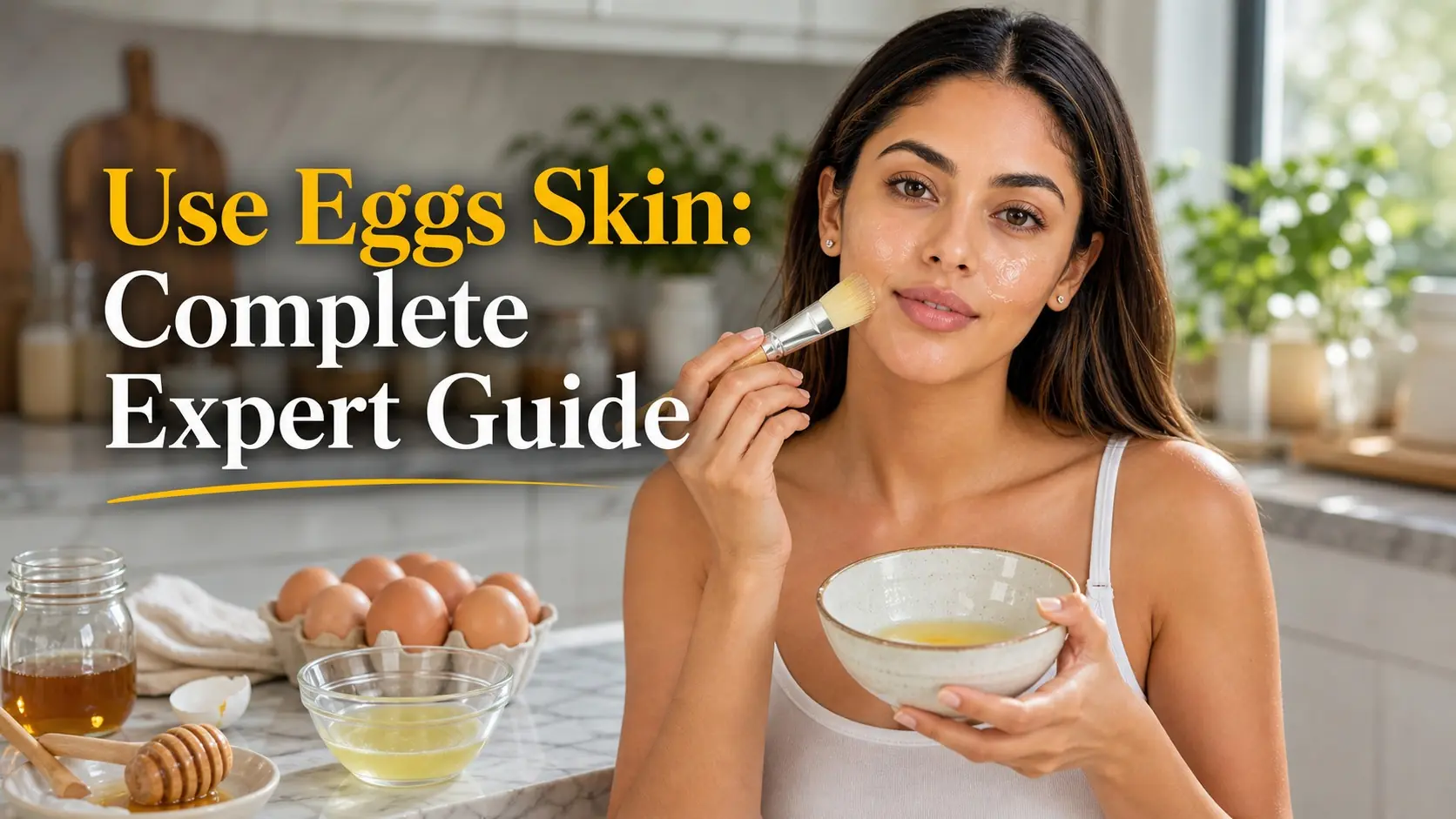
Eggs for skin and hair sound like a pantry trick from a grandparent, and the science actually backs more of the folklore than dermatologists used to admit. Eggs deliver protein, biotin, and barrier-supporting lipids that absorb into both skin and hair shafts when applied correctly. This guide walks through eggs for skin and hair in 7 DIY masks, with the specific ratios for whites versus yolks, the right frequency, and the rinse technique that prevents the texture problem most people warn about.
Published · Updated
How to Use Eggs for Beautiful Skin and Hair
Eggs sit in nearly every kitchen in the world. Most people crack them into a pan without a second thought. But for centuries, women across Asia, the Middle East, and Europe have used eggs as a core beauty treatment, long before serums and sheet masks existed. The reason is straightforward: eggs contain a concentrated blend of proteins, fats, vitamins, and minerals that skin and hair genuinely need. When you use eggs for skin and hair care, you access one of the most complete natural ingredients available at a fraction of the cost of most commercial products. This article covers the full science of why eggs work, step-by-step masks for every skin type, targeted hair treatments, safe application methods, and the most common mistakes that reduce results. Whether you are brand new to natural beauty or looking to deepen an existing routine, this guide gives you practical, evidence-backed methods you can start using today. A detailed FAQ section at the end answers the questions most women ask before trying egg treatments for the first time.
The Science Behind Egg Nutrition for Skin and Hair
The detail most guides skip on eggs for skin and hair: results compound only when small habits stack. Two careful choices today are worth more than ten half-followed ones, and eggs for skin and hair reward consistency over weeks, not chasing a single perfect product.
Understanding what is inside an egg explains why it works so well as a topical treatment. Eggs are not a single ingredient. They are a complex food made of two distinct components, the white and the yolk, each with its own nutrient profile and specific beauty benefits.
Proteins and Amino Acids
Eggs are one of the most protein-dense foods on earth. A single large egg contains about 6 grammes of high-quality protein. That protein is built from over a dozen individual proteins, including ovalbumin, ovotransferrin, ovomucoid, and lysozyme in the white and lipoproteins and phosvitin in the yolk.
When applied to skin, these proteins form a temporary film over the surface. This film tightens the skin, reduces pore visibility, and creates a smoother texture. Albumin, the most abundant egg white protein, is especially effective at this task. It contracts as it dries, producing the tightening sensation you feel when an egg white mask hardens on your face.
For hair, protein matters even more. Hair strands are made primarily of keratin, a structural protein. Heat styling, chemical treatments, and environmental exposure break down keratin over time, leaving hair porous, brittle, and prone to breakage. Egg proteins penetrate the hair shaft and temporarily fill gaps in the cuticle, restoring strength and reducing frizz. This is called a protein treatment, and eggs deliver it at almost zero cost.
The amino acids in eggs also support collagen synthesis. Glycine, proline, and hydroxyproline are the key building blocks of collagen. Eggs provide all three. While topical application does not dramatically boost collagen production, the amino acids do support surface repair and barrier function. Consistent use over time compounds these benefits.
Vitamins and Their Roles
Eggs contain a broad range of vitamins directly relevant to skin and hair health. Vitamin A, found in egg yolks, supports cell turnover. It helps the skin shed dead cells and produce new ones. This is why retinol, a derivative of vitamin A, is one of the most studied anti-ageing ingredients in modern dermatology.
Vitamin D is synthesised in the skin when exposed to sunlight, but it can also be absorbed topically. Egg yolks contain small amounts of vitamin D, which plays a role in skin cell growth and repair. Research has linked vitamin D deficiency to dry skin, psoriasis, and delayed wound healing.
The B-complex vitamins in eggs deserve particular attention. Biotin, also known as vitamin B7, is directly involved in keratin production. A biotin deficiency causes hair thinning, brittle nails, and dry skin. Niacin (B3) supports the skin barrier by increasing ceramide synthesis and reducing water loss through the skin surface. Pantothenic acid (B5) has proved moisturising and healing properties and is used in many commercial moisturisers under the name panthenol.
Vitamin E, concentrated in egg yolks, acts as an antioxidant on the skin surface. It neutralises free radicals generated by UV exposure and pollution, protecting the skin from oxidative stress that accelerates visible aging.
Minerals That Support Beauty
Eggs supply several minerals critical to skin and hair health. Zinc helps regulate sebum production, making it valuable for oily and acne-prone skin. It also plays a role in wound healing and reducing inflammation. Studies have shown that people with acne-prone skin often have lower zinc levels than those with clear skin.
Selenium acts as an antioxidant alongside vitamin E, protecting skin cells from UV-induced damage and supporting the repair of oxidised lipids in the skin barrier. Iron is essential for oxygen delivery to skin cells and hair follicles. Low iron levels are one of the most common causes of hair loss in women, particularly those of reproductive age.
Sulphur, present in egg yolk, supports keratin synthesis and gives hair its structural integrity. Many traditional hair treatments in South Asia include sulphur-rich ingredients, such as onion and egg, specifically to strengthen the hair shaft. This is not a coincidence. It is chemistry.
How to Use Eggs for Skin: Full Benefits Breakdown
The two parts of an egg serve different purposes in skin care. Using both effectively requires knowing which to apply and when. Skin type is the starting point for every decision here.
Hydration and Moisture Retention
The egg yolk is the moisturising component. It contains lecithin, a phospholipid that acts as both an emulsifier and a humectant. Lecithin binds water to the skin surface and slows evaporation, reducing moisture loss throughout the day. This is why yolk-based masks feel rich and nourishing rather than tight or drying.
The fatty acids in egg yolk, particularly oleic acid and linoleic acid, closely mimic the skin’s natural sebum. They soften and condition the skin without clogging pores. Linoleic acid is especially valuable for dry or compromised skin barriers because it replenishes the ceramide layer, the outermost protective seal of the epidermis.
Women with dry, flaky, or mature skin see the most immediate results from yolk-based masks. Skin feels plumper and softer after a single application. Repeated use over several weeks can meaningfully improve the skin’s ability to hold moisture between treatments.
Skin Tightening and Pore Minimization
Egg whites work differently. They are low in fat and high in protein, making them well-suited for oily and combination skin. When egg white is applied to the face and allowed to dry fully, the proteins contract and pull the skin surface taut. This temporarily tightens the skin and reduces the visible size of pores.
Pores do not actually open and close. They are fixed structures. However, they appear larger when stretched by excess oil and debris. Egg white protein absorbs surface oil and pulls some of that debris away when the mask is rinsed or peeled off, making pores appear smaller and less prominent.
The astringent effect also reduces the oily shine many women experience across the T-zone. For women dealing with large-looking pores or persistent midday shine, a weekly egg white mask delivers results without irritation and without any chemical actives.
Acne Control and Blemish Healing
Lysozyme, an antimicrobial enzyme in egg white, inhibits the growth of certain bacteria on the skin surface. While it is not a substitute for prescribed acne treatment, it provides mild antibacterial action that can reduce the bacterial load contributing to breakouts.
The sebum-absorbing properties of egg white also reduce the conditions that allow acne to form. Excess oil feeds the bacteria responsible for acne lesions. Removing that oil disrupts the cycle. Zinc in the yolk adds anti-inflammatory action, calming redness and swelling around existing blemishes.
Vitamin A supports faster cell turnover, which helps fade post-acne marks more quickly. Regular use of yolk-based masks can reduce hyperpigmentation left by healed breakouts. This is a gradual process that rewards patience and consistency over four to eight weeks.
How to Use Eggs for Skin: Face Masks for Every Type
Worth pausing on with eggs for skin and hair: the products matter less than the order and timing. The same shelf can deliver visible eggs for skin and hair results or flat ones, depending on the layering.
Making egg masks at home requires minimal equipment and no special skills. The key is matching the mask to your skin type and applying it with the right technique. These are the three foundational masks every beginner should know.
Egg White and Honey Mask for Oily and Combination Skin
Honey is a natural humectant with well-documented antibacterial properties. It complements egg whites by adding moisture back to the skin while the egg whites draw out oil. Together they balance the skin without over-drying it.
Ingredients:
- 1 egg white
- 1 teaspoon raw honey
Method:
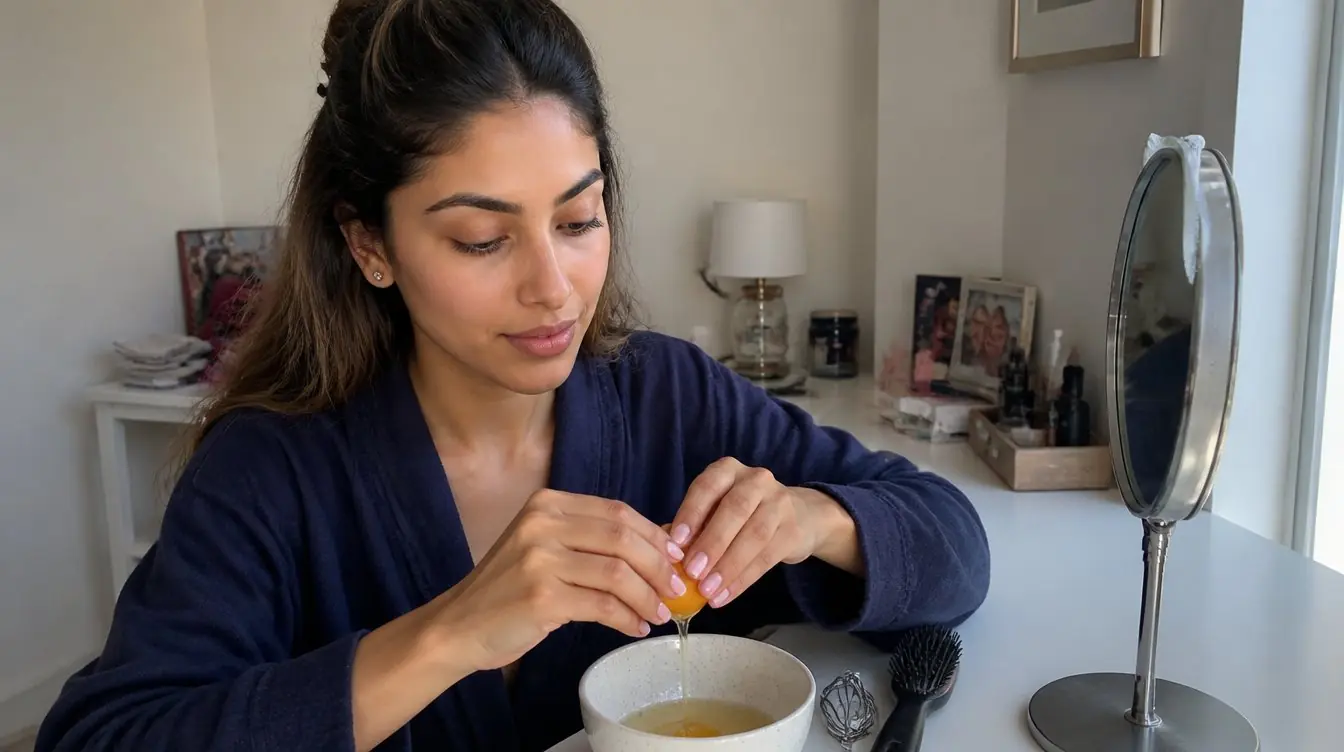
- Separate the egg white from the yolk and place it in a clean bowl.
- Whisk the egg white until frothy and slightly foamy.
- Add the honey and mix until the texture is uniform.
- Cleanse your face and pat it dry before applying.
- Apply the mixture evenly with clean fingertips or a brush, avoiding the eye area and lips.
- Leave the mask on for 15 to 20 minutes.
- Rinse with lukewarm water, then follow with a lightweight moisturiser.
The egg white tightens and mattifies the skin. The honey locks in moisture and calms minor inflammation. Use this mask two to three times per week. After four consistent weeks, most women notice smaller-looking pores and reduced oiliness throughout the day.
Egg Yolk and Avocado Mask for Dry and Mature Skin
Dry and mature skin needs fat, not the tightening action of protein. This mask pairs egg yolk with avocado, which is rich in oleic acid, vitamin E, and beta-sitosterol. The combination delivers deep hydration and antioxidant protection simultaneously.
Ingredients:
- 1 egg yolk
- Half a ripe avocado, mashed to a smooth paste
- 1 teaspoon olive oil (optional, for very dry skin)
Method:
- Mash the avocado until completely smooth with no lumps.
- Add the egg yolk and olive oil, if using.
- Stir until the mixture is a consistent paste.
- Apply a generous layer to clean, dry skin.
- Leave it on for 20 minutes.
- Rinse with lukewarm water. Avoid hot water, which strips the nourishing oils this mask deposits.
This mask delivers intense hydration. Skin feels noticeably softer and more supple immediately after rinsing. It is especially effective as a weekly treatment during winter months when central heating and cold air strip moisture from the skin.
Egg White and Lemon Mask for Brightening
Lemon juice contains citric acid, a natural alpha-hydroxy acid that gently exfoliates the surface layer of dead skin cells. Combined with egg white, this mask brightens dull skin and reduces the appearance of dark spots and uneven tone over time.
Ingredients:
- 1 egg white
- 1 teaspoon freshly squeezed lemon juice
Method:
- Whisk the egg white until frothy.
- Add the lemon juice and mix well.
- Apply to cleansed skin and allow to dry for 10 to 15 minutes.
- Rinse with cool water.
- Apply an SPF moisturiser afterwards, as citric acid increases photosensitivity.
Use this mask no more than once a week. People with sensitive skin should dilute the lemon juice further or skip it and choose a gentler brightening option. Always apply sunscreen after any AHA-containing treatment to protect the freshly exfoliated skin surface.
Advanced Egg Skin Treatments for Targeted Results
Beyond the three foundational masks, eggs combine with other ingredients to target specific skin concerns with greater precision. These advanced recipes suit women who already have a basic egg mask routine and want to address particular issues.
Egg and Turmeric Mask for Brightening and Anti-Inflammation
Turmeric contains curcumin, a potent anti-inflammatory and antioxidant compound. Research has shown that curcumin inhibits the enzyme tyrosinase, which drives melanin production. This makes turmeric an effective ingredient for reducing hyperpigmentation and evening skin tone, particularly for women prone to sunspots or post-acne marks.
Ingredients:
- 1 egg white
- Half a teaspoon ground turmeric
- 1 teaspoon plain yogurt
Method:
- Mix all ingredients until smooth.
- Apply to the face and neck and leave on for 15 minutes.
- Rinse thoroughly with warm water and follow with a toner if any yellow tint remains.
Turmeric can temporarily stain the skin. Rinse thoroughly and follow with a gentle toner if any yellow tint remains. Use once a week. Over consistent weeks of use, this mask visibly reduces redness, dark spots, and uneven tone.
Egg and Oatmeal Mask for Sensitive Skin
Oatmeal contains avenanthramides, compounds that have clinically recognised anti-itch and anti-inflammatory properties. Colloidal oatmeal is recognised as a skin protectant by the FDA. This mask suits rosacea-prone, reactive, or easily irritated skin that cannot tolerate most active ingredients.
Ingredients:
- 1 whole egg
- 2 tablespoons finely ground oats
- 1 teaspoon honey
Method:
- Beat the egg well in a clean bowl.
- Add ground oats and honey and mix until spreadable.
- Apply gently to the face, pressing lightly rather than rubbing.
- Leave on for 15 to 20 minutes, then rinse with cool water while massaging gently.
This is one of the gentlest egg-based treatments available. It soothes irritation, delivers light hydration, and provides mild physical exfoliation during rinsing. Women who react to most commercial masks often tolerate this one well.
Egg and Coffee Scrub for Exfoliation and Circulation
Coffee grounds act as a physical exfoliant. They remove dead skin cells and temporarily stimulate blood circulation, giving the skin a brighter and more awake appearance immediately after use. Caffeine has mild vasoconstrictive properties, which can reduce visible puffiness around the face.
Ingredients:
- 1 egg white
- 1 tablespoon used coffee grounds, fully cooled
- Half a teaspoon coconut oil
Method:
- Combine all ingredients.
- Apply to the face in gentle circular motions and leave on for 10 minutes after application.
- Rinse with warm water.
Limit this scrub to once a week. Over-exfoliation damages the skin barrier and increases sensitivity. This treatment works especially well for women in their thirties and forties who notice dullness or uneven texture where they once had none.
How to Use Eggs for Hair: Benefits and Science
Hair treatments are where eggs often produce their most noticeable and rapid results. The structural similarity between egg proteins and hair keratin means eggs are exceptionally well-suited to repair and maintenance treatments.
Protein Treatments for Chemically Damaged Hair
Chemical processes including bleaching, perming, and relaxing break the disulphide bonds within the keratin structure of the hair shaft. This makes hair porous, meaning it absorbs moisture quickly but loses it just as fast. The result is frizzy, dull, breakage-prone hair that does not hold styles well.
Egg proteins partially fill these structural gaps. They smooth the cuticle surface and reduce porosity, producing more manageable hair with less frizz and better moisture retention. Studies on cosmetic protein treatments confirm that hydrolysed proteins from egg, wheat, and soy penetrate the hair shaft and rebuild its structure at least temporarily.
Using a whole egg treatment once every two weeks maintains this structural support and slows further degradation between salon visits or chemical processes.
Scalp Health and Sebum Regulation
The scalp is made of skin, and many of the principles that apply to facial skin also apply to the scalp. Egg white absorbs excess sebum from the scalp, reducing the greasy buildup that blocks follicle openings over time. A chronically clogged follicle produces a thinner and weaker hair strand with each successive growth cycle.
Zinc in eggs supports healthy sebum regulation by inhibiting 5-alpha reductase, an enzyme involved in converting testosterone to DHT. Elevated DHT activity is linked to androgenetic hair thinning in both men and women. While dietary zinc has a stronger effect than topical application, scalp-applied egg treatments still contribute meaningfully to this regulatory process.
For women with an oily scalp and fine hair, egg white treatments applied directly to the roots before shampooing can reduce between-wash greasiness and temporarily add volume by mattifying the scalp surface.
Shine, Softness, and Frizz Reduction
Egg yolk is rich in lecithin, which conditions the hair shaft and adds glossy shine. When lecithin coats the cuticle, it reflects light more evenly, producing the high-shine effect associated with healthy hair. This is precisely why lecithin appears as a primary ingredient in many commercial conditioning treatments and hair glosses.
The fatty acids in egg yolk, particularly linoleic and oleic acids, also reduce hygral fatigue. This condition is the cumulative damage caused by the hair shaft repeatedly swelling with water during washing and contracting as it dries. Hair that undergoes less swelling per wash cycle is stronger, less prone to breakage, and noticeably smoother to the touch.
DIY Egg Hair Masks and Treatments
Egg hair masks are simple to prepare and highly adaptable. Choosing the right mask depends on your hair type, whether oily, dry, damaged, or colour-treated, and your primary concern at the moment.
Full Egg Mask for Normal to Damaged Hair
Using the whole egg delivers both protein and moisture in one treatment. This is the best starting point for most women and covers a broad range of hair concerns simultaneously.
Ingredients:
- 2 whole eggs (add one extra for hair longer than shoulder length)
- 1 tablespoon olive oil
- 1 tablespoon plain full-fat yogurt
Method:
- Beat the eggs thoroughly in a bowl.
- Add olive oil and yoghurt and mix until smooth.
- Apply to dry or slightly damp hair, starting at the roots and working to the tips.
- Cover with a shower cap and leave on for 30 minutes.
- Rinse first with cool water, then shampoo as normal.
Cool water is essential during the first rinse. Hot water cooks the egg proteins, causing them to coagulate and stick to the hair shaft. This creates a gummy residue that is very difficult to remove and can worsen the condition of the hair. Always start with a cool rinse before introducing any warmth.
Egg White and Yogurt Mask for Oily Scalp and Fine Hair
Yoghurt contains lactic acid, a gentle AHA that removes dead skin cells and product build-up from the scalp without disrupting the follicle. Together with egg white, it creates a clarifying treatment that removes excess oil and adds lightweight volume to flat, fine hair.
Ingredients:
- 2 egg whites
- 3 tablespoons plain Greek yogurt
- 1 teaspoon apple cider vinegar
Method:
- Mix all ingredients until uniform.
- Apply directly to the scalp and roots, massaging gently for two minutes.
- Extend any remaining mixture through the mid-lengths if needed.
- Leave on for 20 minutes, then rinse with cool water and shampoo once.
Apple cider vinegar restores the scalp’s natural acid mantle, which many commercial shampoos disrupt. It seals the cuticle after the treatment, enhancing shine and reducing frizz. Use this mask once a week for consistent oily scalp management.
Egg Yolk and Olive Oil Mask for Dry and Brittle Hair
This mask is the most intensive moisturising treatment in this guide. It suits women with very dry, coarse, or heat-damaged hair that lacks elasticity and breaks easily when brushed or styled.
Ingredients:
- 2 egg yolks
- 2 tablespoons olive oil
- 1 tablespoon honey
- 1 tablespoon coconut milk
Method:
- Whisk the egg yolks until smooth.
- Add olive oil, honey, and coconut milk.
- Blend until the mixture is fully combined.
- Apply generously from mid-shaft to ends, avoiding the scalp unless it is also dry.
- Cover with a shower cap and wrap in a warm towel for 30 to 45 minutes.
- Rinse with cool water and follow with a light conditioner.
The warm towel creates gentle heat that encourages the cuticle to open slightly, allowing the fatty acids and lecithin to penetrate more deeply. Women who use this treatment every two weeks for two months consistently report significantly less breakage and a meaningful increase in softness and elasticity.
How to Apply Egg Treatments Safely and Effectively
Getting the most from egg treatments requires more than mixing and applying. Application technique, timing, frequency, and aftercare all affect your results. Skipping any of these steps reduces the benefit.
Patch Testing and Allergy Awareness
Egg allergy is one of the most common food allergies globally. It affects children most frequently, but a meaningful number of adults also experience reactions. Skin contact with egg protein can trigger contact dermatitis or, in rare cases, a more serious systemic reaction.
Before using any egg-based treatment for the first time, perform a patch test. Apply a small amount of the prepared mask to the inside of your wrist or behind your ear. Leave it for 20 to 30 minutes. If redness, itching, swelling, or hives develop, wash the area immediately and do not proceed with the full application. If you have a known egg allergy, avoid topical egg treatments entirely.
Raw eggs carry a small risk of salmonella contamination. While skin contact is far lower risk than ingestion, avoid applying raw egg near open wounds or broken skin. Wash hands thoroughly before and after handling raw eggs.
Application Tips for Maximum Results
Start with clean skin or hair for every treatment. Product residue, dirt, and oil create a barrier that prevents the egg nutrients from reaching the skin surface or hair shaft effectively.
For face masks, use a clean brush or fingertips. Apply in an upward direction to avoid unnecessary downward dragging of the skin. Avoid the eye area, lips, and any areas of broken or irritated skin. Keep the layer thin and even rather than thick and heavy.
For hair masks, apply to dry or slightly damp hair. Dry hair absorbs the treatment more readily than soaking wet hair, which is already saturated with water. Section the hair before applying to ensure full and even coverage from roots to ends.
Use room-temperature eggs for every treatment. Cold eggs from the refrigerator reduce the spreadability of yolk-based mixtures and make the application process uncomfortable.
Frequency and Aftercare
Egg white face masks suit oily skin two to three times per week and normal or combination skin once a week. Egg yolk face masks work best when applied twice a week for dry skin and once a week for normal skin. Whole egg face masks suit most skin types when used once or twice a week.
Egg hair masks should be used once a week for damaged or chemically processed hair and every two weeks for healthy hair as a maintenance treatment.
After any face mask, apply a lightweight moisturiser. Egg white masks feel tight and slightly drying after rinsing, so restoring surface hydration is important. After hair masks, a small amount of leave-in conditioner or lightweight hair oil applied to the ends seals in the treatment benefits and prevents the hair from drying out between washes.
Common Mistakes That Reduce Results
Even the best natural ingredients deliver poor results when applied incorrectly. These are the most frequent errors women make with egg beauty treatments, along with tips on how to avoid each one.
Rinsing with Hot Water
This is the single most common mistake with egg treatments, especially for hair. Hot water causes egg proteins to denature and coagulate. On the hair, the heat creates a sticky, curd-like residue that bonds to the hair shaft and is extremely difficult to remove without aggressive scrubbing. On the face, it causes the mask to clump rather than rinse clean.
Always rinse first with cool water. Once all egg residue is fully removed, you can follow with slightly warmer water if preferred. Never apply hot water to an egg treatment before the egg proteins have been fully rinsed away.
Protein Overload in Hair Treatments
Hair needs a balance of protein and moisture. Too much protein without adequate moisture produces hair that feels stiff, wiry, and brittle, snapping easily at the mid-shaft. This is called protein overload, and it is a real and reversible concern for women who use egg treatments more frequently than their hair type requires.
Fine hair is more susceptible to protein overload than coarse or thick hair. If your hair starts to feel straw-like or breaks more easily after beginning egg treatments, reduce frequency immediately. Focus on deep moisture treatments without protein for two to four weeks before reintroducing egg treatments at a lower frequency.
Mixing Incompatible Ingredients
Some additions commonly suggested in DIY beauty are counterproductive when combined with egg. Baking soda is a frequent example. It has a very high pH that disrupts the acid mantle of both skin and hair. Adding it to an egg mask creates a product that strips the skin barrier and raises the hair cuticle, worsening the exact problems the treatment is meant to solve.
Strong essential oils such as cinnamon, clove, and undiluted tea tree oil can cause chemical burns when applied directly to the face. Always dilute essential oils to a maximum of 1 to 2 percent before adding them to any topical treatment.
Salt should not be added to skin masks. While sodium has uses in certain cleansing products, adding table salt to an egg mask draws moisture out of the skin through osmosis, leaving the complexion drier than before the treatment began.
Frequently Asked Questions
Can I use eggs on my face every day?
Daily use is not recommended for most people. Egg white masks dry out the skin with overuse and can lead to tightness, flaking, and compromised barrier function over time. Egg yolk masks are gentler but can cause the skin to become reliant on external fatty acids rather than regulating its oil production. Two to three times per week is the maximum for egg white treatments. Twice a week is appropriate for yolk-based masks on dry skin. Give the skin recovery time between applications for the best long-term outcomes.
Do egg treatments actually promote hair growth?
Egg treatments support the conditions needed for healthy hair growth rather than directly triggering new follicle activity. Stronger hair breaks less frequently, which means it retains length more effectively over time. Scalp treatments with egg white reduce follicle-blocking sebum build-up, creating a cleaner environment for hair to emerge and grow unobstructed. The biotin and B vitamins in eggs support keratin synthesis at the cellular level. However, if hair loss is significant, sudden, or progressive, consult a dermatologist. Egg treatments alone cannot address hormonal imbalances, nutritional deficiencies, or autoimmune causes of hair loss.
How do I remove the egg smell from my hair after a treatment?
The smell comes from sulphur compounds released when a raw egg contacts warm water. Several strategies reduce it effectively. First, always start with a cool rinse. Second, add a few drops of lavender or rosemary essential oil to your mask before applying. Both are scalp-safe at the proper dilutions and counteract the sulphur odour. Third, use an apple cider vinegar rinse after shampooing: mix two tablespoons of ACV into two cups of cool water and pour it through the hair after the final shampoo rinse. The acidity neutralises residual odour compounds and seals the cuticle simultaneously, adding shine as a bonus.
Should I use raw eggs or pasteurised eggs for beauty treatments?
Pasteurised eggs carry a lower risk of salmonella while retaining the same nutritional profile as raw eggs. For people who are immunocompromised, pregnant, or cautious about food safety, pasteurised eggs are the safer choice for topical use. The beauty benefits are identical. The pasteurisation process uses gentle heat that does not significantly alter the protein structure of the egg. Both shell and liquid pasteurised eggs are widely available in major supermarkets across the US and UK and can be substituted in every recipe in this guide without any change to the method or results.
Can egg treatments cause breakouts on acne-prone skin?
For most people, egg treatments do not cause breakouts. Egg white is beneficial for oily and acne-prone skin because of its oil-absorbing and mild antimicrobial properties. However, egg yolk is rich in fats and can potentially contribute to congestion in people with very acne-prone skin, particularly when left on for extended periods. If you are prone to breakouts, use egg white only for face applications and avoid applying it near the jawline and chin, where congestion is most common. If a new breakout pattern develops after starting egg treatments, discontinue use, allow the skin to clear, and then test again with a shorter application time of no more than 10 minutes.
Conclusion
Eggs are among the most complete natural beauty ingredients available. The science is clear: their proteins repair and strengthen, their fats moisturise and condition, and their vitamins and minerals support skin and hair health from the cellular level upward. No other single ingredient combines all of these properties at this cost.
The core principles are simple. Use egg white for oily skin and oily scalps. Use egg yolk for dry skin and dry or damaged hair. Use the whole egg for general maintenance and balanced hair treatments. Always rinse with cool water first. Always patch test before the first application. Keep the frequency moderate to avoid protein overload or barrier disruption from overuse.
Start with one treatment this week. Choose the mask that matches your primary concern, prepare it fresh with room-temperature ingredients, apply it correctly, and assess the result after rinsing. Natural treatments reward consistency over time. Four to eight weeks of regular use produces changes that are genuine, measurable, and worth the minimal effort involved. Eggs belong in your beauty routine, not just on your breakfast plate.
RELATED ARTICLES:
How to Look Beautiful in the Gym
How to Be Naturally Beautiful As a Teen Girl
How to Look Naturally Beautiful
How to be beautiful after 50
Unlock the Hydrating Power of Rose Oil for Beautiful Skin
The honest bottom line on eggs for skin and hair: consistency beats complexity. Build a few habits into your weekly rhythm, give your skin and hair a real window to respond, and eggs for skin and hair become second nature.
About The Author

COMMENTS