Siren eyes vs doe eyes is the eye-makeup debate everyone is weighing in on, and the right pick comes down to your face shape. This guide compares sire
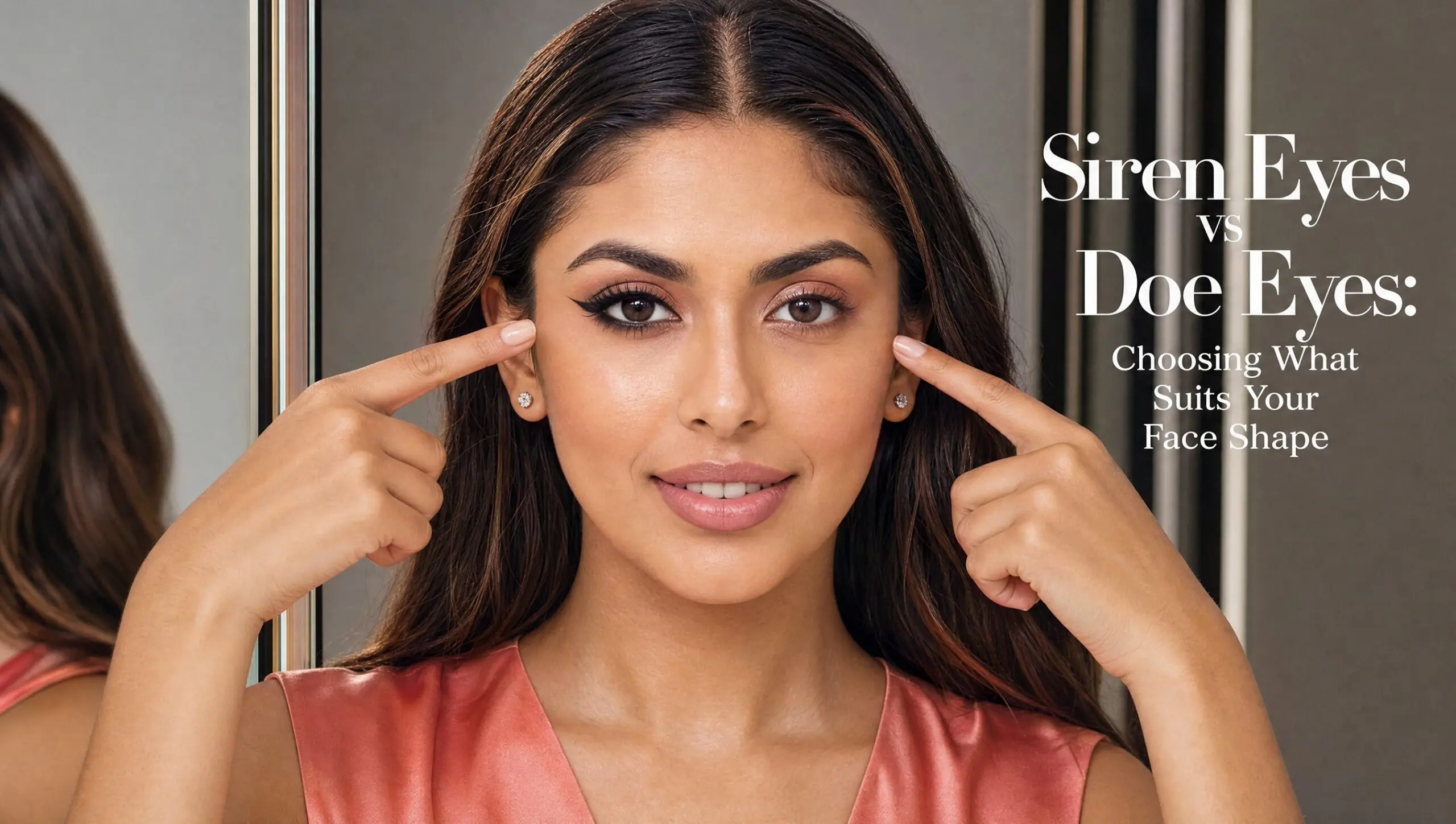
Siren eyes vs doe eyes is the eye-makeup debate everyone is weighing in on, and the right pick comes down to your face shape. This guide compares siren eyes vs doe eyes and shows you how to create whichever look flatters your features most.
Few conversations in the beauty world spark as much fascination as the debate around siren eyes vs doe-eyes. These two eye makeup aesthetics sit at opposite ends of the spectrum, yet both have the power to completely transform a face, shift a mood, and communicate something deeply personal before a single word is spoken. Whether you are drawn to the magnetic intensity of a lifted, smouldering gaze or the soft, luminous openness of a wide-eyed look, understanding the technical craft behind each style will help you wear either with confidence. This guide breaks down everything: the anatomy of each look, the optical illusion principles at play, which face shapes and eye shapes benefit most, step-by-step techniques, product recommendations, and the hybrid approaches that let you borrow from both worlds.
What Are Siren Eyes? Defining the Sultry, Lifted Gaze
The siren eye look draws its name from mythology, conjuring the image of an irresistible, alluring figure whose gaze pulls others in without effort. In makeup terms, siren eyes are defined by a lifted outer corner, a dramatic elongated wing or flick, and a shadow placement that creates the impression of an upward tilt at the outer edge of the eye. The overall effect is angular, sleek, and intentionally seductive.
The defining characteristic of siren eyes is the upswept line at the outer corner. Eyeliner, whether liquid, gel, or pencil, is applied in a way that extends beyond the lash line and angles upward rather than following the natural downward curve many eyes have. This upward flick defies gravity visually, making the eyes appear to sit higher on the face and giving them a cat-like quality.
Shadow placement in a siren eye look prioritises the outer corner and the outer third of the lid. Deeper, smokier tones are concentrated at the outer V, blended upward and outward rather than inward. The inner corner and inner lid are typically left lighter, creating contrast and drawing the eye towards the lifted outer edge. This light-to-dark gradient is a basic optical illusion technique. The eye naturally moves towards the darker area, so putting darkness at the outer corner and upper lash line makes the gaze feel sharp and lifted.
In terms of colour theory, siren eyes tend to favour warm bronzes, rich plums, smoky charcoals, and deep blacks. These tones absorb light and create depth, enhancing the dramatic, three-dimensional structure of the eye socket. Cooler tones in steel blue or forest green can also achieve the siren effect when applied with the correct placement, but warmth tends to heighten the sultry quality most associated with this aesthetic.
Lower lash line application is a key differentiator. In a siren eye look, liner on the lower lash line is typically applied only from the outer corner inward to the centre or slightly past the centre, rather than all the way around. This asymmetric application on the lower lid reinforces the lifted outer corner and prevents the gaze from feeling rounded or innocent, which would work against the siren effect.
Reviewed by the BeautynFacts editorial team. Last updated: May 2026.
What are ‘doe eyes’? Defining the Wide, Innocent Gaze
The doe-eye aesthetic evokes the look of a young deer, with large, round, luminous eyes that communicate openness, curiosity, and an almost ethereal softness. Where siren eyes elongate and sharpen, doe eyes widen and brighten. The techniques used to achieve this look are built around a completely different set of optical principles, all aimed at making the eye appear rounder, larger, and more centred on the face.
The hallmark of a doe-eye is a light concentration at the centre of the lid. Rather than distributing shadow across the full lid, the doe-eye technique places the brightest, most reflective product directly over the pupil. This can be a shimmery champagne shadow, a glittery highlight, or even a touch of a lighter matte shade that contrasts with deeper tones at the inner and outer corners. When light hits the centre of the lid, the eye appears to project forward, creating the illusion of greater volume and roundness.
Liner application in the doe-eye look is softer and often kept to the upper lash line only, without a dramatic wing. If a wing is used at all, it is small and curves slightly downward rather than upward, or it is replaced entirely by a smudged, diffused line that adds definition without sharpening the shape. Tight-lining, which means applying liner directly on the waterline between the lashes, adds fullness to the lash line without adding sharpness.
The lower lash line in a doe-eye look receives special attention. A nude or white liner on the inner waterline of the lower lid is a classic technique that makes the whites of the eye appear larger, instantly creating the impression of a more open, awake gaze. Shadow on the lower lash line, when used, is applied lightly and concentrated towards the inner corner, with a small triangle of highlighter placed in the inner corner itself. This inner corner highlight is one of the most effective tools in doe-eye makeup because the inner corner is where light naturally hits the eye first, and amplifying that natural reflection opens the entire eye area dramatically.
Brow placement matters enormously in doe-eye looks. A slightly arched brow with the highest point centred over the pupil rather than towards the tail creates a more rounded frame for the eye. Brushing brow hairs slightly upward adds to the wide-eyed, fresh quality. In contrast, brows that extend too far outward or have a very flat arch can counteract the doe-eye effect by making the browbone appear lower and heavier.
The Key Technical Differences: Liner, Shadow, and Placement
Understanding the technical divergences between siren and doe-eye techniques reveals why both looks are so effective at achieving their intended effect. These differences are not arbitrary stylistic choices. They are grounded in how the human eye perceives shape, contrast, and light.
Liner Direction and Wing Style
The most visible technical difference is the direction of the liner flick. Siren eyes use a wing that extends upward, often at a 30 to 45-degree angle from the outer corner of the eye. The length of this wing can vary from subtle to dramatic, but the upward trajectory is non-negotiable for the siren effect. The wing visually raises the outer corner, making the eye appear to tilt upward.
Doe eyes either skip the wing entirely or have a minuscule, slightly downward-curving flick that softens rather than sharpens the outer corners. Some doe-eye interpretations use a technique where liner is applied to the upper lash line and then smudged very gently at the outer corner, creating a diffuse shadow effect rather than a crisp line. This softness is what keeps the eye feeling rounded and open rather than angled and defined.
Shadow Placement and the Outer V Technique
In siren-eye makeup, the outer ‘V’ is the star of the shadow work. The outer V refers to the triangular area at the outer corner of the eye, formed between the upper lash line and the lower lash line. Concentrating deep shadow in this zone and blending it upward into the crease and outward beyond the eye creates the elongated, lifted shape central to the siren aesthetic.
Does eyeshadow work to invert this priority? The outer corner receives shadow, but it is softer and less dramatic, and it is counterbalanced by the bright centre lid highlight. Rather than pushing the eye outward and upward, doe-eye shadow placement frames the eye from the outside while opening the centre, creating a perfectly round, full silhouette.
Inner Corner Treatment
Doe eyes love the inner corner. A touch of shimmer, glitter, or a pearl-toned highlighter placed in the inner corner of the eye adds immediate brightness and helps the look achieve that signature wide-eyed quality. In siren-eye looks, the inner corner is typically left neutral or slightly darker to maintain the gradient that draws the eye outward.
Lower Lash Line Application
As discussed, siren eyes apply lower liner from the outer corner inward to roughly the centre, reinforcing the lifted outer-corner effect. Doe eyes use a different approach: either nude waterline liner to make the eye appear larger or a very soft shadow application along the entire lower lash line, concentrated at the inner corner rather than the outer.
Mascara Strategy
Even mascara application differs between the two looks. For siren eyes, mascara is applied generously to the outer lashes, with particular focus on lifting and lengthening the outer corners. Using a mascara wand at an angle to sweep outer lashes upward and outward reinforces the lifted shape. For doe eyes, mascara is applied most heavily to the centre lashes, the ones that sit directly above the pupil, to maximise the fullness and roundness of the lash line at its most visible point. Some doe-eye techniques also apply a small amount of mascara to the lower lashes to further open the eyes.
Which Face Shapes Suit Siren Eyes?
Makeup artistry is largely the practice of using optical illusions to balance and enhance facial proportions. Different face shapes have different natural characteristics, and understanding which eye look complements those characteristics is the key to choosing between the siren and doe-eye techniques.
Round Face Shapes
Round faces are characterised by approximately equal width and length, with soft angles at the jaw, temples, and cheeks. The lack of strong horizontal or vertical lines can make a round face appear very circular or full. Siren eyes are an excellent choice for round faces because the upward-angled wing and lifted outer corner add the angular sharpness and vertical lift that the face shape naturally lacks. The elongated, upswept shape of siren eyes draws the gaze upward and outward, creating an illusion of greater length and definition.
Square Face Shapes
Square faces have strong, defined jawlines and roughly equal width at the forehead and jaw. The angular nature of a square face already provides plenty of structure, and both siren and doe-eye looks can work beautifully. Siren eyes on a square face intensify the strong, defined quality of the features, which can be very striking if that is the desired effect. Doe eyes offer a softening counterbalance, adding roundness and warmth to a naturally angular structure. The choice here depends more on personal style preference than strict face-shape rules.
Oblong or Long Face Shapes
Oblong or long face shapes have more vertical length than width. Strongly upswept siren eyes can sometimes exaggerate the length of a long face by adding even more vertical movement. Doe eyes, with their emphasis on width and roundness, are generally more flattering on long face shapes because they add the horizontal visual weight that balances the elongated proportions. A modified siren eye with a less extreme upward wing can work on a long face, but the doe-eye approach is typically the safer and more flattering choice.
Heart Face Shapes
Heart-shaped faces are wider at the forehead and temples and taper towards the chin. The siren eye, when applied with a moderate wing, can be extremely flattering on a heart-shaped face because it draws attention to the upper third of the face in a way that feels intentional rather than top-heavy. Keeping the overall eye look balanced, not too heavy on the upper lid, prevents the look from making the forehead appear even wider. Doe eyes also work well on hearth faces, particularly because the rounded, centred quality of the doe-eye technique echoes the softness of the tapered lower face.
Oval Face Shapes
Oval faces are often described as the most versatile face shape because the balanced proportions, slightly wider cheekbones, and gently tapered forehead and chin allow virtually any makeup technique to work. People with oval face shapes have the freedom to experiment fully with both siren and doe-eye looks. The choice becomes entirely about personal aesthetic, occasion, and mood rather than corrective technique.
Diamond Face Shapes
Diamond faces feature narrow foreheads and chins with wide, prominent cheekbones. This is one of the rarer face shapes, and it benefits enormously from eye looks that add width at the forehead area. Doe eyes, with their emphasis on opening and widening the eye area, work particularly well on diamond faces because they help balance the prominent cheekbones by drawing attention upwards to the eye area. A softened siren eye with a gentle wing rather than an aggressive upswept line can also work beautifully, providing definition without further narrowing the appearance of the forehead.
Which Eye Shapes Benefit Most from Each Look?
Beyond face shape, the natural shape of your eyes plays a significant role in determining which technique will be most effective and easiest to execute.
Monolid Eyes
Monolid eyes, which have a single eyelid without a visible crease, are wonderfully suited to both siren and doe-eye looks, but the techniques require some adaptation. For siren eyes on a monolid, a bold graphic liner or a strong wing applied above the lash line creates the lifted effect without relying on crease blending. For doe eyes on a monolid, a glittery or shimmery centre-lid product and a strategic inner-corner highlight can create the desired wide-eyed effect. The key for both looks is bold, deliberate liner placement because the absence of a crease means shadow blending has less visual impact than it does on-lid eyes.
Hooded Eyes
Hooded eyes have a fold of skin that covers part or all of the mobile lid when the eyes are open. This is one of the most common eye shapes and one that requires the most technique adjustment. For siren eyes on hooded lids, the wing must be applied higher and with a more extreme upswept angle so it remains visible when the eyes are open. For doe eyes, the centre-lid highlight should be placed on the most visible part of the lid, which, on hooded eyes, tends to be the very centre of the lower portion of the visible lid. Both looks can be beautifully achieved on hooded eyes with practice and proper placement.
Almond Eyes
Almond eyes, with their slightly upswept outer corners and balanced proportions, are considered the most versatile eye shape for makeup. Both the siren and doe-eye techniques look equally polished on almond eyes. The naturally lifted outer corner of almond eyes provides a head start for the siren-eye technique, making the look easier to achieve with less liner work. The balanced proportions of almond eyes also respond beautifully to the doe-eye technique because there are no extreme shape characteristics that the technique needs to work around.
Round Eyes
Round eyes already have the wide, open quality central to the doe-eye aesthetic. For people with naturally round eyes who want to lean into the doe effect, the techniques are straightforward and require minimal adjustment because nature has already done much of the work. However, those with round eyes who want to try the siren-eye technique will find that the upswept wing and outer-corner emphasis do an excellent job of elongating the eye and adding the angular quality that does not come naturally to this eye shape.
Downturned Eyes
Downturned eyes slope slightly downwards at the outer corners. This is one of the eye shapes that benefits most from the siren eye technique because the upward wing directly counteracts the natural downward tilt, creating the illusion of a lifted, balanced gaze. Applying the doe-eye technique on downturned eyes requires care because the soft, rounded approach can sometimes emphasise the downward droop rather than counterbalance it. Using a very soft, modified siren wing on downturned eyes while incorporating some doe-eye elements like inner-corner highlights can be a powerful hybrid approach.
Upturned Eyes
Upturned eyes naturally angle upward at the outer corner, giving them an inherent siren quality. People with upturned eyes who love siren eye makeup will find the look comes together very naturally. For those with upturned eyes who prefer the doe aesthetic, a slightly downward-adjusted wing or a smudged, diffused outer corner treatment can soften the natural upward tilt and create a more balanced, rounded appearance.
Deep-Set Eyes
Deep-set eyes sit further back in the eye socket, making the browbone appear more prominent. Light and shimmer are essential tools for deep-set eyes regardless of which aesthetic you are pursuing. For siren eyes, using a shimmery or metallic lid colour rather than a matte one lifts the lid area forward visually before applying the outer-corner definition. For doe eyes, the centre-lid highlight is even more important than usual because it counteracts the natural shadowing that deep-set eyes experience.
Prominent or Protruding Eyes
Prominent eyes project outward from the face. Darker lid shades can push prominent eyes back visually, which tends to favour the siren-eye technique, where darker tones are concentrated on the lids. Doe-eye looks, with their emphasis on shimmer and highlight at the centre of the lid, can sometimes make prominent eyes appear even more forward-set. A modified approach, perhaps using satin rather than glittery textures in the doe-eye technique, helps achieve the wide-eyed effect without exaggerating the natural prominence.
Step-by-Step: How to Create Siren Eyes
Here is a complete technique for achieving siren eyes from start to finish, broken down into manageable steps that work on most eye shapes.
Step 1: Prime and Prep
Begin with a clean, moisturised eye area. Apply an eye primer to the entire lid from the lash line to the browbone. Primer creates a uniform base that extends the wear of shadow and prevents creasing, both of which are particularly important for a dramatic siren eye look where precision placement is central to the effect.
Step 2: Set with a Neutral Base
Pat a light, neutral matte shadow across the entire lid up to the crease and blend a touch onto the browbone. This creates a smooth, seamless base that makes subsequent shadow application easier and more blendable.
Step 3: Define the Crease
Using a medium-toned matte shadow in a warm taupe, brown, or mauve, work into the crease using a windscreen wiper motion. This shadow should be concentrated at the outer two-thirds of the crease and blended upward slightly above the natural crease line to add depth and dimension. Keeping the inner portion of the crease lighter maintains the gradient effect essential to siren eyes.
Step 4: Deepen the Outer V
Switch to a deeper shade, a rich brown, a smoky charcoal, or a deep plum, and apply it to the outer V at the outer corner of the eye. Work the shadow into a triangular shape that extends from the outer corner of the upper lash line down to the outer corner of the lower lash line and up into the crease. Blend the edges thoroughly so there are no harsh lines, but maintain the concentration of colour in the outer area.
Step 5: Apply Liner with the Upswept Wing
This is the most technically demanding step in the ‘siren eye’ process. Using a precise liquid liner or a sharp gel liner, begin at the inner corner of the upper lash line and draw a line that follows the lash line closely. As you approach the outer corner, begin to angle the line slightly upward. At the outer corner, extend the liner past the lash line and continue in an upward direction, following the angle that would naturally extend the lower lash line if it continued. The length and angle of your wing depend on personal preference and eye shape, but the upward trajectory is the defining element. Draw the wing in a thin line, then connect the tip back to the outer corner of the upper lash line to create a filled triangle. Fill in the triangle for a solid, opaque wing.
Step 6: Lower Lash Line Definition
Apply the deeper shadow from step 4 along the lower lash line from the outer corner inward to approximately the centre of the eye. Use a small, precise brush for this step. The goal is to connect the lower lash line shadow to the outer V, reinforcing the framing effect at the outer corner without making the line too heavy or droopy.
Step 7: Add Inner Corner and Inner Lid Highlight
A touch of shimmer or a bright champagne shadow at the inner corner and inner third of the lid brightens the overall look and creates the contrast that makes the darker outer corner appear even deeper and more dramatic.
Step 8: Mascara
Apply mascara generously, focusing on lifting the outer lashes upward and outward with an angled wand. Wiggle the wand at the base of the lashes and then draw upward in a sweeping motion, particularly at the outer corner, to reinforce the lifted siren effect.
Step-by-Step: How to Create Doe Eyes
Achieving the perfect doe-eye look requires a different mindset: everything is about softness, openness, and light concentration at the centre.
Step 1: Prime and Prep
As with siren eyes, begin with an eye primer on a clean, moisturised lid. Because doe-eyes often use shimmery and glittery products, primer is especially important to ensure these textures adhere properly and stay put throughout the day.
Step 2: Apply a Light Base Shadow
Use a light, neutral matte shadow across the entire lid as your base. For doe eyes, this base shade can be slightly lighter than your skin tone to create an additional sense of brightness and openness across the eye area.
Step 3: Add Soft Outer Corner Definition
Using a soft, medium-toned matte shadow in a warm nude, soft brown, or dusty rose, apply gently to the outer corner and into the outer portion of the crease. This definition should be noticeably softer and less concentrated than in a siren-eye look. The goal is framing, not drama.
Step 4: Highlight the centre lid.
This is the heart of the doe-eye look. Apply a shimmery, glittery, or metallic shadow in a champagne, gold, rose gold, or pearl tone directly over the centre of the lid, over the pupil. Pat the product on rather than sweeping it to maximise colour payoff and intensity. The centre lid highlight should be noticeably brighter than everything around it, creating the illusion that the eye is projecting forward at its widest, roundest point.
Step 5: Inner Corner Highlight
Place the same shimmery product, or an even more intense highlighter, in the inner corner of the eye. This small but powerful step immediately opens the inner eye area and adds a fresh, bright quality to the overall look. A fine-tipped brush or even a fingertip works well for precise placement in this area.
Step 6: Liner and Lash Line Definition
For a soft doe-eye, use a brown or dark brown liner rather than black for a gentler effect. Apply along the upper lash line only, keeping the line thin. If you want to add definition without sharpness, smudge the liner slightly with a small brush after application to create a diffused, shadowy lash line rather than a crisp line. Skip the wing entirely for the purest doe-eye interpretation, or add a tiny, soft-edged flick that curves very slightly downward at the outer corner.
Step 7: Waterline and Lower Lash Line
Apply a nude or white liner pencil to the inner waterline of the lower lid to make the whites of the eyes appear larger. Apply a very light touch of the neutral matte shadow from step 2 along the lower lash line and blend softly. If desired, add a tiny amount of shimmer to the lower inner corner as well, connecting it to the inner corner highlight above.
Step 8: Mascara
Apply mascara most heavily to the centre lashes, those sitting directly above the pupil. Wiggle the wand at the base and draw upward to maximise the length and fullness at the centre. Apply a light coat to the outer and inner lashes as well for a full but round lash silhouette. A small amount of mascara on the lower centre lashes can further open the eye and enhance the wide-eyed effect.
When to Wear Each Look: Occasions and Contexts
Both siren and doe-eye looks have their ideal contexts, and knowing when to reach for each can elevate your makeup game significantly.
Siren Eyes: Best Occasions
The siren-eye look is a natural fit for evenings out, formal events, cocktail parties, date nights, and any occasion where a powerful, memorable impression is the goal. The dramatic, angular quality of the look reads as confident, sophisticated, and intentionally glamorous. Editorial photoshoots and creative events where a striking visual impact matters are also ideal contexts for the siren’s eye.
In professional contexts, a toned-down version of the siren eye, with a subtle wing and a softer smoke rather than intense darkness at the outer corners, can read as polished and put-together without being too theatrical. Industries with creative cultures, including fashion, entertainment, beauty, and advertising, are particularly receptive to bolder ‘siren eye’ interpretations even in professional settings.
Doe Eyes: Best Occasions
Doe eyes are remarkably versatile in terms of occasion. A light, barely-there doe-eye with a soft centre lid shimmer and subtle liner works beautifully for daytime events, brunch, office environments, casual outings, and any setting where a fresh, natural look is desirable. The softness and brightness of the doe-eye also make it particularly flattering in daylight and on camera because light plays off the centre lid highlight in a way that reads as healthy and awake.
For more formal or evening events, a doe-eye can be intensified by using more dramatic glitter or shimmer at the centre lid, adding a more defined lower lash line, and deepening the outer corner shadow without losing the fundamental wide-eyed structure. A bold lash, either in terms of very dramatic mascara or false lashes, can also elevate a doe-eye into a full evening look without sacrificing its signature openness.
Hybrid Looks: Borrowing from Both Aesthetics
The binary of siren versus doe-eyes is useful as a framework for learning, but in practice, some of the most flattering and distinctive eye looks exist in the space between the two aesthetics. Understanding both techniques gives you the tools to mix and match elements intelligently.
The Soft Siren
A soft siren eye takes the fundamental lifted wing and outer corner emphasis of the siren look and softens the execution. Instead of sharp black liquid liner, use a smudged brown or smoky grey liner for the wing. Instead of a deep, heavily pigmented outer V, use a moderately deep matte shade blended very thoroughly so there is no visible edge. The inner corner highlight is kept subtle, and the overall impression is one of quiet confidence rather than overt drama. This hybrid works particularly well for those who love the lifted, elongated quality of siren eyes but find heavy liner or dark shadow too intense for their preferences.
The Defined Doe
A defined doe-eye keeps the centre lid highlight, inner corner brightness, and rounded lash line mascara application central to the look but adds a thin, precise liner on the upper lash line for added definition. A slightly more pigmented outer corner shadow, kept soft but visible, adds depth without sacrificing the wide-open quality. This version of the doe-eye is excellent for those whose eyes need a bit more definition to look polished or for occasions where a completely soft look might read as unfinished.
The Fox Eye Transition
The foxy-eye look has become enormously popular and sits comfortably between the siren and doe aesthetics. It shares the siren eye’s emphasis on a lifted outer corner but tends to use very minimal product overall, relying on a sharply extended liner or a tight-lined approach to elongate the eye horizontally. The result is an eye that appears very long and slightly tilted without the heavy shadow work of a full siren eye. Pairing the fox eyeliner technique with a soft, clean lid and a subtle inner corner highlight creates a modern, editorial hybrid that works across a wide range of occasions.
The Innocent Siren
This hybrid places a delicate wing at the outer corner, keeping it small and precisely drawn, while incorporating the centre lid shimmer and inner corner highlight fundamental to the doe-eye. The outer corner shadow is present but very lightly applied. The result is an eye that has a hint of the siren’s angular sharpness but maintains an overall softness and openness. This look is particularly effective for those who find pure doe eyes feel too ingenue for their taste but also find full siren eyes too intense for everyday wear.
Product Recommendations by Type
The right tools make a significant difference in achieving either look cleanly and precisely. Here is a breakdown of the product categories most important to each aesthetic, with guidance on what to look for.
Eyeliners
For siren eyes, a precise liquid liner is your best friend. Look for a fine tip with a brush that maintains a consistent line without wobbling and a formula that dries quickly to a matte, opaque finish and resists smudging. Gel liner in a pot with a thin angle brush is an excellent alternative because it offers more control and can be corrected during application before it sets. For doe eyes, a soft pencil liner in dark brown or a slightly warmer black gives definition without harshness. A pencil that smudges easily can be deliberately blurred at the outer corner for a diffused effect. For the waterline, a nude or white waterline pencil should be waxy enough to adhere well and opaque enough to actually change the appearance of the waterline.
Eyeshadow Palettes
A palette that includes a range from very light mattes through medium-toned transitional shades and into deep, richly pigmented darks is ideal for siren-eye work. Warm neutrals, cool greys, and one or two jewel-toned options give you flexibility. For doe eyes, a palette that includes multiple shimmery, glittery, or duochrome shades in the light-to-medium range, alongside soft matte neutrals, is ideal. A palette with a very bright inner corner highlight shade, whether a true white shimmer, a holographic glitter, or a pearl, is particularly useful.
Mascara
For siren eyes, a lengthening mascara with a curved or angled wand helps direct lashes outward and upward. A tubing formula is excellent for clean, precise lash coverage without smudging onto the wing. For doe eyes, a volumising mascara that maximises fullness, particularly at the centre of the lash line, is a priority. Some people use two mascaras for doe eyes: a volumising formula for the centre lashes and a lengthening formula for the outer and inner lashes to maintain the rounded, full shape without the outer lashes becoming too long and creating a cat-eye effect.
Eye Primers
A good eye primer is non-negotiable for both looks. Look for a formula that creates a tacky, slightly adherent surface for shadow while also preventing creased lines. Skin-toned or slightly lighter primers work well under sheer to medium shadow applications. White or very light primers maximise the pigment payoff of shadows, which is particularly useful for doe-eye looks where shimmer intensity at the centre lid is central to the effect.
Setting Products
A fine setting powder or spray applied after the full eye look is complete helps lock the work in place. For siren eyes with dark shadow, a light dusting of translucent powder under the eye before beginning the look, which is then brushed away after the eyes are complete, catches any shadow fallout and prevents dark smudges under the eye that can undermine a clean liner line.
Common Mistakes and How to Avoid Them
Even experienced makeup wearers encounter challenges with these techniques. Knowing the most common pitfalls helps you avoid them from the start.
Over-lining the Lower Lash Line for Siren Eyes
One of the most frequent mistakes in siren eye application is applying liner all the way around the lower lash line to the inner corner, which creates a heavy, circled effect that makes the eye appear smaller and rounder rather than lifted and elongated. Keep the lower liner application to the outer half of the lower lash line only and use shadow rather than pencil liner for the most seamlessly blended effect.
Neglecting the Brow Frame in Doe Eyes
A doe-eye look without groomed, well-positioned brows can appear unfinished or even slightly strange because the soft, open quality of the eye makeup contrasts sharply with unkempt or overly aggressive brows. Taking a moment to brush brows upward and slightly fill sparse areas with a featherlight hand before beginning the eye look ensures the framing is consistent with the aesthetic.
Using Too Dark a Shade for the Doe Eye Outer Corner
In an attempt to add depth, some people use the same dark shades for their doe-eye outer corner that they would use for a siren eye. This creates a contradictory look where the heavy outer darkness fights with the bright centre, and neither element reads cleanly. Keeping the doe-eye outer-corner shadow at least two shades lighter than you think you need maintains the balance between definition and openness.
Making the Siren Wing Too Heavy for the Eye Shape
A wing that is too long or too thick relative to the size and shape of the eye can overwhelm the face and create an imbalanced look. Start with a smaller, more modest wing than you think you want; assess the effect with eyes open, and add length or thickness gradually. It is always easier to add than to remove.
Skipping the Inner Corner Highlight in Doe Eyes
The inner corner highlight is not decorative: it is structural. Without it, the dewy eye can look like a vaguely shimmery lid without a clear direction or focal point. The inner corner highlight is what connects the centre lid brightness to the inner eye area and creates the circular, wide-open shape that defines the look. Do not skip it, even if you are doing the most minimal version of the doe-eye.
Frequently Asked Questions
Can you do siren eyes without liquid liner?
Absolutely. A gel liner in a pot with a fine-angled brush can achieve the same precision as liquid liner and often offers more control for beginners. A sharp kohl pencil can also be used for a smokier, slightly less crisp siren wing that still maintains the upswept shape. The key is precision at the outer corner and tip of the wing regardless of the liner formula you choose.
Are siren eyes suitable for everyday wear?
A toned-down siren eye, with a shorter, thinner wing and a lighter touch on the outer-corner shadow, is entirely appropriate for daily wear, particularly in professional or creative environments. The key is scaling the intensity to the occasion. A barely-there liner flick and a soft outer-corner smoke can give you the lifted, defined quality of siren eyes without reading as too dramatic for daytime.
Do doe-eyes work on mature skin?
Doe eyes can be beautifully adapted for mature skin. The key adjustments involve using satin rather than heavy glitter finishes for the centre lid highlight, avoiding shimmer at the brow bone where it can draw attention to fine lines, and using a very light touch with lower lash line shadow. The inner corner highlight and upper centre lid shimmer remain highly effective and flattering at any age, and the overall brightening effect of the doe-eye look is particularly welcome when skin tone and lash density may have changed over time.
Which look is better for close-set eyes?
Close-set eyes, where the eyes sit closer together towards the centre of the face, benefit most from techniques that emphasise the outer corner and add visual weight to the outer eye area. A siren eye is often the more flattering choice because the wing and outer-corner emphasis draw the eyes outward visually. The doe-eye inner corner highlight, when used on close-set eyes, should be very subtle to avoid drawing attention to the proximity of the eyes. A hybrid approach that incorporates the outer lift of the siren eye while keeping the inner corner relatively neutral can be particularly effective for close-set eyes.
Which look is better for wide-set eyes?
Wide-set eyes, where there is significant space between the eyes, benefit from techniques that add emphasis to the inner eye area and draw the eyes towards the centre visually. The doe-eye inner-corner highlight, used strategically, can enhance the natural openness of wide-set eyes. Adding slightly more shadow to the inner corner than you normally would can also draw the eyes inward. A softened siren eye is also workable on wide-set eyes as long as the inner corner receives attention and the wing is kept moderate rather than very long, which would push the outer eye even further from the centre.
How do I transition from doe eyes to siren eyes as the day becomes evening?
Starting with a doe’s eye and deepening it into a siren’s eye for the evening is a practical technique. Begin your morning look with the doe-eye foundation: centre-lid shimmer, inner-corner highlight, soft outer shadow, and light liner. In the evening, deepen the outer corner shadow significantly, add or extend a liner wing to create an upswept angle, and tighten the outer lower lash line with shadow. The foundation of the doe-eye will still be visible at the centre of the lid, creating a hybrid effect that is both glamorous and nuanced.
Can siren eyes make small eyes look even smaller?
A very heavy, dark siren eye on small eyes can reduce their appearance if not balanced carefully. The key for small eyes executing the siren-eye technique is to keep the liner line thin on the upper lid rather than thick, to use the inner-corner highlight to maintain brightness and openness, and to ensure the wing extends outward rather than curving too close to the eye. White or nude waterline liner is also helpful for small eyes executing a siren look because it maintains the impression of size while the wing adds the angular lift.
What is the role of false lashes in each look?
False lashes can enhance both aesthetics significantly. For siren eyes, individual lash clusters or wispy strip lashes concentrated towards the outer corner, sometimes called ‘cat-eye-style’ lashes, reinforce the lifted outer corners and add to the dramatic impact. For doe eyes, a full strip lash that is longer and fuller at the centre, sometimes called ‘baby doll’ or ‘doll’ eyelashes, creates the rounded, wide-eyed shape that defines the look. Applying false centre lashes only, using individual clusters over the centre of the eye, is a less commonly known technique that is particularly effective for maximising the doe-eye effect without the effort of a full strip lash.
Final Thoughts on Siren Eyes vs Doe Eyes
The choice between siren eyes and doe eyes is ultimately a deeply personal one rooted in how you want to present yourself, what suits your unique anatomy, and what feels authentic to your personal aesthetic. There is no universally superior look because both aesthetics are grounded in sound optical principles and genuine artistic traditions. Siren eyes communicate power, precision, and confident femininity. Doe eyes communicate warmth, openness, and luminous softness. Both are valid. Both are beautiful. Both require skill and attention to execute well.
The most important takeaway from this comparison is that understanding both techniques frees you from limiting yourself to just one. Once you know how to lift and elongate with the siren technique and how to widen and brighten with the doe technique, you have a complete toolkit for creating almost any eye look you can imagine. The best makeup artists, whether professional or self-taught, think of these techniques not as fixed looks but as a vocabulary, a set of tools they can combine in endless configurations to suit the face in front of them, the occasion at hand, and the feeling they want to create.
Study your face shape and eye shape carefully. Practise both techniques in good lighting, ideally natural daylight, where you can see the true effect of shadow placement and liner angles. Experiment with the hybrid approaches. And above all, approach both looks with the understanding that makeup is an art form built on principles, and those principles, when truly understood, give you creative freedom rather than rules to follow.
RELATED ARTICLES:
Blue Eyeshadow Makes a Comeback: How to Wear 2026’s Coolest Eye Color Trend
Coloured Eyeliners: Try Emerald Green, Gold, Deep Plum, and Peach for a Pop of Colour to Your Eyes
Sunken Eyes: No More Causes, Remedies, and Treatments That Work
Make Your Eyes Pop with These Age-Defying Eye Makeup Tricks
Use a Hydrogel Eye Patch or Under-Eye Mask to Help Reduce Puffiness and Hydrate the Delicate Skin Around Your Eyes
About The Author

COMMENTS