

Most people believe a great makeup look starts with foundation. It does not. The real secret starts one step earlier, with a technique borrowed from t
Most people believe a great makeup look starts with foundation. It does not. The real secret starts one step earlier, with a technique borrowed from the world of fine art painting. Underpainting makeup is the practice of building a strategic base beneath your foundation layer, using targeted color, coverage, and light-manipulation to create skin that looks naturally radiant from within. Professional makeup artists have used this method on red carpets and editorial shoots for decades, and it is now making its way into everyday beauty routines with extraordinary results. This guide breaks down everything you need to know: what underpainting actually is, the science that makes it work, the two distinct methods artists use, how to choose the right products, and a detailed step-by-step process for every skin type and tone. Whether you are a beginner trying to understand why your foundation never looks quite right, or an experienced enthusiast ready to elevate your technique, this article gives you a complete and practical education on one of the most transformative skills in modern makeup artistry.
The Origins of Underpainting: From Canvas to Complexion
Published
The most common classical form was called grisaille, a monochromatic technique using shades of grey to map out shadows and highlights across a subject. Once dry, the artist would glaze translucent color over this foundation layer. Because the grey tones showed through the transparent glazes, the final painting achieved a luminosity and three-dimensionality that appeared almost lifelike. This same principle, building depth beneath a translucent surface layer, is precisely what makeup underpainting replicates on skin. The parallels between the two disciplines are not coincidental. Both involve constructing an illusion of dimension on a flat surface using layered materials and an understanding of light.
How Makeup Artists Adapted the Technique
Professional makeup artists began adapting underpainting to cosmetics as editorial and film work demanded increasingly natural-looking results. The challenge was always the same: how do you add coverage, color, and dimension to a face without making the skin look flat, cakey, or obviously painted? The answer, borrowed directly from painters, was to build the structural work underneath and then blend everything together with a unifying top layer of foundation.
Artists including Mario Dedivanovic, widely known for his work with Kim Kardashian, helped bring this technique into public awareness in the early 2010s. By applying contour, blush, and highlight directly onto bare, primed skin before foundation, then pressing a sheer or medium-coverage formula over the top, the makeup appeared to exist within the skin rather than sitting on top of it. The result was a finish that cameras and natural light treated identically, with no visible product boundaries and none of the flat, mask-like quality that conventional layering sometimes creates.
What Exactly Is Underpainting Makeup?
The Classic Definition
In its simplest form, underpainting makeup refers to applying a thin, skin-matched layer of foundation or concealer before any other color products. This layer acts as a neutralizing base, evening out skin tone, reducing discoloration, and creating a smooth, consistent surface for everything that follows. Think of it as the cosmetic equivalent of priming a wall before painting: the layer itself may not be the visible focus, but it determines the quality and longevity of everything applied over it.
This classic approach works particularly well for people with uneven skin tone, active breakouts, or significant redness around the nose and chin. Rather than applying heavy, full-coverage foundation everywhere, you apply a targeted layer only where the skin needs the most help. This creates coverage precisely where it is needed without building up unnecessary product in areas where the skin is already even and healthy-looking. The result is a more natural finish across the entire face.
The Advanced Definition
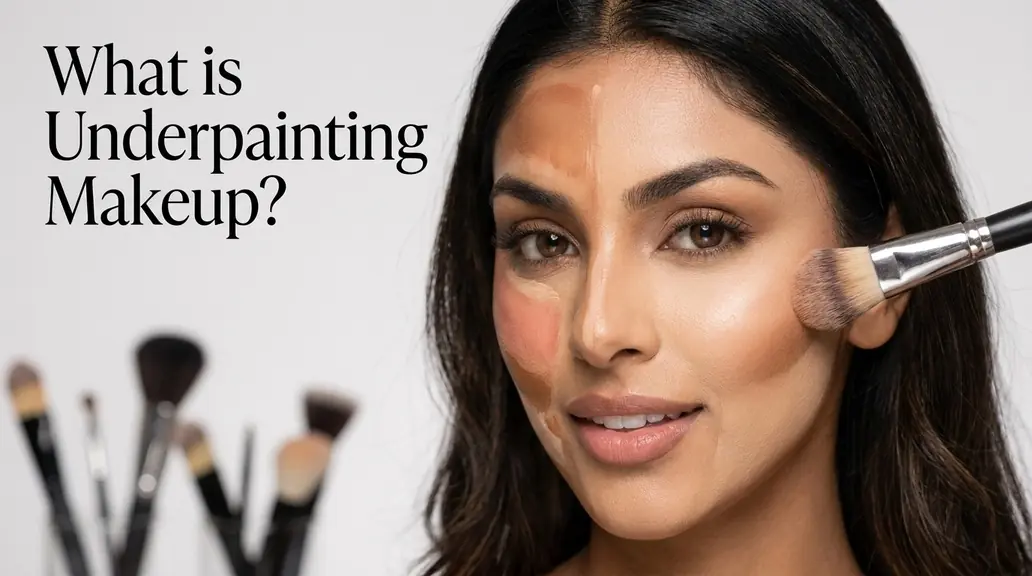
The more advanced and increasingly popular definition of underpainting extends beyond a simple skin-tone base. In this method, you apply your contour, blush, highlight, bronzer, and color correction products directly onto bare, primed skin, then press a sheer or medium-coverage foundation over the entire face to unify and blend all of the elements below. The foundation acts as the translucent glaze from classical painting, merging individual color elements into something cohesive and dimensional.
This approach requires you to reverse the traditional layering order for color and sculpting products. Instead of foundation first and contour second, you apply contour first and foundation second. It sounds counterintuitive, but the visual results are dramatically different. Color placed beneath a layer of foundation integrates with the skin in a way that top-applied color never achieves. Boundaries between product areas dissolve, and the entire face reads as a single, complex, living surface rather than a collection of separate products stacked one over another.
The Difference Between Underpainting and Traditional Priming
Many people confuse underpainting with priming, but the two serve completely different functions. A primer creates adhesion between bare skin and foundation. It fills pores, controls shine, extends wear, and provides a grippy surface for foundation to cling to. Primers are typically colorless or lightly tinted, and they do not provide coverage or active color correction on their own.
Underpainting, by contrast, is a color and coverage technique involving actual pigment, whether from concealer, foundation, color corrector, cream contour, or highlight. It does not simply prepare the skin for makeup; it actively begins the makeup process by establishing tone, coverage, and dimension before the main base layer is applied. The two techniques work together rather than replacing each other. Primer goes on first to prep the skin surface, and underpainting begins immediately after, building the visual structure of the base before foundation completes the look.
The Science Behind a Perfect Makeup Base
How Skin Tone Variation Affects Perception
Skin is not a flat, uniform surface. It has texture, pores, fine lines, and countless micro-variations in color and tone. When you apply a single, opaque layer of foundation directly over this surface, you eliminate the natural variation that makes skin appear alive and healthy. The goal of base makeup, from a perceptual standpoint, is to manage color variation without eliminating the subtle dimension and variation that signals youth and vitality.
Underpainting achieves this balance by building coverage strategically rather than universally. Instead of laying a uniform film over the entire face, you treat each area according to its specific needs. Dark areas receive light-reflecting coverage. Discolored areas receive targeted color correction. Healthy, even areas receive little to no additional product. The foundation layer then ties everything together, creating a surface that appears even without appearing uniform. This distinction is at the heart of why underpainting looks more natural than conventional full-face foundation coverage.
The Role of Light and Shadow in Facial Dimension
The way the human eye perceives a face is almost entirely about how light interacts with its surface. Faces that appear attractive and youthful reflect light more at the center, specifically at the forehead, nose bridge, cheekbones, and chin, and absorb more light at the recessed areas, including the hollows of the cheeks, the temples, and the sides of the nose. This pattern of light reflection and absorption creates the perception of three-dimensional bone structure and healthy, full skin.
Underpainting allows you to engineer this light pattern deliberately and precisely. By applying lighter, reflective tones to areas where you want light to bounce and darker, warmer tones to areas where you want shadow to sit, you create a face that reads as naturally sculpted under any lighting condition. When foundation is pressed over this work, it softens the boundaries between light and shadow zones, making the transition look exactly like the gradual shift of light across a real, three-dimensional face. No top-applied technique can produce this level of seamlessness because no blending tool can merge two products as completely as a third product layered over both of them.
The Two Main Underpainting Methods Explained
Method One: The Neutral Base Technique
The neutral base technique is the simpler of the two methods and the ideal starting point for underpainting beginners. In this approach, you apply a thin, skin-matching layer of concealer or foundation to areas of concern before applying your regular base. The goal is not to achieve full coverage but to reduce the intensity of problem areas so that your foundation can address them with a lighter hand and thinner application.
This technique works best for targeted concerns:
- Dark undereye circles
- Active blemishes or post-breakout marks
- Patches of redness around the nose or chin
- Uneven pigmentation from sun damage or hormonal changes
- Visible veins or discoloration at the temples
You apply a small amount of skin-tone-matched concealer to each concern area, blend the edges thoroughly, allow it to set briefly, then apply your regular foundation over the top. The problem area has already been partially addressed, so your foundation layer can remain thin and natural-looking across the entire face. The skin looks corrected without appearing to be corrected, which is the defining quality of excellent base makeup.
Method Two: The Color and Contour Beneath Foundation Technique
The second method is more dramatic and represents the full artistic expression of underpainting. Here, you apply all of your dimensional products, including contour, bronzer, blush, highlight, and any color correctors, onto bare, primed skin before foundation. You then press a sheer, medium, or buildable-coverage foundation over the entire face to merge all of these elements into a cohesive, unified base.
The key to this method is selecting a foundation with the correct finish and coverage level. A sheer foundation allows the underpainting to show through most clearly. A medium-coverage formula provides more blending and softening of the dimensional elements below. Full-coverage foundations generally work against this technique by obscuring too much of the dimensional work underneath. Cream-based contour and highlight products perform best in the underpainting layer because they blend seamlessly with liquid foundation. Powder products used beneath liquid foundation often create patchy, uneven results as the liquid picks up and displaces the powder during application.
Choosing the Right Products for Underpainting
Foundation, Concealer, and Color Correctors
For the neutral base method, your concealer or foundation must match your skin tone precisely. Any mismatch, whether too yellow, too pink, or too light, will create an unnatural cast that shows through the top layer. Liquid concealers with medium-to-full coverage and a natural or satin finish blend most smoothly and do not drag or pill when foundation is applied over them.
For color correction beneath foundation, the principle of complementary color theory applies directly. The following color corrector pairings address the most common skin concerns:
- Peach or salmon: neutralizes blue and purple undertones in undereye circles on light to medium skin tones
- Orange: neutralizes dark, brown-toned undereye circles on medium to deep skin tones
- Green: neutralizes redness from rosacea, broken capillaries, and post-inflammatory hyperpigmentation
- Yellow: neutralizes purple tones and overall dullness on fair to medium skin
- Lavender: brightens sallow, yellow-toned skin and adds luminosity to dull complexions
When correctors are applied beneath foundation, the foundation moderates their intensity and blends their edges, allowing them to work subtly without appearing as visible patches of unnatural color on the skin’s surface.
Tools That Make Underpainting Work
The right tools are as important as the right products in underpainting. A damp beauty sponge is the single most important tool for pressing foundation over an underpainting layer. Its bouncing and rolling motion deposits product without disturbing the layers beneath. Dragging motions from either a brush or sponge will shift underpainting products and create streaks or bare patches. The pressing action of a hydrated sponge preserves the placement and integrity of the underpainting while blending the foundation evenly across the entire face.
For applying the underpainting layer itself, the following tool choices produce the best results:
- Small dense brush: ideal for precise placement of color correctors and targeted concealer
- Medium flat brush: used in stippling motions for applying cream contour products
- Fan brush: excellent for a light dusting of highlight on high points
- Fingertips: surprisingly effective for highlight products, as warmth helps the product melt into skin
- Damp sponge: reserved exclusively for the top foundation layer, never for the underpainting elements
Step-by-Step Underpainting Guide
Preparing Your Skin
Effective underpainting begins with thoroughly prepared skin. Start by cleansing your face to remove excess oil, residual skincare, and environmental debris. Follow immediately with a moisturizer suited to your skin type. Underpainting requires adequate hydration across the skin: dry, flaky patches cause product to catch on texture and create an uneven base. Allow your moisturizer to absorb fully for at least five minutes before applying any makeup products.
After moisturizer, apply a primer suited to both your skin type and the products you will be layering over it. A silicone-based primer creates an ideal smooth surface for cream underpainting products. A water-based primer suits oily skin types better and works with water-based foundations. Allow your primer to set for two to three minutes. This short wait time makes a measurable difference in how smoothly your underpainting products apply and how well the finished look holds up throughout the day. Skipping either moisturizer or primer will reduce the longevity and quality of every layer that follows.
Applying the Underpainting Layer
Begin with color correction if your skin has specific discoloration concerns. Apply a small amount of the appropriate corrector directly to the target area using a small brush or fingertip, using a stippling motion to blend the edges without moving the product away from its intended location. Apply only enough product to reduce the discoloration, not eliminate it entirely. The foundation layer will complete the correction work.
Next, apply your contour product to areas you want to shadow. Common placement points include the hollows of the cheeks, the temples, the sides of the nose, and along the jaw. Use a genuinely light hand. The product should be visible on the skin but should not appear heavily pigmented at this stage. Apply highlight to the high points: the center of the forehead, the bridge of the nose, the tops of the cheekbones, the Cupid’s bow, and the chin. Add a small amount of blush to the apples of the cheeks, blending upward toward the temples. Step back from the mirror and check that all placements look balanced from a distance before proceeding.
Applying Foundation and Finishing the Look
Dispense a small amount of your chosen foundation onto the back of your hand. Dip a damp beauty sponge into the product and begin pressing it onto the center of your face, working outward in all directions. Use a firm, pressing-and-rolling motion. Never drag or swipe the sponge across the face, as this will shift the underpainting products and create uneven color distribution.
Work systematically: start at the center forehead, move to the nose, then to each cheek, and finish at the chin and jawline. Apply more pressure in areas where you want more coverage and lighter pressure where the skin is already even. Once the first layer is complete, step back and assess. You will see the contour and highlight still visible beneath the foundation, now subtly blended and softened into the skin. If specific areas need more coverage, add a second localized application using the same pressing technique. Set the finished base with a light dusting of translucent setting powder in oily areas only, then lock everything in place with a setting spray pressed over the face using the clean side of your damp sponge.
Underpainting for Different Skin Types and Tones
Oily and Combination Skin
Oily skin presents a specific challenge for underpainting because excess sebum causes cream products to slip and migrate during wear. To minimize movement, choose mattifying or long-wearing formulas for the underpainting layer, and apply a mattifying primer before you begin. Setting the underpainting layer with the lightest possible dusting of translucent powder before applying foundation can help lock the dimensional products in place on oily skin types. Use the absolute minimum amount of powder: too much creates a powdery appearance under the liquid foundation layer.
Keep the number of cream product layers to a minimum on oily skin. Each additional layer increases the likelihood of slippage. A setting spray pressed firmly over the face after the full application is complete will fuse all layers together and significantly improve longevity. Choose a foundation for the top layer that has at least a medium-wear formula with a natural-to-matte finish, as very dewy or luminous foundations tend to amplify the movement of underlying products on skin that produces excess oil.
Dry and Mature Skin
Dry and mature skin benefits enormously from underpainting because the technique naturally reduces the total amount of product required on the skin’s surface. Less product means less settling into fine lines, less caking on dry patches, and a more comfortable wear experience throughout the day. Choose cream-based underpainting products with a satin or luminous finish, as these add moisture and glow rather than emphasizing any existing dryness or texture.
Avoid all powder products in the underpainting layer if your skin is dry or shows signs of aging. Powders settle into texture and create a parched, aged appearance when covered with liquid foundation. A hydrating, dewy-finish foundation applied over the underpainting layer maintains a plump, healthy-looking surface. For mature skin specifically, a luminous cream highlight applied beneath foundation creates a glow that looks like naturally youthful skin rather than a shimmery product sitting on the surface. This is one of underpainting’s most compelling advantages for those concerned with how makeup interacts with fine lines.
Deep and Fair Skin Tones
Underpainting is particularly powerful for deep skin tones because it addresses one of the most common challenges people with deeper complexions face: finding a base that covers discoloration without looking ashy or masking the skin’s natural depth and richness. By correcting discoloration beneath a well-matched foundation, rather than relying on heavy coverage alone, underpainting preserves the vibrancy of deep skin tones while providing effective, targeted coverage where it is genuinely needed.
For fair skin tones, underpainting offers precision in contouring that top-applied techniques frequently lack. Very fair skin can look muddy or bruised when contour products sit on top of a light foundation because the contrast between a dark pigment and a pale base is often too stark. When the same contour product sits beneath a sheer foundation on fair skin, the foundation moderates the contrast and creates a shadow that looks anatomically natural rather than visibly applied. The same principle produces beautiful results with blush placement on fair skin: the flushed, natural-looking cheek color that underpainting creates on pale complexions is one of the technique’s most celebrated outcomes.
Common Underpainting Mistakes and How to Fix Them
Using Incompatible Product Formulas
The most frequent underpainting mistake is using powder products in the under-layer when a liquid foundation is going on top. When you press a liquid foundation over loose or pressed powder, the liquid picks up and displaces the powder, creating streaks, bare patches, and an uneven base. Always use cream or liquid products in your underpainting layer when your top coat is a liquid, serum, or skin tint formula. The only exception is a very lightly applied, finely milled translucent powder used to set an oily underpainting layer before foundation goes on.
A related mistake is choosing a long-wearing or waterproof concealer for the base layer without verifying its compatibility with the top foundation. Some long-wearing formulas create a barrier that prevents subsequent products from adhering properly. Test your chosen product combination on the back of your hand before applying to your face. If the foundation beads up, slides, or resists blending over the underpainting product, the formulas are not compatible and you need to adjust your choices before attempting the full face application.
Applying Too Much Product
Underpainting requires a significantly lighter hand than most people expect. Because you are building multiple layers, each individual layer must be thin and well-blended or the final result will appear heavy and muddy. Applying too much cream contour beneath the foundation is the most common reason underpainting results look grey, patchy, or unnatural. Start with approximately half of the product amount you would normally use for top-applied contouring, and assess whether more is needed only after the foundation layer is in place and fully blended.
The same restraint applies to the foundation itself. The structural work has already been done in the underpainting layer: your foundation only needs to unify the layers below it and provide a thin veil of coverage. Applying your usual amount of foundation risks obliterating the dimensional work beneath and leaving you with a heavier, flatter base than you intended. A common approach among professionals is to apply the foundation in two thin passes rather than one medium pass, assessing after the first pass whether a second is actually necessary.
Skipping or Rushing Skin Preparation
Underpainting is more demanding of skin preparation than traditional foundation application because multiple layers of product must coexist and blend smoothly over the course of an entire day. Inadequate hydration leads to dry patches that disrupt the blending of the underpainting layer, causing color to sit unevenly on the surface. Skipping primer removes the adhesion layer that keeps the underpainting products in place, dramatically increasing the likelihood of migration and fading within hours of application.
Investing an additional five to ten minutes in skin preparation before underpainting is one of the highest-return choices you can make for the quality of your finished result. Double cleanse if your skin is prone to congestion or excess oil. Use a hydrating serum beneath moisturizer if your skin is dry. Choose your primer based specifically on the formula types you are layering over it. Well-prepped skin makes every subsequent step smoother, easier, and more predictable, and extends the wear of the finished look by several hours compared to makeup applied over unprepared skin.
Frequently Asked Questions About Underpainting Makeup
What is the difference between underpainting and color correction?
Color correction is a specific category within the broader underpainting technique. The term underpainting covers any approach that involves building color, coverage, or dimension beneath a foundation layer. Color correction refers specifically to using complementary-colored cosmetic products to neutralize particular skin discolorations, such as applying a peach corrector to cancel blue-toned undereye circles or a green corrector to reduce visible redness. Color correction always produces its best results as an underpainting technique because placing correctors beneath a foundation allows the foundation to blend and moderate their intensity, preventing them from appearing on the skin’s surface as visible, unnatural patches of color that can look jarring in natural light or photography.
Can beginners do underpainting makeup?
Yes, absolutely. The neutral base method is particularly beginner-friendly because it involves a single product: a skin-matched concealer applied to problem areas before foundation. This step requires no advanced skill, no knowledge of facial anatomy, and no specialized tools beyond a basic brush or sponge. It produces an immediate and visible improvement in the quality and longevity of a foundation application. The more advanced color and contour method takes more practice and a better understanding of where light and shadow fall naturally on the face, but beginners can start experimenting with it by using minimal product and adding only one underpainted element at a time. Starting with just a cream blush applied beneath foundation is a low-risk, high-reward way to experience the technique before committing to a full underpainting approach.
Does underpainting work for all skin types?
Underpainting works effectively for every skin type, but the specific products and formulas need to be adapted to each type for optimal results. Oily skin benefits from mattifying underpainting products and a setting step between the under-layer and foundation. Dry skin thrives with cream formulas throughout and a hydrating, dewy foundation on top. Combination skin responds well to a zone-specific approach, using different formulas in different areas of the face. Normal skin types have the most flexibility and can use almost any combination of cream underpainting products paired with a liquid foundation. The technique itself is universally applicable: it is the product selection that requires customization based on individual skin needs and characteristics.
What is the best type of foundation for underpainting?
The best foundation for underpainting is fluid, easy to blend, and offers a coverage level between sheer and medium. Skin tints, serum foundations, and hybrid skin tint formulas are ideal choices because they press easily over the underpainting layer without disturbing the products beneath. They provide enough coverage to unify and slightly soften the underpainting elements while allowing their depth and luminosity to remain visible through the foundation film. Avoid thick, full-coverage formulas or fast-setting matte foundations when practicing the color and contour underpainting method, as these create too much drag over the underpainting layer and make it very difficult to achieve the seamless, blended result the technique is designed to produce.
How long does underpainting makeup last compared to traditional application?
Underpainting can actually improve the longevity of a makeup look compared to conventional layering. Because the color and dimensional products are sandwiched between the skin and the foundation rather than sitting exposed on the outermost surface, they are protected from direct contact with environmental factors, finger contact, and the friction from masks or phone screens that typically causes surface-applied products to fade or migrate. Using a primer before underpainting and a setting spray after the completed application can extend realistic wear time to eight to twelve hours in most everyday conditions, making underpainting an excellent choice for long days, events, or situations where touch-ups are not practical.
Conclusion
Underpainting makeup transforms the way you build a base by borrowing a timeless principle from fine art and applying it to the face with precision and purpose. The foundational insight is straightforward: color and dimension applied beneath a foundation layer look more natural, last longer, and create more seamless results than the same products applied on top. Whether you use the accessible neutral base method to improve your everyday foundation finish or the more involved color and contour approach for special occasions, underpainting gives you greater control over the final result with less visible product sitting on the skin’s surface.
The science behind the technique is sound. Light, shadow, and color behave differently depending on their position within a layered system, and placing your structural makeup work beneath a thin, unifying layer of foundation allows the face to read as a single, cohesive surface rather than a series of separate products. This produces skin that photographs beautifully under any light and holds up throughout the day without requiring constant touch-ups or heavy product application.
To begin putting this into practice, follow these next steps:
- Start with complete skin preparation: cleanse, moisturize, and prime every time
- Try the neutral base method first by applying a skin-matched concealer to any areas of concern before your foundation
- Once comfortable, experiment with adding a single cream element beneath foundation, such as a blush or a soft contour
- Use a damp sponge in a pressing motion to apply your foundation over everything
- Reduce your product amounts throughout: underpainting works best with less product than you think you need
- Practice the technique consistently, adjusting formulas and amounts with each application until the results feel natural and intuitive
Like any artistic skill, underpainting improves with repetition. Each application teaches you something new about how your specific skin, your specific products, and your specific features interact with the technique. The goal is not perfection on the first attempt but a gradual refinement of the process until achieving a flawless, dimensional, naturally radiant base becomes second nature to your routine.
RELATED ARTICLES:
The Biggest Makeup Trends to Watch Out For in 2026
THE SOFT WHIMSICAL MAKEUP TREND TAKING OVER PINTEREST IN 2026
Cloud Skin vs Glass Skin in Indian Humidity: Beauty Tips to Choose the Finish That Actually Lasts
Say Goodbye to Summer Breakouts with These Skin-Friendly Foods
No Chemicals, Just Glow: The Timeless Ritual for Naturally Radiant Skin
About The Author

COMMENTS