











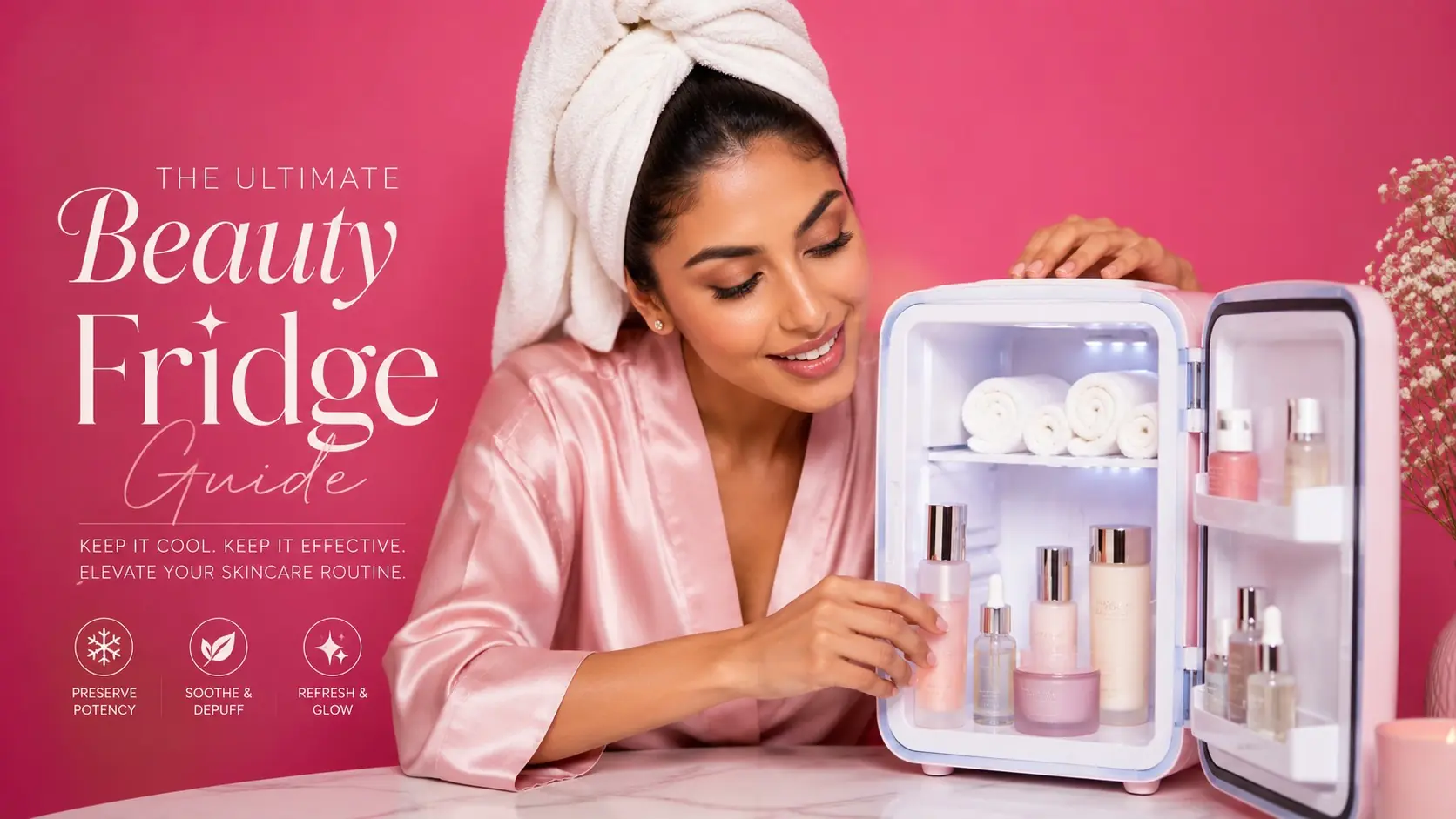
A beauty fridge sounds like peak skincare extra until you actually use one and feel a cold vitamin C serum hit warm skin at 7 a.m. The hashtags #beaut
A beauty fridge sounds like peak skincare extra until you actually use one and feel a cold vitamin C serum hit warm skin at 7 a.m. The hashtags #beautyfridge and #skincarefridge have racked up over 1.2 billion combined views on TikTok, and the trend has graduated from gimmick to a real storage question: what actually benefits from chilling and what gets ruined by it? This guide walks through the products that genuinely belong in cold storage, the ones that don’t, the right temperature range, what to look for when buying a unit, and how to fold a chilled routine into a morning that already feels rushed. Expect honest mythbusting, not blanket hype.
Published · Updated
What a Beauty Fridge Actually Is (and Why It’s Trending in 2026)
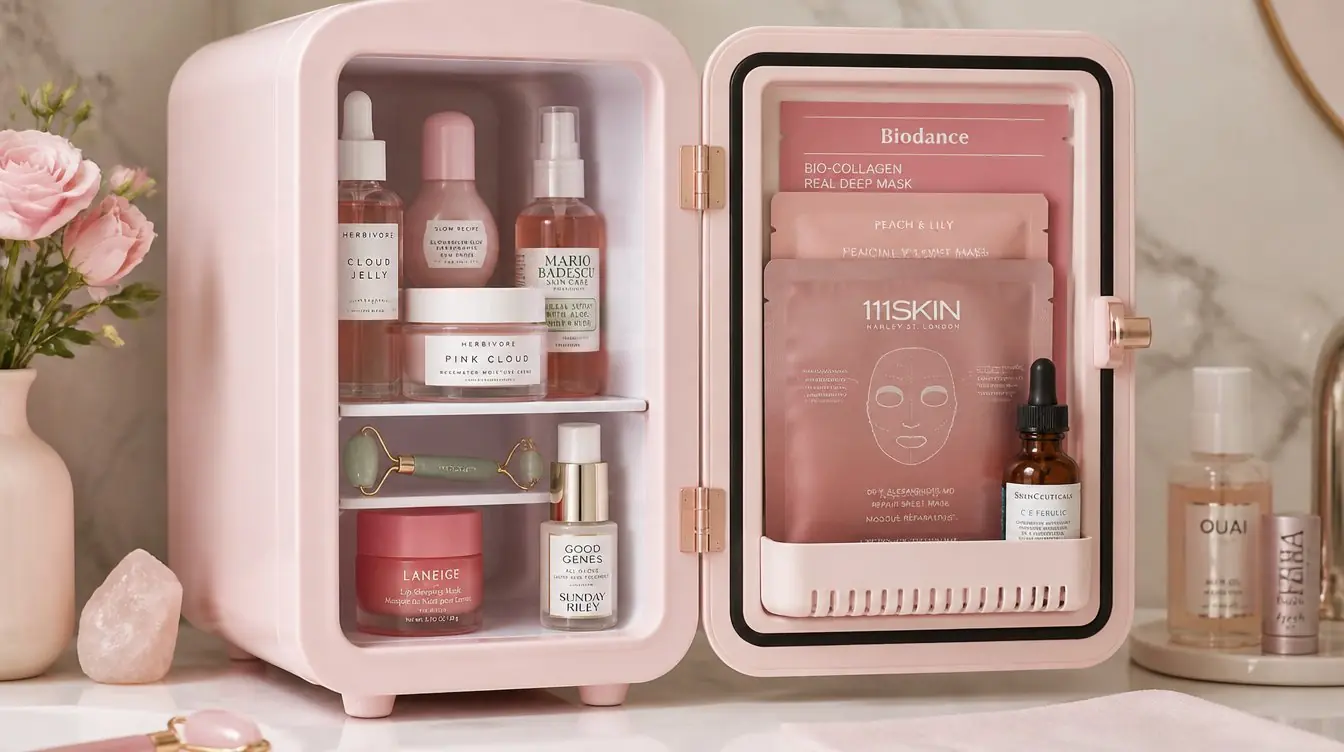
A beauty fridge is a small thermoelectric or compressor-driven refrigerator dedicated to skincare, usually between 4 and 12 litres, designed to sit on a vanity or bathroom shelf. It looks like a dorm fridge that went to finishing school: pastel exteriors, mirrored doors, and LED strips. Functionally, it holds skincare at roughly 35 to 50 degrees Fahrenheit (2 to 10 degrees Celsius), warmer than a kitchen fridge but cold enough to slow oxidation and deliver that cool-touch sensation.
The trend keeps growing because two things converged: skincare got expensive, and short-form video rewards anything that looks satisfying on camera. A beauty fridge solves a practical problem (active ingredients degrade in heat) while photographing beautifully. That combination is hard to kill.
Who a Beauty Fridge Flatters (and Who Should Skip It)
The clearest winners are people who already use water-based active serums, especially vitamin C, hydrating mists, and eye products. Cold storage genuinely extends the working life of these formulas and adds a depuffing kick at application. If you live somewhere warm, where your bathroom regularly climbs past 80 degrees Fahrenheit, a beauty fridge stops being optional. Heat ages active formulas fast.
It also flatters people with reactive or rosacea-prone skin who feel real relief from cold tools first thing in the morning and anyone whose under-eyes show puffiness upon waking. The audience that should skip it: minimalists running a three-product routine of oil cleanser, moisturiser, and SPF. Oils do not benefit from cold, and SPF is fine on a shelf. If your routine fits in a travel pouch, your countertop is your fridge.
How to Set Up Your Beauty Fridge: Step by Step
1. Pick a location. A bathroom vanity works if your room ventilates well; a bedroom dresser is fine and often quieter. Avoid direct sunlight and keep at least two inches of clearance behind the unit for airflow.
2. Run it empty for 24 hours. Most units arrive warm. Let the fridge stabilise at its target temperature before you trust it with a serum.
3. Check the actual temperature with a small thermometer. Marketing copy lies. A 10-dollar fridge thermometer tells you the truth.
4. Sort your skincare into two piles: water-based and active (in) and oil-based and balm (out). Anything labelled “store below 25 degrees Celsius” or “room temperature” stays on the shelf.
5. Load by frequency of use. Morning items (moisturiser, eye cream, vitamin C, and gua sha tool) go on the top shelf. Sheet masks live on the door rack so you can grab one without rummaging.
6. Leave space. A fridge stuffed past 80 per cent capacity circulates air poorly and produces uneven cold spots. Less is more.
7. Wipe it weekly. Skincare drips happen, and you do not want a sticky residue on the inner liner.
The Salon and Dermatology Clinic Version
Walk into any high-end facial bar, and the treatment fridge is full-size, medical-grade, and holds professional-strength serums, masks, and ampoules at a tightly controlled temperature. Dermatology clinics use lab fridges for prescription topicals that genuinely require refrigeration, including some compounded vitamin C preparations and certain biologic creams. The cold helps both stability and patient comfort: a cold mask after a peel calms inflammation in a measurable way.
The pro version of the at-home routine costs between 80 and 200 USD per facial, with the cold-mask finish often included in any modality involving exfoliation. You are paying for the trained hands and the active strength, not just the temperature. The home version cannot replicate that, but it can extend the value of the products you already own.
What Belongs in a Beauty Fridge
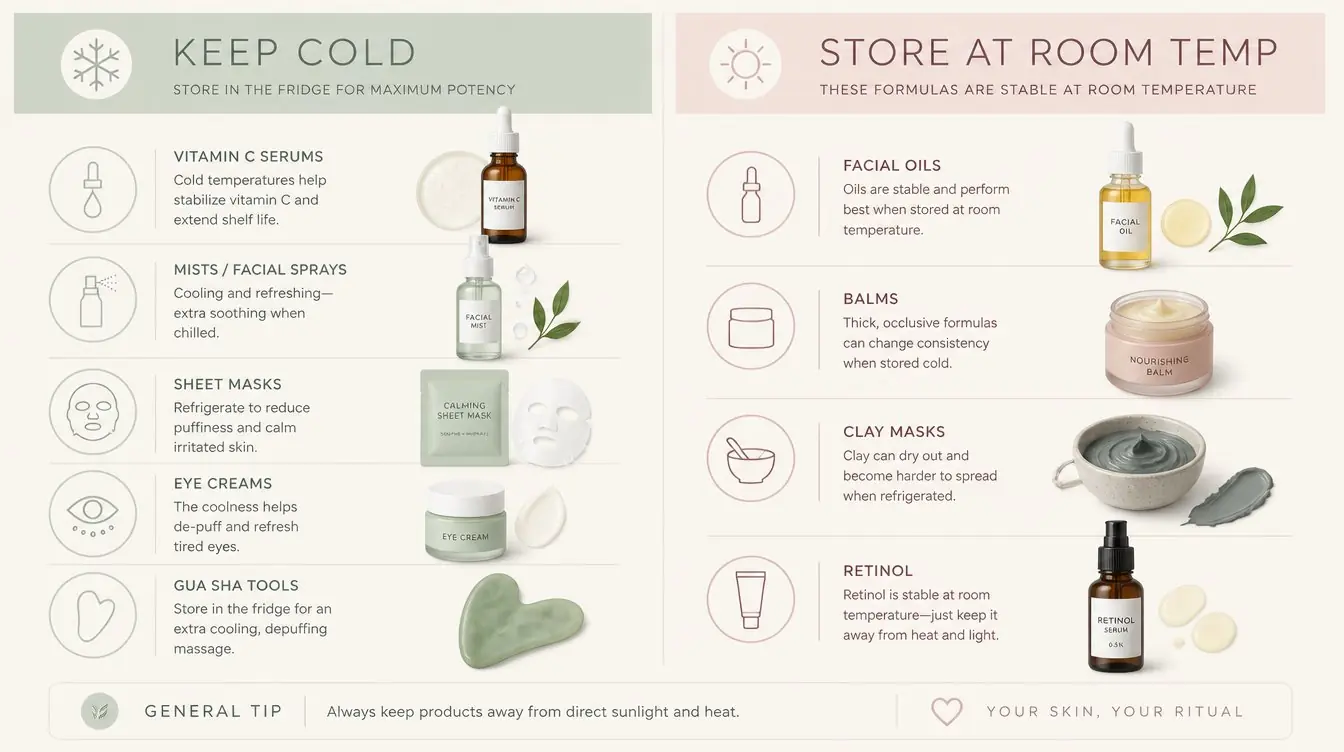
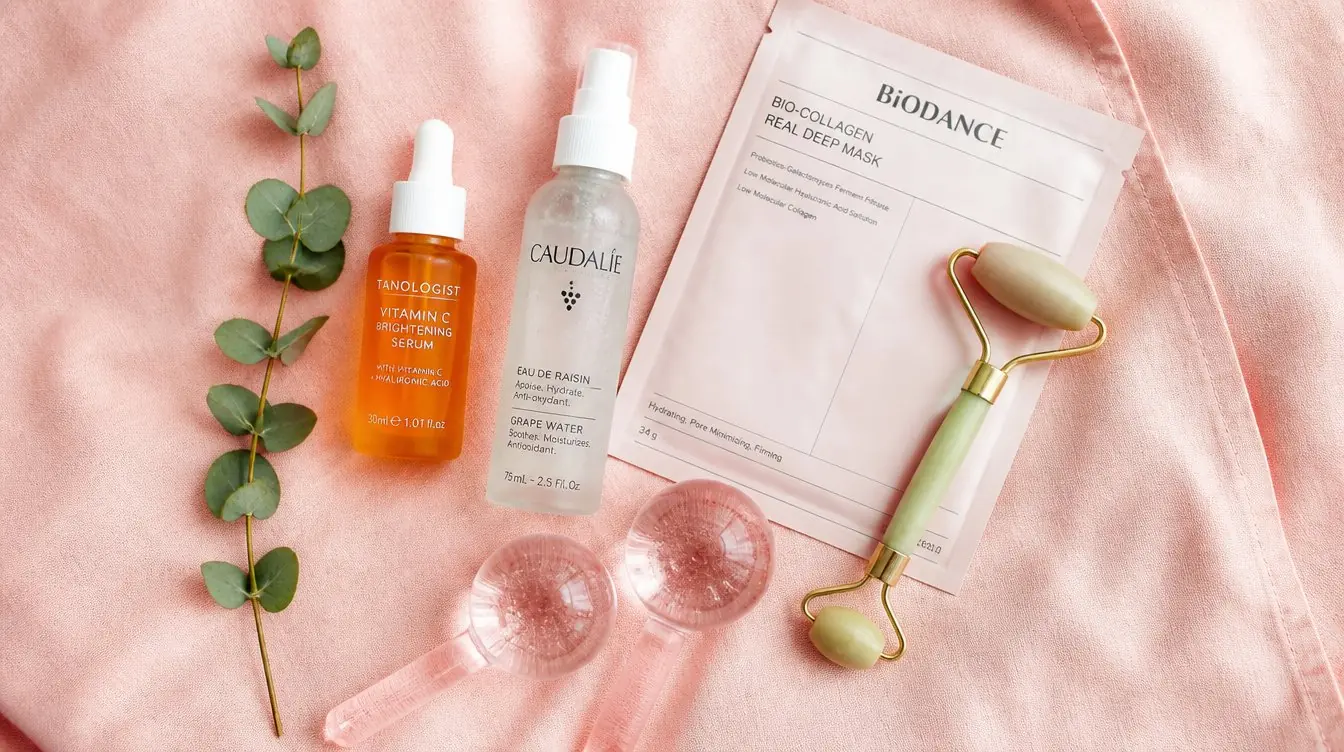
Vitamin C serums are the headline act. L-ascorbic acid oxidises fast at room temperature, turning from a pale straw colour to amber to brown as it degrades. Cold storage slows that reaction meaningfully and stretches a 30 ml bottle from maybe three months to closer to six. The bottle also feels gorgeous on application, which is half the appeal.
Hydrating mists, especially those built around aloe, rose water, or hyaluronic acid, deliver a noticeable cold burst that constricts vessels and reduces redness. Sheet masks are the most satisfying win: a chilled sheet on warm skin pulls puffiness down in about ten minutes. Eye creams targeted at puffiness work harder when cold because the temperature itself does some of the depuffing. Aloe vera gel, post-shave or post-sun, feels twice as soothing chilled.
The tools earn their fridge space too. A cold jade roller, gua sha stone, or pair of ice globes used for three to five minutes in the morning visibly de-puffs the face and brightens the complexion temporarily. Some people keep a small bottle of facial oil out and store only the tool, which is a smart compromise.
What Should Not Go in a Beauty Fridge
Oil-based serums, balms, and any product where oil is the first or second ingredient should stay at room temperature. Cold causes oils to thicken, cloud, or partially solidify, and the texture rarely returns to normal when you warm it back up. Coconut-derived ingredients are especially prone to this.
Clay masks are a hard no. Cold can pull moisture out of the suspension and change the spreadability, leaving you with a gritty mess. Heavy cream moisturisers with certain emulsifier systems can separate when chilled, producing a curdled texture that no amount of stirring fixes. Read the back label: if it says “store at room temperature” or “avoid extreme heat or cold”, believe it.
Retinol is the debated one. Some retinol formulas tolerate cold well; others crystallise or precipitate the active out of suspension at low temperatures. The safest default is to keep retinol at room temperature unless the brand specifically recommends refrigeration. Sunscreen also belongs on the shelf, not because cold ruins it, but because temperature swings between the fridge and the warm bathroom degrade the UV filters over time.
Beauty Fridge vs Kitchen Fridge: How to Choose
The argument for a dedicated beauty fridge comes down to three things: temperature, location, and contamination. A kitchen fridge runs at 35 to 40 degrees Fahrenheit, which is colder than ideal for most skincare. Anything below 35 degrees risks formula damage on water-rich products and can crack glass bottles. A beauty fridge runs warmer, usually 40 to 50 degrees, which is the sweet spot.
Location matters because the fridge needs to be near where you actually apply skincare. Running to the kitchen for a mist before bed is the fastest way to abandon the habit. Contamination is the third issue: food smells and bacteria do not belong near open serum bottles, and serum drips do not belong on your leftovers.
That said, if you only want to chill a sheet mask occasionally and you are tight on budget or counter space, a clean shelf in the kitchen fridge for a sealed mask works fine. The wholesale dedicated-fridge purchase is for people running five or more chillable products.
What Beauty Fridge to Buy: Capacity and Tech
Capacity is the first decision. A 4-litre unit holds roughly six to eight bottles plus a few sheet masks. A 6- to 8-litre unit fits a full active routine comfortably. Anything over 10 litres is overkill for one person and starts to look like a mini bar.
The next call is thermoelectric versus compressor. Thermoelectric units are the standard pastel TikTok fridge: quiet, lightweight, and cheap, usually 40 to 100 USD. They cool to about 18 to 20 degrees below ambient temperature, which is fine in a cool bathroom but struggles in summer heat. Compressor units cost 120 to 250 USD, hold a steadier temperature, and work even when your room hits 90 degrees, but they hum louder and weigh more.
Decorative versus functional is the last lever. The mirror-door, LED-lit fridges look beautiful and store fine. If you want pure performance, look for a unit with adjustable temperature settings, a clear interior light, and removable shelves. Skip anything that only offers one fixed temperature setting; you want control.
Common Mistakes That Ruin the Beauty Fridge Habit
Mistake one: refrigerating everything. New owners get excited and load the fridge with retinol, oils, and SPF, then wonder why their products separate. Fix: Be ruthless about what stays out.
Mistake two: running the fridge too cold. If your fridge has a temperature dial, do not crank it to the lowest setting. Aim for 40 to 45 degrees Fahrenheit. Anything colder than 35°C can damage emulsions and water-based formulas.
Mistake three: skipping the temperature check. The dial setting on a cheap thermoelectric unit is approximate at best. Buy a 10-dollar fridge thermometer and verify.
Mistake four: leaving the door open while doing your routine. Each open-door episode warms the interior. Decide what you need, open, grab, close.
Mistake five: storing food alongside skincare. The fridge becomes a snack station, the seal weakens from frequent opening, and bacteria find their way to your cereal lid. Keep it skincare only.
Mistake six: ignoring expiry dates. Cold storage extends shelf life but does not freeze time. A serum still expires; the fridge just buys you a few extra months.
Beauty Fridge Routine Tips That Actually Work
The five-minute cold gua sha protocol works as a wake-up: pull a chilled gua sha stone from the fridge first thing, apply a thin layer of facial oil (kept at room temperature), and sweep the stone upward and outward across the face for three to five minutes. Puffiness drops, the complexion looks more sculpted, and the whole thing happens before coffee.
The ten-minute sheet mask reset works for evenings: pull a chilled sheet mask from the fridge, apply, and lie down. The cold sheet calms reactive skin, the product penetrates better, and the depuffing effect carries into the next morning.
The two-minute ice globe finish closes a routine well: after moisturiser and SPF, run a chilled ice globe over the face for sixty to ninety seconds. The skin holds the cold long enough to constrict surface vessels and lock the routine in place. Makeup applies more smoothly afterward.
How Long the Beauty Fridge Trend Will Stay Relevant
The beauty fridge is not going anywhere because the underlying logic is real, not aesthetic. Vitamin C does oxidise faster at room temperature. Cold tools do depuff. As long as people invest in active skincare formulas, the case for cold storage holds. Compare this to past beauty appliance trends: facial steamers had their moment and persist as a niche category; LED masks broke through and are now mainstream; ice rollers came and stayed.
The beauty fridge sits closer to the LED mask trajectory. It solves a problem with hardware; the entry price is reasonable, and the visual appeal keeps it on social feeds. Expect the look to evolve (smarter temperature control, app integration, and sustainability claims around energy use), but the category will keep its shelf space well past 2030.
Frequently Asked Questions About Beauty Fridges
Is a beauty fridge actually worth it, or is it just a TikTok trend?
It is worth it if you use water-based active serums, especially vitamin C, or if your bathroom routinely exceeds 80 degrees Fahrenheit. Cold storage genuinely extends the working life of unstable actives and can stretch a 30 ml vitamin C bottle from three months to closer to six. For minimalists running a three-product oil cleanser and moisturiser routine, the fridge is decorative. The trend element is real, but so is the chemistry: heat degrades active ingredients, and a 40 to 100 USD fridge pays for itself in saved serum within a year.
What skincare products should NOT go in a beauty fridge?
Keep oil-based serums, balms, and anything with oil as a top ingredient at room temperature; cold causes them to cloud or solidify. Clay masks change texture when chilled and become harder to apply. Heavy cream moisturisers with certain emulsifiers can separate or curdle. Most retinol formulas do better at room temperature because cold can crystallise the active. Sunscreen also stays on the shelf because temperature swings between the fridge and the warm bathroom degrade UV filters. The rule: if the label says “store at room temperature”, believe it.
What temperature should a beauty fridge be set to?
Aim for 40 to 50 degrees Fahrenheit, which is 4 to 10 degrees Celsius. That range is warmer than a kitchen fridge (typically 35 to 40 degrees Fahrenheit) but cold enough to slow oxidation and deliver a noticeable cool-touch sensation on application. Going colder than 35 degrees Fahrenheit risks damaging water-based formulas and can crack glass bottles. Verify the actual temperature with a cheap fridge thermometer because the dial settings on most thermoelectric units are approximate. Adjust by season: warmer in winter, colder in summer to compensate for ambient swings.
Does keeping vitamin C serum in the fridge make it last longer?
Yes, meaningfully. L-ascorbic acid is one of the least stable active ingredients in skincare and oxidises fast when exposed to heat, light, and air. At room temperature in a warm bathroom, a 30 ml bottle can turn from clear straw to amber to brown within two to three months, losing potency at every stage. Cold storage at 40 to 45 degrees Fahrenheit slows that reaction and typically extends the usable life to five or six months. The same logic applies to other unstable actives like resveratrol, ferulic acid, and some peptide blends.
Can I use a regular mini fridge as a beauty fridge?
You can, but it is not ideal. A standard mini-fridge runs at 35 to 40 degrees Fahrenheit, which is colder than the 40 to 50 degree range that skincare products prefer. That extra cold can damage some emulsions and water-based formulas. If you go this route, set the dial to its warmest setting and verify with a thermometer. Also keep skincare in a sealed bin or on a dedicated shelf away from food, since food odours and bacteria do not belong near open serum bottles. A dedicated beauty fridge is the cleaner solution if the budget allows.
Do sheet masks really work better when refrigerated?
Yes, for two reasons. A chilled sheet mask on warm skin constricts surface vessels, which visibly reduces redness and puffiness within the ten to fifteen minutes of wear. The cold also feels deeply soothing on reactive or rosacea-prone skin, calming heat and irritation in a way a room-temperature mask cannot match. The active ingredients in the serum do not work faster when cold, but the overall sensation and the depuffing effect make the experience noticeably better. Pop a sheet mask in the fridge for at least 20 minutes before applying.
Related Articles
- Red Light Therapy: The Skin Benefits Explained
- Natural Cosmetics: What the Label Actually Means
- Expensive Beauty Products: Are They Worth the Price?
About The Author

COMMENTS