







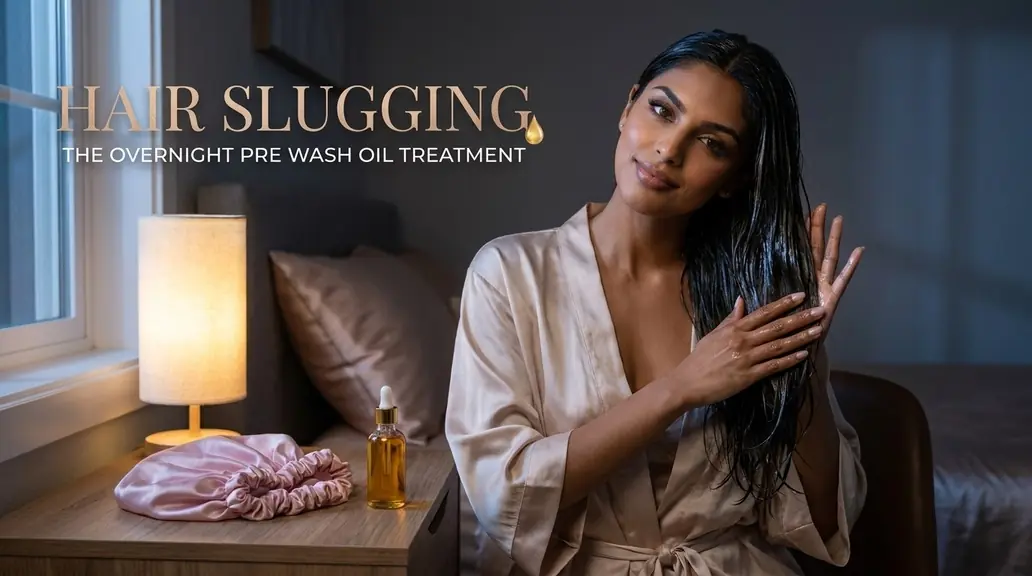
Hair slugging is the overnight pre-wash oil treatment quietly rewriting what a Sunday night hair care routine looks like in 2026. Borrowed from the sk
Hair slugging is the overnight pre-wash oil treatment quietly rewriting what a Sunday night hair care routine looks like in 2026. Borrowed from the skin-slugging playbook but redesigned for lengths and scalp, the method is disarmingly simple: a few drops of light oil, a satin sleep cap, a single night of patience, and a clarifying rinse the next morning. The payoff is mirror shine, a calmer cuticle, fewer flyaways, and lengths that finally feel like they belong to the haircut you actually paid for. This guide covers what slugging really is, who it flatters, how to do it without weighing your hair down, the mistakes that turn it greasy, the smartest oil picks per hair type, and a 6-question FAQ at the end.
Published · Updated

What Hair Slugging Actually Is (and Why It’s Trending in 2026)
Hair slugging is an overnight pre-wash oil treatment where a small amount of lightweight oil is worked through dry hair from mid-length to ends, the lengths are loosely braided or twisted, and everything is sealed under a satin scarf or sleep cap until morning. You sleep in it, then wash it out with a clarifying shampoo. That is the whole routine. The “slug” name borrows from the skincare trend where a thin occlusive seals moisture into the skin overnight; in hair, the oil itself plays the occlusive role, smoothing the cuticle and softening lengths that frizz and dehydrate during the day.
The reason it has dominated For You pages in 2025 and 2026 are partly due to the rise of clean-girl evening rituals, the slow decline of daily hot tools, and the broader shift toward pre-wash care instead of leave-in stacking. Heat styling has dropped, gua sha-style scalp work has risen, and people are looking for a low-friction Sunday-night routine that works while they sleep. Slugging fits that description almost too neatly.
Who Hair Slugging Flatters (and Who Should Adapt the Routine)
Slugging works best on medium-to-coarse hair, chemically processed or colour-treated hair, low-porosity hair that struggles to absorb conditioner, and lengths that have been through a summer of sun, chlorine, or salt water. Curly and coily textures benefit especially, because the oil softens the cuticle and helps define it the next morning rather than fighting it. Deeper skin tones often come with denser, drier hair shafts that drink up overnight oil without going limp; the routine is a natural fit there.
Fine, oily-prone, or already glossy hair needs to adapt rather than skip. The fix targets only the bottom third of the lengths, using a feather-light oil like squalane or a few drops of camellia and shampooing twice in the morning. Scalp slugging is optional and most useful for visibly dry, flaky, or post-colour scalps; if your roots get greasy by day two of a normal wash cycle, leave the scalp alone and slug only the lengths. Anyone with active scalp acne, seborrhoeic dermatitis flares, or recent scalp piercings should sit this routine out until the skin calms.
How to Get Hair Slugging at Home: Step by Step
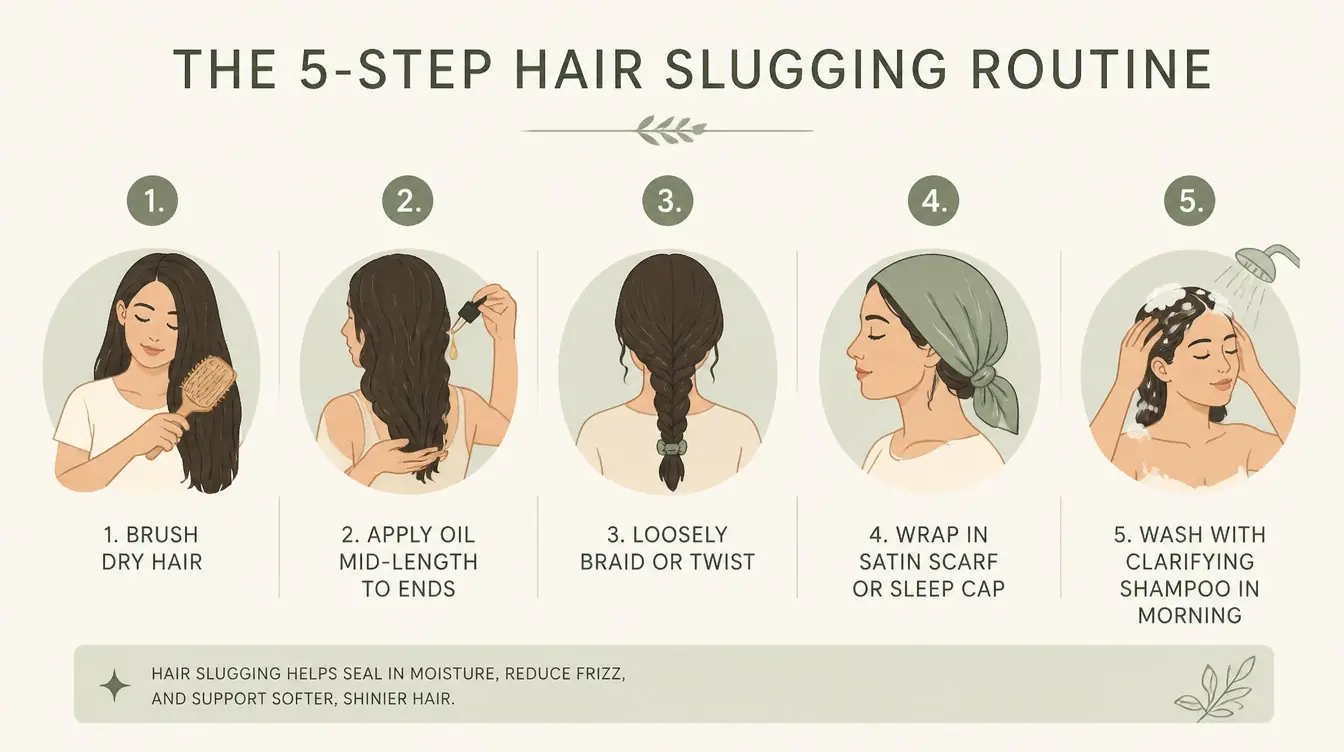
The whole point of hair slugging is that it works without a stylist, without heat, and without a shelf of products. Here is the routine that actually delivers the morning-after shine, in five clear steps.
1. Start on dry, detangled hair. Brush from ends upward with a wide-tooth wooden comb or a soft boar-bristle brush. Damp hair will dilute the oil and slow absorption; wet slugging is a different (and less effective) routine.
2. Warm three to six drops of oil between your palms. Three drops for fine hair, four to five for medium, six for thick or coarse. Anything more is what turns slugging into a greasy disaster the next morning.
3. Apply mid-length to ends first. Smooth the oil down the lengths in a praying-hands motion, then rake gently through with your fingers. Only if your scalp is dry should you press a single extra drop into the roots with your fingertips.
4. Braid loosely or twist into a low bun. A loose plait keeps the oil from migrating to your face and stops the lengths from tangling during the night. A high topknot will dent and crease; keep it low.
5. Wrap in a satin scarf or pull on a satin sleep cap. Cotton pillowcases will wick the oil straight off your hair and onto your bedding, undoing the routine and ruining the sheets in one move. In the morning, shampoo twice with a clarifying or gentle clarifying wash, condition mid-length to ends only, and let air dry or blow-dry as usual.
The Salon / Pro Version
A skilled stylist will turn slugging into a full pre-wash treatment, and the experience is genuinely different from the at-home version. The session usually starts with a scalp consultation and a careful detangle, followed by a steamed scalp massage to open the cuticle, then a custom blend of two or three oils tailored to your porosity, texture, and any chemical history. The blend is applied in sections, often with a tinting brush for precision, and either left under a heated cap for thirty to forty-five minutes or sent home with you to sleep in before a salon wash and blow-out the next morning.
Pricing sits in a wide band. In India, a pre-wash oil treatment at a mid-range salon typically runs 1,500 to 4,500 INR depending on whether a blow-dry is bundled. In the US and UK, a standalone pre-wash and clarifying wash service generally lands between 60 and 180 USD, with luxury salons charging more for premium oil blends and scalp work. What you are really paying for is the diagnosis and wash technique, which matter more than the oil itself.
Common Hair Slugging Variations to Try in 2026
Tip-only slugging. The minimalist version that people with fine, oily-prone hair actually need. Two drops of product were applied only to the bottom three inches, twisted into a loose low ponytail, and topped with a satin cap. The lengths go from dry straw to soft without weighing down the lift at the roots.
Scalp and lengths slugging. The fullest version is recommended once every two weeks for medium-to-coarse hair that has undergone colour treatment, bleaching, or multiple rounds of heat styling. Oil was massaged into the scalp for five minutes, combed through the lengths, slept in, and clarified out in the morning.
Pre-event slugging. One night before a wedding or shoot. The clarifying wash and air-dry the next morning give the cleanest cuticle finish for a blow-dry to grip onto, which is why so many bridal stylists now book it the night before.
Botanical-blend slugging. Custom-blending two oils for what your hair specifically needs: argan and rosemary for thinning, marula and lavender for scalp calm, camellia and squalane for fine hair that still wants the routine.
Bond-builder slugging. A hybrid method applies a bond-repair primer to the mid-lengths and ends first, allows it to sit for ten minutes, and then seals oil over the top before bed. Best for chemically damaged hair; not necessary for healthy lengths.
What to Avoid: Mistakes That Kill the Look
Using too much oil. The single most common slugging failure is using too much oil. More oil does not equal more shine; it equals two shampoos that still feel coated. Stick to the drop count for your hair density.
Skipping the satin layer. Sleeping on a cotton pillowcase will pull the oil into the fabric and abrade the cuticle as you toss and turn. A satin sleep cap or a satin pillowcase is non-negotiable for this routine.
Choosing the wrong oil. Heavy coconut oil on low-porosity hair sits on the surface and refuses to wash out cleanly. Mineral oil and silicone-heavy “hair serums” defeat the purpose. Pick a single-ingredient plant oil that matches your porosity.
Slugging too often. Doing this routine nightly will overload the locks and irritate the scalp. One to two nights a week is the ideal frequency for most hair types, and once every ten days is best for fine hair.
Forgetting the clarifying wash. A regular hydrating shampoo will not lift the oil cleanly off the cuticle. You need a clarifying or gently clarifying formula, used twice, before conditioning.
Slugging on a sweaty or dirty scalp. Trapping oil over product buildup, sweat, or sunscreen residue is how clogged follicles and small whiteheads on the hairline appear. Rinse the scalp the morning before, let it fully dry, and then slug it at night.
Products That Actually Work for Hair Slugging
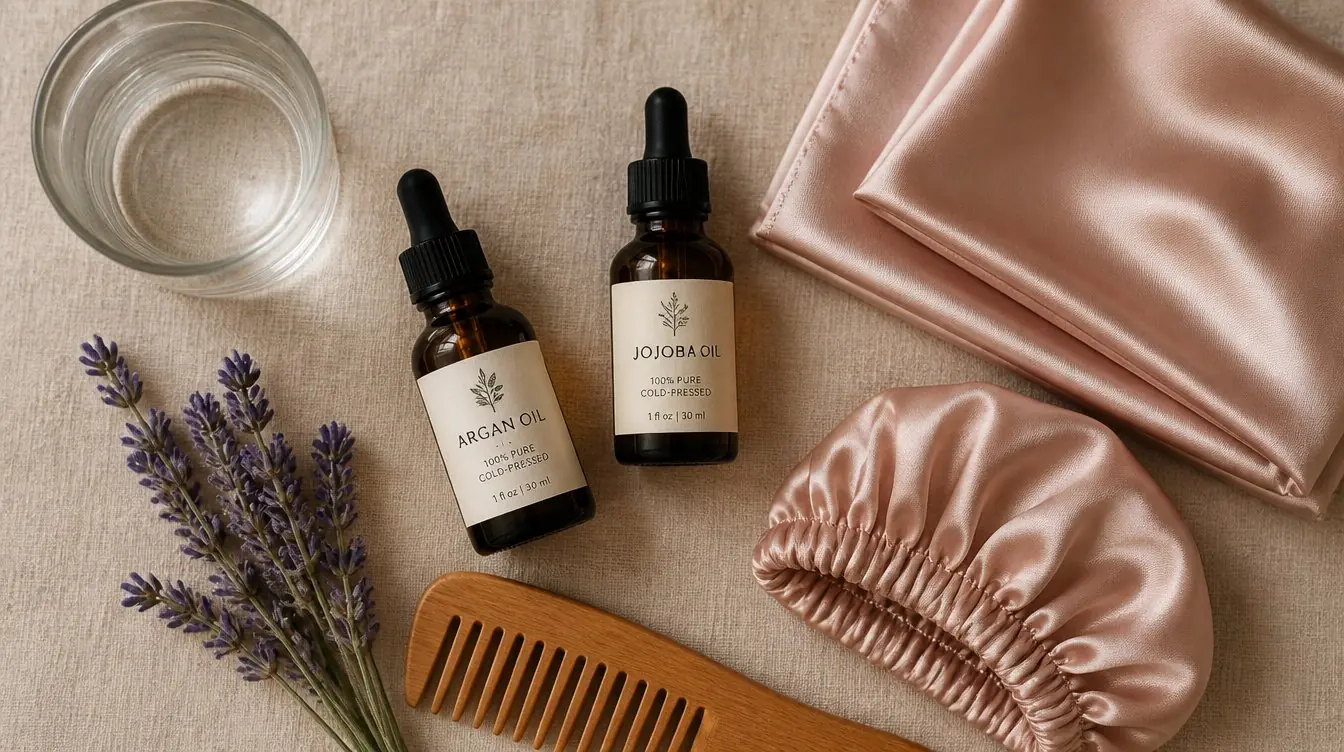
Focus on ingredient transparency over brand storytelling. The oil category to look for is cold-pressed, single-origin plant oils sold in dark amber glass with a dropper. Argan oil is the all-rounder: lightweight enough for most hair types, rich in vitamin E and fatty acids, and the most forgiving for first-time sluggers. Jojoba oil is technically a wax ester and closest to the scalp’s own sebum, which is why it suits combination scalps and fine hair that still wants the routine. Marula oil is a slightly richer choice for coarse, dry, or coily textures. Camellia oil is the silkiest finish for thick, straight or wavy hair. Squalane (plant-derived, not shark) is the featherweight option for hair that goes oily on day two.
On the wash side, the clarifying shampoo matters as much as the oil. Look for surfactants like sodium lauroyl methyl isethionate or sodium cocoyl isethionate, along with chelating agents (sodium phytate and sodium gluconate), that lift mineral and oil residue without stripping. Avoid sulphate-free “co-wash” formulas in this routine; they are not strong enough to break the oil. Skip silicone-heavy serums marketed as “hair oil”; they coat rather than condition. A satin sleep cap with an adjustable drawstring and a wide-tooth wooden comb complete the kit.
Hair Slugging vs Traditional Hair Masks: How to Choose
The two routines look similar from outside the bathroom and behave very differently inside it. A traditional hair mask is a multi-ingredient cream or gel formulated with humectants, proteins, conditioning agents, and often silicones, applied to wet hair for five to thirty minutes and rinsed out the same session. The work is done by formulation. Hair slugging is a single ingredient (oil) applied to dry hair, left on overnight, and washed out the next morning. The work is done by time and occlusion.
Choose a mask when you want a quick mid-week reset, a protein boost after bleach, or a targeted treatment for chemically damaged lengths. Choose slugging when you want low-effort weekly maintenance, smoother cuticles, a softer feel through the lengths, and a routine that does not demand active bathroom time. Many people end up running both: a bond or protein mask once a month for repair and slugging once a week for shine. Slugging is also closer in spirit to Ayurvedic oiling but lighter, shorter, and length-focused rather than scalp-heavy.
How Long the Hair Slugging Trend Will Stay Relevant
Hair slugging hit peak search momentum in late 2025 and will almost certainly stay on salon menus and Pinterest boards through 2027. The reason is structural rather than viral: the routine sits on top of three durable shifts (less heat styling, more sleep-time skincare crossover, and the swing back to pre-wash care) that are not reversing soon. Even when the hashtag cools, the technique stays, because the result is real and the inputs are cheap.
Expect the next twelve to eighteen months to bring more bond-builder hybrids, more pre-blended slugging oils sold in dropper bottles, and a quieter version of the trend on the editorial pages that drops the slug naming and just calls it pre-wash oil treatment. That rebrand is usually how a TikTok trend graduates into a permanent fixture in the routine. Slugging is on that trajectory.
Frequently Asked Questions About Hair Slugging
What is hair slugging, and how is it different from regular oiling?
Hair slugging is an overnight pre-wash routine where a small amount of light oil is applied to dry mid-length to ends, sealed under a satin sleep cap, and washed out in the morning with a clarifying shampoo. Traditional oiling, especially the Ayurvedic version, uses heavier oils like coconut or amla, focuses on the scalp, often involves warming the oil, and can be left on for hours or even multiple days. Slugging is lighter, shorter, length-focused, and built around one wash cycle.
Which oils work best for hair slugging on different hair types?
Argan oil is the safe all-rounder for medium hair. Jojoba oil suits fine hair and combination scalps because its structure mirrors natural sebum. Marula oil is rich enough for coarse, coily, or very dry lengths without going heavy. Camellia oil gives the silkiest finish on thick, straight or wavy hair. Squalane is the featherweight pick for fine, oily-prone hair that still wants the routine. Avoid mineral oil, heavy coconut oil for low-porosity hair, and silicone serums marketed as oil; they coat rather than condition.
Can hair slugging cause breakouts on the scalp or face?
Yes, if you skip a few basics. Migrating oil onto the forehead, temples, or jawline overnight can clog pores and trigger small whiteheads, which is why a satin cap and a low braid matter. On the scalp, trapping oil over sweat, sunscreen residue, or product buildup can clog follicles and cause tender bumps. Rinse the scalp the morning before slugging, let it dry, use only a few drops of oil, and clarify properly the next morning. Skip slugging entirely during active scalp acne or seborrhoeic flares.
How often should I do hair slugging – nightly, weekly, or monthly?
Once or twice a week is ideal for most hair types. Coarse, coily, chemically processed, or very dry hair can tolerate treatment twice a week. Medium hair usually does best at once a week. Fine or oily-prone hair should cap it at once every ten days and slug only the ends. Nightly slugging is too much for almost everyone; it weighs lengths down, irritates scalps, and forces aggressive clarifying that strips colour and shine over time.
Does hair slugging help with split ends and breakage?
Slugging cannot reseal a split end; nothing topical can, and any product that claims otherwise is overpromising. What slugging does do is reduce friction along the lengths, soften the cuticle, and improve elasticity, which slows the rate at which new splits form and reduces mid-shaft breakage from brushing and styling. Combined with routine trims every eight to ten weeks and a bond builder once a month, slugging is a strong supporting routine for damaged, colour-treated, or post-bleach hair, but it is not a substitute for a haircut.
Can fine or oily-prone hair benefit from hair slugging?
Yes, with three adjustments. First, slug only the bottom third of the lengths, never the scalp or roots. Second, use a featherweight oil like squalane or two drops of camellia rather than richer argan or marula. Third, limit the routine to once every ten days, and the next morning, shampoo twice with a gentle clarifying wash. Done that way, fine hair gets the softness and shine benefits without going limp or greasy. Done the full-scalp way, fine hair will look flat and second-day greasy for the rest of the week.
Related Articles
- Overnight Hair Masks: How to Use Them Right
- Hair Plopping: The Towel Trick for Better Curls
- Scalp Detox for Hair Growth Explained
About The Author

COMMENTS