

Douyin makeup is the Korean and Chinese social media technique that makes tired, hooded eye makeup placement eyes look lifted, wider, and visibly youn
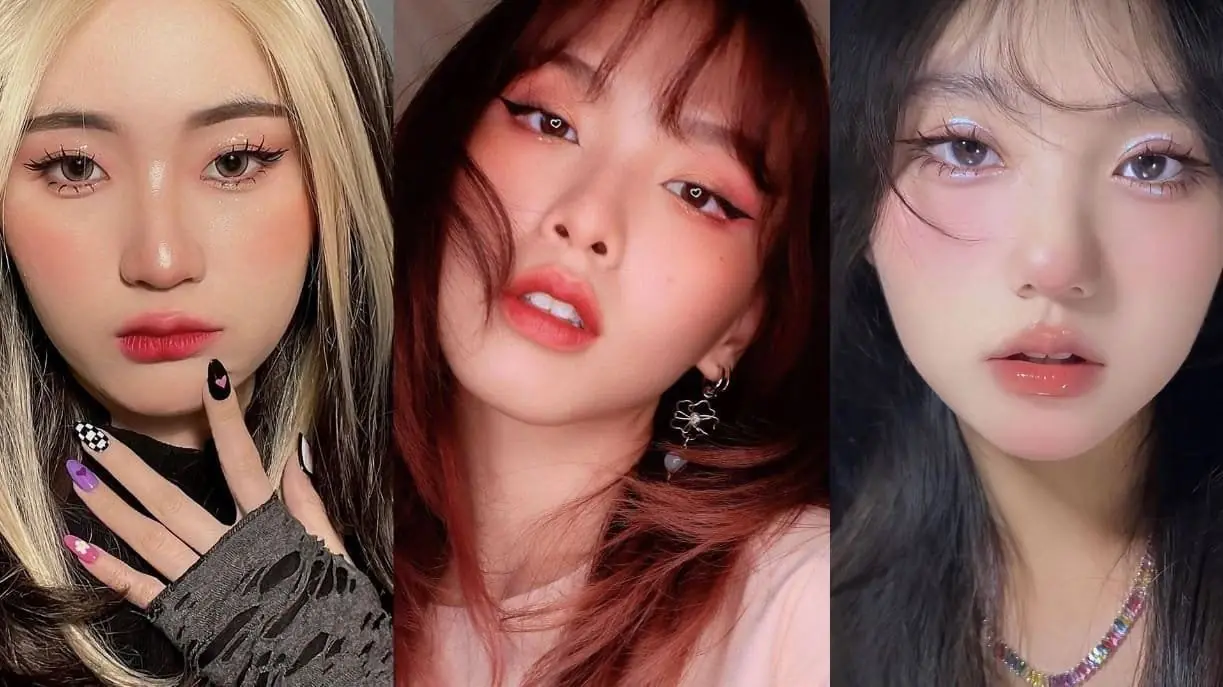
Douyin makeup is the Korean and Chinese social media technique that makes tired, hooded eye makeup placement eyes look lifted, wider, and visibly younger without needles or surgery. If your eyelids feel heavier than they used to, or your gaze looks tired no matter how much you sleep, this trend was made for you. It relies on precise eyeshadow placement, sharp eyeliner geometry, strategic blush, and a signature blurred lip to reshape and open up the entire eye area.
If you have ever looked in the mirror and felt that your eyelids appear heavier than they once did, or that your gaze looks tired regardless of how much sleep you get, this article was written for you. Droopy, hooded, and downturned eyelids are among the most common concerns for women between their mid-twenties and mid-forties. The Douyin technique addresses all three with a precise combination of eyeshadow placement, eyeliner geometry, blush positioning, and a signature blurred lip finish.
By the time you finish reading, you will understand exactly how this technique works, why it works on a visual and anatomical level, which products you need, and how to apply every element step by step. This is the most complete guide to Douyin makeup available outside of a professional makeup studio.
What Is Douyin Makeup and Where Did It Come From?
Published · Updated
Korean makeup artists were among the earliest adopters and refiners of the Douyin aesthetic. South Korea already had a decades-long tradition of skin-first, detail-oriented beauty culture, and the Douyin eye technique folded naturally into that philosophy. Korean artists began sharing their own adaptations of Douyin eye looks on their own domestic platforms, and through cross-cultural beauty communities on Instagram and YouTube, the technique spread westward rapidly.
By 2022 and 2023, the Douyin makeup aesthetic had become one of the most searched beauty trends globally. What made it unique was its central contradiction: it looked effortless, almost bare-faced, but required a high level of technical precision to execute correctly. That contradiction is exactly what makes it so compelling.
How Douyin Makeup Differs from Traditional Korean Makeup
Classic Korean makeup, often called the “glass skin” or “dewy skin” look, focuses heavily on the complexion. The eyes receive relatively subtle treatment, usually involving soft brown shadow, a thin liner, and plenty of mascara. The goal is freshness and youth through luminous skin rather than dramatic eye work.
Douyin makeup shares the dewy skin foundation but adds a far more structured approach to the eyes. Where traditional Korean makeup keeps the eye soft and rounded, Douyin deliberately introduces angular elements. The outer corner of the eye is extended and sharpened. The lower lash line receives careful attention with a specific placement of shadow and liner. The inner corner is brightened intensely. Together, these elements create an upward optical pull that visually repositions a drooping or hooded lid.
The other major distinction is the blush placement. Douyin uses a flushed, almost sunburned gradient blush that runs high across the nose bridge and cheekbones, sometimes even touching the lower eyelid. This placement reinforces the lifted effect by drawing the eye upward and inward rather than outward and downward.
Why the Trend Went Global
Beauty trends travel fastest when they solve a universal problem. Douyin makeup solves one of the most common and emotionally charged beauty concerns that women report: the feeling that their eyes look tired, heavy, or aged. Unlike contouring trends that require a thorough understanding of facial structure, or graphic liner trends that only suit a narrow range of eye shapes, the Douyin technique is adaptable. Its core principles of shadow, highlight, and line geometry apply across ethnicities, eye shapes, and skill levels.
The trend also benefited from extraordinary timing. Post-pandemic mask culture had already trained millions of women to focus intensely on eye makeup as the only visible part of a masked face. Eyes became the primary canvas. Douyin arrived precisely when audiences were most primed to appreciate and experiment with eye-focused techniques.
Understanding Droopy Eyelids: Anatomy and Causes
What Causes Hooded and Droopy Eyelids
The terms “droopy,” “hooded,” and “downturned” are often used interchangeably, but they describe slightly different conditions. Droopy eyelids, clinically called ptosis, occur when the upper eyelid descends lower than its ideal position, partially covering the iris. Hooded eyes refer to an excess of skin on the brow bone that folds down and covers part or all of the mobile lid. Downturned eyes describe an outer corner that angles lower than the inner corner, giving a sad or tired appearance even in neutral expression.
The causes are varied. Genetics play the largest role, and many women in their twenties already have naturally hooded or downturned eye shapes. Aging is the second major contributor. The levator muscle that holds the upper eyelid loses elasticity over time, and the skin of the eyelid thins and begins to sag. Fat redistribution around the orbital bone can also cause the brow to descend, further compressing the lid space. Sun damage accelerates all of these processes by breaking down collagen in the delicate periorbital skin.
How Eyelid Shape Affects Makeup Application
The primary challenge of droopy or hooded eyelids is that the standard rules of eyeshadow placement do not apply. Traditional eyeshadow tutorials instruct you to place your darkest shadow in the crease. On a hooded eye, the crease is hidden when the eyes are open. Any shadow placed exactly in the crease disappears entirely beneath the falling skin.
This means that most women with hooded eyes have spent years following advice that was never designed for their anatomy. They apply eyeshadow according to standard tutorials, open their eyes, and find that all of their careful blending work has vanished. The result looks either completely bare or, worse, a smudged and undefined mess where the shadow transferred to the hood.
Douyin makeup acknowledges this anatomical reality and works with it rather than against it. It places shadow and liner based on how the eye looks when it is open, not on where the crease technically sits when the eye is closed. This shift in approach is what makes the technique genuinely transformative for hooded and droopy lids.
The Science of Visual Perception in Eye Makeup
The Douyin technique is fundamentally an exercise in applied visual psychology. Human eyes are drawn to contrast and follow lines in predictable directions. Dark colors recede visually, while light colors advance. Angular lines that travel upward and outward read as lifted, while lines that curve downward reinforce a drooping appearance.
When shadow is placed at the outer corner of the eye in an upward, wing-like direction rather than following the natural curve of the lower lash line, the brain reads the eye as tilted upward. When the inner corner is flooded with light, the eye appears wider and more open from a wider angle. When the lower lash line receives a thin line of shadow placed slightly below the actual lash line rather than sitting directly on it, the eye appears taller and more defined without looking heavy or closed.
These are not tricks in a superficial sense. They are deliberate applications of how the human visual cortex processes edges, contrast, and spatial relationships. Understanding this science helps you understand why each step of the Douyin method is placed exactly where it is.
Who Benefits Most from Douyin Makeup
Face Shapes That Thrive with This Technique
Douyin makeup’s lifting and lengthening properties make it particularly flattering on round and square face shapes. Round faces tend to have soft, even features without strong angular definition. The sharpness introduced by Douyin’s eyeliner technique and high blush placement adds structure and elongates the overall look of the face. The upward pull of the eye makeup counteracts the circular proportions of a round face and creates a more oval visual impression.
Square faces, defined by a strong jaw and a roughly equal width at the forehead and jaw, benefit from the high, inward blush placement and the upward eye focus. These elements draw attention away from the jaw and redirect the viewer’s gaze toward the upper third of the face. Heart-shaped and oval faces also wear the look beautifully, though they require less adaptation because their natural proportions already align with the aesthetic the technique creates.
Eye Shapes Best Suited for Douyin Makeup
While the technique can be adapted for every eye shape, it was essentially designed for hooded, monolid, and downturned eyes. These three shapes share the challenge of appearing closed or tired in standard makeup. Douyin’s geometry directly corrects this visual impression.
Monolid eyes, common among East Asian women and characterized by the absence of a visible crease, benefit enormously from the technique’s approach to shadow placement above the crease line rather than within it. The technique was partly developed with monolid aesthetics in mind, which is why its Korean and Chinese origins are so deeply embedded in its logic.
Women with almond-shaped eyes, which are widely considered the most universally flattering eye shape, can also wear Douyin makeup effectively. The technique enhances their natural symmetry and adds a fresh, modern edge without overwhelming their existing proportions.
Skin Tones and How to Adapt the Look
One of the most inclusive aspects of Douyin makeup is its color flexibility. The original Korean and Chinese versions of the look lean toward rosy pinks, warm browns, and soft taupes. These shades work beautifully on fair to light skin tones. For medium skin tones, shifting toward deeper mauves, warm terracottas, and copper browns maintains the same lifted effect while complementing the deeper pigmentation of the skin.
Women with deep and rich skin tones can achieve the Douyin look using rich burgundy, deep plum, or warm bronze shades. The key principle is not the specific color but the contrast relationship between the shades. A light, a medium, and a dark tone from the same color family will always create the necessary depth and dimension regardless of which color family you choose.
The blush element of the look also adapts beautifully. Pink blush works for fair skin. Peach, warm coral, and brick blush shades suit medium tones. Deep rose, terracotta, and warm brown blush tones create the same flushed, radiant effect on deeper skin.
Preparing Your Canvas: Skincare and Primer Steps
The Skincare Routine Before Douyin Makeup
Douyin makeup demands a well-prepared skin surface, particularly around the eyes. The delicate periorbital skin is thinner than any other area on the face. It absorbs and reflects texture, dryness, and fine lines more visibly than the cheeks or forehead. Any flakiness, puffiness, or deep lines around the eye area will interfere with the smooth application that the technique requires.
Begin with a gentle eye-area cleanse. Remove any previous makeup thoroughly, paying close attention to the lash line and inner corner. Apply a lightweight eye cream, preferably one containing peptides, caffeine, or hyaluronic acid. Peptides support the levator muscle by improving skin elasticity over time with consistent use. Caffeine temporarily reduces puffiness by constricting blood vessels beneath the skin. Hyaluronic acid plumps the skin surface and reduces the appearance of crepiness.
Allow the eye cream to absorb fully for at least five minutes before moving to primer or foundation. Applying makeup over a still-damp eye cream causes everything to slip, crease, and migrate within hours.
Choosing the Right Eye Primer
Eye primer is not optional for Douyin makeup. It is the structural foundation that makes every subsequent product perform better and last longer. On hooded eyes specifically, the skin of the hood physically presses against the lid throughout the day. Without primer, this pressure causes shadow to transfer to the hood and crease within two to three hours. The crisp lines and precise placement that define the Douyin look will be completely lost.
Choose an eye primer that is matte and slightly tacky in texture. These formulas grip powder eyeshadow most effectively. Apply a thin, even layer across the entire mobile lid, from the lash line up to and just above where you intend to place your highest shadow. Press it in gently with your fingertip rather than rubbing, which can cause the primer to pill.
If you find that shadow still creases, apply a thin layer of translucent or skin-toned powder over the primer before your shadow. This creates an additional barrier and gives the shadow even more to grip.
Setting the Base for Long-Lasting Color
Your foundation or tinted moisturizer should be applied before your eye makeup, especially if you are using a formula that needs to be blended near the eye area. Apply your base, set the under-eye area with a lightweight setting powder, and address any darkness or discoloration with a thin layer of concealer if needed.
Under-eye concealer is an important part of the Douyin canvas. The technique uses the area just below the lower lash line as an active makeup zone. A clean, bright under-eye surface helps the lower-lid placement read crisply rather than muddying into skin discoloration. Choose a concealer that is one shade lighter than your skin tone for this area, and set it well with powder to prevent creasing throughout the day.
Step-by-Step Douyin Eye Makeup Technique
Mapping the Eye and Choosing Your Palette
Before picking up a brush, take a moment to study your own eye shape with both eyes open and looking straight into the mirror. This is the view that Douyin makeup is designed for. Identify where your highest visible point of skin sits when the eye is fully open. This point will be the top boundary of your shadow application. Many women with hooded eyes find that this high point sits considerably higher than where the crease is when the eye is closed.
For your palette, you need three to four coordinating shades: one very light or shimmery shade for highlight, one medium transition shade, one deeper defining shade, and optionally one very dark or slightly smoky shade for the outer corner. A warm brown family works well for beginners because it blends forgivingly and suits most skin tones. As your skill increases, you can experiment with rosy taupes, soft mauves, and dusty peach tones.
Building Shadow Layers for the Lifted Effect
Apply your transition shade first, using a fluffy blending brush. Place it above the natural crease, sweeping it in a windshield-wiper motion to deposit and blend the color into the area that will be visible when the eye is open. The transition shade should not be too dark at this stage. Its job is to create a soft gradient between the lid and the brow bone so that subsequent layers blend seamlessly.
Apply your medium shade to the center of the mobile lid with a flat shader brush. Focus the concentration of color at the center of the lid and blend the edges outward and upward. This creates the rounded, dimensional quality that gives Douyin eyes their characteristic depth.
Place your deeper shade at the outer corner of the eye, extending it slightly beyond the natural end of the lash line in an upward direction. The angle matters enormously here. The shadow should travel upward toward the tail of the brow, not outward in a flat horizontal line. This upward extension is the critical step that creates the visual lift. Blend the inner edge of the dark shade thoroughly so it fades into the medium shade without a harsh line.
Apply your highlight shade to the inner third of the lid and directly to the inner corner of the eye. Use a small, precise brush or your ring fingertip for the inner corner application. Press the highlight in rather than sweeping it, which ensures maximum color payoff in that small but important zone. A shimmery, light-reflecting formula works best here because it catches light and visually pops the inner corner forward.
The Eyeliner Method That Changes Everything
Eyeliner is where the Douyin technique diverges most dramatically from conventional wisdom. The standard advice for droopy eyes has always been to avoid lower lash line liner, which supposedly makes the eye look smaller. Douyin contradicts this advice entirely, and it is right to do so.
On the upper lash line, apply a thin line of dark liner as close to the lash root as possible. The line should be very thin at the inner two-thirds of the lid and gradually thicken toward the outer third. At the outer corner, extend the liner upward in a sharp, upward flick. The angle of this wing should follow the upward direction of your outer shadow placement. This consistency between shadow and liner direction is what makes the lifted illusion read as a cohesive whole rather than a collection of separate techniques.
For the lower lash line, use a soft brown or dark taupe liner rather than black. Apply it to the outer third of the lower lash line only, starting from approximately the middle of the lower lid and extending to the outer corner. Draw this line very slightly below the actual lash line rather than directly on it. This placement creates the impression of a taller, more open eye. Avoid taking the lower liner all the way to the inner corner, which would close the eye and create a heavy, tired effect that directly contradicts the goal of the technique.
Finish with two to three coats of a lengthening and lifting mascara on the upper lashes. Curl the lashes with a heated or traditional eyelash curler before applying mascara for maximum upward lift. On the lower lashes, apply mascara sparingly or not at all. The lower lash zone in Douyin makeup is meant to look soft and natural, not dense or dramatic.
The Douyin Blush and Skin Technique
The Gradient Blush Placement
Blush placement in Douyin makeup is one of its most recognizable and distinctive elements. Forget the traditional placement of blush on the apples of the cheeks. That placement is widely flattering but does nothing for a drooping eye area. Douyin blush travels high, across the nose bridge and up toward the lower orbital bone, sometimes reaching the outer edge of the lower eyelid.
This high placement achieves two things simultaneously. First, it creates a warm, flushed appearance that reads as healthy and youthful. Second, it reinforces the upward visual direction established by the eye makeup, pulling the viewer’s attention toward the upper face and creating a continuous upward sweep from cheek to eye.
Apply blush with a fluffy, dome-shaped brush. Deposit the color first on the higher area, near the nose bridge, and blend it downward and outward across the cheekbone. The densest concentration of color should sit high on the face. The edges should fade naturally into the skin. The finished blush should look like the natural flush of someone who has just come in from a cold walk, not like applied product.
Creating the Glass Skin Effect
The skin beneath all of this eye and blush work should look luminous and perfectly even. Glass skin, a term coined in Korean beauty to describe skin so hydrated and smooth that it resembles glass, is the ideal base for Douyin makeup. Achieving this effect does not require expensive products. It requires the right layering approach.
After your skincare routine, apply a lightweight hydrating primer with a dewy finish. Follow with a sheer to medium coverage foundation or tinted moisturizer in a satin or natural finish formula. Avoid full-coverage matte foundations for this look. They tend to flatten the face and fight against the luminous quality that Douyin makeup depends on.
If you need more coverage in specific areas, use a concealer applied and blended only where needed rather than adding more foundation overall. Set only the areas prone to shine, typically the forehead, nose, and chin, with a fine translucent powder. Leave the cheekbones, temples, and brow bones free of powder so they retain their natural luminosity.
Highlighting for a Three-Dimensional Face
Highlighter in Douyin makeup is used with restraint and precision. The goal is not the bold, metallic highlight associated with heavy contouring. Instead, the highlight should look like natural radiance amplified slightly rather than light applied from outside the skin.
Apply a soft, finely milled highlighter to the very top of the cheekbone, just below the outer corner of the eye. A small amount on the brow bone, directly beneath the arch of the eyebrow, lifts the brow area and reinforces the overall upward aesthetic. A tiny press of highlight to the very center of the nose bridge and the cupid’s bow of the upper lip adds dimension without looking costume-like.
Avoid applying highlighter to the forehead or jaw. These placements can make the face look flat or overly round, which conflicts with the lifted, structured effect that Douyin makeup is designed to create.
Velvet Lips: The Signature Douyin Lip Finish
Choosing the Right Lip Color
The lips in Douyin makeup play a quieter role than the eyes, but the wrong lip color choice can completely undermine the entire look. Douyin lip aesthetics favor shades that are close to the natural lip color but slightly more perfected. Think of the color your lips turn when you are warm and well-rested. That is the target zone.
Rosy mauves, dusty roses, warm nudes with a pink undertone, and soft berry shades all work beautifully depending on your natural lip tone and skin depth. The shade should never be so light that it looks washed out or so dark that it competes with the eye makeup for visual dominance. The eyes are the star of this look, and the lips exist to complete the picture without stealing focus.
For fair skin tones, soft rose and blush pink shades create the right balance. Medium skin tones suit warm rose, nude pink, and soft mauve. Deeper skin tones look beautiful in warm berry, soft plum, and brown-rose shades that still read as natural on richer skin.
The Blurred Lip Application Method
The defining characteristic of the Douyin lip is not the color but the application method. The blurred or “gradient” lip technique deliberately softens the edges of the lip color so that it looks as though the color is coming from within the lip rather than applied on top of it. This technique gives lips a naturally flushed, youthful appearance and integrates the lip into the overall soft-focus quality of the Douyin look.
Begin by applying lip color primarily to the center of the lips, both upper and lower. Use the product directly from the bullet or use a lip brush to place the most concentrated color in the middle section of the lips. Blend the color outward toward the corners of the mouth, but stop before reaching the very outer edges. The outer corners should fade into a lighter, softer version of the color rather than maintaining the full pigmentation.
Gently press your lips together to diffuse the product and soften any hard edges. If the color is still too defined, press a clean fingertip lightly along the outer border of the lip color to blur it further. The result should look as though you applied color to the center of the lips and it naturally faded toward the edges, which is exactly what has happened.
Making the Lip Look Last
The blurred lip technique can be fragile if not set properly. Because the edges are deliberately soft, any smudging tends to show immediately. A thin layer of translucent lip liner applied around the perimeter of the lips before the lip product adds structure and prevents color from bleeding or migrating.
After applying and blending your lip color, press a single layer of tissue gently against the lips to remove excess product. This step also removes any surface moisture that would cause the color to slip. Follow with a very thin layer of the same lip color to refresh the pigmentation. This two-layer blotting technique creates a semi-matte finish that lasts considerably longer than a single application.
Avoid applying lip gloss over the blurred lip. Gloss moves lip color around and will destroy the soft, precise gradient you have created. If you want a slight shine, a very small amount of clear balm pressed only to the very center of the lips adds luminosity without disturbing the gradient.
Products and Tools You Need for Douyin Makeup
Essential Brushes and Applicators
The right tools make the difference between a professional-looking Douyin eye and a muddy, undefined result. You need at minimum four brushes for the eye application. A large, fluffy blending brush handles the transition shadow and all primary blending work. A medium flat shader brush packs color onto the lid. A small, precise pencil or tapered blending brush works the outer corner detail and blends the liner edge. A fine, stiff liner brush applies gel or cream liner with control.
For blush, a dome-shaped or fan brush gives the soft, diffused application the technique requires. Avoid dense, flat blush brushes, which deposit too much color too quickly and make it difficult to achieve the gradient effect.
Brushes do not need to be expensive to perform well. Many affordable brushes from established cosmetic brands deliver excellent results. What matters more than price is the quality of the bristles, which should be soft, densely packed without being stiff, and sized appropriately for your eye area. Replace brushes when the bristles begin to splay or shed, as degraded brushes apply product unevenly.
Best Product Formulas for This Technique
Pressed powder eyeshadows are the most forgiving formula for Douyin makeup. They blend easily, build gradually, and have excellent longevity when applied over primer. Cream shadows can also work beautifully for the lid color application, particularly when set with a matching powder shadow on top. Avoid liquid eyeshadows for the blending-intensive outer corner work, as they dry quickly and leave little room for correction.
For liner, a fine-tip felt pen liner works well for crisp, upward flicks on the upper lid. A soft kohl or gel pencil in brown or taupe is ideal for the lower outer lash line because it can be smudged to a softer finish. Avoid hard pencil liners for the lower lid, as they tend to drag on the delicate lower lash line skin and deposit uneven color.
Blush formulas in powder are the easiest to control for this placement. Cream blushes can also achieve the gradient effect beautifully and tend to look more natural on drier skin types. If you choose a cream formula, apply it before setting your skin with powder so it blends seamlessly into the skin surface.
Drugstore vs. High-End Options
Douyin makeup does not require a high-end budget. Several drugstore brands produce eyeshadow palettes, liners, and blushes that perform at a level comparable to luxury products for this specific technique. The most important investment is in your primer and your brushes, both of which have a direct impact on the longevity and precision of the finished look.
If you are choosing one high-end product to invest in, make it a well-reviewed eye primer. The difference between a high-quality eye primer and a budget alternative is most apparent on hooded eyes, where product migration is a constant challenge. A premium primer can extend the wear of your eye makeup by several hours and keep the crisp placement that defines Douyin makeup intact throughout the day.
For eyeshadow palettes, look for formulas described as highly pigmented and finely milled. These descriptors indicate that the shadows will blend smoothly and deliver color payoff without requiring heavy-handed application. For mascara, a lengthening and lifting formula with a curved brush head supports the upward lash direction that complements the overall lifted aesthetic.
Frequently Asked Questions About Douyin Makeup
Is Douyin makeup only for Asian eye shapes?
No. While the technique was developed within East Asian beauty culture and is particularly well-suited to monolid and hooded eye shapes common in that population, the principles of shadow placement, line geometry, and optical lifting apply to every eye shape and ethnicity. Women with round eyes, almond eyes, deep-set eyes, and protruding eyes can all adapt the technique to their own anatomy. The adjustments required are mostly related to shadow depth and liner thickness rather than any fundamental change in approach. The core concept of placing visual weight upward and outward to create a lifted impression is universally applicable.
Can I wear Douyin makeup if I have very sensitive eyes?
Yes, with some important product substitutions. Women with sensitive eyes or contact lens wearers should prioritize ophthalmologist-tested, fragrance-free products for all areas near the eye. Look for eyeshadows and liners specifically labeled as safe for sensitive eyes or contact lens wearers. Avoid applying any product directly to the waterline, as this places product in immediate contact with the tear film. The Douyin technique does not require waterline application, so this is an easy adjustment to make. If you react to certain primer formulas, try a silicone-free option or a primer specifically formulated for sensitive skin.
How long does Douyin makeup take to apply?
For a beginner, the complete Douyin makeup look from skincare prep to finished lip will take approximately forty-five minutes to an hour. The eye technique specifically, including shadow layering, blending, and liner application, accounts for most of that time. With regular practice, most women reduce this to twenty to thirty minutes. The blending steps benefit from patience rather than speed, so resist the urge to rush the transitions between shadow shades. A well-blended gradient always looks more polished than a quickly applied but harsh one, regardless of how expensive the products are.
Will Douyin eye makeup crease on hooded eyelids?
With proper preparation, creasing can be almost entirely prevented. The combination of a well-formulated eye primer and a light setting powder creates a surface that resists the friction and moisture transfer that cause shadow to crease. Placing shadow above the crease line rather than within it also significantly reduces creasing, because the shadow is applied to the area of skin that is visible and relatively stable rather than the fold of skin that presses closed throughout the day. Touch-up during the day is easy with a small fluffy brush and a matching powder shadow carried in your bag.
What is the difference between Douyin makeup and the fox eye trend?
Both trends share a focus on elongating and lifting the outer corner of the eye, but they achieve this in very different ways and produce distinctly different results. The fox eye trend, popularized around 2020, involves pulling the outer corner of the eye taut with tape or adhesive, applying a very thin, sharp liner that extends steeply upward, and completely shaving or drawing over the tail of the brow to create an extreme almond shape. It is angular, stark, and deliberately dramatic. Douyin makeup, by contrast, creates a lifted effect through shadow and color gradient rather than mechanical pulling or extreme line work. The result is softer, more natural-looking, and does not require physical manipulation of the eye area. Douyin is also a complete face look that includes skin, blush, and lips, while fox eye is an isolated eye technique.
Bringing It All Together
Douyin makeup works because it approaches the face as a system of visual relationships rather than a collection of isolated features. Every element, the upward shadow placement, the angular liner extension, the high blush position, the luminous skin, and the blurred lip, works in concert to create one unified impression: a face that looks rested, lifted, and effortlessly beautiful.
The technique is genuinely democratic in a way that many beauty trends are not. It does not favor one particular face shape, skin tone, or eye shape over another. It adapts to the person wearing it rather than demanding that the person conform to a rigid ideal. For women who have struggled with the feeling that standard makeup tutorials simply do not address their specific eye anatomy, Douyin makeup offers a practical, science-informed alternative that actually delivers results.
The steps to take next are straightforward. Begin with your skincare and primer preparation, which will make every subsequent step easier. Practice the shadow gradient with your eyes open and a mirror positioned at eye level rather than angled upward, which gives you an accurate view of how the placement reads in real life. Master the upward liner flick on one eye before attempting both simultaneously. Build the blush gradient slowly, adding color in thin layers until you reach the right intensity. Finish with the blurred lip and step back to assess the look as a whole.
Douyin makeup rewards practice. The first attempt will teach you more about your own eye shape and how it interacts with color and line than any tutorial can convey in text. Each subsequent application will be faster, more precise, and more naturally adapted to your specific features. Within a week of daily practice, what once felt like a technically demanding process will become second nature, and the lifted, luminous result will feel like your own face at its best.
RELATED ARTICLES:
Korean Glass Skin Routine: How to Get That Dewy Glow at Home
Hooded Eyes Makeup Tips: The Best Techniques for a Wide-Awake Look
Eyeliner Styles for Different Eye Shapes: Your Complete Guide
Blush Placement Guide: Where to Apply Blush for Your Face Shape
Gradient Lip Tutorial: How to Get the Perfect Korean Blurred Lip
{
“@context”: “https://schema.org”,
“@type”: “FAQPage”,
“mainEntityOfPage”: {
“@type”: “WebPage”,
“@id”: “https://beautynfacts.com/douyin-makeup/”
},
“mainEntity”: [
{
“@type”: “Question”,
“name”: “Is Douyin makeup only for Asian eye shapes?”,
“acceptedAnswer”: {
“@type”: “Answer”,
“text”: “No. While the technique was developed within East Asian beauty culture and is particularly well-suited to monolid and hooded eye shapes common in that population, the principles of shadow placement, line geometry, and optical lifting apply to every eye shape and ethnicity. Women with round eyes, almond eyes, deep-set eyes, and protruding eyes can all adapt the technique to their own anatomy. The adjustments required are mostly related to shadow depth and liner thickness rather than any fundamental change in approach. The core concept of placing visual weight upward and outward to create a lifted impression is universally applicable.”
}
},
{
“@type”: “Question”,
“name”: “Can I wear Douyin makeup if I have very sensitive eyes?”,
“acceptedAnswer”: {
“@type”: “Answer”,
“text”: “Yes, with some important product substitutions. Women with sensitive eyes or contact lens wearers should prioritize ophthalmologist-tested, fragrance-free products for all areas near the eye. Look for eyeshadows and liners specifically labeled as safe for sensitive eyes or contact lens wearers. Avoid applying any product directly to the waterline, as this places product in immediate contact with the tear film. The Douyin technique does not require waterline application, so this is an easy adjustment to make. If you react to certain primer formulas, try a silicone-free option or a primer specifically formulated for sensitive skin.”
}
},
{
“@type”: “Question”,
“name”: “How long does Douyin makeup take to apply?”,
“acceptedAnswer”: {
“@type”: “Answer”,
“text”: “For a beginner, the complete Douyin makeup look from skincare prep to finished lip will take approximately forty-five minutes to an hour. The eye technique specifically, including shadow layering, blending, and liner application, accounts for most of that time. With regular practice, most women reduce this to twenty to thirty minutes. The blending steps benefit from patience rather than speed, so resist the urge to rush the transitions between shadow shades. A well-blended gradient always looks more polished than a quickly applied but harsh one, regardless of how expensive the products are.”
}
},
{
“@type”: “Question”,
“name”: “Will Douyin eye makeup crease on hooded eyelids?”,
“acceptedAnswer”: {
“@type”: “Answer”,
“text”: “With proper preparation, creasing can be almost entirely prevented. The combination of a well-formulated eye primer and a light setting powder creates a surface that resists the friction and moisture transfer that cause shadow to crease. Placing shadow above the crease line rather than within it also significantly reduces creasing, because the shadow is applied to the area of skin that is visible and relatively stable rather than the fold of skin that presses closed throughout the day. Touch-up during the day is easy with a small fluffy brush and a matching powder shadow carried in your bag.”
}
},
{
“@type”: “Question”,
“name”: “What is the difference between Douyin makeup and the fox eye trend?”,
“acceptedAnswer”: {
“@type”: “Answer”,
“text”: “Both trends share a focus on elongating and lifting the outer corner of the eye, but they achieve this in very different ways and produce distinctly different results. The fox eye trend, popularized around 2020, involves pulling the outer corner of the eye taut with tape or adhesive, applying a very thin, sharp liner that extends steeply upward, and completely shaving or drawing over the tail of the brow to create an extreme almond shape. It is angular, stark, and deliberately dramatic. Douyin makeup, by contrast, creates a lifted effect through shadow and color gradient rather than mechanical pulling or extreme line work. The result is softer, more natural-looking, and does not require physical manipulation of the eye area. Douyin is also a complete face look that includes skin, blush, and lips, while fox eye is an isolated eye technique.”
}
}
]
}
About The Author

COMMENTS