Low Porosity Hair Routine: 7 Tips for Moisture That Sticks

HomeHair Care

Low Porosity Hair Routine: 7 Tips for Moisture That Sticks

Build the perfect low porosity hair routine and stop product buildup for good. Understand why low porosity hair resists moisture and learn the techniques that finally work.

Hair Steaming at Home for Deep Moisture Penetration
Oatmeal water: its amazing benefits for health, skin and hair
How to Curl Hair Without Heat: 7 Methods for Soft, Lasting Curls

A low porosity hair routine has to work harder for the same hydration result that high porosity hair gets in minutes. When the cuticle lies flat and tight against the hair shaft, water beads off, conditioners sit on top, and oils never quite absorb. This guide walks through a low porosity hair routine in seven steps that get moisture past the cuticle, with the warm-water trick, product timing, and finishing rinse that actually change how your hair feels.

Reviewed by the BeautynFacts editorial team. Last updated: May 2026.

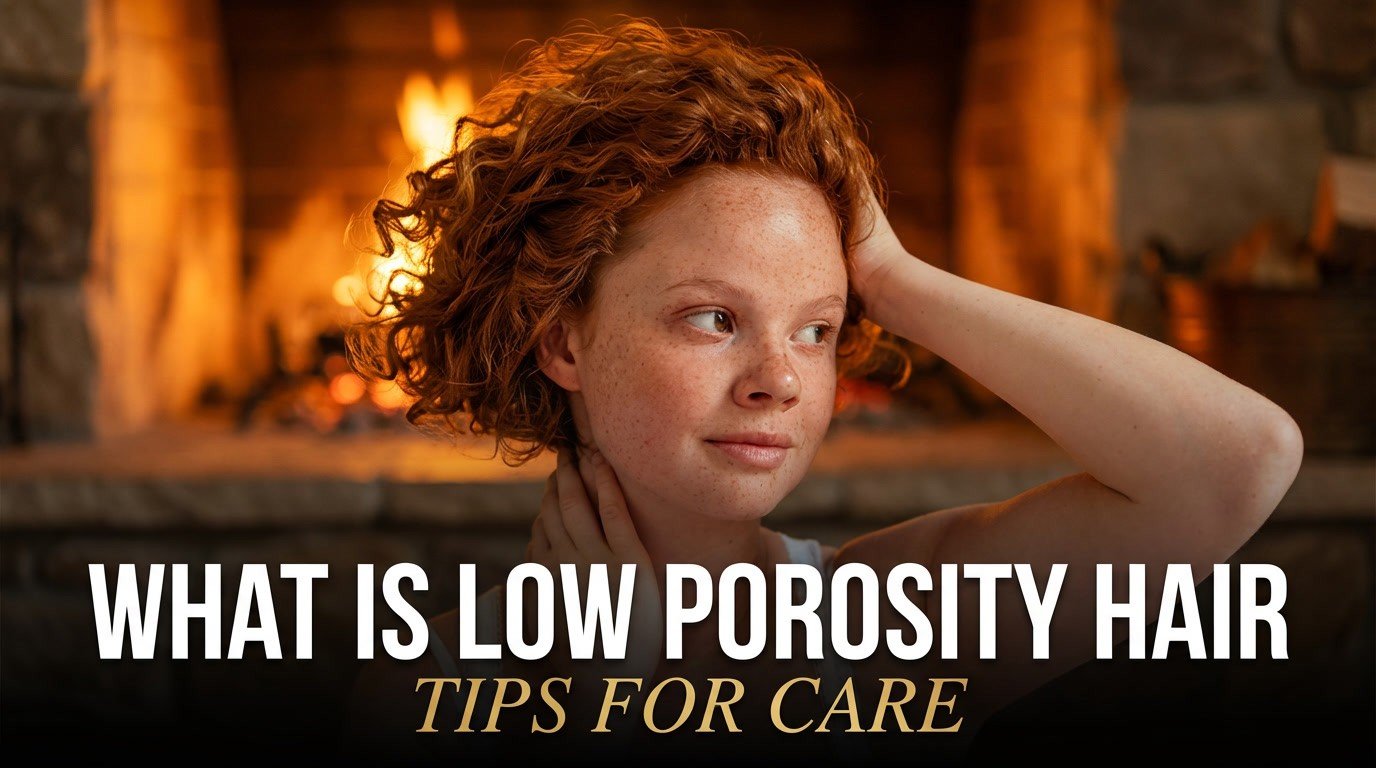
Kaira illustrating low porosity hair routine in a candid home photograph

Low-Porosity Hair Routine: Why Your Products Sit on Top and How to Fix It

If you have ever slathered conditioner onto your hair only to feel it pooling on the surface hours later, you are likely dealing with low-porosity hair. Building a proper low-porosity hair routine is not just about picking the right ingredients. It requires understanding the very architecture of your strands and working with that structure rather than against it. Low porosity hair is incredibly common, frequently misunderstood, and almost always treated the wrong way. The result is a cycle of product buildup, dryness, and frustration that never seems to end. This guide breaks down exactly why low-porosity hair behaves the way it does, what goes wrong with most standard routines, and how to build a step-by-step approach that actually lets moisture in, keeps it there, and leaves your hair genuinely healthy over the long term.

What Low Porosity Hair Actually Means

Hair porosity describes how well your hair is able to absorb and retain moisture. More specifically, it refers to how open or closed the cuticle layer of your hair shaft is. Every strand of hair is made up of three layers: the medulla at the core, the cortex in the middle, and the cuticle on the outside. The cuticle is a protective layer made up of tiny, overlapping, scale-like cells, similar to roof shingles. How tightly or loosely those scales lie determines your hair’s porosity.

The Structure Behind the Problem

In low-porosity hair, the cuticle scales lie extremely flat and tight against the hair shaft. This structure is actually a sign of healthy, undamaged hair, but it creates a major practical challenge: water, conditioners, and moisturising treatments have a very hard time penetrating those tightly sealed scales. Products tend to bead up and roll off rather than absorbing into the strand. This is why people with low-porosity hair often describe their hair as feeling perpetually dry even after deep conditioning or why their hair takes an unusually long time to get fully saturated with water in the shower.

How Porosity Is Determined

Porosity is primarily genetic, meaning it is largely determined by the structure of the hair you were born with. It can be influenced by chemical processing, heat damage, and environmental exposure over time, but for many people, low porosity is simply a trait they will manage throughout their lives. Hair type, texture, and curl pattern are separate characteristics from porosity, which means you can have straight, wavy, or tightly coiled hair that is also low porosity. The two are independent variables, though low porosity is particularly noticeable and problematic in curly and coily hair textures because those hair types already have a more complex moisture journey from scalp to ends.

Signs You Have Low Porosity Hair

One of the most important steps in building a successful low-porosity hair routine is confirming that low porosity is actually the issue you are dealing with. Many people assume they have low porosity because their hair is dry, but dryness can stem from several different causes. Knowing the specific signs of low porosity will help you pursue the right solutions.

The Float Test and Its Limitations

The commonly cited float test involves taking a clean strand of hair and dropping it into a glass of water to see whether it sinks quickly, sinks slowly, or floats. Hair that floats for a long time before sinking is said to have low porosity. While this test is popular, it is not perfectly reliable. The result can be influenced by product residue on the strand, the temperature of the water, and how long the hair has been sitting. It can provide a rough indication, but it should be considered alongside other observable signs rather than used as the sole diagnostic tool.

Observable Signs in Daily Hair Care

The more reliable indicators of low-porosity hair are behavioural. Your hair takes a very long time to become fully wet in the shower even under running water. When you apply products, they seem to sit on the surface rather than soak in, leaving a greasy or coated feeling without actual moisturisation. After washing, your hair takes an unusually long time to air dry because the sealed cuticle also slows the release of water from the strand. Products tend to build up quickly on your scalp and strands, requiring more frequent clarifying washes than people with other porosity types. Conditioners that work beautifully for other people in your family or friend group seem to do nothing for your hair. If several of these descriptions sound familiar, low porosity is very likely the underlying issue.

Why Standard Hair Care Advice Fails Low Porosity Hair

Most mainstream hair care guidance is written with the assumption of normal- to high-porosity hair. High porosity hair, which is often the result of damage, chemical processing, or certain genetic traits, has open, lifted cuticles that absorb moisture very readily but lose it just as quickly. The standard advice to layer rich, heavy conditioners and seal with thick oils works well for high-porosity hair. It is almost entirely counterproductive for low-porosity hair.

The Heavy Product Trap

Because low-porosity hair feels dry, the instinctive response is to apply more product. More conditioner, heavier oils, and richer masks. However, those products cannot penetrate the tightly sealed cuticle and end up sitting on the outside of the strand. Instead of moisturising the hair, they coat it, adding weight and causing buildup that makes the hair feel even worse. The hair becomes limp, weighed down, and potentially prone to tangles and breakage, all while remaining genuinely dehydrated on the inside. This is one of the most common and damaging cycles people with low porosity hair fall into.

The Protein Overload Mistake

Another frequent mistake involves protein treatments. Protein fills gaps and bonds in damaged or porous hair, helping to strengthen and smooth the cuticle. For high-porosity hair, regular protein treatments can be genuinely transformative. For low-porosity hair, protein often has the opposite effect. Because the cuticle is already tightly sealed, protein molecules tend to accumulate on the surface rather than entering the shaft. This can make the hair feel hard, stiff, brittle, and more prone to snapping. Low porosity hair generally needs far less protein and much more moisture, a distinction that standard haircare content rarely makes clearly.

The Role of Heat in a Low Porosity Hair Routine

Heat is one of the most powerful tools available to people with low-porosity hair, and it is one of the key elements that separates an effective low-porosity hair routine from one that produces few results. Understanding why heat works, and how to use it correctly, can entirely change your hair’s ability to absorb moisture.

How Heat Opens the Cuticle

When hair is exposed to warmth, the cuticle scales lift slightly from the shaft, creating temporary openings through which moisture and conditioning ingredients can enter. This is the same mechanism that happens when hair becomes naturally porous over time from heat damage or chemical processing, except that controlled, temporary heat during conditioning allows you to reap the benefits of an open cuticle without causing permanent structural damage. The key word is temporary. Once the heat source is removed and the hair returns to its natural temperature, the cuticle scales close back down, ideally trapping the moisture and conditioning agents inside.

Practical Heat Methods

There are several practical ways to introduce heat into a conditioning session. A hooded dryer used over a plastic processing cap is one of the most effective methods because it distributes heat evenly around all of the hair simultaneously. A steamer specifically designed for hair use works exceptionally well because it delivers moist heat, which is gentler than dry heat and particularly effective at helping hydrating ingredients penetrate. Simply sitting in a warm room with a conditioner-covered head wrapped in a plastic cap can also work, particularly if the cap is worn after a warm shower when residual heat is still present. The duration of heat exposure matters too. Allowing conditioner to process under heat for 20 to 30 minutes is typically far more effective than a five-minute rinse-out application.

Ingredients That Work for Low Porosity Hair

The size of a molecule matters enormously when it comes to low-porosity hair. Small molecules can more readily slip through even a tightly closed cuticle, while large molecules cannot. Choosing products with the right ingredient profiles is a foundational part of any successful low-porosity hair routine.

Humectants and Lightweight Moisturizers

Humectants are ingredients that attract water molecules from the surrounding environment and pull them into the hair shaft. Because they work by drawing moisture rather than applying a physical coating, many humectants are small enough to penetrate low-porosity hair more effectively than heavy conditioning agents. Glycerin is one of the most widely researched and effective humectants for hair. Aloe vera gel contains compounds that have been shown to penetrate the hair shaft and aid in moisture retention. Panthenol, also called provitamin B5, is a small-molecule ingredient that absorbs well and provides flexible conditioning without the heaviness of larger conditioning molecules. Honey is another humectant with a long history of use in hair care. These are the ingredients to look for in your leave-in conditioners, refreshers, and styling products.

Lightweight Oils Versus Heavy Oils

Not all oils behave the same way on low-porosity hair. Heavier oils with large molecular structures, such as castor oil; coconut oil applied in large amounts; and avocado oil, tend to sit on the surface of low porosity hair and contribute to buildup without delivering meaningful internal moisture. Lighter oils with smaller molecules, such as argan oil, grapeseed oil, sweet almond oil, and jojoba oil, are far better choices. Jojoba in particular is structurally very similar to the natural sebum produced by the scalp, making it one of the most compatible oils for use on low-porosity hair. These oils can be used sparingly to seal in moisture after a hydrating treatment, rather than being applied as a primary moisturising step.

Ingredients to Limit or Avoid

Heavy butters such as shea butter and mango butter, while wonderful for high-porosity hair, tend to sit on low-porosity hair and block moisture rather than supporting it. Coconut oil deserves special mention because it is frequently recommended as a universal hair treatment, but research suggests it can penetrate some hair types while sitting entirely on the surface of others. Many people with low-porosity hair find that coconut oil consistently causes buildup and dryness. Heavy silicones that require sulphates to remove are another ingredient category to approach with caution. While some light silicones are water soluble and less problematic, the heavy, non-water-soluble varieties can create a barrier that prevents moisture from reaching the shaft even during your next wash.

Building Your Low Porosity Hair Wash Day Routine

Wash day is the foundation of any hair care practice, and for low-porosity hair, getting the wash day sequence right makes a substantial difference in how the rest of the week goes for your strands. Every step needs to be designed with the closed cuticle in mind.

Pre-Poo Considerations

Pre-poo refers to any treatment applied to dry hair before shampooing. For high-porosity hair, a pre-poo with a heavy oil or butter can prevent excessive moisture loss during shampooing. For low porosity hair, a pre-poo is less commonly necessary and can sometimes create additional buildup that the shampoo then needs to remove. If you enjoy a pre-poo step, choose a very lightweight oil and apply it sparingly to the ends where hair tends to be driest. Avoid applying heavy products to the roots and mid-shaft before washing, as applying heavy products can leave residue that is difficult to remove without aggressive shampooing.

Clarifying Is Not Optional

Because products build up so readily on low-porosity hair, regular clarifying washes are essential. A clarifying shampoo uses stronger cleansing agents to remove mineral deposits, product residue, silicone buildup, and excess oil from the hair and scalp. For most people with low-porosity hair, clarifying every two to four weeks is appropriate, though those who use many products or live in areas with hard water may need to clarify more frequently. Skipping clarifying leads to progressive buildup that worsens the moisture barrier problem, making the hair increasingly resistant to absorbing any product at all. After clarifying, following up with a good moisturising conditioner is important because clarifying shampoos strip away some of the hair’s natural oils along with the buildup.

Shampooing Technique for Low Porosity Hair

Use a sulphate-free or mild sulphate shampoo for regular wash days between clarifying sessions. Apply shampoo primarily to the scalp and allow the suds to rinse through the lengths rather than vigorously scrubbing the mid-shaft and ends, which can cause unnecessary friction and tangling. Warm water is preferable to cold water during shampooing because warmth helps open the cuticle slightly, improving both the cleansing action and the subsequent conditioning step. Rinsing with cooler water at the very end of your conditioning step will help seal the cuticle back down.

Deep Conditioning with Heat

After shampooing, apply your deep conditioner to damp, not dripping wet, hair. Excess water dilutes the conditioning product and creates a barrier that further reduces penetration. Apply the conditioner generously, section by section, and then cover the hair with a plastic processing cap. Apply heat for 20 to 30 minutes using your preferred method. When the time is up, rinse with cool or lukewarm water to close the cuticle and lock in the conditioning benefits. This single step, applying heat during deep conditioning, is often the game-changer that people with low-porosity hair have been missing.

The Low Porosity Hair Routine for Daily Moisture Maintenance

Beyond wash day, maintaining moisture in low-porosity hair throughout the week requires a different approach than what works for other porosity types. The goal is to add and retain moisture without creating buildup, which means keeping products lightweight and being strategic about how and when you apply them.

The LOC and LCO Methods

The LOC method (liquid, oil, cream) and the LCO method (liquid, cream, oil) are popular layering systems for moisturising hair. For low-porosity hair, neither method works well with heavy creams and thick oils. Instead, adapt the principle using lightweight alternatives. Apply a water-based leave-in conditioner or aloe vera gel as your liquid base while the hair is still damp from washing. If you use a cream, choose one with a thin consistency that spreads easily and absorbs quickly. Finish with a light oil to help seal the moisture in place. Keep the amounts small. A little goes a long way with low-porosity hair, and applying too much of even lightweight products can lead to the same buildup problems caused by heavier products.

Refreshing Between Wash Days

Low porosity hair generally holds moisture well once it has been properly moisturised because the sealed cuticle prevents moisture from escaping as quickly as it does from high-porosity hair. This is one of the genuine advantages of the hair type. Between wash days, a light mist of water or a diluted leave-in spray can revive moisture without overloading the hair. Avoid applying fresh layers of product on top of existing product without wetting the hair first, as this practice is a reliable path to buildup. If the hair feels dry, try spritzing with water first and gently working it through before adding any product.

Scalp Care in a Low Porosity Hair Routine

The scalp is the foundation of hair health, and in a low-porosity hair routine, scalp care deserves specific attention. Because product buildup is such a persistent issue with low-porosity hair, the scalp is particularly vulnerable to clogged follicles and residue accumulation that can affect hair growth and scalp health over time.

Avoiding Product Buildup at the Scalp

Keep products designed for the lengths and ends of your hair away from the scalp whenever possible. Heavy conditioning masks, styling creams, and thick oils applied directly to the scalp will mix with natural sebum and create a dense residue that can be difficult to remove. Focus your scalp care on keeping the scalp clean and stimulated rather than moisturised with external products. The scalp produces its own natural oils, and for most people, those oils are sufficient for scalp health. When you direct heavy products to the strands where they belong, you keep the scalp clear and reduce how often you need to use aggressive clarifying.

Scalp Massages and Circulation

Regular scalp massage has well-documented benefits for hair growth and scalp health, helping to improve circulation in the follicular region and distribute natural oils along the hair shaft. For low porosity hair, scalp massages done on damp hair or with a tiny amount of lightweight oil can help work the scalp’s natural sebum downward toward the hair shaft, acting as a supplemental conditioning step. This is especially useful for those with tighter curl patterns where natural oil cannot travel down the curl path as easily on its own.

Protective Styling and Low Porosity Hair

Protective styles, which are styles that tuck away the ends of the hair and minimise daily manipulation, can be a valuable part of managing low-porosity hair. However, the approach to protective styling needs to account for the unique moisture challenges of this hair type.

Moisturizing Before Protective Styling

Going into a protective style with dry or under-moisturised hair is a common mistake. Because low-porosity hair resists moisture absorption, adding hydration after a protective style is in place can be challenging. Instead, ensure the hair is thoroughly moisturised on your final wash day before installing the style. Conduct a full deep conditioning session with heat and allow the hair to absorb as much moisture as possible before styling. This sets the hair up with a solid moisture reserve to draw from while the style is in place.

Managing Moisture During Protective Styles

During the time a protective style is worn, use a light water mist to keep the hair and scalp refreshed. Avoid applying heavy oils or thick products to the scalp area, which can cause buildup around the follicle openings. Keep the scalp clean and the style from going beyond its recommended wear time. Wearing protective styles for too long without proper maintenance can lead to tangling, dryness, and breakage at takedown, particularly where product residue has hardened around the strands.

Low Porosity Hair Routine for Specific Hair Textures

While the core principles of a low-porosity hair routine apply across all textures, the specific application varies between straight, wavy, curly, and coily hair.

Low Porosity Straight and Wavy Hair

Straight and wavy hair with low porosity often presents as perpetually flat, weighed down, and prone to an oily appearance at the roots while still feeling dry at the ends. This is because natural scalp oils travel easily down the smooth hair shaft and accumulate at the roots but cannot penetrate the tightly sealed cuticle further down. People with this texture benefit from keeping products extremely lightweight, clarifying regularly, and using a scalp-focused cleansing approach that avoids over-conditioning the roots. Volumising styling products that do not contain heavy butters or oils are generally the best choice for styling after wash day.

Low Porosity Curly Hair

Curly hair with low porosity is probably the most common combination in discussions about moisture struggles. The S-shaped or spiral curl pattern means natural oils from the scalp cannot travel far down the shaft, and the sealed cuticle compounds the difficulty of getting external moisture in. Deep conditioning with heat is especially critical for this texture, and using a diffuser on low heat settings to dry the hair after styling helps maintain curl definition without adding the friction of air-drying. Lightweight styling gels and mousses work better than thick creams for defining and holding curls without contributing to buildup.

Low Porosity Coily Hair

Tightly coiled hair types, including 4a, 4b, and 4c textures, combined with low porosity, represent perhaps the most challenging combination to manage. Natural oils can barely travel past the first few millimetres of hair growth; the curl pattern is extremely tight, which increases tangling risk; and the closed cuticle means external moisture is difficult to get in. The finger detangling method, performed on very well-conditioned, wet hair under a running shower, minimises mechanical damage. Steam treatments and hooded dryer sessions are particularly valuable for this group, and wash day frequency needs to be balanced carefully since too frequent washing can strip moisture that took significant effort to install.

Common Low Porosity Hair Mistakes and How to Avoid Them

Even with the best intentions, several recurring mistakes undermine the effectiveness of a low-porosity hair routine. Recognising these patterns early can save months of frustration and money spent on the product.

Skipping the Clarifying Step

Clarifying feels aggressive, and for people with hair that is already feeling dry and fragile, the idea of using a stronger cleanser can feel counterintuitive. However, skipping clarification when the hair has significant buildup means that all subsequent moisturising efforts are applied on top of a layer of product residue. The moisturising ingredients cannot reach the hair shaft. After a proper clarifying wash followed by a heat-assisted deep conditioning session, many people are surprised to find that their hair feels significantly softer and more moisturised than it did before the clarifying wash.

Applying Products to Dry Hair

Applying any moisture-based product to dry, low-porosity hair is significantly less effective than applying it to damp tresses. Water acts as the primary moisturising agent, and the additional products are meant to support and lock in that water. If you apply a leave-in conditioner, gel, or cream to hair that is already dry, you are primarily adding coating rather than moisture. For best results, always start with damp hair, either freshly washed or lightly misted, before applying any product.

Using Too Many Products Simultaneously

The temptation to layer multiple products in search of moisture is understandable but self-defeating for low-porosity hair. Each additional layer of product adds to buildup without necessarily adding to the moisture content inside the strand. A streamlined routine with two or three well-chosen, lightweight products will consistently outperform a 10-step routine using heavier products.

Building a Seasonal Low Porosity Hair Routine

Hair care needs shift with the seasons, and low porosity hair is no exception. Temperature and humidity variations affect how hair behaves and what it needs throughout the year.

Cold Weather Adjustments

Cold, dry weather reduces the amount of ambient moisture available for humectants to draw into the hair. In very cold or dry climates during winter months, humectant-heavy products can actually pull moisture from the hair shaft when the air is drier than the hair, causing increased dryness. During winter, balance humectant use with slightly heavier sealants than you might use in summer, but keep them lighter than what high-porosity hair users would reach for. Protective styles and satin-lined accessories become especially important during this season to reduce friction-related moisture loss from cold air and dry indoor heating.

Warm Weather Adjustments

In warm, humid weather, humectants are at their most effective because there is abundant moisture in the air for them to pull from. Low porosity hair users often find that their hair feels better and more moisturised during summer months, and this is largely because the warm, humid environment naturally helps with the moisture absorption challenge. During summer, you may be able to simplify your routine further, reducing product load and relying more on environmental humidity. However, if you spend significant time in chlorinated pools or the ocean, a pre-swim coat of lightweight oil on dry hair, followed by a thorough clarifying wash afterwards, is important for preventing mineral and chemical buildup.

Frequently Asked Questions About Low Porosity Hair Routines

Why does my hair feel dry even after deep conditioning?

This is the most common complaint among people with low-porosity hair, and it almost always comes down to one of two issues. Either the deep conditioner was not given enough time or heat to actually penetrate the tightly sealed cuticle, or there is existing buildup on the hair shaft that is blocking the conditioning ingredients from reaching the strand. Try a clarifying shampoo session first to remove any accumulated residue, then follow with a deep conditioning treatment done under heat for at least 20 to 30 minutes. Many people notice an immediate and dramatic improvement in how their hair feels after clearing the buildup and using heat during conditioning.

How often should someone with low-porosity hair wash their hair?

There is no single answer because it depends on scalp oil production, product use, activity level, and hair texture. However, most people with low-porosity hair do well washing every one to two weeks. More frequent washing can strip away moisture that was difficult to install, and less frequent washing allows buildup to accumulate. Including a clarifying shampoo session every two to four weeks within your regular wash schedule helps manage the buildup that is inherent to this hair type. Pay attention to how your scalp and strands feel rather than following a rigid schedule, and adjust as needed for your specific circumstances.

Is low porosity hair the same as damaged hair?

No, and this distinction is important. Low porosity hair is actually characterised by a smooth, tightly sealed cuticle, which is a structural sign of healthy, intact hair. Damaged hair typically has high porosity because damage lifts and chips away at the cuticle scales, leaving gaps and holes. Many people with low-porosity hair mistakenly pursue protein treatments or other damage-repair strategies because they assume their hair’s dryness must indicate damage. In most cases, the solution for low-porosity hair is not repair but rather technique: finding ways to temporarily open the cuticle enough to let moisture in and choosing the right lightweight ingredients.

Can you change your hair’s porosity level?

You cannot permanently change genetic low porosity, but you can temporarily influence the cuticle’s openness through techniques like heat and steam. You can also avoid practices that would damage the hair and push it toward high porosity, such as excessive heat styling, harsh chemical treatments, and aggressive mechanical manipulation. Managing low porosity is a lifelong practice of working with the hair’s natural structure rather than trying to fundamentally alter it. Focus on mastering the techniques that work with a sealed cuticle rather than searching for ways to change the porosity itself.

What is the best way to detangle low-porosity hair?

Detangling low-porosity hair is most effective when done on soaking wet hair that is saturated with conditioner, ideally a lightweight, slip-providing rinse-out conditioner. The slippery texture of conditioner on wet hair reduces friction and allows tangles to release without snapping the strand. Use your fingers to gently work through tangles from the ends upward toward the roots before using any tool. If you do use a detangling tool, choose a wide-tooth comb rather than a fine-tooth comb or brush, and work slowly. Attempting to detangle dry, low-porosity hair leads to significantly more breakage because dry, sealed cuticles create more friction between strands.

Are there specific hair care practices that make low-porosity hair worse?

Yes, several practices consistently make low-porosity hair more difficult to manage. Applying heavy butters, thick oils like unrefined castor oil, and large amounts of heavy conditioning creams directly to the hair creates stubborn buildup that acts as a barrier to moisture. Skipping clarifying washes allows that buildup to compound over time. Using protein-heavy products too frequently can make the hair feel stiff and resistant. Applying products to completely dry hair reduces their effectiveness significantly. Sleeping on a cotton pillowcase without a satin cover or bonnet increases friction and disrupts the moisture you worked to install on wash day. Air drying in cold weather can cause the cuticle to close rapidly before moisture has had a chance to settle in, leaving the hair drier than expected.

Conclusion: Working With Your Low Porosity Hair, Not Against It

A successful low porosity hair routine is built on one foundational truth: the structure of your hair is not a problem to be solved; it is a set of conditions to be understood and accommodated. Low porosity hair is not damaged. It is not inherently weak or unmanageable. It simply requires a different set of strategies than the ones that work for most other hair types, and the standard advice that dominates mainstream hair care conversations was never designed with low porosity in mind.

The most important shifts to make are consistent and simple. Use heat every time you deep condition. Clarify regularly and without apology. Choose lightweight, small-molecule ingredients over heavy butters, thick oils, and protein-rich formulas. Apply products to damp hair, not dry. Keep your product rotation streamlined rather than layering endlessly in search of a solution that more product alone can never provide.

When you apply these principles consistently, the results become visible over weeks and months. Hair that once felt perpetually coated and dry starts to feel genuinely moisturised. Styles that previously fell flat or felt heavy begin to have movement and life. The time and money you previously spent cycling through products that did not work get redirected into a small selection of the right products used correctly.

Understanding your porosity is one of the most empowering pieces of knowledge you can apply to your hair care practice. It provides a framework for evaluating every product, every technique, and every piece of advice through the specific lens of how your hair actually works. With that knowledge guiding your choices, a truly effective low porosity hair routine is not just possible. It is entirely within reach.

RELATED ARTICLES:

Grasping Hair Porosity and Its Care: An In-Depth Guide to Achieving Lustrous, Healthy Hair
MOB WIFE HAIR: HOW TO GET THE VOLUMINOUS, LIVED-IN LOOK EVERYONE’S OBSESSING OVER
DIY Rosemary Oil Tonics: Science‑Backed Ways to Boost Growth
Glass Hair in 2026: The Products and Techniques for a Frizz-Free, Mirror-Like Finish That Lasts
5 Hair Mistakes While Sleeping

About The Author