




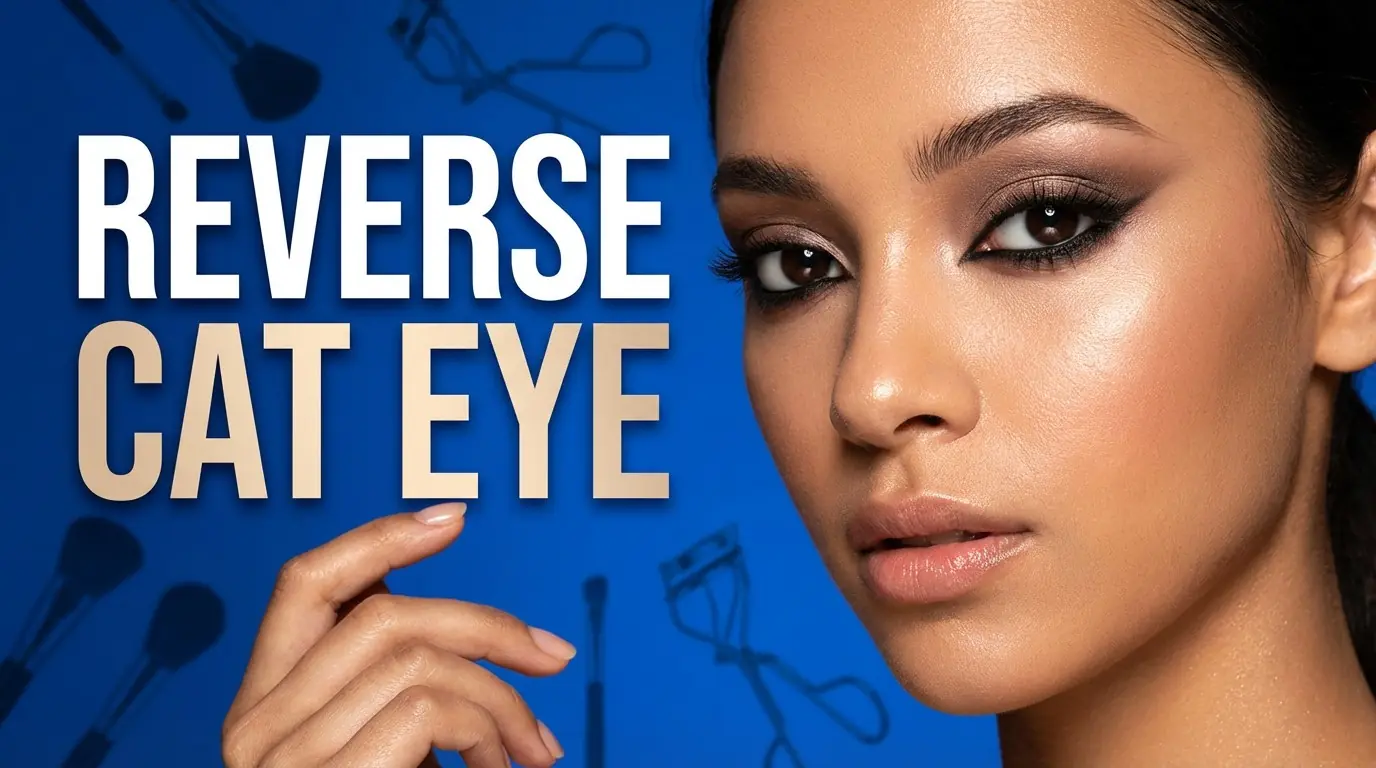
Reverse cat eye flips the classic wing on its head, tracing the flick along your lower lash line for a bold, unexpected liner look. This guide shows y
Reverse cat eye flips the classic wing on its head, tracing the flick along your lower lash line for a bold, unexpected liner look. This guide shows you how to master the reverse cat eye, from mapping the angle to choosing the right liner for your eye shape.
There is something undeniably magnetic about a liner look that defies convention. The reverse cat eye takes everything you know about classic winged liner and flips the script entirely, placing the dramatic extended line beneath the eye rather than above it. The result is a sultry, editorial edge that reads as both retro-inspired and thoroughly modern. Whether you have been perfecting your upper lid wing for years or you are just beginning your liner journey, learning this technique opens up an entirely new dimension of eye makeup artistry.
This guide covers everything from the anatomy of the look and which eye shapes benefit most to the tools that make application easier, the exact mapping method professionals use, and a full step-by-step walkthrough for both beginners and those ready to push into more advanced territory. By the time you finish reading, you will have all the knowledge you need to execute a clean, symmetrical inverted wing every single time.
What Makes the Reverse Cat Eye Different from a Classic Wing
Published · Updated
The reverse cat eye does the opposite. Instead of extending from the upper lid, the wing originates at the outer corner of the lower lash line and sweeps downward and outward, or sometimes straight across. This elongates the eye horizontally rather than lifting it vertically. The effect is often described as smoky, sleepy, or feline in an entirely different sense. It carries a heaviness that is dramatic without being harsh, and it creates a natural downward pull that many people consider deeply flattering and expressive.
Makeup artists working in editorial, runway, and fashion spaces have long used this technique to create looks that photograph beautifully and read as intentional, high-concept choices. The inverted wing was prominent in 1960s and 1970s makeup aesthetics, worn by icons whose beauty approach centred on bold, graphic liner work beneath the eye. It has circulated back into mainstream beauty consciousness thanks to social media, with newer generations discovering that the look adapts remarkably well to everyday wear when the scale is adjusted.
The key visual distinction is this: a classic cat eye elongates and lifts, while a reverse cat eye elongates and grounds. Neither is superior. They simply create different moods, and understanding that distinction lets you choose intentionally based on the feeling you want to convey on any given day.
Which Eye Shapes Benefit Most from the Inverted Wing
One of the most common questions about this technique is whether it works for every eye shape. The honest answer is yes, though the exact angle, thickness, and placement will vary depending on your unique eye geometry. Getting those variables right is what makes a look feel flattering instead of off, and a little anatomical awareness helps a lot here.
Almond Eyes
Almond-shaped eyes are symmetrically proportioned with a slight upward taper at the outer corner and visible lid space. This shape is considered the most versatile in makeup terms, and the reverse cat eye is no exception. Because almond eyes already have a natural balance between lift and length, you can wear the inverted wing at almost any angle without distorting the eye’s proportions. A slightly downward sweep reads as intentional and sultry rather than droopy, which makes this shape ideal for experimenting with bolder, more exaggerated versions of the look.
Monolid Eyes
The reverse cat eye can be a game-changer for monolid eyes, which have little to no visible crease on the upper lid. Traditional upper lid wings on monolids can get lost because the liner tends to fold when the eye is open. Placing the drama along the lower lid keeps it fully visible and creates a striking, graphic effect that stays put throughout the day. Many makeup artists who specialise in East Asian beauty aesthetics favour the lower lid wing precisely because it showcases liner work without the crease issue. The line can be kept relatively thin close to the inner corner and widened as it moves outward for the most flattering effect.
Hooded Eyes
Hooded eyes have a fold of skin that covers part or all of the upper lid when the eye is open. This is one of the most common eye shapes and also one of the most misunderstood in makeup guidance. Because the hood frequently obscures the upper lid liner on hooded eyes, placing liner emphasis on the lower lid is a genuinely strategic move. The reverse cat eye keeps the drama where it can actually be seen, and it can make the eye appear more open if the liner is kept close to the waterline initially and then allowed to extend outward and slightly away from the eye at the outer corner.
Round Eyes
Round eyes have a more circular shape with visible white (sclera) above or below the iris, and they can use the reverse cat-eye to add horizontal length and reduce roundness. The key for this shape is to keep the line angled outward rather than downward, which elongates the eye without emphasising its circular quality. A flick that travels mostly sideways rather than dropping toward the cheekbone tends to be the most flattering approach.
Downturned Eyes
Downturned eyes, where the outer corners angle slightly lower than the inner corners, require the most thoughtful approach with any cat-eye variation. With an inverted wing, the flick can amplify the natural downward movement of the outer corner if it drops too steeply. The solution is to angle the flick more horizontally and draw it outward instead of downward. Some makeup artists even angle it slightly upward at the outermost point to counterbalance the eye’s natural tilt. Done correctly, the reverse cat eye on downturned eyes looks intentionally editorial rather than accidentally droopy.
Deep-Set and Prominent Eyes
Deep-set eyes, which sit further back in the socket, can benefit from lower lid liner work because it brings visual attention forward. Prominent or protruding eyes, which sit closer to the surface, can use the lower lid wing to add depth and reduce the projection effect. In both cases, the reverse cat eye can be a useful tool for reshaping the eye’s perceived depth and position.
The Tools You Need: Liner Types Compared
The liner you choose has a significant impact on how easy the technique is to execute and how the finished look holds up throughout the day. There is no single right answer here, but understanding what each formula does will help you match the tool to your skill level and the finish you want.
Liquid Liner
Liquid liner delivers the crispest, most graphic lines. It dries quickly and, once set, is highly resistant to smudging or fading. The challenge is that precision is unforgiving. Any wobble in your hand shows immediately, and liquid liner is difficult to blend or soften if you want a slightly smoky edge. For the reverse cat eye, a felt-tip liquid liner with a fine or medium brush tip gives you the most control. The pen-style applicators are generally easier to manage than a pot liner with a separate brush, especially if you are still building confidence with the technique.
Gel Liner
Gel liner sits in a small pot and is applied with a brush, typically an angled liner brush or a fine-pointed detail brush. It offers nearly the precision of liquid liner but with a slightly softer, more workable texture. You can slightly blend the edges before it sets for a smudged look at the base of the wing. Gel liner is also excellent for waterline and tightline application, which can be a finishing element of the reverse cat-eye look. It tends to be long-wearing and more resistant to the natural oils along the lower lid than pencil formulas.
Pencil Liner
Pencil liner is the most beginner-friendly option because it is easy to control, easy to correct, and naturally produces a softer line. The limitation is longevity. The lower lash line area is more prone to transferring product because the skin there is thinner and moves more with expressions. A waterproof pencil liner performs significantly better in this area, and setting it with a matching eyeshadow pressed over the top can dramatically extend its staying power. For a smoky or blended take on the reverse cat eye, pencil is excellent because you can blend the line with a smudge brush or even your fingertip to create a more diffused effect.
Felt-Tip Pen Liner
Felt-tip pen liners have become the gold standard for wing application because they combine the precision of liquid liner with the ease of a pen-grip applicator. The tip flexibility matters: a stiffer tip gives more control, while a more flexible felt tip can be used at an angle to create both thin and thick strokes. For the reverse cat eye specifically, a fine felt-tip is ideal for mapping out the initial line and the wing extension, and then a slightly broader tip can be used to fill in the body of the line if you want more drama.
Eyeshadow as Liner
Using an eyeshadow applied with a thin, damp brush gives you the softest, most blendable version of the reverse cat eye. This approach is particularly useful for those who want a diffused, smoky finish rather than a graphic line, and it is also more forgiving of small inconsistencies in line placement. A dark matte shadow (black, deep brown, or charcoal) pressed along the lower lid and then extended outward with an angled brush creates a beautiful, softened version of the inverted wing that wears beautifully into the evening.
How to Map the Angle Before You Draw
The mapping step is where most people skip ahead and then wonder why their wings do not match. Professional makeup artists spend a meaningful amount of time measuring and marking before committing to any line, and that preparation is what makes their symmetrical results look effortless.
The first thing to understand is that the angle of your reverse cat eye wing should be determined by your eye shape and bone structure, not by a reference photo of someone with a different face. Here is how to find the right angle for you.
Start with your face in a relaxed, neutral position, looking straight ahead into a mirror. Hold a thin makeup brush or a clean liner brush against the outer corner of your eye. The natural angle this brush takes as it rests along the outer corner of your lower lid gives you a baseline reference. From there, you decide whether you want the wing to drop below that angle (for a more dramatic, downturned effect), stay parallel to it (for a neutral elongated look), or travel slightly above it (for a more lifted result that works well for downturned eyes).
Using a white or nude eye pencil to mark the intended endpoint of your wing before you draw the actual line is a technique borrowed directly from professional makeup artists. Make a small dot at the point where you want your flick to end. This gives you a target to draw toward rather than making the decision mid-stroke, which is where inconsistency tends to creep in.
To check symmetry before committing to your final line, step back from the mirror and look at both eyes simultaneously. The dots should appear balanced. If one sits lower or farther out than the other, adjust before drawing. Correcting a misplaced dot is much easier than correcting a full liner stroke.
Step-by-Step Application: Beginner Version
If you are new to the reverse cat eye or new to liner work in general, this approach prioritises control and correctness over speed. Mastering the basics here creates the foundation for everything more advanced that follows.
Step 1: Prepare the Skin
Clean, moisturised skin holds liner better than dry or textured skin. Apply your usual base products, including any eye primer you use, and allow them to fully set before touching the eye area with liner. A thin layer of translucent setting powder along the lower lid can also act as a base that helps liner adhere and prevents the oils of the under-eye area from causing the product to slide.
Step 2: Choose Your Liner and Steady Your Hand
For beginners, a waterproof pencil liner or a fine felt-tip pen liner is the most forgiving choice. Rest your elbow on a flat surface if possible, which significantly reduces hand tremor. Your non-dominant hand can gently pull the outer corner of the eye taut, which flattens the skin and makes drawing a clean line much easier.
Step 3: Map Your Endpoint
Use the brush-angle technique described earlier to find your natural angle, then place a small dot with your liner at the intended endpoint of the wing. For a beginner version, keep this dot relatively close to the outer corner of the eye, perhaps half a centimetre to one centimetre beyond the corner, depending on the level of drama you want.
Step 4: Draw the Wing Extension First
This approach feels counterintuitive for many people who are used to drawing liner along the lash line and then adding the flick at the end. For the reverse cat eye, drawing the wing extension first, then connecting it back to the lash line, tends to produce cleaner results because you establish the endpoint before the stroke rather than trying to hit it at the finish.
Draw a short line from your marked dot back toward the outer corner of your lower lash line. Keep this line angled as you planned during the mapping step. It does not need to be perfect yet. This is your guide stroke.
Step 5: Connect to the Lower Lash Line
Starting from the outer corner of your lower lash line, draw a line that follows the lash line inward toward the inner corner. How far you take this line depends on the look you want. A subtle version stays in the outer third of the eye. A more dramatic version follows the full lower lash line. For beginners, the outer half is a comfortable starting point.
Step 6: Fill and Refine
Fill in any gaps between your wing extension line and your lash line stroke to create a solid, connected shape. At this stage, you can also thicken the line at the outer corner if you want more impact. The line can be thicker where it meets the outer corner and tapers as it moves inward toward the inner corner.
Step 7: Clean Up
Dip a fine-tipped cotton swab in micellar water or makeup remover and use it to sharpen any edges that are uneven or to remove any fallout beneath the line. A pointed cotton swab gives you more precision than a round-tipped one. Some people prefer to use a small, flat concealer brush loaded with a touch of concealer to clean up the edges and simultaneously sharpen the lines.
Step 8: Check Symmetry
Step back from the mirror and assess both eyes from a normal viewing distance. Small imperfections that feel enormous up close often disappear entirely from this perspective. If one wing is noticeably longer or at a different angle than the other, make adjustments now rather than adding more product over an already-complete wing on the other side.
Step-by-Step Application: Advanced Techniques
Once you are comfortable with the basic structure, there are several ways to push the reverse cat eye into more sophisticated and editorial territory.
The Double-Wing Variation
One of the most striking advanced variations combines the reverse cat eye with a classic upper-lid wing. When both wings are present and balanced, the eye appears completely bracketed by liner, which creates a dramatic, graphic look with significant visual impact. The key to making this work is ensuring both wings share the same angle relative to the eye. If the upper wing flicks upward at 45 degrees and the lower wing drops at a significantly different angle, the look can feel disjointed. When both lines run roughly parallel, the result feels intentional and precise.
The Graphic Cut-Crease Integration
For those who work with eyeshadow, connecting a graphic cut-crease or a bold lower-lid shadow look to the reverse cat-eye wing creates an editorial result that feels truly high-concept. The liner wing acts as a boundary that frames the eyeshadow work, and the two elements together create a cohesive story. Although this variation requires significant skill in eyeshadow placement and blending, the payoff is a look that reads as professionally composed.
Colored Liner
Coloured liner transforms the reverse cat eye from a classic beauty staple into a creative expression tool. Deep jewel tones like navy, forest green, and plum create a look that reads as dramatic but wearable. Brighter shades like cobalt, emerald, or burgundy push into statement territory. Metallic or shimmer liner formulas add dimension that photographs beautifully. The colour choice interacts with your eye colour in interesting ways: warm brown liners make blue and green eyes appear more vivid, while cool-toned liners tend to make brown eyes look deeper and richer.
The Smudged Edge Technique
Rather than a crisp, graphic line, the smudged reverse cat eye uses a pencil or gel liner that is deliberately blended outward along the lower edge of the wing. This creates a diffused, smoky cloud effect that reads as effortlessly cool rather than precisely graphic. To execute the winged eyeliner look, draw your liner as usual, then immediately use a small smudge brush or the tip of your finger to press and drag the lower edge of the wing slightly outward and downward. Work quickly, as gel and pencil formulas become increasingly difficult to blend as they set.
Layering Products for Longevity
Advanced liner users often layer products to maximise their staying power. A common professional approach is to apply a gel liner as the base layer, press a matching dark eyeshadow over the top while the gel is still slightly tacky, and then finish with a liquid liner stroke over everything. Each layer reinforces the others, and the result is a line that holds up through long days and warm environments where single-product application would fade or migrate.
Fixing Mistakes: Common Issues and Solutions
Even experienced makeup artists make mistakes with liner. The difference is that they know how to fix them quickly and confidently. Here are the most common issues with the reverse cat eye and exactly what to do about each one.
The Wings Are Uneven
Asymmetry is the most common liner frustration and also the most solvable. The rule is to match the shorter wing to the longer one rather than trying to shorten the longer one, because adding product is easier than removing it without disturbing everything around it. If one wing drops lower than the other, use a pointed cotton swab dipped in remover to lift the lower edge of the longer wing until both match. If the lengths are different, extend the shorter one to meet the longer one.
The Line Is Too Thick
A line that has become thicker than intended can be refined by running a cotton swab dipped in remover along the inner edge of the liner to thin it. Moving slowly and checking frequently is important here, as it is easy to remove too much. Alternatively, a fine concealer brush loaded with foundation or concealer pressed along the top edge of the line can visually reduce its thickness without actually removing product.
The Product Has Smudged Beneath the Line
Smudging beneath the lower lid liner is particularly common in warm weather or for those with naturally oilier skin. Clean up any smudged areas with a cotton swab, then set the liner with a matching eyeshadow pressed over the top. A dusting of translucent powder beneath the liner can also help prevent further smudging by absorbing oils before they can cause migration.
The Wing Has Cracked or Chipped
Liquid liner, in particular, can crack if applied over a moisturising base or if the layer is too thick. If this happens, allow the liner to dry completely, then carefully fill in the cracks with a small liner brush loaded with fresh product. Trying to fix wet cracks almost always makes them worse. Going forward, applying liquid liner in thin layers rather than one thick stroke prevents this issue.
The Line Looks Wobbly
A wobbly line usually comes from drawing in a single continuous stroke rather than building the line in short, connected sections. The fix is to clean up the edges with a cotton swab and then redraw using the dot-to-dot method: place a series of small dashes or dots along the intended path of the line and then connect them. This approach takes slightly longer but gives far more control and produces a much cleaner result.
Pairing the Reverse Cat Eye with Eyeshadow
The reverse cat eye works beautifully both as a standalone liner look and as part of a more layered eyeshadow composition. Understanding how shadow interacts with the inverted wing helps you create more cohesive finished looks.
Minimal Shadow Pairings
When the reverse cat eye is the main event, keeping eyeshadow minimal creates a clean, editorial balance. A light wash of a neutral matte shadow across the lid and a soft highlight on the brow bone frame the eyes without competing with the liner. A bare or nearly bare lid lets the lower lid wing command full attention, which is effective for both everyday wear and photographic purposes where strong liner reads better than complex shadow blending.
Smoky Eye Integration
Placing a smoky eye on the upper lid alongside a reverse cat eye on the lower lid creates a fully enveloped, dramatically moody look. The key is to ensure that the colour palette flows between the two elements. If the lower lid liner is black, the upper lid smoke should incorporate that same black at the deepest point of the blend. A mismatch in pigment depth between the upper and lower elements can make the look feel unfinished. Blending the lower corner of the upper lid shadow down to meet the base of the wing creates a seamless transition.
Complementary Color Stories
Using a different colour on the upper lid than on the lower liner creates a contrast that is both deliberate and artistic. A warm copper or bronze shadow on the upper lid paired with a navy or black reverse cat eye on the lower creates a striking interplay of warmth and depth. A cool-toned lilac or silver on the upper lid alongside a deep plum liner wing reads as sophisticated and evening-appropriate. The colours do not need to match; they need to respond to each other in a way that feels intentional.
Cut Crease with Inverted Wing
A clean-cut crease on the upper lid combined with a reverse cat eye creates a look with strong graphic energy. The horizontal precision of the cut crease line above and the liner wing below create a sense of visual framing around the entire eye. This combination photographs exceptionally well and is a favourite in editorial and competition makeup contexts.
Day Version vs. Bold Evening Version
One of the most versatile aspects of the reverse cat-eye is how easily it scales between casual daytime wear and full-drama evening looks. The technique stays the same; what changes is the scale, formula, and any additional elements you add around it.
Creating a Daytime Reverse Cat Eye
A daytime reverse cat-eye stays subtle through restraint in length, thickness, and product type. Starting the liner only at the outer third of the lower lash line rather than tracing the entire lower lid keeps the look fresh and light. A brown or deep taupe liner rather than black softens the look significantly and feels more natural in daylight. Keeping the wing extension short, perhaps just a centimetre beyond the outer corner, maintains the elongating effect without tipping into dramatic territory.
A thin pencil liner blended slightly with a cotton swab, rather than a crisp liquid line, creates a softness that reads well for daytime settings like the office, school, or casual social events. Pairing this with mascara on the upper lashes and a clean, neutral lid keeps the focus subtle but present. A nude or peachy inner corner highlight on the waterline brightens the eye and balances the depth of the outer liner.
Building a Bold Evening Reverse Cat Eye
The evening version of this look is where you let go of restraint entirely. Liquid liner applied in confident strokes along the full lower lash line and extended into a long, dramatic wing creates maximum visual impact. Thickening the line at the outer corner adds weight and drama. The wing can extend two to three centimetres beyond the outer corner for a truly editorial effect.
On the upper lid, a full smoky eye or a deep shimmer shadow adds the dimension that makes evening looks feel complete. Black or dark brown mascara applied generously to the upper lashes, with lower lashes touched with mascara as well, ties the entire look together. For an even bolder result, false lashes on the upper lid in a style that fans outward rather than dramatically upward complement the downward drama of the lower wing beautifully.
A matte foundation with a pressed powder finish keeps the skin from looking shiny under evening lighting, which can sometimes wash out liner work. A deeper or more contoured cheek look balances the boldness of the eye without competing with it.
Common Errors That Undermine the Look
Understanding what commonly goes wrong helps you course-correct before problems develop into the kind of minor disasters that require starting over entirely.
Skipping the Primer Step
The lower lid is one of the most challenging areas of the face to keep makeup in place because the skin is thin, moves constantly with expressions, and is adjacent to the eye, which produces moisture. Skipping a primer or setting powder in this area almost always results in liner that has migrated significantly by midday. A thin layer of eye primer pressed along the lower lid before liner application, or a dusting of translucent setting powder as a base, makes a measurable difference in longevity.
Drawing Too Close to the Waterline Initially
If the liner sits right up against the waterline at the start of application, any slight hand movement can transfer product to the waterline or inside the lash line. Placing the liner just at the base of the lower lashes rather than pressed against the waterline reduces transfer and keeps the look cleaner. You can always add waterline liner as a separate, deliberate step once the main line is set.
Using the Wrong Formula for Your Skin Type
Oily skin under the eye will eat through most non-waterproof liner formulas within a few hours. If you consistently find that your lower lid liner smudges or disappears by afternoon, switching to a waterproof or long-wear formula is the most direct solution. This is a formula problem, not a technique problem, and changing your product choice is the right fix.
Making the Wing Too Steep for Your Eye Shape
A wing that drops too steeply below your eye’s natural angle can appear unintentional rather than dramatic. This is the single most common issue for people with downturned or round eyes, and it comes from copying a reference look without accounting for the difference in eye shape between the person in the photo and them. Always angle the wing based on your eye geometry rather than a fixed external reference.
Ignoring the Transition Between Liner and Bare Skin
Where the wing ends and bare skin begins matters. A perfectly drawn wing appears unfinished if it ends with a slightly jagged edge or a smear of product on the skin beneath it. Taking a moment to clean up the endpoint with a cotton swab and then touching a small amount of concealer below the tip of the wing creates a crisp, clean boundary that makes the entire look feel more polished.
The Science Behind Liner Staying Power
Understanding why a liner behaves the way it does gives you tools to troubleshoot and improve performance systematically rather than by trial and error.
Liner formulas are built around film-forming polymers that create a flexible, adhesive layer over the skin. When these polymers cure or dry fully, they form a bond that resists water and mechanical disruption. The challenge on the lower lid is that the skin in this area contains more sebaceous (oil-producing) activity than other facial areas, and the natural oils that the skin produces can interfere with the polymer-to-skin bond, causing the liner to slip or migrate.
Waterproof liner formulas address the issue of moisture breaking down the film by incorporating waxes and water-repelling agents that prevent moisture from breaking down the film. Setting a liner with powder works by filling in the microscopic gaps in the liner film with fine particles that absorb oil before it can reach and disrupt the liner. This is why the powder-over-liner layering technique is so effective for longevity, particularly on the lower lid.
Temperature also plays a role. In warm environments or during physical activity, increased skin temperature softens the wax components in liner formulas, making them more prone to smudging. This is why high-performance liner formulas designed for longevity tend to have higher-melting-point wax components and why professional makeup artists working on set or in warm conditions often layer products, as described in the advanced techniques section above.
Frequently Asked Questions About the Reverse Cat Eye
Can I do a reverse cat eye with no makeup on my upper lid?
Absolutely. One of the things that makes this technique interesting is how well it works as a standalone feature. With nothing on the upper lid except perhaps mascara on the upper lashes, the lower liner wing becomes a striking, minimalist statement. The contrast between a bare upper lid and a bold lower wing is actually part of what gives the look its editorial quality. You do not need eyeshadow or upper lid liner to make the reverse cat eye work.
How do I keep the liner from transferring to my upper lid?
Transfer from the lower lid to the upper lid, often called the panda eye effect, happens when product from the lower lid picks up on the fold of skin that touches the lower lid when the eye is open or when blinking. Setting your lower liner with a pressed dark eyeshadow over the top reduces surface tackiness and decreases transfer significantly. Using a waterproof formula rather than a standard one also helps. Some people find that dusting a small amount of translucent setting powder in the crease area of the upper lid creates a barrier that further reduces transfer.
Is the reverse cat eye appropriate for mature skin?
Yes, though the approach benefits from some modifications. Thinner skin around the eye tends to show liner more clearly, which can be an advantage in terms of visibility, but it also means that heavy-handed application or overly thick lines can emphasise fine lines. A softer formula, a thinner line that stays close to the lash line, and keeping the wing length moderate rather than exaggerated generally work best. Avoiding tight-line application directly on the waterline can also be more comfortable for mature eyes, which may be more sensitive to waterline products.
What is the easiest liner formula for a beginner to use for this technique?
A waterproof retractable pencil liner offers the gentlest entry point for this technique. It requires no sharpening, applies with a familiar grip similar to a standard pencil, and forgives small wobbles better than liquid liner. A brown-black shade is even more forgiving than pure black because it reads softer. Once you are comfortable with the placement and the technique, switching to a felt-tip liquid liner will give you a crisper, longer-lasting result.
Can the reverse cat eye be worn during the day at work?
A daytime-appropriate version can absolutely be worn in professional settings. The scale matters most: a thin line in the outer half of the lower lid with a modest flick, done in brown or dark taupe rather than black, reads as intentional and polished rather than dramatic. Pair it with a neutral lid, clean brows, and a soft lip, and the overall look is professional with a distinct, personal touch.
Should the lower liner match the upper lid liner?
Matching upper and lower liners creates a unified, harmonious look. Contrasting upper and lower liner colours is a valid artistic choice that creates visual interest. There is no rule requiring them to match. The decision should be guided by the overall look you are building, the colours you are working with elsewhere in the makeup, and your personal preferences. Many makeup artists intentionally use different liner colours on the upper and lower lids to create a layered, complex effect that a single colour would not achieve.
How can I practise this technique without wasting any product?
Practise the wing-drawing motion on your hand or forearm before approaching your eye. The skin on the back of the hand has a texture that simulates facial skin reasonably well, and you can draw and erase repeatedly without the pressure of working close to your eye. You can also use a face primer or moisturiser to simulate the slip of skin when practising on your hand. Once you have developed muscle memory for the stroke, moving to your actual eye feels much more manageable.
What remover works best for cleaning up liner mistakes?
Micellar water on a cotton swab is the most versatile option for cleanup because it removes product without the oiliness that can compromise surrounding makeup. Oil-based removers dissolve waterproof formulas more effectively but can cause surrounding shadow and foundation to slip if used carelessly. For sharp, precise cleanups, a pointed cotton swab dipped in micellar water gives the most control. Makeup remover wipes tend to be too broad and too saturated for detailed liner correction work.
Building Your Reverse Cat Eye Routine
Like any makeup skill, the reverse cat eye improves dramatically with consistent practice. The first few attempts rarely look exactly like the reference in your mind, and that is completely normal. The muscle memory required to draw a clean, even line at a consistent angle develops over time, not in a single session.
Using a forgiving formula on a day when you have time and no plans helps to remove the pressure that makes your hands unsteady. Doing the technique in good natural light rather than artificial bathroom lighting makes it easier to see what you are doing and assess symmetry accurately. Photographing you completing the look is useful for studying it at a slight remove, because the camera captures what others actually see rather than the magnified, distorted view you get in a close-up mirror.
Keeping notes on what worked and what did not, even informal mental notes, accelerates the learning process. If a particular formula consistently transfers, trying a different one is the next logical step. If the wings consistently end up uneven, the solution is to slow down the mapping step and take more time with the endpoint placement before drawing.
The reverse cat eye, like all precision liner techniques, rewards patience and deliberate practice. It is a skill that compounds: every attempt teaches you something, and the looks that feel effortless eventually become effortless because the groundwork was laid through repetition.
Final Thoughts on Mastering the Inverted Wing
The reverse cat-eye is one of those techniques that looks complicated from the outside but becomes entirely approachable once you understand its logic. It is not a variation of the classic cat eye so much as a completely independent liner technique that happens to share the wing element. Its power comes from doing something unexpected, placing the emphasis and the drama where most linear looks do not go, and that very difference from the conventional is what makes it so visually striking.
The eye shapes that benefit most are varied, the tools available to execute it span from the most beginner-friendly to the most professional-grade, and the range of looks achievable, from a barely-there daytime line to a full-scale editorial statement, means this is a technique that can genuinely grow with you through your entire makeup journey. The mapping step, the practice of drawing the wing extension before the lash line, and the habit of cleaning up edges are the three pillars of consistent success with this look, and they apply regardless of what formula you use or what level of drama you are going for.
Approach this technique with the same patience as any new skill, and the inverted wing will become one of the most reliable and expressive tools in your makeup repertoire.
RELATED ARTICLES:
Quick and Tangy ‘Retinol Salad’ Will Boost Collagen and Reverse Skin Aging
How to Care for Your Nails in Winter: Tips for Healthy, Beautiful Nails During the Cold Months
5 Skincare Trends to Watch Out for in 2026
Trim Split Ends Regularly for Healthier, Stronger Hair: The Exact Schedule That Works
Hair Care for the Outdoor Enthusiast: Field-Tested Tips to Protect, Style, and Recover Anywhere
About The Author

COMMENTS