







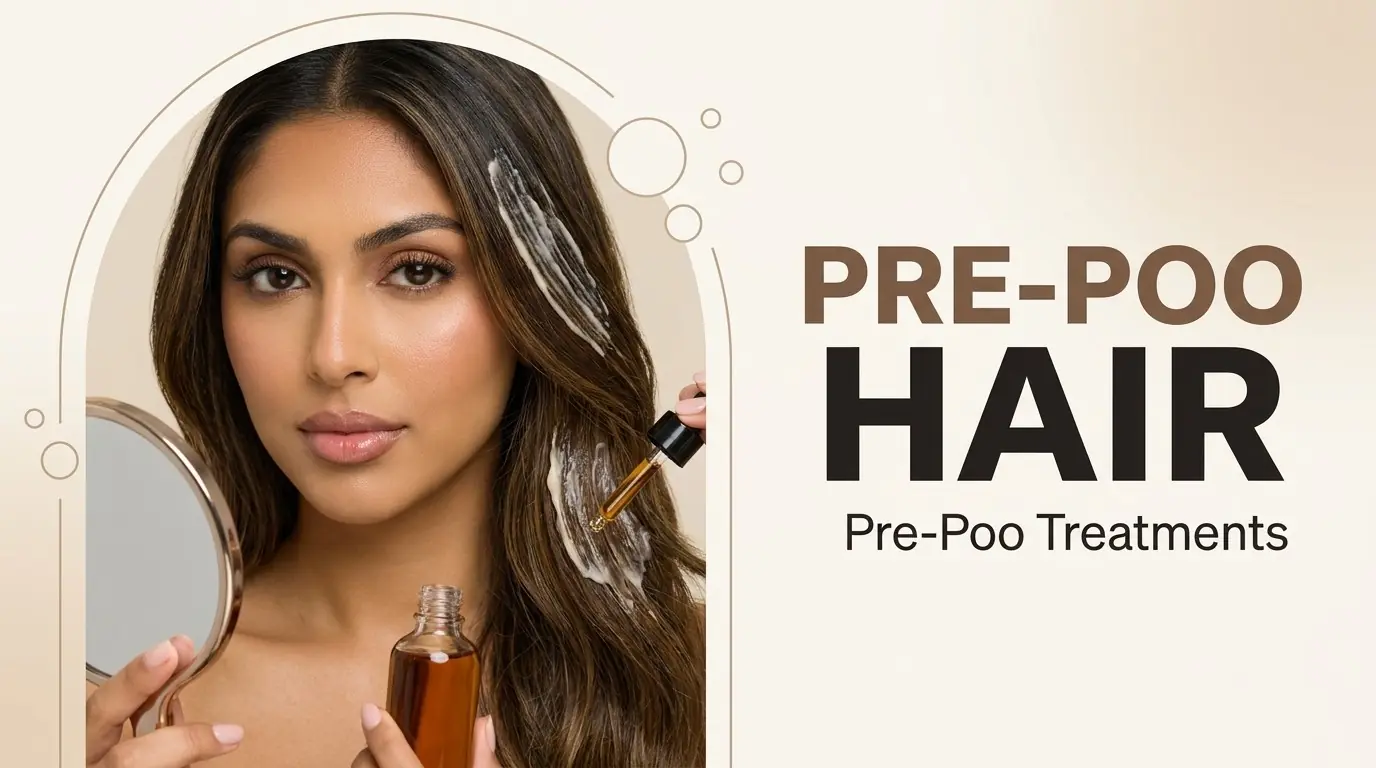
Pre poo treatments are the forgotten pre-wash step generations of Indian women have sworn by for thick, resilient hair. This guide explains how pre po
Pre poo treatments are the forgotten pre-wash step generations of Indian women have sworn by for thick, resilient hair. This guide explains how pre poo treatments coat and protect your strands before shampooing, and how to do this simple Ayurvedic ritual at home.
Pre-Poo Treatments: The Forgotten Step Indian Women Swear By: If you have ever stepped out of the shower with hair that feels like straw despite using an expensive conditioner, you are not alone. The secret that generations of Indian women have quietly passed down through families, from mothers to daughters and grandmothers to granddaughters, has nothing to do with the shampoo or conditioner you use. It has everything to do with what you do before you wash. Pre-poo treatments, short for pre-shampoo treatments, are the often overlooked first step in a wash day routine that can completely transform the health, softness, and strength of your hair. Far from being a trendy social media hack, this practice has deep roots in Ayurvedic tradition and is now being validated by modern hair science. Whether your hair is curly, straight, fine, or thick, understanding and adopting this step could be the single most impactful change you make to your hair care routine this year.
Published · Updated
The logic is beautifully simple. Shampoo, while necessary for cleansing the scalp and removing product buildup, is also quite effective at stripping the hair of its natural oils. Those natural oils, called sebum, are produced by the sebaceous glands at the base of each hair follicle and serve as the hair strand’s natural moisturizer and protector. When shampoo removes too much sebum, the hair cuticle, which is the outermost layer of the hair shaft, lifts and becomes rough. This leads to frizz, breakage, dryness, and tangling. A pre-poo treatment creates a protective buffer that helps the hair retain more of its natural moisture through the entire cleansing process.
Think of it as priming a wall before painting. The primer does not replace the paint, but it makes the final result smoother, longer-lasting, and better looking. In the same way, a pre-poo does not replace your shampoo or conditioner. It makes everything that follows work more effectively.
The Science Behind Pre-Poo Treatments
To appreciate why pre-poo treatments work, it helps to understand the basic anatomy of a hair strand. Each strand is made up of three layers: the medulla at the core, the cortex that gives the strand its strength and color, and the cuticle on the outside. The cuticle is composed of overlapping scales, much like roof tiles or fish scales, that lie flat when the hair is healthy and lift when the hair is damaged or exposed to high pH substances.
Most shampoos are formulated with surfactants, which are cleansing agents that have both water-attracting and oil-attracting ends. Surfactants are highly effective at removing dirt and excess oil, but they also raise the pH of the hair shaft and cause the cuticle scales to lift during the wash. When the cuticle is lifted, the hair is vulnerable. Water enters the cortex rapidly in a process researchers describe as hygral fatigue, and the swelling and contraction of the hair shaft during repeated wet-dry cycles can weaken the protein bonds within the cortex over time.
Studies on coconut oil penetration published in the Journal of Cosmetic Science have shown that certain oils, particularly those with a low molecular weight and linear structure, can penetrate the hair shaft rather than simply coating the surface. Coconut oil, for example, has been shown to reduce protein loss from hair that has been treated before and after washing. When an oil penetrates the cortex before the hair is exposed to water and shampoo, it competes with water for space within the hair shaft. This reduces the degree to which the hair swells during washing, limiting the mechanical stress on the cuticle and cortex.
Beyond penetration, oils applied before shampooing also lubricate the cuticle layer. When hair is coated with oil, the strands slide against each other more easily during detangling, which dramatically reduces the mechanical damage caused by combing through wet, vulnerable hair. This is particularly significant for women with long, thick, or textured hair where detangling is a major source of breakage.
Additionally, some pre-poo ingredients, such as aloe vera and egg proteins, can temporarily fill in gaps along the cuticle, making it smoother and more resilient before it faces the chemical and mechanical stresses of a full wash day routine.
The Indian Hair Care Tradition That Inspired a Global Movement
Long before the term pre-poo entered the vocabulary of beauty bloggers, women across India were practicing champi, the traditional Indian head massage using oil. In many Indian households, applying warm oil to the scalp and lengths of the hair, often hours or even the night before washing, is as routine as brushing teeth. This practice is not merely cosmetic. It is deeply embedded in Ayurvedic medicine, which views oiling the scalp as a way to balance the doshas, improve blood circulation, nourish the hair follicles, and strengthen the overall nervous system through marma points, which are vital energy points concentrated in the scalp.
The oils traditionally used in champi are not chosen randomly. Each has a specific purpose rooted in centuries of practical observation. Coconut oil is the staple across South India, praised for its deep conditioning and protein-loss-reducing properties. Brahmi oil is used to strengthen the roots. Bhringraj, often called the king of herbs for hair, is steeped in sesame or coconut oil and applied to combat thinning and promote growth. Amla, or Indian gooseberry oil, is rich in Vitamin C and antioxidants and is believed to prevent premature graying and strengthen the follicle. Neem oil is used for scalp health and to combat dandruff.
What is particularly striking is how precisely these traditional practices align with what modern hair science tells us about pre-washing oil application. Indian women did not have access to scanning electron microscopes or peer-reviewed journals, but they understood through generations of lived experience that oiling hair before washing produced dramatically better results than conditioning after. This is a powerful example of traditional knowledge anticipating scientific discovery.
The global natural hair movement, which gained tremendous momentum in the 2010s, brought these principles to a wider audience. Women with 4C coils, 3A waves, and everything in between began adopting pre-poo practices and reporting significant improvements in moisture retention, reduced breakage, and easier detangling. Today, the practice has crossed all hair type boundaries and is recommended by professional hair stylists and trichologists for everyone from fine-haired blondes to thick-haired redheads.
The Best Ingredients for Pre-Poo Treatments
Not all pre-poo treatments are created equal. The best ingredient for you depends on your hair type, your specific concerns, and what you have available. Here is a detailed breakdown of the most effective options and how they work.
Coconut Oil
Coconut oil is the gold standard of pre-poo treatments, and for good reason. Its unique chemical structure, particularly its high lauric acid content and low molecular weight, allows it to penetrate the hair shaft rather than simply sitting on top of it. This penetrating ability is what sets coconut oil apart from most other oils, which primarily work by coating the cuticle.
When coconut oil enters the hair shaft before washing, it reduces the amount of water that can enter during the wash, limiting swelling. This protection significantly reduces hygral fatigue, the term used to describe the cumulative damage caused by repeated swelling and contraction of the hair shaft. Research has consistently shown that coconut oil reduces protein loss from both undamaged and chemically damaged hair, making it useful across a wide range of hair situations.
Virgin, unrefined coconut oil is always the best choice because it retains more of the fatty acids and natural compounds that have been shown to benefit hair. Refined coconut oil, while still effective, has had some of these beneficial components removed during processing. For very fine hair, use coconut oil sparingly and focus application on the lengths and ends rather than the roots, as it can weigh fine hair down if applied too close to the scalp.
Castor Oil
Castor oil has a completely different profile from coconut oil. It is thick, viscous, and rich in ricinoleic acid, a rare omega-9 fatty acid that makes up roughly 90 percent of its composition. Ricinoleic acid has been studied for its anti-inflammatory and antimicrobial properties, making castor oil particularly beneficial for scalp health.
Because of its thick consistency, castor oil is rarely used alone as a pre-poo treatment. It is typically blended with a lighter carrier oil such as coconut oil, jojoba oil, or argan oil in a ratio of roughly one part castor oil to three or four parts of the lighter oil. This blend coats the hair shaft with a protective layer that helps seal in moisture, smooths the cuticle, and adds a visible shine and thickness to the strands.
A caution for long hair: in rare cases, castor oil on long hair has been linked to sudden, severe matting known as acute hair felting, which usually has to be cut out. Use only a small amount, keep it diluted with a lighter oil, and comb it through gently rather than piling the hair up while it is coated.
Castor oil is particularly popular among women who are trying to grow out damaged or thinning edges, as it is believed to improve circulation in the scalp when massaged in. While direct clinical evidence for this specific claim is still being explored, the fatty acid profile and the mechanical stimulation of massage together create a plausible mechanism for improving follicle health.
Argan Oil
Often called liquid gold, argan oil comes from the kernels of the argan tree native to Morocco, and it has earned its reputation as one of the most luxurious and effective hair oils available. It is rich in oleic acid, linoleic acid, and Vitamin E, a powerful antioxidant that protects the hair from oxidative stress caused by sun exposure, heat styling, and environmental pollution.
Argan oil is lighter than coconut or castor oil, making it an excellent choice for fine or straight hair types that cannot handle heavier oils without becoming greasy. It does not penetrate the hair shaft as deeply as coconut oil, but it forms a silky coating on the cuticle that smooths frizz, increases elasticity, and adds a luminous shine. As a pre-poo treatment, argan oil is particularly beneficial for color-treated hair because the antioxidants help counteract some of the oxidative damage caused by bleach and hair dye.
A small amount goes a long way with argan oil. Two to three drops can be warmed between the palms and worked through the mid-lengths and ends before allowing it to sit as part of a pre-poo treatment. Because of its light texture, it can also be layered under a heavier oil or mixed into a pre-poo mask for a more intensive treatment.
Aloe Vera
Aloe vera brings a different kind of benefit to a pre-poo routine. Rather than providing an oil-based protective coating, aloe vera works through its water-based gel composition and its unique combination of polysaccharides, enzymes, vitamins, and minerals. The gel from the aloe plant has a pH that is close to the natural pH of the hair shaft, making it a natural pH balancer that can help soothe a lifted cuticle.
Used as a pre-poo treatment, either on its own or mixed with an oil, aloe vera adds a layer of hydration to the hair before washing. Its polysaccharides form a lightweight film over the hair that helps retain moisture and reduce static. For women with naturally dry or high-porosity hair, adding aloe vera to a pre-poo blend can make a noticeable difference in softness and manageability after washing.
Fresh aloe vera gel, scooped directly from the leaf, is the most potent form. Store-bought aloe vera gels are a convenient alternative but should be chosen carefully. Look for products with aloe vera listed as the first ingredient and avoid those with artificial fragrances, alcohol, or excessive preservatives that can dry out the hair.
Eggs
Eggs are one of the oldest and most effective hair treatments in the world, appearing in beauty traditions from ancient Rome to medieval Europe to modern India. The science behind their effectiveness is clear: eggs are composed of complete proteins, meaning they contain all the essential amino acids that form the building blocks of keratin, the protein that makes up 90 percent of each hair strand.
When beaten eggs are applied to hair as a pre-poo treatment, the proteins in the egg white and yolk temporarily bond to and fill in gaps along the hair shaft. This process, called protein filling, makes each strand temporarily thicker, stronger, and more resistant to breakage. The egg yolk additionally provides a rich source of lecithin and fatty acids that moisturize and add softness, while biotin in the yolk supports overall hair health.
Because eggs are highly effective at stiffening the cuticle and adding protein, they should be used with some care by women with protein-sensitive hair. Signs of protein sensitivity include hair that becomes brittle, stiff, or snaps easily after protein treatments. For those without this sensitivity, an egg pre-poo treatment once every two to four weeks can significantly strengthen fine or damage-prone hair. Always use cool or lukewarm water when rinsing out an egg pre-poo. Hot water will cook the egg and make it nearly impossible to remove from the hair.
Honey and Yogurt
Honey is a humectant, meaning it draws moisture from the surrounding air and into the hair shaft. In a pre-poo context, mixing honey with an oil creates a treatment that both seals and attracts moisture simultaneously. Honey also contains enzymes, antioxidants, and trace minerals that support scalp health and add softness to the strands.
Plain yogurt, particularly full-fat dairy yogurt, provides lactic acid that gently conditions and smooths the cuticle, as well as proteins that strengthen the hair. The combination of honey, yogurt, and a nourishing oil such as coconut or olive oil makes for one of the most deeply conditioning pre-poo masks available using only kitchen ingredients. This type of mask is particularly popular in Indian households as a monthly intensive treatment.
How to Apply a Pre-Poo Treatment: A Step-by-Step Guide
Getting the application right is just as important as choosing the right ingredients. Here is how to do a pre-poo treatment effectively, regardless of which formula you choose.
Step 1: Section Your Hair
Divide your hair into four to eight sections depending on its thickness and length. Use clips or loose hair ties to keep sections separated. Working in sections ensures that every strand receives even coverage, which is especially important for thick or voluminous hair where product can easily miss the inner layers.
Step 2: Apply the Treatment
Start at the ends and work upward toward the roots. The ends of the hair are the oldest, most porous, and most damaged part of each strand, so they benefit the most from intensive pre-poo treatment. Use your fingers to work the oil or mask through each section, ensuring that every strand is coated. If you are using a liquid oil, warming it slightly between your palms before application helps it spread more easily and penetrate more effectively.
Whether to include the scalp in your pre-poo treatment depends on your specific goals. For a traditional champi-style oiling focused on stimulating growth and improving scalp health, applying the oil directly to the scalp and massaging it in for five to ten minutes is beneficial. However, if your primary goal is protecting the hair shaft from wash-day damage, focus on the lengths and ends and keep application to the scalp minimal, particularly if you have an oily scalp or scalp conditions such as seborrheic dermatitis.
Step 3: Detangle Gently
Once the treatment is applied, use a wide-tooth comb or your fingers to gently detangle each section. The oil or mask will have lubricated the strands enough to make detangling significantly easier than it would be on dry, uncoated hair. Start at the ends and work your way up toward the roots, holding the hair above the point where you are detangling to minimize tension and breakage at the roots.
Step 4: Cover and Wait
Gather all sections loosely, twist them or pile them on top of your head, and cover with a plastic shower cap or a warm towel. The heat trapped by the shower cap opens the cuticle slightly and helps the treatment penetrate more deeply. Some women prefer to gently warm the hair using a hooded dryer set to low heat for 15 to 20 minutes, which achieves an even more intensive penetration effect.
The minimum wait time for a pre-poo treatment is 15 to 30 minutes. For a more intensive treatment, leaving the product on for 1 to 2 hours is effective. Some women choose to apply their pre-poo treatment the night before washing and sleep in it overnight, which works well with most oil-based treatments as long as the hair is covered with a silk or satin bonnet to protect both the hair and the pillowcase.
Step 5: Wash as Normal
After the pre-poo treatment has had time to work, proceed with your regular shampoo and conditioning routine. You may find that you need to double-shampoo to remove heavier oils such as castor oil. The first wash primarily removes the pre-poo product, while the second wash cleanses the scalp more thoroughly. Follow with your usual conditioner and any leave-in products.
How Long Should You Leave a Pre-Poo Treatment On?
The ideal duration for a pre-poo treatment varies depending on the type of treatment you are using and your hair’s current condition.
For a light oil-based pre-poo using a fast-absorbing oil such as argan or jojoba, 15 to 30 minutes is sufficient to provide meaningful protection before washing. This is the express version, ideal for busy mornings when wash day cannot be extended significantly.
For a penetrating oil such as coconut oil, 30 minutes to 1 hour allows enough time for the oil to enter the hair shaft and provide its maximum protein-loss-reducing benefit. If you have the time, extending this to 2 hours will enhance the effect further.
For heavier, more intensive mask-style pre-poo treatments involving eggs, yogurt, or castor oil blends, 30 minutes to 1 hour is generally recommended. These treatments are more about surface conditioning and protein filling than deep penetration, and extending the time beyond an hour offers diminishing returns with some of these ingredients.
Overnight pre-poo treatments work best with oil-only formulas. Leaving protein-based treatments such as eggs on the hair overnight is not recommended because prolonged exposure to high-protein treatments can cause the hair to become stiff and brittle. Overnight oil treatments, on the other hand, are a tradition in Indian hair care and are considered safe and beneficial for most hair types.
Pre-Poo Treatments for Different Hair Types
One of the most common questions women have about pre-poo treatments is whether they are appropriate for their specific hair type. The good news is that pre-poo treatments can be adapted for virtually every hair type with some adjustments.
Fine or Thin Hair
Women with fine hair often worry that oil-based pre-poo treatments will leave their hair flat, limp, or greasy. The key for fine hair is choosing the right oil and using it sparingly. Argan oil and jojoba oil are the best choices because they are lightweight and absorb quickly without leaving a heavy residue. Apply only a small amount focused on the lengths and ends, avoiding the roots entirely. Limit the treatment time to 20 to 30 minutes and shampoo thoroughly to ensure all residue is removed. Fine hair benefits enormously from the detangling protection that a pre-poo provides, which reduces mechanical breakage that is particularly damaging when working with delicate strands.
Thick or Coarse Hair
Thick, coarse hair is often the hair type that benefits the most dramatically from pre-poo treatments. This hair type tends to be naturally drier, more prone to frizz, and more difficult to detangle. Heavier oils such as coconut oil, castor oil blends, or shea butter-based treatments work well here. The higher porosity often seen in coarse hair means it can handle and absorb larger quantities of product. Leave the treatment on for at least an hour, or overnight for maximum benefit. The reduction in detangling difficulty alone makes the pre-poo step transformative for women with thick hair.
Curly and Coily Hair
Curly and coily hair types, particularly those in the 3A to 4C range, are the hair types around which much of the modern pre-poo movement was built. The spiral structure of curly hair means that sebum from the scalp has a much harder time traveling down the full length of the strand compared to straight hair. This leaves curly hair chronically drier and more prone to breakage. Pre-poo treatments address this vulnerability directly by providing the external moisture and protection that sebum cannot fully deliver on its own.
For curly and coily hair, a generous pre-poo with penetrating oils is highly recommended before every single wash. Many curly-haired women use the LOC method (Liquid, Oil, Cream) for styling but find that incorporating a pre-poo before washing keeps their curl pattern defined, reduces shrinkage-related breakage, and maintains moisture between wash days. The pre-poo step is so well-established in the curly hair community that many consider it non-negotiable for maintaining healthy coils.
Color-Treated or Chemically Processed Hair
Chemically processed hair, whether bleached, highlighted, permed, or relaxed, is structurally compromised in ways that make it particularly vulnerable during washing. Chemical treatments alter the disulfide bonds within the cortex and raise the porosity of the cuticle, making the hair more susceptible to hygral fatigue and protein loss with every wash. Pre-poo treatments are especially important for this hair type.
For color-treated hair, a pre-poo that combines a penetrating oil with a protein-based ingredient such as egg or a keratin-enriched mask offers both protective and reparative benefits. The oil reduces the amount of additional protein loss during washing, while the protein temporarily fills in weakened areas of the cortex. Color-treated hair should ideally receive a pre-poo treatment before every single wash session.
Natural or Unprocessed Hair
Even hair that has never been chemically treated benefits from a pre-poo. Natural, unprocessed hair is generally in better structural condition, but it is still subject to mechanical damage from combing and washing, environmental stressors such as sun and pollution, and the drying effect of shampoo. A simple coconut oil pre-poo before each wash maintains the natural condition of healthy hair and helps prevent the gradual damage that accumulates over years of washing without protection.
Common Mistakes That Undermine Your Pre-Poo Results
Even women who are diligent about doing a pre-poo treatment sometimes do not see the results they expect because of small but impactful errors in their approach.
Using Too Little Product
A pre-poo treatment needs to coat every strand to provide meaningful protection. Using too little means some sections of the hair are going into the wash unprotected. Be generous, particularly with the ends. You can always shampoo twice to remove excess if needed.
Not Waiting Long Enough
Applying an oil and immediately washing it out provides almost no benefit. The oil needs time to penetrate the hair shaft or at least thoroughly coat the cuticle before you expose the hair to shampoo. A minimum of 15 to 20 minutes is necessary for any meaningful effect, and 30 minutes to an hour is far more effective.
Applying to Soaking Wet Hair
Applying a pre-poo treatment to hair that is already completely wet reduces its effectiveness significantly. Oil and water compete for the same spaces within the hair shaft. If the hair is already saturated with water, the oil cannot penetrate as effectively. Apply your pre-poo treatment to dry or very lightly dampened hair for best results.
Choosing the Wrong Oil for Your Hair Type
As discussed in the hair type section, not every oil works well for every hair type. Using castor oil on fine hair without blending it with a lighter oil will result in limp, greasy hair and a difficult rinse. Using argan oil on very thick or coily hair may not provide enough slip for effective detangling. Matching the treatment to your hair type is essential.
Skipping the Detangling Step
One of the most significant benefits of a pre-poo treatment is how much easier it makes detangling. Women who skip the detangling step during the pre-poo phase and then try to detangle dry or on wet, shampoo-stripped hair lose much of the mechanical protection benefit. Always detangle while the pre-poo treatment is in place, before washing.
Using the Same Treatment Every Week Without Variation
Hair has both protein and moisture needs, and these needs can shift based on how much heat styling you do, the season, whether you have recently colored your hair, and other factors. Using a heavy protein treatment every single week can lead to protein overload. Alternating between moisture-focused pre-poos, such as a honey-oil blend, and protein-focused treatments, such as an egg mask, every few weeks keeps the hair balanced and prevents either moisture or protein overload.
Building a Pre-Poo Routine That Works for Your Lifestyle
Consistency matters more than perfection when it comes to any hair care practice. A simple pre-poo treatment done every wash day will produce better long-term results than an elaborate treatment done occasionally. Here are some practical ways to build the pre-poo step into a busy lifestyle.
If you wash your hair in the morning, apply your pre-poo treatment the night before. Coat the hair in coconut oil, twist it loosely, cover with a satin bonnet, and sleep comfortably. In the morning, proceed directly to washing. This overnight approach requires no extra time on your actual wash day and delivers one of the most intensive treatments possible.
If you wash your hair in the evening, apply your pre-poo treatment when you arrive home from work. While you make dinner or complete other tasks, your hair is receiving its treatment. By the time you are ready to shower, 30 minutes to an hour will have passed and your hair will be primed for washing.
Keep a pre-made pre-poo blend in your bathroom in a squeeze bottle or jar. Pre-mixing your chosen oils means you can apply the treatment in seconds rather than having to measure and combine ingredients each time. A simple blend of equal parts coconut oil and argan oil kept at room temperature will last for several months and can be applied quickly before every wash.
The Connection Between Pre-Poo Treatments and Hair Growth
While pre-poo treatments are primarily protective rather than growth-stimulating, there is a meaningful indirect relationship between consistent pre-poo practice and improved hair length retention. Hair growth happens at a relatively constant rate of roughly half an inch per month for most people, regardless of what products are used. The real variable is how much of that new growth is retained rather than lost to breakage.
Pre-poo treatments reduce one of the most significant sources of hair breakage, which is the mechanical and chemical damage caused by washing. By protecting the hair during the most stressful part of the hair care routine, pre-poo treatments help ensure that the hair grown over the previous weeks is not lost before the next wash. Over months and years, this reduction in wash-day breakage translates directly into greater length retention and the appearance of faster growth.
Additionally, the scalp massage involved in applying a pre-poo treatment improves blood circulation to the follicles. Research published in Eplasty has shown that scalp massage increases hair thickness and may support the anagen (growth) phase of the hair cycle. Combining this circulatory benefit with the protective effects of the treatment itself makes a pre-poo routine particularly beneficial for women who are trying to grow their hair out.
DIY Pre-Poo Recipes to Try at Home
Ready to get started? Here are three tried-and-tested pre-poo recipes that cover different hair needs.
The Classic Penetrating Oil Treatment
Combine three tablespoons of virgin coconut oil with one tablespoon of argan oil. Warm the mixture between your palms and apply generously to dry hair, section by section. Cover with a shower cap and leave on for 30 to 60 minutes before shampooing. This treatment is suitable for all hair types and is the best starting point for pre-poo beginners.
The Strengthening Protein Mask
Beat one whole egg with two tablespoons of coconut oil and one tablespoon of honey until well combined. Apply to dry hair, focusing on the lengths. Cover and leave for 30 minutes. Rinse with cool water before proceeding to shampoo. This treatment is ideal for fine, damaged, or breakage-prone hair and should be used once every two to three weeks.
The Moisture Surge Mask for Very Dry Hair
Mix two tablespoons of coconut oil, two tablespoons of full-fat plain yogurt, one tablespoon of honey, and two tablespoons of fresh aloe vera gel. Apply generously to dry hair and cover with a shower cap. For an intensive treatment, apply gentle heat using a warm towel over the shower cap for 15 to 20 minutes. Leave on for 45 minutes to one hour before shampooing. This mask is particularly beneficial for curly, coily, or very dry hair types and can be used weekly.
Frequently Asked Questions About Pre-Poo Treatments
Can I pre-poo if I have a sensitive or oily scalp?
Yes, but with modifications. If you have an oily scalp, apply the pre-poo treatment only to the lengths and ends, completely avoiding the scalp. Use a lightweight oil such as argan or jojoba rather than heavier options. If you have a sensitive scalp prone to irritation, test any new pre-poo ingredient on a small section of skin before full application, and avoid essential oils, which can be irritating to sensitive skin.
How often should I do a pre-poo treatment?
Ideally, you should pre-poo before every wash session. This is the practice advocated by most trichologists and adopted by women in the Indian hair care tradition. If every wash is not realistic for your schedule, aim for at least every other wash. The more consistently you apply the treatment before washing, the more cumulative protection your hair receives.
Will a pre-poo treatment make my hair greasy after washing?
Not if you shampoo properly. A thorough shampoo, which may require two passes if you have used a heavy oil, will remove the pre-poo treatment and leave the hair clean. The difference is that the shampoo is not stripping the hair of its natural oils as aggressively because the pre-treatment has buffered the cuticle. Your hair should feel clean but not stripped after washing.
Can I use a store-bought deep conditioner as a pre-poo?
Absolutely. Many women use their favorite deep conditioner as a pre-poo treatment, particularly if it is formulated with nourishing oils, butters, or proteins. Applied before washing rather than after, a deep conditioner penetrates the hair while it is still intact rather than trying to repair it after the cuticle has been stressed by shampooing. This is a particularly convenient option for women who already have a favorite deep conditioner in their routine.
Is a pre-poo treatment the same as an oil rinse?
No, these are different techniques. A pre-poo is applied to dry hair before washing. An oil rinse is applied to wet hair after shampooing and before conditioning, as a detangling and smoothing step. Both techniques leverage the benefits of oils, but they target different stages of vulnerability in the wash process. You can use both in the same wash day for maximum protection.
How do I know if my hair needs more moisture-focused or protein-focused pre-poos?
Hair that feels dry, rough, porous, or dull typically needs more moisture. Hair that feels limp, stretchy, or breaks without much resistance typically needs more protein. The strand test is a useful guide: take a single strand of clean, dry hair and stretch it gently. Healthy hair should stretch slightly and then return to its original length. Hair that stretches a great deal and does not spring back is protein-deficient. Hair that snaps immediately with almost no stretch may have too much protein or be dehydrated. Adjust your pre-poo recipe based on what your hair tells you.
Do I need to wash my hair with hot water to remove the pre-poo oil?
Hot water is not necessary and actually counterproductive. Hot water raises the cuticle, causes excessive swelling of the hair shaft, and strips more natural oils than warm or cool water. Warm water is entirely sufficient for rinsing out oil-based pre-poo treatments. For egg-based treatments, cool water is essential to prevent cooking the protein onto the hair. Always finish any wash with a cool water rinse to close the cuticle and add shine.
Integrating Pre-Poo Into Your Complete Wash Day Routine
A pre-poo treatment does not exist in isolation. It is most powerful when integrated into a thoughtful, complete wash day routine. Here is what an ideal wash day might look like when pre-poo is included.
Begin by applying your chosen pre-poo treatment to dry, sectioned hair and detangling gently. Cover and allow the treatment to penetrate for 30 minutes to an hour. Then, use a gentle, sulfate-free shampoo to cleanse the scalp, using two passes if needed to remove any heavy pre-poo products. Follow with a moisturizing conditioner applied to the lengths, leaving it on for the time recommended on the packaging before rinsing. Apply a leave-in conditioner to damp hair, followed by your preferred styling products. Seal with a light oil to lock in moisture.
This sequence, pre-poo, shampoo, conditioner, leave-in, seal, creates a comprehensive moisture management system that addresses the hair at every stage of the wash process. Women who adopt this full routine consistently typically report significant improvements in hair health within four to eight weeks of starting.
Final Thoughts on Pre-Poo Treatments
In the world of hair care, where new products and trends emerge constantly, the pre-poo treatment stands out because it is not a trend at all. It is a time-tested practice grounded in both ancient tradition and modern science, proven across generations and across hair types. Indian women understood intuitively what researchers have since confirmed: protecting hair before washing produces dramatically better outcomes than any amount of damage repair after the fact.
Adding a pre-poo treatment to your wash day routine is one of the lowest-cost, highest-impact changes you can make to your hair care practice. Whether you use pure coconut oil applied an hour before washing or an elaborate mask left on overnight, the fundamental principle is the same. Protect before you cleanse, and your hair will reward you with improved softness, strength, shine, and manageability that builds with every wash day you commit to the practice.
Start simple. One oil. Thirty minutes. One wash. See how your hair feels afterward, and let the results guide you from there.
Sources
- Hair Cosmetics: An Overview, International Journal of Trichology (via PubMed Central, NIH)
- Black hair: Tips for everyday care, American Academy of Dermatology
- 6 curly hair care tips from dermatologists, American Academy of Dermatology
- Standardized Scalp Massage Results in Increased Hair Thickness by Inducing Stretching Forces to Dermal Papilla Cells in the Subcutaneous Tissue, Eplasty (via PubMed Central, NIH)
RELATED ARTICLES:
Sunken Eyes No More Causes, Remedies, and Treatments That Work
A Guide to Hair Straightening Treatments: What’s Right for You?
The Benefits of Hair Care Treatments: From Olaplex to Protein
About The Author

COMMENTS