









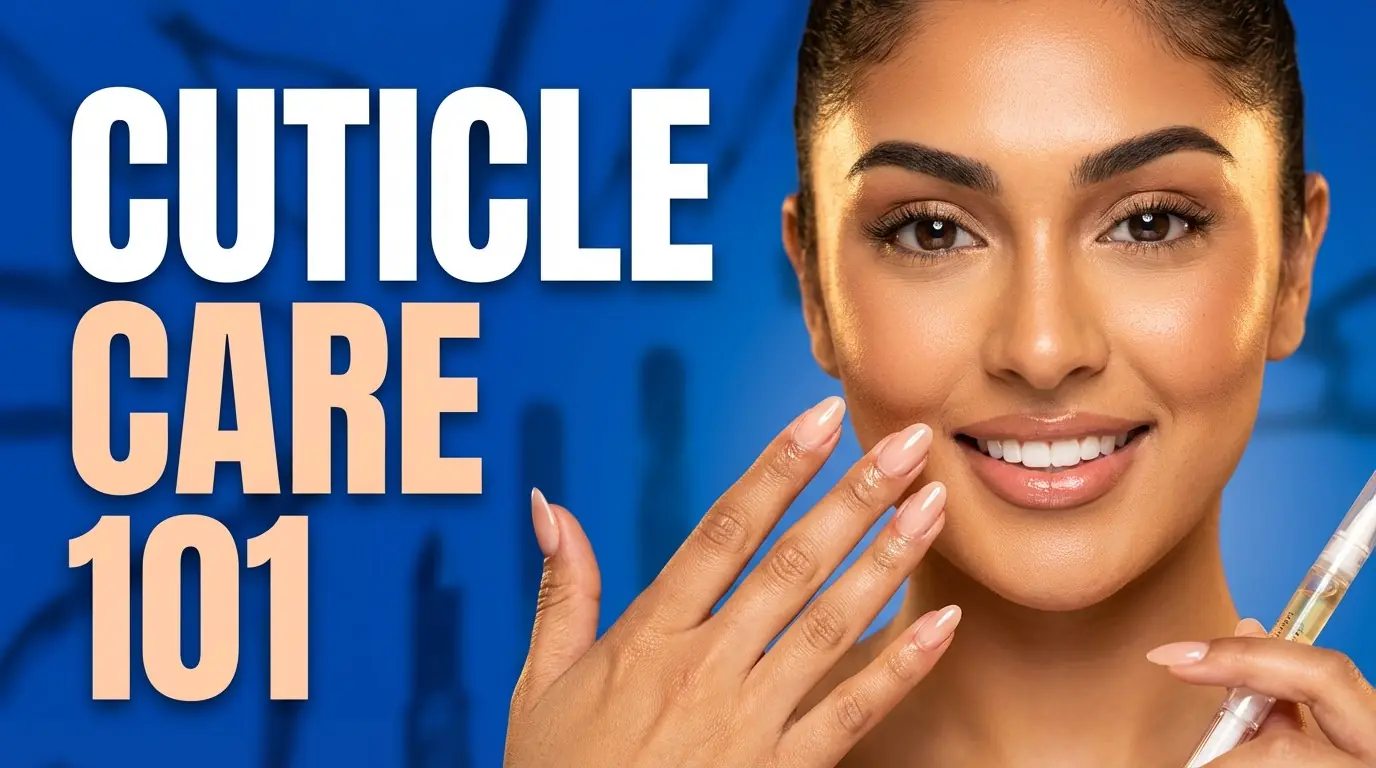
Cuticle Care 101: The Push, Don’t Cut Rule ExplainedCuticle care is one of the most misunderstood parts of nail health, and the single most important
Cuticle Care 101: The Push, Don’t Cut Rule Explained
Cuticle care is one of the most misunderstood parts of nail health, and the single most important shift you can make is adopting the push, don’t cut philosophy. If you have watched a technician snip that thin strip of skin framing your nails, you have seen the habit that leaves them brittle and irritated. This guide breaks down the anatomy, the technique, and the routines that build genuinely strong, healthy nails.
What Cuticles Actually Are and Why They Matter
Published · Updated
In strict anatomical terms, the cuticle is a thin, translucent layer of dead skin cells that migrates from the proximal nail fold outward onto the surface of the nail plate. Think of it as a seal, a biological gasket that bonds the skin to the nail and prevents bacteria, fungi, and environmental irritants from slipping underneath the fold and reaching the nail matrix below. The nail matrix is the tissue at the very base of your nail responsible for producing all new nail cells. It is the engine of nail growth, and it is extraordinarily sensitive.
This thin strip of keratinized tissue is part of the broader keratin structure of the body. Keratin is the fibrous structural protein found in nails, hair, and the outer layer of skin. When the cuticle is intact, it acts as a flexible, moisture-resistant barrier. When it is repeatedly cut or removed, that barrier is compromised every single time.
The cuticle is not decorative. It is not extra skin that your body produces by accident. It is a deliberately engineered protective structure, and removing it repeatedly sends a signal to the body that the area is under threat, often resulting in thicker, faster regrowth that becomes increasingly difficult to manage over time.
The Difference Between the Cuticle, the Eponychium, and the Nail Fold
Here is where things get interesting from an anatomy perspective, and where a lot of the confusion in the beauty industry originates. The terms cuticle, eponychium, and proximal nail fold are often used interchangeably, but they refer to three separate structures that serve overlapping yet distinct functions.
The Proximal Nail Fold
The proximal nail fold is the actual fold of skin that you can see at the base of each nail. It is living skin tissue, richly supplied with blood vessels and nerve endings. It connects the surface of your fingertip to the nail plate and acts as the outermost shield for the nail matrix beneath. Because it is living tissue, cutting into the proximal nail fold causes real injury, triggers inflammation, and creates an open pathway for pathogens.
The Eponychium
Directly beneath and continuous with the proximal nail fold is the eponychium, a slightly thicker band of living skin that forms the bottom portion of the nail fold. The eponychium is the structure that most salon clients feel when a technician uses a metal cuticle pusher aggressively. It can become inflamed, cracked, or infected when handled roughly, and it should never be cut under any circumstances.
The True Cuticle
The true cuticle is the dead, translucent tissue that actually sits on the surface of the nail plate itself. Because it is composed of dead cells, gently removing it by pushing and dissolving is not inherently harmful, provided you are not tearing into the living eponychium below. This distinction is the entire foundation of the push, don’t cut rule: you can safely address the dead cuticle tissue that appears on the nail surface, but you must never cut or aggressively trim the living skin structures surrounding it.
When a salon technician clips the “cuticle” with nippers, they are very often cutting into the eponychium or proximal nail fold, not just the dead cuticle layer. This is where the risk of infection and long-term damage begins.
Why Cutting Cuticles Is Risky
The beauty industry has long promoted the idea that cutting cuticles produces a cleaner, more polished nail look. And visually, in the very short term, this is true. The nail bed appears longer and more uniform immediately after a cut. But the downstream consequences are significant, and they compound over time.
Infection Risk and Open Pathways
Every time you cut or aggressively trim the cuticle area, you create a small wound. Even a tiny nick in the skin surrounding the nail creates a direct pathway into the deeper tissues. The space beneath the nail fold, known as the subungual space, is warm, slightly moist, and largely sealed from the environment under healthy conditions. Once that seal is broken, bacteria such as Staphylococcus aureus and fungal organisms such as Candida albicans can enter and establish an infection.
Paronychia is the clinical term for an infection of the tissue surrounding the nail. It can present as acute paronychia, which appears quickly and causes redness, swelling, warmth, and pus, or as chronic paronychia, which develops gradually over weeks or months and is characterized by persistent swelling, nail discoloration, and separation of the nail from the nail fold. Both forms are directly associated with repeated trauma to the cuticle area, including cutting.
Disruption of Nail Matrix Signaling
The nail matrix does not just produce new nail cells passively. It responds to signals from the surrounding tissue. When the proximal nail fold and eponychium are repeatedly injured through cutting, the inflammatory response that follows can alter the environment of the nail matrix. Over time, this can lead to irregular nail growth, ridging along the nail surface, pitting, and in severe cases, permanent changes to the nail shape.
The Regrowth Cycle
Cutting cuticles also triggers an accelerated regrowth response. The body, interpreting repeated cuts as ongoing injury to the area, produces more keratinized tissue more quickly. Clients who have their cuticles cut regularly at salons often notice that their cuticles seem to grow back faster and thicker than before they started the practice. This creates a dependency on continued cutting that feels like maintenance but is actually a cycle of damage and repair.
Skin Integrity and Moisture Loss
The cuticle and surrounding skin structures also play a role in moisture regulation at the base of the nail. When intact, they prevent transepidermal water loss from the nail matrix area. Repeated cutting disrupts this barrier, leading to dryness, cracking, and hangnail formation, all of which create additional entry points for infection and discomfort.
The Push-Only Technique: A Step-by-Step Guide
Pushing cuticles rather than cutting them accomplishes the same aesthetic goal, producing a cleaner, more defined nail base, without the associated risks. When done correctly, it is gentle enough to perform weekly without any damage to the nail or surrounding tissue.
What You Will Need
Before you begin, gather the following: a bowl of warm water, a gentle hand soak or a small amount of mild soap, a cuticle softening product (covered in detail in the next section), a wooden orange stick or a rubber-tipped cuticle pusher, a soft nail brush, and a nourishing cuticle oil to finish. Avoid metal cuticle pushers unless you are extremely experienced, as they apply too much concentrated pressure and can easily damage the eponychium.
Step One: Soak and Soften
Begin by soaking your fingertips in warm, not hot, water for three to five minutes. Warm water hydrates and softens the cuticle tissue, making it much easier to push back gently without tearing. You can add a small amount of gentle soap or a drop of cuticle oil to the soak if you like, though plain warm water is effective on its own.
Alternatively, perform this step immediately after a shower or bath when the skin is already naturally softened. This timing takes advantage of the water exposure your skin has already received and eliminates the need for a separate soak.
Step Two: Apply a Cuticle Softener
After soaking, pat your hands dry and apply a cuticle softening product to the base of each nail. Allow it to sit for the amount of time specified on the product, typically one to three minutes. The softener works by breaking down the keratin bonds in the dead cuticle tissue, making it more pliable and easier to move without force. Do not leave cuticle softeners on for longer than directed, as some formulas contain ingredients that can irritate the living skin if left on too long.
Step Three: Push Gently with the Correct Tool
Using the flat, angled end of your orange stick or rubber-tipped pusher, position the tool at the base of the nail where the cuticle meets the nail plate. Apply light, steady pressure and use small, circular motions to gently push the cuticle tissue back toward the nail fold. Work across the entire base of the nail from one side to the other.
The key word here is gently. You should not need to use significant force. If you are pushing hard and the cuticle is not moving, the tissue has not been adequately softened and you should apply more product or soak for longer rather than pressing harder.
Never push the cuticle back so far that you are digging into the fold itself. The goal is to expose a clean nail plate surface, not to create a gap between the nail and the fold.
Step Four: Clean Away Loosened Tissue
After pushing, use the pointed end of your orange stick or a soft nail brush to gently sweep away any loosened dead cuticle tissue from the nail surface. This step removes the opaque, slightly rough-looking dead cells that can make nails appear dull without cutting into any living tissue.
Step Five: Rinse and Hydrate
Rinse your hands with cool water to remove any remaining cuticle softener, then pat dry completely. Immediately apply cuticle oil to the base of each nail and massage it gently into the nail fold and surrounding skin. This final step is not optional. It replenishes moisture to the tissue you have just worked on and supports the health of the nail matrix.
Softening Cuticles Before Pushing: Why It Matters
The single most common reason people injure their cuticles during at-home care is attempting to push without adequately softening the tissue first. Dry cuticle tissue is surprisingly resilient. It will resist gentle pressure and then tear rather than move cleanly if you push too hard, leaving jagged edges of skin that are uncomfortable and prone to catching on fabric and other surfaces.
Softening is not just about making the process easier. It protects the tissue by making it more flexible and less brittle. Well-hydrated keratin cells have more give, meaning that the force of the pusher distributes across a larger area rather than concentrating at one point.
Water-Based Softening
The simplest and most accessible softening method is warm water immersion. Five minutes is generally sufficient for most people, though those with very dry or thickened cuticles may benefit from soaking for up to ten minutes. Adding a drop of jojoba oil or almond oil to the water can provide mild additional softening and leaves a thin layer of moisture on the skin after you pat dry.
Chemical Cuticle Softeners
Commercial cuticle softeners typically contain either alpha hydroxy acids such as lactic acid or citric acid, or alkaline compounds such as potassium hydroxide or sodium hydroxide. Both categories work by disrupting the structural bonds in keratin, but they do so through different mechanisms.
Acid-based softeners are gentler and better suited for regular use. They work gradually and have less potential to irritate living skin if the product migrates slightly beyond the cuticle area. Alkaline softeners are more aggressive and work faster, but they require precise application and should not be left on for longer than the product instructions specify.
For most people doing at-home care, a gentle acid-based cuticle remover or a product labeled as a cuticle softener rather than a cuticle remover will be the most forgiving and effective choice.
The Best Cuticle Oils and Their Key Ingredients
Cuticle oil is not a luxury add-on. It is the foundation of ongoing cuticle health between weekly pushing sessions. The nail fold and surrounding skin are areas with relatively few sebaceous glands compared to other parts of the hand, which means they are naturally prone to dryness. Regular application of cuticle oil compensates for this and keeps the tissue supple, reducing the likelihood of cracking, hangnail formation, and excessive cuticle regrowth.
Jojoba Oil
Jojoba oil is technically a liquid wax ester rather than an oil, and this molecular structure makes it an exceptional cuticle treatment. Its composition closely resembles human sebum, which means it absorbs readily into the skin without leaving a heavy, greasy residue. It forms a light protective film on the surface that reduces moisture loss while delivering vitamin E and B-complex vitamins to the tissue. For daily use, jojoba oil is one of the best options available because it is non-comedogenic, stable, and well-tolerated by virtually all skin types.
Vitamin E Oil
Vitamin E, or tocopherol, is a fat-soluble antioxidant that protects skin cells from oxidative damage caused by environmental exposure. In the context of cuticle care, it helps repair and maintain the lipid barrier of the skin surrounding the nail fold, reducing roughness, dryness, and the micro-tears that lead to hangnails. Many cuticle oil formulas include vitamin E as a core ingredient precisely because it addresses the repair side of nail health rather than just hydration.
Sweet Almond Oil
Rich in oleic and linoleic fatty acids, sweet almond oil penetrates the upper layers of the skin quickly and delivers long-lasting moisture. It is also a good source of zinc, which plays a role in keratin synthesis and wound healing. When used as a cuticle oil, sweet almond oil leaves the nail fold noticeably softer within a few days of regular use and is gentle enough for even the most sensitive skin.
Argan Oil
Argan oil has earned its reputation in the beauty world for good reason. It contains unusually high concentrations of oleic acid, linoleic acid, and tocopherols, along with squalene, a natural emollient that mimics the skin’s own lipid matrix. For cuticle care, argan oil is particularly effective at restoring flexibility to dry, cracked nail folds and smoothing roughness along the cuticle line. Its lightweight texture means it absorbs without making the skin feel slippery, which is useful when applying it during the day.
Vitamin C and Biotin as Supplementary Support
While topical oils address the external barrier, the health of your cuticles and nails is also influenced by internal nutrition. Vitamin C is essential for collagen synthesis, and collagen is a structural component of the connective tissue in the nail fold and surrounding skin. Biotin, a B-vitamin, has been studied in relation to nail thickness and strength. Getting adequate amounts of both through diet or supplementation supports the tissue from the inside in ways that topical products alone cannot.
Daily and Weekly Cuticle Care Routines
Consistency matters more than intensity when it comes to cuticle health. A brief daily habit combined with a slightly more thorough weekly session will produce far better results than occasional intensive treatments separated by long periods of neglect.
The Daily Routine
Every morning or evening, or both if you are dealing with significant dryness, apply a small drop of cuticle oil to the base of each nail and massage it in with the pad of your thumb. This takes less than two minutes and can easily be incorporated into an existing skincare or hand care routine. Apply it after washing your hands, after showering, or before bed as part of a nighttime hand care routine when the oil has the longest uninterrupted time to absorb.
During the day, whenever your hands feel dry, apply a rich hand cream and pay particular attention to working it into the nail fold area. Many hand creams do not deliver enough emollient concentration to the cuticle area because people apply them quickly and do not massage the product in thoroughly. Take an extra thirty seconds to press the cream into the skin at the base of each nail.
The Weekly Routine
Once a week, perform the full pushing sequence described earlier. Choose a consistent day, perhaps a Sunday evening or whenever you typically do your nails, and make it part of your regular grooming schedule. Soak for three to five minutes, apply a cuticle softener, push gently, clean away dead tissue, rinse, and finish with cuticle oil. This entire process should take no more than ten to fifteen minutes.
If you paint your nails, perform the cuticle pushing step before applying any polish. This gives you the cleanest possible base and ensures the polish adheres closely to the nail plate without being blocked by overhanging cuticle tissue.
Seasonal Adjustments
Cuticle care needs shift with the seasons. During winter months when indoor heating reduces ambient humidity, hands and nails become significantly drier. During this period, consider increasing your cuticle oil application to twice daily and adding a weekly overnight treatment: apply a generous amount of cuticle oil or a thick hand cream to the nail area, put on cotton gloves, and sleep with them on. The occlusion created by the gloves dramatically increases absorption and can reverse even severely dry cuticles within a few sessions.
During summer months, sun exposure and chlorine from swimming can dry out the nail area as well. Apply a UV-protective hand cream and reapply cuticle oil after swimming or spending extended time outdoors.
Problems Caused by Neglected Cuticles
Ignoring cuticle care does not mean nothing happens. It means the problems accumulate silently until they become difficult to address. Understanding what neglect actually causes helps explain why a consistent routine is worth the investment of time and effort.
Overgrown and Thickened Cuticles
Without regular gentle pushing, cuticle tissue gradually migrates further onto the nail plate. Over time, this creates a thick, opaque covering over the lower portion of the nail that makes nails look shorter and unkempt. The more overgrown the cuticle becomes, the more tempting it is to reach for clippers, which restarts the damage cycle.
Hangnails
Hangnails are perhaps the most immediately uncomfortable consequence of cuticle neglect. They form when the skin at the edge of the nail fold dries out and a small strip tears away from the surrounding tissue, leaving a painful raised flap of skin. Hangnails are not actually nail tissue, they are skin, and they develop most commonly when the cuticle and nail fold area is chronically dry. People who keep their cuticles well hydrated with daily oil application rarely deal with persistent hangnails.
Nail Ridging and Irregularity
Chronic inflammation around the nail fold, whether from dryness, trauma, or repeated cutting, disrupts the nail matrix and can result in vertical or horizontal ridges along the nail surface. Vertical ridges (onychorrhexis) are often associated with general aging and dryness but can be exacerbated by ongoing nail fold irritation. Horizontal ridges or Beau’s lines typically indicate a more significant disruption to matrix function, including acute injury or systemic illness.
Chronic Paronychia from Repeated Exposure
People who work with their hands in water frequently, such as healthcare workers, cooks, and cleaning professionals, are already at elevated risk for chronic paronychia because repeated wet-dry cycles compromise the nail fold’s integrity. If these individuals also cut their cuticles regularly, the combined risk escalates significantly. Chronic paronychia manifests as persistent swelling, redness, and occasional discharge around the nail fold and, if left untreated, can lead to nail plate changes and require antifungal or antibiotic treatment.
What to Do About Hangnails
Hangnails deserve their own section because the instinctive way most people deal with them, biting or tearing them off, is precisely the worst thing you can do.
When you bite or tear a hangnail, you do not remove it cleanly. You tear through living skin tissue in an unpredictable path, creating a jagged wound that is significantly larger than the original hangnail and much more vulnerable to infection. The tearing also damages the skin immediately adjacent to the hangnail, setting up the conditions for another hangnail to form in the same area.
The Correct Way to Handle a Hangnail
The correct approach begins with softening the area. Soak the finger in warm water for two to three minutes, or apply a small amount of cuticle oil and allow it to sit for a minute. The goal is to make the skin tissue more pliable so that it can be cut cleanly without tearing further.
Using sharp, clean cuticle nippers or fine nail scissors, trim the hangnail at its very base, as close to the skin as possible without cutting into healthy tissue. The cut should remove only the raised, detached flap of dead skin. After trimming, apply an antiseptic if the area is at all raw or irritated, followed by cuticle oil to begin the healing and hydration process.
This is one of the only circumstances in which cutting is the appropriate response in cuticle-adjacent care, and even here, the goal is surgical precision on the detached dead tissue rather than broad cutting across the entire cuticle line.
Preventing future hangnails comes down to maintaining daily hydration. People who apply cuticle oil consistently rarely develop significant hangnails because the skin at the nail fold stays supple rather than drying out and cracking.
Professional Salon Cuticle Care Versus At-Home Care
One of the most common questions in the cuticle care conversation is whether professional salon treatments are worth pursuing, and if so, what to look for and what to avoid.
What a Good Nail Technician Does
A well-trained nail technician with a thorough understanding of nail anatomy will use the push, don’t cut approach as their default practice. They will soften cuticles with a professional-grade cuticle softener, use a gentle pusher to move the dead cuticle tissue back off the nail plate, use a wooden or rubber-tipped tool rather than a sharp metal implement, and finish with a nourishing treatment. They will use cuticle nippers only for actual hangnails or truly stubborn pieces of dead tissue that cannot be pushed away, and they will sterilize all metal tools between clients.
Red Flags at the Salon
Certain practices are worth noting when you visit a new salon. If the technician immediately reaches for metal nippers before doing any soaking or softening, that is a sign they are prioritizing speed over safety. If the nippers are used liberally across the entire cuticle area rather than selectively on hangnails or specific dead tissue, that is a concern. If tools are not visibly clean and stored in a sterile container or autoclaved, the infection risk from any cutting becomes significant.
You have every right to ask your technician to push rather than cut, and any professional worth their reputation will respect this request without argument. Phrasing it simply as “I prefer my cuticles pushed rather than cut” is entirely sufficient.
When Professional Treatment Adds Value
Professional cuticle care genuinely adds value in specific situations. If your cuticles are significantly overgrown from months or years of neglect, a single professional session with an experienced technician who uses the push method can reset them more effectively than several weeks of at-home work. Professional-grade cuticle softeners are often more potent than retail options and can address stubborn buildup more efficiently. After this initial reset, a consistent at-home routine can maintain the results indefinitely.
The Case for At-Home Care
At-home cuticle care, done correctly and consistently, is entirely capable of producing excellent results without the infection risk associated with salon tools used on multiple clients. You control the tool cleanliness, you control the pressure, and you control the frequency. For most people, a weekly at-home push combined with daily cuticle oil application will produce healthier nails than infrequent salon visits where cutting is the default approach.
Building a Complete Nail Care Philosophy Around Cuticle Health
Cuticle care does not exist in isolation. It is one component of a broader approach to nail health that, when all elements work together, produces consistently beautiful, strong nails without reliance on acrylics, gels, or other enhancement systems that cover rather than correct underlying issues.
Filing Technique and Nail Shape
The shape you file your nails into influences how they behave at the edges, which in turn affects the stress placed on the nail fold and cuticle area. Overly sharp corners on square nails are more prone to catching and tearing, which can traumatize the skin at the lateral nail folds. A gentle squoval or rounded shape distributes stress more evenly and reduces the likelihood of tears that can spread toward the cuticle area.
File in one direction rather than sawing back and forth. Bidirectional filing creates heat and stress along the nail edge that weakens the nail plate structure over time. Use a fine-grit file (240 grit or higher) rather than a coarse one to minimize the micro-fractures that lead to peeling.
Hydration From Within
Nail and cuticle health reflects overall hydration status. Chronically dehydrated individuals often display dry, cracked nail folds and brittle nails regardless of how much topical product they apply, because the tissue simply does not have adequate internal moisture to work with. Drinking sufficient water daily is not a glamorous recommendation, but it is a foundational one.
Protective Habits
Wearing gloves during household cleaning, gardening, and dishwashing is one of the highest-impact habits you can develop for nail and cuticle health. Harsh cleaning chemicals, prolonged water exposure, and soil contact all compromise the cuticle barrier. Even a single session of unprotected dishwashing strips the natural oils from the nail fold and begins the dryness-cracking cycle.
Polish and Removal Habits
Acetone-based nail polish remover is effective but harsh, stripping moisture from the nail plate and surrounding skin with each use. If you remove polish frequently, consider using an acetone-free remover for routine changes and reserving acetone-based products for gel or stubborn glitter polishes. After any polish removal, apply cuticle oil immediately to compensate for the moisture loss.
Allow your nails to breathe periodically between polish applications. A short period of no polish every few weeks gives the nail plate time to re-equilibrate its moisture content and allows you to clearly assess the condition of your cuticles and nail surface without the visual barrier of color.
Frequently Asked Questions About Cuticle Care
Is it ever okay to cut cuticles?
The general answer is no, at least not as a routine practice. The push, don’t cut approach provides the same aesthetic benefit without the infection risk and tissue damage associated with cutting. The one exception is hangnails, which are small flaps of dead skin that have already detached from the surrounding tissue and need to be trimmed cleanly to prevent further tearing. Even in this case, a precise cut at the base of the hangnail is the goal, not broad cutting across the cuticle area.
How often should I push my cuticles?
Once a week is the standard recommendation for most people. More frequent pushing is not necessary and, if done without proper softening, can irritate the nail fold. The weekly session is enough to prevent significant overgrowth when combined with daily cuticle oil application that keeps the tissue supple.
Why do my cuticles grow back so fast after cutting?
This is a direct consequence of the body’s wound-healing response. When the cuticle area is cut repeatedly, the body interprets the repeated small injuries as an ongoing threat and increases keratinized tissue production in the area. Switching to the push method and maintaining consistent hydration will slow regrowth over time as the tissue stabilizes.
Can I use coconut oil as a cuticle oil?
Coconut oil is an effective and accessible cuticle treatment, particularly for those with dry cuticles. It is rich in lauric acid, which has antimicrobial properties that can help protect the nail fold area. The one consideration is that coconut oil is relatively heavy and can feel greasy, which some people find inconvenient for daytime use. As a nighttime treatment or overnight mask under gloves, it works very well.
What does it mean if my cuticles are painful without any visible injury?
Painful cuticles without obvious trauma can indicate a developing paronychia infection, contact dermatitis from a nail product or cleaning chemical, or psoriatic nail involvement if you have or are at risk for psoriasis. If the pain is accompanied by redness, swelling, warmth, or any discharge, it warrants evaluation by a dermatologist or healthcare provider rather than at-home treatment.
Do nail strengtheners help with cuticle health?
Nail strengtheners address the nail plate itself rather than the cuticle tissue, so they work on a different problem. However, since nail plate health and cuticle health are interconnected, maintaining strong nails reduces the likelihood of breakage that creates jagged edges near the nail fold and causes hangnails. Products containing hydrolyzed keratin or calcium can support nail plate strength, though they should be combined with, not used instead of, proper cuticle care.
My cuticles look fine, so do I still need to maintain them?
Yes. Cuticle care is preventive as much as corrective. People with cuticles that currently look healthy are in an excellent position to keep them that way with a minimal investment of daily oil application and weekly gentle pushing. Waiting until problems appear before establishing a routine means dealing with dry, overgrown, or irritated cuticles rather than maintaining healthy ones, and correcting problems always takes more effort than preventing them.
Are cuticle care products safe during pregnancy?
Most cuticle oils made from plant-based carrier oils are considered safe during pregnancy, but strong chemical cuticle softeners or removers containing high concentrations of acids or alkaline compounds should be discussed with a healthcare provider before use. When in doubt, plain warm water soaking and a gentle plant oil such as jojoba or sweet almond oil is the safest approach during pregnancy and is genuinely effective for routine maintenance.
Final Thoughts on Mastering Cuticle Care
The push, don’t cut rule is not just a preference or a trend. It is grounded in a clear understanding of nail anatomy, infection pathways, and the biology of how the body responds to repeated tissue trauma. The cuticle is a purposefully designed barrier that protects one of the most important structures in nail health, the matrix, and treating it with respect produces compounding benefits over time.
The investment required to implement a proper cuticle care routine is genuinely small: a few minutes each week for pushing, a few seconds each day for oil application, and the discipline to resist reaching for clippers except in the case of genuine hangnails. The return on that investment is nails that are consistently healthier, stronger, and more beautiful than they would be with any amount of cutting.
Start today by picking up a quality cuticle oil and committing to the daily application habit. Within two to three weeks, you will notice a visible difference in the condition of the skin surrounding your nails. Within two to three months of consistent practice, you will have established the foundation of genuinely healthy nail care that serves you for years.
RELATED ARTICLES:
How to Care for Your Nails in Winter: Tips for Healthy, Beautiful Nails During the Cold Months
The Influence of Celebrity Nail Trends: Uncovering the Power of A-List Manicures
2026 Skin Streaming Routine
About The Author

COMMENTS