
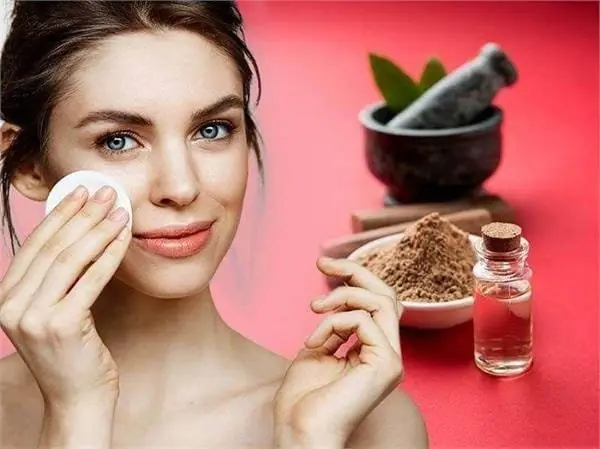
Red sandalwood for skin is a centuries-old natural solution for acne, dullness, and hyperpigmentation, ground from the heartwood of a sacred tree into
Red sandalwood for skin is a centuries-old natural solution for acne, dullness, and hyperpigmentation, ground from the heartwood of a sacred tree into a deep crimson powder. Prized across Ayurveda, this gentle botanical calms breakouts, evens tone, and brings a healthy glow, and this guide shows you exactly how to use it.
A natural solution to acne has been hiding in plain sight for generations, ground from the heartwood of a sacred tree into a deep crimson powder prized across South Asia for clearing breakouts and fading stubborn dark spots.
For centuries, long before serums came in pipette bottles and clinics offered laser facials, women across South Asia turned to a deep crimson powder ground from the heartwood of a sacred tree to clear their breakouts, fade their dark spots, and coax a lit-from-within glow. That ingredient is red sandalwood, known in Sanskrit as ‘Raktachandan’, and it is quietly experiencing a global renaissance as modern skincare enthusiasts rediscover what Ayurvedic physicians have recommended for generations. Unlike fleeting beauty trends that promise everything and deliver little, red sandalwood carries the weight of documented tradition, emerging scientific research, and genuine dermatological logic behind its reputation.
If you have struggled with stubborn acne that refuses to clear, uneven pigmentation that foundation cannot fully hide, or skin that looks tired despite a full cabinet of products, this ancient ingredient may be the missing piece. In the pages that follow, we will examine exactly what red sandalwood is, the active compounds that make it biologically effective, how it compares to modern actives like salicylic acid and niacinamide, the correct way to prepare and apply it at home, and how to avoid the common mistakes that prevent most people from seeing results. You will also learn how to distinguish authentic red sandalwood from the adulterated imitations that flood the market and how to layer it safely within a contemporary skincare routine. By the end, you will have the depth of understanding needed to treat red sandalwood not as a nostalgic beauty ritual but as a serious, evidence-informed tool for clearer, brighter, healthier skin.
What Exactly Is Red Sandalwood and Why Is It Different From White Sandalwood
Red sandalwood is harvested from Pterocarpus santalinus, a slow-growing tree native to the southern Eastern Ghats of India, primarily the forests of Andhra Pradesh. The tree takes between fifty and a hundred years to mature enough for its heartwood to develop the rich ruby colouration that gives the ingredient its name. That deep red hue comes from a family of naturally occurring compounds called santalins, along with pterocarpin, pterostilbene, and a variety of flavonoids and triterpenes that are concentrated in the inner heartwood and bark. Because of overharvesting, Pterocarpus santalinus is classified as endangered under CITES, which is why ethically sourced, certified powder carries a higher price and why cheap imitations dyed with brick powder or synthetic colourants are unfortunately common.
It is important to understand that red sandalwood and white sandalwood, Santalum album, are two entirely different species with overlapping but distinct uses. White sandalwood is primarily aromatic, valued for its essential oil and soothing, slightly sweet fragrance, and it is often used for dry, sensitive, or mature skin. Red sandalwood is essentially odourless in its powdered form, does not yield a commercial essential oil, and is valued instead for its pigmentary, astringent, and anti-inflammatory properties that target oily skin, acne, and hyperpigmentation. Confusing the two or assuming they are interchangeable is one of the most common mistakes newcomers make when building a traditional skincare routine.
Reviewed by the BeautynFacts editorial team. Last updated: May 2026.
The Botanical and Chemical Profile
Phytochemical analyses published in journals such as the Journal of Ethnopharmacology and Phytotherapy Research have identified over fifty distinct bioactive compounds in Pterocarpus santalinus heartwood. The headline actives include santalin A and santalin B, which are unique pigmented isoflavonoids demonstrated to have antioxidant activity; pterostilbene, a methylated analogue of resveratrol with potent free radical scavenging ability; savinin, a lignan with documented anti-inflammatory effects; and isoflavones, including liquiritigenin, that modulate inflammatory cytokines in the skin. Together these molecules give red sandalwood a polyphenol density comparable to green tea and a tyrosinase-inhibiting profile that explains its historical use as a brightening agent.
A Brief Cultural and Historical Context
Ayurvedic texts, including the Charaka Samhita and the Sushruta Samhita, reference Raktachandan in formulations for Pitta dosha skin complaints, which in modern terms roughly correspond to heat-related conditions such as acne, rashes, and inflammatory pigmentation. Brides across India have traditionally used ubtan pastes containing red sandalwood in the weeks leading up to their wedding to achieve a luminous complexion. In Unani medicine, the same ingredient is prescribed for blood purification and skin disorders. This is not a freshly marketed trend. It is an ingredient with roughly three thousand years of continuous recorded use across multiple medical systems, which is precisely the kind of long-term human safety and efficacy signal that dermatologists increasingly value when assessing botanical actives.
The Science Behind Red Sandalwood for Acne
Acne is a multifactorial condition driven by excess sebum production, follicular hyperkeratinisation, the proliferation of Cutibacterium acnes bacteria, and the resulting inflammatory cascade. An effective topical treatment ideally addresses more than one of these pathways at once, which is precisely where red sandalwood earns its reputation. Laboratory studies have shown that extracts of Pterocarpus santalinus inhibit the growth of Staphylococcus aureus, Staphylococcus epidermidis, and strains of Cutibacterium acnes, the bacterial triad most strongly implicated in inflammatory breakouts. The inhibitory effect is attributed primarily to the lignans and pterostilbene, which disrupt bacterial membrane integrity.
Beyond its antimicrobial action, red sandalwood reduces the inflammatory response that turns a harmless clogged pore into an angry, swollen papule or pustule. Research published in peer-reviewed pharmacology journals has demonstrated that Pterocarpus santalinus extracts downregulate pro-inflammatory cytokines, including TNF alpha and interleukin 6, and suppress the activity of cyclooxygenase 2, an enzyme central to the redness and swelling of active acne lesions. For practical purposes, this means that applying a red sandalwood mask to a fresh breakout can visibly reduce its size and colour within hours, a phenomenon that generations of users have noticed without knowing the biochemical explanation.
There is also the matter of sebum regulation. Red sandalwood is naturally astringent, meaning it tightens the skin and reduces the appearance of large pores temporarily while also helping to absorb excess surface oil. For oily and combination skin types, this benefit translates to a matte, refined finish after use and, over weeks of consistent application, fewer clogged pores. It will not replace a prescription retinoid for severe nodulocystic acne, but for mild to moderate comedonal and inflammatory acne, red sandalwood is a good addition or, for those who prefer to avoid harsh actives, a standalone treatment.
How Red Sandalwood Fades Hyperpigmentation and Dark Spots
Hyperpigmentation, whether from post-inflammatory marks left by old pimples, melasma triggered by hormones, or sun damage accumulated over years, occurs when melanocytes in the skin produce excess melanin. The enzyme tyrosinase is the rate-limiting step in melanin synthesis, which is why most modern brightening ingredients, from kojic acid to arbutin to tranexamic acid, work by interfering with tyrosinase activity. Red sandalwood belongs to this same functional category. Santalin A and pterostilbene have been shown in in vitro studies to inhibit tyrosinase, slowing the production of new melanin without bleaching or damaging existing skin cells.
The second mechanism is gentle exfoliation. When red sandalwood powder is mixed with liquid and applied to the skin, the fine particulate matter provides a very mild mechanical exfoliation that lifts away the uppermost layer of pigmented, dead corneocytes. Unlike harsh scrubs with jagged nutshells or plastic microbeads, properly ground red sandalwood has rounded, uniform particles that polish rather than scratch. Over time, this helps older hyperpigmented cells turn over faster, revealing fresher, more evenly toned skin beneath.
Post-Inflammatory Hyperpigmentation Versus Melasma
It is worth distinguishing between the two most common pigment concerns, because red sandalwood responds to them differently. Post-inflammatory hyperpigmentation, the brown or reddish marks left behind after a pimple heals, responds exceptionally well to red sandalwood because the ingredient addresses both the residual inflammation and the excess pigment in one step. Expect visible improvement within four to eight weeks of consistent use, two to three times per week. Melasma, the symmetrical brown patches often seen on the cheeks, upper lip, and forehead of women with hormonal fluctuations, is a more stubborn condition. Red sandalwood can help soften melasma, but realistic expectations are essential. Used alongside diligent daily sunscreen and, if appropriate, a dermatologist-prescribed combination therapy, it becomes a useful supporting player rather than a standalone cure.
Sun Damage and Photoaging
Ultraviolet radiation generates free radicals in the skin, which accelerate collagen breakdown and trigger patchy pigmentation. The polyphenol content of red sandalwood provides direct antioxidant support, neutralising these free radicals before they damage skin structures. A 2018 study on Pterocarpus santalinus extracts demonstrated significant DPPH radical scavenging activity comparable to ascorbic acid at equivalent concentrations, which is a meaningful benchmark. This makes red sandalwood a reasonable evening repair ingredient, applied after sun exposure to calm heat-related redness and buffer oxidative stress.
Anti-inflammatory and Skin-Soothing Benefits
Sensitive, reactive skin presents a unique challenge because many of the most effective actives, like retinoids, acids, and strong vitamin C serums, can trigger the very redness and irritation users are trying to calm. Red sandalwood fills an important gap here. Its cooling, anti-inflammatory character makes it suitable for skin that flushes easily, for rosacea-prone complexions under the guidance of a dermatologist, and for post-procedure recovery when stronger actives are off-limits.
The soothing effect is not merely anecdotal. Studies evaluating Pterocarpus santalinus extracts in animal and cell culture models of contact dermatitis have shown reductions in erythema, oedema, and histamine release. When combined with a humectant like rose water or aloe vera gel, a red sandalwood paste becomes a genuine calming treatment for sunburn, heat rash, mild eczema flares, and the transient irritation that can follow overuse of chemical exfoliants. Applying cool from the refrigerator, the sensory experience alone is worth the twenty minutes of stillness.
Exfoliation, Skin Texture, and Glow
The word ‘glow’ is thrown around loosely in beauty marketing, but it has a specific physiological meaning. Skin that appears luminous does so because its surface is smooth enough to reflect light evenly, its hydration levels are balanced, its pigment is uniform, and its microcirculation is healthy. Red sandalwood contributes to all four of these factors simultaneously, which is why a single mask application tends to produce such a visible before and after effect.
The fine particle texture exfoliates and polishes. The astringent action refines pore appearance. The anti-inflammatory compounds reduce diffuse redness that would otherwise dull the complexion. And the gentle massage required to apply and remove the paste stimulates microcirculation, bringing oxygen and nutrients to the skin surface. The result is the flushed, healthy glow that wedding preparations and festival rituals have leant on for centuries. For a photoshoot, an event, or simply a Sunday reset, few single ingredients deliver as much instant visual payoff.
How to Choose Authentic, High-Quality Red Sandalwood Powder
Because true Pterocarpus santalinus is endangered and expensive to source legally, the market is saturated with counterfeits. Some vendors sell brick powder or iron oxide-dyed sawdust labelled as ‘red sandalwood’. Others blend a small amount of genuine material with filler to stretch supply. Using an adulterated product at best wastes your time and at worst delivers unknown contaminants directly onto your skin.
When shopping, look for powder that is deep reddish brown rather than bright orange-red, since synthetic dyes tend towards vivid, unnatural hues. Authentic powder has a very faint woody, earthy scent, not a sharp chemical or dye odour. Rub a small amount between wet fingers. Real red sandalwood releases its colour slowly and stains skin a soft tan that washes off easily, while fake versions often leak vivid red instantly and stain more aggressively. Reputable brands source their material with legal provenance documentation, often from state-run Andhra Pradesh Forest Development Corporation auctions, and will mention this on their packaging or website. Certified organic, lab-tested, heavy metal-screened options cost more but are worth the premium for a product that will be in prolonged contact with your face.
Powder Grade and Particle Size
Not all red sandalwood powder is ground to the same fineness. Coarse powder is suitable for body scrubs and spiritual preparations but can feel rough on facial skin. Look for face grade or ultra-fine powder, which feels silky between the fingers and passes through a fine-mesh sieve without residue. If your powder feels gritty, sift it through a tea strainer before mixing to remove larger particles that could microscopically abrade delicate facial skin.
Step-by-Step Home Recipes for Every Skin Concern
The beauty of red sandalwood is its versatility. A single jar of powder can form the base of five or six different formulations, each tailored to a specific concern. The recipes that follow are based on traditional Ayurvedic ratios refined through contemporary use, and all quantities serve a single face and neck application.
Classic Brightening Mask for Dullness and Uneven Tone
Combine one teaspoon of fine red sandalwood powder with two teaspoons of raw, unpasteurised honey and enough rosewater to form a smooth, spreadable paste. Apply to clean skin, avoiding the eye area, and leave for fifteen minutes. The honey contributes humectant and antibacterial action; rose water adds a calming floral note and mild astringency; and the sandalwood does the brightening work. Rinse with lukewarm water, massaging gently in circular motions to lift the dried paste and exfoliate. Use two times per week.
Acne Clearing Paste for Active Breakouts
Mix one teaspoon of red sandalwood powder with half a teaspoon of turmeric, a pinch of cinnamon, and enough fresh neem leaf juice or green tea to form a paste. Apply only to affected areas rather than the whole face, since turmeric can stain and cinnamon can be warming for sensitive skin. Leave for ten minutes, then rinse. The synergy of antimicrobial turmeric, circulation-boosting cinnamon, and antibacterial neem amplifies the acne-fighting effect of sandalwood. Use it on spots up to three times per week, patch-testing first if you have never used cinnamon topically.
Hyperpigmentation Treatment for Dark Spots
Blend one teaspoon of red sandalwood powder with one teaspoon of fresh tomato pulp and half a teaspoon of plain yoghurt. Tomatoes contribute natural lycopene, and mild lactic acid from the yoghurt adds gentle alpha-hydroxy acid exfoliation. Apply to clean skin, focusing on pigmented areas, and leave for twelve minutes. Rinse thoroughly and follow with a fragrance-free moisturiser. Used two to three times weekly over six to eight weeks, this combination measurably softens post-inflammatory marks and sunspots.
Soothing Mask for Sensitive or Irritated Skin
Stir one teaspoon of red sandalwood powder into two tablespoons of chilled aloe vera gel, preferably freshly scooped from a leaf or a minimally processed store-bought version without added alcohol or fragrance. Apply generously and leave for twenty minutes. This version is specifically designed for reactive skin, post-sun exposure, or the day after a stronger active ingredient, like retinol, has been used. Use as needed, up to every other day.
Anti-Ageing Nourishment Blend
Combine one teaspoon of red sandalwood powder with half a teaspoon of almond oil, half a teaspoon of honey, and a few drops of raw milk or yoghurt. Almond oil delivers vitamin E and essential fatty acids; milk contributes a trace of lactic acid, and honey seals in moisture. Apply to slightly damp skin and leave for fifteen minutes. This rich blend suits dry and mature skin types that find pure sandalwood paste too drying on their own. Use once or twice weekly.
How to Build Red Sandalwood Into a Modern Routine
Traditional ingredients work best when thoughtfully integrated with contemporary skincare rather than treated as a separate ritual. Begin with a double cleanse to remove sunscreen and sebum, then exfoliate with a chemical acid two nights a week as normal. On alternate evenings, use a red sandalwood mask as your treatment step, then follow with your hydrating toner, serum, and moisturiser as usual. Avoid layering red sandalwood on the same night as a strong retinoid or a high-percentage glycolic acid, since the combined effect may overwhelm the skin barrier.
Morning routines can include red sandalwood in a different form. Some users prefer to keep a small spray bottle of red sandalwood-infused rose water in the refrigerator and mist their face before applying moisturiser. This delivers a diluted dose of the active compounds daily without the commitment of a full mask, and the cooling sensation is a welcome ritual on warm mornings.
What to Pair With Red Sandalwood
Excellent partners include hyaluronic acid for hydration, niacinamide for barrier support, vitamin C in the morning for complementary brightening, peptides for collagen support, and mineral sunscreen every single day without exception. Because red sandalwood accelerates surface cell turnover and slightly reduces melanin production, unprotected sun exposure can undo its benefits within days. A broad-spectrum SPF 30 or higher is non-negotiable for anyone pursuing a brighter complexion.
What to Avoid Combining
Do not mix red sandalwood with lemon juice, which some older recipes recommend. The extreme acidity of citrus can disrupt the skin barrier and paradoxically trigger more pigmentation. Avoid combining it on the same day as physical scrubs, as the mild exfoliation from the powder itself is enough, and additional mechanical action leads to redness and micro-tears. Finally, skip the combination with essential oils unless you are experienced with dilution, since undiluted essential oils in a DIY mask are a leading cause of contact dermatitis.
Patch Testing, Safety, and Who Should Avoid Red Sandalwood
Red sandalwood has an excellent safety record, but skin is individual, and no ingredient is universally tolerated. Before using any new preparation, mix a small amount and apply it to the inside of your forearm or behind your ear. Leave for fifteen minutes, rinse, and wait twenty-four hours. If there is no redness, itching, or breakout, the preparation is likely safe for facial use.
Pregnant and breastfeeding individuals should consult a physician before using any Ayurvedic herb topically, even one as gentle as red sandalwood. People with a known allergy to legumes should proceed with caution, since Pterocarpus santalinus belongs to the Fabaceae family, and rare cross-reactivity has been reported. Those with very dry or eczema-prone skin may find pure sandalwood paste too tightening and should always blend it with a hydrating base like yoghurt, honey, or aloe. If you experience persistent redness, itching, or worsening breakouts after use, discontinue immediately. While rare, these reactions are almost always caused by adulterated products containing dyes or contaminants rather than genuine red sandalwood itself.
Red Sandalwood for Body, Hair, and Beyond the Face
While the face gets most of the attention, red sandalwood has valuable applications across the body. Back acne, a notoriously difficult problem to treat because of the thicker skin and harder-to-reach area, responds well to a weekly body mask. Mix three tablespoons of powder with yoghurt into a thick paste, apply to the shoulders and upper back after showering, leave for fifteen minutes, and rinse. Over two months, many users report clearer skin and faded post-acne marks across the back and chest.
Underarms, elbows, knees, and bikini lines are other hyperpigmentation-prone zones that benefit from periodic red sandalwood treatment. For the body, the paste can be slightly more abrasive, mixed with chickpea flour or oat flour to create a gentle body polish that exfoliates and brightens in one step. Use once or twice per week in the shower.
For scalp health, a red sandalwood and yoghurt mask applied to the scalp for twenty minutes before shampoo can soothe itching, reduce dandruff-related inflammation, and support a healthier environment for hair growth. This is not a primary hair treatment but a useful addition for those dealing with scalp irritation or seborrhoeic dermatitis under medical guidance.
Realistic Timelines and Tracking Your Results
One of the most common reasons people abandon natural skincare is impatience. Red sandalwood works with your skin’s biology rather than forcing dramatic change overnight, which means results accrue gradually. In the first week, expect a short-term glow after each mask and a slight reduction in redness. By weeks three to four, active pimples should be healing faster and fewer new ones appearing. Between weeks six and eight, hyperpigmentation begins to visibly lighten, particularly post-inflammatory marks. Full results on stubborn pigmentation or textural issues typically emerge around week twelve with consistent twice-weekly use.
Document your progress with standardised photos. Take a front-facing and two side-profile photos in the same location, at the same time of day, with the same lighting and no make-up, every two weeks. Comparing week zero to week eight side by side reveals changes the daily mirror glance never registers. This practice is what separates users who stay consistent and see real results from those who give up after two weeks, convinced nothing is happening.
Common Mistakes That Sabotage Results
Even a superb ingredient fails if used incorrectly. The most frequent mistake is using red sandalwood inconsistently, applying it once, seeing no dramatic change, and forgetting about it for a month. Consistency over two to three months is what delivers measurable change. The second common error is leaving masks on until they are bone dry and crack when you smile. Once a clay- or powder-based mask dries fully, it draws moisture out of the skin rather than depositing benefits, leaving skin feeling tight and sometimes more irritated than before. Mist the mask lightly with rose water if it begins to feel uncomfortably tight before the fifteen-minute mark.
A third mistake is skipping sunscreen. Brightening protocols without photoprotection are self-defeating. Fourth, using coarse, unsifted powder on delicate facial skin can cause microscopic irritation that negates the anti-inflammatory benefits. Fifth, storing homemade preparations. Red sandalwood masks made with honey, yoghurt, or fresh juice should be mixed fresh each time. Leftover paste develops bacterial growth rapidly and should never be saved, even when refrigerated. The dry powder itself keeps for a year or more in an airtight container away from light and moisture, but wet preparations are single-use only.
Frequently Asked Questions About Red Sandalwood
Can I use red sandalwood every day
For most skin types, daily use of a full mask is too much and will eventually leave skin feeling tight and overexfoliated. Two to three times per week is the sweet spot for facial masks. If you want daily exposure to the active compounds, consider a red sandalwood-infused rose water mist or a small amount mixed into your cleanser. Oily, acne-prone skin can sometimes tolerate four weekly applications, but always watch for signs of overuse, such as tightness, peeling, or stinging.
Does red sandalwood lighten skin tone permanently
Red sandalwood does not bleach or lighten your natural baseline skin tone. What it does is reduce excess melanin production triggered by inflammation, sun exposure, or hormones and exfoliate accumulated dead cells that make skin look dull. The result is your natural, healthiest complexion made more visible, not a permanent change in your underlying skin colour. If a product claims to permanently lighten skin tone, it is either exaggerating or it contains bleaching agents that are unsafe and often illegal.
Is red sandalwood safe during pregnancy
Topical use of pure red sandalwood powder mixed with gentle ingredients like rose water, aloe, or honey is generally considered safe during pregnancy, since minimal systemic absorption occurs through intact skin. However, pregnancy is a time of heightened skin sensitivity and changing hormones, and every pregnancy is different. Always check with your obstetrician or a qualified Ayurvedic practitioner before introducing new skincare ingredients, and avoid combining red sandalwood with essential oils, strong actives, or untested herbal blends during this period.
How long does it take to see results on acne
Active inflammation and redness around individual pimples often visibly decrease within hours of a single mask. More meaningful change in the frequency of new breakouts typically becomes noticeable between three and four weeks of consistent twice-weekly use. Significant, stable improvement in acne-prone skin usually emerges around the eight to twelve week mark. Severe cystic acne requires medical treatment and will not respond adequately to red sandalwood alone.
Can I use red sandalwood on sensitive skin
Yes, with modifications. Avoid combining it with potentially irritating ingredients like cinnamon, turmeric in high amounts, or citrus juices. Instead, mix it with soothing bases such as aloe vera gel, raw honey, or oat milk. Keep application time shorter, around ten minutes rather than fifteen. Always patch test first. Many people with sensitive skin find red sandalwood better tolerated than modern chemical exfoliants because of its inherent anti-inflammatory action.
Will red sandalwood stain my skin or pillowcase
Genuine red sandalwood leaves a faint warm tan tint on skin that washes off easily with a second cleanse and disappears entirely within a few hours. It can temporarily tint light-coloured towels and fabrics, so use a dedicated dark-coloured towel for rinsing and avoid applying masks right before bed if you are worried about pillow marks. Adulterated powders with synthetic dyes stain much more aggressively and are a red flag that the product is not authentic.
Can men use red sandalwood skincare
Absolutely. Skin biology does not differ meaningfully by gender, and men frequently experience the same concerns red sandalwood addresses: acne, post-shaving irritation, pigmentation, and dullness from sun exposure. A cooling red sandalwood and aloe mask after shaving is particularly soothing for razor-burn- and ingrown-hair-prone skin. The ingredient is gender neutral and has been used traditionally by men and women alike for millennia.
Is red sandalwood essential oil the same as the powder
No. There is no commercially meaningful red sandalwood essential oil. What is sometimes sold under that name is usually diluted white sandalwood oil with added colouring or a synthetic fragrance blend. The active skincare compounds in Pterocarpus santalinus, santalin pigments and polyphenols, are not volatile and do not transfer to steam-distilled essential oils. Stick with authentic, finely ground powder from a reputable source for genuine skincare benefits.
Bringing It All Together
Red sandalwood occupies a rare space in the skincare world, an ingredient with deep cultural heritage, meaningful modern research supporting its traditional uses, and genuine versatility across concerns from acne to hyperpigmentation to sensitivity. It is not a miracle cure, and it does not replace the role of evidence-based dermatological care for severe conditions. What it does offer is a gentle, biologically active, affordable, and beautifully ritualistic addition to a thoughtful skincare routine, one that can measurably improve skin clarity, tone, and radiance when used correctly over time.
To start, source a small jar of certified, fine-ground red sandalwood powder from a reputable vendor; gather a few pantry ingredients, like honey, rose water, yoghurt, and aloe; and commit to two mask sessions per week for eight weeks. Take before photos, protect your skin with daily sunscreen, and pay attention to how your complexion responds. Most users find that by the end of the second month, they have not only clearer, brighter skin but also a more intuitive understanding of what their skin actually needs. That combination, visible results and embodied skin knowledge, is the quiet gift that centuries-old ingredients keep offering to anyone patient enough to use them properly. Red sandalwood has earned its reputation across three millennia, and once you experience the cool, calming, gently polishing ritual of a proper Raktachandan mask on a Sunday evening, you will understand exactly why.
RELATED ARTICLES:
What are the solutions to get rid of stretch marks naturally and quickly?
2025’s Best Natural Wrinkle Remedy: Garlic Skincare Hacks for Ageless Beauty!
Top Reasons to Make the Switch to Organic and Natural Makeup Today!
How to Remove Forehead Wrinkles Naturally and Effectively: Proven Tips and Treatments for Smoother Skin
Prevent the use of skincare products that contain alcohol, as this can deplete your skin’s natural oils and bring about dryness
About The Author

COMMENTS