Marilyn Monroe’s eye makeup is The secret to increasing your sex appealMarilyn Monroe eye makeup is having a full cultural revival more than seventy y
Marilyn Monroe’s eye makeup is The secret to increasing your sex appeal
Marilyn Monroe eye makeup is having a full cultural revival more than seventy years after she first captivated Hollywood. Fuelled by TikTok tutorials and celebrity cosplay, a new generation of artists is decoding her signature technique, and this guide shows you exactly how to recreate her sultry, magnetic eyes step by step.
Eye makeup inspired by Marilyn Monroe is having a full cultural revival, more than seventy years after she first captivated Hollywood. Fueled by TikTok tutorials and celebrity cosplay moments, a new generation of artists is decoding exactly how she built that sultry, heavy lidded gaze. This guide goes deeper than a basic how to, breaking down the anatomy of her technique, the optical illusions behind it, and the eyeliner and shadow placement that create her signature look.
This article is going to go far deeper than a basic tutorial. We are going to break down the anatomy of Monroe’s eye technique, explain the optical illusions at work, walk you through a comprehensive step-by-step process, help you adapt the look for your own eye shape, and give you the full context of how and why this look works so powerfully on the human brain. By the time you finish reading, you will understand not just how to do it, but why it works, what products to reach for, and how to make it your own. Get ready to transform the way you think about eye makeup forever.
The Enduring Cultural Fascination with Marilyn Monroe’s Beauty
Reviewed by the BeautynFacts editorial team. Last updated: May 2026.
To understand why Monroe’s eye makeup has gone so viral in the modern era, it helps to understand the unique cultural position she occupies. Marilyn Monroe was not simply a beautiful actress. She was, and continues to be, a living symbol of femininity at its most powerful and paradoxical. She was simultaneously vulnerable and commanding, innocent and wildly sensual. The way she moved, spoke, and looked communicated a kind of magnetism that remains almost scientifically inexplicable. And much of that magnetism, it turns out, was carefully constructed through makeup.
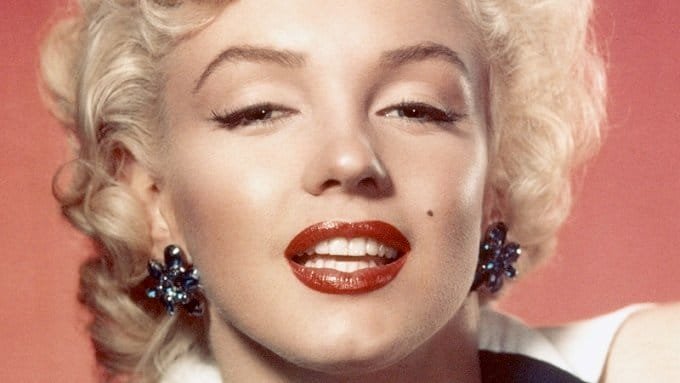
The platinum blonde hair and the red lips are the elements most commonly associated with Monroe’s look, and they are the ones most frequently replicated in Halloween costumes and cosplay. But makeup artists who have studied Monroe’s archive photographs, screen tests, and film appearances carefully know that the real secret weapon was always her eyes. Her eyes did something extraordinary on camera and in person. They managed to look simultaneously heavy and half-closed, dreamy and intensely focused, relaxed and deeply sensual. This combination of qualities is what makeup artists now refer to as the “sleepy eye” effect, and achieving it is both simpler and more technical than most people realize.
The 2022 cultural moment brought Monroe back to the center of the beauty conversation in a particularly intense way. Kim Kardashian’s decision to wear Monroe’s original “Happy Birthday Mr. President” dress to the Met Gala was one of the most talked-about celebrity moments of the year, reigniting debates about Monroe’s legacy and sparking a massive wave of online interest in every dimension of her aesthetic. Simultaneously, Ana de Armas delivered a widely praised performance as Monroe in the biographical film Blonde, and makeup artists working on that production spent months researching and recreating Monroe’s exact beauty techniques. The result of all this cultural energy was a tidal wave of Monroe-inspired content online, with TikTok’s #marilynmonroemakeup hashtag accumulating more than six million views as creators tested, refined, and shared their interpretations of her iconic eye look.
What makes this moment feel different from previous Monroe revivals is the level of technical deconstruction happening. This is not just women putting on red lipstick and calling it a Monroe look. Modern creators are doing frame-by-frame analyses of her films, comparing different photographic eras of her career, and bringing genuine expertise in color theory and facial anatomy to the project of understanding exactly what she did and why it worked.
What Actually Defines Marilyn Monroe’s Eye Makeup
Before diving into application techniques, it is worth building a precise vocabulary for what Monroe’s eye look actually consisted of. This was not a single static look that she wore identically every day. Monroe worked with several different makeup artists across her career, including the legendary Allan “Whitey” Snyder, who was her personal makeup artist for most of her life. Over the years, her eye look evolved and was adapted for different lighting conditions, film types, and photographic contexts. But certain core elements remained consistent and are what define the look we recognize today.
The Sleepy Eye Effect Explained
The most distinctive quality of Monroe’s eyes in photographs and film is a quality that beauty writers and makeup artists now call the “sleepy eye” or “bedroom eye” effect. Her eyes appear heavy-lidded, partially closed, and deeply relaxed. This is not accidental, and it was not simply how her eyes naturally looked. In behind-the-scenes footage and candid photographs where Monroe was not “performing,” her eyes look noticeably more open and alert. The sleepy quality was something she and her makeup artists cultivated deliberately, and it was achieved through a combination of makeup technique and a conscious physical choice about how to hold her face.
The technical foundation of the sleepy eye is a lower lash line technique that creates the illusion of a shadow beneath the eye. By drawing a line along the lower lash line using a brown or dark pencil, and extending that line slightly beyond the outer corner of the eye, Monroe’s makeup artists created a visual weight that pulled the eye downward. This downward pull is what gives the eyes their heavy, relaxed appearance. Normally, we perceive eyes as more youthful and alert when the space above the pupil is maximized, meaning when the eyes are wide open and the upper lids are high. Monroe’s look deliberately works against that convention, creating something that reads instead as deeply sensual and languid.
Celebrity makeup artist Clarissa Luna, who works with stars including Megan Fox and Lana Condor, has described the mechanics of this effect with precision. The elongated lower lash line creates the illusion of shadow, she explains. The cat-eye application on the upper lid is intended to lengthen the look and give the appearance of a thicker lash line, while the lower line creates a shadow of the lashes, drawing the eye downward. This dual-directional technique creates a sort of visual frame around the eye that reads as dramatically sensual without tipping into anything harsh or heavy.
The Science of the Optical Illusion at Work
Understanding why Monroe’s eye technique works requires a brief detour into visual perception and the psychology of attractiveness. Research in evolutionary psychology has repeatedly shown that facial features associated with sexual maturity and health are universally perceived as attractive. One of these features is the appearance of heavily pigmented lash lines, which create the impression of naturally dark, thick lashes and a well-defined eye socket. This is one reason why eye makeup is one of the oldest beauty practices in human history, dating back to ancient Egyptian kohl application.
What Monroe’s technique adds to this baseline is the specific effect of the lower lash shadow. When the lower lash line appears dark and defined, it creates the visual impression of a lash shadow that would only be visible if the wearer’s real lashes were extraordinarily thick and long. The brain perceives this shadow as evidence of abundant, healthy lashes, which is a secondary sexual characteristic associated with youth and vitality. At the same time, the heavy-lidded appearance created by this downward visual weight is associated in human perception with a state of relaxed arousal, the kind of half-closed eye expression that appears in genuine moments of pleasure or intimacy. This is why the look reads as inherently sexual without being aggressive or overt.
The white eyeliner applied to Monroe’s lower waterline serves a different but complementary perceptual function. The white or nude waterline liner creates a bright, clean boundary at the inner edge of the lower lid. This brightness makes the whites of the eyes appear whiter and the overall eye area appear more open and luminous, even as the outer corners and lower lash line are being deliberately darkened and weighted. It is this contrast between brightness at the inner corner and depth at the outer corner that creates the complex, multidimensional quality of Monroe’s gaze. The eye appears simultaneously open and heavy, bright and dark, awake and sleepy. That contradiction is exactly what makes it so compelling.
The TikTok Revolution and How a New Generation Discovered the Secret
TikTok has proven to be one of the most powerful platforms in beauty history for the rapid dissemination and evolution of makeup techniques, and the Monroe eye look is a perfect case study in how the platform works. The initial viral moment began with a handful of creators who had noticed something specific while watching Monroe’s films frame by frame: her lower lash line did not look like typical 1950s eye makeup. Where most of her contemporaries emphasized dramatic upper eye work with thick liner and heavy shadow, Monroe’s lower eye had a softness and a particular kind of defined haziness that was different from anything else being done at the time.
Once creators started analyzing the technique and recreating it, the results were startling. Women who had never previously been known for particularly dramatic eye looks were suddenly posting Monroe-inspired recreations that transformed their appearance in ways that felt genuinely revelatory. The hashtag #marilynmonroemakeup began accumulating millions of views as creators shared their attempts, compared product recommendations, and refined their understanding of the technique in real time. This is the particular genius of TikTok as a beauty platform: it allows for rapid iterative learning, where each creator builds on what the previous one discovered and adds their own layer of refinement.
What the TikTok community identified collectively was something that professional makeup artists had known for decades but had rarely articulated clearly for a general audience. The Monroe lower lash technique is not about adding more product to the eye. It is about strategic placement of a small amount of very specific product in a very specific location. The precision of the application is everything. Get it wrong by even a few millimeters, and the look tips from sultry to tired or smudged. Get it right, and the effect is transformative in a way that seems almost magical.
The viral success of this look also reflects something important about where beauty culture is right now. After years of maximalist, highly engineered looks dominated by bold cut creases, graphic liners, and elaborate color work, there is a genuine appetite for something that feels more classic, more vintage, and more rooted in the idea of enhancing natural features rather than repainting the face entirely. Monroe’s eye technique speaks directly to that appetite. It is glamorous without being theatrical, precise without being severe, and deeply sensual without requiring any particular level of existing makeup skill.
The Essential Products and Tools You Will Need
One of the most reassuring things about Marilyn Monroe’s eye technique is that it does not require an extensive collection of products. The look is built on a small number of carefully chosen items, and the quality of the application matters far more than the quantity of what you use. That said, choosing the right product formats and shades is genuinely important, and it is worth understanding why each element in the kit serves the function it does.
The foundation of the lower lash line shadow is a brown eyeliner in a pencil or cream formula. The brown shade is critical. Using black for this element of the look creates a result that is too harsh and graphic, pulling the technique away from the soft, diffused shadow quality that defines Monroe’s effect. A cool-toned mid-brown works beautifully for most skin tones, though women with very deep complexions may want to experiment with a slightly darker brown to ensure enough contrast. The pencil or cream formula is specifically recommended because these formulas blend and diffuse more naturally than liquid liners or gel formulas with a firm tip. The goal is a line that reads as slightly soft-edged, not a crisp, precise stripe.
For the upper lash line, a dark brown or black liner in a formula that can be applied close to the lash line is ideal. Many makeup artists working in the Monroe tradition prefer a gel liner applied with a fine brush for maximum precision along the upper lash line. The goal on the upper lid is to create a line that makes the lashes appear thicker rather than drawing attention to the liner itself. This is a lash-enhancement application rather than a graphic liner application, and the subtlety of the execution requires a steady hand and a very fine-tipped tool.
White or nude eyeliner for the waterline is the third essential product. This element of the look is widely available in drugstore and luxury formulations alike, and the most important quality to look for is staying power. The waterline is a notoriously difficult surface to keep product on because it is constantly in contact with moisture from the eye. A waterproof or water-resistant formula will maintain the brightening effect for much longer than a standard pencil. Some makeup artists prefer a creamy nude shade rather than stark white for this application, as it can look more natural while still providing the eye-opening and brightening effect.
Beyond liners, you will want a matte brown eyeshadow in a soft, dusty tone for diffusing and blending the lower lash line work. A small, tapered blending brush is ideal for this step. False lashes or a good volumizing mascara will complete the upper lash effect. Monroe famously wore strip lashes on camera, and while these are optional for an everyday interpretation of the look, they add a genuinely significant amount of drama and authenticity when you are going for a more complete Monroe effect.
Step-by-Step Guide to Recreating Marilyn Monroe’s Eye Makeup
The following process is organized to take you through the look in the correct sequence, building each element in the order that allows for the best control and blending. Read through the entire process once before beginning, as understanding how the steps connect to each other will help you execute each one with more intention.
Preparing Your Eyes and Face
Preparation is the step that most people skip or rush, and it is the one that makes the biggest difference to how long the look lasts and how precisely it can be applied. Begin by applying your regular skincare and a lightweight primer or concealer around the eye area if you use one. For Monroe’s eye technique specifically, an eye primer on the lid and under-eye area helps both the shadow and the liner adhere without creasing or fading.
Makeup artist Hayley Kassel, who worked on a Monroe-inspired campaign for ColourPop Cosmetics, has offered a piece of advice that transforms the application process for this particular look. She recommends allowing your face and eyes to be as completely relaxed as possible before and during application. This is the opposite of how most people instinctively apply makeup, during which they tend to raise their eyebrows, tighten their forehead, and open their eyes as wide as possible to access the lid area. For Monroe’s sleepy eye, that wide-open position will cause you to draw the lower lash shadow in the wrong location. When your eyes are relaxed and slightly heavy, the placement of the outer corner shadow will fall naturally into the correct position. Practice holding your face in the relaxed, half-lidded expression Monroe herself cultivated, and try to maintain that expression while you work.
Apply your base foundation and concealer as you normally would. Monroe’s complexion makeup was notably matte and porcelain in finish, which helped her eye work read clearly on camera and in photographs. A luminous or dewy base works beautifully for a modern interpretation, but avoid applying too much shimmer or highlight directly under the eye if you want the lower lash line work to read clearly. Set your under-eye area with a light dusting of translucent powder, which will also help the lower lash liner adhere and blend smoothly.
Creating the Upper Lash Line Effect
Monroe’s upper lash line was a modified cat eye, but it differed from the sharp, graphic cat eye that became popular in the 1960s. The Monroe upper liner is closer to the lash line, more integrated with the lashes themselves, and features a wing that is relatively subtle in its upward angle. Think of it less as a cat eye and more as a lash enhancement with a gentle flick.
Using your gel liner and a fine brush, or a fine-tipped liquid liner pen, draw as close to the upper lash line as you can manage, starting from the inner corner and moving outward. The line should be thinnest at the inner corner and gradually thicken as it moves toward the outer third of the eye. At the outer corner, extend the line in a slight upward flick, keeping the wing relatively short and angled to follow the natural curve of the lower lash line if it were extended. The wing on Monroe’s eye was never dramatic or architectural. It was a gentle elongation of the eye shape rather than a sharp geometric accent.
If you make mistakes or the line is uneven, a small brush dipped in micellar water or makeup remover can clean the edges precisely without disturbing the rest of your base. Once you are satisfied with the upper line, allow it to dry fully before proceeding to the next step, particularly if you are working with a gel formula.
The Lower Lash Shadow Technique
This is the heart of the Monroe eye technique and the element that creates the majority of the look’s distinctive sensual quality. The lower lash shadow is applied using your brown pencil or cream liner along the lower lash line, but crucially, only along the outer third to half of the lower lash line, not the entire length. Beginning at the outer corner of the eye, draw a soft line along the lower lash line, moving inward toward the center of the eye. The line should be close to the actual lash line but can be very slightly below it to create maximum shadow effect.
Once the brown line is placed, use a small tapered brush or a fingertip to gently diffuse the product upward and slightly outward. The goal is to create a soft, hazy shadow rather than a crisp line. This diffused quality is what makes the effect read as a natural lash shadow rather than a drawn line, which is the entire point of the technique. Take your time with this step. The blending is where the magic happens.
The outer corner placement and the diffused quality of the shadow create the visual effect of a downward cast from long, thick lashes. This is why Clarissa Luna describes the technique as an “eyelash shadow.” The brain perceives this shadow as evidence of lashes rather than as eyeliner, which gives the look an almost uncannily natural quality even though it is entirely constructed. Monroe used a very similar logic throughout her makeup approach: the goal was never to look made-up, it was to look like a more extraordinary version of natural.
The White Eyeliner Waterline Secret
With the lower lash shadow placed and blended, you are now ready to apply the white or nude eyeliner to the lower waterline. Pull your lower lid gently downward to access the waterline and apply your chosen liner product directly to the inner rim of the lower lid. Apply it generously from the inner corner all the way to the outer corner, or at minimum from the inner corner to where your brown shadow begins.
The contrast between the white waterline and the brown shadow just above it creates a complex visual effect. The white line makes the actual rim of the lower lid invisible, merging it visually with the white of the eye. This makes the eye appear taller and more open at the waterline level, even as the shadow above it creates a downward visual weight. Together, these two elements create the contradictory quality that defines Monroe’s eye: simultaneously open and heavy, bright and sultry.
Clarissa Luna specifically recommends a cream liner formula for the waterline application, noting that it both illuminates and defines the lower lash area in a way that pencil formulas alone cannot always achieve. A cream formula also tends to glide onto the waterline with less tugging or discomfort, and many cream formulas offer better staying power on this challenging surface.
Adapting the Monroe Eye for Different Eye Shapes
One of the most common concerns women have when looking at iconic beauty looks is whether a technique designed for one specific face will translate to their own features. Monroe herself had a particular eye shape, a relatively round, prominently set eye with a generous lid space, that made certain aspects of her technique easy to execute and very visible. But the core principles of the Monroe eye adapt beautifully to a wide range of eye shapes with relatively minor modifications.
Women with hooded eyes, where the brow bone sits low and partially or fully covers the mobile lid when the eye is open, will want to focus their upper liner work on the visible lash line and extend the wing slightly more dramatically than Monroe’s original. The lower lash shadow technique works particularly well on hooded eyes because it adds the impression of eye depth and definition that the hidden lid cannot provide. The result often looks even more dramatically sultry on hooded eyes than on more prominently lidded eyes.
Women with monolid eyes, common in East Asian, Southeast Asian, and some Indigenous heritage groups, will find that the lower lash shadow is actually the most transformative element of this look for their eye shape. Since the upper lid technique depends on a visible lid crease, monolid adaptations often involve a slightly different upper liner approach, such as a double liner technique or a focus on building depth along the upper lash line without attempting to create a floating lid shadow. The lower lash shadow and white waterline elements translate directly and produce beautiful results.
Women with downturned eyes, where the outer corner of the eye sits lower than the inner corner, will want to angle their lower lash shadow slightly less toward the outer corner and concentrate more of the diffused blending upward rather than downward. For the upper liner wing, a more upwardly angled extension can help balance the downward angle of the eye shape. The white waterline is particularly helpful for downturned eyes as it creates a brightness that counteracts any tendency for the look to appear heavy or drooping.
Almond-shaped eyes, often considered the most versatile eye shape for makeup application, can follow the Monroe technique very closely as described. Close-set eyes benefit from concentrating the white liner application toward the inner corner and keeping the lower shadow toward the outer corner, as this visually widens the space between the eyes. Wide-set eyes can extend the lower shadow slightly further inward and reduce the inner corner brightening to visually balance the spacing.
The Role of Brows, Lashes, and Base in Completing the Monroe Effect
Monroe’s eye technique does not exist in isolation. The full impact of her sultry, magnetic gaze was created through the relationship between her eye makeup and several other elements of her beauty look. Understanding how these elements interact is essential if you want to achieve the full effect rather than just a partial approximation.
Monroe’s brows were a crucial supporting character in her eye look. Unlike the pencil-thin brows that had been fashionable in the early 1950s, Monroe wore brows that were relatively full, highly arched, and slightly elongated at the outer end. The high arch created an expression of perpetual, gentle surprise that counterbalanced the heavy-lidded quality of her eyes, preventing the overall effect from reading as tired or flat. The elongated tail of the brow contributed to the overall lengthening of the eye area that the extended liner wing also provided. For a modern interpretation, a well-groomed, naturally full brow with a clean, moderately high arch is ideal. Avoid over-filling or squaring off the brow, as these modern brow trends work against the soft, curved aesthetic of the Monroe look.
Lashes played an enormous role in Monroe’s screen appearance. She consistently wore false strip lashes in her film and photographic work, and her own natural lashes were carefully curled and coated with black mascara before the falsies were applied. The combined effect was a lash line of extraordinary density and length that amplified the shadow effect central to her eye technique. For everyday interpretations of the look, a good volumizing and lengthening mascara applied in several coats, combined with careful use of an eyelash curler, can approximate this effect without requiring false lashes. However, for special occasions or maximum impact, a natural-looking strip lash or individual lashes clustered at the outer corner add a dimension of authenticity and drama that mascara alone cannot quite replicate.
Monroe’s complexion makeup also contributed significantly to the eye look’s impact. Her skin was finished to a high matte quality with a very pale, porcelain base tone that created strong contrast with her dark eye work and red lips. This pale, matte canvas made every element of her eye technique read with great clarity, as there was no competing luminosity or color from the skin itself. For modern women, matching Monroe’s exact complexion approach is neither necessary nor always appropriate for their skin tone. However, the general principle of creating a smooth, relatively matte under-eye and lid area before applying the eye technique will help all the liner and shadow work read as precisely as possible.
How Monroe’s Makeup Was Developed and Refined in the 1950s
To fully appreciate Monroe’s eye technique, it helps to understand the professional and technical context in which it was developed. Hollywood makeup in the 1950s was a highly specialized discipline practiced by skilled craftspeople who understood the specific optical challenges of black-and-white film, early Technicolor, and high-contrast studio lighting. Makeup designed for these conditions often looks quite different from what photographs or film might suggest when examined in natural light, because it was calibrated for how it would read on camera or on stage, not how it would appear in an everyday setting.
Allan “Whitey” Snyder began working with Monroe in the late 1940s, and he developed her signature look in response to both her natural features and the specific demands of her film projects. Monroe had several features that Snyder worked with carefully. Her eyes were relatively close-set, which influenced decisions about where to place liner to create the impression of more spacing. Her nose had a quality that Monroe was self-conscious about, and Snyder’s eye technique was partially designed to draw attention away from the nose and toward the eyes. The elongated lower lash shadow and the wing extension at the outer corner both contribute to this effect of lengthening the eye and drawing the viewer’s attention horizontally across the face rather than vertically down the nose.
Snyder also understood the power of contrast and restraint. In an era when many female stars were wearing very heavy, theatrical eye makeup, Monroe’s look was distinctive for its softness. The diffused, blended quality of her lower lash shadow was unusual for the period. Most of her contemporaries wore crisper, more graphic liner work. Monroe’s diffused effect created something that felt more intimate and less theatrical, contributing to the sense that her sensuality was effortless and natural rather than performed, even though it was, of course, entirely the result of skilled application.
Modern Celebrity Interpretations and Red Carpet Evolutions
The Monroe eye technique has appeared in various forms on countless red carpets and in editorial contexts over the decades, but the past few years have seen a particularly concentrated wave of Monroe-inspired looks among celebrities and their makeup teams. Understanding how professional makeup artists adapt the technique for modern contexts can provide useful insights for women recreating it at home.
Megan Fox, who frequently works with Clarissa Luna, has worn variations of the Monroe eye look at multiple high-profile events. What is particularly interesting about Fox’s interpretation is how it has been adapted to work with her own eye shape, which has a distinctive feline quality at the outer corner that differs from Monroe’s more rounded eye. Luna has spoken about how the Monroe lower lash technique translates across different eye shapes by keeping the core principle, the diffused brown shadow at the outer corner, intact while adjusting the exact angle and placement to suit the individual’s features. This adaptive approach is exactly what women recreating the look at home should aim for: fidelity to the principle rather than slavish imitation of the exact angles and measurements.
Adele’s eye look, while often categorized separately as a vintage-inspired cat eye, borrows several elements directly from Monroe’s technique, particularly the relationship between the elongated upper liner, the lower lash line definition, and the white waterline brightener. Adele’s longtime makeup artist has described the lower lash line as the element that gives the overall look its particular emotional quality, distinguishing it from a graphic, fashion-forward cat eye and giving it instead a warmth and sensuality associated with the best of old Hollywood glamour.
In editorial and advertising contexts, the Monroe eye has been reinterpreted through the lens of modern beauty trends, combined with dewy skin finishes, bold brows, and contemporary color palettes. These hybrid looks demonstrate the technique’s versatility and its ability to function as a classic foundation on which more modern elements can be layered. The lower lash shadow and white waterline combination, in particular, have become widely adopted as standalone techniques independent of the full Monroe look, appearing in everything from editorial beauty spreads to everyday makeup tutorials across social media platforms.
Common Mistakes That Undermine the Effect and How to Fix Them
Because Monroe’s eye technique is deceptively simple in concept but requires precision in execution, there are several common errors that can undermine the effect and produce results that read as tired, smudged, or simply off. Being aware of these pitfalls in advance will help you navigate them more easily.
The most frequent mistake is using black eyeliner for the lower lash shadow when the technique calls for brown. Black is too stark and graphic for this application. It creates a hard line rather than a soft shadow, and it tips the look from sultry to harsh. If you only own black liners, consider blending the black product with a finger before it fully sets to soften its intensity, or look for a dark espresso brown shade as an alternative. The difference in the final result is dramatic.
Applying the lower lash shadow too far toward the inner corner of the eye is another common error. When the dark shadow extends along the entire lower lash line rather than just the outer third to half, it creates a heavy, encircling effect that can make the eyes look smaller rather than larger and more sultry. Keep the inner portion of the lower lash line clean and natural, with any definition in that area coming only from the white waterline liner.
Forgetting to blend is probably the most critical mistake of all. A crisp, unblended line along the lower lash line does not read as Monroe. It reads as smudged liner, which is an entirely different effect. The diffusion of the lower lash shadow into a soft, hazy cloud is what transforms it from a drawn line into the impression of a natural lash shadow. Even thirty seconds of gentle blending with a small brush or a fingertip makes an enormous difference.
Over-relying on shimmer or metallic eyeshadow on the lid is another mistake that works against the Monroe effect. Monroe’s lid work was matte or very subtly luminous. Heavy shimmer on the lid draws attention to the texture of the lid rather than to the eyes themselves, and it competes with the shadow work that creates the look’s distinctive quality. If you want to add luminosity to the Monroe eye for a modern interpretation, a very subtle, fine-particle highlight at the innermost corner of the eye is the most sympathetic approach.
Finally, applying the look on a completely tight, tense face will result in incorrect placement of the lower shadow. As Hayley Kassel has emphasized, the relaxed, sleepy facial expression is not just the end goal of the look but a necessary condition for applying it correctly. When the face is relaxed and the eyes are slightly heavy, the outer corner of the lower lash line is in its natural resting position. When the face is tense and the eyes are open wide, that corner is pulled in a different direction, and the shadow you place there will look wrong as soon as you relax your expression again.
Frequently Asked Questions About Marilyn Monroe Eye Makeup
What is the most important single product for achieving the Monroe eye look?
If you had to choose just one product as the non-negotiable foundation of the Monroe eye look, it would be a brown pencil or cream eyeliner for the lower lash line. This single product, applied carefully to the outer third of the lower lash line and gently diffused into a soft shadow, is the element most responsible for the distinctive sleepy, sultry quality that defines Monroe’s gaze. Everything else in the look, the upper liner, the white waterline, the mascara and lashes, amplifies and refines this core effect, but the brown lower lash shadow is the heart of what makes Monroe’s eye look unlike anything else in beauty history.
Can this look work on hooded eyes or older eyes with less visible lid space?
Absolutely, and in many cases it works even more beautifully on these eye types than on eyes with more prominent lids. For hooded eyes and mature eyes with less visible lid space, the lower lash line technique becomes even more important as the primary source of definition and depth. Since the lid space may not be highly visible when the eyes are open, the lower eye becomes the main canvas for creating impact. The Monroe lower lash shadow adds beautiful definition and depth without requiring any visible lid space at all. The white waterline is particularly valuable for mature eyes, as it creates brightness and opens the eye in a way that looks fresh and youthful without requiring elaborate lid work.
How long does the Monroe eye makeup last, and what can you do to improve longevity?
The longevity of the look depends largely on the formulas you choose and the preparation you do beforehand. The lower lash shadow, applied in pencil or cream formula, is vulnerable to fading and smudging if the under-eye area is oily or if the product is not set. Using an eye primer under the eye and setting the pencil work with a matching powder shadow significantly extends its wear time. The white or nude waterline liner is the most challenging element to maintain, as the waterline is constantly moistened by natural eye secretions. Choosing a waterproof formula and touching up the waterline during the day as needed is the most practical approach. In ideal conditions with good preparation and quality products, the look can last six to eight hours before requiring any significant touch-up.
What eye shadow colors complement the Monroe eye technique beyond basic browns?
Monroe’s own eye look was almost entirely constructed with neutral browns, taupes, and soft beiges, and these shades remain the most sympathetic palette for recreating the authentic effect. However, modern interpretations of the look have experimented with other shades with interesting results. A soft, muted mauve or dusty rose in place of the brown lower lash shadow creates a romantic, feminine version of the technique that reads as very current. Deep forest green used for the lower shadow creates a mysterious, editorial quality. Cooler, gray-toned browns work particularly well on very fair or cool-complexion skin tones. The one consistent principle across all these variations is that the lower lash shadow color should be matte rather than metallic or shimmery, and it should be softer and more diffused in application rather than precise and graphic.
Is it possible to wear the Monroe eye look in a minimal, every day appropriate way?
The Monroe eye technique is actually one of the most everyday-wearable classic beauty looks precisely because so much of its effect is achieved through very subtle product application in very specific placement. A minimal daily version requires only three things: a soft brown pencil lightly diffused along the outer corner of the lower lash line, white or nude liner on the waterline, and a coat or two of good mascara. This takes approximately five minutes to apply and creates a definitively polished, slightly sultry quality that elevates any face without reading as particularly “done up.” The more elaborate elements of the look, the upper liner wing, the false lashes, the fully defined lower lash line, can be added on occasions when more impact is desired.
How do you remove Monroe eye makeup without damaging the under-eye skin?
The under-eye area is home to some of the thinnest, most delicate skin on the entire face, and aggressive removal of eye makeup in this area is one of the leading contributors to premature fine lines, darkness, and loss of elasticity. For removing the lower lash shadow and waterline liner, a dedicated oil-based eye makeup remover applied to a soft cotton pad is the most effective and gentle approach. Press the soaked pad gently against the eye for fifteen to twenty seconds to allow the oil to dissolve the product, then wipe very gently in one direction rather than rubbing back and forth. Micellar water is effective for lighter applications but may require more passes than an oil-based remover for waterproof formulas, increasing the total mechanical stress on the skin. After removal, a light application of eye cream helps restore hydration and repair the skin barrier.
What is the difference between Monroe’s eye look and a standard cat eye or smoky eye?
This is a genuinely useful distinction to understand because the Monroe eye is often incorrectly categorized with both the cat eye and the smoky eye when it is actually quite different from either. A cat eye is primarily an upper lid technique focused on a sharp, precisely drawn wing at the outer corner, with the lower lash line usually left relatively undone or very minimally lined. A smoky eye is a blended shadow technique focused on creating depth all around the eye, covering the entire lid and often the under-eye area with multiple layers of blended shadow in dark, graduated tones. Monroe’s technique, by contrast, is focused almost entirely on the lower lash line and uses a minimal, close-to-lash approach on the upper lid. It is lower-focused and shadow-mimicry-based rather than being primarily a shadow or liner look. This is why it creates such a unique and distinctive effect compared to these more familiar categories.
Can men or people of any gender wear the Monroe eye technique?
The Monroe lower lash shadow technique is not inherently gendered in any technical sense. The optical illusions it creates, the appearance of naturally thick lashes and the languid, heavy-lidded gaze, are effects that can enhance anyone’s eyes regardless of gender. In the current beauty landscape, where men’s grooming increasingly includes subtle eye definition and where gender-fluid beauty aesthetics are more visible and celebrated than ever, the Monroe technique offers a historically resonant but functionally universal approach to creating a more compelling, expressive eye look. The key adaptations for men or people with other gender presentations would typically involve keeping the upper liner work extremely minimal and focusing primarily on the lower lash shadow and white waterline, which create the most impact with the least overtly “made-up” appearance.
Conclusion
Marilyn Monroe’s eye makeup represents one of beauty history’s most perfectly engineered optical illusions. Built on a foundation of strategic shadow placement, the psychology of attraction, and a deeply intuitive understanding of how the human eye perceives beauty, it achieves something that very few makeup looks can claim: it makes you look simultaneously more made-up and more naturally magnetic. The look works not by adding color or drama to the eye, but by creating the impression of natural physical gifts, thick lashes, heavy lids, bright eyes, that human beings are evolutionarily programmed to find irresistible.
The practical takeaways are clear and actionable. Choose a brown pencil or cream liner for the lower lash shadow and keep it soft, diffused, and focused on the outer third of the lower lash line. Apply white or nude liner to the waterline for brightness and contrast. Keep the upper liner close to the lash line with a gentle, modest wing. Allow your face to relax during application so the placement falls naturally into position. Finish with curled, coated lashes and well-groomed brows. These five elements, executed with patience and a light hand, are everything you need.
The Monroe eye technique is not difficult, but it rewards attention and practice. Your first attempt may not be perfect, and that is entirely expected. The placement of the lower shadow is something that becomes more intuitive with repetition, and the blending technique improves rapidly with practice. Most women who commit to trying this look three or four times find that it becomes one of their fastest and most reliable tools in their makeup repertoire, a five-minute transformation that reliably elevates any face.
Monroe herself understood something that the best makeup artists have always known: the most powerful beauty looks are the ones that appear effortless. The sleepy, heavy-lidded gaze she cultivated communicated a kind of magnetism that felt innate rather than manufactured. That is the ultimate achievement of her eye technique, and it is what you are reaching for when you pick up that brown pencil and begin. You are not just recreating a historical look. You are tapping into a timeless understanding of how beauty and desire operate on a fundamental, human level. That is a very powerful thing to hold in your hands.
RELATED ARTICLES:
Valentine’s Day 2023 Makeup Looks: Get Glam with These Show-Stopping Ideas for February!
Blue Eyeshadow Makes a Comeback: How to Wear 2026’s Coolest Eye Color Trend
Marilyn Monroe and her beauty secrets with which she conquered the world
Makeup for Glasses: Eye Looks That Stand Out Behind Lenses
The Ultimate Guide to Brow Lamination, Lash Lift, Brow Tint, and Lash Tint in 2024
About The Author

COMMENTS