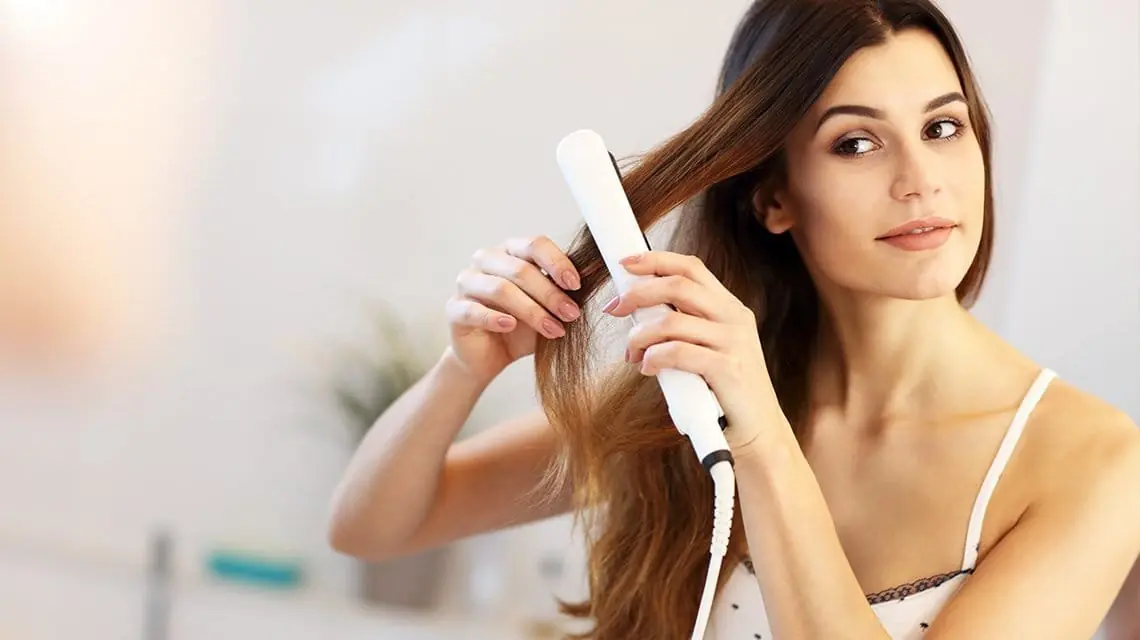
The conversation about hair straightening and uterine cancer has grown sharper since a 2022 NIH-backed study reported a measurable correlation between
The conversation about hair straightening and uterine cancer has grown sharper since a 2022 NIH-backed study reported a measurable correlation between chemical hair straightener use and uterine cancer risk in women who use these products frequently.
Reviewed by the BeautynFacts editorial team. Last updated: May 2026.
An American scientific study has just established a relationship between hair straightening and uterine cancer. The alarms have gone off and the media have echoed this work.
On October 22 of this year, a study by the National Institute of Health of the United States Department of Health revealed in the Journal of the National Cancer Institute that hair products may contain dangerous chemicals with carcinogenic and endocrine-disrupting properties. These disruptors (a very fashionable word) are a series of chemical substances capable of altering the hormonal system of the human organism and generating its dysfunction.
Other studies had already linked an increased risk of breast and ovarian cancer, but no one had ever mentioned the uterus. For this reason, the news has spread rapidly.
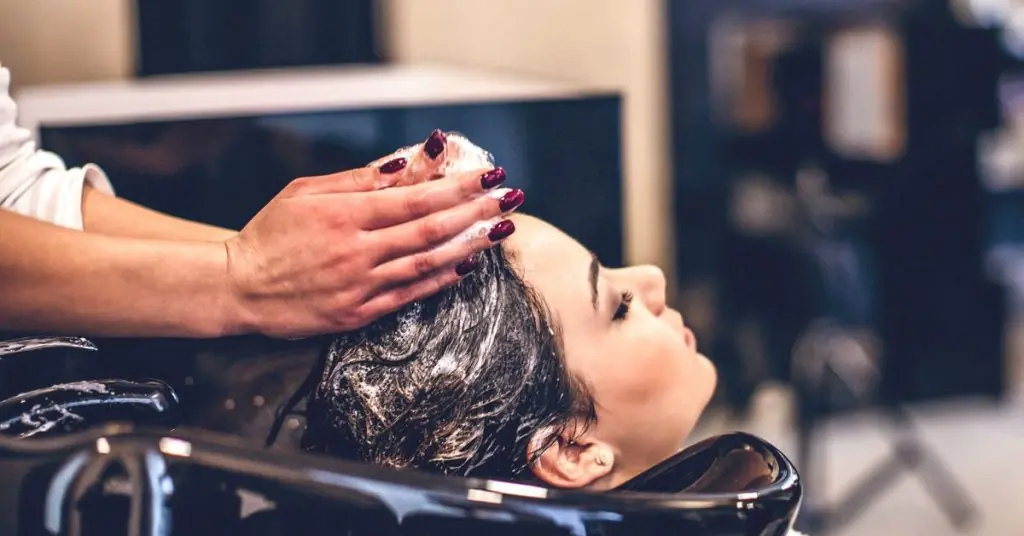
The Internet search for “smoothing and uterine cancer” shows a figure close to 2,000 million results. That is, people – and especially us women – are concerned about whether there is a relationship between straightening and uterine cancer. We explain below that the products used in Spain and the European Union are free of chemicals that could cause this disease.
Let’s start with the idea that everything in this world is chemistry, even down to the water. That does not mean that everything that falls into our hair or on our face is going to cause us cancer.
Fortunately for us, in Europe and therefore in Spain, there is a very restrictive law regarding potentially dangerous substances. Having established this premise, the scientific work, called the Sister Study, was carried out in a population of 50,884 women between the ages of 35 and 74 who did not suffer from disease in utero between 2003 and 2009 but who did have or had had a sister. with breast cancer.
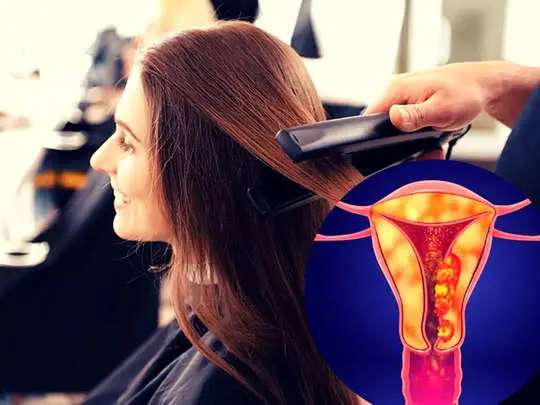
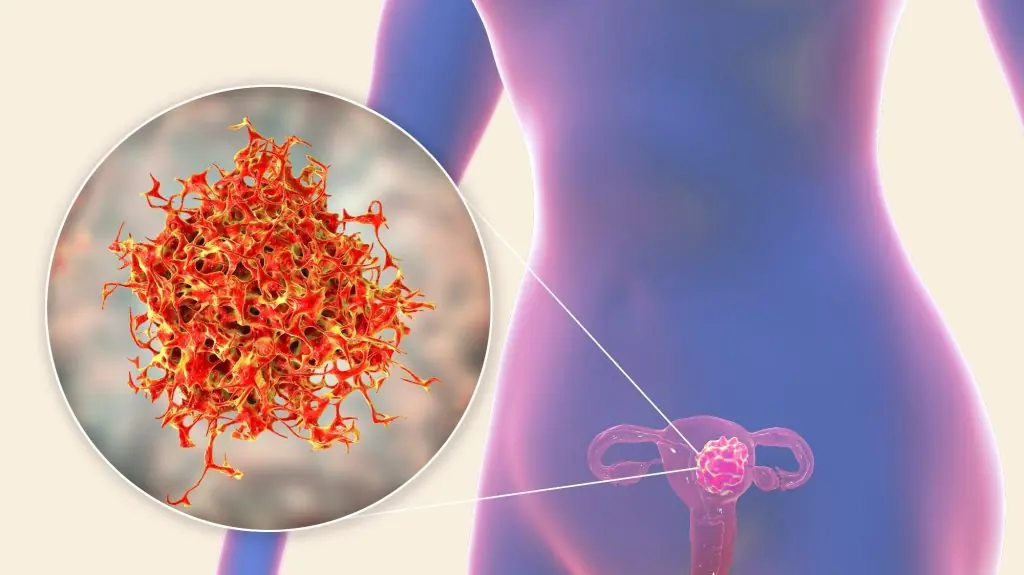
Evidence of association between hair straightening and uterine cancer
During a period of 10.9 years, 262 cases of uterine cancer were identified. The ever-increasing use of smoothing products was associated with higher rates of uterine cancer. However, the use of other hair products, including dyes and perms, did not bind this type of tumour. Of course, in the survey sent to each member of the programme, they were asked whether they had used hair products in the last 12 months.
The uterine cancer findings are the first epidemiological evidence of an association between the use of hair straightening products and uterine cancer. The United States Department of Health will continue to investigate and replicate its findings in other settings.
Some of the substances linked to these cancers, which are more common among Black people because they use the most straightening products, include parabens, bisphenol, and formaldehyde.
Do we use these products in Spain?
The discussion of hair straightening and uterine cancer in Europe centres on whether the same formaldehyde-releasing compounds reach women in Spanish salons.
Refrain from crying to heaven because these products are banned in Spain. Parabens are a group of ingredients that are used as preservatives. They are very useful to avoid contamination by bacteria, fungi or yeasts, which is why they serve to guarantee the safety of cosmetic products and extend their useful life.
But the family of parabens is very wide, and most are not used in cosmetics. A few years ago, some studies linked the presence of parabens with health problems such as breast cancer or male infertility. However, subsequent research found that there was no direct relationship between parabens and health problems. Still, the European Union has banned the use of 5 parabens. The claim “without parabens” is a strategy some brands use to differentiate themselves from others that contain them. And, since it is a preservative, if the cream does not contain parabens, it must have been formulated with another preservative.
It is a lure just like the “cruelty-free” one. In Europe, testing with live animals has been prohibited since 2013; it is thus another claim by the industry to distinguish itself from cosmetic companies that do not use the label on the packaging.
Bisphenol is another chemical product that has been used for many years as a component in the manufacture of polycarbonate and epoxy-phenolic resins and that enters into the composition of containers.
As I explained to you, European legislation is very demanding, and it has also provided its data. The European Food Safety Authority (EFSA) has worked in recent years to reassess the potential risks of bisphenol. As a result of these works, a scientific opinion has recently been published stating that this substance is safe.
And are formaldehydes responsible for the relationship between hair straightening and uterine cancer?

Formaldehyde is a colourless, strong-smelling, flammable chemical used for some industrial purposes and in the healthcare sector to perform very specific types of tests.
To answer this question, we are going to know the opinion of Maria Jose Tous, a pharmacist, cosmetologist and founder of the Kosei brand. “It is a mistake to extrapolate the results obtained in the United States because Spanish legislation does not allow the use of straighteners with formaldehyde.”
For Maria Jose Tous, “The article that mentions the relationship between hair straightening and uterine cancer does not take into account that there are many types of straightening with different types of ingredients.” From my perspective, you should have said that you were referring to formaldehyde-based smoothing treatments and not generically to straightening treatments. We already know that formaldehyde is a carcinogenic agent, and in fact, it is banned in most countries in the world, not just in Europe.
What compounds are hair straighteners made with in Spain?
The answer is complex because the ingredients used for smoothing in Europe/Spain are varied; no single ingredient can perform this function.
Maria Jose Tous explains to Belleza Pura that the oldest are thioglycollates, used for both curling and straightening hair, and they were used in the era of perms. It is difficult to control the end point of the treatment, and they damage the hair a lot. The most modern products are made from glyoxylic acid or its salt (glyoxylate), carbocysteine or its derivatives, and cysteine derivatives. The key is in the percentages of each of these ingredients, their combinations and the base (emulsion ingredients) in which they are formulated.” All of this is what will inform the form of application (whether it is appropriate to wash after applying the treatment to the hair or before ironing the hair or not). And everything mentioned above affects the result in terms of hair straightening and how the hair fibre is left (more or less damaged). ”.
If we go to the legal field, there is also information to provide. “Any cosmetic manufactured in Europe must have a dossier called PIF (Product File Information) in which a technician (pharmacist, doctor, or specialised chemist) must carry out a safety assessment based on the toxicological profile of the substances that form part of the finished product, its way of use, the place and the amount of application,” explains the creator of Kosei.
“For this reason,” concludes Maria Jose Toussaint, people who get straightening should not be afraid in this sense. As long as they are using a product whose origin and composition are known.”
Frequently Asked Questions About Hair Straightening and Health
Is there a link between hair straightening and uterine cancer?
Studies, including a 2022 National Institutes of Health study, found a higher risk of uterine cancer among women who used chemical hair straightening products frequently, particularly those containing formaldehyde-releasing agents. The risk was most notable in women who used straightening products more than four times a year. The study did not establish causation, but the association was strong enough to recommend caution. Women who use these products regularly should consider safer alternatives like keratin treatments without formaldehyde or heat-based straightening methods.
Which hair straightening method is safest?
The safest hair straightening methods are heat-based, like flat ironing or blow-drying with a round brush, when used with heat protectant and at moderate temperatures. For longer-lasting straightening, formaldehyde-free keratin treatments are a safer alternative to traditional Brazilian blowouts, which release toxic fumes. Japanese hair straightening, while effective and long-lasting, uses harsh chemicals and should be done sparingly. Always check the ingredient list and ask the stylist to confirm formaldehyde-free products. Discuss any chronic chemical hair treatments with your doctor at routine checkups.
What chemicals in hair straighteners are concerning?
The most concerning chemicals in hair straighteners are formaldehyde and formaldehyde-releasing agents, which are used in many Brazilian blowout and keratin straightening treatments. These chemicals are classified as carcinogens by the World Health Organization and have been linked to several health risks. Other concerning ingredients include sodium hydroxide in relaxers, ammonium thioglycolate, and certain dyes. Read product labels carefully, ensure salon ventilation is good during treatment, and choose formaldehyde-free alternatives when possible. Limit chemical hair straightening to occasional rather than frequent use.
How often is it safe to chemically straighten hair?
Most dermatologists and oncologists recommend limiting chemical hair straightening to no more than three or four times a year, and ideally less. The National Institutes of Health study linked frequent use, defined as more than four times a year, to an increased uterine cancer risk. If you straighten more often, switch to heat-based methods between chemical treatments. Consult your doctor if you have a family history of hormone-related cancers, since the risk profile may be more concerning for your specific situation.
Are there natural alternatives to chemical hair straightening?
Yes, several natural alternatives reduce the need for chemical hair straightening. Daily blow-drying with a round brush and a heat protectant can give a smooth, straight look. Hair masks made of milk and honey, banana and yogurt, or coconut milk help soften and tame frizz. A silk pillowcase reduces overnight frizz, and a leave-in conditioner with smoothing ingredients adds shine and manageability. While these methods do not produce the ultra-straight look of chemical treatments, they significantly reduce frizz and give a sleeker finish without the health concerns.
Should I stop using chemical hair straighteners?
If you have a family history of uterine, ovarian, or breast cancer, talk to your doctor before continuing chemical hair straightening. For everyone else, the decision is personal. Reducing frequency to once or twice a year, choosing formaldehyde-free formulas, and ensuring proper salon ventilation lowers the risk significantly. If you decide to continue, schedule regular gynaecological checkups and report any unusual symptoms promptly. Many women find that switching to heat-based methods or formaldehyde-free keratin treatments offers a reasonable compromise between straight hair and health.
RELATED ARTICLES:
There are many benefits to using cumin oil on hair.
Glass Hair in 2026: The Products and Techniques for a Frizz-Free, Mirror-Like Finish That Lasts
MOB WIFE HAIR: HOW TO GET THE VOLUMINOUS, LIVED-IN LOOK EVERYONE’S OBSESSING OVER
5 Hair Mistakes While Sleeping
Trim Split Ends Regularly for Healthier, Stronger Hair: The Exact Schedule That Works
About The Author

COMMENTS