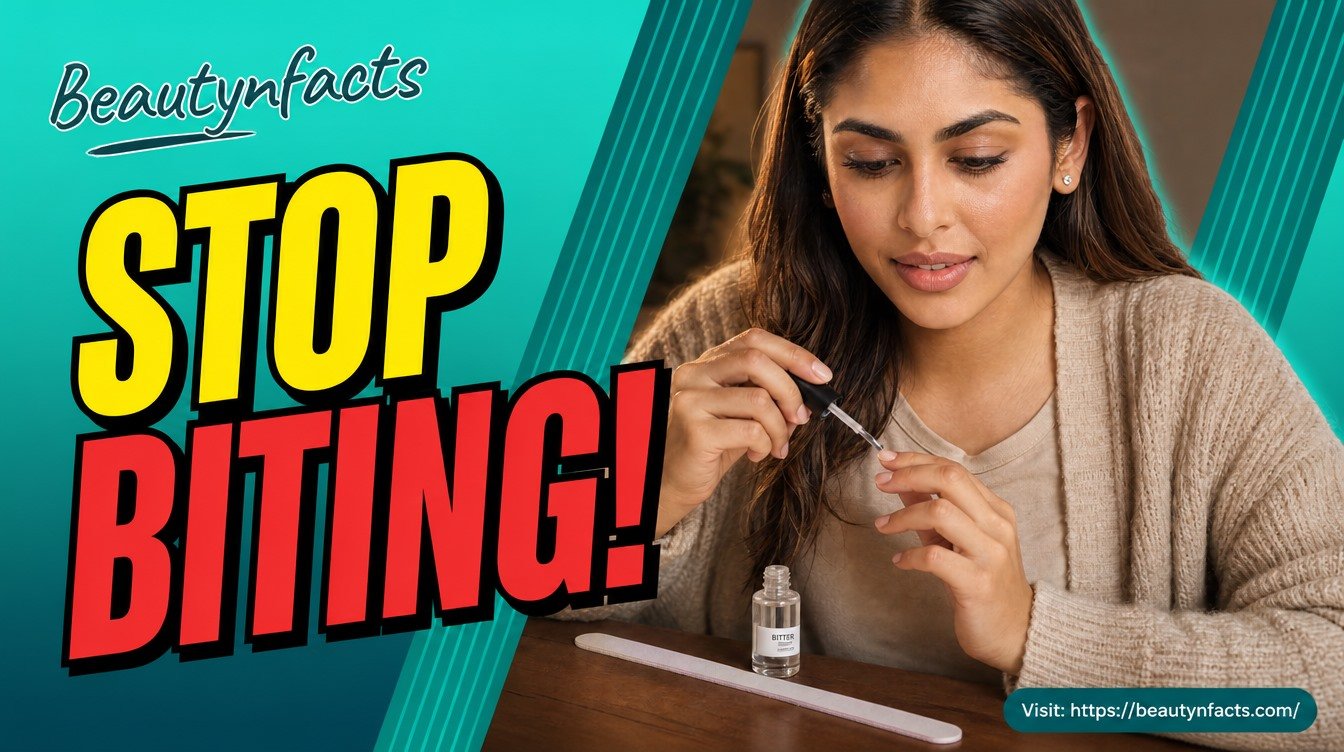
How to stop biting nails is harder than how to start, because the habit is rarely about the nails themselves: it usually pairs with focus, anxiety, or
How to stop biting nails is harder than how to start, because the habit is rarely about the nails themselves: it usually pairs with focus, anxiety, or simple boredom and lives below conscious thought. The good news is the habit responds well to a combination of behavioral cues and one or two specific products. This guide walks through how to stop biting nails in 12 practical steps, from bitter-polish picks to the focus tools and grooming habits that quietly retrain the response.
Reviewed by the BeautynFacts editorial team. Last updated: May 2026.
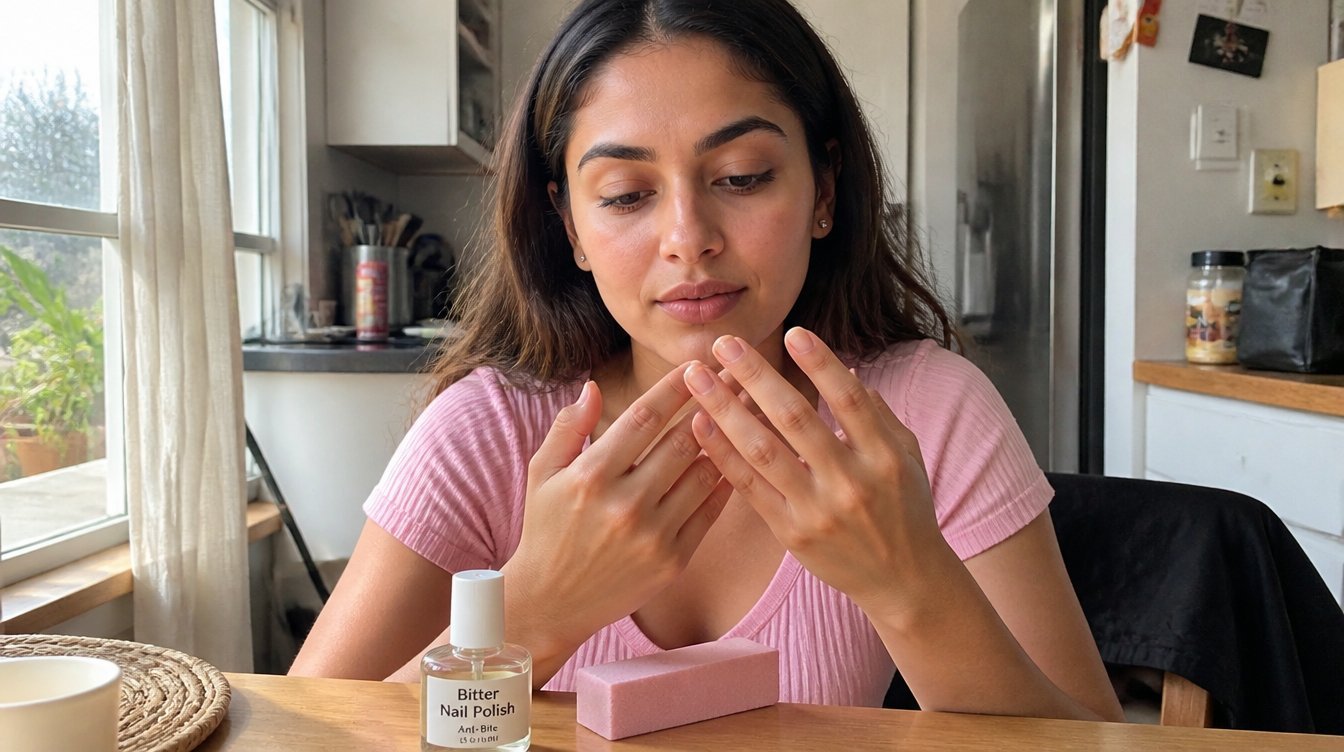
Bye-Bye, Nail-Biting: Discover the Secrets to Breaking Free from This Pesky Habit
You glance down at your hands and feel that familiar pang of frustration. Your nails are short, ragged, and sore. You did not even realise you were biting them again. If this sounds familiar, you are far from alone. Nail biting, medically known as onychophagia, is one of the most common nervous habits in the world. It affects people of every age, background, and walk of life. Saying bye-bye to nail-biting can feel almost impossible when the habit is deeply ingrained, but breaking free is absolutely achievable with the right knowledge and tools.
This guide goes far beyond surface-level advice. You will learn the science behind why nail biting starts and why it persists. You will discover proven behavioural strategies that rewire your habit loop. You will find out which nail products, from bitter polishes to protective gel overlays, can serve as powerful deterrents. And you will get a practical roadmap for rebuilding your nail health from the inside out. By the time you finish reading, you will have everything you need to finally put this habit behind you and grow the strong, beautiful nails you deserve.
Understanding Nail Biting and Its Hidden Impact
One detail people miss with how to stop biting nails: small inputs compound. Two careful changes today are worth more than ten half-followed ones, and how to stop biting nails rewards the people who show up consistently over weeks, not the ones chasing a single perfect product.
How Common Is Nail Biting?
Nail biting is remarkably widespread. Studies estimate that between 20 and 30 percent of the general population bites their nails. Among children between the ages of 7 and 10, that figure rises to around 28 to 33 percent. In teenagers, the prevalence spikes further, reaching as high as 44 percent in some studies. Many people carry the habit into adulthood without ever finding a lasting solution.
The habit does not discriminate. It affects people across income levels, professions, and genders. However, some research suggests a slightly higher prevalence among males. Nail-biting is also more common among people who have family members with the same habit, which points to a mix of genetic predisposition and learned behaviour.
What makes nail biting so persistent is its classification. The American Psychiatric Association categorises chronic nail biting under body-focused repetitive behaviours, or BFRBs. This grouping also includes hair pulling and skin picking. Understanding this classification helps explain why simple willpower rarely works as a standalone solution.
The Physical Damage You May Not Notice
Nail-biting causes more physical harm than most people realise. The most visible damage is to the nail plate itself. Repeated biting removes the free edge and often chips or cracks the nail body. Over time, the nail plate can become thin, brittle, and permanently deformed.
The cuticle suffers as well. Biting and tearing at the skin around the nail creates micro-tears. These tiny wounds act as entry points for bacteria and fungi. Paronychia, a painful infection of the nail fold, is significantly more common among habitual nail biters. The infection causes redness, swelling, and pus around the nail. In severe cases, it requires antibiotic treatment or minor surgical drainage.
Dental health is another casualty. The constant pressure of biting hard nails puts stress on the front teeth. Over the years, this can cause enamel erosion, micro-fractures, and even tooth misalignment. Orthodontists frequently identify nail-biting as a contributing factor in relapse after brace treatment.
There is also a hygiene concern that many people overlook. The area under the fingernail harbours more bacteria than almost any other surface on the body. Every time you put your fingers in your mouth, you transfer those bacteria directly to your oral cavity and digestive system. Research has linked nail biting to increased rates of gastrointestinal infections, including those caused by E. coli and Salmonella.
The Psychological Toll of Onychophagia
The emotional consequences of nail biting are just as significant as the physical ones. Many nail biters report feelings of shame, embarrassment, and frustration. They hide their hands in photos, avoid shaking hands in professional settings, and feel self-conscious in social situations.
This shame can feed a vicious cycle. Stress and negative emotions trigger the urge to bite. Biting provides momentary relief. Then guilt and shame set in. Those negative emotions increase stress, which triggers more biting. Breaking this cycle requires addressing both the habit itself and the emotional patterns that sustain it.
In some cases, nail biting reflects deeper anxiety disorders or obsessive-compulsive tendencies. Studies have found elevated rates of OCD, generalised anxiety disorder, and attention deficit hyperactivity disorder among people with chronic nail-biting habits. This does not mean every nail-biter has a mental health condition, but it does highlight the importance of understanding the emotional roots of the behaviour.
Why Do People Bite Their Nails? The Root Causes
Stress, Anxiety, and the Nervous Habit Loop
Stress is the most commonly cited trigger for nail biting. When the body enters a state of stress or anxiety, it seeks outlets for the nervous energy. For nail biters, putting fingers in the mouth provides a quick, accessible form of self-soothing. The oral stimulation activates the parasympathetic nervous system, which creates a mild calming effect.
This is why nail biting tends to intensify during exams, deadlines, difficult conversations, and other high-pressure situations. The brain learns that biting equals relief. That association becomes hardwired over time through simple conditioning. Each repetition strengthens the neural pathway until the behaviour happens almost automatically.
The challenge is that the relief is temporary. The underlying stress or anxiety does not disappear. Once the momentary calm fades, the stressor returns, and the urge to bite surges again. This cycle can repeat dozens of times in a single day without the person being fully aware of it.
Boredom, Inactivity, and Idle Hands
Boredom is another powerful driver. When the mind is understimulated, it seeks sensory input. Nail biting provides tactile feedback, oral stimulation, and a physical activity for idle hands all at once. It fills sensory gaps with very little conscious effort.
Many people report that they bite their nails most often while watching television, reading, riding in vehicles, or sitting in meetings. These are situations where the hands are unoccupied and the mind is only partially engaged. The habit rushes in to fill that gap.
Understanding this trigger helps you choose effective substitutes. If boredom drives your biting, you need solutions that engage your hands and provide similar sensory stimulation without damaging your nails.
Perfectionism and Underlying Psychological Conditions
Research published in the Journal of Behaviour Therapy and Experimental Psychiatry found that people with perfectionist tendencies are more prone to body-focused repetitive behaviours, including nail biting. Perfectionism creates chronic frustration when reality does not match the internal ideal. Nail biting becomes an outlet for that frustration.
Perfectionist nail biters often report that they start biting when they notice an uneven nail edge, a hangnail, or a rough cuticle. The desire to fix or smooth the imperfection triggers the biting episode. Biting always makes the situation worse, which fuels more frustration and continues the loop.
For some individuals, nail-biting overlaps with diagnosable conditions. OCD involves repetitive behaviours driven by intrusive thoughts. BFRBs like nail biting share some features with OCD but are classified separately in the DSM-5. ADHD also correlates with nail biting, as the habit may provide stimulation that an underactive attention system craves. If you suspect your nail-biting connects to a deeper condition, speaking with a mental health professional is the most effective first step.
The Science Behind Breaking the Nail-Biting Habit
How Habits Form in the Brain
Habits live in a region of the brain called the basal ganglia. This structure handles routine, automatic behaviours, which frees the conscious mind for more complex thinking. Once a behaviour becomes a habit, it runs largely on autopilot. This is why you can drive a familiar route and arrive with little memory of the journey.
Nail biting follows this same neurological process. Over repeated cycles, the brain encodes the behaviour into a compressed routine that triggers automatically in response to specific cues. The behaviour becomes so automatic that many people do not realise they are doing it until their nail is already in their mouth.
The good news is that the brain remains plastic throughout life. Neuroplasticity, the brain’s ability to form new connections and pathways, means that habits can be unlearned and replaced. It takes time and consistent repetition, but the neural pathway for nail-biting can weaken while a new, healthier pathway strengthens in its place.
The Habit Loop: Cue, Routine, Reward
Charles Duhigg’s habit loop model breaks every habit into three components: the cue, the routine, and the reward. For nail-biting, the cue might be stress, boredom, or noticing an uneven nail. The routine is the biting itself. The reward is the brief sensory satisfaction or anxiety reduction that follows.
To break the habit, you must identify the cue and replace the routine while preserving some form of reward. Simply trying to stop the routine without substituting something else leaves a void that the brain will quickly fill with the original behaviour.
Habit reversal training, a well-researched behavioural therapy approach, applies exactly this principle. It helps you become aware of cues, build competing responses, and practise those responses until they become the new automatic behaviour. Studies show habit reversal training produces significant reductions in nail-biting frequency, often within just a few weeks of consistent practice.
Why Willpower Alone Is Not Enough
Willpower is a limited resource. Research by psychologist Roy Baumeister demonstrated that self-control draws on a finite pool of mental energy that depletes throughout the day. By evening, when stress and fatigue peak, willpower reserves are at their lowest. That is exactly when habit-driven behaviours surge.
This explains why so many people succeed at not biting their nails all day, only to find themselves biting without thinking while watching television at night. The failure is not a character flaw. It is a predictable consequence of relying on conscious effort to suppress an automatic behaviour.
Effective habit change works with the brain rather than against it. It builds environmental triggers, physical deterrents, and automatic substitute behaviours into daily life so that the healthier option requires less conscious effort over time.
Bye-Bye Nail Biting: Behavioral Strategies That Actually Work
Identifying Triggers and Building Awareness
The foundation of any effective behaviour change plan is awareness. Most nail biters are not conscious of when or why they bite. Keeping a simple habit journal for one week can reveal powerful patterns.
Each time you catch yourself biting, write down the time, your location, your emotional state, and what you were doing immediately before. Within days, patterns emerge. You may discover that you always bite during phone calls, or only when you feel anxious about work, or consistently in the car during your commute.
Once you identify your specific triggers, you can prepare targeted responses for each one. This specificity is what separates effective habit change plans from vague intentions to stop. Telling yourself you will stop biting your nails is far less effective than telling yourself that when you sit down for your evening television routine, you will put on a fidget ring and keep your hands occupied with something else.
Habit Substitution Techniques
Habit substitution replaces nail-biting with a competing behaviour that satisfies the same underlying need. The substitute should be incompatible with biting, meaning you cannot do either at the same time.
For stress-driven biting, deep breathing exercises, progressive muscle relaxation, and mindfulness meditation address the root cause while giving your body and mind something productive to do. Even 60 seconds of slow, intentional breathing can interrupt the anxiety loop and reduce the urge to bite.
For boredom-driven biting, keeping hands occupied is the priority. Fidget toys, stress balls, textured rings, and small handheld puzzles all provide tactile stimulation without harming nails. Knitting, drawing, and playing a musical instrument are excellent longer-form substitutes because they require both hands and sustained focus.
For the urge to fix a rough nail edge or hangnail, keeping a nail file in your bag at all times is a big shift. The moment you notice an imperfection, you can smooth it with a file instead of biting it. This removes the perfectionism trigger before it escalates into a full biting episode.
Cognitive Behavioral Therapy and Professional Support
For chronic nail biters, professional support significantly improves outcomes. Cognitive behavioural therapy, or CBT, helps identify and restructure the thought patterns that drive compulsive behaviours. A therapist trained in habit reversal training or the complete behavioural treatment model can work through your specific triggers, build personalised competing responses, and provide accountability.
Acceptance and commitment therapy, or ACT, is another evidence-based approach. Rather than fighting the urge to bite, ACT teaches you to observe the urge with curiosity and choose your response deliberately. This reduces the power of the urge over time without requiring you to suppress it through force of will.
For individuals whose nail-biting connects to OCD or severe anxiety, medication may be part of the treatment plan. Selective serotonin reuptake inhibitors, or SSRIs, have shown effectiveness in reducing compulsive behaviours when combined with therapy. This is a conversation to have with a psychiatrist or your primary care physician.
Nail Products That Help You Stop Biting
Bitter-Tasting Nail Polishes and Deterrent Products
Bitter-tasting nail polishes are among the most widely used tools for deterring nail biting. These products contain a safe but intensely unpleasant compound, usually denatonium benzoate, which is considered the most bitter substance known to science. A tiny amount on your fingertip delivers an immediate, unpleasant reminder the moment your fingers reach your mouth.
Popular options include Mavala Stop, Orly No Bite, and Control It. These polishes dry clear and can be worn alone or over other nail products. For best results, apply them daily. The flavour lasts through most activities but may need reapplication after heavy handwashing or swimming.
Bitumen polish works best as part of a broader strategy rather than as a standalone solution. They interrupt the habit loop at the routine stage, giving your conscious mind a moment to redirect to a substitute behaviour.
Thumb guards and nail covers are physical barriers that prevent nail biting entirely. These soft silicone or fabric covers slip over individual fingers and are available in adult sizes. They are particularly useful during high-risk periods, such as evening television time or long car journeys.
Gel, Acrylic, and Dip Nails as a Protective Barrier
Artificial nail enhancements serve a dual purpose for nail biters. They protect the natural nail underneath while making biting physically difficult. The thick, hard surface of an acrylic or gel overlay is much harder to bite through than a natural nail, and the effort required often breaks the automatic habit loop before any damage occurs.
Gel nails are cured under UV or LED light and create a flexible but durable coating over the natural nail. They can be applied as a simple overlay on short nails, providing protection and length without requiring nail tips. Gel nails look natural and last two to three weeks before requiring a fill.
Acrylic nails use a liquid monomer and powder polymer that harden in air. They create a thicker, more rigid surface than gel and are particularly useful for nail biters with very short or damaged nails, as tips can be added to build length. Acrylics require fills every two to three weeks as the natural nail grows.
Dip powder nails offer another option. The process involves applying a bonding base coat, dipping nails into coloured acrylic powder, and sealing with a clear topcoat. No UV light is required. Dip nails are durable and last three to four weeks. They tend to be gentler on the natural nail than traditional acrylics when applied and removed correctly.
Regular nail polish alone provides minimal physical protection but can still support habit-breaking. Painted nails draw visual attention and can increase conscious awareness of hand-to-mouth movements. Wearing a colour you love creates a psychological investment in keeping your nails intact.
Nail Strengtheners and Growth Polishes
Nail strengtheners are specially formulated products that reinforce the nail plate with bonding agents, proteins, and hardening ingredients. They are especially important during the recovery phase, when nails are fragile after prolonged biting.
Look for strengtheners that contain hydrolysed keratin, calcium, biotin, or formaldehyde-free hardening agents. OPI Nail Envy, Sally Hansen Hard as Nails, and Nailtiques Formula 2 are well-reviewed options. Apply a base coat of strengthener before any other polish and reapply every two to three days for best results.
Growth-promoting treatments often combine strengthening ingredients with nail-nourishing compounds like vitamin E, argan oil, and peptides. These support healthy cell turnover at the nail matrix, which is the growth centre located under the skin at the base of the nail. A healthy nail matrix produces a stronger, more resilient nail plate over time.
Rebuilding Nail Health After Biting
Hydration and Cuticle Care
Chronically bitten nails and cuticles are dehydrated, damaged, and vulnerable. Restoring moisture is the first step in rebuilding nail health. Dry nails are brittle nails. Brittle nails break, peel, and produce rough edges that tempt biters back into old habits.
Apply a dedicated cuticle oil at least twice daily. Look for formulas containing jojoba oil, vitamin E, and sweet almond oil. These lightweight oils penetrate the cuticle and nail plate to restore suppleness and flexibility. Massage the oil into the base and sides of each nail for 30 seconds to stimulate circulation and absorption.
Hand cream complements cuticle oil by providing surface moisture to the skin around the nails. Choose a cream with shea butter, glycerin, or hyaluronic acid. Apply it every time you wash your hands. Fragrance-free formulas are gentler on already irritated skin.
Drinking enough water supports nail hydration from within. Nails are composed of keratin, a protein that requires adequate hydration to maintain their structure. Chronic dehydration contributes to brittle, fragile nails that are more prone to breaking and snapping. Aim for at least eight glasses of water per day as a baseline.
Strengthening Damaged Nails
Beyond topical treatments, nutrition plays a major role in nail strength. Biotin, also known as vitamin B7, is the most studied nutrient for nail health. Multiple clinical studies show that biotin supplementation at doses of 2.5 milligrams per day significantly improves nail thickness and reduces brittleness. Results typically appear after two to three months of consistent supplementation.
Protein intake matters as well, since nails are made of keratin. Collagen supplements have gained research support for improving nail growth rate and reducing breakage. A 2017 study published in the Journal of Cosmetic Dermatology found that women who took collagen peptide supplements daily for 24 weeks showed a 12 percent increase in nail growth rate and a 42 percent decrease in broken nails.
Zinc, iron, and vitamins A, C, and E also contribute to nail strength and growth. Deficiencies in any of these nutrients can manifest as nail changes, including brittleness, ridging, and slow growth. A balanced diet rich in lean protein, leafy greens, nuts, and seeds provides the nutritional foundation for healthy nail regrowth.
Common Nail Conditions Caused by Biting and How to Treat Them
Nail biting creates specific conditions that require targeted treatment. Paronychia, the infection of the nail fold, is among the most common. Acute paronychia comes on suddenly and is usually caused by bacterial infection following a bite-related skin break. Treatment typically involves warm water soaks several times a day, topical antibiotic ointment, and, in more serious cases, oral antibiotics prescribed by a doctor.
Onycholysis, the separation of the nail plate from the nail bed, can occur when repeated trauma from biting disrupts the nail’s natural attachment. The nail appears white and detached at the tip. Treatment requires keeping the nail trimmed short, keeping it dry, and allowing it to reattach naturally over several months.
Nail ridging is another common post-biting condition. Vertical ridges are often benign and increase with age, but horizontal ridges, called Beau’s lines, can indicate past trauma to the nail matrix from biting. These ridges grow out slowly as the nail grows. Light buffing can smooth the surface temporarily, but aggressive buffing thins the nail further and should be avoided.
Persistent skin infections, discolouration, or nail shape changes that do not improve within a few weeks warrant a visit to a dermatologist. A dermatologist can diagnose and treat nail conditions with prescription-strength antifungal or antibiotic medications when needed.
Bye-Bye Nail-Biting: Maintaining Long-Term Progress
Tracking Progress and Setting Milestones
Long-term habit change requires a way to measure progress. Without visible benchmarks, it is easy to feel like you are failing even when you are making meaningful gains.
Take a photograph of your nails every week. The visual evidence of nail growth and improving condition is a powerful motivator. Even small changes, like a sliver of white at the tip or smoother cuticles, signal real progress.
Set milestone rewards for yourself. When your nails reach a specific length, treat yourself to a professional manicure. When you go two weeks without biting, buy the nail polish colour you have been saving for. These rewards reinforce the new behaviour and build positive associations with having healthy nails.
Track the number of bite-free days in a habit-tracking app or a simple paper calendar. Research on habit formation confirms that visible streaks create a motivational pull to maintain the chain. The longer your streak, the stronger your resistance to breaking it becomes.
Building a Supportive Environment
Your environment shapes your behaviour more than motivation or intention alone. Redesigning your surroundings to make nail-biting harder and healthier alternatives easier is one of the most effective long-term strategies available.
Keep a nail file in every location where you commonly bite: your desk, your car, your bedside table, and your handbag. Keep a small bottle of cuticle oil or hand cream in the same spots. When the urge to address a rough patch arises, the healthy alternative is immediately within reach.
Tell trusted people in your life about your goal. Social accountability significantly improves habit change outcomes. You do not need to make it a big announcement. Simply letting a close friend or partner know that you are working on stopping creates a gentle accountability dynamic that supports your effort.
Consider joining an online community of people working on BFRBs. Organisations like the TLC Foundation for Body-Focused Repetitive Behaviours offer forums, resources, and peer support for people managing nail-biting and related habits.
When to Seek Medical or Therapeutic Help
Most nail biters can make significant progress with self-directed strategies. But some situations call for professional support.
Seek help from a mental health professional if your nail-biting causes significant distress, if you have tried repeatedly to stop without success, or if you suspect it connects to anxiety, OCD, or ADHD. Effective treatments exist, and professional guidance accelerates results considerably.
See a dermatologist if you have signs of infection around your nails; persistent nail deformity that does not improve with home care; or any nail change that looks unusual or concerning. Early treatment of nail infections prevents complications and speeds recovery.
See your dentist if you notice any changes to your teeth or bite alignment. Your dentist can assess whether nail-biting has caused dental damage and recommend appropriate treatment, including a custom night guard if grinding or enamel erosion is present.
Safe Application and Removal of Nail Products During Recovery
Applying Nail Products Safely on Recovering Nails
Recovering nails are thinner and more porous than healthy nails. This makes them more vulnerable during the nail product application process. Taking extra care during application protects the nail while it heals.
Always start with a good base coat. Base coats create a protective barrier between the nail plate and pigmented polish. They prevent staining and provide a smoother surface that helps topcoats adhere better and last longer. This step is especially important for recovering nails that may have surface irregularities from biting.
For gel products, avoid filing the nail plate aggressively before application. Light buffing with a 180-grit file is sufficient to create adhesion. Excessive filing thins already-fragile, recovering nails. Ensure the gel is cured fully under the lamp according to the manufacturer’s instructions, as under-cured gel can cause sensitivity and skin reactions.
For acrylic applications, choose a salon technician who understands nail health. Communicate that your nails are recovering from biting and request minimal prep filing. Ask about low-odour or EMA acrylic systems, which tend to be gentler than older MMA-based products. If your nails are very short, nail tips can extend length and provide a surface that is much harder to damage than natural nails alone.
For dip powder, ensure the shop uses individual brush-and-dip systems rather than shared dipping pots to prevent contamination. At-home dip kits are available from brands like SNS, Revel Nail, and Kiara Sky, and they allow you to control both sanitation and application pressure.
Safe Removal to Protect Nail Health
Improper removal of nail products is one of the most common causes of nail damage, even among people who do not bite their nails. For recovering nail biters, careless removal can undo weeks of healing progress.
Never peel or force off gel or acrylic products. Peeling removes layers of the nail plate along with the product, leaving nails thin, white, and rough. That rough texture then triggers the urge to bite and fix.
For gel polish removal, saturate a cotton pad with acetone, place it directly on the nail, and wrap each finger in small squares of foil. Leave the wraps on for 10 to 15 minutes. The gel will soften and slide off with gentle pressure from an orange stick. Never scrape or apply force.
For hard gel and acrylic removal, the process is similar but may require a longer soak time of 20 to 30 minutes. Some hard gels must be filed off rather than soaked. In this case, use a coarse-grit file carefully and stop frequently to check how much product remains. The goal is to remove the product, not thin the natural nail underneath it.
After any removal process, apply cuticle oil immediately and follow with a nourishing hand cream. Give your nails a few days of bare recovery time before applying new products, especially if they feel thin or sensitive to the touch.
Taking Nail Breaks Between Applications
Nails benefit from periodic breaks between product applications. A one-week break every six to eight weeks allows the nail plate to recover and rebuild its natural oil content. During this break, use a strengthening treatment daily and keep nails hydrated with cuticle oil.
This recovery period is also an opportunity to assess nail health. Look for signs of thinning, discolouration, or unusual texture that may indicate product-related damage or the early stages of a fungal infection. Catching these issues early makes treatment simple.
If your nails feel sensitive, thin, or painful after removal, extend the break period. The goal is to build nail health progressively, not to rush back into products before the nail plate has recovered. Patience during this phase pays off with stronger, more resilient nails that hold products better and resist biting more effectively over time.
Frequently Asked Questions About Nail Biting
How long does it take to completely stop biting your nails?
The timeline varies from person to person. Research on habit change suggests that an average of 66 days of consistent practice is needed to form a new automatic behaviour, though individual results range from 18 to 254 days. For nail-biting specifically, most people notice a significant reduction in frequency within two to four weeks of applying consistent behavioural strategies. Complete elimination of the urge, however, often takes three to six months. The key factor is consistency. Missing the occasional day does not derail your progress, but returning to old patterns for several weeks sets you back considerably. Treat it as a long-term project and celebrate incremental gains along the way.
Can nail-biting cause permanent damage to your nails?
In most cases, nail damage from biting is not permanent. The nail matrix, which produces new nail cells, can recover from repeated trauma as long as the damage is not severe or ongoing. Once biting stops, nails typically regrow fully within three to six months. However, long-term, severe nail biting can cause lasting changes to the nail matrix, resulting in permanently narrowed or ridged nails. Chronic infections can also cause scarring of the nail fold that affects future nail growth. This is why stopping sooner rather than later matters. The longer biting continues, the greater the cumulative risk of changes that take much longer to resolve or, in rare cases, do not fully resolve on their own.
Is nail biting a sign of anxiety?
Nail biting is strongly associated with anxiety, but it does not automatically indicate an anxiety disorder. For many people, it is a learned coping behaviour that provides momentary stress relief. However, research consistently shows elevated rates of anxiety disorders among chronic nail biters compared to the general population. If your nail-biting spikes significantly during periods of stress, is accompanied by persistent worry, or occurs alongside other anxiety symptoms like racing thoughts, sleep disturbance, or avoidance behaviours, it may be worth speaking with a mental health professional. Addressing the underlying anxiety often reduces or eliminates nail biting as a natural side effect of that broader work.
Do gel or acrylic nails actually help stop nail-biting?
Yes, for many people, they do. Gel and acrylic overlays create a physical barrier that makes biting significantly harder. The thickness and hardness of the product create enough resistance to interrupt the automatic habit loop. Many nail biters report that after wearing artificial enhancements for several weeks, their biting urge decreases because the tactile feedback they were accustomed to is no longer accessible. The time and money invested in a professional manicure also create a psychological deterrent. That said, nail enhancements work best as part of a broader strategy. They manage the surface behaviour but do not address the underlying triggers. Combining them with behavioural techniques produces the best and most lasting outcomes.
What should I do if I relapse and start biting again?
Relapse is normal and expected in habit change. It does not mean you have failed or that stopping is impossible. When you notice you have been biting again, resist the urge to shame yourself. Self-criticism increases stress, which is likely one of your core triggers, making the problem worse rather than better. Instead, treat the relapse as information. Ask yourself what triggered the return to biting. Was it a particularly stressful week? Did you run out of your butter polish? Were your hands unoccupied more than usual? Use that insight to adjust your strategy. Resume your deterrent products, revisit your habit journal, and reconnect with your substitute behaviours. Each restart builds your overall resilience and teaches you more about your specific patterns.
Conclusion
Breaking free from nail biting is a genuine achievement that requires strategy, patience, and self-compassion. It is not a matter of deciding to stop and then succeeding through willpower. The habit is rooted in neurology, emotion, and learned behaviour, and it deserves a thoughtful, complex approach.
Start by understanding your triggers and building awareness of when and why you bite. Replace the habit with targeted substitutes that satisfy the same underlying need. Use physical deterrents like bitter polish, nail files, and protective nail enhancements to interrupt the automatic behaviour at the source. Rebuild your nail health with hydration, strengthening treatments, and proper nutrition. Apply and remove nail products safely to protect recovering nails. And seek professional support if your biting connects to anxiety, OCD, or other conditions that respond well to clinical treatment.
Your nails can and will recover. New nail cells are growing right now. Every day you choose a healthier response over biting; that growth continues. Give your nails the care and protection they deserve; stay consistent with your strategies, and the results will follow. Strong, beautiful, healthy nails are closer than you think.
RELATED ARTICLES:
Discover the Convenience and Beauty of Best Long-Lasting Nail Polish
Trendy Wedding Nails 2026: The Ultimate Guide to Fashionable Bridal Manicures
How to Care for Your Nails in Winter: Tips for Healthy, Beautiful Nails During the Cold Months
The Influence of Celebrity Nail Trends: Uncovering the Power of A-List Manicures
10 Nail Care Tips for Stronger, Longer, and Healthier Nails!
The honest takeaway on how to stop biting nails: results come from consistency, not complexity. Build a few of these habits into your weekly rhythm, give your skin a real four-week window to respond, and how to stop biting nails becomes second nature rather than another thing on the to-do list.
About The Author

COMMENTS