



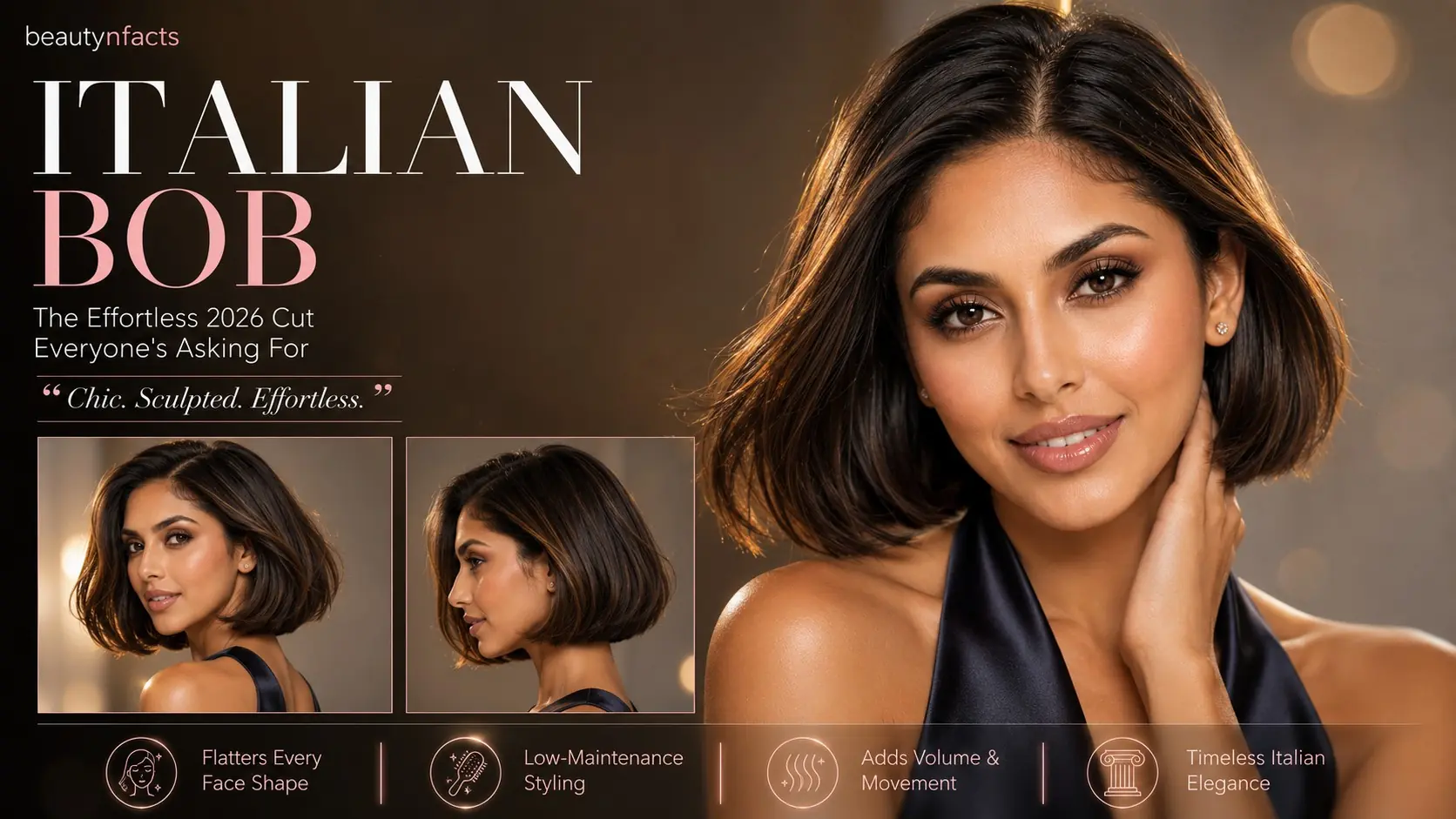
The Italian bob has quietly taken over salon menus from Milan to Mumbai this spring, replacing the sharp lob as 2026's most-requested chin-length cut.
The Italian bob has quietly taken over salon menus from Milan to Mumbai this spring, replacing the sharp lob as 2026’s most-requested chin-length cut. Picture a soft, blunt bob that lands somewhere between the jaw and collarbone, with a barely there outward bend at the ends instead of the tucked-under flick we saw two years ago. It looks air-dried, lived-in, and weirdly grown-up without being matronly. This guide breaks down what makes the cut specific, who it actually flatters, how to ask for it without ending up with a generic blunt bob, the styling routine that keeps it from going flat by lunch, and the six questions every reader keeps Googling before booking the appointment.
Published · Updated
What the Italian Bob Actually Is (and Why It’s Trending in 2026)
An Italian bob is a chin-length to jaw-length blunt cut with a soft outward bend at the tips, finished to look air-dried rather than blow-dried. The length sits between roughly an inch under the earlobe and the top of the collarbone, depending on neck length and face shape. There are no choppy layers cut into the body, no razor on the perimeter, and no sharp internal graduation. The shape is meant to read as one clean line that breathes a little at the ends.
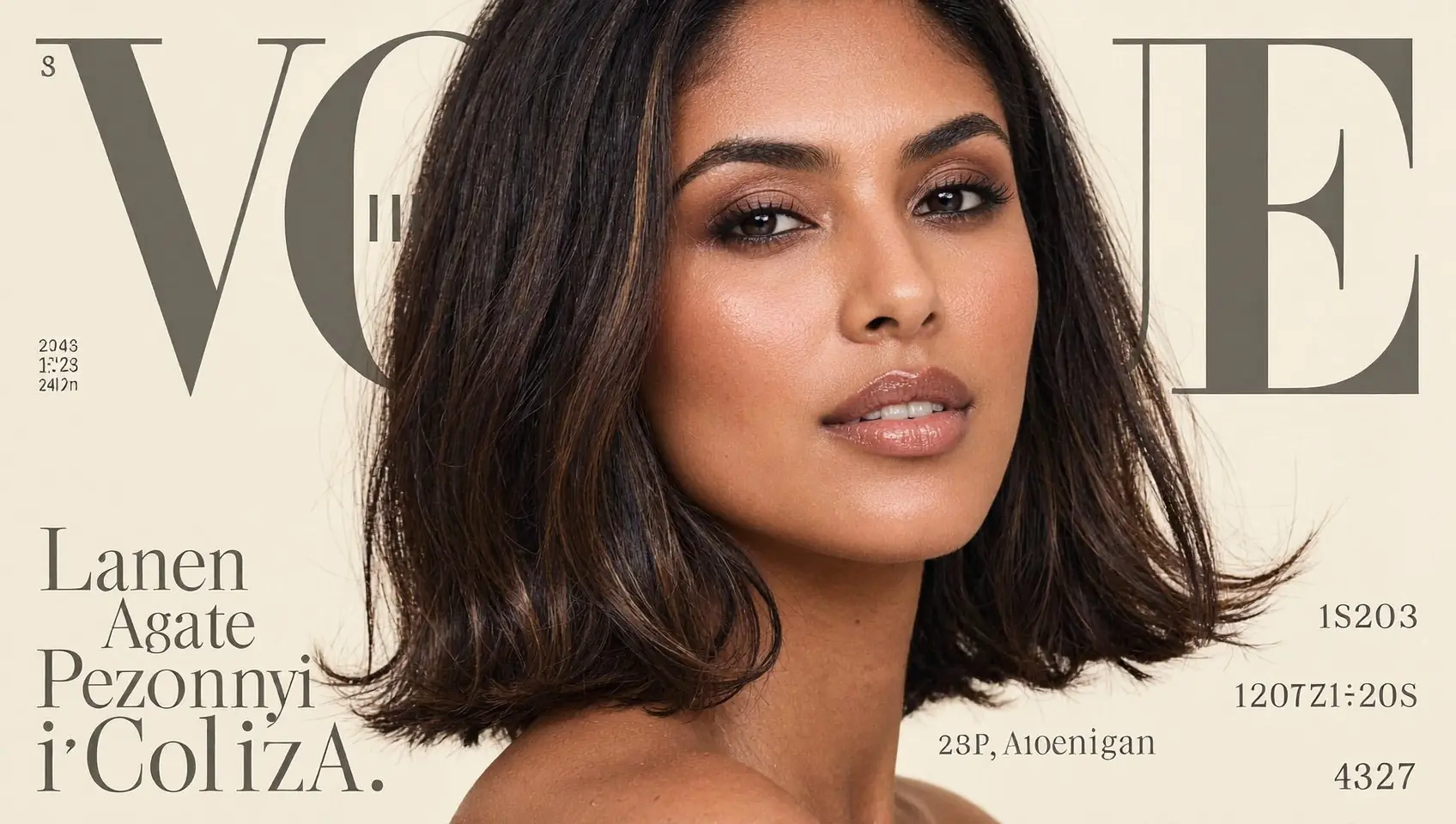
The reference points come straight out of 90s Italian editorials: Monica Bellucci, Sophia Loren’s daughter Anna, and a generation of Vogue Italia covers where the hair looked like it had spent the morning at the beach and the afternoon in a leather jacket. What makes the 2026 version trend-current is the deliberate softness. Where the 2023 lob and the 2024 sharp bob both leaned glossy and architectural, this version sits closer to undone. Stylists in Milan, Paris, New York, and Mumbai have all flagged it as the spring’s number one walk-in request, and Pinterest saves for the search jumped through the roof between January and May.
Who the Italian Bob Flatters (and Who Should Adapt the Look)
The shape is unusually forgiving because the softness at the ends does most of the framing work. Oval and long oval faces wear it almost without adjustment. The chin-length stop adds horizontal weight where a longer face needs balance, and the gentle outward bend keeps the line from pulling the eye downward.
Round faces can absolutely wear it, with one tweak. Ask for the length to land just below the jaw rather than right at the chin, and request the perimeter to fall a quarter inch longer at the front than the back. That tiny diagonal slims the cheek line without losing the blunt feeling. Square and angular faces look striking in this cut because the soft bend at the ends contrasts the strong jaw, but skip any front-pushed styling that emphasises the corners.
Heart-shaped faces should keep the length closer to the collarbone end of the range so the volume doesn’t sit too high. Deep skin tones and warm undertones especially read beautifully in this cut because the shape draws attention to the jawline and decolletage rather than to the ends, which is where a sharper bob tends to feel cold. Texture-wise, straight, wavy, and lightly curly hair all work. Tightly coiled hair can adapt into a soft, round, chin-length cut, but the air-dried bend finish reads differently, and the styling routine is its own thing.
How to Get the Italian Bob at Home: Step by Step
Cutting your own bob is a real commitment, and most readers should skip to the salon section. If you want to dust the ends between appointments to keep the line tidy, here is the safest sequence.
1. Wash and condition the night before, then sleep on it. Day-two hair sits flatter and shows the real line. Cutting wet hair often results in a cut that is shorter than expected once it dries and bounces up.
2. Comb everything straight down from a centre part. This cut lives on the perimeter line, so the part you cut from has to be the part you wear.
3. Section the back, sides, and front separately. Clip the back up and start with the lowest layer at the nape.
4. Use sharp hairdressing shears, never kitchen or craft scissors. The line will not look blunt if the blade isn’t sharp.
5. Hold the section between your index and middle finger, palm facing the mirror, and cut a single horizontal line. Trim no more than a quarter inch at a time. Walk away, check, repeat if needed.
6. Work upward in horizontal sections, matching each new section to the line below. Pull the next section straight down and trim only the hair that drops past the established line.
7. When the back is done, bring the side sections forward, match them to the back, and trim. The front pieces should be a touch longer if you want the gentle face-framing diagonal.
8. To create the soft outward bend, do not cut it in. Bend lives in the styling, not the cut. Skip any razor or texturising shear work at the ends. Smooth, blunt, slightly bent dry styling reads as Italian. Choppy, point-cut, and internal-layered reads as a shag or wolf cut, which are different looks entirely.
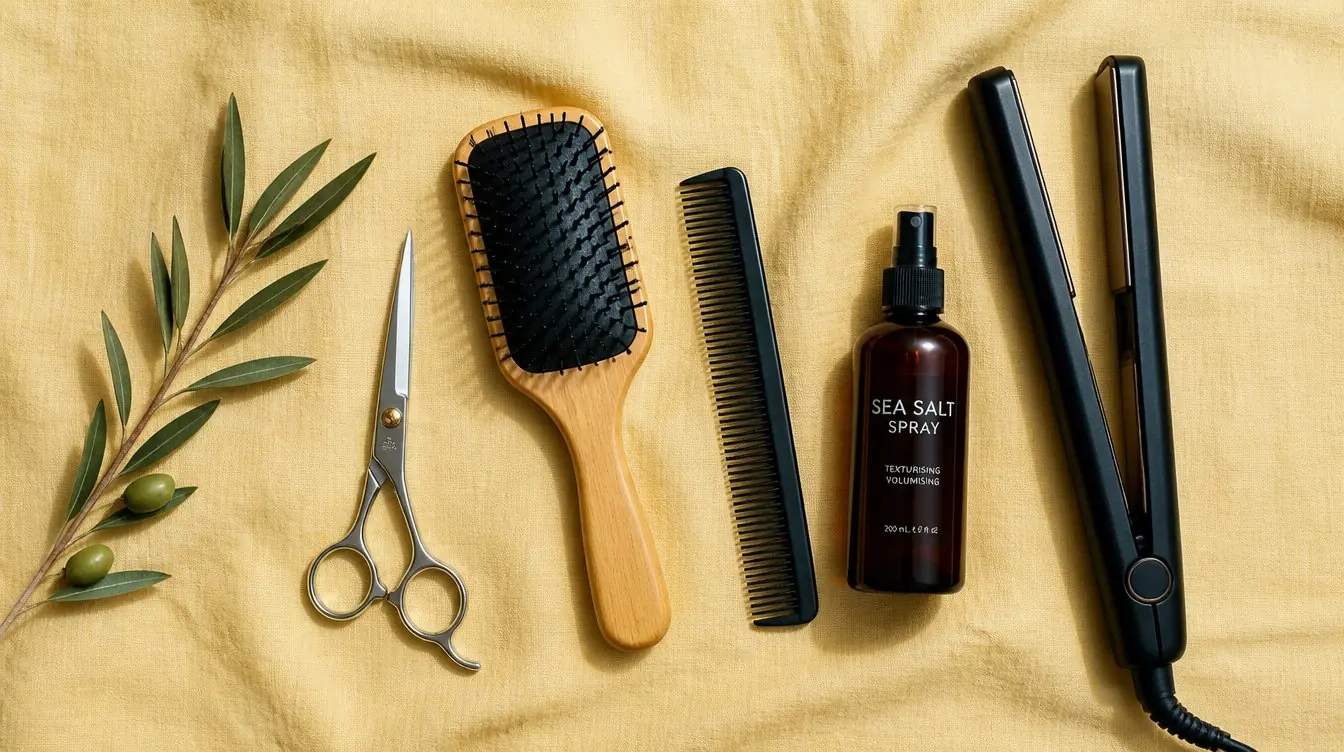
The Salon or Pro Version
A trained cutter will start by analysing the natural fall of your hair before they cut a single strand. Cowlicks, density distribution, and the way your hair sits when wet versus dry all change the final shape. Expect a dry assessment first, then a wet cut, then a dry refine where the stylist walks around the chair with shears in hand and snips one or two stray pieces.
The price band runs from about 80 to 200 USD in the US and the UK and roughly 2500 to 5000 INR in major Indian cities. Mid-tier salons in metro markets sit at the lower end of that range. Established stylists with editorial experience or a personal waiting list sit at the upper end, and that premium is usually worth it for a precision cut where the line itself is the point. Ask to see the stylist’s recent bob work before booking. A great hair photo does not always equal a great bob cutter. The blunt perimeter is a specific skill that takes years to nail.
Stylists who run a chair colour-and-cut routine will often pair the cut with a soft warm gloss, a single-process root touch-up, or a low-contrast face-frame highlight. None of these are required for the shape to read right. The cut stands alone.
Common Italian Bob Variations to Try in 2026
The first variation is the curtain-bang version, where soft side-parted curtain bangs frame the cheekbones and skim the jaw. It softens the front of the face without committing to a full fringe.
The second is the long cut, sitting at collarbone length instead of chin length. It keeps the soft outward bend and the blunt line but gives readers who want to tie hair back during workouts or work a bit more length to work with.
The third is the textured take, where the stylist adds the tiniest amount of internal point-cutting to remove bulk in dense hair without breaking the blunt perimeter line. This is the version you want if your hair is naturally heavy and tends to fall in a solid sheet.
The fourth is the dark glossy version, finished with a deep espresso or near-black gloss that plays up the 90s Italian editorial reference. It photographs beautifully on warm and deep skin tones and pairs well with a strong brow and bare, glossed lips.
The fifth is the lived-in copper or chestnut look, where a soft warm dimensional colour adds depth without the maintenance load of high-contrast highlights.
What to Avoid: Mistakes That Kill the Look
Cutting the line razor-flat. A flat-sheet finish reads as the 2024 sharp bob, not the soft Italian shape. Fix: Ask for blunt scissor-cut ends and finish with a hint of natural bend, not a poker-straight blow-dry.
Adding too many layers. Internal layering breaks the one-line silhouette that makes this cut work. Fix: hold the line. If volume is an issue, address it with styling or a small amount of invisible weight removal, not chunky face-frame layers.
Blow-drying the ends under instead of out. The tucked-under bob is its own look and reads as a 2020 hair revival. Fix: brush the ends outward over a round brush or a flat paddle while the hair is still slightly damp.
Skipping the wet-to-dry assessment at the salon. Cowlicks and growth patterns are invisible on wet hair. Fix: ask the stylist to dry-cut a final pass after the wet cut so the line sits true on real-world hair.
Using a heavy oil through the mid-lengths. This cut wants air and movement, not a slick coastal grandma finish. Fix: Keep finishing the product with a light salt spray or a pea-size amount of cream rubbed into the palms, then through the ends only.
Touching up the colour every four weeks. Frequent root colour at this length makes the cut look fussy. Fix: stretch root touch-ups to eight or ten weeks and lean on a tinted dry shampoo at the part in between.
Products That Actually Work for the Italian Bob
The product story is short, which is part of the appeal. Look for a lightweight sea salt texturising spray with a low sodium load and a hint of a conditioning agent. Heavy salt sprays leave the hair crunchy and matte, which works against the soft Italian finish. Check the label for “texture spray” rather than “beach spray” if you want grip without grit.
A satin-finish smoothing cream, sized to a pea or a small almond, takes the frizz off the perimeter without flattening the body. Look for ingredients like cetearyl alcohol, dimethicone in a low position on the list, and a humectant such as glycerin or panthenol.
For straight to wavy hair, a flat paddle brush with mixed boar and nylon bristles smooths the lines on damp hair. For wavier hair, a wide-tooth comb and air-drying handle the same job. Skip the round brush unless you want a more polished finish.
A flexible-hold hairspray with a soft satin finish locks the bend without freezing the hair. Stay away from anything labelled “maximum” or “super hold”. This shape needs to move.
If your hair runs dry, a leave-in conditioner spray applied to the lengths before air drying keeps the ends from looking parched. The cut highlights the perimeter, so the perimeter has to look healthy.
Italian Bob vs French Bob: How to Choose
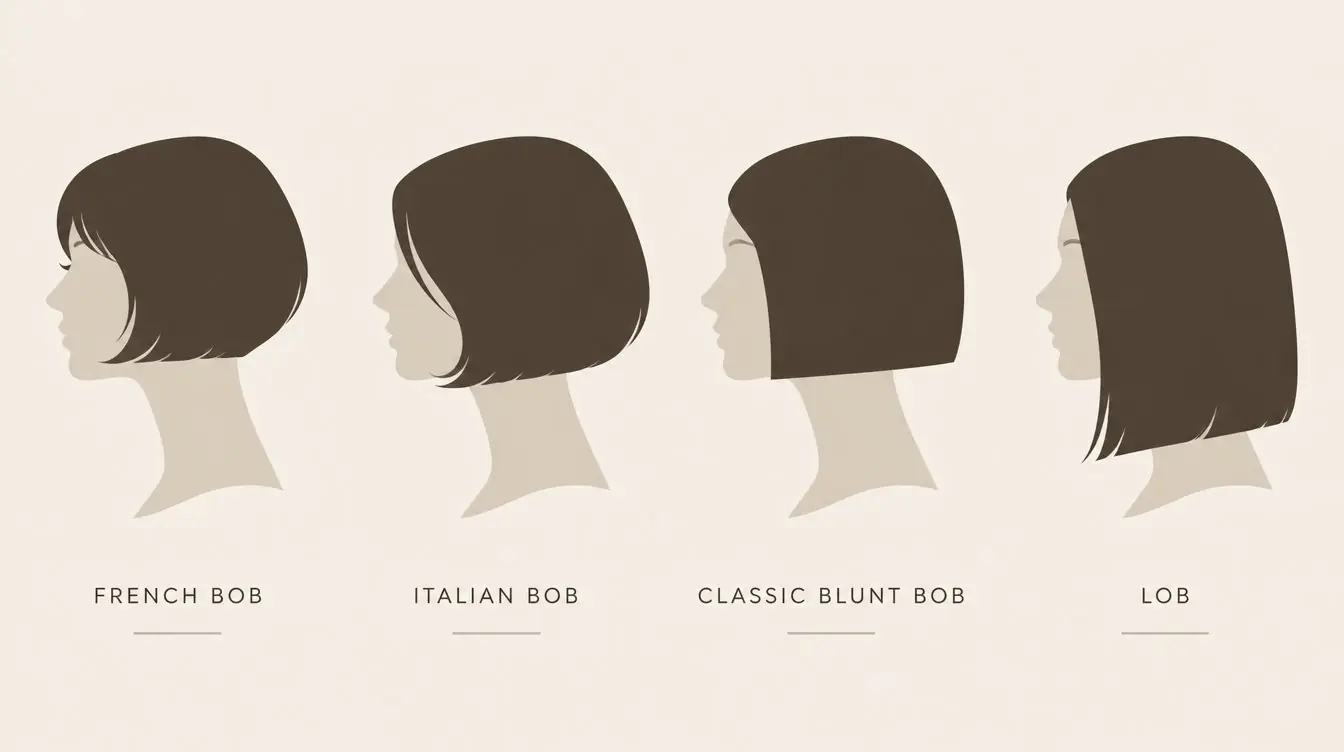
The two cuts get confused constantly, so here is the line. The French bob sits higher on the face, usually landing at the top of the jaw or just under the earlobe. It almost always comes with a blunt straight-cut fringe, and the perimeter is cut to fall slightly inward, creating a rounded silhouette. The reference points are 60s and 70s Parisians: Anna Karina, Francoise Hardy, and Jeanne Damas in her early days.
The Italian bob sits lower, between the chin and the collarbone, and skips the fringe in most versions. The perimeter falls slightly outward, creating a softer silhouette that opens up the jaw and neck. The reference points are 90s Italian editorials, which have a warmer, more sun-soaked aesthetic than the cool Parisian French bob.
If your face is round or short and you want the cut to elongate, the French bob with bangs is usually the better choice. If your face is long, oval, or angular and you want the cut to balance horizontally, the chin-length Italian shape has the edge. If you do not want to commit to a fringe, the longer cut wins by default. Both shapes work on most hair textures, but the softer version is more forgiving of natural waves and curls because the outward bend at the ends works with the texture rather than against it.
How Long the Italian Bob Trend Will Stay Relevant
Short hair trends usually peak fast and settle into a long shelf life. The bob as a category has been around for a century and never fully leaves the salon menu. What changes is the version that reads as current. The 2023 lob took roughly eighteen months from emergence to saturation, then held a quieter steady state for another year before the conversation shifted.
This version looks set to follow a similar arc. The peak request period is likely to run from spring 2026 through spring 2027, with a soft tail through the rest of 2027 as the shape becomes a standard menu item rather than a trend booking. Readers who get the cut now will be on-trend through next year and still on a flattering shape long after the trend label drops off. The silhouette is built on a classic line, which is the kind of trend worth committing to, unlike a heavily layered shag or a buzz that ages out fast.
Frequently Asked Questions About the Italian Bob
What is an Italian bob and how is it different from a French bob?
An Italian bob is a chin-length to jaw-length blunt cut with a soft outward bend at the ends and almost always no fringe. It references 90s Italian editorial hair, warm and undone. A French bob sits higher, usually right at the earlobe or top of the jaw, and almost always comes with a blunt, straight-cut fringe. The French bob curves slightly inward for a rounded silhouette. The Italian bob curves slightly outward for a softer, more open silhouette. Different lengths, different fringe rules, different reference cultures, and related families of cuts.
Does an Italian bob suit round, square, or oval face shapes?
Oval faces wear the Italian bob almost without adjustment. Round faces should ask for the length to sit just below the jaw and the front to fall a quarter inch longer than the back, which adds a slimming diagonal. Square and angular faces look striking in it because the soft bend at the ends balances a strong jaw. Heart-shaped faces should aim for the collarbone end of the length range so the visual weight sits lower. Long faces benefit from the horizontal weight the chin-length stop provides. Almost every face shape can wear a version of it.
Can I get an Italian bob if I have thick, wavy, or curly hair?
Yes, with adjustments. Thick hair works beautifully with a small amount of internal weight removal so the perimeter line still reads blunt, but the body does not feel helmet-heavy. Wavy hair is almost the ideal canvas because the natural movement reinforces the soft outward bend that defines the cut. Lightly curly hair can wear the shape with a curl-friendly dry cutting technique that respects each curl pattern. Tightly coiled hair can adapt the silhouette into a soft, round, chin-length cut, though the air-dried styling story is different. Ask a stylist experienced in your specific texture before booking.
How do I ask my stylist for an Italian bob? What should I say?
Bring three reference photos that show the cut from the front, side, and back. Use the words “blunt perimeter, chin-length, soft outward bend at the ends, no internal layers, and no razor. ” Specify whether you want the front to fall longer than the back for a gentle face frame. Mention that you want a wet cut followed by a dry refine so the line sits true. If your stylist suggests adding face-frame layers or texturising the ends with a razor, gently push back. The Italian bob lives on the clean, blunt line. Anything that breaks that line breaks the cut.
How do I style an Italian bob at home day-to-day?
Start with damp, towel-blotted hair after washing. Mist a light texturising spray through the mid-lengths and ends. Comb through with a wide-tooth comb. Air dry to about eighty per cent, then either let it finish drying naturally for the softest finish or use a flat paddle brush and a low-heat blow dryer to coax the ends outward. For a smoother day, run a flat iron quickly through the lengths and bend the last inch outward with a gentle wrist flick. A pea of smoothing cream on the ends seals the line.
How often does the Italian bob need maintenance trimming?
Plan for a trim every six to eight weeks to keep the blunt perimeter sharp and the bend behaving. The cut shows wear faster than longer styles because the line itself is the point, and a quarter inch of uneven growth shows up clearly. Readers who want to stretch appointments can ask for a “dust” trim at the six-week mark, which removes only the very tips without reshaping. Full reshapes can run every eight to twelve weeks depending on hair growth speed. Skipping trims past the twelve-week mark is when the cut starts to read as a grown-out bob instead.
Related Articles
About The Author

COMMENTS