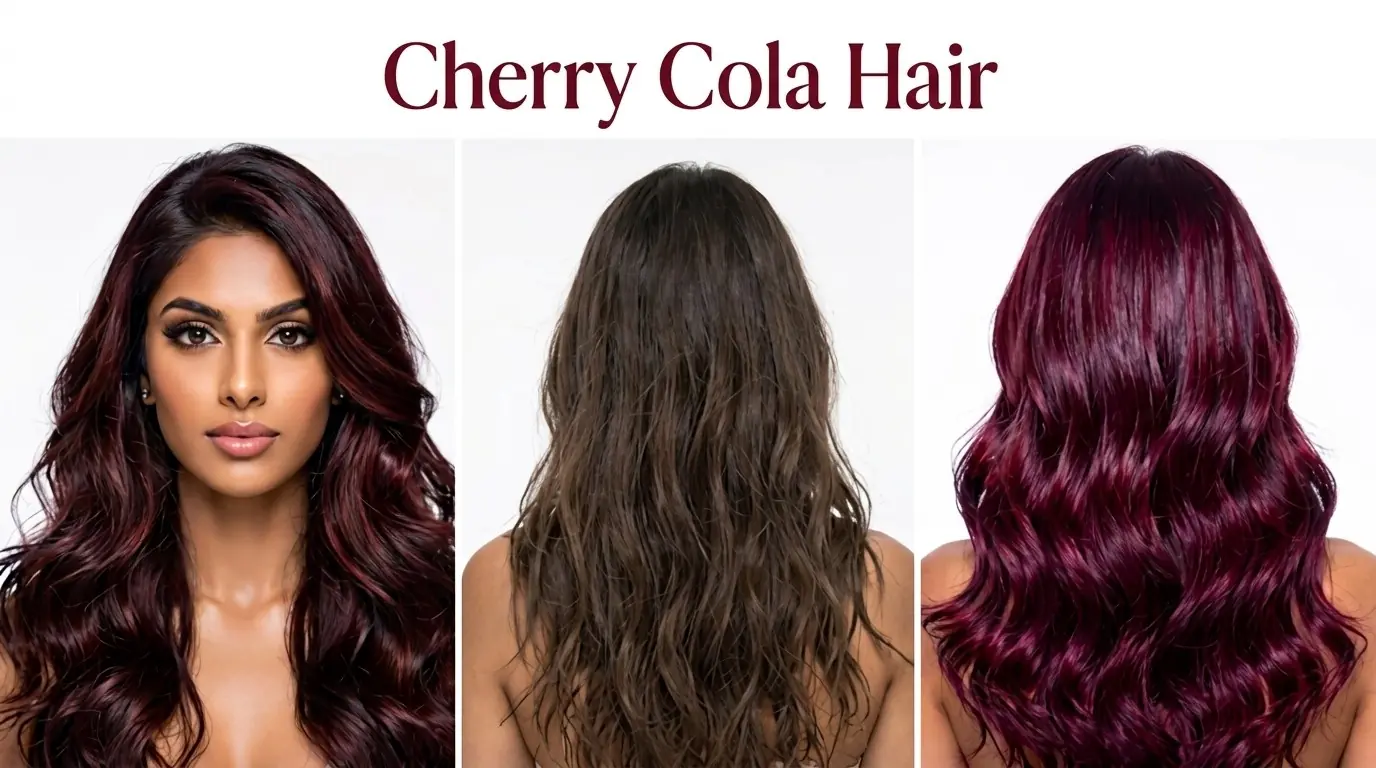
Cherry cola hair is the deep red-brown colour that has become one of the most requested hair shades of 2026. Picture cherry juice swirled into a tall
Cherry cola hair is the deep red-brown colour that has become one of the most requested hair shades of 2026. Picture cherry juice swirled into a tall glass of cola: a rich espresso base shot through with glossy red undertones that shift between mahogany, cherry, and dark caramel depending on the light. It is darker than copper, warmer than burgundy, and more dimensional than a flat chocolate brunette. This guide breaks down what cherry cola hair actually is, who it flatters across every skin tone, how to get the colour (at home or in a salon chair), the variations worth trying, the mistakes that flatten the finish, and the products that hold the tone between appointments.
Published · Updated
What Cherry Cola Hair Actually Is (and Why It’s Trending in 2026)
Cherry cola hair is a multi-tonal red-brown colour built on a deep espresso base with strong cherry-red undertones woven through the mid-lengths and ends. The defining quality is the shift. In the dull glow of indoor light the hair looks rich dark brown. Step outdoors, and the same strands flash mahogany, then cherry, then a soft dark caramel at the tips. That dimensional flicker is the whole point of the trend, and it is what separates cherry cola from a one-note dye job.
The reason it is having a 2026 moment comes down to timing. After two years of bronde, money-piece babylights, and the cinnamon cookie brunette of late 2025, colourists were ready for something with more warmth and personality than another beige variation. Cherry cola gives the saturation of a fashion red without the maintenance ceiling of an actual redhead, and that compromise has made it the most requested colour of the year.
Which Cherry Cola Hair Flatters (and Who Should Adapt the Look)
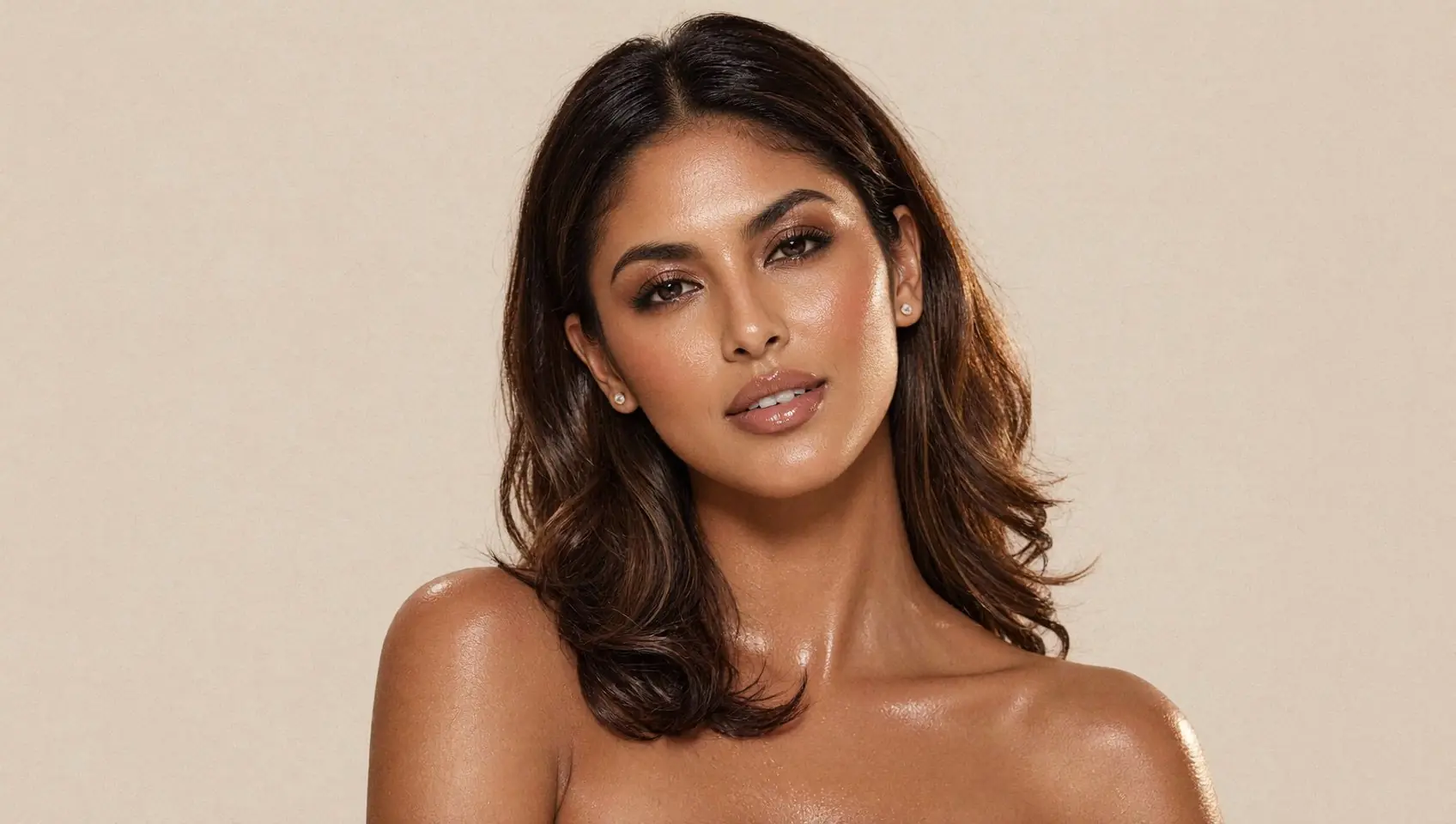
The short answer is everyone, but the formula shifts. Warm undertones (peachy, golden, olive-warm) get an instant glow boost from cherry cola because the red pigment echoes the warmth already in the skin. Cool undertones (pink, neutral-cool, and blue-toned) get a striking, elegant contrast: the deep red-brown reads almost jewel-like against cooler complexions, similar to the effect of a deep ruby lipstick.
Deep complexions wear cherry-cola hair beautifully when the formula leans into a darker, blacker espresso base with cherry only emerging in direct light. A pure cherry-red wash can look chalky on deep skin, so colourists keep the saturation low at the root and concentrate the red shimmer through the mid-lengths and ends. This approach preserves the dimensional shift without the colour competing with the skin’s natural depth.
Medium tan and olive complexions can take the most saturated version. The red pigment sits in the same temperature family as the skin, which makes the colour look custom-mixed rather than applied. Very fair complexions should go one shade lighter on the base, keeping the cherry concentrated through the front pieces so the contrast against the skin stays flattering rather than severe.
Hair texture is forgiving. Cherry cola works on straight bobs, on long beachy waves, on tight 4A coils, and on locs. Curly and coily textures actually showcase the dimensional shift better than straight hair, because every twist in the curl catches a different angle of light and surfaces a different tone in the formula.
How to Get Cherry Cola Hair at Home: Step by Step
An at-home version is realistic if you are starting from a medium-to-dark brown base and you want a semi-permanent or demi-permanent finish. Anyone going from blonde or from a previous fashion colour should book a colourist, because lifting and depositing in the same session is where most kitchen-table disasters happen.
Here is the sequence for a base-to-medium-brown starting point:
- Strand test 48 hours before. Mix a small amount of your chosen demi-permanent cherry-red colour (in a shade labelled ‘deep red-brown’, ‘mahogany’, or ‘red-violet brunette’) and apply it to a hidden section behind the ear. Process for the recommended time, rinse, and dry. Confirm you like the tone before committing.
- Start with clean, dry hair. Wash 24 hours before with a clarifying shampoo to lift any silicone or product buildup, then let the natural oils return overnight. Apply the colour to dry, fully detangled hair the next day.
- Section into four quadrants. Part down the centre from forehead to nape, then again from ear to ear. Clip up three sections and work one at a time so the colour application stays even.
- Apply root to mid-first, then to ends. Use a tint brush to paint colour from the root down to the mid-length in saturated, even strokes. Process for half the recommended time, then drag the remaining colour through the ends and process the rest of the time. This protects already-porous ends from over-absorbing pigment and turning muddy.
- Watch the timer and check at the halfway mark. Wipe a small section with a damp cotton pad to check the tone. If it is already in the cherry cola range, rinse early. Demi-permanent reds can shift fast in the last five minutes.
- Rinse in cool water until it runs clear. Hot water opens the cuticle and lifts pigment immediately. Stay under cool water for the full rinse, including the conditioner step.
- Skip shampoo for 72 hours. The colour needs to lock into the cuticle. Use only a sulphate-free, colour-safe conditioner for the first three washes, and avoid clarifying products for at least two weeks.
The Salon or Pro Version
The professional process is where the colour earns its premium. A skilled colourist starts with a consultation that includes a strand test, a porosity check, and a discussion of your current colour history (boxed dye, henna, and previous reds all affect the formula). The actual service is usually a two-step combination: a low-volume developer base shade applied first to deepen and refresh the brown, then a glossing toner in cherry-red or mahogany-violet brushed through the mid-lengths and ends to layer the dimensional shift on top.
Many colourists add a soft-painted babylight or face-frame technique in the same session. Hand-painted ribbons of a slightly lighter red-cherry tone get woven through the front pieces so the colour catches light around the face. This is the technique behind the most-saved celebrity versions, and it is the difference between a flat dye job and a true editorial finish.
Pricing bands run roughly $180 to $400 in the United States, GBP 150 to GBP 350 in the United Kingdom, and INR 6,000 to INR 18,000 in major Indian metros, depending on length, existing colour, and whether highlights are added. Touch-up appointments at the six-week mark run about half that, and a standalone gloss refresh is usually under half.
Common Cherry Cola Hair Variations to Try in 2026
The trend has split into several recognisable takes, and picking the right variation matters more than picking the right brand of dye.
Sleek Cherry Cola. Glass-finish, blunt-cut, parted dead centre. This is the Sofia Richie version. The dimensional shift is more subtle because the surface is so smooth, so the cherry pigment has to be slightly more saturated to read on camera.
Wavy Cherry Cola. The version most flattering to the widest range of face shapes. Loose waves through the mid-lengths break the colour into ribbons of mahogany, cherry, and dark caramel, which is the dimensional shift most people are actually chasing.
Merlot Cherry Cola. A deeper, more violet-leaning take that reads as wine in low light. Madison Beer wore this through the spring awards run. It suits cool undertones and very deep complexions especially well.
Caramel-Tipped Cherry Cola. A balayage approach with cherry through the upper lengths, transitioning to a soft dark caramel at the ends. This grows out the most gracefully because the natural lighter ends blend into the painted gradient.
Cherry Cola Money Piece. Two ribbons of brighter cherry red are painted around the face on an otherwise deep brunette base. The cheapest version to try because it requires only foil work on the front pieces and the easiest to walk back if you change your mind in three months.
What to Avoid: Mistakes That Kill the Look
A few traps flatten cherry cola faster than anything else:
Going too red, not red-brown. Pure cherry-red without a brown base reads as cosplay, not editorial. The fix is to layer the red as a gloss or toner over a deep brunette base, never as the base itself.
Skipping the gloss between appointments. Red molecules are the smallest pigment in any dye, which means they fade first and they fade fastest. Without a glossing refresh every four to six weeks, the colour drops to a flat brown within two months.
Using clarifying shampoo or anti-dandruff shampoo. Both strip pigment aggressively. Switch to a sulphate-free, colour-safe formula immediately after colouring, and keep clarifying products out of the rotation for the life of the colour.
Hot tools without heat protection. Flat irons above 180 degrees Celsius break red pigment down quickly. Drop the temperature to 160 and always use a heat-protectant spray with UV filters.
Sun exposure without protection. UV oxidises red pigment faster than any other colour. A leave-in spray with SPF or UV filters is non-negotiable through summer, and a hat helps on long pool days.
Chlorine and hard water. Both turn cherry cola orange or brassy within a few swims. Wet hair with clean water before getting in the pool so the strands absorb less chlorine, and consider a shower filter if your home water runs hard.
Products That Actually Work for Cherry Cola Hair
Skip brand chasing and read labels instead. The categories worth your budget:
A sulphate-free, colour-safe shampoo with low pH. Look for “colour-protecting”, “for red hair”, or a pH between 4.5 and 5.5 on the label. Lower pH keeps the cuticle closed and the pigment locked in.
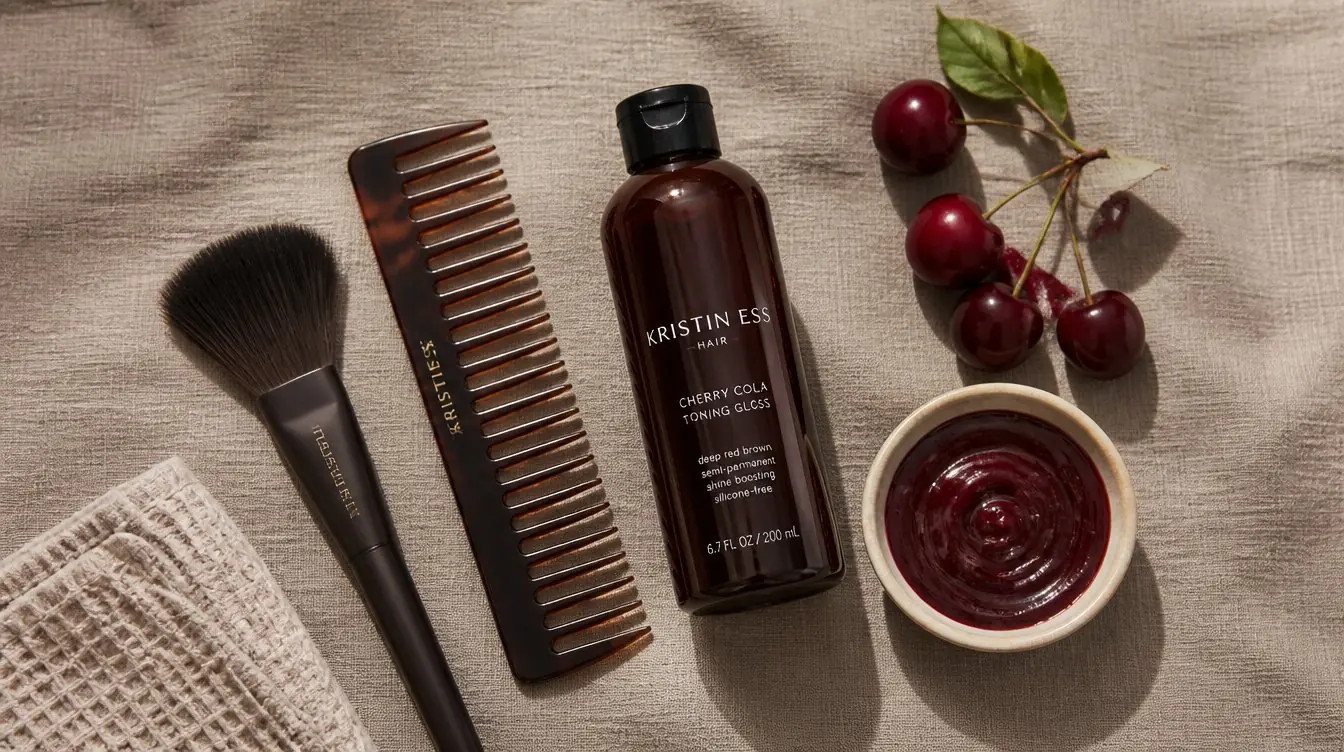
A red-pigmented conditioner or weekly mask. Often labelled “red-colour depositing” or “cherry-toning”. Used once a week, it tops up the pigment between gloss appointments and is the single highest-impact product you can add.
A leave-in with UV filters. Look for “UV protection”, “colour shield”, or actual SPF on the label. Apply daily through summer and twice weekly the rest of the year.
A bond-builder treatment. Marketed as bond repair, plex treatment, or strengthening mask. Use weekly. Red dye is harder on the cuticle than most colours, and a bond-builder keeps the shine that makes cherry cola read as expensive.
A glossing serum or oil. Look for argan, jojoba, or marula oil high in the ingredient list. Two drops on damp ends and one drop on dry mid-lengths are the ratio that produces the glass shine without weighing the colour down.
What to skip: clarifying shampoo, anti-dandruff shampoo, lemon-juice or apple-cider-vinegar rinses, and any product marketed as “colour-correcting” or “brightening”. All of these strips have pigment.
Cherry Cola Hair vs Auburn vs Copper: How to Choose
The three shades sit in the same warm family but read very differently, and choosing wrong is the most common reason someone walks out of a salon disappointed.
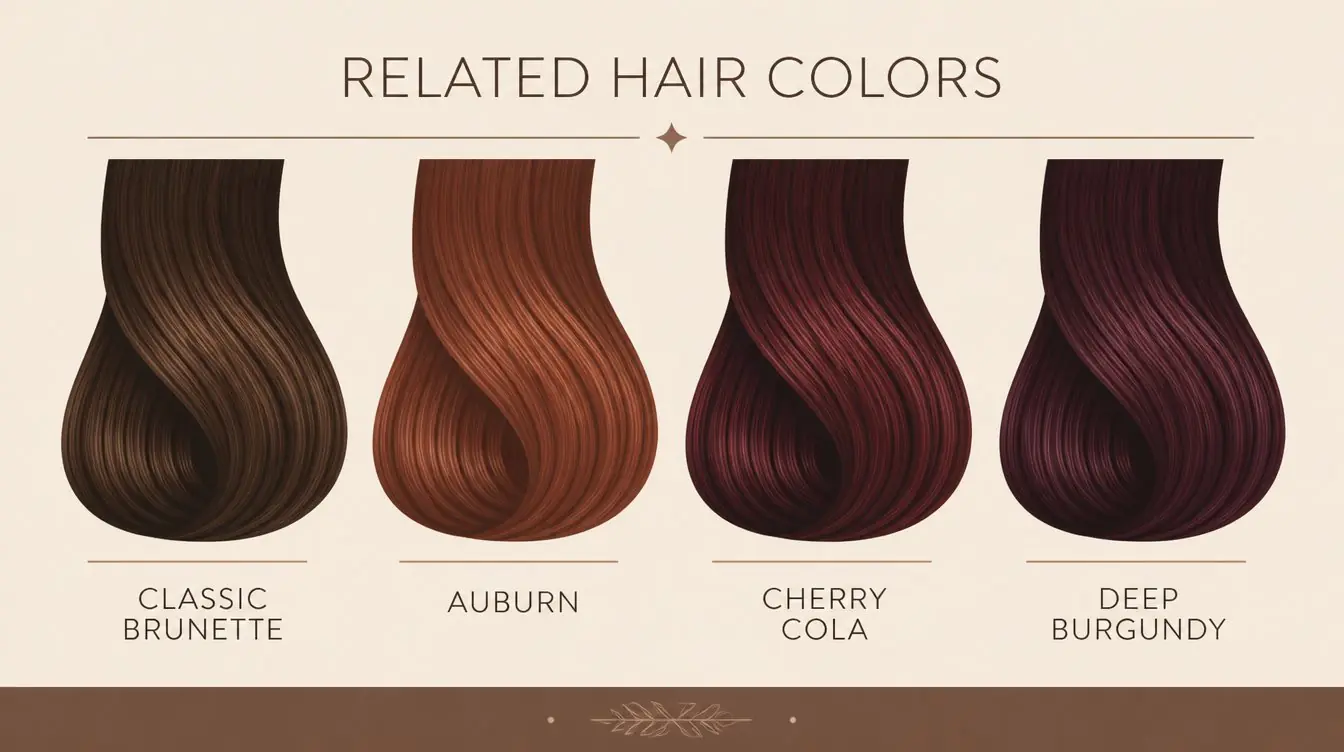
Cherry cola hair is a deep red-brown, with the brown winning the contest at first glance. The red pigment shows up as a dimensional flicker in good light. The base is espresso to dark chocolate. It is the most low-maintenance of the three because the dark base hides root growth longer.
Auburn is more orange-red and lighter overall. The brown is muted, and the red-orange leads. Classic auburn reads as warm and earthy, almost like a copper penny with a brown filter. It suits warm undertones beautifully but can wash out cool complexions.
Copper is the lightest and most orange of the three, with almost no brown holding it down. It reads as a true fashion red and demands more upkeep because the lighter base means root growth shows within three weeks and the orange pigment fades to peach quickly.
If you want the most dimensional, the most forgiving, and the most office-appropriate of the three, cherry cola wins. If you want a true redhead identity, copper is the answer. Auburn sits in the middle and works best on warm-toned, medium-complected wearers who want classic warmth without the maintenance of copper.
How Long the Cherry Cola Hair Trend Will Stay Relevant
Colour trends in the brunette-and-red family tend to outlast their hype cycle by years, not months. Bronde launched in 2015 and is still on salon menus. Money-piece blonde peaked in 2022 and remains a staple service. Cherry cola has the same structural advantage: it is a dimensional, low-contrast, grown-up version of a more dramatic colour, which makes it easy to live with for the long haul.
The peak of cultural attention will likely run through autumn 2026. The shade is already shifting from “trend” to “modern classic” in the editorial copy, and that linguistic shift is usually the signal that a colour is moving into the standard salon rotation. Expect cherry cola to read as fresh through at least 2027 and then settle into the background as a reliable, warm, brown option for years after that.
The version most likely to date fastest is the heavily saturated merlot variation. The dimensional, balayage-influenced wavy version will age the slowest because it grows out gracefully and works at almost any saturation level.
Frequently Asked Questions About Cherry Cola Hair
What exactly is cherry cola hair, and what shade family does it belong to?
Cherry cola hair is a deep red-brown colour built on an espresso or dark chocolate base with strong cherry-red undertones woven through the mid-lengths and ends. It belongs to the warm brunette family, not the redhead family, because the brown wins at first glance and the red shows up as a dimensional shift in good light. Think of it as the most saturated cousin of a chocolate brunette, sitting between mahogany and burgundy on the colour wheel. The signature is the flicker between mahogany, cherry, and dark caramel as the light changes.
Does cherry cola hair work on all skin tones, including deep complexions?
Yes, with formula adjustments. Warm undertones (peach, gold, and olive-warm) get an instant glow boost because the cherry pigment echoes existing warmth in the skin. Cool undertones (pink, blue, and neutral-cool) get a jewel-toned contrast similar to the effect of a deep ruby lipstick. Deep complexions look best when the colourist keeps the base a darker, blacker espresso and concentrates the cherry shimmer through the mid-lengths and ends, which avoids any chalky-looking results. Medium tan and olive skin can take the most saturated version of the colour directly.
How is cherry cola hair different from auburn or copper?
Cherry cola is a deep red-brown where brown wins at first glance and red appears as a dimensional flicker. Auburn is lighter, more orange-red, and reads as a warm earthy redhead with muted brown. Copper is the lightest and most saturated orange-red of the three, with almost no brown holding it down, which makes it read as a true fashion red. Cherry cola is the most low-maintenance because the dark base hides root growth longest. Copper requires the most upkeep. Auburn sits in the middle of both maintenance and saturation.
Can I get cherry cola hair at home, or do I need a colourist?
You can do a respectable version at home if you are starting from a medium-to-dark brown base and you choose a demi-permanent or semi-permanent red-brown formula. The process is straightforward: a strand test, clean and dry hair, a four-section application (root-to-mid first, ends last), and a cool rinse. Anyone starting from blonde, previously bleached hair, or a fashion colour should book a colourist. Lifting and depositing in the same session is where most kitchen disasters happen, and red dye is unforgiving when it lands on porous, uneven strands.
How long does cherry cola hair last before it fades?
A salon-grade cherry cola colour holds its full saturation for four to six weeks, then begins to soften through weeks seven and eight and reads as a warm dark brunette by weeks ten or twelve without a refresh. At-home demi-permanent versions fade faster, holding peak colour for about three to four weeks. Red pigment is the smallest molecule in hair dye, which means it leaves first and leaves quickest. A glossing top-up every four to six weeks is what separates a six-week colour from a six-month one, and it is the single most important habit.
What gloss or toner keeps the cherry cola tone vibrant between colourings?
A red-pigmented or cherry-toning conditioner used once a week is the highest-impact product you can add. Look for labels reading “red colour depositing”, “cherry toning”, or “mahogany gloss”. For a stronger refresh, an at-home demi-permanent gloss in a red-brown shade applied every four to six weeks holds the saturation between full colourings. In the salon, a quick glossing service every six weeks costs a fraction of a full colour and is the routine most colourists recommend for clients committed to keeping the dimensional shift intact long-term.
Related Articles
About The Author

COMMENTS