
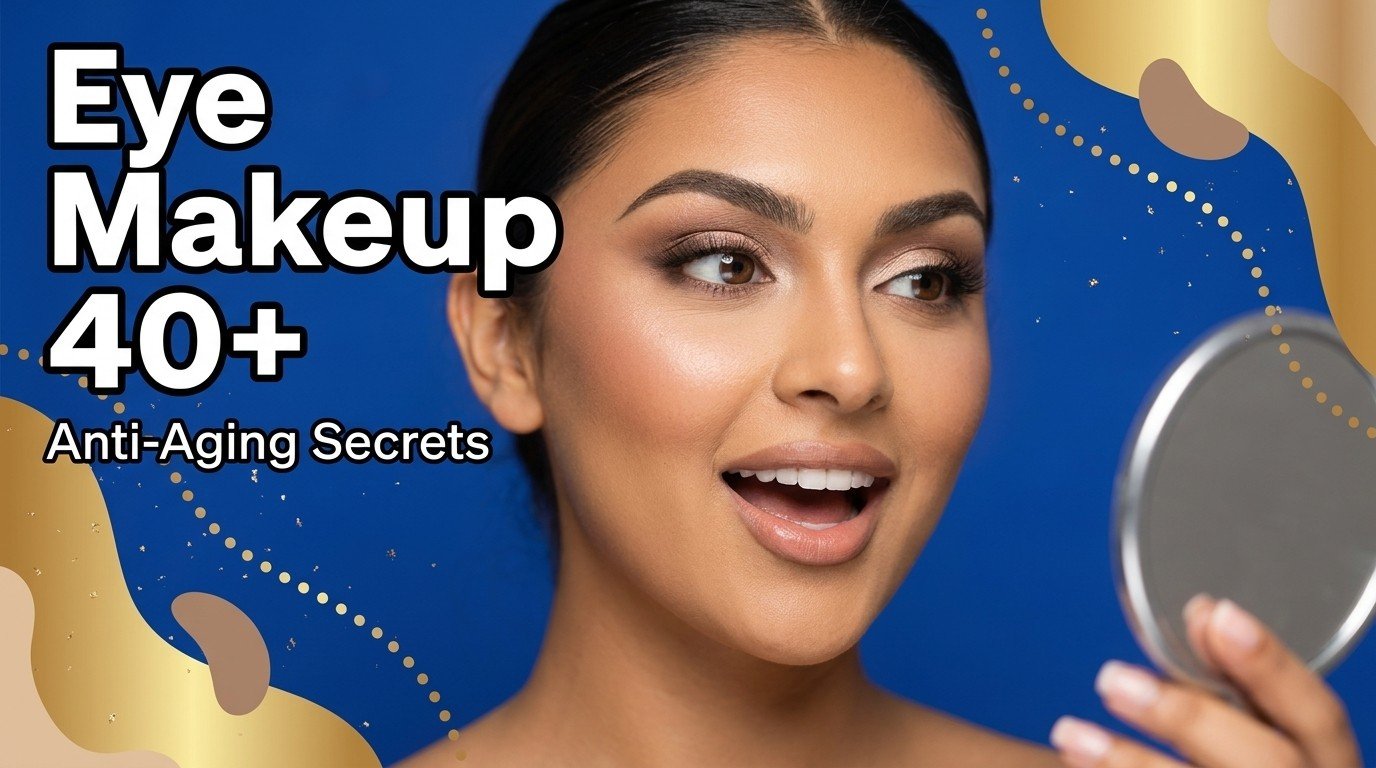
Mature eye makeup behaves differently than what you wore in your twenties, and the reason is pure biology. As the delicate skin around the eyes thins
Mature eye makeup behaves differently than what you wore in your twenties, and the reason is pure biology. As the delicate skin around the eyes thins and loses firmness with age, shadow folds into creases, liner migrates, and mascara smudges below the lashes. This guide explains those structural changes and gives you a practical, professional roadmap for products, techniques, and application order that keep color in place and flatter your current eye shape.
If you have ever spent twenty minutes perfecting your eye look only to glance in the mirror two hours later and find your eyeshadow has folded into every crease, your liner has migrated south, and your mascara has left smudges beneath your lower lashes, you are not doing anything wrong. Mature eye makeup behaves differently than the eye makeup you wore in your twenties and thirties, and the reason is rooted in biology. The skin around the eyes undergoes significant structural changes as we age, and these changes demand an entirely different approach to products, techniques, and application order. This guide explains the science behind the changes in your eye area and provides a practical, professional-level roadmap for eye makeup that stays in place, looks polished, and flatters your current eye shape.
Why Makeup Behaves Differently on Mature Eyes: The Skin Science
Understanding what is happening beneath the surface of your skin is the first step toward making smarter product and technique choices. The eye area is the thinnest, most delicate skin on the entire face, and it is also the first to show the effects of aging in visible, makeup-disrupting ways.
Reviewed by the BeautynFacts editorial team. Last updated: May 2026.
Collagen and Elastin Loss
Collagen is the protein responsible for keeping skin firm, plump, and resilient. Elastin works alongside it to give skin its ability to snap back into place. Starting in our mid-twenties, collagen production begins to decline at a rate of roughly one percent per year. By the time we reach our forties and fifties, the cumulative loss is substantial enough to be both visible and functionally significant when it comes to makeup wear.
When collagen and elastin diminish in the eyelid and orbital area, the skin loses its internal scaffolding. It becomes thinner, less taut, and more prone to folding and crinkling with every blink and expression. Each time you blink, the softened skin folds along those natural crease lines, and any eyeshadow or liner sitting on top gets pushed into the fold. This is the primary mechanical reason creasing happens more aggressively after 40. The skin is literally pressing itself into creases with every movement of the eye.
Reduced Sebaceous Activity and Increased Dryness
Paradoxically, the very thing that causes oily skin in youth, sebaceous gland activity, slows significantly with age. While this means fewer breakouts, it also means the skin around the eyes becomes noticeably drier and more fragile. Dry skin lacks the hydrated plumpness that helps products sit smoothly on the surface. Instead, products tend to cling to dry patches, accentuate fine lines, and eventually crack and flake throughout the day.
Powder eyeshadows, which are the go-to formula for most makeup wearers, can look dusty and settle into fine lines on dehydrated lids. The absence of natural moisture means products have less of an even surface to grip, and they migrate or crumble rather than staying in place.
Lid Laxity and Hooding
Lid laxity refers to the loosening and dropping of the upper eyelid skin that occurs as the levator muscle weakens and the skin loses its elasticity. This progressive drooping can cause the outer corners of the eyes to descend and the crease of the eyelid to become less defined or to disappear entirely beneath an overhang of skin. The result is commonly called hooding.
Hooding fundamentally changes where eyeshadow is visible when the eyes are open. A dramatic cut crease that looks stunning in a tutorial may be completely invisible once your eyes are open if you have significant hooding. Liner applied to the upper lid can transfer to the hood within minutes. Understanding your specific degree of hooding is essential for placing colour where it will actually be seen.
Orbital Fat Redistribution
The fat pads that sit beneath the orbital area around the eyes shift and redistribute with age. Some areas lose volume, contributing to a hollowed or sunken appearance in the upper socket. Other areas develop puffiness as fat herniates forward. This uneven terrain makes it harder to apply and blend eyeshadow evenly, and it means that what looked like a flat canvas in your twenties now has peaks and valleys that catch light and shadow differently.
Changes in Brow Position
As the forehead skin descends and the frontalis muscle works harder to compensate, the brow can drop in position. A lower brow compresses the space between the eye and the brow, which was already potentially reduced by hooding. Less vertical space means that traditional eye makeup maps, with wide blending zones and dramatic high-crease work, simply do not work the same way they did before.
Prep and Prime: The Most Important Step for Mature Eyes
If there is one area where mature eye makeup absolutely demands your attention before any shadow or liner touches your lids, it is in the preparation and priming phase. Skipping this step is the single biggest contributor to creasing, fading, and settling, and no amount of high-quality product will compensate for an unprepped base.
Skincare Prep the Night Before and Morning Of
Well-hydrated skin holds makeup better. In the days and hours before application, focus on building a moisture barrier around the eye area. A hydrating eye cream applied the night before allows ingredients to absorb fully overnight. In the morning, apply your eye cream at least fifteen to twenty minutes before you begin makeup application. If you apply it immediately before primer or shadow, the moisturiser creates a slick surface that prevents adhesion and accelerates creasing.
Avoid applying thick, rich eye creams to the mobile lid itself. Save those for the orbital bone and under-eye area. Oils and heavy emollients on the lid skin directly interfere with primer performance. If your lids feel tight or dry despite eye cream, a light tap of a balm-type product along the brow bone is fine, but always allow it to fully absorb before proceeding.
Choosing the Right Eye Primer
Eye primer is non-negotiable for mature lids. It serves multiple functions: it creates a gripping surface for powder products, it neutralises the natural pigment of the lid (which can be veiny, discoloured, or uneven with age), and it creates a tacky base that holds shadow in place even when the lid skin folds during blinking.
For mature eyes specifically, the formula of the primer matters enormously. Thick, silicone-heavy primers can initially feel smooth, but they create a slippery base that allows shadow to slide. Look for primers with a slightly tacky or grippy finish rather than a silky one. Mattes and satin-finish primers tend to perform better on mature lids than glossy or illuminating formulas for the lid itself.
Apply primer with your fingertip, using a gentle pressing motion rather than dragging. Start at the inner corner of the lid, press along the mobile lid to the outer corner, and then blend slightly above the crease. Do not tug or pull the skin, which is delicate and can be irritated by aggressive rubbing.
Allow primer to set for at least sixty seconds before applying any powder. This brief window lets the primer become tacky and adhesive. Applying powder immediately after will simply drag the primer and create an uneven surface.
Setting the Primer with a Base Shadow
After the primer has set, press a light, matte flesh-toned or bone-coloured powder shadow over the entire lid before building any colour. This additional step locks the primer, creates an even starting canvas, and absorbs any residual moisture that could cause creasing. Use a flat shader brush and press rather than sweep. Sweeping at this stage can disturb the primer and create patchiness.
This base shadow step is often skipped but makes a measurable difference in wear time. Think of it as the equivalent of priming walls before painting. The colour goes on more evenly, adheres better, and lasts longer.
Eyeshadow Formulas That Do Not Crease on Mature Lids
Not all eyeshadow formulas are created equal, and on mature eyes, formula choice can be the difference between a look that lasts eight hours and one that settles into the crease within ninety minutes.
Powder Eyeshadows: What to Look For
Powder is still the most versatile and forgiving formula for mature eyes when chosen carefully. The key attributes to look for are high pigmentation with minimal filler, a pressed rather than loose formula, and a finish that skews matte or satin rather than shimmer or glitter for the lid itself.
Highly pigmented powders require less product to achieve colour payoff, which means less buildup in the crease. Products that require you to layer heavily to get colour often end up packed too thick, and that excess product is what folds and creases. Look for powders described as buttery, smooth-pressing, or highly pigmented in their texture descriptions.
Avoid powders with excessive fallout, as they tend to contain more filler and less pigment. Also be cautious with chunky glitters, which can settle into fine lines and make the skin texture more visible rather than less.
Cream Eyeshadows and Their Limitations
Cream shadows have become increasingly popular, and they can work beautifully on mature eyes under specific conditions. The catch is that cream formulas are more prone to creasing on their own than powders applied over primer. The solution is layering: apply cream shadow as a first layer for colour intensity, then lightly set it with a matching or complementary powder shadow. This combination locks the cream in place and prevents movement.
Eyeshadow Sticks and Pencils
Eyeshadow sticks and pencils are among the most crease-resistant options available for mature lids when used correctly. They are typically formulated with waxes and polymers that grip lids without needing primer underneath (though primer still extends wear). Apply with a light hand, blend quickly with a fingertip or small brush before the formula sets, and then leave it alone. Over-blending after the product has begun to set creates patchiness and reduces longevity.
Sticks work particularly well as transition shades in the crease when you want a soft wash of colour without the risk of a powder product falling into fine lines. Apply a warm brown or taupe stick to the crease area, blend the edges, and build from there with powder if desired.
Understanding Finishes: Matte Versus Shimmer on Mature Eyes
The debate around matte versus shimmer on mature eyes is more nuanced than the common advice of “avoid shimmer” suggests. Matte shadows have their place and their pitfalls. Flat, chalky mattes can emphasise texture and make crepey skin look more prominent. Finely milled, soft-focus matte formulas are different: they diffuse light gently and minimise the appearance of fine lines rather than accentuating them.
Shimmers also exist on a spectrum. Large-particle glitters and chunky metallics can catch in fine lines and look harsh. Micro-fine shimmers and pearl-finish powders, especially those with a satin quality, can add a brightness and luminosity to the lid that actually counteracts the dullness that comes with age. A soft champagne or golden pearl on the centre of the lid or the inner corner is genuinely flattering on mature eyes and looks nothing like the garish glitter look that the “no shimmer after 40” advice was trying to prevent.
The approach that works best for most mature eyes: matte or satin shades for the crease and blending areas, micro-shimmer or pearl for the lid centre and inner corner, and matte for outer corner depth work.
Color Placement Strategies for Hooded and Crepey Lids
Colour placement on mature eyes requires thinking about where shadow will be visible when the eye is open, not just how it looks when the eye is closed or half-open during application. This is the critical mental shift that separates techniques that work from those that simply do not translate from the mirror to real life.
Mapping Your Lid for Open-Eye Visibility
Before any application, open your eyes fully and look straight into a mirror. Notice where the natural crease of your lid falls in your line of sight. If you have significant hooding, you may notice that your crease is invisible or that your lid appears as a narrow strip of skin. This is your working canvas.
Apply eyeshadow while looking straight ahead, not with your eye closed or angled down. This allows you to see in real time where the colour will be visible and where it will disappear under the hood. Blending above the natural crease line (higher than where the crease actually sits) brings colour into the visible zone even when the hood is present.
The Higher Crease Technique
One of the most effective adjustments for hooded lids is to place transition and crease shades higher than the anatomical crease. Instead of following where the crease physically sits, place your medium-toned shadow one to three millimetres above it, depending on the degree of hooding. When the eye is open, this higher placement is what falls into the visible zone above the hood, creating the illusion of a defined crease.
Use a fluffy blending brush in windscreen-wiper motions to deposit the crease colour, working higher with each pass. Blend the upper edge well so there is no harsh line where the shadow meets bare skin. The result should look like a naturally defined crease when the eyes are fully open.
Avoiding Dramatic Cut Creases
The sharp, deeply pigmented cut crease that dominates so many makeup tutorials is flattering on prominent, non-hooded lids where the crease is fully visible. On mature eyes with hooding, attempting a cut crease often results in a dramatic line that disappears completely when eyes are open, leaving only a harsh, dark shadow visible beneath a hood. Instead, aim for a soft crease definition using gradient blending where colours melt seamlessly from light to medium to deep rather than creating a sharp line.
Color on the Lower Lid
The lower lash line deserves as much strategic thought as the upper lid on mature eyes. A smudged or heavily lined lower lash line can pull the eye downward, making it look smaller and more tired. Instead of lining the entire lower waterline or tightlining with dark shadow or liner, focus colour on the outer third of the lower lash line to add depth and dimension without closing off the eye.
A soft, medium-toned matte shade blended along the outer lower lash line connects with the outer corner shadow above, creating a lifted, framed effect. Avoid taking this shade all the way to the inner corner, which creates a ringed look that makes eyes appear smaller and rounder.
Brightening the Inner Corner and Brow Bone
Highlighting the inner corner of the eye and the brow bone just below the tail of the brow are two placement techniques that work especially well on mature eyes. A light, pearlescent or matte ivory shade pressed into the inner corner opens the eye and creates the illusion of width. Placed on the brow bone, it lifts the appearance of the brow and creates separation between the brow and lid, which can compress as the brow descends.
Keep these highlights subtle and well-blended. Too much product or too bright a shade can look chalky or draw attention to dry skin texture rather than creating the intended illumination.
Liner Approaches That Do Not Tug or Transfer
Eyeliner is one of the most age-related problem areas in makeup for women over 40. The skin of the upper lid has become more lax, which means it moves more, and liner applied to a moving surface transfers, smudges, and migrates. Additionally, tugging the lid skin to apply liner can, over time, contribute to further laxity.
The Case Against Tight Lining the Entire Upper Lid
Applying a dark liner along the full upper waterline or tightlining the entire upper lid with a dark shade can make the eye look smaller and more closed, especially on hooded lids where the liner is barely visible anyway. If you love the look of a defined lash line, a better approach is to apply a very thin line of liner as close to the lash base as possible, then immediately top it with a matching shadow to soften and set it.
Pencil Liners Versus Liquid Versus Gel
Each liner formula has its place on mature eyes, and the right choice depends on the look you want and your specific eye concerns.
Pencil liners are the gentlest to apply because they require the least pressure and do not need to be dragged across the lid the way some techniques require. Soft, creamy pencils apply with minimal friction. The downside is that soft pencils crease easily unless immediately set with a matching powder shadow over the top.
Gel liners in a pot, applied with a small, flat angled brush, offer excellent longevity and can be applied with more control and less pressure than pencils. They do need to be set with powder for maximum wear. Water-resistant or waterproof gel formulas are particularly good for under the eyes, where transfer is most common.
Liquid liners, including felt-tip formulas, are the most transfer-resistant once dry. They require a steadier hand and more practice, but they do not need setting and tend to stay exactly where they are placed. If you struggle with a shaky hand, look for a liner with a slightly flexible or cushioned tip rather than a rigid one, as this allows the tip to follow the natural micro-movements of your hand rather than skipping across the lid.
Smudging and Softening for a Flattering Effect
A hard, sharp line of liner can look harsh on mature skin, drawing attention to the delicate texture of the lid rather than defining and enhancing the eye. Smudging liner slightly, either by applying it with a smudge brush rather than a liner brush or by immediately blending the top edge with a small blending brush, softens the look in a way that tends to be more flattering. A smudged liner also hides any slight wobbles or unevenness, which makes it more forgiving to apply.
Wing Placement for Mature Eyes
A classic winged liner can still work beautifully on mature eyes, but the placement and angle require adjustment. As the outer corner of the eye descends with age, extending a wing at the natural angle of the lower lash line (which may now angle slightly downward) can accentuate the drooping rather than counteracting it. Instead, extend the wing at a slightly upward angle relative to the lower lash line. This counteracts the natural descent of the outer corner and creates a lifted effect.
Keep the wing thin and relatively short. An extended, dramatic wing on a mature eye can look unbalanced if there is not enough lid space visible to support it. Shorter, lifted wings tend to look cleaner and more contemporary on hooded or lax lids.
Lash Choices: Length Versus Volume After 40
Lashes thin and shorten with age just as the hair on the scalp does. The lash cycle slows, individual lashes become finer, and gaps in the lash line become more visible. Choosing the right mascara and knowing when and how to use false lashes or lash lifts can make a significant difference in how open and bright the eyes appear.
Mascara Formula Choices for Mature Lashes
The two primary mascara categories are volumising and lengthening. For most mature eyes, a balance of both is ideal, but if you have to choose, lengthening formulas tend to be more flattering. Here is why: volumising mascaras add bulk to lashes by depositing more formula around each lash. On fine, sparse lashes, this can result in clumping rather than the fluffy fullness the product promises. Lengthening formulas, which use smaller, more precise brushes and thinner formulas, separate and extend individual lashes, making the lash line look denser even when individual lashes are fine.
Tubing mascaras are an excellent choice for mature eyes. Instead of coating lashes with wet pigment, tubing formulas wrap each lash in a polymer tube. These tubes do not smudge or migrate, they are removed with warm water rather than makeup remover, and they do not crumble throughout the day. For women who struggle with mascara ending up beneath their eyes by midday, tubing mascaras are genuinely game-changing.
Upper Versus Lower Lashes
On mature eyes, it is often better to apply mascara primarily to the upper lashes and use a very light hand or skip the lower lashes entirely. Heavily mascaraed lower lashes can emphasise under-eye darkness and bags, draw the eye downward, and create smudging issues beneath the eyes throughout the day. If you like the look of defined lower lashes, a fine-tipped mascara wand applied lightly to just the outer lower lashes gives definition without the downsides.
Individual Lash Clusters and Half Lashes
Full strip false lashes can look theatrical on mature eyes unless they are very natural in length and density. Individual lash clusters or half-lash strips applied to the outer two-thirds of the upper lash line are more wearable and more flattering. They add the appearance of length and density where the lash line tends to be sparsest, at the outer corners, without adding bulk to the inner corner area where it can look overpowering.
When applying any false lashes, allow the glue to become tacky (approximately thirty seconds after application) before pressing it to the lash line. Pressing wet glue means the lash will slide around and is more likely to end up in the wrong position. Once placed, press gently along the band for several seconds to ensure adhesion.
Lash Lifts and Tints as a Makeup Alternative
For women whose natural lashes have become straight or downward-pointing with age, a professional lash lift curls lashes from the root, making them appear longer and creating an eye-opening effect that no mascara can replicate. Combined with a lash tint, which darkens lashes without the daily mascara application, a lash lift can dramatically simplify your eye makeup routine while looking more polished. Results last six to eight weeks and make daily makeup significantly faster to apply and easier to maintain.
Setting Techniques That Lock Everything in Place
Setting your eye makeup after application is the final step in building a crease-resistant, long-wearing look. This phase is often rushed or skipped, but it provides a meaningful extension of wear time.
Translucent Setting Powder
A very light dusting of finely milled translucent setting powder over the entire eye area after makeup is complete can absorb any remaining moisture or oils and lock products in place. Use the lightest possible touch. Apply with a clean, fluffy brush and tap off the excess before applying. Too much setting powder can look cakey and settle into fine lines, which defeats its purpose on mature skin.
For the under-eye area specifically, a light setting powder is essential for preventing mascara and liner transfer. Press a small amount under the lower lash line using a small, flat brush or even a clean fingertip.
Setting Sprays
A makeup setting spray misted over the face after the full look is complete can help meld all layers of product together and create a barrier against humidity, oils, and environmental factors. Choose a formula labelled as ‘long-wear’ or ‘waterproof’ rather than a ‘dewy’ or ‘hydrating’ setting spray, which can reactivate products and cause creasing. Hold the bottle at arm’s length and mist in an X pattern across the face, allowing it to dry naturally rather than fanning or blotting.
Baking Under the Eyes
The baking technique involves pressing a generous amount of translucent or setting powder under the eyes and leaving it in place for five to ten minutes while the warmth of the skin helps set the concealer or foundation beneath it. Once the time has passed, the excess powder is swept away with a clean brush, leaving a set, crease-resistant under-eye area. This technique is particularly effective for mature under-eye areas where concealer tends to crease in the fine lines.
Use a damp beauty sponge to press the powder into place rather than applying it with a brush, which can drag and move the concealer underneath.
Common Mistakes That Cause Creasing and Aging
Even with the best products and preparation, certain habits and technique errors can undermine your eye makeup. Recognising these patterns is the first step to correcting them.
Using Too Much Product
More is rarely more when it comes to mature eye makeup. Too much primer creates a slippery base. Too much shadow builds up and crumbles into creases. Too much mascara clumps and flakes. The consistent solution across all products is to apply in thin layers, build gradually, and stop before you think you need to. The thin-layer approach requires more pigmented products (so they deliver colour without requiring excess), which is why formula quality matters more on mature skin.
Skipping Primer
This bears repeating because it is the most common and most impactful mistake: applying eyeshadow directly to bare, unprimed skin on a mature lid will always result in creasing. The natural oils, the texture of the skin, and the movement of the lid combine to displace shadow within minutes without a primer barrier. Primer is not optional for mature eyes. It is the foundation upon which everything else builds.
Using the Wrong Brushes
Large, fluffy brushes intended for blending can be too imprecise for the limited lid space on hooded or mature eyes. Oversized blending brushes deposit product too widely, putting shadow in areas where it will not be seen and potentially under the browbone where it can look muddy. Use smaller, more precise brushes for application and a medium fluffy brush for targeted blending. Consider the size of your actual working lid space when selecting tools.
Pulling or Tugging the Lid Skin
Applying liner or shadow with a heavy hand that drags the delicate lid skin is problematic for two reasons. First, it is difficult to achieve precision when the skin is moving. Second, repeated stretching and tugging of the eyelid skin over time can contribute to further laxity. Apply all products with a gentle pressing or patting motion. Use short, light strokes rather than long drags when using liner brushes.
Applying Eye Cream Too Close to Application Time
As mentioned in the prep section, applying eye cream immediately before makeup is a common mistake. The rich emollients in eye creams prevent primer adhesion and create a slippery surface. A fifteen- to twenty-minute gap between skincare and makeup application gives products time to absorb and the skin time to return to a balanced surface ready for makeup.
Ignoring the Undertone of Your Shadow Colors
Certain shadow colours become less flattering with age, not because of the colour itself but because of the undertone. Cool, ashy purples and greys can read as harsh and unflattering on skins that have lost the warm flush of youth. Warm-toned shadows, including taupes, bronzes, warm browns, mauves, and peachy nudes, tend to work better across a wider range of mature skin tones because they complement rather than contrast with the natural changes in skin undertone that occur with age.
A Morning Eye Makeup Routine Optimized for Longevity
Putting all of these principles into a practical, efficient morning routine makes the difference between good intentions and consistent results. This routine is designed to take twenty to twenty-five minutes and to deliver an eye look that holds through an eight- to ten-hour day.
Step One: Skincare with a Gap
Apply your morning moisturiser and eye cream at least fifteen to twenty minutes before you begin makeup. Use this time to complete the rest of your skincare routine, make coffee, or complete another morning task.
Step Two: Base Makeup First
Apply your foundation, concealer, and any base products before moving to the eye area. This prevents foundation overspray or spattering from landing on completed eye makeup. Set under-eye concealer with a light press of setting powder using a damp sponge.
Step Three: Eye Primer Application
Apply a pea-sized amount of eye primer to each lid using the ring finger (the gentlest finger with the least natural pressure). Press and pat from the inner corner across the mobile lid to the outer corner, extending slightly above the natural crease. Wait sixty to ninety seconds.
Step Four: Base Shadow
Press a matte flesh-toned or bone powder shadow over the entire primed area using a flat shader brush. This seals the primer and creates the working canvas.
Step Five: Transition Shade
Using a small to medium fluffy brush, apply a matte medium-toned shadow (a warm taupe or soft brown) to the crease area, placing it slightly higher than the anatomical crease to account for hooding. Blend the edges well.
Step Six: Lid Color
Apply your chosen lid colour, whether a cream shadow set with powder or a single powder shade, to the mobile lid using a flat shader brush. Press the product on rather than sweeping to minimise fallout and maximise pigment deposit.
Step Seven: Depth and Definition
Using a small, precise brush, apply a deeper shade to the outer corner of the upper lid and blend it slightly into the crease transition shade to create soft depth and definition.
Step Eight: Highlight
Press a light pearl or matte ivory shade into the inner corner and along the browbone. Blend the browbone highlight so it fades gradually upward.
Step Nine: Liner
Apply liner as close to the upper lash base as possible using your chosen formula. Set any pencil or gel liner immediately with a matching powder shadow using a small flat brush.
Step Ten: Lower Lash Line
If desired, apply a soft matte shadow to the outer third of the lower lash line using a small pencil brush. Keep it minimal and blended.
Step Eleven: Mascara
Apply mascara to the upper lashes, working the wand from the base to the tip in a zigzag motion to separate and lengthen. Apply a light coat to the outer lower lashes only if desired.
Step Twelve: Set and Finish
Mist the face with a long-wear setting spray. Allow it to dry fully before touching the face.
Frequently Asked Questions About Mature Eye Makeup
Why does my eyeshadow always crease even when I use primer?
There are several possible causes. The primer may not be fully set before the shadow is applied. The primer formula may be too silky or silicone-heavy, creating a surface that eventually allows movement. Eye cream may have been applied too recently, preventing the primer from adhering properly. You may be applying too much shadow, creating excess product that builds up and folds. Try waiting longer after primer, switching to a tackier primer formula, and applying shadow in thinner layers.
Can I wear bold or dark eye shadow after 40?
Yes, absolutely. The idea that mature women must stick to neutral, light eye looks is outdated and limiting. Dark and bold shades can be worn beautifully after 40 with the right technique. The key is blending well so there are no harsh edges, keeping the brow area clean and defined to frame the look, and balancing a bold eye with a more minimal lip and cheek, or vice versa. Smokier looks can actually be very flattering on mature eyes because the soft blending de-emphasises texture and the added depth makes the eyes appear more prominent.
What is the best way to prevent mascara from smudging under my eyes?
Mascara smudging under the eyes is usually caused by one or more of the following: oils from the under-eye skin transferring to the lower lashes and breaking down mascara, applying too much mascara to the lower lashes, or using a formula that is not resistant to humidity. Switch to a tubing mascara formula, apply a light setting powder under the eyes before mascara application, and avoid applying mascara to the lower lashes or keep it minimal.
Is it true I should avoid shimmery eyeshadow as I age?
The advice to avoid shimmer entirely is an oversimplification. Large-particle glitters and chunky metallics can settle into fine lines and emphasise texture. However, micro-fine pearl and satin-finish shimmers can be genuinely flattering because they reflect light away from textured areas and add a luminous quality that ages beautifully. Focus on the finish quality: fine-milled, satiny shimmers are more forgiving and flattering than chunky or coarse ones.
How do I stop my eyeliner from transferring to my hooded lid?
Liner transferring to the hood is one of the most common and frustrating issues for mature eyes. The solution has two parts: formula and technique. First, choose a waterproof or water-resistant liner formula. Gel and liquid liners tend to be more transfer-resistant than pencils. Second, immediately set any liner with a matching matte powder shadow pressed on top using a small flat brush. This locks the liner and prevents it from transferring as the lid skin moves.
How can I make my eyes look more open and lifted without surgery?
Several makeup techniques create a non-surgical lifting effect. Extending liner and shadow in a slightly upward direction at the outer corner counteracts natural drooping. Placing transition shadow above the natural crease brings colour into the visible zone. A soft brow highlight separates the brow from the lid and creates vertical space. Curling lashes and using a lengthening mascara opens the eye from below. A thin skin-toned or white liner on the waterline of the lower lid (rather than a dark shade) makes the eye appear larger and more awake. Finally, a well-shaped, defined brow frames the eye and creates the illusion of lift even without any additional eye makeup.
What should I look for in an eye primer for older skin?
For mature skin specifically, look for an eye primer that is described as having a tackiness or grip to its finish, not a silky or slippery one. It should be long-wearing (eight hours or more) and ideally waterproof or water-resistant. A slight colour correction toward peach or salmon is helpful if your lids have visible veins or uneven pigmentation, as this neutralises and creates a more even base. Avoid primers with heavy emollients or oils in the first few ingredients, as these tend to slide on mature lids.
How often should I replace my eye makeup products?
Mascara should be replaced every three months to prevent bacterial contamination, which can cause eye irritation and infections. Eyeliner pencils should be sharpened regularly to present a clean surface; the product itself lasts two years or more. Liquid and gel liners should be replaced every six months. Eyeshadow palettes can last two to three years if kept dry and clean. Eyeshadow primers are typically good for one to two years after opening. Pay attention to any changes in smell, texture, or performance as signs that a product has passed its prime, and when in doubt, replace it.
Final Thoughts: Working With Your Eyes, Not Against Them
The most important shift in approaching makeup for mature eyes is moving from trying to recreate the eye look of your younger years to celebrating and enhancing the eye you have today. Your eyes have character, depth, and a history that no twenty-year-old can replicate. The techniques in this guide are not about hiding your age. They are about understanding the specific needs of mature skin so that every product choice and every brush stroke works in your favour rather than against you.
Primer is non-negotiable; formula matters more than you think; placement needs to account for what is actually visible when the eyes are open; and setting is the final piece that holds everything together. With these principles in practice, a flattering, polished, long-lasting eye look is entirely achievable, on your terms, at any age.
RELATED ARTICLES:
How to prevent premature aging of sensitive skin?
Blue Eyeshadow Makes a Comeback: How to Wear 2026’s Coolest Eye Color Trend
Skincare-infused makeup: Why your 2026 foundation should double as a serum
Dolphin Skin Makeup
How to Reduce Wrinkles Fast: Achieve Smooth, Wrinkle-Free Skin in Just Two Minutes
About The Author

COMMENTS