Perfect lipsticks for Valentine’s Day Valentine’s Day has always been a celebration wrapped in color, and no color carries more romantic weight than
Perfect lipsticks for Valentine’s Day
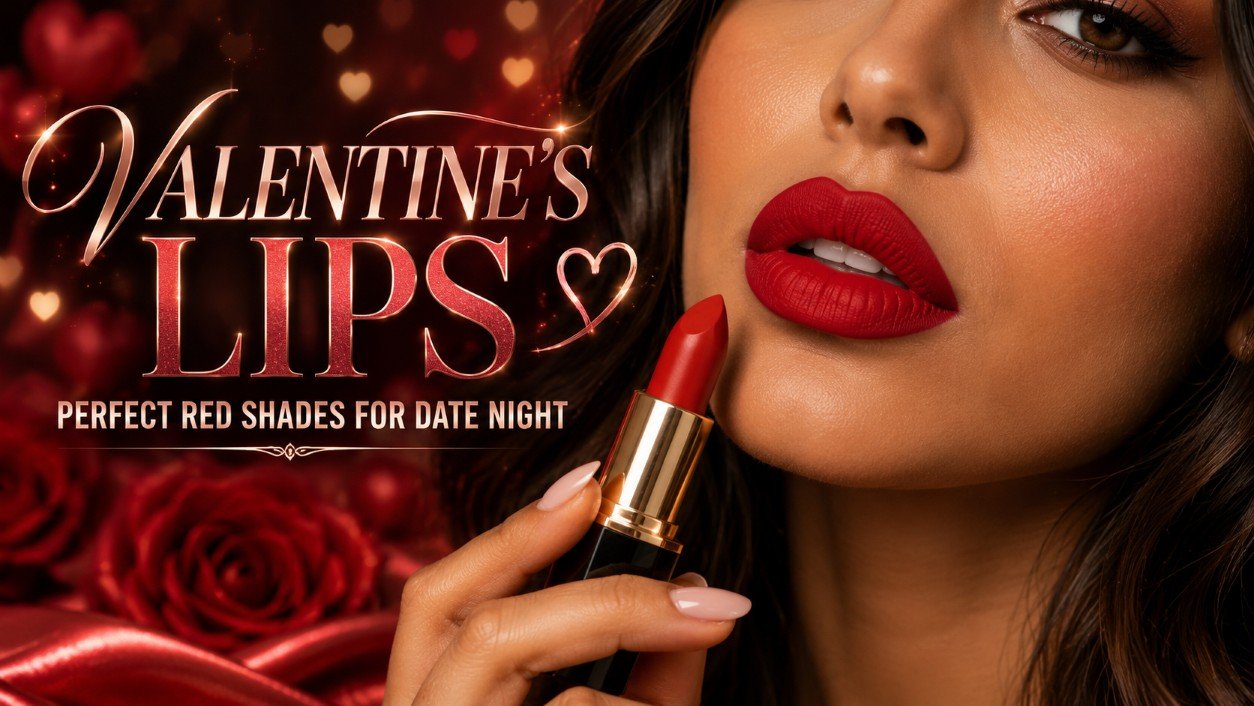
Valentine’s Day has always been a celebration wrapped in color, and no color carries more romantic weight than the one you choose for your lips. Whether you are getting ready for a candlelit dinner, a sunny brunch with friends, a cozy night in, or a solo celebration of self-love, the right lipstick becomes the finishing flourish that signals exactly how you want the evening to feel. The perfect lipsticks for Valentine’s Day are not simply the trendiest shades on a brand’s bestseller page; they are the formulas that harmonize with your skin’s undertone, survive whatever kissing, sipping, and smiling your evening brings, and flatter the specific shape and texture of your lips.
This guide goes far beyond a typical product roundup. You will learn how to identify your undertone with precision, which red, pink, berry, nude, and plum families suit which complexions, how matte, satin, cream, and gloss formulas behave on different lip textures, and what dermatologists and makeup artists actually recommend for a long wear look that still feels comfortable. You will also get step by step application techniques, a prep routine for soft supple lips, a transfer resistant kissing strategy, and a detailed FAQ that addresses the questions most Valentine’s Day articles conveniently skip. By the end, you will not just have a shortlist of beautiful lipsticks; you will have the confidence to wear any shade you love and know exactly why it works on you.
Why Lipstick Matters More Than Any Other Valentine’s Day Makeup Choice
Reviewed by the BeautynFacts editorial team. Last updated: May 2026.
Ask any makeup artist who has worked a February wedding, a film premiere, or a red carpet campaign, and they will tell you the same thing. When time is short and the moment matters, lipstick is the one product that transforms a face faster than anything else. A well chosen shade brightens the complexion, balances the features, and adds a hit of intentionality that says you showed up on purpose. On a day as emotionally charged as Valentine’s Day, that sense of intention is everything.
There is also real science behind the impact of a beautiful lip. Studies from cosmetic psychology researchers have shown that contrast between lip color and surrounding skin is one of the most consistent visual cues of health and youthful vitality across cultures. A saturated red, a warm berry, or even a well blended rose nude increases that contrast and draws the eye toward the mouth, the part of the face we use to speak, smile, and connect. On a date, that visual pull translates into warmth, presence, and an easy kind of charisma that does not require any additional effort.
Beyond aesthetics, the ritual of applying a gorgeous lipstick is a form of self care. Slowing down to prep your lips, choose a shade that makes you smile in the mirror, and trace the cupid’s bow with a steady hand becomes a mini meditation before you walk out the door. Valentine’s Day is the perfect excuse to reintroduce that ritual if you have been skipping it.
Understanding Your Undertone Before You Choose a Shade
Before you fall in love with a particular lipstick, you need to know which half of the color wheel loves you back. Undertone, the subtle hue beneath the surface of your skin, is the single most important factor in whether a shade looks harmonious or slightly off. Warm undertones carry golden, peach, or yellow pigment. Cool undertones lean pink, rosy, or bluish. Neutral undertones sit somewhere in the middle and can usually pull off both ends of the spectrum.
Three Quick Ways to Identify Your Undertone
The vein test is the classic starting point. Look at the inside of your wrist in natural daylight. If your veins appear greenish, your undertone is warm. If they look blue or purple, you are cool. If you see a mix of both, you are likely neutral. Next, consider how your skin reacts to sunlight. Skin that tans easily and rarely burns tends to be warm, while skin that reddens quickly and freckles often leans cool. Finally, think about jewelry. If gold tones make your complexion glow, you are warm; if silver or platinum flatters you more, you are cool.
Once you know your undertone, the shade guidance becomes much simpler. Warm undertones shine in tomato reds, brick, coral, terracotta, warm berries, and honey nudes. Cool undertones are stunning in blue reds, cherry, raspberry, fuchsia, wine, and rosy pinks. Neutral skin can reach for both, along with true reds that sit right in the middle.
Pairing Undertone with Depth
Undertone tells you the direction to lean, but depth tells you how far to go. Fair skin typically benefits from clear, bright pigments that do not overwhelm delicate features, while medium skin looks breathtaking in saturated mid tones like ruby and berry. Deep skin can carry the richest, most concentrated pigments, from oxblood to plum to vivid fuchsia, with an ease that lighter complexions cannot always match. The goal is not to hide or minimize your depth but to amplify it with a shade that feels proportional.
Matte Lipsticks: The Sophisticated Statement
Matte lipsticks remain the gold standard for a lip look that photographs beautifully and holds up through a long evening. Without the reflective sheen of gloss, matte pigments read as confident, modern, and slightly editorial. They also transfer less onto glasses, napkins, and the occasional kiss, which is why so many makeup artists reach for them on high stakes days.
The MAC Retro Matte Lipstick has earned cult status for a reason. The formula delivers intense, saturated color in a single swipe, and the finish stays velvety for hours without budging. Ruby Woo, a cool toned true red with a blue base, has been a makeup artist staple since its debut because it flatters nearly every undertone and makes teeth look whiter by contrast. For warmer complexions, Lady Danger offers a vivid orange red that is both retro and fresh.
The Huda Beauty Matte Power Bullet Cream Lipstick offers a slightly more comfortable take on matte. The cream infused core keeps the formula from feeling dry during wear, while the pigment load rivals traditional liquid lipsticks. Shades like Game Over, a deep cherry, and Interview, a rich rose, are particularly Valentine’s Day friendly because they photograph beautifully in candlelight.
Charlotte Tilbury Matte Revolution is another exceptional choice for those who want matte payoff without the tightness. The formula contains lipstick tree extract and orchid complex, which help the lips look plumper and fuller over time. Pillow Talk, the brand’s legendary rose nude, is the unofficial uniform of countless makeup artists working February weddings, while Walk of Shame delivers a playful raspberry pink that suits almost every complexion.
NARS Powermatte Lipstick deserves a spot on this list for its featherlight texture and impressive wear time. The pigment glides on like a cream and dries to a soft matte that never cracks or flakes. Dragon Girl, a cool toned pure red, is a particularly striking option for anyone who wants drama without fuss.
How to Make a Matte Lipstick Feel Comfortable
Matte formulas have a reputation for being drying, but the trick is in the prep. Exfoliate your lips with a soft toothbrush or a sugar scrub the night before, then layer on a rich balm before bed. In the morning, blot away any residue, apply a thin layer of hydrating balm, wait two or three minutes, and then blot again. This gives your lips a smooth, moisturized base without creating a slippery surface that would cause the matte pigment to slide.
Glossy Lipsticks: The Soft Romantic Approach
If matte feels too severe for your vibe, gloss is having a genuine renaissance. Today’s glosses are nothing like the sticky, saccharine versions from the early 2000s. The new generation uses lightweight oils, peptides, and plumping agents to create a cushiony shine that feels more like a lip treatment than a cosmetic.
The Pat McGrath Labs LuxeTrance Lipstick bridges the gap between lipstick and gloss beautifully. The formula delivers the pigment of a classic bullet with the comfort and shine of a balm, which makes it a fantastic choice for anyone who wants impact without commitment. Shades like Flesh 3 and Elson offer both everyday ease and date night polish.
NARS Afterglow Lip Shine Gloss reimagines the iconic Orgasm peachy pink in a luminous formula infused with hydrating oils. The shade adapts subtly to your natural lip tone, creating that elusive your lips but better effect that looks effortless in selfies. For something richer, Dolce Vita, a dusty rose, brings a sultry, twilight quality that suits evening plans.
Dior Addict Lip Maximizer has become a modern classic for a reason. The hyaluronic acid and collagen complex genuinely plump the lips over the course of wear, and the gentle tingle reminds you that something active is happening. Shade 012 Rosewood and 027 Intense Fig both photograph beautifully and add subtle dimension to a natural makeup look.
Fenty Beauty Gloss Bomb Heat is another standout for Valentine’s Day because it delivers plumping warmth without the harsh sting of capsaicin based formulas. The ginger and cayenne infusion encourages circulation to the lips, creating a fuller, rosier appearance that lasts even after the gloss fades.
Building a Gloss into a Full Lip Look
Gloss alone is beautiful, but gloss layered over lipstick is transformative. Start with a lip liner that matches or slightly deepens your natural lip color, fill in the entire lip with a creamy lipstick, and finish with a dab of clear or tinted gloss right at the center of the lower lip. This technique creates dimension, makes the lips appear fuller, and ensures that even when the gloss wears off, you are left with a polished base underneath.
Classic Red Lipsticks: The Valentine’s Day Signature
No shade has been more associated with love, passion, and seduction across centuries of fashion than red. From Cleopatra’s crushed beetle pigment to Marilyn Monroe’s Besame Red, a classic red lip carries narrative weight the moment it touches your face. For Valentine’s Day, a thoughtfully chosen red is practically a love letter in itself.
The Chanel Rouge Allure Velvet Lipstick remains a benchmark for what luxury red should feel like. The powdery matte finish is plush rather than flat, and the pigment wears beautifully for hours without settling into fine lines. La Favorite, a classic rosy red, suits cool undertones exceptionally well, while L’Indomptee offers a warm brick red that is perfect for autumn toned complexions who wish Valentine’s Day fell in a different season.
Tom Ford Beauty Lip Color is another investment piece that earns its price tag. The formula is saturated with moisturizing ingredients like Brazilian murumuru butter and soja seed extract, which is why the lipstick feels almost creamy despite its opaque payoff. Scarlet Rouge is the definitive cool red in the lineup, while Cherry Lush brings a ripe, juicy warmth that reads youthful and romantic.
Yves Saint Laurent Rouge Pur Couture delivers on its Parisian heritage with a silky texture and a slight sheen that keeps the lips from looking flat. Shade 1966, a vivid rouge libre, has become a modern classic, while the Rouge Volupte Shine line offers the same shade family in a more hydrating, pearly finish.
For a more accessible option, the Maybelline SuperStay Matte Ink in Pioneer punches far above its price point. The liquid lipstick dries down to a long wearing matte that survives wine, dinner, and late night conversation without a touch up. It is the drugstore hero that even professional artists keep in their kits.
Armani Beauty Lip Maestro deserves special mention for its liquid matte formula that manages to feel featherlight while still delivering editorial level pigment. Shade 400, a warm poppy red, is particularly flattering on medium to deep skin tones, and shade 405 gives cool complexions a true velvet red.
Finding Your Perfect Red
Not every red is your red, and the difference comes down to undertone matching. If you are unsure whether to go warm or cool, try this test at a beauty counter: swatch a blue based red and an orange based red side by side on your bare wrist. The one that makes your skin look instantly brighter, more even, and more radiant is the one for you. The other will look slightly muddy or clash with your natural flush.
Pink and Berry Lipsticks: The Playful Alternative
Red may be the traditional pick, but pink and berry shades have quietly become the modern Valentine’s Day favorite. They feel softer, more personal, and often more flattering in natural daylight, which makes them ideal for brunch dates, casual outings, and anyone whose style leans away from overtly glamorous.
The Charlotte Tilbury Pillow Talk family has become shorthand for the perfect universally flattering pink. The original Pillow Talk is a muted rose nude that works on almost every skin tone, while Pillow Talk Medium shifts into a deeper berry pink ideal for medium to deep complexions. Pillow Talk Intense adds red undertones for those who want more drama.
Rare Beauty Soft Pinch Tinted Lip Oil has become a viral favorite for good reason. The formula delivers buildable color with a natural looking shine, and the jojoba oil and kukui oil base leaves the lips feeling conditioned rather than coated. Joy, a juicy berry, and Happy, a coral pink, both feel celebratory and fresh.
MAC Lipstick in Please Me and Mehr have been quiet bestsellers for decades because they provide the rare mauve pink that flatters warm, cool, and neutral undertones alike. Both are worth owning for daytime Valentine’s plans or for balancing a dramatic eye look.
For berry lovers, the YSL Rouge Pur Couture in shade 4 Rouge Vermillon and the Pat McGrath Labs MatteTrance in Full Blooded both deliver the deep, wine soaked pigment that looks incredible against evening lighting. Deep plum shades read as sophisticated and mysterious, which makes them a brilliant counterpoint to the sweetness of the holiday.
Nude Lipsticks: The Confident Minimalist
A well chosen nude is not boring; it is one of the most difficult lip looks to execute well, which is precisely why it looks so expensive when it is right. The secret is to choose a shade that is one or two tones deeper than your natural lip color rather than a concealer like beige that washes the mouth out.
The Hourglass Unlocked Satin Creme Lipstick in Canvas and Nude Lace are two of the most flattering universal nudes on the market. The satin finish sits somewhere between matte and cream, which keeps the lips looking dimensional rather than chalky.
Kosas Weightless Lip Color in Undone is a standout for natural makeup enthusiasts. The balmy formula contains avocado, shea butter, and jojoba oil, so it treats the lips while it colors them. The shade itself is a dusty pink nude that looks like your lips after a long kiss.
For a slightly deeper nude, Pat McGrath Labs MatteTrance in Flesh 3 has become a makeup artist secret. The toasted rose shade suits medium and deep complexions exceptionally well and creates the plush, barely there lip that defines modern editorial beauty.
The Overlined Nude Technique
To make a nude lipstick look fuller and more sculpted, use a lip liner one shade deeper to slightly trace just outside your natural lip line, especially at the cupid’s bow and the center of the lower lip. Blend the line inward with a clean brush, then apply your nude lipstick on top. The subtle contrast creates depth and dimension without looking obviously overdrawn.
Long Wearing Liquid Lipsticks: The Marathon Formula
If your Valentine’s Day plans involve a full day of activities, from lunch to cocktails to dinner to whatever comes after, a liquid lipstick is your best insurance. These formulas bond to the lips with a combination of pigment, film formers, and evaporating solvents, which means they stay put through eating, drinking, and kissing in a way no bullet lipstick can match.
The Stila Stay All Day Liquid Lipstick in Beso remains the category benchmark for a true red that genuinely lasts twelve hours. The precision applicator allows for sharp edges, and the formula dries quickly without the tight feeling many liquid lipsticks produce.
The Fenty Beauty Stunna Lip Paint in Uncensored is arguably the single most universally flattering red ever made. The blue toned formula brightens every skin tone, from the fairest to the deepest, and the lightweight texture wears comfortably for hours.
Kosas Wet Stick Balm in deeper shades offers a hybrid solution for anyone who wants long wear without the matte finish. The peptide and hyaluronic acid formula feels like a balm but wears like a tint, staining the lips with a soft flush that survives dinner and lingers beautifully into the next morning.
How to Make Any Liquid Lipstick More Comfortable
The key to a wearable liquid lip is prep and layering. Start with exfoliated, moisturized, and then blotted lips. Apply a thin first layer of the liquid lipstick and let it dry fully before adding a second. This creates a more even, flexible film. Once it has set, press a finger lightly against your lips to test for tightness; if it feels uncomfortable, dab a tiny amount of lip oil over the top, which will soften the finish without disturbing the color.
The Complete Lip Prep Ritual for Flawless Application
The most expensive lipstick in the world cannot compensate for dry, flaky, or chapped lips. Dermatologists consistently point out that the skin on the lips is thinner and more vulnerable than the rest of the face, containing no sweat glands and very few oil glands. That means proper prep is not a luxury; it is the foundation of any polished lip look.
Start the night before Valentine’s Day with a gentle exfoliation. A soft bristled toothbrush dipped in warm water and a drop of honey is enough for most people. For more stubborn flakes, a sugar and honey scrub massaged in small circles for thirty seconds dissolves dead skin without irritation. Rinse, pat dry, and apply a thick balm or overnight lip mask like the Laneige Lip Sleeping Mask, which contains murumuru and shea butter along with vitamin C to condition and brighten.
In the morning, blot away any residue and apply a fresh layer of balm while you do the rest of your makeup. This gives the balm time to absorb so that the lipstick has a prepped, not slippery, surface to grip. Right before application, press a tissue gently against the lips to remove excess product, then dust a whisper of translucent powder to set the base. This last step is optional but dramatically improves the longevity of any lipstick formula.
Application Techniques That Make Any Lipstick Look More Expensive
The difference between a lipstick that looks good and one that looks couture often comes down to technique, not the product itself. Start with a lip liner in a shade that matches your lipstick, your natural lip, or a color one tone deeper. Line the cupid’s bow first with small controlled strokes, then trace the outer edges of the lips, ending at the center of the lower lip. Soften any hard edges by blending slightly inward with a clean fingertip.
For maximum precision, apply lipstick with a small synthetic brush rather than directly from the bullet. This allows you to build color gradually, correct mistakes easily, and reach the corners of the mouth without overshooting. After the first layer, blot gently with a tissue, reapply, and blot once more. This press and seal method bonds the pigment to the lips and dramatically extends wear time.
To create the illusion of fuller lips, dab a tiny amount of highlighter just above the cupid’s bow and blend softly. A dot of clear gloss or a lighter lipstick shade in the very center of the lower lip adds dimension and light. These micro details are what professional makeup artists use on set, and they work just as well at your bathroom mirror.
Shade Pairing with Your Overall Valentine’s Day Look
Your lipstick does not exist in isolation; it is the final note in a larger composition that includes your outfit, your eye makeup, and the setting of your plans. A saturated red lip looks most balanced with a softer eye, typically a warm neutral shadow, clean liner, and plenty of mascara. Piling smoky shadow on top of a bold red can tip the look from sultry to costumey.
For a glossy pink or nude lip, you have more flexibility to play with your eyes, whether that means a glittering shadow, a graphic liner, or a full smoky look. The softer mouth balances the drama. Berry and plum shades pair beautifully with bronzed eyes, a warm blush, and glowy skin, which evokes a sunset quality that photographs exceptionally well in golden hour light.
Consider your outfit color too. A red lip against a red dress can be stunning if the undertones align, but clashing reds create visual dissonance. Black, white, cream, navy, and metallic tones are universally safe backdrops for any lip shade. If you are wearing pink, try a contrasting berry or plum on the lips; if your outfit is bold and patterned, let a nude or soft gloss keep the focus balanced.
How to Keep Your Lipstick Intact Through Dinner, Drinks, and Kisses
Even the longest wearing formula benefits from a few strategic habits. When drinking from a glass, lick your lips slightly before taking a sip; this creates a subtle barrier that reduces how much pigment transfers onto the rim. When eating, cut food into smaller pieces and use a fork and knife for items that would otherwise require direct contact with the lips.
For kissing, the transfer resistant trick that has circulated among makeup artists for years is to apply a liquid lipstick base, let it dry completely, then layer a matching bullet lipstick on top. The liquid creates a stained base that will remain even if the top layer transfers, so your lips stay colored even after contact. A quick touch up with the bullet refreshes the look without requiring a full redo.
Always carry a small kit in your bag: the lipstick itself, a cotton swab for cleaning up any smudges, a pocket mirror, and a tinted or clear balm for refreshing hydration. These four items will keep your lips photograph ready from cocktail hour through dessert.
Ingredients to Look For and Ingredients to Avoid
A truly great Valentine’s Day lipstick should not only look beautiful but also treat your lips well, especially since the occasion involves more friction than usual. Dermatologists recommend formulas that include hyaluronic acid, peptides, shea butter, squalane, jojoba oil, vitamin E, and ceramides. These ingredients replenish moisture, support the lip barrier, and help prevent the dry, cracked aftermath of a long day of wear.
On the other end of the spectrum, watch out for ingredients that can aggravate sensitive lips. High concentrations of capsaicin or menthol can cause tingling that some users enjoy but others find irritating, especially on already chapped lips. Certain drying alcohols like SD alcohol 40 in liquid lipsticks can exacerbate dehydration, so balance those formulas with generous pre application balm. Fragrance is another common trigger for allergic reactions around the mouth; if you have experienced any reactions in the past, seek fragrance free formulations.
Quality control matters too. Buy from reputable retailers rather than unknown third party sellers, since counterfeit lipsticks have been found to contain unsafe levels of heavy metals and bacteria. Valentine’s Day is not the day to gamble on mystery products.
Budget Friendly Alternatives That Rival Luxury Formulas
Beautiful lips do not require a luxury budget. Several drugstore formulas deliver results that rival or even surpass high end counterparts. The Revlon Super Lustrous Lipstick in Love That Red has been a professional kit staple for decades because the creamy formula and versatile red suit nearly every skin tone.
Maybelline SuperStay Vinyl Ink delivers high shine, long wearing color in a formula that behaves more like a luxury product than a drugstore item. L’Oreal Colour Riche Satin Lipstick offers buttery pigment and classic shade range at an accessible price, and NYX Professional Makeup Soft Matte Lip Cream has been a cult favorite for over a decade thanks to its mousse like texture and extensive shade selection.
If you love the Charlotte Tilbury Pillow Talk effect but want a lower price point, try the ColourPop Lux Lipstick in Birthday Suit or the Essence 8h Matte Liquid Lipstick in Pink Blush. The pigment and wear time are remarkably close to their high end inspiration.
Building a Five Lipstick Valentine’s Day Wardrobe
If you want to be prepared for any plan, any outfit, and any mood, five strategically chosen lipsticks cover every possibility. Start with a classic red that matches your undertone; this becomes your anchor piece for evening events and photo worthy moments. Add a rosy nude for casual dates and daytime plans when you want to look polished but not overly done.
A berry or plum shade handles more dramatic evening looks, pairs beautifully with velvet or dark jewel toned outfits, and translates well from dinner into late night. A soft pink, whether in a cream or gloss formula, covers brunch dates, breakfast in bed, and any moment where a whisper of color feels more appropriate than a statement. Finally, a high shine gloss or tinted balm serves as your touch up hero and can be layered over any of the previous shades to refresh them throughout the day.
This five shade capsule ensures that you are never caught without the right lip color, and over time these shades tend to become your signature beyond Valentine’s Day.
Frequently Asked Questions
What is the most universally flattering lipstick shade for Valentine’s Day?
Makeup artists agree that a rose nude with a hint of mauve undertone, often called a pillow talk shade, flatters the widest range of complexions and undertones. The specific formulation matters: cream and satin finishes tend to be more forgiving than full mattes because they add a touch of dimension that keeps the lip from looking flat. If you want to go bolder, a blue based true red like MAC Ruby Woo or Fenty Stunna Uncensored reads well on nearly every skin tone because the cool undertone makes teeth look whiter and creates strong facial contrast regardless of your natural complexion.
How do I choose between a matte and glossy lipstick for my date?
The choice depends on three factors: the activities planned, your lip texture, and the overall feeling you want to create. Matte lipsticks are ideal for long evenings with lots of eating, drinking, and kissing because they transfer less and stay in place longer. However, they can emphasize dryness, so they work best on well exfoliated and moisturized lips. Gloss creates a softer, more romantic visual effect and feels more comfortable on dry lips, but it requires more frequent touch ups. If you have smooth lips and want drama, choose matte; if you have any dryness or prefer a softer look, go with a satin or gloss finish.
Can I make my lipstick last through a dinner date without touching up?
Yes, with the right technique. Start by exfoliating and moisturizing your lips, then blot away excess balm. Apply lip liner across the entire lip surface, not just the edges, which creates a pigmented base. Layer your lipstick, blot with tissue, dust with translucent powder through a tissue, and reapply. Finish with a final blot. This multi step method can extend wear from two hours to six or more. For absolute insurance, use a long wearing liquid lipstick as the base and apply a creamier bullet in the same shade on top; as the top layer fades, the base color remains intact.
What if my lips are chapped right before Valentine’s Day?
A lip emergency can be corrected in about thirty six hours with dedicated care. The night before, apply a thick occlusive balm containing petrolatum or lanolin and leave it on overnight. In the morning, gently exfoliate with a damp washcloth using small circular motions, then reapply balm. Repeat this cycle two or three times throughout the day. Avoid licking your lips, which accelerates moisture loss, and drink more water than usual. By the evening of your date, the lips will be significantly smoother and ready for pigment. If time is extremely short, a tinted balm or sheer lipstick is more forgiving than a matte formula.
Is it better to wear bold lipstick or bold eye makeup for a date?
The classic makeup principle is to choose one focal feature and keep the rest soft. Bold lipstick paired with defined but understated eyes creates a timeless, confident look that reads as sophisticated rather than overdone. Conversely, a smoky or glittering eye balances best with a nude or soft pink lip. Doing both at full intensity can overwhelm the face and make individual features compete rather than complement each other. That said, if you are attending a dramatic event like a black tie gala, a full glamour look with both elements at full saturation is absolutely appropriate.
How do I prevent lipstick from bleeding or feathering?
Bleeding occurs when oils and pigments migrate into the fine lines around the mouth. The most effective prevention is a clear or nude lip liner applied around the entire border of the lips after your lipstick. This creates an invisible dam that blocks migration. You can also prep the skin around the mouth with a thin layer of lip balm or primer to smooth the surface, then set it with a whisper of powder. Avoid overly oily lipstick formulas if you are prone to feathering, and consider a matte or satin finish that is less likely to travel.
Are expensive lipsticks actually worth the investment?
The answer depends on what you value. Luxury lipsticks often include higher quality pigments, more refined textures, better scent and packaging, and ingredients like peptides and botanical extracts that treat the lips while they color. However, the performance gap between mid range and luxury lipsticks has narrowed dramatically in recent years. A drugstore lipstick with excellent pigment load can match the wear of a luxury formula at a fraction of the cost. Where luxury formulas tend to excel is in comfort, finish, and the subtle sensory experience of application. For Valentine’s Day specifically, a single luxury lipstick can feel like a small ritual of self care that justifies the expense.
What is the best way to apply lipstick for a no smudge kiss?
Choose a genuinely long wearing formula, preferably a liquid lipstick or a transfer resistant matte, and apply it using the layered technique described earlier. Allow each layer to set fully before adding the next. After the final application, press a tissue against the lips to remove any surface pigment that has not bonded. This leaves only the stained, transfer resistant layer on the lips. For extra insurance, some makeup artists apply a thin layer of translucent setting powder through a tissue to lock the pigment in place. The result is a color that stays bright through conversation, dining, and affection.
Bringing It All Together
The perfect Valentine’s Day lipstick is not a single product you can buy sight unseen; it is the intersection of your undertone, your lip texture, your plans, your personal style, and the mood you want to create. A rich blue red creates one kind of evening; a soft rose nude creates another; a glossy berry creates a third. Each is correct when it aligns with you, and each becomes incorrect when it fights against the person wearing it.
The actionable next steps are simple. Identify your undertone using the vein and jewelry tests so you can shop with confidence. Choose one shade family that excites you most, whether that is classic red, soft pink, deep berry, or warm nude. Invest in one well formulated lipstick in that family along with a matching lip liner. Commit to the prep ritual of exfoliation, balm, and blotting in the days leading up to your plans. Practice application at least once before the day itself so that your technique feels intuitive rather than rushed.
Above all, remember that lipstick is a tool for expressing something you already feel rather than something that feels foreign on your face. The most stunning Valentine’s Day lip is the one you put on with a smile because it reflects the version of yourself you most want to show up as, whether that person is confident and bold, soft and romantic, or somewhere beautifully in between. Choose accordingly, wear it with intention, and let the rest of the evening unfold around the glow of a mouth that knows exactly what it is doing.
RELATED ARTICLES:
Matte Lipsticks: The Perfect Choice for a Bold and Vibrant Look
Glossy Lipsticks: The Perfect Choice for a Shiny and Hydrated Look
The Art of the Perfect Lip Blot: Tips and Tricks
Lazy Girl’s Secrets to Perfect Lips: Easy Tips for Soft, Smooth, and Healthy Lips
The Perfect Pout: How to Choose the Best Lip Products for You
How to get perfect lips
How to Get Perfect Lips
Your lips are one of the most expressive features on your face, capable of conveying warmth, confidence, sensuality, and emotion without a single word. Yet they are also among the most neglected areas in many beauty routines, often reduced to a quick swipe of balm before running out the door. Learning how to get perfect lips is not about chasing an unrealistic ideal or reshaping what nature gave you. It is about understanding the unique architecture of your own mouth, caring for the delicate skin that covers it, and mastering the techniques that enhance your natural shape with precision and artistry.
This comprehensive guide walks you through every element that contributes to beautiful, healthy, camera-ready lips. You will learn the science behind lip anatomy and why the skin here behaves so differently from the rest of your face. You will discover evidence-based strategies for hydration, exfoliation, and long-term conditioning. You will master the makeup techniques that professional artists use to sculpt, balance, and elevate any lip shape, from full and rounded to narrow and asymmetrical. Along the way, you will find dermatologist-approved ingredient insights, step-by-step instructions, and troubleshooting advice for common issues like feathering, chapping, and uneven pigmentation. By the end, you will have a complete framework for lips that look polished, feel comfortable, and reflect the best version of you.
Understanding the Anatomy of Your Lips
Before you can enhance your lips, it helps to understand what makes them so distinct from the rest of your skin. The lips are covered by a specialized form of skin called the vermilion, which is remarkably thin compared to facial skin. While the skin on your cheeks contains around sixteen layers of cells, your lips have only three to five. This thinness is what allows the color of the underlying blood vessels to show through, giving lips their characteristic pink or reddish tone. It also explains why lips are so prone to dryness, cracking, and damage from weather, sun, and environmental stressors.
The vermilion border, that crisp line that separates your lips from the surrounding skin, is the structural boundary that makeup artists use as a map. Within that border sits the philtrum, the vertical groove between your nose and upper lip, which ends in the Cupid’s bow. The Cupid’s bow can be sharply peaked, softly rounded, or barely defined at all, and its shape plays a major role in how your mouth reads to others. The lower lip is usually fuller than the upper, with a natural central depression that catches light beautifully when highlighted correctly.
Unlike the rest of your face, your lips have no sebaceous glands, which means they do not produce their own oils to stay moisturized. They also lack a true melanin-producing layer, making them especially vulnerable to ultraviolet radiation. Understanding these anatomical realities is the foundation of every smart lip care and makeup decision you will make. When you know why your lips behave the way they do, you can choose products and techniques that work with their biology rather than against it.
The Science of Lip Color
The natural color of your lips is determined by the capillary network just beneath the vermilion. People with lighter complexions often have pinker lips because their thinner skin reveals the red of oxygenated blood more clearly. Those with deeper skin tones tend to have lips with brown, berry, or mauve undertones due to higher melanin concentration. Hormonal shifts, circulation, hydration levels, and even body temperature can all change how your lips look from day to day. Recognizing your natural undertone helps you choose lipsticks and liners that flatter rather than fight your baseline tone.
How Lips Change Over Time
Lips are not static. With age, the production of collagen, elastin, and hyaluronic acid decreases throughout the body, including in the lip tissue. The result is a gradual loss of volume, a softening of the vermilion border, and the appearance of fine vertical lines sometimes called lipstick lines or barcode wrinkles. Sun exposure accelerates this process dramatically, and smoking compounds it further by restricting blood flow and breaking down connective tissue. The good news is that consistent care, sun protection, and strategic makeup can counteract much of this change and keep lips looking youthful for decades.
Identifying Your Lip Shape
Stand in front of a mirror in natural light and study your mouth without smiling. Are your upper and lower lips roughly equal in fullness, or is one noticeably larger? Do the corners turn slightly upward, sit neutral, or curve down? Is your Cupid’s bow defined or soft? Is the overall shape wide, narrow, heart-like, or round? These observations will guide every makeup decision that follows.
Full lips have generous volume on both the top and bottom, with a pronounced pout. Thin lips have a more restrained vermilion with less visible fullness. Heart-shaped lips feature a sharply peaked Cupid’s bow and a rounded lower lip. Round lips have soft, almost circular proportions without a strong peak at the top. Wide lips stretch broadly across the face, while small lips occupy a narrower portion of the lower face. Asymmetrical lips, which are extremely common, have one side or one lip that is noticeably different from the other.
No shape is better than another. The goal is to understand what you are working with so you can either highlight its natural beauty or create the illusion of balance where you want it. A long face often looks more harmonious with softly rounded lip corners, while a round or short face is flattered by slightly more angular corners that add structural interest. The little peaks at the outer edges of the upper lip should sit centered under each nostril for a balanced look, and if they do not, liner can gently guide the eye.
Building a Lip Care Routine That Actually Works
Perfect lips start with healthy lips. No amount of lipstick, gloss, or filler can disguise flaking, chronic dryness, or compromised skin. Dermatologists consistently emphasize that lip care should be as intentional as the care you give your face. The routine does not need to be complicated, but it does need to be consistent. A simple four-step approach, repeated daily, transforms the texture and appearance of the lips within two to three weeks.
The first step is gentle cleansing. When you wash your face at night, include your lips, using a soft cloth to remove the residue of the day, including lipstick pigments, food particles, and environmental pollutants. Harsh cleansers or scrubbing can damage the thin vermilion, so keep the pressure light. The second step is exfoliation, which should happen two to three times per week, not daily. Over-exfoliating strips the protective barrier and causes more irritation than it solves.
The third step is treatment. This is where targeted serums, balms, and overnight masks come in. Look for ingredients like hyaluronic acid, which binds water to the skin, and peptides, which support collagen production. The fourth step is protection. During the day, always apply a lip product with broad-spectrum SPF 30 or higher. Ultraviolet damage is one of the leading causes of premature lip aging, pigmentation changes, and even actinic cheilitis, a precancerous condition that dermatologists see most often in people who skip lip sun protection.
Choosing the Right Lip Balm
Not all balms are created equal. Many popular products contain ingredients that actually worsen dryness over time, including menthol, camphor, phenol, and certain fragrances. These create a cooling or tingling sensation that feels like relief but can trigger irritation and a cycle of reapplication. The best balms rely on occlusive agents like lanolin, shea butter, beeswax, and petrolatum to seal in moisture, paired with humectants like glycerin and hyaluronic acid that draw water into the skin. Ceramides and squalane are excellent additions that strengthen the lipid barrier.
If your lips are chronically chapped despite heavy balm use, consider whether you may be applying a product that contains a hidden irritant. Flavored balms, especially those with cinnamon, peppermint, or citrus oils, are frequent culprits. Switching to a fragrance-free, dye-free formula often solves the problem within days.
DIY Exfoliation Done Safely
A simple homemade lip scrub, used two to three times per week, removes flaky cells and preps the surface for smoother makeup application. Mix one teaspoon of fine sugar with one teaspoon of honey and a few drops of jojoba or almond oil. Apply a small amount to your lips, massage in gentle circular motions for about thirty seconds, then rinse with warm water. The sugar provides physical exfoliation while the honey delivers mild antibacterial and humectant benefits. Follow immediately with a rich balm to lock in hydration. Avoid harsh scrubs with large particles or any exfoliant that causes visible redness or stinging.
Hydration from the Inside Out
Topical care is only half the equation. Lips reflect overall hydration status faster than almost any other part of the body because of their thin skin and lack of oil glands. Chronic dehydration shows up as persistent dryness, fine vertical lines, and a dull color that no balm can fully correct. Aim for at least eight to ten cups of water per day, and increase that intake during exercise, air travel, or in dry climates.
Diet matters too. Omega-3 fatty acids, found in salmon, walnuts, flaxseed, and chia seeds, support the skin’s lipid barrier and reduce inflammation. Vitamin E, abundant in almonds, sunflower seeds, and avocados, protects lip tissue from oxidative damage. B vitamins, particularly B2 and B12, prevent a condition called angular cheilitis, which causes painful cracks at the corners of the mouth. Iron deficiency can also present as pale, dry lips, so if your lip color has changed noticeably and balm is not helping, a conversation with your doctor about nutritional bloodwork may be warranted.
Alcohol, caffeine, and high-sodium foods all contribute to fluid loss, so balance their consumption with extra water. Herbal teas, cucumber water, and broths are excellent hydration allies. Many women also notice their lips look significantly better after a few weeks of reducing processed sugar, which drives systemic inflammation and glycation, the process by which sugar molecules damage collagen and elastin throughout the body.
The Art of Prepping Lips for Makeup
Even the finest lipstick performs poorly on an unprepared canvas. Professional makeup artists spend as much time prepping the lips as they do on the application itself, because a smooth, hydrated, balanced base is what separates polished results from patchy ones. The prep process takes only a few minutes but makes a dramatic difference in color payoff, longevity, and comfort throughout the day.
Start by gently exfoliating with a soft-bristled toothbrush or a damp washcloth to remove any flakes. Follow with a thin layer of lip balm and let it absorb for at least five minutes while you work on the rest of your face. When you are ready to apply color, blot the lips with a tissue to remove excess balm. Applying lipstick over a slick surface causes it to slide and feather, so you want a conditioned but not greasy base.
Next, apply a thin layer of foundation or concealer over the entire lip. This step, which many people skip, is the secret behind long-wear results. The foundation neutralizes your natural lip pigment, creates a sticky surface for color to grip, and blurs the vermilion border so you can redraw it with precision. Set the foundation with a whisper of translucent powder to lock everything in place. Now your lips are ready for the real work.
Mastering the Lip Liner
Lip liner is arguably the most transformative tool in lip makeup, and also the most misunderstood. Used skillfully, it corrects asymmetry, lifts downturned corners, defines a soft Cupid’s bow, and prevents color from bleeding into surrounding skin. Used clumsily, it creates the dreaded outlined-and-filled look that screams of mistakes from a bygone era. The key is blending, restraint, and color matching.
Choose a liner that is either a shade darker than your natural lip color for a subtle enhancement, or one that matches your chosen lipstick precisely for a seamless finish. Nude liners in your skin tone are versatile tools for correcting shape without committing to a specific color. Always sharpen your pencil before use. A dull tip creates thick, uneven lines that are nearly impossible to blend.
Begin at the Cupid’s bow, drawing two small lines that follow the peaks of your natural shape or slightly extend them if you want more fullness. Then work outward toward the corners in short, feathered strokes rather than one continuous line. Move to the lower lip, starting at the center and working outward to each corner. Do not connect the corners with a hard line. Instead, let the upper and lower liner meet with a soft overlap that keeps the corners from looking heavy or sad.
Correcting Common Shape Concerns
If your upper lip appears thin compared to the lower, trace your liner just above the natural vermilion border on the upper lip only, keeping the peaks of the Cupid’s bow gently exaggerated. Blend the new line inward with a brush so no visible edge remains. If the lower lip is thinner, do the opposite, extending the liner slightly below the natural border in the center only. Never overdraw the corners, which looks unnatural regardless of how skilled the application is.
For downturned corners that create a resting sad expression, the fix is to stop your liner just before reaching the actual corner of your mouth and redirect the line slightly upward. This subtle lift, no more than a millimeter or two, dramatically brightens the entire face. For asymmetrical lips, use the more balanced side as your reference and gently match the other side to it with a light hand. Never try to completely reinvent your mouth. The best corrections are the ones nobody notices.
Blending for a Seamless Finish
After outlining, use a small lip brush or a clean fingertip to blend the inner edge of the liner inward toward the center of the lips. This creates a gradient that prevents a visible ring when your lipstick fades throughout the day. Fill in the entire lip lightly with the liner as well, which acts as a base coat that extends the wear of whatever color you apply on top. A touch of compact powder pressed gently over the liner with a latex sponge locks everything in place and keeps feathering at bay.
Choosing and Applying Lipstick Like a Professional
Lipstick formulas fall into several distinct categories, each with different strengths. Satin finishes offer creamy comfort and flattering light reflection, making them the most universally wearable. Matte lipsticks deliver bold, long-wearing color but can emphasize dryness if the lips are not properly prepped. Gloss adds dimension and the illusion of fullness but has shorter wear. Tinted balms provide sheer color with skincare benefits, ideal for everyday ease. Stains deposit long-lasting pigment with a lightweight feel. Liquid lipsticks range from comfortable satin finishes to full matte that can wear for eight hours or more.
When selecting a color, consider your undertone. Cool undertones, identified by blue or pink veins at the wrist, are flattered by berries, plums, blue-based reds, and cool pinks. Warm undertones, with green or olive veins, look radiant in corals, terracottas, orange-reds, and warm nudes. Neutral undertones can wear almost any shade. Skin depth matters too. Fair skin tones balance beautifully with soft pinks, peachy nudes, and classic reds. Medium tones shine in mauves, rosy reds, and caramel nudes. Deep skin tones glow in rich berries, brick reds, plums, and chocolate browns.
For application, use a lip brush rather than applying directly from the bullet. A brush gives you precision at the edges and ensures even distribution across the entire surface. Start at the center of the upper lip and work outward, following the shape established by your liner. Do the same on the lower lip. Press your lips together gently to distribute, then blot once with a tissue. Apply a second layer for intensity, blot again, and finish with a final thin layer for full saturation. This layer-blot-layer technique is what professionals use to achieve finishes that last through hours of wear, meals, and conversation.
The Science of Long-Wear Formulas
Long-wear and liquid matte lipsticks rely on film-forming polymers and volatile solvents. The solvents evaporate after application, leaving a flexible pigmented film behind. This is why the product feels wet going on and settles into a dry finish within a minute or two. The trade-off is that these formulas can be more dehydrating, so proper lip prep becomes even more critical. Applying a thin layer of balm twenty minutes before makeup, then blotting thoroughly, creates a conditioned surface that minimizes tight, uncomfortable wear.
Creating the Illusion of Fuller Lips
To make lips look fuller without overdrawing dramatically, use a combination of color placement and highlight. Apply your main lipstick shade across the entire lip, then dab a slightly lighter, more luminous shade in the center of both the upper and lower lip. Press the lips together lightly to diffuse the lighter color outward. Follow with a tiny dot of shimmer or gloss right in the center of the lower lip, which catches light and creates the perception of a plush, three-dimensional pout. A whisper of highlighter on the Cupid’s bow and just below the center of the lower lip amplifies the effect further.
Specialized Techniques for Every Occasion
Different settings call for different lip looks. A polished daytime lip leans toward soft pinks, rosy nudes, or tinted balms with a satin finish. The goal is enhancement rather than statement, so keep liner subtle and skip heavy gloss. For the office or professional meetings, mid-tone berries, mauves, and dusty roses project confidence without distraction. Evening and special occasions invite bolder choices, from classic red to deep plum, metallic finishes, or statement glosses.
For brides and photographed events, choose long-wear formulas and avoid anything too glossy, which can catch flashes unpredictably. Layer liner, lipstick, and a final translucent powder dusting for wear that survives hours of smiling, kissing, eating, and hugging. For video calls and virtual meetings, slightly brighter and warmer shades translate better on camera than on-trend cooler tones, which can read washed out under screen lighting.
Seasonal variation matters too. In spring and summer, lighter formulas and sheer, juicy finishes feel right. In fall and winter, the skin often calls for richer, deeper shades with more coverage, along with heavier conditioning underneath to counter dry indoor heat and cold outdoor air. Rotating your lip wardrobe seasonally keeps your look fresh and your products performing at their best, since lipsticks degrade over time.
Troubleshooting the Most Common Lip Problems
Even with excellent care, lips can develop issues. Understanding the cause of each problem makes it much easier to solve. Persistent chapping that does not respond to balm often signals either an ingredient sensitivity or underlying dehydration. Try eliminating flavored balms, drinking more water, and switching to a simple petrolatum-based product for two weeks. If the problem persists, consult a dermatologist, as conditions like eczema, allergic contact dermatitis, or perioral dermatitis can present on the lips.
Feathering lipstick, where color bleeds into the fine lines around the mouth, is solved by outlining with a clear or nude anti-feathering liner before applying color. These specialized pencils contain waxes that create an invisible barrier. Matte and long-wear formulas also feather less than creamy or glossy ones. Dark pigmentation along the lip line can be caused by sun exposure, smoking, iron deficiency, or certain medications. Consistent SPF use, vitamin C serums formulated for the mouth area, and professional treatments like gentle chemical peels can gradually lighten the area.
Angular cheilitis, the cracking at the mouth corners, often results from yeast or bacterial overgrowth combined with nutritional deficiency or excessive moisture. Treatment involves keeping the area clean and dry, applying a barrier ointment, and addressing any underlying B vitamin or iron deficiency. Cold sores, caused by the herpes simplex virus, respond to antiviral medications when taken at the first tingle. Chronic dryness that persists despite all efforts can indicate actinic cheilitis, particularly in people with significant sun exposure history, which warrants a dermatological evaluation.
Natural and Clinical Enhancement Options
Some women want more than makeup can deliver. Natural enhancement options include lip massage, which increases circulation and can temporarily plump the tissue. Massaging a drop of peppermint or cinnamon oil diluted in jojoba oil produces a mild, temporary swelling effect through increased blood flow, though this should be used sparingly as those essential oils can irritate.
Lip plumping glosses use the same principle through ingredients like capsicum, menthol, or peptides, creating a temporary fullness that lasts one to two hours. For more lasting results, hyaluronic acid fillers administered by a board-certified dermatologist or plastic surgeon can restore volume lost to aging or add definition that was never there naturally. Modern techniques emphasize subtle enhancement, with results that look like your lips on a very good day rather than obvious overfilling.
Non-invasive treatments like lip masks with microcurrent technology, LED therapy, and professional exfoliating treatments can improve texture and tone over time. Whatever path you choose, research providers carefully, ask to see before and after photos of patients with similar starting lips to yours, and have realistic conversations about what is and is not possible for your anatomy.
Lifestyle Habits That Support Beautiful Lips
Beyond skincare and makeup, several daily habits profoundly affect how your lips look. Avoid licking your lips, which seems hydrating but actually accelerates dryness because saliva contains digestive enzymes that break down the delicate skin. Breathing through your nose rather than your mouth, especially during sleep, prevents the constant air exposure that chaps lips overnight. A humidifier in your bedroom, set to maintain indoor humidity around forty to fifty percent, makes a dramatic difference for people who wake up with dry, flaky lips.
Protect your lips from sun exposure year-round, not just during beach days. Lip-specific SPF should be reapplied every two hours during outdoor activity, after eating or drinking, and always before extended sun exposure. During winter, the combination of cold air, wind, and dry indoor heat creates a particularly hostile environment, so rotate in heavier overnight treatments during those months.
Remove lip makeup thoroughly every night before bed. Sleeping in lipstick, particularly long-wear formulas, can cause gradual staining, dryness, and barrier damage. Use a gentle oil-based cleanser or micellar water to dissolve pigments without scrubbing. Follow with a nourishing overnight balm or mask containing ingredients like lanolin, hyaluronic acid, and ceramides. Over weeks and months, this simple nightly ritual transforms lip health more than any single treatment.
Frequently Asked Questions About Perfect Lips
How long does it take to see results from a new lip care routine?
Most women notice softer, more comfortable lips within three to five days of consistent care, but meaningful changes in texture, color, and resilience take two to four weeks. The vermilion is thin and cells turn over relatively quickly, so if you stick with the routine daily, results compound steadily. If you see no improvement after a month, the issue may be an ingredient sensitivity, chronic dehydration, or an underlying skin condition that benefits from professional evaluation. Be patient and consistent, and avoid overloading the lips with too many active ingredients at once, which can cause irritation that delays visible progress.
Is it bad to wear lipstick every day?
Wearing lipstick daily is fine as long as you remove it thoroughly each night and choose formulas compatible with your lips. Long-wear and matte formulas can be drying with constant use, so rotate in tinted balms, satin lipsticks, and bare days to give the skin a break. Always apply a hydrating base before color, and never sleep in lipstick. Some older formulations contained higher levels of lead and other heavy metals, but modern regulated lipsticks from reputable brands contain only trace amounts well within safety thresholds. If you are pregnant or particularly concerned, clean beauty brands formulate without many of the ingredients that worry consumers.
Why do my lips peel even when I use lip balm constantly?
Excessive peeling despite heavy balm use usually points to one of three causes. The first is an irritating ingredient in the balm itself, such as menthol, camphor, phenol, flavor oils, or certain preservatives. The second is a licking habit that continually strips the balm and exposes the lips to enzymes. The third is an underlying condition like eczema, perioral dermatitis, or contact allergy. Try switching to a plain petrolatum or lanolin-based product for two weeks with no other treatments. If peeling persists, see a dermatologist for evaluation and possibly a patch test to identify the trigger.
Can I make my thin lips look fuller without fillers?
Yes, through a combination of makeup techniques. Overlining slightly beyond your natural vermilion border, but not at the corners, adds the perception of fullness without looking obvious. Using a lighter shade in the center of the lips and blending outward creates dimensional highlight. A touch of gloss or shimmer in the very center of the lower lip catches light and amplifies the pout. Lip plumping glosses with peptides or mild irritants like capsicum provide temporary fullness lasting one to two hours. Over time, consistent hydration, exfoliation, and collagen-supporting ingredients like peptides can also subtly improve lip plumpness naturally.
What is the best way to keep red lipstick from smudging?
The secret to immovable red lipstick is layered preparation. Start with well-moisturized lips that have been blotted, then apply foundation over the entire lip to create a grippy base. Line with a red liner that matches your lipstick. Fill the entire lip with the liner. Apply lipstick with a brush, blot with a tissue, dust with translucent powder, and apply a second layer. This process takes five minutes but produces results that last through meals and hours of wear. Choose long-wear or liquid matte formulas for the most extreme longevity. Carry the lipstick with you for quick touch-ups at the center of the lips, which fades first after eating.
Do lip masks actually work or are they just marketing?
Quality lip masks do work, though their benefits are often overstated. Overnight masks that contain hyaluronic acid, peptides, ceramides, and occlusive agents like shea butter or petrolatum genuinely improve hydration and barrier function over time. Hydrogel patches worn for fifteen to twenty minutes deliver a concentrated burst of moisture and can temporarily plump fine lines, which is useful before an event. Masks cannot permanently change lip shape or size, so be skeptical of claims about dramatic volumizing or reshaping. Used consistently as part of a broader routine, they are a valuable addition, but a good daily balm with strong ingredients delivers most of the same benefits.
How do I choose the right lip color for my skin tone?
Start by identifying your undertone. Look at the veins on the inside of your wrist in natural light. Blue or purple veins indicate cool undertones, which are flattered by blue-based reds, berries, plums, mauves, and cool pinks. Green veins suggest warm undertones, which glow in corals, terracottas, peachy nudes, and orange-based reds. Veins that appear both blue and green indicate neutral undertones, which can wear almost any shade. Skin depth also matters. Fair skin pairs beautifully with soft pinks and classic reds, medium skin with mauves and rosy reds, and deep skin with rich berries, brick reds, and chocolate browns. Always test colors in natural light before committing.
Are lip fillers safe and how long do they last?
Hyaluronic acid lip fillers administered by board-certified dermatologists or plastic surgeons are generally safe when performed correctly, though like any medical procedure they carry risks including bruising, swelling, asymmetry, and in rare cases vascular complications. Most modern fillers last six to twelve months, with individual variation based on metabolism, product choice, and injection technique. The best approach is starting conservatively, with small amounts and natural-looking enhancement, rather than chasing dramatic change. Research your provider thoroughly, ask for before and after photos, and have detailed consultations about your goals. If you are unhappy with results, hyaluronic acid fillers can be dissolved with an enzyme called hyaluronidase.
Bringing It All Together for Lips You Love
Perfect lips are not a single destination but a daily practice built on understanding, care, and skill. The most beautiful lips in the world belong to women who know their own shape, respect the unique biology of lip skin, and use technique to enhance rather than erase their natural features. Start with health. Hydrate consistently, nourish from the inside with nutrient-rich foods, protect from sun exposure, and follow a simple but consistent skincare routine that includes gentle cleansing, targeted exfoliation, treatment, and daily SPF.
Build your makeup skills gradually. Master the prep, learn to wield a lip liner with precision, choose colors that flatter your undertone and depth, and practice application techniques that deliver professional results at home. Experiment with different finishes, formulas, and occasions until you develop a personal lip wardrobe that serves every moment of your life, from busy weekday mornings to special celebrations. Pay attention to how your lips respond to products and adjust as needed. What works in summer may not work in winter, and what suited you at twenty may need updating at forty.
Above all, remember that your lips are uniquely yours. The goal is never to mimic someone else’s mouth but to bring out the best version of your own. Symmetry can be enhanced, volume can be amplified, color can be elevated, but the foundation of real beauty is always the confidence that comes from knowing you are caring for yourself with intention. With the knowledge in this guide, you have everything you need to create lips that look healthy, feel comfortable, and carry you through every smile, kiss, and conversation with assurance. Start tonight with a nourishing balm, tomorrow with a mindful makeup routine, and watch what happens when consistent care meets thoughtful technique.
RELATED ARTICLES:
Lazy Girl’s Secrets to Perfect Lips: Easy Tips for Soft, Smooth, and Healthy Lips
Matte Lipsticks: The Perfect Choice for a Bold and Vibrant Look
Glossy Lipsticks: The Perfect Choice for a Shiny and Hydrated Look
Perfect lipsticks for Valentine’s Day
Milk Tea Lips & Blurred Edges 2025: The Work-Ready Lip Care Look That Lasts Through Coffee
Matte Lipsticks: The Perfect Choice for a Bold and Vibrant Look
In the ever-evolving world of beauty, certain makeup staples stand the test of time, offering a consistent blend of style, performance, and versatility. Among these enduring favorites, matte lipsticks have carved out a significant niche, becoming a go-to for those seeking a sophisticated, long-lasting, and impactful lip color. For decades, makeup enthusiasts have gravitated towards matte finishes for their ability to deliver intense pigmentation, a smudge-proof wear, and a refined aesthetic that can elevate any look, from a casual daytime ensemble to a glamorous evening affair. Whether your heart desires a striking, vibrant red that commands attention or a subtle, everyday neutral that whispers elegance, the perfect matte lipstick awaits. This comprehensive guide delves deep into the allure of matte lipsticks, exploring their manifold benefits, the science behind their enduring appeal, and providing an in-depth look at some of the most coveted options available. We will equip you with the knowledge to navigate the diverse landscape of matte lipsticks, ensuring you can confidently select shades and formulas that not only complement your natural beauty but also empower you to express your unique style with unwavering boldness and vibrancy.
The Enduring Allure of Matte Lipsticks: More Than Just a Finish
The popularity of matte lipsticks is not a fleeting trend; it’s a testament to their inherent qualities that resonate with consumers seeking both aesthetic appeal and practical performance. Unlike their glossy or satin counterparts, matte lipsticks offer a distinct visual and tactile experience that many find irresistible. Their smooth, velvety texture and light-absorbing finish create an illusion of fuller lips and a more defined pout, providing a sophisticated edge that is often associated with timeless glamour. This sophisticated finish makes them incredibly versatile, suitable for a wide range of occasions and personal styles. The appeal lies not just in the way they look, but also in how they make the wearer feel , confident, polished, and ready to take on the world.
The history of matte lipstick is intertwined with the evolution of makeup itself. Early formulations often prioritized pigment over comfort, leading to a perception of matte lipsticks being drying or chalky. However, modern cosmetic science has revolutionized these formulas. Today’s matte lipsticks are engineered with advanced ingredients and innovative textures that deliver the desired matte finish without compromising on wearability. This evolution has democratized the matte lipstick, making it accessible and enjoyable for a broader audience. The result is a product that not only looks good but feels good, offering a luxurious experience that justifies its enduring popularity.
Furthermore, the cultural impact of matte lipsticks cannot be understated. They have been a signature element in iconic beauty looks throughout history, from the screen sirens of Hollywood’s golden age to the bold statements of modern-day fashion icons. The matte lip has become synonymous with confidence, power, and a certain unapologetic attitude. This cultural resonance continues to fuel their desirability, making them a powerful tool for self-expression and personal branding. They are more than just makeup; they are a statement.
The Multifaceted Benefits of Choosing Matte Lipsticks
The widespread adoption of matte lipsticks by makeup artists and enthusiasts alike stems from a compelling set of advantages that cater to both aesthetic desires and practical needs. These benefits go beyond mere appearance, offering a functional superiority that makes them a smart choice for a variety of situations.
Unrivaled Longevity and Smudge-Proof Wear
Perhaps the most celebrated attribute of matte lipsticks is their exceptional staying power. Formulated with a higher concentration of pigments and often a waxier base, they adhere more firmly to the lips. This unique composition creates a barrier that resists transfer, meaning your color stays put through meals, drinks, and conversations without migrating or smudging. This is a significant advantage for anyone with a busy lifestyle or for special events where frequent touch-ups are inconvenient or impossible. Imagine attending a wedding, a long workday, or a night out without the constant worry of checking your lipstick in the mirror. This reliability frees you to focus on enjoying the moment, confident that your lip color remains as flawless as when you first applied it. The confidence that comes from knowing your makeup will last is invaluable.
The science behind this longevity involves ingredients like dimethicone, a silicone that creates a smooth, flexible film on the lips, and various waxes that provide structure and adhesion. Unlike glosses that evaporate or satins that transfer easily due to their emollient content, matte formulas are designed for endurance. This makes them ideal for high-stakes events, professional settings, or simply for those who prefer a low-maintenance makeup routine.
Intense Pigmentation for Bold and Vibrant Statements
Matte lipsticks are renowned for their rich, opaque color payoff. The absence of reflective particles, common in glossy or shimmery finishes, allows the pigments to shine through with unadulterated intensity. This means a single swipe can deliver a dramatic, vibrant hue that truly pops, enhancing your natural features and drawing attention to your smile. Whether you opt for a classic fiery red, a deep vampy berry, or a shocking fuchsia, the matte finish ensures the color is seen and appreciated. This intensity is particularly effective for creating bold, statement-making looks that convey confidence and personality. The depth of color achievable with matte lipsticks allows for a truly transformative effect, making them a favorite for those who love to experiment with impactful color.
The high pigmentation is achieved through finely milled pigments that are suspended in a base designed for maximum color release. This concentration ensures that even lighter shades offer impressive coverage, and darker shades appear rich and multidimensional. The matte finish further amplifies this effect, as the lack of shine allows the pure pigment to be the star of the show. This makes them perfect for events where you want your makeup to be a focal point, or for days when you want to feel particularly empowered.
A Comfortable and Non-Drying Experience
Historically, matte lipsticks often came with a reputation for being drying and uncomfortable, leading to flaky lips and a tight sensation. However, this is largely a misconception today, thanks to significant advancements in cosmetic formulation. Modern matte lipsticks are meticulously crafted with hydrating ingredients and innovative textures that combat dryness. Many formulas now incorporate nourishing oils, butters, and emollients that work to keep lips feeling soft and supple, even while delivering a true matte finish. These ingredients create a flexible film that moves with your lips, preventing the cracking or caking that was common in older formulations.
The key lies in the balance. While matte lipsticks need to be less emollient than glosses to achieve their finish, they are not inherently dehydrating. Brands are increasingly focusing on hybrid formulas that offer the best of both worlds: the intense color and longevity of a matte lipstick combined with the comfort of a hydrating balm. Ingredients like hyaluronic acid, vitamin E, and shea butter are frequently found in these advanced formulas, ensuring that your lips remain moisturized throughout the day. This means you can enjoy a bold, vibrant matte lip without sacrificing comfort, a crucial factor for everyday wear.
Versatility for Every Occasion and Style
The matte finish possesses a unique ability to adapt to virtually any aesthetic. For a professional setting, a muted nude or a subtle rose matte lipstick can convey sophistication and polish without being overpowering. For a casual day out, a berry-toned matte can add a touch of effortless chic. And for evenings or special events, a classic red or a deep plum matte lipstick is the epitome of timeless glamour and bold allure. The versatility extends to application techniques as well; a precise application creates a sharp, defined lip, while a slightly blurred edge can offer a softer, more approachable look.
The spectrum of shades available in matte formulations is vast, ranging from the subtlest of nudes to the most daring of brights and deep, enigmatic tones. This wide array ensures that there is a perfect matte lipstick for every skin tone, personal preference, and occasion. Whether you are aiming for understated elegance or a dramatic statement, the matte finish provides a sophisticated canvas for your creativity. This adaptability makes matte lipsticks a cornerstone of any well-curated makeup collection, offering a reliable option for countless styling scenarios.
Decoding Matte Lipstick Formulations: Understanding What You’re Applying
The magic behind a great matte lipstick lies in its formulation. Understanding the key ingredients and textures can help you choose the best product for your needs and predict its performance. While the goal is always a non-reflective, velvety finish, the journey to achieve it varies significantly between different types of matte lipsticks.
Liquid Matte Lipsticks: The Long-Wear Champions
Liquid matte lipsticks have surged in popularity due to their incredible staying power and intense color payoff. These formulas typically start as a creamy liquid and then dry down to a completely matte, transfer-proof finish. They are often lauded for their ability to withstand hours of wear, making them ideal for events or days when you simply don’t want to worry about reapplying. The application is usually done with a doe-foot applicator, allowing for precise lines and full coverage. However, because they dry down so completely, some liquid mattes can feel a bit drying on the lips if not formulated with hydrating elements. Look for those that mention ingredients like silicone elastomers, which provide flexibility and a comfortable feel, or nourishing oils that are incorporated to counteract potential dryness.
The drying process for liquid mattes is crucial to their performance. As the volatile solvents evaporate, the pigments and film-forming agents set, creating that iconic matte, budge-proof seal. This is why it’s often recommended not to press your lips together immediately after application, as this can disrupt the setting process and lead to an uneven finish or reduced longevity. Once set, however, they are remarkably resilient.
Traditional Matte Bullet Lipsticks: Classic Comfort and Color
The classic matte lipstick in a bullet or stick form offers a more traditional application experience. These are typically formulated with a higher percentage of waxes and pigments compared to their satin or creamy counterparts. They provide excellent color payoff and a soft, velvety matte finish that is generally more comfortable than some of the more intense liquid formulas. While they may not offer the same level of transfer-proof wear as liquid mattes, many modern bullet mattes are still quite long-lasting and require minimal touch-ups throughout the day. Their creamier texture often makes them feel more hydrating and less prone to emphasizing lip lines.
The wax content in bullet mattes is key to their structure and finish. Beeswax, carnauba wax, and candelilla wax are common ingredients that provide firmness and help the lipstick maintain its shape. The balance of waxes and oils determines the final texture and finish. For a true matte, the wax content will be higher, and the emollient content lower, resulting in that signature non-shiny appearance. Many brands have perfected the art of creating these formulas to be both richly pigmented and surprisingly comfortable.
Velvet Matte Lipsticks: The Best of Both Worlds
Velvet matte lipsticks strike a beautiful balance between a traditional matte and a satin finish. They offer a soft, diffused matte appearance that looks velvety smooth on the lips, without the completely flat, sometimes stark look of a true matte. These formulas are often more hydrating and comfortable to wear for extended periods, as they contain a slightly higher amount of emollients and often silicone derivatives that provide slip and a smooth feel. They provide good color payoff and decent longevity, though they may transfer slightly more than a liquid matte. If you love the sophisticated look of matte but find traditional mattes too drying, velvet mattes are an excellent compromise.
The “velvet” effect is achieved through finely milled pigments and specific texture enhancers. These ingredients create a soft-focus effect, minimizing the appearance of lip texture and lines. They offer a luxurious feel and a sophisticated finish that is universally flattering. Think of them as the comfortable cashmere sweater of the lipstick world , elegant, soft, and effortlessly chic.
Choosing Your Perfect Matte Lipstick: A Guide to Shades and Formulas
Selecting the ideal matte lipstick involves more than just picking a color that catches your eye. It requires considering your skin tone, the occasion, and the specific formula that best suits your preferences and lip needs. With the vast array of options available, navigating the choices can feel overwhelming, but with a few key considerations, you can find your perfect match.
Finding Your Shade: Complementing Your Skin Tone
The universally flattering nature of matte lipsticks is amplified when you choose a shade that harmonizes with your natural skin undertones. Understanding whether you have cool, warm, or neutral undertones is the first step. Generally, individuals with cool undertones (pink, red, or bluish hues) look best in blue-based reds, berry shades, and cool-toned pinks. Warm undertones (yellow, golden, or peachy hues) are often complemented by orange-based reds, coral shades, and warm nudes. Neutral undertones can typically wear a wider range of shades from both categories.
For Fair to Light Skin Tones: Soft pinks, peachy nudes, and light corals can provide a subtle enhancement. For a bolder statement, consider a classic true red or a vibrant fuchsia. Avoid shades that are too dark or too brown, as they can appear overpowering.
For Medium to Tan Skin Tones: Warm nudes, terracotta shades, brick reds, and rose pinks are often stunning. Deeper berry shades and warm mauves also work beautifully. Experiment with shades that have a bit more depth and warmth.
For Deep to Rich Skin Tones: Bold and vibrant colors truly shine here. Think deep berries, wine reds, rich plums, and even vibrant oranges or fuchsias. Deep nudes with a hint of brown or mauve can also provide an elegant, everyday option. The key is to embrace shades with significant pigment saturation.
When in doubt, always try to swatch lipsticks on your wrist or, if possible, on your lips to see how the color truly appears against your skin. Lighting can significantly affect how a shade looks, so checking in natural light is always best.
Considering the Occasion: From Boardroom to Ballroom
The context in which you’ll be wearing your lipstick is a crucial factor in shade and formula selection. For professional environments or daytime wear, opting for more subdued, natural-looking shades is often preferred. Think muted nudes, soft rosy pinks, or subtle terracotta tones. These shades add a polished finish without drawing excessive attention. The formula choice here might lean towards a comfortable bullet matte or a velvet matte for ease of wear throughout the day.
For evening events, parties, or occasions where you want to make a statement, bolder choices are encouraged. Classic reds, deep berries, vampy plums, and even brighter, more adventurous colors can be perfect. For these instances, a long-wearing liquid matte lipstick is often the ideal choice, ensuring your color stays vibrant and impeccable throughout the festivities, no matter how much you eat, drink, or dance. The intensity of matte pigment also lends itself beautifully to dramatic evening looks.
Formula Focus: Matching Texture to Your Needs
As discussed earlier, different matte formulations offer distinct benefits. If your primary concern is long-lasting, transfer-proof wear, liquid mattes are likely your best bet. They are perfect for special occasions, long days, or when you need your makeup to withstand challenging conditions. However, be mindful of potential dryness and ensure you prep your lips well.
If comfort and a more traditional application are your priorities, classic matte bullet lipsticks are an excellent choice. They offer a good balance of color, longevity, and wearability, and are generally more forgiving for drier lips. They are a reliable everyday option and can still provide significant staying power.
For those who desire the matte aesthetic but crave superior comfort and a softer finish, velvet matte lipsticks are the ideal compromise. They provide a sophisticated, diffused matte look that is less prone to emphasizing lip texture and feels more hydrating. These are perfect for daily wear or when you want a polished look without the commitment of a completely transfer-proof formula.
Application Techniques for a Flawless Matte Finish
Achieving a perfect matte lip is an art, and like any art form, it benefits from proper technique. The unique nature of matte formulas requires a slightly different approach than their creamier counterparts to ensure a smooth, even, and long-lasting application.
Preparation is Key: The Foundation for a Perfect Matte Lip
The most crucial step before applying any matte lipstick, especially the drier formulas, is proper lip preparation. Start by gently exfoliating your lips to remove any dry, flaky skin. A simple sugar scrub or a dedicated lip scrub can be used, followed by rinsing and patting dry. This creates a smooth canvas for the lipstick to adhere to, preventing patchiness and ensuring a more even color application. Skipping this step is a common reason for matte lipstick looking streaky or settling into lip lines.
Next, apply a thin layer of lip balm. Choose a hydrating balm that absorbs relatively quickly. Allow it to sink in for a few minutes, and then gently blot away any excess. The goal is to moisturize the lips without leaving a greasy residue, which can interfere with the lipstick’s adherence and longevity. For extra staying power, some makeup artists recommend applying a very thin layer of translucent setting powder over the balm-blotted lips before lipstick application, though this is an optional step.
Liner Magic: Defining and Enhancing Your Matte Lip
Lip liner is an invaluable tool when working with matte lipsticks, particularly for achieving sharp, defined edges and preventing feathering. Choose a lip liner that matches your chosen lipstick shade or is a shade close to your natural lip color for a universally flattering effect. Start by outlining the natural shape of your lips, paying attention to the cupid’s bow and the corners. For a fuller-looking pout, you can slightly overline the center of your upper and lower lips.
Once your outline is complete, you have a few options: you can either fill in your entire lips with the liner to create a base that will help your lipstick last even longer, or you can use the liner solely for definition. If filling in, ensure the application is smooth and even. This base layer acts as a primer and helps to neutralize your natural lip color, allowing the lipstick shade to appear true to its color payoff.
Application Precision: Mastering the Swipe
For Liquid Matte Lipsticks: Begin by applying the product from the center of your lips and working outwards, using the applicator to trace your lip line. For the cupid’s bow, use the tip of the applicator to create a precise point. Avoid over-applying; a single, even coat is usually sufficient for full opacity. Resist the urge to press your lips together immediately after application. Allow the formula to dry down completely, which can take anywhere from 30 seconds to a couple of minutes, depending on the product. Once dry, your lips will have a transfer-proof, velvety matte finish.
For Bullet Matte Lipsticks: You can apply directly from the bullet for a quick application, or use a lip brush for more precision, especially with darker shades. If applying directly, start from the center and glide outwards. For a cleaner line, use the edge of the bullet. If using a lip brush, pick up a moderate amount of product and carefully paint it onto your lips, following your natural lip line. You can then press your lips together gently to ensure even distribution. For a sharper edge, you can clean up any mistakes with a small brush dipped in concealer or makeup remover.
Touch-Ups and Maintenance: Keeping Your Matte Lip Flawless
Even the longest-wearing matte lipsticks may require touch-ups after prolonged wear, especially after eating oily foods. Instead of layering more product directly on top, which can lead to a heavy or cakey feel, it’s often best to gently blot your lips with a tissue to remove any excess product or residue. Then, reapply a fresh, thin layer of lipstick. For liquid mattes, this is usually not necessary unless you’ve eaten something particularly heavy. If you do need to touch up a liquid matte, try to remove the old layer completely with a makeup remover before reapplying for the smoothest finish.
If your matte lipstick starts to feel a bit drying throughout the day, you can discreetly apply a tiny amount of clear balm or a lip oil to the center of your lips. Blot gently afterwards to maintain the matte finish as much as possible while adding a touch of moisture. This can help to revive the comfort without compromising the overall look.
Iconic Matte Lipsticks: Top Picks for a Bold and Vibrant Look
The market is flooded with fantastic matte lipstick options, but some have achieved legendary status for their performance, shade range, and enduring appeal. These are the products that consistently receive rave reviews and are staples in many makeup artist kits and personal collections.
MAC Retro Matte Lipstick: The Timeless Classic
MAC’s Retro Matte formula is legendary for a reason. It delivers an intensely pigmented, velvety matte finish that is truly iconic. These lipsticks are known for their extreme longevity and their signature “Retro Matte” feel, which is a true, uncompromising matte. While they can feel a bit drier than some other formulas, their staying power is unparalleled, making them a go-to for anyone seeking a bulletproof matte lip. The shade range is extensive, featuring everything from the universally flattering Ruby Woo (a cool-toned blue-red) to the vibrant All Fired Up (a hot pink) and the deep, dramatic Feels So Grand (a deep blue-red). The classic bullet packaging is also a testament to its enduring appeal.
Huda Beauty Matte Power Bullet Lipstick: Rich Pigmentation, Velvety Feel
Huda Beauty’s Matte Power Bullet lipsticks are designed to deliver maximum impact with a comfortable feel. These lipsticks boast a rich, creamy texture that glides on smoothly, providing opaque coverage in a single swipe. The formula is praised for its ability to deliver a true matte finish without feeling overly dry or heavy on the lips. The shades are curated to be universally flattering and include a stunning array of reds, pinks, and nudes, each designed to make a bold statement. The unique hexagonal bullet shape allows for precise application, ensuring clean lines and controlled coverage.
Maybelline SuperStay Matte Ink Liquid Lipstick: Unbeatable Longevity
Maybelline’s SuperStay Matte Ink Liquid Lipstick is a drugstore marvel and a favorite for its incredible, long-lasting wear. This liquid lipstick dries down to a completely transfer-proof, budge-proof matte finish that can genuinely last for 12-16 hours, even through meals and drinks. The formula is highly pigmented, offering vibrant color payoff. While it is known for being one of the most long-wearing options available, some users find it can feel a bit drying if lips are not properly prepped. However, its performance justifies the potential need for extra lip care. The shade range is vast, offering everything from everyday neutrals to bold, fashion-forward colors.
NARS Audacious Lipstick: Luxurious Matte Finish
While NARS offers various finishes, their Audacious Lipstick line includes shades that lean towards a satin-matte finish, providing a luxurious feel with excellent color payoff and decent longevity. These lipsticks are known for their creamy texture that glides on effortlessly, delivering rich, full-coverage color. The finish is sophisticated , a soft matte that isn’t overly drying and doesn’t emphasize lip lines as much as some other matte formulas. The shade range is impressive, featuring a mix of classic and contemporary colors, all housed in the brand’s signature sleek, magnetic packaging. These are a great option if you want a matte look with added comfort and a touch of luxury.
Pat McGrath Labs MatteTrance Lipstick: High-Fashion Matte
Pat McGrath Labs is renowned for its high-performance, runway-inspired makeup, and the MatteTrance Lipstick is no exception. This lipstick offers a revolutionary matte finish that feels incredibly lightweight and comfortable on the lips, despite its opaque pigmentation and true matte appearance. The formula is designed to mimic the look of a finely milled powder, providing a soft, velvety texture that glides on smoothly and wears beautifully. The shade selection is curated with fashion-forward individuals in mind, featuring a range of bold, sophisticated colors that make a statement. This is a splurge-worthy option for those seeking the ultimate high-fashion matte lip experience.
Beyond the Basics: Tips for Maximizing Your Matte Lipstick Experience
Once you’ve chosen your perfect matte lipstick and mastered the application, there are a few extra tips and tricks that can elevate your experience and ensure your matte lip looks flawless from morning to night.
The Power of Lip Primer
While not strictly necessary for all matte lipsticks, a good lip primer can significantly enhance both the application and longevity of your chosen product. A lip primer creates a smooth, even surface, minimizing the appearance of lip lines and preventing the lipstick from feathering or bleeding. It also acts as a barrier, preventing the pigments from staining your lips and making removal easier. Some primers also offer a slight plumping effect or added hydration, further improving the wearability of matte formulas. Apply a thin layer and allow it to set for a minute or two before applying your lip liner and lipstick.
Dealing with Dryness: Rescue Remedies
If you find that even the most comfortable matte lipsticks tend to feel dry over time, there are a few rescue remedies. As mentioned, a touch of clear lip balm or a dedicated lip oil applied to the center of the lips can offer relief. Blotting gently afterwards helps to maintain the matte finish. Another approach is to layer your matte lipstick. You can start with a hydrating lipstick or balm, blot it down, and then apply your matte lipstick on top. This creates a more comfortable base while still achieving a matte look. Some people also find relief by applying a very thin layer of clear gloss over the matte lipstick, though this does compromise the true matte finish.
Removing Matte Lipstick Effectively
Removing stubborn matte lipsticks, especially long-wearing liquid formulas, requires a bit more effort than your average lipstick. Relying on regular facial cleansers might not be enough. An oil-based makeup remover or a dedicated micellar water formulated for waterproof makeup is essential. Apply the remover to a cotton pad and hold it against your lips for about 10-15 seconds to allow the product to break down the pigments. Gently wipe away the color, repeating the process if necessary. Follow up with your regular cleansing routine and apply a nourishing lip balm to rehydrate your lips overnight.
Matte Lips and Lip Care: A Year-Round Commitment
Consistent lip care is crucial for anyone who frequently wears matte lipsticks. Exfoliation should be a regular part of your routine, ideally a few times a week, to keep lips smooth and free of dead skin cells. Hydration is also paramount; drinking plenty of water and using a rich lip balm, especially before bed, will keep your lips supple and healthy. Healthy, well-moisturized lips are the best canvas for any lipstick, but they are particularly important for matte formulas, as they help to mitigate any potential dryness and ensure a flawless application every time.
Conclusion: Embrace the Power of the Matte Lip
Matte lipsticks have rightfully earned their place as a beauty essential, offering a unique combination of bold color, sophisticated finish, and impressive longevity. From their ability to create striking, vibrant looks to their subtle elegance in neutral shades, matte lipsticks empower wearers to express themselves with confidence and style. The evolution of formulations means that comfort and hydration are no longer sacrificed for the sake of a matte finish, making them a versatile choice for any occasion and any skin type.
By understanding the benefits, exploring different formulas, and mastering application techniques, you can unlock the full potential of matte lipsticks. Whether you are drawn to the classic appeal of a bullet lipstick, the unwavering hold of a liquid matte, or the soft sophistication of a velvet finish, there is a perfect matte option waiting for you. Embrace the power of the matte lip to define your look, enhance your features, and make a lasting impression. With the right shade and application, your matte lipstick will undoubtedly become your perfect choice for achieving a bold, vibrant, and undeniably chic aesthetic.
Frequently Asked Questions About Matte Lipsticks
Are matte lipsticks always drying?
No, not anymore. While older matte formulations could be quite drying, modern cosmetic science has led to the development of many matte lipsticks that are surprisingly comfortable and hydrating. Many brands now incorporate moisturizing ingredients like oils, butters, and hyaluronic acid into their matte formulas. However, it’s still true that some intensely long-wearing liquid mattes can feel drier than other finishes, so proper lip preparation and choosing formulas that emphasize comfort are key.
How can I make my matte lipstick last longer?
Several techniques can extend the wear of your matte lipstick. Start with well-exfoliated and moisturized lips, then blot away excess balm. Using a lip liner that matches your lipstick to fill in your lips before applying the lipstick creates a base layer. For liquid mattes, avoid pressing your lips together until they are fully dry. For bullet mattes, applying with a lip brush can offer more precision and adherence. Finally, avoid oily foods, as they can break down the lipstick more quickly.
Can I wear matte lipstick if I have dry lips?
Yes, you absolutely can. The key is to choose your matte lipstick wisely and to prioritize lip care. Opt for formulas specifically designed to be hydrating or those with a velvet matte finish, which tend to be more comfortable. Always ensure your lips are well-exfoliated and moisturized before application. Applying a very thin layer of balm and blotting before lipstick can help. If your lips tend to get dry throughout the day, carry a hydrating lip balm or a clear lip oil to reapply discreetly to the center of your lips.
How do I remove stubborn matte lipstick?
Stubborn matte lipsticks, especially long-wearing liquid formulas, require a strong remover. An oil-based makeup remover, a cleansing balm, or a micellar water specifically designed for waterproof makeup is your best bet. Apply the remover to a cotton pad, press it onto your lips for about 15-30 seconds to allow it to break down the product, and then gently wipe away. You may need to repeat this process a couple of times. Always follow up with a nourishing lip balm to rehydrate your lips.
What is the difference between a matte and a velvet matte lipstick?
A true matte lipstick has a completely non-reflective, flat finish. It offers intense color payoff and excellent longevity but can sometimes feel drier. A velvet matte lipstick, on the other hand, has a soft, diffused matte finish that looks velvety smooth. These formulas often contain more emollients, making them feel more comfortable and hydrating, and they provide a sophisticated, soft-focus effect. While still long-lasting, they may transfer slightly more than a true matte.
RELATED ARTICLES:
Glossy Lipsticks: The Perfect Choice for a Shiny and Hydrated Look
Perfect lipsticks for Valentine’s Day
The Art of the Perfect Lip Blot: Tips and Tricks
Lazy Girl’s Secrets to Perfect Lips: Easy Tips for Soft, Smooth, and Healthy Lips
The Perfect Pout: How to Choose the Best Lip Products for You
Lips Wedding Day: Complete Expert Guide | BeautyNFacts
Your lip look can be bold or subtle, glossy or matte, classic or contemporary. Whatever direction you choose, this guide gives you the science, the steps, and the practical confidence to walk down that aisle with a pout you are genuinely proud of.
Why Your Lips Wedding Day Look Deserves Serious Planning
The Unique Demands of Bridal Makeup
Bridal makeup faces conditions that everyday makeup simply does not. You wear it for ten to fourteen hours. You cry happy tears during the ceremony. You eat a full wedding meal. You drink champagne at the toast. You hug dozens of guests throughout the evening. You stand in direct sunlight for outdoor portraits and under harsh venue lighting for indoor shots. Each of these factors tests your lip product in ways that a regular workday never would.
The stakes are also much higher than usual. A faded lip at a Tuesday work meeting is forgettable. A faded lip in your ceremony portraits is permanent. This is why bridal lip preparation goes far beyond choosing a color you like. It requires selecting products formulated for longevity, applying them with techniques that maximize staying power, and having a smart touch-up strategy ready for the moments between courses and toasts.
Many brides underestimate the role of lip texture. Chapped, flaky lips show through even the most pigmented lipstick. The color sits unevenly, clings to dry patches, and fades faster at the center of the lip where dryness is most common. Smooth, hydrated lips hold color better, look more defined in photographs, and give a fuller, healthier appearance overall. Investing time in your lip health weeks before the wedding pays off in ways that no product alone can replicate.
How Your Lips Look on Camera vs. In Person
Professional wedding photographers shoot in RAW format and edit images to enhance true color and contrast. A lipstick that appears perfectly balanced in your bathroom mirror can photograph very differently under flash or natural diffused light. Sheer formulas often disappear on camera entirely. Very dark shades can photograph as flat and heavy unless balanced with a lighter gloss at the center of the lip.
Matte lipsticks tend to photograph cleanly and sharply. They hold their edge well and reduce the shine that can reflect flash unevenly. Glossy finishes look beautiful in golden-hour outdoor portraits but may reflect too much light in harsh indoor flash photography. Understanding this trade-off helps you make a more informed product choice and leads to more productive conversations with your makeup artist during the trial.
Skin undertones also behave differently on camera. Cool-toned pinks can wash out fair skin under flash. Warm nudes can appear muddy on deep skin tones if the undertone does not align with the complexion. Always test your chosen lip color in both indoor and outdoor lighting before your wedding day. Take photographs in both environments so you see exactly how the color performs across different conditions.
The 30-Day Lip Care Countdown Before Your Wedding
Weeks Four and Three: Exfoliation and Barrier Repair
Start your lip preparation a full month before your wedding. During weeks four and three, make exfoliation your primary focus. Lip skin is thinner than skin anywhere else on the body. It contains no oil glands and cannot self-moisturize. Dead skin cells accumulate quickly, especially in dry or cold climates, and they create the rough, uneven texture that causes lipstick to apply unevenly and fade in patches.
Exfoliate your lips twice a week using a gentle lip scrub. You can use a commercial product or make one at home by combining one teaspoon of fine sugar with half a teaspoon of honey and a few drops of olive oil or coconut oil. Massage the mixture onto your lips in small circles for sixty seconds, then rinse with warm water and immediately apply a thick lip balm or a repair-focused lip treatment to seal moisture back in.
Avoid over-exfoliating. Doing it more than twice a week strips the lip barrier and causes increased dryness and sensitivity, the opposite of what you want. The goal during these first two weeks is to remove buildup and begin rebuilding the lip’s natural moisture barrier. Look for a lip balm containing ceramides, shea butter, or lanolin. These ingredients actively repair the barrier rather than simply sitting on top of the skin surface.
Weeks Two and One: Deep Hydration and Targeted Treatment
During weeks two and one, shift your focus from exfoliation to intensive hydration. Reduce your scrub sessions to once a week and add a dedicated overnight lip mask to your nightly routine. Overnight lip masks are formulated for extended contact with the skin. They create an occlusive seal over the lips while you sleep, trapping moisture and allowing active ingredients to penetrate deeply into the lip tissue during the hours when your skin repairs itself most efficiently.
Look for masks containing hyaluronic acid, peptides, or vitamin E. Hyaluronic acid pulls moisture from the environment into the lip tissue. Peptides stimulate collagen synthesis in the lip area, which improves firmness and definition over time with consistent use. Vitamin E acts as a powerful antioxidant and a light occlusive agent that prevents moisture from evaporating overnight. A mask combining all three creates a genuinely effective overnight treatment.
If you want a subtle plumping effect without committing to cosmetic procedures, consider adding a lip serum with peptides and botanical extracts such as cinnamon or ginger during this phase. These ingredients stimulate microcirculation and mildly increase lip volume. Use the serum each morning before your lip balm for the best cumulative result. After two weeks of consistent use, most women notice measurably smoother, slightly fuller looking lips that hold color with greater evenness.
The Night Before and Morning of Your Wedding
The night before your wedding, give your lips one final gentle exfoliation, followed by a generous coat of your overnight lip mask. Do not introduce any new products at this stage. Use only what your skin has already responded well to during the previous weeks. A new ingredient the night before your wedding risks an allergic reaction, redness, or increased sensitivity at the worst possible time.
On the morning of your wedding, start with a lightweight, fast-absorbing lip balm applied at least twenty minutes before your makeup begins. Choose a formula that soaks in fully rather than sitting as a greasy layer. Eat your breakfast first, then apply the balm so it has time to absorb without being removed by food. A well-hydrated base on the morning of your wedding is the single most impactful thing you can do to ensure your lipstick applies smoothly, photographs beautifully, and lasts longer throughout the entire day.
Solving the Three Biggest Lips Wedding Day Problems
Dryness and Flaking
Dryness is the most common lip problem brides encounter on their wedding day. It worsens under stress, in air-conditioned reception venues, during cold-weather weddings, and when a bride has not maintained a consistent lip care routine in the weeks prior. Dry lips cause lipstick to cling visibly to flakes, appear patchy within the first hour of wear, and feel uncomfortable throughout the day.
The solution to dryness is almost entirely preventative. The thirty-day routine eliminates most dryness before the wedding day arrives. If you wake up on your wedding morning with drier than usual lips despite your preparation, do a very gentle, brief exfoliation with a damp soft cloth. Rub lightly for thirty seconds only. Apply a thick layer of lip balm immediately afterward and wait ten to fifteen minutes before your makeup begins. Your makeup artist will blot the surface excess and work on a properly hydrated canvas.
During the day, whenever you reapply lipstick, layer a thin coat of a treatment gloss or hydrating balm beneath your touchup color. Applying fresh lipstick over dry, worn lips at hour six or seven of your wedding emphasizes the dryness and creates a visibly aged look. A single thin layer of balm beneath the fresh color creates a smoother base, helps the new coat blend smoothly with whatever remains from your original application, and keeps the overall look fresh rather than tired.
Feathering and Bleeding
Feathering occurs when lipstick migrates outside the natural lip line and travels into the fine lines around the mouth. It is most common with glossy, creamy, or very moisturizing formulas and worsens when lips are warm, when no liner or primer was used to create a physical barrier, and when the skin around the mouth is dry and lined. Feathering is especially unforgiving in close-up wedding photographs and is difficult to correct without fully removing and reapplying the lip color.
The most effective prevention strategy combines two steps. First, apply a thin layer of translucent setting powder around the outer edge of your lips using a fine brush before you apply any lip product. This creates a dry barrier that the creamier lipstick formula resists crossing. Second, line the entire lip surface with a lip liner that closely matches your lipstick shade, not just the outer perimeter. The waxy composition of lip liner creates a physical grip layer and a barrier that keeps the softer lipstick formula in its intended place throughout the day.
Combining both techniques, the powder barrier and the fully filled-in liner, gives you maximum feather resistance for even the glossiest, most pigmented formulas. Many professional bridal makeup artists also apply a thin layer of concealer along the outer lip edge and set it with powder before beginning the liner step. This triple-barrier approach is the most reliable method available for preventing feathering across a full wedding day.
Fading Throughout the Day
Some degree of fading is unavoidable. Eating and drinking remove lip color faster than almost any other factor. However, the rate of fading depends almost entirely on product choice and application technique. The right formula, applied correctly over a prepared surface, maintains visible, defined color for four to six hours before a touchup is genuinely needed. The wrong formula on an unprepared surface may fade significantly within ninety minutes of wear.
Liquid lip formulas and long-wear matte lipsticks offer the strongest resistance to fading. Liquid lip products dry down to a flexible, transfer-resistant film that bonds with the lip surface and resists removal from most contact. They deliver the longest wear time of any lip product category. The tradeoff is that they can feel increasingly tight and drying as the day progresses, which is why thorough lip preparation is especially important when your lip look centers on a liquid lip formula.
The blot-and-layer application method extends the life of any lipstick significantly regardless of formula. Apply one full coat of color. Blot with a single layer of tissue, pressing gently without rubbing. Dust a light veil of translucent powder through the tissue onto the lips. Apply a second full coat of color. This builds a layered, structurally bonded color application that resists fading and transfer at a level that a single coat alone cannot achieve.
Understanding Lip Products and Their Use Cases
Foundation Products: Lip Balm and Lip Liner
Lip balm functions as skincare on your wedding day, not just comfort. It creates the smooth, hydrated surface that every other lip product depends on for proper adhesion and even application. Choose a balm that absorbs within five to ten minutes rather than sitting on the surface indefinitely. Thick, heavily occlusive balms designed for extreme overnight repair take too long to absorb and can cause lipstick to slide if applied too close to makeup time. Look for balms containing shea butter, beeswax, ceramides, or squalane, and apply them at least twenty minutes before any lip color product is placed on your lips.
Lip liner is the most underused product in everyday makeup routines and the most essential product in a professional bridal lip application. It serves two functions simultaneously: definition and longevity. Its waxy, semi-dry formula adheres to the lip surface with more grip than any lipstick formula. By filling in the entire lip with liner as a base coat before applying color, you create a long-wearing, pigmented layer that gives your lipstick something to bind to. The precision it provides at the lip edge also makes your overall lip shape look more intentional, symmetrical, and polished in photographs.
Choose a liner shade that closely matches your lipstick or sits one tone deeper for added definition. Avoid liners dramatically darker than your lipstick. A strongly contrasting outline looks dated and draws attention to the liner itself rather than enhancing the lip shape as a whole. The liner should be a supporting tool, not a visible feature of the look.
Lipstick vs. Liquid Lip: Choosing the Right Formula
Traditional bullet lipstick and liquid lip color serve fundamentally different purposes and suit different bridal priorities. Bullet lipstick in a satin or matte finish offers comfort, ease of touchup, and reliable pigmentation in one familiar format. It applies smoothly and blends easily, making corrections and touchups fast and straightforward throughout the day. The tradeoff is durability. Bullet lipstick, even long-wear formulas, transfers more readily and fades faster than liquid lip products, particularly during eating and drinking.
Liquid lip color, including the popular liquid-to-matte category, delivers dramatically superior staying power. The formula dries to a transfer-resistant, flexible film that bonds with the lip surface and can maintain visible color for six to eight hours under normal conditions. It photographs exceptionally well because the matte finish eliminates reflective hot spots under flash. The tradeoff is comfort and flexibility. Liquid lips feel increasingly tight as the day progresses, and correcting application errors after drying requires a dedicated remover rather than a simple blending tool.
A practical hybrid strategy works well for most brides. Wear a liquid lip formula for the ceremony and the early portion of the reception when durability matters most and touchups are least convenient. Switch to a creamy bullet lipstick in the same shade for evening touchups when you prioritize comfort and quick application over maximum transfer resistance. Carry both products in your touch-up kit so this transition is seamless.
Lip Gloss: When and How to Use It
Lip gloss adds dimension, luminosity, and the visual appearance of fullness by reflecting light from the lip surface. It works most effectively as a finishing layer applied strategically over a more durable base rather than as a standalone product. Apply gloss to the center of the lower lip only, not all over both lips. This targeted placement creates a natural-looking gradient that draws the eye toward the fullest part of the mouth and gives an impression of greater volume without overlining or any structural change to the lip shape.
Choose a non-sticky formula with a smooth, slightly dense consistency. Sticky gloss is genuinely impractical on a wedding day. It catches hair, transfers to glasses and people, and requires constant reapplication. Look for gloss formulas containing hyaluronic acid or plumping peptides. These add both optical shine and a mild physical plumping effect, making them especially useful for brides seeking more volume. A clear formula works over any lipstick shade. A tinted gloss in a shade one to two tones lighter than your lipstick adds an ombre dimension that photographs beautifully in outdoor portrait sessions.
Reserve your gloss for moments when photographs are actively being taken rather than wearing it continuously. Gloss is the least durable of all lip product categories and transfers immediately onto food, glasses, and other people. Apply it strategically before key photography moments such as portraits, the first dance, and the cake cutting, and let your more durable base formula carry the color between those moments.
Choosing Your Perfect Wedding Lip Color
Matching Lip Color to Your Skin Tone
Skin tone is the most reliable foundation for a wedding lip color decision. For fair skin with cool undertones, soft pinks, dusty mauves, and classic blue-toned reds all photograph with strong, flattering contrast. These shades complement the complexion without overwhelming it. Warm peachy nudes suit fair skin with warm undertones and create a naturally flushed, romantic quality that feels effortless in golden-hour photographs.
For medium skin tones, rosy pinks, warm berries, and brick reds all work beautifully. Medium skin with neutral or warm undertones also carries deep terracotta and caramel nude shades exceptionally well. These give a modern, editorial quality to bridal portraits without reading as too dark or heavy against the complexion. A deep warm berry in particular gives medium skin tones a rich, dimensional look that appears striking in both natural and studio light.
For deep and rich skin tones, the range of beautiful options is genuinely wide. Deep burgundies, warm plums, true reds, and rich chocolate-toned nudes all look stunning. Avoid very light, chalky nude formulas. These appear ashy or flat against deep skin and lose all definition on camera. A warm brown-toned nude that sits one to two shades deeper than the natural lip color gives a polished, intentional result that photographs with remarkable clarity.
Matching Lip Color to Your Wedding Theme and Dress
Your lip color should feel like a deliberate choice within the overall context of your wedding aesthetic. A classic white ball gown pairs naturally with a red lip, a soft pink, or a creamy nude. An ivory or champagne dress looks more harmonious with warmer tones: peaches, warm pinks, and gold-flecked nudes that echo the warm undertone of the fabric. A blush-toned dress calls for a deeper contrast in the lip, such as a mauve, berry, or terracotta, to prevent the overall look from blending into a single wash of soft color without definition.
Your wedding color palette also informs the decision. If your florals and decor feature deep jewel tones, a bold lip in a complementary shade connects your beauty look to the overall visual story of the day in a way that feels considered. If your wedding is soft, garden-inspired, and pastel in palette, a sheer natural pink or a peachy gloss suits the atmosphere with ease and elegance.
Your eye makeup intensity should always be part of the equation. A strong smoky eye calls for a softer, more neutral lip. A bold eye and a bold lip compete for attention in photographs. Choose one feature as the clear focal point and allow the other to play a supporting role. This balance creates a cohesive bridal look rather than one that reads as visually fragmented or overly complicated.
Testing Your Color Before the Big Day
Never commit to a wedding lip color without testing it in advance on your actual lips. Colors look different in the tube than they do when worn. They also behave differently under various types of light. Schedule a full makeup trial at least four to six weeks before your wedding and use the session to test your chosen shades under conditions that mimic your actual wedding environment as closely as possible.
Take photographs during your trial using your phone in natural light, indoor lighting, and if possible, in the specific type of venue you will be married in. Compare how the color appears across all conditions. If you will be outdoors for portraits, step outside during the trial and take test shots in natural light. This gives you real visual data about how your color performs on your face, under your lighting, in your actual environment rather than relying on how it appears in a studio mirror.
If you love a shade but find it fades faster than you want, ask your makeup artist to apply it using the full blot-and-layer method during your trial. In many cases, the application technique transforms the longevity of the exact color you love. You may not need to change the shade at all. The difference between a lipstick that lasts two hours and one that lasts six is often purely in how it was applied, not in the formula itself.
Expert Application Techniques for a Flawless Bridal Lip
Prepping the Canvas Before Color Application
Pre-application preparation on your wedding morning happens in two clear steps. First, apply your lip balm and allow it to absorb completely. The absorption window is at least fifteen to twenty minutes for most formulas. When your makeup artist is ready to work on your lips, they will blot the surface lightly with a dry tissue to remove any remaining greasiness. This leaves a hydrated but dry surface that holds product without slipping.
Second, apply a thin, even layer of full-coverage foundation or concealer over the entire lip surface and the skin immediately surrounding it. This step neutralizes your natural lip pigment, which can otherwise shift the final color of your lipstick, particularly with lighter or more translucent shades. It also creates a uniform base that helps liner adhere cleanly and extends overall wear time by providing a slightly grippy surface for the product above.
Set the concealer base with a small amount of translucent powder, focusing specifically on the area just outside the lip edge. Use a small flat brush to apply it with precision. Dust away any excess with a clean fluffy brush, leaving only a fine residue as the feather-prevention barrier. This three-step foundation, including balm, concealer, and powder, transforms the surface your lip color sits on and makes every subsequent step more effective.
Lining and Defining Your Lips
Begin lining at the cupid’s bow. The cupid’s bow is the V-shaped double peak at the center of your upper lip. Place the tip of your sharpened liner at the highest point of each arch, then draw downward and outward toward the corners of the upper lip. Use short, controlled strokes rather than one continuous sweeping line. Short strokes give you more precision and make it easier to correct the shape as you progress toward the corners.
For the lower lip, start at the center and work outward toward each corner. Follow your natural lip line unless you are deliberately overlining for added fullness. If you choose to overline, stay within one to two millimeters of your natural border. Overlining beyond that point reads as obviously artificial in close-up photographs. When done with precision and restraint, subtle overlining creates a softly fuller appearance that looks natural even in high-resolution portraits.
Once the perimeter is complete, fill the entire lip surface with the liner using short back-and-forth strokes. This filled-in liner base adds significant depth to your final color and gives the lipstick formula a rough, waxy surface to bind to. Check your lip symmetry carefully in a mirror after lining. Use a clean cotton swab lightly dampened with micellar water to refine any uneven or imprecise edges before proceeding to color application. Symmetrical, clean edges make a measurable difference in how professional and polished your lip looks in photographs.
Applying Color and Building Staying Power
Apply your first coat of lipstick using a lip brush rather than directly from the bullet or the wand applicator. A lip brush gives you significantly greater control over placement, particularly at the edges where precision matters most. Load the brush with product and work from the center of the lip outward, pressing the color onto the filled-in liner base with a pressing motion rather than a dragging one. Pressing the product on bonds it to the surface. Dragging it can disturb the liner layer underneath.
Once your first coat covers the entire lip, blot gently by pressing a single layer of tissue against your lips without any rubbing motion. The blotting action removes the surface oils from the first coat while leaving the bonded pigment behind on the lip. Hold the tissue in place and dust a fine layer of translucent powder over it, pressing lightly. Remove the tissue and apply your second coat of color using the lip brush. This two-coat structure is the foundation of long-wear bridal lip application and dramatically outperforms a single-coat approach in both longevity and transfer resistance.
For a finished look with added dimension, apply a small press of gloss to the center of the lower lip only. Use a fingertip or clean brush to press rather than spread the gloss. Spreading disturbs the layers beneath. Pressing deposits the gloss cleanly on top, creating a lit-from-within highlight that makes the lips look fuller and more dimensional without compromising the staying power of the base color underneath.
Making Your Wedding Lip Look Last All Day
Smart Eating and Drinking Habits
Eating and drinking are the most damaging forces your lip color faces on your wedding day. A three-course meal removes a substantial portion of even the most long-wearing formula. A few practical habits minimize the damage significantly. When drinking, tilt the glass away from the center of your lip and sip from the side. Use a straw for casual drinks at the reception when possible. These habits reduce direct contact between the liquid and your lip color.
When eating, cut food into small, manageable pieces rather than biting into large portions. Large bites push your lips apart and smear the inner lip color extensively. Oily dishes, buttery sauces, and olive-oil based foods accelerate fading faster than any other food type. Plan your touchup kit to be accessible immediately after the meal. A quick two-minute touchup right after dinner restores your look for the dancing, speeches, and evening photography that follow.
Building Your Wedding Day Touch-Up Kit
Designate a small, organized cosmetics pouch specifically as your bridal lip kit. Hand it to your maid of honor, wedding coordinator, or a trusted bridesmaid to carry throughout the day. The kit should include your exact lipstick or liquid lip formula, a matching lip liner, a clear or tinted gloss if you used one, a small clean lip brush, a packet of tissues, and several cotton swabs for edge correction. A compact mirror rounds out the kit and saves you from needing to locate a bathroom every time a touchup is needed.
When performing a touchup, always begin by blotting the existing color with a tissue to remove accumulated oils, food residue, and uneven buildup. Adding fresh product directly on top of worn color without blotting first creates the cakey, layered appearance that makes it obvious a touchup occurred. After blotting, use the lip brush to apply a thin coat of your lipstick with a pressing motion. Redefine the liner only at the edges if the definition has genuinely softened. Finish with a single press of gloss if desired. The entire process takes under two minutes when practiced in advance.
Scheduling Your Touchups Strategically
Rather than monitoring your lips anxiously throughout the day, build two or three planned touchup moments into your wedding timeline. Schedule one touchup immediately after the meal. Schedule another before a key photography moment such as the first dance, the cake cutting, or a planned sunset portrait session. These structured moments ensure you always look polished during the most photographed events of the evening without spending mental energy on it between those points.
Many brides also choose to keep their lipstick application slightly lighter during the ceremony itself and add a full, bold color application immediately after for the reception. The first kiss is one of the most photographed moments of the entire day, and a heavy application sometimes makes the moment look less natural in photographs. A lighter ceremony application followed by a bolder reception look gives you variety in your wedding day photographs and keeps the overall story of your day visually dynamic.
Bridal Lip Looks for Every Style and Aesthetic
Classic and Timeless: The Red Lip
A red lip is the most iconic bridal choice for very good reason. It is confident, bold, and timeless across every decade of wedding photography. A true red or a blue-toned red suits cool skin undertones and photographs with extraordinary crispness and contrast. A warm orange-red or brick red complements warm and olive complexions beautifully, adding richness without clashing with the warm tones in the skin. The key to wearing a red lip successfully on your wedding day is precision. The liner must be immaculate, the application clean, and the formula firmly in the long-wear category.
Apply a red lip using the full two-coat method for maximum staying power. Red pigment is highly visible and shows fading and feathering more dramatically than softer shades, which makes the preparation steps for feather prevention especially important. A satin or matte finish suits a red lip best for the ceremony. The depth of the color provides all the dimension the look needs without gloss. Keep the rest of your makeup relatively restrained to let the lip carry the visual weight of the entire bridal look.
Romantic and Dimensional: Pink, Mauve, and Berry
Pink, mauve, and berry shades offer a romantic, softly feminine quality that suits the bridal aesthetic naturally across a wide range of wedding styles. A dusty rose mauve works beautifully on fair to medium skin and photographs with a soft, film-like warmth. A warm pink with golden undertones brightens medium and deep skin tones and looks luminous in outdoor natural light portraits. A deep berry or cool magenta adds genuine drama to a soft bridal look without requiring the full commitment of a classic red.
For pink and mauve lips, a satin finish is often the most flattering choice of formula. It provides enough surface brightness to keep the look youthful and fresh without the full reflective quality of a gloss. Apply a nude liner one shade deeper than the lipstick to define the lip shape without hardening the overall appearance of the look. This technique delivers definition and precision without a visible outline, which suits the softer, more romantic aesthetic of these shades.
Modern and Effortless: Nude and Glossy Lips
Nude and glossy lip looks have become a genuinely prominent trend in modern bridal beauty. They create a clean, contemporary aesthetic that feels fresh rather than formal and allows the eyes, the skin, and the overall bridal glow to take center stage. The central challenge with a nude lip is shade selection. A nude that is too light makes the lips disappear entirely on camera. A nude with the wrong undertone can look muddy or washed out against the complexion. The ideal bridal nude sits one shade warmer and slightly deeper than your natural lip color, giving an enhanced rather than masked impression.
A glossy nude is especially beautiful for outdoor ceremonies and garden or boho-inspired weddings. Apply a satin or creamy nude lipstick as your base coat for durability, then layer a clear or barely tinted gloss over the center of the lower lip for dimension. This combination reads as fresh, luminous, and hydrated in golden-hour photography while maintaining the staying power of the base formula beneath. Carry your gloss in the touch-up kit and reapply it after meals. The lipstick base continues providing color even as the gloss wears away between applications.
Frequently Asked Questions
How far in advance should I start preparing my lips for my wedding?
Start four full weeks before your wedding day. The first two weeks focus on exfoliation and barrier repair. Gently scrub your lips twice a week using a sugar-based lip scrub and follow immediately with a repairing balm containing ceramides or lanolin. Apply balm morning and night throughout this phase. The second two weeks shift to deep hydration. Add an overnight lip mask to your nightly routine and reduce exfoliation to once a week to avoid over-stripping the barrier you have been working to rebuild. By the week of your wedding, your lips should feel genuinely smooth, soft, and plump. The night before, apply your overnight mask as usual and avoid introducing any new products. On the morning of the wedding, apply a lightweight fast-absorbing balm at least twenty minutes before your makeup session begins. This timeline allows real, visible improvement in lip texture and hydration that directly enhances how your lipstick applies and how long it lasts.
What is the best type of lipstick formula for a long wedding day?
The best formula depends on the balance between durability and comfort you are comfortable with. A liquid-to-matte formula offers the longest staying power of any lip product category. It dries to a transfer-resistant finish and can maintain visible color for six to eight hours under normal conditions. However, it requires well-prepared lips and can feel increasingly tight as the day progresses. For brides who want strong staying power with more comfort, a long-wear satin bullet lipstick applied using the full blot-and-layer two-coat method is a practical alternative that balances both. Many professional bridal makeup artists recommend a liquid lip for the ceremony and a creamy lipstick for evening touchups. This hybrid approach uses the right tool for each phase of the day rather than expecting one product to perform optimally across fourteen hours.
How do I prevent my lipstick from feathering throughout the wedding day?
Feathering prevention relies on three layered steps used together. First, apply a thin precision layer of translucent setting powder around the outer edge of your lips before any lip product touches the surface. This creates a dry physical barrier that the creamier lipstick formula resists crossing. Second, fill the entire lip surface with a lip liner that closely matches your lipstick shade. The waxy liner composition creates a grip layer across the entire lip and a defined barrier at the perimeter. Third, choose a formula with less inherent movement, such as a matte or long-wear satin, rather than a highly creamy or intensely moisturizing formula. If you want gloss, apply it to the center of the lower lip only, not across both lips. The outer edges, sealed with powder and liner, remain defined while the center adds the shine and dimension you want.
Should I do my own lip makeup or hire a professional makeup artist?
Both are achievable and the right choice depends on your skill level and comfort. If you regularly work with lip liner, apply precise lipstick, and feel confident using long-wear formulas, doing your own lip makeup on your wedding day is a realistic option. Practice the full application sequence, including the barrier prep, two-coat method, and gloss placement, at least three times using your exact chosen products before the wedding. If you hire a professional bridal makeup artist, you gain access to professional-grade products formulated for event-length wear, a trained eye for your specific lip shape and skin tone, and the confidence that comes from having an experienced person manage this part of your look. In either case, schedule a full trial at least four weeks before the wedding. Test your chosen look in real conditions and take photographs to evaluate how it performs. The trial is where adjustments happen without pressure, making it the most important investment you can make in your bridal lip look before the day itself.
How do I touch up my lipstick at the reception without it looking cakey or overdone?
The key to a clean, natural-looking touchup is always starting with a clear surface. Blot the existing color firmly with a dry tissue before applying any new product. Do not add fresh lipstick on top of accumulated, worn layers without blotting first. Worn product mixed with new product is the direct cause of the cakey, uneven appearance brides want to avoid. After blotting, use a lip brush to apply a thin, precise coat of your lipstick using a pressing motion rather than a dragging stroke. Redefine your liner at the edges only if definition has genuinely softened. Add a single press of gloss to the center lower lip if desired. Practice this exact routine at home two or three times before your wedding so it feels fast and automatic on the day. A well-practiced touchup takes under two minutes and leaves your lip looking as fresh as the original application.
Conclusion
A beautiful bridal lip look is built on three pillars: preparation, product knowledge, and application technique. Begin your lip care routine four weeks before your wedding and work through exfoliation, hydration, and targeted treatment in a structured sequence. Choose your lip color by testing it on your actual lips in conditions that match your wedding environment, not in a store or a bathroom mirror. Select your formula based on how long you need it to last and how much comfort matters across a full day of celebration.
Apply your color in layers using liner as your base, build staying power with the blot-and-powder two-coat method, and add dimension strategically with gloss at the center of the lower lip. Prevent dryness through preparation rather than correction. Stop feathering before it begins with a powder barrier and a fully filled-in liner layer. Fight fading with a long-wear formula and a clean, efficient touchup routine executed at planned intervals throughout the day.
Schedule your trial appointment, practice your touchup routine at home, and build your lip kit well before your wedding morning. Walk down the aisle knowing that every detail of your lip look was chosen with intention and applied with care. Smile without hesitation. The photographs will capture every bit of confidence and joy you bring to that moment.
RELATED ARTICLES:
Lazy Girl’s Secrets to Perfect Lips: Easy Tips for Soft, Smooth, and Healthy Lips
Matte Lipsticks: The Perfect Choice for a Bold and Vibrant Look
Glossy Lipsticks: The Perfect Choice for a Shiny and Hydrated Look
Perfect lipsticks for Valentine’s Day
How to get perfect lips
How to Get Perfect Lips
Your lips are one of the most expressive features on your face, capable of conveying warmth, confidence, sensuality, and emotion without a single word. Yet they are also among the most neglected areas in many beauty routines, often reduced to a quick swipe of balm before running out the door. Learning how to get perfect lips is not about chasing an unrealistic ideal or reshaping what nature gave you. It is about understanding the unique architecture of your own mouth, caring for the delicate skin that covers it, and mastering the techniques that enhance your natural shape with precision and artistry.
This comprehensive guide walks you through every element that contributes to beautiful, healthy, camera-ready lips. You will learn the science behind lip anatomy and why the skin here behaves so differently from the rest of your face. You will discover evidence-based strategies for hydration, exfoliation, and long-term conditioning. You will master the makeup techniques that professional artists use to sculpt, balance, and elevate any lip shape, from full and rounded to narrow and asymmetrical. Along the way, you will find dermatologist-approved ingredient insights, step-by-step instructions, and troubleshooting advice for common issues like feathering, chapping, and uneven pigmentation. By the end, you will have a complete framework for lips that look polished, feel comfortable, and reflect the best version of you.
Understanding the Anatomy of Your Lips
Before you can enhance your lips, it helps to understand what makes them so distinct from the rest of your skin. The lips are covered by a specialized form of skin called the vermilion, which is remarkably thin compared to facial skin. While the skin on your cheeks contains around sixteen layers of cells, your lips have only three to five. This thinness is what allows the color of the underlying blood vessels to show through, giving lips their characteristic pink or reddish tone. It also explains why lips are so prone to dryness, cracking, and damage from weather, sun, and environmental stressors.
The vermilion border, that crisp line that separates your lips from the surrounding skin, is the structural boundary that makeup artists use as a map. Within that border sits the philtrum, the vertical groove between your nose and upper lip, which ends in the Cupid’s bow. The Cupid’s bow can be sharply peaked, softly rounded, or barely defined at all, and its shape plays a major role in how your mouth reads to others. The lower lip is usually fuller than the upper, with a natural central depression that catches light beautifully when highlighted correctly.
Unlike the rest of your face, your lips have no sebaceous glands, which means they do not produce their own oils to stay moisturized. They also lack a true melanin-producing layer, making them especially vulnerable to ultraviolet radiation. Understanding these anatomical realities is the foundation of every smart lip care and makeup decision you will make. When you know why your lips behave the way they do, you can choose products and techniques that work with their biology rather than against it.
The Science of Lip Color
The natural color of your lips is determined by the capillary network just beneath the vermilion. People with lighter complexions often have pinker lips because their thinner skin reveals the red of oxygenated blood more clearly. Those with deeper skin tones tend to have lips with brown, berry, or mauve undertones due to higher melanin concentration. Hormonal shifts, circulation, hydration levels, and even body temperature can all change how your lips look from day to day. Recognizing your natural undertone helps you choose lipsticks and liners that flatter rather than fight your baseline tone.
How Lips Change Over Time
Lips are not static. With age, the production of collagen, elastin, and hyaluronic acid decreases throughout the body, including in the lip tissue. The result is a gradual loss of volume, a softening of the vermilion border, and the appearance of fine vertical lines sometimes called lipstick lines or barcode wrinkles. Sun exposure accelerates this process dramatically, and smoking compounds it further by restricting blood flow and breaking down connective tissue. The good news is that consistent care, sun protection, and strategic makeup can counteract much of this change and keep lips looking youthful for decades.
Identifying Your Lip Shape
Stand in front of a mirror in natural light and study your mouth without smiling. Are your upper and lower lips roughly equal in fullness, or is one noticeably larger? Do the corners turn slightly upward, sit neutral, or curve down? Is your Cupid’s bow defined or soft? Is the overall shape wide, narrow, heart-like, or round? These observations will guide every makeup decision that follows.
Full lips have generous volume on both the top and bottom, with a pronounced pout. Thin lips have a more restrained vermilion with less visible fullness. Heart-shaped lips feature a sharply peaked Cupid’s bow and a rounded lower lip. Round lips have soft, almost circular proportions without a strong peak at the top. Wide lips stretch broadly across the face, while small lips occupy a narrower portion of the lower face. Asymmetrical lips, which are extremely common, have one side or one lip that is noticeably different from the other.
No shape is better than another. The goal is to understand what you are working with so you can either highlight its natural beauty or create the illusion of balance where you want it. A long face often looks more harmonious with softly rounded lip corners, while a round or short face is flattered by slightly more angular corners that add structural interest. The little peaks at the outer edges of the upper lip should sit centered under each nostril for a balanced look, and if they do not, liner can gently guide the eye.
Building a Lip Care Routine That Actually Works
Perfect lips start with healthy lips. No amount of lipstick, gloss, or filler can disguise flaking, chronic dryness, or compromised skin. Dermatologists consistently emphasize that lip care should be as intentional as the care you give your face. The routine does not need to be complicated, but it does need to be consistent. A simple four-step approach, repeated daily, transforms the texture and appearance of the lips within two to three weeks.
The first step is gentle cleansing. When you wash your face at night, include your lips, using a soft cloth to remove the residue of the day, including lipstick pigments, food particles, and environmental pollutants. Harsh cleansers or scrubbing can damage the thin vermilion, so keep the pressure light. The second step is exfoliation, which should happen two to three times per week, not daily. Over-exfoliating strips the protective barrier and causes more irritation than it solves.
The third step is treatment. This is where targeted serums, balms, and overnight masks come in. Look for ingredients like hyaluronic acid, which binds water to the skin, and peptides, which support collagen production. The fourth step is protection. During the day, always apply a lip product with broad-spectrum SPF 30 or higher. Ultraviolet damage is one of the leading causes of premature lip aging, pigmentation changes, and even actinic cheilitis, a precancerous condition that dermatologists see most often in people who skip lip sun protection.
Choosing the Right Lip Balm
Not all balms are created equal. Many popular products contain ingredients that actually worsen dryness over time, including menthol, camphor, phenol, and certain fragrances. These create a cooling or tingling sensation that feels like relief but can trigger irritation and a cycle of reapplication. The best balms rely on occlusive agents like lanolin, shea butter, beeswax, and petrolatum to seal in moisture, paired with humectants like glycerin and hyaluronic acid that draw water into the skin. Ceramides and squalane are excellent additions that strengthen the lipid barrier.
If your lips are chronically chapped despite heavy balm use, consider whether you may be applying a product that contains a hidden irritant. Flavored balms, especially those with cinnamon, peppermint, or citrus oils, are frequent culprits. Switching to a fragrance-free, dye-free formula often solves the problem within days.
DIY Exfoliation Done Safely
A simple homemade lip scrub, used two to three times per week, removes flaky cells and preps the surface for smoother makeup application. Mix one teaspoon of fine sugar with one teaspoon of honey and a few drops of jojoba or almond oil. Apply a small amount to your lips, massage in gentle circular motions for about thirty seconds, then rinse with warm water. The sugar provides physical exfoliation while the honey delivers mild antibacterial and humectant benefits. Follow immediately with a rich balm to lock in hydration. Avoid harsh scrubs with large particles or any exfoliant that causes visible redness or stinging.
Hydration from the Inside Out
Topical care is only half the equation. Lips reflect overall hydration status faster than almost any other part of the body because of their thin skin and lack of oil glands. Chronic dehydration shows up as persistent dryness, fine vertical lines, and a dull color that no balm can fully correct. Aim for at least eight to ten cups of water per day, and increase that intake during exercise, air travel, or in dry climates.
Diet matters too. Omega-3 fatty acids, found in salmon, walnuts, flaxseed, and chia seeds, support the skin’s lipid barrier and reduce inflammation. Vitamin E, abundant in almonds, sunflower seeds, and avocados, protects lip tissue from oxidative damage. B vitamins, particularly B2 and B12, prevent a condition called angular cheilitis, which causes painful cracks at the corners of the mouth. Iron deficiency can also present as pale, dry lips, so if your lip color has changed noticeably and balm is not helping, a conversation with your doctor about nutritional bloodwork may be warranted.
Alcohol, caffeine, and high-sodium foods all contribute to fluid loss, so balance their consumption with extra water. Herbal teas, cucumber water, and broths are excellent hydration allies. Many women also notice their lips look significantly better after a few weeks of reducing processed sugar, which drives systemic inflammation and glycation, the process by which sugar molecules damage collagen and elastin throughout the body.
The Art of Prepping Lips for Makeup
Even the finest lipstick performs poorly on an unprepared canvas. Professional makeup artists spend as much time prepping the lips as they do on the application itself, because a smooth, hydrated, balanced base is what separates polished results from patchy ones. The prep process takes only a few minutes but makes a dramatic difference in color payoff, longevity, and comfort throughout the day.
Start by gently exfoliating with a soft-bristled toothbrush or a damp washcloth to remove any flakes. Follow with a thin layer of lip balm and let it absorb for at least five minutes while you work on the rest of your face. When you are ready to apply color, blot the lips with a tissue to remove excess balm. Applying lipstick over a slick surface causes it to slide and feather, so you want a conditioned but not greasy base.
Next, apply a thin layer of foundation or concealer over the entire lip. This step, which many people skip, is the secret behind long-wear results. The foundation neutralizes your natural lip pigment, creates a sticky surface for color to grip, and blurs the vermilion border so you can redraw it with precision. Set the foundation with a whisper of translucent powder to lock everything in place. Now your lips are ready for the real work.
Mastering the Lip Liner
Lip liner is arguably the most transformative tool in lip makeup, and also the most misunderstood. Used skillfully, it corrects asymmetry, lifts downturned corners, defines a soft Cupid’s bow, and prevents color from bleeding into surrounding skin. Used clumsily, it creates the dreaded outlined-and-filled look that screams of mistakes from a bygone era. The key is blending, restraint, and color matching.
Choose a liner that is either a shade darker than your natural lip color for a subtle enhancement, or one that matches your chosen lipstick precisely for a seamless finish. Nude liners in your skin tone are versatile tools for correcting shape without committing to a specific color. Always sharpen your pencil before use. A dull tip creates thick, uneven lines that are nearly impossible to blend.
Begin at the Cupid’s bow, drawing two small lines that follow the peaks of your natural shape or slightly extend them if you want more fullness. Then work outward toward the corners in short, feathered strokes rather than one continuous line. Move to the lower lip, starting at the center and working outward to each corner. Do not connect the corners with a hard line. Instead, let the upper and lower liner meet with a soft overlap that keeps the corners from looking heavy or sad.
Correcting Common Shape Concerns
If your upper lip appears thin compared to the lower, trace your liner just above the natural vermilion border on the upper lip only, keeping the peaks of the Cupid’s bow gently exaggerated. Blend the new line inward with a brush so no visible edge remains. If the lower lip is thinner, do the opposite, extending the liner slightly below the natural border in the center only. Never overdraw the corners, which looks unnatural regardless of how skilled the application is.
For downturned corners that create a resting sad expression, the fix is to stop your liner just before reaching the actual corner of your mouth and redirect the line slightly upward. This subtle lift, no more than a millimeter or two, dramatically brightens the entire face. For asymmetrical lips, use the more balanced side as your reference and gently match the other side to it with a light hand. Never try to completely reinvent your mouth. The best corrections are the ones nobody notices.
Blending for a Seamless Finish
After outlining, use a small lip brush or a clean fingertip to blend the inner edge of the liner inward toward the center of the lips. This creates a gradient that prevents a visible ring when your lipstick fades throughout the day. Fill in the entire lip lightly with the liner as well, which acts as a base coat that extends the wear of whatever color you apply on top. A touch of compact powder pressed gently over the liner with a latex sponge locks everything in place and keeps feathering at bay.
Choosing and Applying Lipstick Like a Professional
Lipstick formulas fall into several distinct categories, each with different strengths. Satin finishes offer creamy comfort and flattering light reflection, making them the most universally wearable. Matte lipsticks deliver bold, long-wearing color but can emphasize dryness if the lips are not properly prepped. Gloss adds dimension and the illusion of fullness but has shorter wear. Tinted balms provide sheer color with skincare benefits, ideal for everyday ease. Stains deposit long-lasting pigment with a lightweight feel. Liquid lipsticks range from comfortable satin finishes to full matte that can wear for eight hours or more.
When selecting a color, consider your undertone. Cool undertones, identified by blue or pink veins at the wrist, are flattered by berries, plums, blue-based reds, and cool pinks. Warm undertones, with green or olive veins, look radiant in corals, terracottas, orange-reds, and warm nudes. Neutral undertones can wear almost any shade. Skin depth matters too. Fair skin tones balance beautifully with soft pinks, peachy nudes, and classic reds. Medium tones shine in mauves, rosy reds, and caramel nudes. Deep skin tones glow in rich berries, brick reds, plums, and chocolate browns.
For application, use a lip brush rather than applying directly from the bullet. A brush gives you precision at the edges and ensures even distribution across the entire surface. Start at the center of the upper lip and work outward, following the shape established by your liner. Do the same on the lower lip. Press your lips together gently to distribute, then blot once with a tissue. Apply a second layer for intensity, blot again, and finish with a final thin layer for full saturation. This layer-blot-layer technique is what professionals use to achieve finishes that last through hours of wear, meals, and conversation.
The Science of Long-Wear Formulas
Long-wear and liquid matte lipsticks rely on film-forming polymers and volatile solvents. The solvents evaporate after application, leaving a flexible pigmented film behind. This is why the product feels wet going on and settles into a dry finish within a minute or two. The trade-off is that these formulas can be more dehydrating, so proper lip prep becomes even more critical. Applying a thin layer of balm twenty minutes before makeup, then blotting thoroughly, creates a conditioned surface that minimizes tight, uncomfortable wear.
Creating the Illusion of Fuller Lips
To make lips look fuller without overdrawing dramatically, use a combination of color placement and highlight. Apply your main lipstick shade across the entire lip, then dab a slightly lighter, more luminous shade in the center of both the upper and lower lip. Press the lips together lightly to diffuse the lighter color outward. Follow with a tiny dot of shimmer or gloss right in the center of the lower lip, which catches light and creates the perception of a plush, three-dimensional pout. A whisper of highlighter on the Cupid’s bow and just below the center of the lower lip amplifies the effect further.
Specialized Techniques for Every Occasion
Different settings call for different lip looks. A polished daytime lip leans toward soft pinks, rosy nudes, or tinted balms with a satin finish. The goal is enhancement rather than statement, so keep liner subtle and skip heavy gloss. For the office or professional meetings, mid-tone berries, mauves, and dusty roses project confidence without distraction. Evening and special occasions invite bolder choices, from classic red to deep plum, metallic finishes, or statement glosses.
For brides and photographed events, choose long-wear formulas and avoid anything too glossy, which can catch flashes unpredictably. Layer liner, lipstick, and a final translucent powder dusting for wear that survives hours of smiling, kissing, eating, and hugging. For video calls and virtual meetings, slightly brighter and warmer shades translate better on camera than on-trend cooler tones, which can read washed out under screen lighting.
Seasonal variation matters too. In spring and summer, lighter formulas and sheer, juicy finishes feel right. In fall and winter, the skin often calls for richer, deeper shades with more coverage, along with heavier conditioning underneath to counter dry indoor heat and cold outdoor air. Rotating your lip wardrobe seasonally keeps your look fresh and your products performing at their best, since lipsticks degrade over time.
Troubleshooting the Most Common Lip Problems
Even with excellent care, lips can develop issues. Understanding the cause of each problem makes it much easier to solve. Persistent chapping that does not respond to balm often signals either an ingredient sensitivity or underlying dehydration. Try eliminating flavored balms, drinking more water, and switching to a simple petrolatum-based product for two weeks. If the problem persists, consult a dermatologist, as conditions like eczema, allergic contact dermatitis, or perioral dermatitis can present on the lips.
Feathering lipstick, where color bleeds into the fine lines around the mouth, is solved by outlining with a clear or nude anti-feathering liner before applying color. These specialized pencils contain waxes that create an invisible barrier. Matte and long-wear formulas also feather less than creamy or glossy ones. Dark pigmentation along the lip line can be caused by sun exposure, smoking, iron deficiency, or certain medications. Consistent SPF use, vitamin C serums formulated for the mouth area, and professional treatments like gentle chemical peels can gradually lighten the area.
Angular cheilitis, the cracking at the mouth corners, often results from yeast or bacterial overgrowth combined with nutritional deficiency or excessive moisture. Treatment involves keeping the area clean and dry, applying a barrier ointment, and addressing any underlying B vitamin or iron deficiency. Cold sores, caused by the herpes simplex virus, respond to antiviral medications when taken at the first tingle. Chronic dryness that persists despite all efforts can indicate actinic cheilitis, particularly in people with significant sun exposure history, which warrants a dermatological evaluation.
Natural and Clinical Enhancement Options
Some women want more than makeup can deliver. Natural enhancement options include lip massage, which increases circulation and can temporarily plump the tissue. Massaging a drop of peppermint or cinnamon oil diluted in jojoba oil produces a mild, temporary swelling effect through increased blood flow, though this should be used sparingly as those essential oils can irritate.
Lip plumping glosses use the same principle through ingredients like capsicum, menthol, or peptides, creating a temporary fullness that lasts one to two hours. For more lasting results, hyaluronic acid fillers administered by a board-certified dermatologist or plastic surgeon can restore volume lost to aging or add definition that was never there naturally. Modern techniques emphasize subtle enhancement, with results that look like your lips on a very good day rather than obvious overfilling.
Non-invasive treatments like lip masks with microcurrent technology, LED therapy, and professional exfoliating treatments can improve texture and tone over time. Whatever path you choose, research providers carefully, ask to see before and after photos of patients with similar starting lips to yours, and have realistic conversations about what is and is not possible for your anatomy.
Lifestyle Habits That Support Beautiful Lips
Beyond skincare and makeup, several daily habits profoundly affect how your lips look. Avoid licking your lips, which seems hydrating but actually accelerates dryness because saliva contains digestive enzymes that break down the delicate skin. Breathing through your nose rather than your mouth, especially during sleep, prevents the constant air exposure that chaps lips overnight. A humidifier in your bedroom, set to maintain indoor humidity around forty to fifty percent, makes a dramatic difference for people who wake up with dry, flaky lips.
Protect your lips from sun exposure year-round, not just during beach days. Lip-specific SPF should be reapplied every two hours during outdoor activity, after eating or drinking, and always before extended sun exposure. During winter, the combination of cold air, wind, and dry indoor heat creates a particularly hostile environment, so rotate in heavier overnight treatments during those months.
Remove lip makeup thoroughly every night before bed. Sleeping in lipstick, particularly long-wear formulas, can cause gradual staining, dryness, and barrier damage. Use a gentle oil-based cleanser or micellar water to dissolve pigments without scrubbing. Follow with a nourishing overnight balm or mask containing ingredients like lanolin, hyaluronic acid, and ceramides. Over weeks and months, this simple nightly ritual transforms lip health more than any single treatment.
Frequently Asked Questions About Perfect Lips
How long does it take to see results from a new lip care routine?
Most women notice softer, more comfortable lips within three to five days of consistent care, but meaningful changes in texture, color, and resilience take two to four weeks. The vermilion is thin and cells turn over relatively quickly, so if you stick with the routine daily, results compound steadily. If you see no improvement after a month, the issue may be an ingredient sensitivity, chronic dehydration, or an underlying skin condition that benefits from professional evaluation. Be patient and consistent, and avoid overloading the lips with too many active ingredients at once, which can cause irritation that delays visible progress.
Is it bad to wear lipstick every day?
Wearing lipstick daily is fine as long as you remove it thoroughly each night and choose formulas compatible with your lips. Long-wear and matte formulas can be drying with constant use, so rotate in tinted balms, satin lipsticks, and bare days to give the skin a break. Always apply a hydrating base before color, and never sleep in lipstick. Some older formulations contained higher levels of lead and other heavy metals, but modern regulated lipsticks from reputable brands contain only trace amounts well within safety thresholds. If you are pregnant or particularly concerned, clean beauty brands formulate without many of the ingredients that worry consumers.
Why do my lips peel even when I use lip balm constantly?
Excessive peeling despite heavy balm use usually points to one of three causes. The first is an irritating ingredient in the balm itself, such as menthol, camphor, phenol, flavor oils, or certain preservatives. The second is a licking habit that continually strips the balm and exposes the lips to enzymes. The third is an underlying condition like eczema, perioral dermatitis, or contact allergy. Try switching to a plain petrolatum or lanolin-based product for two weeks with no other treatments. If peeling persists, see a dermatologist for evaluation and possibly a patch test to identify the trigger.
Can I make my thin lips look fuller without fillers?
Yes, through a combination of makeup techniques. Overlining slightly beyond your natural vermilion border, but not at the corners, adds the perception of fullness without looking obvious. Using a lighter shade in the center of the lips and blending outward creates dimensional highlight. A touch of gloss or shimmer in the very center of the lower lip catches light and amplifies the pout. Lip plumping glosses with peptides or mild irritants like capsicum provide temporary fullness lasting one to two hours. Over time, consistent hydration, exfoliation, and collagen-supporting ingredients like peptides can also subtly improve lip plumpness naturally.
What is the best way to keep red lipstick from smudging?
The secret to immovable red lipstick is layered preparation. Start with well-moisturized lips that have been blotted, then apply foundation over the entire lip to create a grippy base. Line with a red liner that matches your lipstick. Fill the entire lip with the liner. Apply lipstick with a brush, blot with a tissue, dust with translucent powder, and apply a second layer. This process takes five minutes but produces results that last through meals and hours of wear. Choose long-wear or liquid matte formulas for the most extreme longevity. Carry the lipstick with you for quick touch-ups at the center of the lips, which fades first after eating.
Do lip masks actually work or are they just marketing?
Quality lip masks do work, though their benefits are often overstated. Overnight masks that contain hyaluronic acid, peptides, ceramides, and occlusive agents like shea butter or petrolatum genuinely improve hydration and barrier function over time. Hydrogel patches worn for fifteen to twenty minutes deliver a concentrated burst of moisture and can temporarily plump fine lines, which is useful before an event. Masks cannot permanently change lip shape or size, so be skeptical of claims about dramatic volumizing or reshaping. Used consistently as part of a broader routine, they are a valuable addition, but a good daily balm with strong ingredients delivers most of the same benefits.
How do I choose the right lip color for my skin tone?
Start by identifying your undertone. Look at the veins on the inside of your wrist in natural light. Blue or purple veins indicate cool undertones, which are flattered by blue-based reds, berries, plums, mauves, and cool pinks. Green veins suggest warm undertones, which glow in corals, terracottas, peachy nudes, and orange-based reds. Veins that appear both blue and green indicate neutral undertones, which can wear almost any shade. Skin depth also matters. Fair skin pairs beautifully with soft pinks and classic reds, medium skin with mauves and rosy reds, and deep skin with rich berries, brick reds, and chocolate browns. Always test colors in natural light before committing.
Are lip fillers safe and how long do they last?
Hyaluronic acid lip fillers administered by board-certified dermatologists or plastic surgeons are generally safe when performed correctly, though like any medical procedure they carry risks including bruising, swelling, asymmetry, and in rare cases vascular complications. Most modern fillers last six to twelve months, with individual variation based on metabolism, product choice, and injection technique. The best approach is starting conservatively, with small amounts and natural-looking enhancement, rather than chasing dramatic change. Research your provider thoroughly, ask for before and after photos, and have detailed consultations about your goals. If you are unhappy with results, hyaluronic acid fillers can be dissolved with an enzyme called hyaluronidase.
Bringing It All Together for Lips You Love
Perfect lips are not a single destination but a daily practice built on understanding, care, and skill. The most beautiful lips in the world belong to women who know their own shape, respect the unique biology of lip skin, and use technique to enhance rather than erase their natural features. Start with health. Hydrate consistently, nourish from the inside with nutrient-rich foods, protect from sun exposure, and follow a simple but consistent skincare routine that includes gentle cleansing, targeted exfoliation, treatment, and daily SPF.
Build your makeup skills gradually. Master the prep, learn to wield a lip liner with precision, choose colors that flatter your undertone and depth, and practice application techniques that deliver professional results at home. Experiment with different finishes, formulas, and occasions until you develop a personal lip wardrobe that serves every moment of your life, from busy weekday mornings to special celebrations. Pay attention to how your lips respond to products and adjust as needed. What works in summer may not work in winter, and what suited you at twenty may need updating at forty.
Above all, remember that your lips are uniquely yours. The goal is never to mimic someone else’s mouth but to bring out the best version of your own. Symmetry can be enhanced, volume can be amplified, color can be elevated, but the foundation of real beauty is always the confidence that comes from knowing you are caring for yourself with intention. With the knowledge in this guide, you have everything you need to create lips that look healthy, feel comfortable, and carry you through every smile, kiss, and conversation with assurance. Start tonight with a nourishing balm, tomorrow with a mindful makeup routine, and watch what happens when consistent care meets thoughtful technique.
RELATED ARTICLES:
Lazy Girl’s Secrets to Perfect Lips: Easy Tips for Soft, Smooth, and Healthy Lips
Matte Lipsticks: The Perfect Choice for a Bold and Vibrant Look
Glossy Lipsticks: The Perfect Choice for a Shiny and Hydrated Look
Perfect lipsticks for Valentine’s Day
Milk Tea Lips & Blurred Edges 2025: The Work-Ready Lip Care Look That Lasts Through Coffee
Matte Lipsticks: The Perfect Choice for a Bold and Vibrant Look
In the ever-evolving world of beauty, certain makeup staples stand the test of time, offering a consistent blend of style, performance, and versatility. Among these enduring favorites, matte lipsticks have carved out a significant niche, becoming a go-to for those seeking a sophisticated, long-lasting, and impactful lip color. For decades, makeup enthusiasts have gravitated towards matte finishes for their ability to deliver intense pigmentation, a smudge-proof wear, and a refined aesthetic that can elevate any look, from a casual daytime ensemble to a glamorous evening affair. Whether your heart desires a striking, vibrant red that commands attention or a subtle, everyday neutral that whispers elegance, the perfect matte lipstick awaits. This comprehensive guide delves deep into the allure of matte lipsticks, exploring their manifold benefits, the science behind their enduring appeal, and providing an in-depth look at some of the most coveted options available. We will equip you with the knowledge to navigate the diverse landscape of matte lipsticks, ensuring you can confidently select shades and formulas that not only complement your natural beauty but also empower you to express your unique style with unwavering boldness and vibrancy.
The Enduring Allure of Matte Lipsticks: More Than Just a Finish
The popularity of matte lipsticks is not a fleeting trend; it’s a testament to their inherent qualities that resonate with consumers seeking both aesthetic appeal and practical performance. Unlike their glossy or satin counterparts, matte lipsticks offer a distinct visual and tactile experience that many find irresistible. Their smooth, velvety texture and light-absorbing finish create an illusion of fuller lips and a more defined pout, providing a sophisticated edge that is often associated with timeless glamour. This sophisticated finish makes them incredibly versatile, suitable for a wide range of occasions and personal styles. The appeal lies not just in the way they look, but also in how they make the wearer feel , confident, polished, and ready to take on the world.
The history of matte lipstick is intertwined with the evolution of makeup itself. Early formulations often prioritized pigment over comfort, leading to a perception of matte lipsticks being drying or chalky. However, modern cosmetic science has revolutionized these formulas. Today’s matte lipsticks are engineered with advanced ingredients and innovative textures that deliver the desired matte finish without compromising on wearability. This evolution has democratized the matte lipstick, making it accessible and enjoyable for a broader audience. The result is a product that not only looks good but feels good, offering a luxurious experience that justifies its enduring popularity.
Furthermore, the cultural impact of matte lipsticks cannot be understated. They have been a signature element in iconic beauty looks throughout history, from the screen sirens of Hollywood’s golden age to the bold statements of modern-day fashion icons. The matte lip has become synonymous with confidence, power, and a certain unapologetic attitude. This cultural resonance continues to fuel their desirability, making them a powerful tool for self-expression and personal branding. They are more than just makeup; they are a statement.
The Multifaceted Benefits of Choosing Matte Lipsticks
The widespread adoption of matte lipsticks by makeup artists and enthusiasts alike stems from a compelling set of advantages that cater to both aesthetic desires and practical needs. These benefits go beyond mere appearance, offering a functional superiority that makes them a smart choice for a variety of situations.
Unrivaled Longevity and Smudge-Proof Wear
Perhaps the most celebrated attribute of matte lipsticks is their exceptional staying power. Formulated with a higher concentration of pigments and often a waxier base, they adhere more firmly to the lips. This unique composition creates a barrier that resists transfer, meaning your color stays put through meals, drinks, and conversations without migrating or smudging. This is a significant advantage for anyone with a busy lifestyle or for special events where frequent touch-ups are inconvenient or impossible. Imagine attending a wedding, a long workday, or a night out without the constant worry of checking your lipstick in the mirror. This reliability frees you to focus on enjoying the moment, confident that your lip color remains as flawless as when you first applied it. The confidence that comes from knowing your makeup will last is invaluable.
The science behind this longevity involves ingredients like dimethicone, a silicone that creates a smooth, flexible film on the lips, and various waxes that provide structure and adhesion. Unlike glosses that evaporate or satins that transfer easily due to their emollient content, matte formulas are designed for endurance. This makes them ideal for high-stakes events, professional settings, or simply for those who prefer a low-maintenance makeup routine.
Intense Pigmentation for Bold and Vibrant Statements
Matte lipsticks are renowned for their rich, opaque color payoff. The absence of reflective particles, common in glossy or shimmery finishes, allows the pigments to shine through with unadulterated intensity. This means a single swipe can deliver a dramatic, vibrant hue that truly pops, enhancing your natural features and drawing attention to your smile. Whether you opt for a classic fiery red, a deep vampy berry, or a shocking fuchsia, the matte finish ensures the color is seen and appreciated. This intensity is particularly effective for creating bold, statement-making looks that convey confidence and personality. The depth of color achievable with matte lipsticks allows for a truly transformative effect, making them a favorite for those who love to experiment with impactful color.
The high pigmentation is achieved through finely milled pigments that are suspended in a base designed for maximum color release. This concentration ensures that even lighter shades offer impressive coverage, and darker shades appear rich and multidimensional. The matte finish further amplifies this effect, as the lack of shine allows the pure pigment to be the star of the show. This makes them perfect for events where you want your makeup to be a focal point, or for days when you want to feel particularly empowered.
A Comfortable and Non-Drying Experience
Historically, matte lipsticks often came with a reputation for being drying and uncomfortable, leading to flaky lips and a tight sensation. However, this is largely a misconception today, thanks to significant advancements in cosmetic formulation. Modern matte lipsticks are meticulously crafted with hydrating ingredients and innovative textures that combat dryness. Many formulas now incorporate nourishing oils, butters, and emollients that work to keep lips feeling soft and supple, even while delivering a true matte finish. These ingredients create a flexible film that moves with your lips, preventing the cracking or caking that was common in older formulations.
The key lies in the balance. While matte lipsticks need to be less emollient than glosses to achieve their finish, they are not inherently dehydrating. Brands are increasingly focusing on hybrid formulas that offer the best of both worlds: the intense color and longevity of a matte lipstick combined with the comfort of a hydrating balm. Ingredients like hyaluronic acid, vitamin E, and shea butter are frequently found in these advanced formulas, ensuring that your lips remain moisturized throughout the day. This means you can enjoy a bold, vibrant matte lip without sacrificing comfort, a crucial factor for everyday wear.
Versatility for Every Occasion and Style
The matte finish possesses a unique ability to adapt to virtually any aesthetic. For a professional setting, a muted nude or a subtle rose matte lipstick can convey sophistication and polish without being overpowering. For a casual day out, a berry-toned matte can add a touch of effortless chic. And for evenings or special events, a classic red or a deep plum matte lipstick is the epitome of timeless glamour and bold allure. The versatility extends to application techniques as well; a precise application creates a sharp, defined lip, while a slightly blurred edge can offer a softer, more approachable look.
The spectrum of shades available in matte formulations is vast, ranging from the subtlest of nudes to the most daring of brights and deep, enigmatic tones. This wide array ensures that there is a perfect matte lipstick for every skin tone, personal preference, and occasion. Whether you are aiming for understated elegance or a dramatic statement, the matte finish provides a sophisticated canvas for your creativity. This adaptability makes matte lipsticks a cornerstone of any well-curated makeup collection, offering a reliable option for countless styling scenarios.
Decoding Matte Lipstick Formulations: Understanding What You’re Applying
The magic behind a great matte lipstick lies in its formulation. Understanding the key ingredients and textures can help you choose the best product for your needs and predict its performance. While the goal is always a non-reflective, velvety finish, the journey to achieve it varies significantly between different types of matte lipsticks.
Liquid Matte Lipsticks: The Long-Wear Champions
Liquid matte lipsticks have surged in popularity due to their incredible staying power and intense color payoff. These formulas typically start as a creamy liquid and then dry down to a completely matte, transfer-proof finish. They are often lauded for their ability to withstand hours of wear, making them ideal for events or days when you simply don’t want to worry about reapplying. The application is usually done with a doe-foot applicator, allowing for precise lines and full coverage. However, because they dry down so completely, some liquid mattes can feel a bit drying on the lips if not formulated with hydrating elements. Look for those that mention ingredients like silicone elastomers, which provide flexibility and a comfortable feel, or nourishing oils that are incorporated to counteract potential dryness.
The drying process for liquid mattes is crucial to their performance. As the volatile solvents evaporate, the pigments and film-forming agents set, creating that iconic matte, budge-proof seal. This is why it’s often recommended not to press your lips together immediately after application, as this can disrupt the setting process and lead to an uneven finish or reduced longevity. Once set, however, they are remarkably resilient.
Traditional Matte Bullet Lipsticks: Classic Comfort and Color
The classic matte lipstick in a bullet or stick form offers a more traditional application experience. These are typically formulated with a higher percentage of waxes and pigments compared to their satin or creamy counterparts. They provide excellent color payoff and a soft, velvety matte finish that is generally more comfortable than some of the more intense liquid formulas. While they may not offer the same level of transfer-proof wear as liquid mattes, many modern bullet mattes are still quite long-lasting and require minimal touch-ups throughout the day. Their creamier texture often makes them feel more hydrating and less prone to emphasizing lip lines.
The wax content in bullet mattes is key to their structure and finish. Beeswax, carnauba wax, and candelilla wax are common ingredients that provide firmness and help the lipstick maintain its shape. The balance of waxes and oils determines the final texture and finish. For a true matte, the wax content will be higher, and the emollient content lower, resulting in that signature non-shiny appearance. Many brands have perfected the art of creating these formulas to be both richly pigmented and surprisingly comfortable.
Velvet Matte Lipsticks: The Best of Both Worlds
Velvet matte lipsticks strike a beautiful balance between a traditional matte and a satin finish. They offer a soft, diffused matte appearance that looks velvety smooth on the lips, without the completely flat, sometimes stark look of a true matte. These formulas are often more hydrating and comfortable to wear for extended periods, as they contain a slightly higher amount of emollients and often silicone derivatives that provide slip and a smooth feel. They provide good color payoff and decent longevity, though they may transfer slightly more than a liquid matte. If you love the sophisticated look of matte but find traditional mattes too drying, velvet mattes are an excellent compromise.
The “velvet” effect is achieved through finely milled pigments and specific texture enhancers. These ingredients create a soft-focus effect, minimizing the appearance of lip texture and lines. They offer a luxurious feel and a sophisticated finish that is universally flattering. Think of them as the comfortable cashmere sweater of the lipstick world , elegant, soft, and effortlessly chic.
Choosing Your Perfect Matte Lipstick: A Guide to Shades and Formulas
Selecting the ideal matte lipstick involves more than just picking a color that catches your eye. It requires considering your skin tone, the occasion, and the specific formula that best suits your preferences and lip needs. With the vast array of options available, navigating the choices can feel overwhelming, but with a few key considerations, you can find your perfect match.
Finding Your Shade: Complementing Your Skin Tone
The universally flattering nature of matte lipsticks is amplified when you choose a shade that harmonizes with your natural skin undertones. Understanding whether you have cool, warm, or neutral undertones is the first step. Generally, individuals with cool undertones (pink, red, or bluish hues) look best in blue-based reds, berry shades, and cool-toned pinks. Warm undertones (yellow, golden, or peachy hues) are often complemented by orange-based reds, coral shades, and warm nudes. Neutral undertones can typically wear a wider range of shades from both categories.
For Fair to Light Skin Tones: Soft pinks, peachy nudes, and light corals can provide a subtle enhancement. For a bolder statement, consider a classic true red or a vibrant fuchsia. Avoid shades that are too dark or too brown, as they can appear overpowering.
For Medium to Tan Skin Tones: Warm nudes, terracotta shades, brick reds, and rose pinks are often stunning. Deeper berry shades and warm mauves also work beautifully. Experiment with shades that have a bit more depth and warmth.
For Deep to Rich Skin Tones: Bold and vibrant colors truly shine here. Think deep berries, wine reds, rich plums, and even vibrant oranges or fuchsias. Deep nudes with a hint of brown or mauve can also provide an elegant, everyday option. The key is to embrace shades with significant pigment saturation.
When in doubt, always try to swatch lipsticks on your wrist or, if possible, on your lips to see how the color truly appears against your skin. Lighting can significantly affect how a shade looks, so checking in natural light is always best.
Considering the Occasion: From Boardroom to Ballroom
The context in which you’ll be wearing your lipstick is a crucial factor in shade and formula selection. For professional environments or daytime wear, opting for more subdued, natural-looking shades is often preferred. Think muted nudes, soft rosy pinks, or subtle terracotta tones. These shades add a polished finish without drawing excessive attention. The formula choice here might lean towards a comfortable bullet matte or a velvet matte for ease of wear throughout the day.
For evening events, parties, or occasions where you want to make a statement, bolder choices are encouraged. Classic reds, deep berries, vampy plums, and even brighter, more adventurous colors can be perfect. For these instances, a long-wearing liquid matte lipstick is often the ideal choice, ensuring your color stays vibrant and impeccable throughout the festivities, no matter how much you eat, drink, or dance. The intensity of matte pigment also lends itself beautifully to dramatic evening looks.
Formula Focus: Matching Texture to Your Needs
As discussed earlier, different matte formulations offer distinct benefits. If your primary concern is long-lasting, transfer-proof wear, liquid mattes are likely your best bet. They are perfect for special occasions, long days, or when you need your makeup to withstand challenging conditions. However, be mindful of potential dryness and ensure you prep your lips well.
If comfort and a more traditional application are your priorities, classic matte bullet lipsticks are an excellent choice. They offer a good balance of color, longevity, and wearability, and are generally more forgiving for drier lips. They are a reliable everyday option and can still provide significant staying power.
For those who desire the matte aesthetic but crave superior comfort and a softer finish, velvet matte lipsticks are the ideal compromise. They provide a sophisticated, diffused matte look that is less prone to emphasizing lip texture and feels more hydrating. These are perfect for daily wear or when you want a polished look without the commitment of a completely transfer-proof formula.
Application Techniques for a Flawless Matte Finish
Achieving a perfect matte lip is an art, and like any art form, it benefits from proper technique. The unique nature of matte formulas requires a slightly different approach than their creamier counterparts to ensure a smooth, even, and long-lasting application.
Preparation is Key: The Foundation for a Perfect Matte Lip
The most crucial step before applying any matte lipstick, especially the drier formulas, is proper lip preparation. Start by gently exfoliating your lips to remove any dry, flaky skin. A simple sugar scrub or a dedicated lip scrub can be used, followed by rinsing and patting dry. This creates a smooth canvas for the lipstick to adhere to, preventing patchiness and ensuring a more even color application. Skipping this step is a common reason for matte lipstick looking streaky or settling into lip lines.
Next, apply a thin layer of lip balm. Choose a hydrating balm that absorbs relatively quickly. Allow it to sink in for a few minutes, and then gently blot away any excess. The goal is to moisturize the lips without leaving a greasy residue, which can interfere with the lipstick’s adherence and longevity. For extra staying power, some makeup artists recommend applying a very thin layer of translucent setting powder over the balm-blotted lips before lipstick application, though this is an optional step.
Liner Magic: Defining and Enhancing Your Matte Lip
Lip liner is an invaluable tool when working with matte lipsticks, particularly for achieving sharp, defined edges and preventing feathering. Choose a lip liner that matches your chosen lipstick shade or is a shade close to your natural lip color for a universally flattering effect. Start by outlining the natural shape of your lips, paying attention to the cupid’s bow and the corners. For a fuller-looking pout, you can slightly overline the center of your upper and lower lips.
Once your outline is complete, you have a few options: you can either fill in your entire lips with the liner to create a base that will help your lipstick last even longer, or you can use the liner solely for definition. If filling in, ensure the application is smooth and even. This base layer acts as a primer and helps to neutralize your natural lip color, allowing the lipstick shade to appear true to its color payoff.
Application Precision: Mastering the Swipe
For Liquid Matte Lipsticks: Begin by applying the product from the center of your lips and working outwards, using the applicator to trace your lip line. For the cupid’s bow, use the tip of the applicator to create a precise point. Avoid over-applying; a single, even coat is usually sufficient for full opacity. Resist the urge to press your lips together immediately after application. Allow the formula to dry down completely, which can take anywhere from 30 seconds to a couple of minutes, depending on the product. Once dry, your lips will have a transfer-proof, velvety matte finish.
For Bullet Matte Lipsticks: You can apply directly from the bullet for a quick application, or use a lip brush for more precision, especially with darker shades. If applying directly, start from the center and glide outwards. For a cleaner line, use the edge of the bullet. If using a lip brush, pick up a moderate amount of product and carefully paint it onto your lips, following your natural lip line. You can then press your lips together gently to ensure even distribution. For a sharper edge, you can clean up any mistakes with a small brush dipped in concealer or makeup remover.
Touch-Ups and Maintenance: Keeping Your Matte Lip Flawless
Even the longest-wearing matte lipsticks may require touch-ups after prolonged wear, especially after eating oily foods. Instead of layering more product directly on top, which can lead to a heavy or cakey feel, it’s often best to gently blot your lips with a tissue to remove any excess product or residue. Then, reapply a fresh, thin layer of lipstick. For liquid mattes, this is usually not necessary unless you’ve eaten something particularly heavy. If you do need to touch up a liquid matte, try to remove the old layer completely with a makeup remover before reapplying for the smoothest finish.
If your matte lipstick starts to feel a bit drying throughout the day, you can discreetly apply a tiny amount of clear balm or a lip oil to the center of your lips. Blot gently afterwards to maintain the matte finish as much as possible while adding a touch of moisture. This can help to revive the comfort without compromising the overall look.
Iconic Matte Lipsticks: Top Picks for a Bold and Vibrant Look
The market is flooded with fantastic matte lipstick options, but some have achieved legendary status for their performance, shade range, and enduring appeal. These are the products that consistently receive rave reviews and are staples in many makeup artist kits and personal collections.
MAC Retro Matte Lipstick: The Timeless Classic
MAC’s Retro Matte formula is legendary for a reason. It delivers an intensely pigmented, velvety matte finish that is truly iconic. These lipsticks are known for their extreme longevity and their signature “Retro Matte” feel, which is a true, uncompromising matte. While they can feel a bit drier than some other formulas, their staying power is unparalleled, making them a go-to for anyone seeking a bulletproof matte lip. The shade range is extensive, featuring everything from the universally flattering Ruby Woo (a cool-toned blue-red) to the vibrant All Fired Up (a hot pink) and the deep, dramatic Feels So Grand (a deep blue-red). The classic bullet packaging is also a testament to its enduring appeal.
Huda Beauty Matte Power Bullet Lipstick: Rich Pigmentation, Velvety Feel
Huda Beauty’s Matte Power Bullet lipsticks are designed to deliver maximum impact with a comfortable feel. These lipsticks boast a rich, creamy texture that glides on smoothly, providing opaque coverage in a single swipe. The formula is praised for its ability to deliver a true matte finish without feeling overly dry or heavy on the lips. The shades are curated to be universally flattering and include a stunning array of reds, pinks, and nudes, each designed to make a bold statement. The unique hexagonal bullet shape allows for precise application, ensuring clean lines and controlled coverage.
Maybelline SuperStay Matte Ink Liquid Lipstick: Unbeatable Longevity
Maybelline’s SuperStay Matte Ink Liquid Lipstick is a drugstore marvel and a favorite for its incredible, long-lasting wear. This liquid lipstick dries down to a completely transfer-proof, budge-proof matte finish that can genuinely last for 12-16 hours, even through meals and drinks. The formula is highly pigmented, offering vibrant color payoff. While it is known for being one of the most long-wearing options available, some users find it can feel a bit drying if lips are not properly prepped. However, its performance justifies the potential need for extra lip care. The shade range is vast, offering everything from everyday neutrals to bold, fashion-forward colors.
NARS Audacious Lipstick: Luxurious Matte Finish
While NARS offers various finishes, their Audacious Lipstick line includes shades that lean towards a satin-matte finish, providing a luxurious feel with excellent color payoff and decent longevity. These lipsticks are known for their creamy texture that glides on effortlessly, delivering rich, full-coverage color. The finish is sophisticated , a soft matte that isn’t overly drying and doesn’t emphasize lip lines as much as some other matte formulas. The shade range is impressive, featuring a mix of classic and contemporary colors, all housed in the brand’s signature sleek, magnetic packaging. These are a great option if you want a matte look with added comfort and a touch of luxury.
Pat McGrath Labs MatteTrance Lipstick: High-Fashion Matte
Pat McGrath Labs is renowned for its high-performance, runway-inspired makeup, and the MatteTrance Lipstick is no exception. This lipstick offers a revolutionary matte finish that feels incredibly lightweight and comfortable on the lips, despite its opaque pigmentation and true matte appearance. The formula is designed to mimic the look of a finely milled powder, providing a soft, velvety texture that glides on smoothly and wears beautifully. The shade selection is curated with fashion-forward individuals in mind, featuring a range of bold, sophisticated colors that make a statement. This is a splurge-worthy option for those seeking the ultimate high-fashion matte lip experience.
Beyond the Basics: Tips for Maximizing Your Matte Lipstick Experience
Once you’ve chosen your perfect matte lipstick and mastered the application, there are a few extra tips and tricks that can elevate your experience and ensure your matte lip looks flawless from morning to night.
The Power of Lip Primer
While not strictly necessary for all matte lipsticks, a good lip primer can significantly enhance both the application and longevity of your chosen product. A lip primer creates a smooth, even surface, minimizing the appearance of lip lines and preventing the lipstick from feathering or bleeding. It also acts as a barrier, preventing the pigments from staining your lips and making removal easier. Some primers also offer a slight plumping effect or added hydration, further improving the wearability of matte formulas. Apply a thin layer and allow it to set for a minute or two before applying your lip liner and lipstick.
Dealing with Dryness: Rescue Remedies
If you find that even the most comfortable matte lipsticks tend to feel dry over time, there are a few rescue remedies. As mentioned, a touch of clear lip balm or a dedicated lip oil applied to the center of the lips can offer relief. Blotting gently afterwards helps to maintain the matte finish. Another approach is to layer your matte lipstick. You can start with a hydrating lipstick or balm, blot it down, and then apply your matte lipstick on top. This creates a more comfortable base while still achieving a matte look. Some people also find relief by applying a very thin layer of clear gloss over the matte lipstick, though this does compromise the true matte finish.
Removing Matte Lipstick Effectively
Removing stubborn matte lipsticks, especially long-wearing liquid formulas, requires a bit more effort than your average lipstick. Relying on regular facial cleansers might not be enough. An oil-based makeup remover or a dedicated micellar water formulated for waterproof makeup is essential. Apply the remover to a cotton pad and hold it against your lips for about 10-15 seconds to allow the product to break down the pigments. Gently wipe away the color, repeating the process if necessary. Follow up with your regular cleansing routine and apply a nourishing lip balm to rehydrate your lips overnight.
Matte Lips and Lip Care: A Year-Round Commitment
Consistent lip care is crucial for anyone who frequently wears matte lipsticks. Exfoliation should be a regular part of your routine, ideally a few times a week, to keep lips smooth and free of dead skin cells. Hydration is also paramount; drinking plenty of water and using a rich lip balm, especially before bed, will keep your lips supple and healthy. Healthy, well-moisturized lips are the best canvas for any lipstick, but they are particularly important for matte formulas, as they help to mitigate any potential dryness and ensure a flawless application every time.
Conclusion: Embrace the Power of the Matte Lip
Matte lipsticks have rightfully earned their place as a beauty essential, offering a unique combination of bold color, sophisticated finish, and impressive longevity. From their ability to create striking, vibrant looks to their subtle elegance in neutral shades, matte lipsticks empower wearers to express themselves with confidence and style. The evolution of formulations means that comfort and hydration are no longer sacrificed for the sake of a matte finish, making them a versatile choice for any occasion and any skin type.
By understanding the benefits, exploring different formulas, and mastering application techniques, you can unlock the full potential of matte lipsticks. Whether you are drawn to the classic appeal of a bullet lipstick, the unwavering hold of a liquid matte, or the soft sophistication of a velvet finish, there is a perfect matte option waiting for you. Embrace the power of the matte lip to define your look, enhance your features, and make a lasting impression. With the right shade and application, your matte lipstick will undoubtedly become your perfect choice for achieving a bold, vibrant, and undeniably chic aesthetic.
Frequently Asked Questions About Matte Lipsticks
Are matte lipsticks always drying?
No, not anymore. While older matte formulations could be quite drying, modern cosmetic science has led to the development of many matte lipsticks that are surprisingly comfortable and hydrating. Many brands now incorporate moisturizing ingredients like oils, butters, and hyaluronic acid into their matte formulas. However, it’s still true that some intensely long-wearing liquid mattes can feel drier than other finishes, so proper lip preparation and choosing formulas that emphasize comfort are key.
How can I make my matte lipstick last longer?
Several techniques can extend the wear of your matte lipstick. Start with well-exfoliated and moisturized lips, then blot away excess balm. Using a lip liner that matches your lipstick to fill in your lips before applying the lipstick creates a base layer. For liquid mattes, avoid pressing your lips together until they are fully dry. For bullet mattes, applying with a lip brush can offer more precision and adherence. Finally, avoid oily foods, as they can break down the lipstick more quickly.
Can I wear matte lipstick if I have dry lips?
Yes, you absolutely can. The key is to choose your matte lipstick wisely and to prioritize lip care. Opt for formulas specifically designed to be hydrating or those with a velvet matte finish, which tend to be more comfortable. Always ensure your lips are well-exfoliated and moisturized before application. Applying a very thin layer of balm and blotting before lipstick can help. If your lips tend to get dry throughout the day, carry a hydrating lip balm or a clear lip oil to reapply discreetly to the center of your lips.
How do I remove stubborn matte lipstick?
Stubborn matte lipsticks, especially long-wearing liquid formulas, require a strong remover. An oil-based makeup remover, a cleansing balm, or a micellar water specifically designed for waterproof makeup is your best bet. Apply the remover to a cotton pad, press it onto your lips for about 15-30 seconds to allow it to break down the product, and then gently wipe away. You may need to repeat this process a couple of times. Always follow up with a nourishing lip balm to rehydrate your lips.
What is the difference between a matte and a velvet matte lipstick?
A true matte lipstick has a completely non-reflective, flat finish. It offers intense color payoff and excellent longevity but can sometimes feel drier. A velvet matte lipstick, on the other hand, has a soft, diffused matte finish that looks velvety smooth. These formulas often contain more emollients, making them feel more comfortable and hydrating, and they provide a sophisticated, soft-focus effect. While still long-lasting, they may transfer slightly more than a true matte.
RELATED ARTICLES:
Glossy Lipsticks: The Perfect Choice for a Shiny and Hydrated Look
Perfect lipsticks for Valentine’s Day
The Art of the Perfect Lip Blot: Tips and Tricks
Lazy Girl’s Secrets to Perfect Lips: Easy Tips for Soft, Smooth, and Healthy Lips
The Perfect Pout: How to Choose the Best Lip Products for You
Lips Wedding Day: Complete Expert Guide | BeautyNFacts
Your lip look can be bold or subtle, glossy or matte, classic or contemporary. Whatever direction you choose, this guide gives you the science, the steps, and the practical confidence to walk down that aisle with a pout you are genuinely proud of.
Why Your Lips Wedding Day Look Deserves Serious Planning
The Unique Demands of Bridal Makeup
Bridal makeup faces conditions that everyday makeup simply does not. You wear it for ten to fourteen hours. You cry happy tears during the ceremony. You eat a full wedding meal. You drink champagne at the toast. You hug dozens of guests throughout the evening. You stand in direct sunlight for outdoor portraits and under harsh venue lighting for indoor shots. Each of these factors tests your lip product in ways that a regular workday never would.
The stakes are also much higher than usual. A faded lip at a Tuesday work meeting is forgettable. A faded lip in your ceremony portraits is permanent. This is why bridal lip preparation goes far beyond choosing a color you like. It requires selecting products formulated for longevity, applying them with techniques that maximize staying power, and having a smart touch-up strategy ready for the moments between courses and toasts.
Many brides underestimate the role of lip texture. Chapped, flaky lips show through even the most pigmented lipstick. The color sits unevenly, clings to dry patches, and fades faster at the center of the lip where dryness is most common. Smooth, hydrated lips hold color better, look more defined in photographs, and give a fuller, healthier appearance overall. Investing time in your lip health weeks before the wedding pays off in ways that no product alone can replicate.
How Your Lips Look on Camera vs. In Person
Professional wedding photographers shoot in RAW format and edit images to enhance true color and contrast. A lipstick that appears perfectly balanced in your bathroom mirror can photograph very differently under flash or natural diffused light. Sheer formulas often disappear on camera entirely. Very dark shades can photograph as flat and heavy unless balanced with a lighter gloss at the center of the lip.
Matte lipsticks tend to photograph cleanly and sharply. They hold their edge well and reduce the shine that can reflect flash unevenly. Glossy finishes look beautiful in golden-hour outdoor portraits but may reflect too much light in harsh indoor flash photography. Understanding this trade-off helps you make a more informed product choice and leads to more productive conversations with your makeup artist during the trial.
Skin undertones also behave differently on camera. Cool-toned pinks can wash out fair skin under flash. Warm nudes can appear muddy on deep skin tones if the undertone does not align with the complexion. Always test your chosen lip color in both indoor and outdoor lighting before your wedding day. Take photographs in both environments so you see exactly how the color performs across different conditions.
The 30-Day Lip Care Countdown Before Your Wedding
Weeks Four and Three: Exfoliation and Barrier Repair
Start your lip preparation a full month before your wedding. During weeks four and three, make exfoliation your primary focus. Lip skin is thinner than skin anywhere else on the body. It contains no oil glands and cannot self-moisturize. Dead skin cells accumulate quickly, especially in dry or cold climates, and they create the rough, uneven texture that causes lipstick to apply unevenly and fade in patches.
Exfoliate your lips twice a week using a gentle lip scrub. You can use a commercial product or make one at home by combining one teaspoon of fine sugar with half a teaspoon of honey and a few drops of olive oil or coconut oil. Massage the mixture onto your lips in small circles for sixty seconds, then rinse with warm water and immediately apply a thick lip balm or a repair-focused lip treatment to seal moisture back in.
Avoid over-exfoliating. Doing it more than twice a week strips the lip barrier and causes increased dryness and sensitivity, the opposite of what you want. The goal during these first two weeks is to remove buildup and begin rebuilding the lip’s natural moisture barrier. Look for a lip balm containing ceramides, shea butter, or lanolin. These ingredients actively repair the barrier rather than simply sitting on top of the skin surface.
Weeks Two and One: Deep Hydration and Targeted Treatment
During weeks two and one, shift your focus from exfoliation to intensive hydration. Reduce your scrub sessions to once a week and add a dedicated overnight lip mask to your nightly routine. Overnight lip masks are formulated for extended contact with the skin. They create an occlusive seal over the lips while you sleep, trapping moisture and allowing active ingredients to penetrate deeply into the lip tissue during the hours when your skin repairs itself most efficiently.
Look for masks containing hyaluronic acid, peptides, or vitamin E. Hyaluronic acid pulls moisture from the environment into the lip tissue. Peptides stimulate collagen synthesis in the lip area, which improves firmness and definition over time with consistent use. Vitamin E acts as a powerful antioxidant and a light occlusive agent that prevents moisture from evaporating overnight. A mask combining all three creates a genuinely effective overnight treatment.
If you want a subtle plumping effect without committing to cosmetic procedures, consider adding a lip serum with peptides and botanical extracts such as cinnamon or ginger during this phase. These ingredients stimulate microcirculation and mildly increase lip volume. Use the serum each morning before your lip balm for the best cumulative result. After two weeks of consistent use, most women notice measurably smoother, slightly fuller looking lips that hold color with greater evenness.
The Night Before and Morning of Your Wedding
The night before your wedding, give your lips one final gentle exfoliation, followed by a generous coat of your overnight lip mask. Do not introduce any new products at this stage. Use only what your skin has already responded well to during the previous weeks. A new ingredient the night before your wedding risks an allergic reaction, redness, or increased sensitivity at the worst possible time.
On the morning of your wedding, start with a lightweight, fast-absorbing lip balm applied at least twenty minutes before your makeup begins. Choose a formula that soaks in fully rather than sitting as a greasy layer. Eat your breakfast first, then apply the balm so it has time to absorb without being removed by food. A well-hydrated base on the morning of your wedding is the single most impactful thing you can do to ensure your lipstick applies smoothly, photographs beautifully, and lasts longer throughout the entire day.
Solving the Three Biggest Lips Wedding Day Problems
Dryness and Flaking
Dryness is the most common lip problem brides encounter on their wedding day. It worsens under stress, in air-conditioned reception venues, during cold-weather weddings, and when a bride has not maintained a consistent lip care routine in the weeks prior. Dry lips cause lipstick to cling visibly to flakes, appear patchy within the first hour of wear, and feel uncomfortable throughout the day.
The solution to dryness is almost entirely preventative. The thirty-day routine eliminates most dryness before the wedding day arrives. If you wake up on your wedding morning with drier than usual lips despite your preparation, do a very gentle, brief exfoliation with a damp soft cloth. Rub lightly for thirty seconds only. Apply a thick layer of lip balm immediately afterward and wait ten to fifteen minutes before your makeup begins. Your makeup artist will blot the surface excess and work on a properly hydrated canvas.
During the day, whenever you reapply lipstick, layer a thin coat of a treatment gloss or hydrating balm beneath your touchup color. Applying fresh lipstick over dry, worn lips at hour six or seven of your wedding emphasizes the dryness and creates a visibly aged look. A single thin layer of balm beneath the fresh color creates a smoother base, helps the new coat blend smoothly with whatever remains from your original application, and keeps the overall look fresh rather than tired.
Feathering and Bleeding
Feathering occurs when lipstick migrates outside the natural lip line and travels into the fine lines around the mouth. It is most common with glossy, creamy, or very moisturizing formulas and worsens when lips are warm, when no liner or primer was used to create a physical barrier, and when the skin around the mouth is dry and lined. Feathering is especially unforgiving in close-up wedding photographs and is difficult to correct without fully removing and reapplying the lip color.
The most effective prevention strategy combines two steps. First, apply a thin layer of translucent setting powder around the outer edge of your lips using a fine brush before you apply any lip product. This creates a dry barrier that the creamier lipstick formula resists crossing. Second, line the entire lip surface with a lip liner that closely matches your lipstick shade, not just the outer perimeter. The waxy composition of lip liner creates a physical grip layer and a barrier that keeps the softer lipstick formula in its intended place throughout the day.
Combining both techniques, the powder barrier and the fully filled-in liner, gives you maximum feather resistance for even the glossiest, most pigmented formulas. Many professional bridal makeup artists also apply a thin layer of concealer along the outer lip edge and set it with powder before beginning the liner step. This triple-barrier approach is the most reliable method available for preventing feathering across a full wedding day.
Fading Throughout the Day
Some degree of fading is unavoidable. Eating and drinking remove lip color faster than almost any other factor. However, the rate of fading depends almost entirely on product choice and application technique. The right formula, applied correctly over a prepared surface, maintains visible, defined color for four to six hours before a touchup is genuinely needed. The wrong formula on an unprepared surface may fade significantly within ninety minutes of wear.
Liquid lip formulas and long-wear matte lipsticks offer the strongest resistance to fading. Liquid lip products dry down to a flexible, transfer-resistant film that bonds with the lip surface and resists removal from most contact. They deliver the longest wear time of any lip product category. The tradeoff is that they can feel increasingly tight and drying as the day progresses, which is why thorough lip preparation is especially important when your lip look centers on a liquid lip formula.
The blot-and-layer application method extends the life of any lipstick significantly regardless of formula. Apply one full coat of color. Blot with a single layer of tissue, pressing gently without rubbing. Dust a light veil of translucent powder through the tissue onto the lips. Apply a second full coat of color. This builds a layered, structurally bonded color application that resists fading and transfer at a level that a single coat alone cannot achieve.
Understanding Lip Products and Their Use Cases
Foundation Products: Lip Balm and Lip Liner
Lip balm functions as skincare on your wedding day, not just comfort. It creates the smooth, hydrated surface that every other lip product depends on for proper adhesion and even application. Choose a balm that absorbs within five to ten minutes rather than sitting on the surface indefinitely. Thick, heavily occlusive balms designed for extreme overnight repair take too long to absorb and can cause lipstick to slide if applied too close to makeup time. Look for balms containing shea butter, beeswax, ceramides, or squalane, and apply them at least twenty minutes before any lip color product is placed on your lips.
Lip liner is the most underused product in everyday makeup routines and the most essential product in a professional bridal lip application. It serves two functions simultaneously: definition and longevity. Its waxy, semi-dry formula adheres to the lip surface with more grip than any lipstick formula. By filling in the entire lip with liner as a base coat before applying color, you create a long-wearing, pigmented layer that gives your lipstick something to bind to. The precision it provides at the lip edge also makes your overall lip shape look more intentional, symmetrical, and polished in photographs.
Choose a liner shade that closely matches your lipstick or sits one tone deeper for added definition. Avoid liners dramatically darker than your lipstick. A strongly contrasting outline looks dated and draws attention to the liner itself rather than enhancing the lip shape as a whole. The liner should be a supporting tool, not a visible feature of the look.
Lipstick vs. Liquid Lip: Choosing the Right Formula
Traditional bullet lipstick and liquid lip color serve fundamentally different purposes and suit different bridal priorities. Bullet lipstick in a satin or matte finish offers comfort, ease of touchup, and reliable pigmentation in one familiar format. It applies smoothly and blends easily, making corrections and touchups fast and straightforward throughout the day. The tradeoff is durability. Bullet lipstick, even long-wear formulas, transfers more readily and fades faster than liquid lip products, particularly during eating and drinking.
Liquid lip color, including the popular liquid-to-matte category, delivers dramatically superior staying power. The formula dries to a transfer-resistant, flexible film that bonds with the lip surface and can maintain visible color for six to eight hours under normal conditions. It photographs exceptionally well because the matte finish eliminates reflective hot spots under flash. The tradeoff is comfort and flexibility. Liquid lips feel increasingly tight as the day progresses, and correcting application errors after drying requires a dedicated remover rather than a simple blending tool.
A practical hybrid strategy works well for most brides. Wear a liquid lip formula for the ceremony and the early portion of the reception when durability matters most and touchups are least convenient. Switch to a creamy bullet lipstick in the same shade for evening touchups when you prioritize comfort and quick application over maximum transfer resistance. Carry both products in your touch-up kit so this transition is seamless.
Lip Gloss: When and How to Use It
Lip gloss adds dimension, luminosity, and the visual appearance of fullness by reflecting light from the lip surface. It works most effectively as a finishing layer applied strategically over a more durable base rather than as a standalone product. Apply gloss to the center of the lower lip only, not all over both lips. This targeted placement creates a natural-looking gradient that draws the eye toward the fullest part of the mouth and gives an impression of greater volume without overlining or any structural change to the lip shape.
Choose a non-sticky formula with a smooth, slightly dense consistency. Sticky gloss is genuinely impractical on a wedding day. It catches hair, transfers to glasses and people, and requires constant reapplication. Look for gloss formulas containing hyaluronic acid or plumping peptides. These add both optical shine and a mild physical plumping effect, making them especially useful for brides seeking more volume. A clear formula works over any lipstick shade. A tinted gloss in a shade one to two tones lighter than your lipstick adds an ombre dimension that photographs beautifully in outdoor portrait sessions.
Reserve your gloss for moments when photographs are actively being taken rather than wearing it continuously. Gloss is the least durable of all lip product categories and transfers immediately onto food, glasses, and other people. Apply it strategically before key photography moments such as portraits, the first dance, and the cake cutting, and let your more durable base formula carry the color between those moments.
Choosing Your Perfect Wedding Lip Color
Matching Lip Color to Your Skin Tone
Skin tone is the most reliable foundation for a wedding lip color decision. For fair skin with cool undertones, soft pinks, dusty mauves, and classic blue-toned reds all photograph with strong, flattering contrast. These shades complement the complexion without overwhelming it. Warm peachy nudes suit fair skin with warm undertones and create a naturally flushed, romantic quality that feels effortless in golden-hour photographs.
For medium skin tones, rosy pinks, warm berries, and brick reds all work beautifully. Medium skin with neutral or warm undertones also carries deep terracotta and caramel nude shades exceptionally well. These give a modern, editorial quality to bridal portraits without reading as too dark or heavy against the complexion. A deep warm berry in particular gives medium skin tones a rich, dimensional look that appears striking in both natural and studio light.
For deep and rich skin tones, the range of beautiful options is genuinely wide. Deep burgundies, warm plums, true reds, and rich chocolate-toned nudes all look stunning. Avoid very light, chalky nude formulas. These appear ashy or flat against deep skin and lose all definition on camera. A warm brown-toned nude that sits one to two shades deeper than the natural lip color gives a polished, intentional result that photographs with remarkable clarity.
Matching Lip Color to Your Wedding Theme and Dress
Your lip color should feel like a deliberate choice within the overall context of your wedding aesthetic. A classic white ball gown pairs naturally with a red lip, a soft pink, or a creamy nude. An ivory or champagne dress looks more harmonious with warmer tones: peaches, warm pinks, and gold-flecked nudes that echo the warm undertone of the fabric. A blush-toned dress calls for a deeper contrast in the lip, such as a mauve, berry, or terracotta, to prevent the overall look from blending into a single wash of soft color without definition.
Your wedding color palette also informs the decision. If your florals and decor feature deep jewel tones, a bold lip in a complementary shade connects your beauty look to the overall visual story of the day in a way that feels considered. If your wedding is soft, garden-inspired, and pastel in palette, a sheer natural pink or a peachy gloss suits the atmosphere with ease and elegance.
Your eye makeup intensity should always be part of the equation. A strong smoky eye calls for a softer, more neutral lip. A bold eye and a bold lip compete for attention in photographs. Choose one feature as the clear focal point and allow the other to play a supporting role. This balance creates a cohesive bridal look rather than one that reads as visually fragmented or overly complicated.
Testing Your Color Before the Big Day
Never commit to a wedding lip color without testing it in advance on your actual lips. Colors look different in the tube than they do when worn. They also behave differently under various types of light. Schedule a full makeup trial at least four to six weeks before your wedding and use the session to test your chosen shades under conditions that mimic your actual wedding environment as closely as possible.
Take photographs during your trial using your phone in natural light, indoor lighting, and if possible, in the specific type of venue you will be married in. Compare how the color appears across all conditions. If you will be outdoors for portraits, step outside during the trial and take test shots in natural light. This gives you real visual data about how your color performs on your face, under your lighting, in your actual environment rather than relying on how it appears in a studio mirror.
If you love a shade but find it fades faster than you want, ask your makeup artist to apply it using the full blot-and-layer method during your trial. In many cases, the application technique transforms the longevity of the exact color you love. You may not need to change the shade at all. The difference between a lipstick that lasts two hours and one that lasts six is often purely in how it was applied, not in the formula itself.
Expert Application Techniques for a Flawless Bridal Lip
Prepping the Canvas Before Color Application
Pre-application preparation on your wedding morning happens in two clear steps. First, apply your lip balm and allow it to absorb completely. The absorption window is at least fifteen to twenty minutes for most formulas. When your makeup artist is ready to work on your lips, they will blot the surface lightly with a dry tissue to remove any remaining greasiness. This leaves a hydrated but dry surface that holds product without slipping.
Second, apply a thin, even layer of full-coverage foundation or concealer over the entire lip surface and the skin immediately surrounding it. This step neutralizes your natural lip pigment, which can otherwise shift the final color of your lipstick, particularly with lighter or more translucent shades. It also creates a uniform base that helps liner adhere cleanly and extends overall wear time by providing a slightly grippy surface for the product above.
Set the concealer base with a small amount of translucent powder, focusing specifically on the area just outside the lip edge. Use a small flat brush to apply it with precision. Dust away any excess with a clean fluffy brush, leaving only a fine residue as the feather-prevention barrier. This three-step foundation, including balm, concealer, and powder, transforms the surface your lip color sits on and makes every subsequent step more effective.
Lining and Defining Your Lips
Begin lining at the cupid’s bow. The cupid’s bow is the V-shaped double peak at the center of your upper lip. Place the tip of your sharpened liner at the highest point of each arch, then draw downward and outward toward the corners of the upper lip. Use short, controlled strokes rather than one continuous sweeping line. Short strokes give you more precision and make it easier to correct the shape as you progress toward the corners.
For the lower lip, start at the center and work outward toward each corner. Follow your natural lip line unless you are deliberately overlining for added fullness. If you choose to overline, stay within one to two millimeters of your natural border. Overlining beyond that point reads as obviously artificial in close-up photographs. When done with precision and restraint, subtle overlining creates a softly fuller appearance that looks natural even in high-resolution portraits.
Once the perimeter is complete, fill the entire lip surface with the liner using short back-and-forth strokes. This filled-in liner base adds significant depth to your final color and gives the lipstick formula a rough, waxy surface to bind to. Check your lip symmetry carefully in a mirror after lining. Use a clean cotton swab lightly dampened with micellar water to refine any uneven or imprecise edges before proceeding to color application. Symmetrical, clean edges make a measurable difference in how professional and polished your lip looks in photographs.
Applying Color and Building Staying Power
Apply your first coat of lipstick using a lip brush rather than directly from the bullet or the wand applicator. A lip brush gives you significantly greater control over placement, particularly at the edges where precision matters most. Load the brush with product and work from the center of the lip outward, pressing the color onto the filled-in liner base with a pressing motion rather than a dragging one. Pressing the product on bonds it to the surface. Dragging it can disturb the liner layer underneath.
Once your first coat covers the entire lip, blot gently by pressing a single layer of tissue against your lips without any rubbing motion. The blotting action removes the surface oils from the first coat while leaving the bonded pigment behind on the lip. Hold the tissue in place and dust a fine layer of translucent powder over it, pressing lightly. Remove the tissue and apply your second coat of color using the lip brush. This two-coat structure is the foundation of long-wear bridal lip application and dramatically outperforms a single-coat approach in both longevity and transfer resistance.
For a finished look with added dimension, apply a small press of gloss to the center of the lower lip only. Use a fingertip or clean brush to press rather than spread the gloss. Spreading disturbs the layers beneath. Pressing deposits the gloss cleanly on top, creating a lit-from-within highlight that makes the lips look fuller and more dimensional without compromising the staying power of the base color underneath.
Making Your Wedding Lip Look Last All Day
Smart Eating and Drinking Habits
Eating and drinking are the most damaging forces your lip color faces on your wedding day. A three-course meal removes a substantial portion of even the most long-wearing formula. A few practical habits minimize the damage significantly. When drinking, tilt the glass away from the center of your lip and sip from the side. Use a straw for casual drinks at the reception when possible. These habits reduce direct contact between the liquid and your lip color.
When eating, cut food into small, manageable pieces rather than biting into large portions. Large bites push your lips apart and smear the inner lip color extensively. Oily dishes, buttery sauces, and olive-oil based foods accelerate fading faster than any other food type. Plan your touchup kit to be accessible immediately after the meal. A quick two-minute touchup right after dinner restores your look for the dancing, speeches, and evening photography that follow.
Building Your Wedding Day Touch-Up Kit
Designate a small, organized cosmetics pouch specifically as your bridal lip kit. Hand it to your maid of honor, wedding coordinator, or a trusted bridesmaid to carry throughout the day. The kit should include your exact lipstick or liquid lip formula, a matching lip liner, a clear or tinted gloss if you used one, a small clean lip brush, a packet of tissues, and several cotton swabs for edge correction. A compact mirror rounds out the kit and saves you from needing to locate a bathroom every time a touchup is needed.
When performing a touchup, always begin by blotting the existing color with a tissue to remove accumulated oils, food residue, and uneven buildup. Adding fresh product directly on top of worn color without blotting first creates the cakey, layered appearance that makes it obvious a touchup occurred. After blotting, use the lip brush to apply a thin coat of your lipstick with a pressing motion. Redefine the liner only at the edges if the definition has genuinely softened. Finish with a single press of gloss if desired. The entire process takes under two minutes when practiced in advance.
Scheduling Your Touchups Strategically
Rather than monitoring your lips anxiously throughout the day, build two or three planned touchup moments into your wedding timeline. Schedule one touchup immediately after the meal. Schedule another before a key photography moment such as the first dance, the cake cutting, or a planned sunset portrait session. These structured moments ensure you always look polished during the most photographed events of the evening without spending mental energy on it between those points.
Many brides also choose to keep their lipstick application slightly lighter during the ceremony itself and add a full, bold color application immediately after for the reception. The first kiss is one of the most photographed moments of the entire day, and a heavy application sometimes makes the moment look less natural in photographs. A lighter ceremony application followed by a bolder reception look gives you variety in your wedding day photographs and keeps the overall story of your day visually dynamic.
Bridal Lip Looks for Every Style and Aesthetic
Classic and Timeless: The Red Lip
A red lip is the most iconic bridal choice for very good reason. It is confident, bold, and timeless across every decade of wedding photography. A true red or a blue-toned red suits cool skin undertones and photographs with extraordinary crispness and contrast. A warm orange-red or brick red complements warm and olive complexions beautifully, adding richness without clashing with the warm tones in the skin. The key to wearing a red lip successfully on your wedding day is precision. The liner must be immaculate, the application clean, and the formula firmly in the long-wear category.
Apply a red lip using the full two-coat method for maximum staying power. Red pigment is highly visible and shows fading and feathering more dramatically than softer shades, which makes the preparation steps for feather prevention especially important. A satin or matte finish suits a red lip best for the ceremony. The depth of the color provides all the dimension the look needs without gloss. Keep the rest of your makeup relatively restrained to let the lip carry the visual weight of the entire bridal look.
Romantic and Dimensional: Pink, Mauve, and Berry
Pink, mauve, and berry shades offer a romantic, softly feminine quality that suits the bridal aesthetic naturally across a wide range of wedding styles. A dusty rose mauve works beautifully on fair to medium skin and photographs with a soft, film-like warmth. A warm pink with golden undertones brightens medium and deep skin tones and looks luminous in outdoor natural light portraits. A deep berry or cool magenta adds genuine drama to a soft bridal look without requiring the full commitment of a classic red.
For pink and mauve lips, a satin finish is often the most flattering choice of formula. It provides enough surface brightness to keep the look youthful and fresh without the full reflective quality of a gloss. Apply a nude liner one shade deeper than the lipstick to define the lip shape without hardening the overall appearance of the look. This technique delivers definition and precision without a visible outline, which suits the softer, more romantic aesthetic of these shades.
Modern and Effortless: Nude and Glossy Lips
Nude and glossy lip looks have become a genuinely prominent trend in modern bridal beauty. They create a clean, contemporary aesthetic that feels fresh rather than formal and allows the eyes, the skin, and the overall bridal glow to take center stage. The central challenge with a nude lip is shade selection. A nude that is too light makes the lips disappear entirely on camera. A nude with the wrong undertone can look muddy or washed out against the complexion. The ideal bridal nude sits one shade warmer and slightly deeper than your natural lip color, giving an enhanced rather than masked impression.
A glossy nude is especially beautiful for outdoor ceremonies and garden or boho-inspired weddings. Apply a satin or creamy nude lipstick as your base coat for durability, then layer a clear or barely tinted gloss over the center of the lower lip for dimension. This combination reads as fresh, luminous, and hydrated in golden-hour photography while maintaining the staying power of the base formula beneath. Carry your gloss in the touch-up kit and reapply it after meals. The lipstick base continues providing color even as the gloss wears away between applications.
Frequently Asked Questions
How far in advance should I start preparing my lips for my wedding?
Start four full weeks before your wedding day. The first two weeks focus on exfoliation and barrier repair. Gently scrub your lips twice a week using a sugar-based lip scrub and follow immediately with a repairing balm containing ceramides or lanolin. Apply balm morning and night throughout this phase. The second two weeks shift to deep hydration. Add an overnight lip mask to your nightly routine and reduce exfoliation to once a week to avoid over-stripping the barrier you have been working to rebuild. By the week of your wedding, your lips should feel genuinely smooth, soft, and plump. The night before, apply your overnight mask as usual and avoid introducing any new products. On the morning of the wedding, apply a lightweight fast-absorbing balm at least twenty minutes before your makeup session begins. This timeline allows real, visible improvement in lip texture and hydration that directly enhances how your lipstick applies and how long it lasts.
What is the best type of lipstick formula for a long wedding day?
The best formula depends on the balance between durability and comfort you are comfortable with. A liquid-to-matte formula offers the longest staying power of any lip product category. It dries to a transfer-resistant finish and can maintain visible color for six to eight hours under normal conditions. However, it requires well-prepared lips and can feel increasingly tight as the day progresses. For brides who want strong staying power with more comfort, a long-wear satin bullet lipstick applied using the full blot-and-layer two-coat method is a practical alternative that balances both. Many professional bridal makeup artists recommend a liquid lip for the ceremony and a creamy lipstick for evening touchups. This hybrid approach uses the right tool for each phase of the day rather than expecting one product to perform optimally across fourteen hours.
How do I prevent my lipstick from feathering throughout the wedding day?
Feathering prevention relies on three layered steps used together. First, apply a thin precision layer of translucent setting powder around the outer edge of your lips before any lip product touches the surface. This creates a dry physical barrier that the creamier lipstick formula resists crossing. Second, fill the entire lip surface with a lip liner that closely matches your lipstick shade. The waxy liner composition creates a grip layer across the entire lip and a defined barrier at the perimeter. Third, choose a formula with less inherent movement, such as a matte or long-wear satin, rather than a highly creamy or intensely moisturizing formula. If you want gloss, apply it to the center of the lower lip only, not across both lips. The outer edges, sealed with powder and liner, remain defined while the center adds the shine and dimension you want.
Should I do my own lip makeup or hire a professional makeup artist?
Both are achievable and the right choice depends on your skill level and comfort. If you regularly work with lip liner, apply precise lipstick, and feel confident using long-wear formulas, doing your own lip makeup on your wedding day is a realistic option. Practice the full application sequence, including the barrier prep, two-coat method, and gloss placement, at least three times using your exact chosen products before the wedding. If you hire a professional bridal makeup artist, you gain access to professional-grade products formulated for event-length wear, a trained eye for your specific lip shape and skin tone, and the confidence that comes from having an experienced person manage this part of your look. In either case, schedule a full trial at least four weeks before the wedding. Test your chosen look in real conditions and take photographs to evaluate how it performs. The trial is where adjustments happen without pressure, making it the most important investment you can make in your bridal lip look before the day itself.
How do I touch up my lipstick at the reception without it looking cakey or overdone?
The key to a clean, natural-looking touchup is always starting with a clear surface. Blot the existing color firmly with a dry tissue before applying any new product. Do not add fresh lipstick on top of accumulated, worn layers without blotting first. Worn product mixed with new product is the direct cause of the cakey, uneven appearance brides want to avoid. After blotting, use a lip brush to apply a thin, precise coat of your lipstick using a pressing motion rather than a dragging stroke. Redefine your liner at the edges only if definition has genuinely softened. Add a single press of gloss to the center lower lip if desired. Practice this exact routine at home two or three times before your wedding so it feels fast and automatic on the day. A well-practiced touchup takes under two minutes and leaves your lip looking as fresh as the original application.
Conclusion
A beautiful bridal lip look is built on three pillars: preparation, product knowledge, and application technique. Begin your lip care routine four weeks before your wedding and work through exfoliation, hydration, and targeted treatment in a structured sequence. Choose your lip color by testing it on your actual lips in conditions that match your wedding environment, not in a store or a bathroom mirror. Select your formula based on how long you need it to last and how much comfort matters across a full day of celebration.
Apply your color in layers using liner as your base, build staying power with the blot-and-powder two-coat method, and add dimension strategically with gloss at the center of the lower lip. Prevent dryness through preparation rather than correction. Stop feathering before it begins with a powder barrier and a fully filled-in liner layer. Fight fading with a long-wear formula and a clean, efficient touchup routine executed at planned intervals throughout the day.
Schedule your trial appointment, practice your touchup routine at home, and build your lip kit well before your wedding morning. Walk down the aisle knowing that every detail of your lip look was chosen with intention and applied with care. Smile without hesitation. The photographs will capture every bit of confidence and joy you bring to that moment.
RELATED ARTICLES:
Lazy Girl’s Secrets to Perfect Lips: Easy Tips for Soft, Smooth, and Healthy Lips
Matte Lipsticks: The Perfect Choice for a Bold and Vibrant Look
Glossy Lipsticks: The Perfect Choice for a Shiny and Hydrated Look
Perfect lipsticks for Valentine’s Day
How to get perfect lips
