
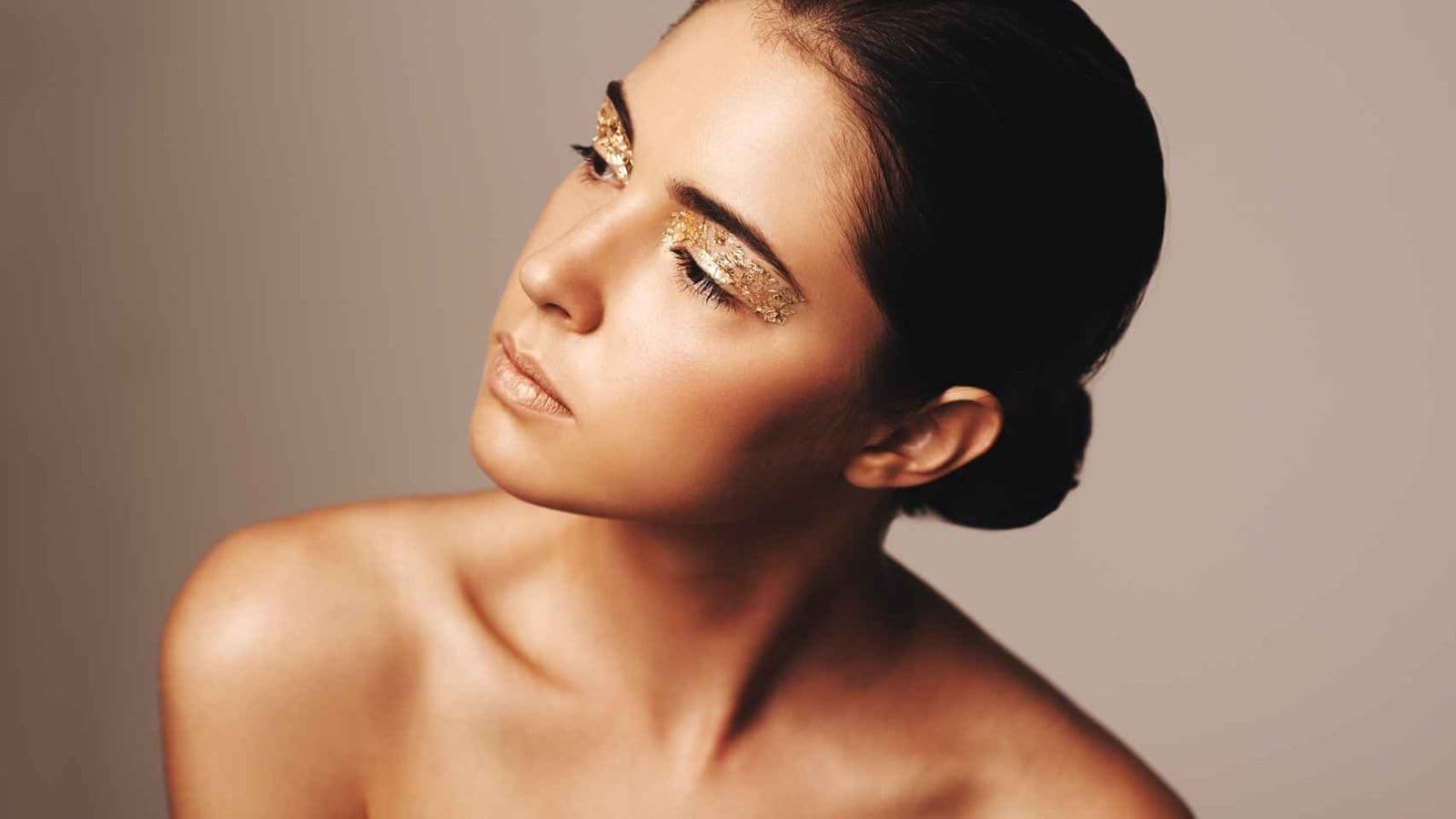
Glitter eyeshadows are the makeup trend of the moment, and this revival looks nothing like the chunky craft-store flecks of the past. Today's formulas
Glitter eyeshadows are the makeup trend of the moment, and this revival looks nothing like the chunky craft-store flecks of the past. Today’s formulas range from delicate pearlescent washes and molten foil finishes to liquid chrome and finely milled pressed pigments that catch light like crushed diamonds. They flatter every eye shape, skin tone, and age, and the only real requirement is a willingness to play. This guide shows you how to wear them with confidence, from soft daytime shimmer to full-glam sparkle.
What makes this moment different from previous glitter revivals is the range. We are no longer talking about chunky craft-store flecks reserved for teen sleepovers. Today’s glitter eyeshadows span delicate pearlescent washes, molten foil finishes, liquid chrome formulas, and finely milled pressed pigments that catch light like crushed diamonds. They work on every eye shape, every skin tone, and every age. The only real requirement is willingness to experiment.
This comprehensive guide walks you through everything you need to know to wear glitter eyeshadow with confidence, whether you are a total beginner nervous about fallout or a seasoned makeup enthusiast looking to push your creativity further. You will learn how to choose the right formula for your eye anatomy, how to prep skin so pigment stays put for twelve hours or more, how to layer textures for dimension, and how to adapt the look for daylight, office, and evening. Expect science-backed tips on ingredients, dermatologist-aligned safety guidance, and practical step-by-step techniques you can replicate tonight.
Why Glitter Eyeshadow Is Defining Beauty Right Now
Reviewed by the BeautynFacts editorial team. Last updated: May 2026.
Fashion is cyclical, and beauty moves with it. The return of glitter eyeshadow is not a random aesthetic whim; it reflects a broader cultural shift toward expressive, maximalist self-presentation. After a long stretch of muted palettes, many women are craving looks that feel celebratory and personal. Makeup artists describe this as a rejection of algorithmic sameness, a pushback against the identical nude-lip, sculpted-cheek uniform that dominated social feeds for years.
On the runways, the trend arrived with force. Prada paired wet-look glitter lids with sleek tailored coats, creating a tension between austerity and sparkle. Givenchy layered silver pigment across the full mobile lid for a cosmic, almost otherworldly finish. Versace opted for warm bronze foils that echoed its signature gilded aesthetic, while Luar and Tory Burch used softer pearlescent shimmer to highlight natural features rather than dominate them. This variety is precisely what has helped the trend travel beyond editorial shoots and into everyday wardrobes.
Celebrities have accelerated the moment. Hailey Bieber has been photographed in champagne-toned shimmer that blurs the line between highlighter and eyeshadow. Gigi Hadid leans into cooler silvers and smoky metallics. Dua Lipa, true to her disco-revival aesthetic, favours saturated holographic finishes. Each of these personalities wears glitter differently, which reinforces the central message of the trend: there is no single correct way to do it.
The Psychology of Sparkle
There is a quiet scientific reason glitter feels so magnetic. Research in visual perception suggests that the human eye is naturally drawn to moving highlights, a phenomenon connected to our evolved sensitivity to water and light. Reflective particles on the eyelid create micro-movements of light every time you blink, speak, or smile, which makes a glittered eye feel alive in a way matte pigment simply cannot replicate. Makeup artists often describe glitter as “kinetic colour”, and that description captures something real.
Understanding the Different Types of Glitter Eyeshadow
Before you shop or swatch, it helps to understand that “glitter eyeshadow” is actually an umbrella term covering very different formulations. Knowing the categories saves you money and prevents the frustration of buying a product that does not behave the way you expected.
Pressed shimmer shadows are the most beginner-friendly option. These contain reflective pigments suspended in a powder binder, pressed into a pan. They apply with a standard brush or fingertip, blend easily, and produce a smooth wash of light rather than dramatic sparkle. Think of pearlescent champagne, soft rose gold, or lit-from-within taupe finishes.
Foiled shadows sit a step higher on the intensity scale. These use larger reflective particles and a slightly wetter binder to create a mirror-like sheen. The pigment payoff is dramatic when applied with a damp brush or a dedicated wet finger, and the result looks like liquid metal poured across the lid.
Loose glitter pigments deliver the most dimensional sparkle but require a separate adhesive. The particles are typically larger and more reflective than pressed options, which means more drama but also more fallout if you do not use a proper glitter glue. Loose pigments are the formula of choice for editorial and stage makeup because photographs capture their multidimensional reflections beautifully.
Liquid or cream glitter eyeshadows combine pigment, binder, and adhesive in a single product. They apply directly from a doe-foot applicator or tube, dry down to a flexible film, and resist fallout better than almost any other format. These are the formulas Hailey Bieber and countless celebrity makeup artists rely on for minimal-prep, maximum-impact looks.
Cosmetic-Grade Glitter Versus Craft Glitter
Dermatologists are emphatic on this point: only use glitter explicitly labelled as ‘cosmetic-grade’ near the eyes. Craft glitter is cut from thin metal or plastic sheets with sharp edges that can scratch the cornea or irritate delicate eyelid skin. Cosmetic-grade glitter is cut from softer polyester or plant-derived cellulose, rounded at the edges, and tested for safety around mucous membranes. Always check the ingredient list for terms like “polyethylene terephthalate”, “cellulose”, or “mica” rather than the generic “glitter”.
Preparing Your Eyelids for Long-Lasting Glitter
Glitter eyeshadow lives or dies on the prep work beneath it. Skip this stage, and you will battle creasing, fallout, and patchy colour within two hours. Invest five extra minutes and your look will stay picture-perfect from morning coffee to midnight.
Begin with clean, moisturised skin. The eyelid contains some of the thinnest skin on the entire body, and dehydration leads pigments to grab unevenly and settle into fine lines. Apply a lightweight eye cream, allow it to absorb fully for at least three minutes, then gently blot any residue with a tissue. You want hydration, not slip.
Next, apply an eyeshadow primer. Primers contain silicones and film-forming polymers that create a tacky, uniform canvas for pigment to cling to. They also neutralise any redness or veining on the lid, which brightens every colour you apply afterward. Press the primer on with your ring finger rather than rubbing, then let it set for thirty seconds.
Set the primer with a thin dusting of translucent powder or a skin-tone matte shadow. This two-layer approach, known among professional makeup artists as the “lock-and-load” technique, gives glitter something to grip while absorbing excess oils that would otherwise break down your look.
The Anti-Fallout Shield
One of the smartest tricks in the professional toolkit is the under-eye shield. Before you apply glitter, dust a generous layer of loose setting powder beneath the lower lash line. Any stray flecks will land on the powder rather than your skin. When you are finished with eye makeup, sweep the powder away with a fluffy brush, and your concealer underneath will be perfectly intact. This single step transforms the experience of wearing glitter from stressful to genuinely easy.
Five Application Techniques That Flatter Every Eye
The beauty of glitter eyeshadow is that it adapts to your personality, your outfit, and your mood. Below are five distinct techniques, each offering a different level of drama and suited to different occasions.
Technique One: The Cream Shadow Wash
This is the easiest, most fool-proof method and the one every beginner should master first. Choose a cream or liquid glitter shadow in a shade that complements your undertone. Warm skin tones often glow in copper, bronze, or champagne, while cool tones sing in silver, pewter, or icy lilac. Neutral undertones can wear almost anything.
Dot the product across the centre of the mobile lid using your ring finger. Press, do not drag. The warmth of your finger melts the product into the skin for a seamless, almost liquid finish. Blend the edges outward with a clean fingertip or a small synthetic brush. The entire application takes under a minute and produces a radiant, modern effect that works beautifully with a fresh complexion and a nude lip.
Technique Two: The Glittery Smoky Eye
This technique delivers dimension and depth, perfect for evenings, date nights, or anytime you want eyes that command attention. Begin by building a neutral base. Apply a mid-tone matte shadow, such as soft brown or warm taupe, across the entire lid and blend up into the crease with windscreen-wiper motions. Deepen the outer corner with a darker brown or plum to create shape.
Once the smoky base is complete, layer your glitter. Apply it only to the centre of the lid, leaving the darker outer corner and inner crease matte. This contrast creates the illusion of larger, more rounded eyes because light reflects outward from the centre while the darker edges recede. Finish with smudged liner along the upper lash line and a generous coat of mascara. The effect is sultry without veering into heaviness.
Technique Three: The Grunge Revival
For those who love an edgier aesthetic, glitter pairs surprisingly well with grunge-inspired makeup. Start with a smudged kohl liner along both the upper and lower waterlines. Allow the liner to extend slightly below the lower lash line for that lived-in, slept-in quality that defines the look. Then press a cool-toned glitter, silver, gunmetal, or deep indigo onto the centre of the lid.
The contrast between the dark, imperfect liner and the luminous centre creates a dimensional, almost editorial effect. Pair with a bitten-berry lip and imperfect hair texture for an aesthetic that feels rebellious and distinctly personal. Avoid warm golds and oranges here; cool tones read more authentically grunge and create a stronger visual contrast with the smudged black.
Technique Four: The Modern Cat Eye
The classic feline flick gets a glittering update that feels fresh without abandoning its timeless appeal. Begin with a clean lid and apply a thin wash of matte neutral shadow to balance the complexion. Next, use a traditional gel or liquid liner to draw a crisp black wing along the upper lash line, flicking outward at the outer corner.
Here is the twist. Line the lower lash line with a glitter eyeliner in a contrasting metallic, such as copper, emerald, or sapphire. The lower glitter line adds unexpected dimension and makes the eyes appear larger and more awake. Keep the rest of the face polished and simple: dewy skin, groomed brows, and a nude or peach lip.
Technique Five: The Monochrome Moment
Monochrome makeup, where a single colour family unites the eyes, cheeks, and lips, has become one of the defining looks of contemporary beauty. Glitter translates into this trend gorgeously. Choose a colour family you love, rose gold is a popular starting point, and apply a glitter eyeshadow in that shade across the lid. Then echo the tone with a sheer wash of blush in a similar warm-pink hue and a glossy lip in a complementary colour.
The monochrome approach creates visual harmony that looks deeply intentional and polished. It also simplifies decisions: once you have chosen your colour, every other product falls into place. Copper monochrome works beautifully on warm skin, lilac on cool undertones, and soft gold on almost everyone.
Matching Glitter Shades to Your Eye Color
Colour theory is not just a design-school concept; it directly affects how your eyes will read in photographs and in real life. Understanding which shades enhance your natural eye colour can elevate a good look into a spectacular one.
Brown eyes are the most versatile and flatter almost every glitter shade, but they come alive particularly in blues, teals, and deep purples. These cool tones sit opposite brown on the colour wheel, creating complementary contrast that intensifies the warmth of the iris. Copper and bronze also work beautifully because they harmonise with brown tones for a rich, glowing effect.
Blue eyes pop dramatically against warm metallics. Copper, bronze, peach, and warm gold create the strongest contrast and make blue irises appear more vivid. Silver and icy tones can still work but produce a softer, more ethereal effect rather than intense contrast.
Green and hazel eyes sparkle against plum, burgundy, and deep rose shades. These berry tones contain red undertones that make green appear more saturated. Warm golds and bronzes also flatter by pulling out the amber flecks hidden in many hazel irises.
Grey eyes benefit from either direction. Cool silvers and pewters amplify their ethereal quality, while warm rose golds add unexpected warmth and femininity. Experiment to discover which feels more aligned with your personal style.
Glitter Eyeshadow for Mature Eyes
There is a persistent myth that women over forty should avoid glitter. Every contemporary makeup artist worth their kit disagrees. The truth is that glitter can look breathtaking on mature eyes when applied with a few targeted adjustments. The key is scale, placement, and formula choice.
Choose finely milled shimmer rather than chunky glitter. Large particles emphasise skin texture and settle into fine lines, while fine pearlescent pigments reflect light smoothly and actually blur the appearance of crepiness. Liquid and cream formulas outperform powder options on mature skin because they do not cling to dry patches.
Placement matters. Rather than coating the entire mobile lid, concentrate shimmer on the inner corner and the centre of the lid only. This draws light toward the brightest, smoothest portion of the eye and lifts the overall appearance. Avoid placing glitter directly on the outer corner or in the crease, where any settling will emphasise lines.
Prime more generously than you think you need, and set the area with a hydrating setting spray rather than a drying powder. The goal is luminous, not caked, and the right preparation preserves that balance all day.
Day-to-Night Transitions
One of the most common concerns about glitter eyeshadow is that it feels too costumey for daytime or professional settings. That concern is rooted in a misunderstanding of what contemporary glitter looks like. Done correctly, a touch of shimmer reads as radiant, healthy, and polished rather than theatrical.
For daytime wear, think minimal and strategic. Apply a single sweep of pearlescent shadow to the inner corner of each eye and along the centre of the mobile lid. Keep everything else soft: a taupe or beige transition shade, brown mascara, groomed brows, and a neutral lip. The shimmer catches light in photographs and video calls without announcing itself.
To transition the same look into evening, layer additional pigment on top. A deeper foiled shadow along the lash line, a touch of glitter eyeliner flicked outward, or a smoky outer corner transforms the daytime version into something sultry within minutes. This layering approach is especially practical if you finish work and head directly to dinner or an event.
Office-Appropriate Shimmer
For more conservative workplaces, stick to warm skin-tone shimmers: champagne, soft peach, warm nude, and pearlescent pink. These colours read as “glowing skin” rather than “dramatic eyeshadow” and rarely draw comments. Avoid obvious silver, holographic, or heavily pigmented finishes until the workday ends.
Choosing the Right Brushes and Tools
The tools you use have an enormous effect on how glitter eyeshadow performs. Investing in a small selection of quality brushes pays dividends in finish quality and ease of application.
A flat, dense synthetic brush is your primary tool for packing pigment onto the lid. Natural-hair brushes struggle with glitter because the particles can hide in the bristles and create unpredictable shedding. Synthetic fibres release pigment cleanly and are easier to clean between uses.
A small, flat paddle-style brush, sometimes called a smudger, is ideal for applying glitter along the lash line without fallout. Dampen it slightly for even more precision. A fluffy blending brush, used clean, softens edges and diffuses the outer boundary of your shimmer wash.
For loose pigments and liquid formulas, flat silicone applicators have gained popularity among professionals. They pick up product cleanly, press it firmly against the lid, and rinse clean under water in seconds.
The Power of Fingertips
Never underestimate your own hands. The warmth of a fingertip melts cream and liquid glitter formulas into the skin more seamlessly than any brush. Use your ring finger, which naturally applies lighter pressure, and press rather than drag. Many celebrity makeup artists, including those who work with Zendaya and Rihanna, rely on fingertips for the most flattering, skin-like glitter finishes.
Common Mistakes and How to Avoid Them
Even seasoned makeup lovers make predictable errors with glitter eyeshadow. Recognising these pitfalls before they happen transforms your results instantly.
Mistake one is skipping the primer. Oils on the lid break down every glitter formula within hours, leading to creasing and migration. Primer is not optional; it is foundational.
Mistake two is overloading a dry brush with loose glitter. This guarantees fallout. Instead, dampen the brush with a mixing medium, glitter glue, or even a tiny drop of eye-safe setting spray before dipping into the pigment. The moisture makes the glitter adhere to the brush and transfer cleanly to the lid.
Mistake three is applying glitter before foundation. When fallout occurs, and some always does, concealer and foundation beneath the eyes are ruined. Always complete eye makeup first, then clean up with a makeup wipe and apply face base afterwards. Professional makeup artists call this “eyes first”, and it solves the fallout problem permanently.
Mistake four is choosing the wrong colour for the occasion. An emerald holographic pigment looks spectacular at a concert but odd at a board meeting. Build a small wardrobe of shades: one neutral champagne, one warm metallic, one cool tone, and one statement colour. This collection will carry you through almost any scenario.
Mistake five is forgetting to blend. Harsh edges make any eyeshadow look amateur, and this is especially true with reflective formulas. Take an extra thirty seconds with a clean, fluffy brush to soften every boundary before you call the look finished.
Safe Removal and Eye Health
Glitter particles near the eye demand careful removal. Pulling or rubbing risks corneal scratches and accelerates the appearance of fine lines around the delicate eye area. Dermatologists recommend a two-step cleansing approach for any makeup containing reflective particles.
Begin with an oil-based cleanser or micellar water designed for eye makeup. Saturate a soft cotton pad and hold it gently against the closed eye for fifteen to twenty seconds. The oil dissolves the binders that hold glitter in place without requiring friction. Then sweep the pad downward and away from the eye in a single gentle motion. Repeat with a fresh pad until no pigment transfers.
Follow with your regular water-based cleanser to remove any residual oil. Finish with a nourishing eye cream to replace moisture lost during cleansing. Never sleep in glitter eyeshadow. The particles can migrate into the eye overnight and cause significant irritation.
When to See an Eye Doctor
If a glitter particle enters your eye, resist the urge to rub. Rinse with a gentle saline solution or cool water for several minutes. If irritation persists beyond a few hours, if you experience blurred vision, or if redness intensifies, see an optometrist or ophthalmologist promptly. These cases are rare but worth taking seriously, particularly for contact lens wearers, who should remove their lenses before any glitter application and reinsert them only after complete removal.
Building Your Glitter Eyeshadow Wardrobe
You do not need a drawer full of products to master this trend. A curated collection of five to seven pieces covers virtually every situation.
Start with a universally flattering cream or liquid glitter in champagne or soft gold. This single product handles everything from daytime glow to the starting point of more elaborate evening looks. Add one cool-toned option in silver or pewter for contrast-driven looks and cooler colour palettes.
Include at least one foiled pressed shadow for days when you want more intensity without the complexity of loose pigments. A warm bronze works beautifully for almost every skin tone and photographs gorgeously under both natural and artificial light.
A glitter eyeliner in a statement shade, emerald, sapphire, or deep amethyst, opens up creative possibilities and takes up almost no storage space. For those who want to push further, a single jar of cosmetic-grade loose pigment in a holographic or duochrome finish delivers dramatic looks for events and photographs.
Round out the collection with a high-quality glitter primer or mixing medium and a dedicated eyeshadow primer. These two products are the invisible heroes that make every glitter moment possible.
Frequently Asked Questions About Glitter Eyeshadow
Can I wear glitter eyeshadow if I have hooded eyes?
Absolutely, and the effect can be particularly striking. The key for hooded eyes is strategic placement. Concentrate shimmer on the centre of the mobile lid and the inner corner, where it remains visible when the eyes are open. Avoid heavy glitter in the crease or under the brow bone, since these areas disappear under the hood and waste pigment. Cream and liquid formulas are especially well-suited to hooded eyes because they resist transfer onto the upper lid when the eye is open. A small touch of glitter on the inner third of the lower lash line also opens up hooded eyes beautifully.
How do I stop glitter eyeshadow from falling onto my cheeks?
Fallout is the single most common frustration with glitter, but it is completely preventable with the right technique. First, always apply eye makeup before foundation and concealer so any stray pigment can be brushed away before the face base is applied. Second, use a tacky primer or dedicated glitter adhesive that holds particles firmly in place. Third, dampen your brush slightly before picking up pigment; dry brushes scatter glitter, but damp brushes deposit it precisely. Fourth, press rather than sweep when applying, since sweeping motions fling particles off the brush. Finally, create a fallout shield by dusting loose powder under the eyes before starting, then brushing it away once you are finished.
Is glitter eyeshadow safe for sensitive eyes or contact lens wearers?
Glitter can be worn safely by most people, including many with sensitive eyes or contacts, but it requires extra care. Choose only cosmetic-grade formulations with rounded particles specifically rated as safe for use near the eye area. Contact lens wearers should insert lenses before applying any eye makeup and remove them before cleansing. Avoid applying glitter directly to the waterline or inner rim of the eye, where particles can easily dislodge and float beneath a lens. If you experience any irritation, discontinue use immediately and switch to ultra-fine pearlescent shadows rather than true glitter.
What is the difference between shimmer, metallic, and glitter?
These three terms describe different finishes along a spectrum of reflectivity. ‘Shimmer’ refers to a soft, satin-like sheen created by finely milled pearlescent particles. The finish is smooth and skin-like, similar to a subtle highlighter. ‘Metallic’ describes a more intense, polished finish that resembles brushed chrome, copper, or gold; it reflects more light than shimmer but remains smooth rather than sparkly. Glitter contains larger, more angular particles that produce distinct, multidimensional sparkle rather than a uniform sheen. Many modern products blend these categories, offering finishes that read as metallic in low light and glittery under direct illumination.
How long should a glitter eyeshadow look last?
With proper preparation, a well-applied glitter eyeshadow should hold beautifully for eight to twelve hours, easily taking you from morning through dinner. Liquid and cream formulas often outlast powder options because their adhesive binders dry down into flexible films that resist oil and friction. Expect some minor softening around the edges after six or seven hours, but significant creasing or migration indicates a preparation issue rather than a product failure. A quick midday touch-up with a clean fingertip, pressing any displaced pigment back into place, extends longevity considerably.
Can I create a glitter look without buying speciality products?
Yes, especially for occasional wear. A finely milled face highlighter can double as a luminous eyeshadow base when paired with an eyeshadow primer underneath. Many shimmer shadows already sitting in your collection can be transformed into foiled finishes by applying them with a damp brush rather than a dry one. For a true glitter moment, mixing a tiny amount of loose cosmetic pigment with a clear lash glue or dedicated mixing medium creates a customisable shadow without requiring a pre-made product. That said, if glitter eyeshadow becomes a regular part of your routine, investing in at least one dedicated formula significantly improves ease and results.
Will glitter eyeshadow work for brides or formal events?
Glitter has become one of the most-requested finishes for bridal makeup precisely because it photographs beautifully under every lighting condition. Soft champagne, rose gold, and pearlescent white create a romantic, luminous effect that reads as radiant rather than costumey in photographs. For formal events, lean toward pressed foiled shadows or liquid glitters that resist fallout and transfer, since events often involve hours of movement, dancing, and close contact. Avoid chunky loose pigments unless your makeup artist is on-site for touch-ups, and always do a trial run at least two weeks before the event to confirm your chosen products perform well on your skin.
How do I choose the right glitter shade for my skin tone?
Start with undertone, since it determines which metallic families harmonise with your natural colouring. Warm undertones (yellow, peach, and golden) glow in copper, bronze, warm gold, and amber. Cool undertones (pink, red, and blue) shine in silver, platinum, icy lilac, and pewter. Neutral undertones can be worn by both families comfortably. Beyond undertone, consider contrast. Deeper skin tones often look breathtaking in high-pigment, high-reflection finishes because the contrast between skin and sparkle is striking. Lighter skin tones can wear softer, more diffused shimmers for an ethereal effect, or intensified pigments for dramatic contrast. The only wrong choice is one that makes you feel self-conscious; confidence is the real finishing touch.
Bringing It All Together
Glitter eyeshadow is no longer a trend waiting for permission; it has fully arrived and shows no sign of retreating. Runways, red carpets, and everyday Instagram feeds confirm that shimmering pigments have become part of the contemporary beauty vocabulary. The women who wear them confidently are not following a strict rulebook; they are expressing mood, personality, and creativity through the most visible, expressive feature of the face.
Your path into this trend does not need to begin dramatically. Start with a single cream or liquid glitter in a flattering neutral shade. Spend a weekend practising the application techniques outlined here, paying particular attention to primer and fallout prevention. Build confidence through small, repeatable wins. Once the fundamentals feel second nature, expand into foiled shadows, glitter liners, and eventually loose pigments for moments that call for maximum impact.
Remember the core principles that separate beautiful glitter from messy glitter: preparation matters more than product, placement matters more than pigment, and quality matters more than quantity. A single strategically placed shimmer, applied with care over a well-primed lid, outperforms layers of pigment slapped onto unprepared skin every single time.
Most importantly, give yourself permission to play. Makeup is one of the few art forms that washes off at the end of the day, which means the cost of experimentation is almost nothing. Try shades you would never normally consider. Attempt techniques that feel beyond your skill level. Photograph your results in different lighting. The makeup artists whose work fills magazines and red carpets all began exactly where you are now, with a small collection of products and the willingness to try something new. Your lids are a canvas, the pigment is the paint, and the only reviewer whose opinion truly matters is the one looking back at you in the mirror.
RELATED ARTICLES:
Blue Eyeshadow Makes a Comeback: How to Wear 2026’s Coolest Eye Color Trend
For the holiday season, try these three glitter eyeshadow variants
How to put on makeup if you wear contact lenses
Coloured Eyeliners: Try Emerald Green, Gold, Deep Plum, and Peach for a Pop of Colour to Your Eyes
Get Ready to Dazzle: Viral Arabic Doll Eye Makeup Look!
About The Author

COMMENTS