Holiday glitter eyeshadow is the fastest way to turn a simple look into a party showstopper. This year, makeup artists treat glitter as a precision to
Holiday glitter eyeshadow is the fastest way to turn a simple look into a party showstopper. This year, makeup artists treat glitter as a precision tool rather than a chunky afterthought, layering gold-toned sparkle, iridescent shades, and full chrome finishes onto the lid, into the crease, and beneath the brow bone for a polished, festive finish.
What makes this season different is the way glitter eye shadow is being used. Makeup artists treat it as a precision tool rather than just a statement accessory. They use it to create depth in the crease, frost across the lid, and luminosity beneath the brow bone. The result is always dramatic, but in a way that feels polished and intentional rather than chaotic.
This guide covers three specific glitter eye shadow looks dominating the beauty conversation right now. You will get the history behind each trend, a detailed breakdown of the technique, product guidance, and tips for adapting each look to your unique features. By the end, you will have everything you need to execute any of these looks with confidence, whether you are heading to a Christmas dinner, a New Year’s Eve party, or anywhere in between.
Why Glitter Eye Shadow Is the Beauty Story of the Holiday Season
Reviewed by the BeautynFacts editorial team. Last updated: May 2026.
The Cultural Shift Behind the Glitter Comeback
Glitter in makeup has always appeared in cycles. It surges during periods when culture craves escapism, celebration, and self-expression. The early 2000s brought Britney Spears and Paris Hilton with their frosted, shimmery lids. The late 2010s introduced pressed glitters and foiled shadows that made their way into everyday wear. The current wave is more layered and technically advanced than either of those eras.
The current glitter resurgence carries a different energy. It is not about excess for the sake of excess. It is about using glitter as a precision tool. Makeup artists today apply glitter with surgical intent, placing it along the inner corner, across the centre of the lid, or in a deliberate cut crease line. The placement matters as much as the product itself.
This shift was partly driven by the rise of high-definition cameras and social media photography. When your face appears in 4K close-up on someone’s phone screen, fine-particle glitter that catches light naturally looks spectacular. Chunky glitter, by contrast, can look messy and dated. The beauty industry responded by developing micro-fine and nano-particle formulas that photograph beautifully and feel weightless on the skin.
Celebrity Influence and Red Carpet Moments
Celebrity looks have played a massive role in pushing glitter eye shadow back into mainstream consciousness. Rita Ora appeared at the MTV Awards with ultra-glittery gold eyes that immediately became a reference point for makeup artists and beauty fans globally. The look was not subtle. It was bold, intentional, and executed with precision.
Olivia Wilde took a different approach at a Variety event. Her makeup artist Wendy Rowe created a look that paired graphic eyeliner with an iridescent star pattern across the lid. Rowe described the inspiration as a fusion of 1990s David Bowie and early Kate Moss, two icons who understood that the eyes could tell an entire story on their own. The result sat somewhere between editorial and wearable, and it resonated deeply with beauty audiences already leaning toward more expressive holiday looks.
These celebrity moments did something important. They gave permission. They showed audiences that glitter eye shadow is not just for performers or for Halloween. It is for anyone who wants to command a room, celebrate a moment, or simply feel extraordinary. That shift in perception opened the door for everyday beauty lovers to experiment with looks they might previously have dismissed as too much.
How TikTok Transformed the Way We Learn Glitter Techniques
Before TikTok, learning a complex makeup technique required watching a long YouTube tutorial or reading a dense magazine spread. TikTok compressed all of that into sixty-second clips that show the before, the process, and the finished look in one seamless sequence. For glitter eye shadow specifically, this format is perfect. You can see exactly how a creator packs glitter onto the lid, how they blend the edges, and how the finished look moves under different lighting conditions.
The glitter cut crease tutorial by creator jellybean_xxdd is a perfect example. It accumulated over four million views not because the look was shockingly new, but because the execution was so clear and replicable. Viewers could follow each step in real time. TikTok also created a feedback loop. When a glitter technique performs well, it gets recreated, remixed, and refined by hundreds of other creators within days. The result is rapid, collective improvement in technique and product knowledge across a massive community of beauty enthusiasts.
Understanding Glitter Eye Shadow Formulas
Loose Glitter, Pressed Glitter, and Liquid Formulas Compared
Not all glitter eye shadows are created equal. The formula you choose determines the finish, the application method, the staying power, and the overall intensity of your look. Understanding the differences helps you match the right product to the right look before you open a single compact.
Loose glitter is the most intensely pigmented option. It comes as a fine powder that you pack onto the lid using a flat, dense brush or your fingertip. Loose glitter delivers maximum sparkle and is the format most associated with high-impact editorial looks. The downside is fallout. Loose glitter particles can migrate onto the cheeks and under the eyes during application. Using a base layer of eye glue or a sticky primer minimises this significantly.
Pressed glitter is the most beginner-friendly format. The glitter particles are compressed into a pan alongside a binding agent, which makes them easier to pick up with a brush and easier to control during application. Pressed glitter delivers a strong but slightly softer finish compared to loose glitter. It is ideal for the diamond-crumbled and cut-crease looks described later in this guide.
Liquid glitter shadow combines glitter particles suspended in a gel or liquid base. These formulas are the most customisable. You can apply them lightly for a translucent foil effect or build them up for full coverage intensity. Liquid shadows blend easily when wet and dry down to a semi-permanent finish that resists creasing. MAC Cosmetics and Charlotte Tilbury both produce standout liquid glitter formulas that makeup artists reach for on professional jobs.
Particle Size and How It Affects Your Finished Look
Glitter particle size is one of the most important and least discussed variables in glitter eye shadow. Larger particles create a more obvious, disco-ball-style sparkle that works beautifully for photographs but can look heavy in person under certain lighting conditions. Smaller particles, sometimes called micro-glitter or fine shimmer, scatter light more diffusely. They create a glow rather than individual sparkle points, which reads as more sophisticated and wearable across a broader range of settings.
Ultra-fine particles, sometimes referred to as ‘holographic’ or ‘duochrome’ pigments, shift colour depending on the angle of light. These are the particles responsible for the iridescent, colour-shifting effects you see in mermaid eye looks and the starry patterns used by celebrities on red carpets. They require a slightly different application approach: pressing rather than sweeping ensures the particles lay flat on the lid and catch light from multiple angles simultaneously.
Many professional makeup artists layer particle sizes deliberately. They start with a base of fine shimmer, build mid-tone coverage with a pressed glitter, and then place individual larger glitter particles at the centre of the lid for a three-dimensional sparkle effect. This layering technique is what separates a flat, one-note glitter look from one that appears to have actual depth and movement when the light shifts.
Eye-Safe Glitter: What You Need to Know Before You Buy
Not all glitter is safe for use near the eyes. Craft glitter, body glitter, and some imported cosmetic glitters use polyethylene terephthalate (PET) film cut into sharp-edged particles. If these particles contact the eye surface, they can cause corneal abrasions. This is a real risk, and it is worth understanding before you reach for any loose glitter product.
Cosmetic-grade glitter approved for eye use is made from either synthetic fluorphlogopite, a lab-created mica, or film-grade PET that has been rounded at the edges. Both materials are approved by the FDA and EU cosmetic regulations for periocular use. When shopping for glitter eye shadow, look for products that specifically state “eye-safe” or “approved for use near eyes” on the packaging. If the packaging does not mention eye safety, contact the brand directly before using the product on your lids.
Biodegradable glitters made from plant cellulose are also becoming more common. These are cosmetically safe and more environmentally responsible than traditional plastic-based options. Several indie cosmetic brands now offer eye-safe biodegradable glitter that performs comparably to synthetic options in terms of sparkle intensity and wear time, giving conscientious shoppers a strong alternative.
Trend One: The Glitter Cut Crease
What Makes the Glitter Cut Crease Different
The cut crease is already one of the most technically demanding eye makeup techniques in the beauty world. A traditional cut crease involves blending a transition shade into the crease of the eye, then using a concealer or light base to sharply define the boundary between the lid and the crease, creating the illusion of a deeper socket and a more sculpted eye shape. The glitter cut crease adds one more layer of complexity: it replaces or augments the traditional dark lid colour with glitter, creating a look that combines architectural precision with maximum luminosity.
The TikTok version that went viral, created by jellybean_xxdd, subverts the traditional formula in a smart way. Rather than using a bold dark shadow in the crease, the creator uses a soft pink shadow blended around the entire eye as a base. The cut is then drawn not with concealer but with a transparent glitter liner traced along the lash line and slightly above it. This creates a shimmering boundary that defines the eye without the harshness of a stark concealer line.
The finishing detail is what makes this version special. A liquid liner in snow white is applied in multiple thin layers over the glitter line. Each layer dries before the next is added, building opacity gradually. The result is a bright, clean line that makes the eyes appear larger and more awake, while the glitter beneath catches the light and adds genuine dimension to the entire look.
Step-by-Step Application for the Glitter Cut Crease
Start by priming the entire lid with an eye shadow primer. Allow it to dry for sixty seconds before applying any product. This step is non-negotiable for a glitter look because without a primer, glitter particles shift throughout the day and the cut line loses its sharpness by the time you arrive at your event.
Apply a soft matte pink shadow across the entire lid, blending upward into the crease with a fluffy blending brush. Keep the colour soft and diffused. You are not creating dramatic contrast at this stage. You are establishing the base tone of the eye and warming up the socket so the final look has depth beneath the glitter layers.
Using a small flat brush, press a fine-particle transparent glitter or a pale champagne glitter onto the lid from the lash line up to approximately two-thirds of the way up the lid. Press the product firmly rather than sweeping it. Pressing ensures the particles adhere firmly to the primer and creates more even, dense coverage with minimal fallout.
With a thin liner brush, draw a subtle cat’s eye flick in black pencil liner at the outer corner of the eye. Keep this line very light. Its purpose is to provide a guide for the glitter line, not to be a visible feature itself. The pencil line helps you trace the glitter application with precision rather than freestyling the angle.
Trace over the upper lash line and slightly above it with a clear glitter liner gel. This creates the glittery definition line that anchors the look and gives the lash line its sparkle edge. Finally, apply white liquid liner in two to three thin coats along the very top of the glitter line. Allow each coat to dry before adding the next. The white liner brightens the entire eye area and creates the sharp, clean contrast that defines this look.
Adapting the Glitter Cut Crease to Your Eye Shape
Eye shape significantly affects how a cut crease looks and whether you need to modify the standard technique. For monolid eyes, the cut crease needs to be placed higher on the lid than it would be for eyes with a natural crease. Drawing the glitter line approximately one centimetre above where a crease would naturally sit creates the illusion of depth and definition. Use a slightly wider glitter application on the lid to compensate for the reduced visible lid space when the eye is fully open.
For hooded eyes, where the brow bone partially covers the lid when the eye is open, apply the glitter and the cut line with the eye open rather than closed. This ensures the placement is visible when you are looking straight ahead rather than disappearing under the hood of skin above. Choose finer glitter particles for hooded eyes, as larger particles can make the lid appear heavier and more closed than it already is.
For deep-set eyes, the goal is to bring the eyes forward visually. Apply the lightest glitter shades to the centre of the lid and blend them outward. Avoid placing very dark matte shades anywhere near the eye, as these deepen the appearance of the socket further. A glitter cut crease in warm gold or rose gold tones is particularly flattering for deep-set eyes because warm, reflective tones draw the eye outward and forward.
Trend Two: Diamond Crumble Frosty Lids
The Retro Inspiration and Its Contemporary Update
If you grew up watching MTV in the early 2000s, you will recognize the frosted lid look immediately. Britney Spears, Christina Aguilera, and Paris Hilton all appeared regularly with silvery, icy lids that reflected stage lighting at maximum intensity. At the time, the technique was simple: pack silver or white shimmer shadow onto the entire lid and proceed. The result was striking but often flat, with little dimension or layering beneath the surface sparkle.
The contemporary version, inspired by MAC Cosmetics’ Diamond Dust collection, is a far more sophisticated interpretation of the same idea. The key difference is the layering approach. Instead of a single silver shade across the lid, the modern diamond crumble look builds multiple metallic and pastel tones that overlap and blend at the edges, creating an effect that resembles fractured ice or scattered gemstones. The palette typically includes pink, light blue, silver, and pale yellow, though these vary widely depending on personal preference and skin tone.
The word “chrome” is central to understanding this look. The textures that work best here are true chrome, meaning they have a mirror-like reflective quality rather than a dusty shimmer. Chrome textures require specific formulas, usually liquid or cream-based, because pressed powder shimmers rarely achieve the same depth of metallic reflection. The light bounces off a chrome lid in a concentrated beam rather than diffusing softly, and that concentrated reflection is what creates the icy, high-fashion quality that defines the diamond crumble aesthetic.
How to Build the Icy Chrome Layers
Skin prep is especially important for the diamond crumble look. Start with a lightweight hydrating eye cream applied at least fifteen minutes before makeup application. Dry skin interrupts chrome formulas and creates patchiness across the lid. The lid surface needs to be smooth and slightly tacky from a primer to hold each layer in place without slipping or separating.
Apply a white or pale nude base across the entire lid. This provides a neutral canvas that allows the true colour of each metallic layer to show through rather than being absorbed into the skin’s natural tone. A flesh-toned base makes metallic shades appear muddy. A light, bright base makes them appear clean and luminous from the first application.
Apply the first colour layer, typically a soft pink chrome or liquid metallic, to the inner corner and blend slightly across the inner third of the lid. Use a small flat brush or your ring fingertip, pressing the product in rather than sweeping it. Allow this layer to dry slightly before moving to the next colour to preserve the definition at each colour’s edge.
Apply a light blue or lilac chrome to the centre of the lid, overlapping slightly with the pink at the inner edge. The overlap creates a natural gradient where the two colours blend at the point of contact, producing the fractured, multi-tonal quality that gives this look its name. Finish with silver or pale gold chrome at the outer corner and along the lower lash line.
For the most striking version of this look, add a single highlight of the palest shade available to the very centre of the lid, directly over the pupil. This central highlight creates a dimensional effect that makes the eye appear to have a three-dimensional sparkle point, drawing attention directly to the iris and giving the look its signature depth.
Color Combinations and Skin Tone Considerations
The classic diamond crumble palette of pink, blue, and silver works beautifully on fair to medium skin tones. On deeper skin tones, these pastel metallics can read less vividly against the skin’s natural warmth. For deeper complexions, increase the saturation of each shade or swap the pale pink for a richer rose gold and the pale blue for a deeper cobalt or teal chrome. The silver anchor shade can stay, though a champagne or warm gold often complements deeper skin tones more harmoniously.
Warm skin tones generally look stunning with a gold, peach, and champagne version of the diamond crumble. Replace the cool pink with a warm peach chrome and the blue with a warm olive or bronze. Keep the brightest highlight at the centre of the lid in white gold rather than silver to maintain warmth throughout the entire look and prevent a cool, ashy reading against golden or olive undertones.
Cool skin tones are the natural home of the classic blue and silver palette. Lean into lavender, ice blue, and silver for a look that feels cohesive and intentional. Adding a pale violet at the outer corner instead of silver creates a more romantic, ethereal version of the diamond crumble that pairs particularly well with winter holiday settings and cool-toned evening clothing.
Trend Three: Mermaid Eyes with Full Lid Glitter Coverage
Understanding the Mermaid Eye Aesthetic
The mermaid eye has been a fixture in editorial and avant-garde makeup for several years. The classic interpretation uses green, teal, and turquoise tones to evoke an underwater quality, often with wet-look textures and graphic liner shapes. The current version differs in one significant way: iridescence has replaced solid colour as the primary visual element. Rather than a lid that reads as one colour, the modern mermaid eye shifts between multiple colours depending on the angle of light, creating the impression of scales or deep-ocean luminescence in motion.
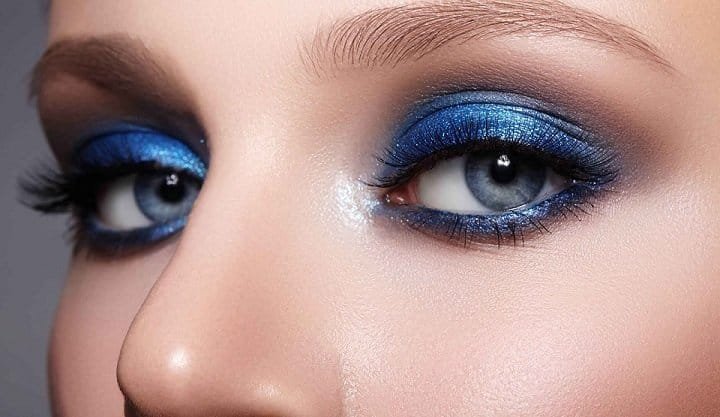
Charlotte Tilbury contributed one of the most talked-about versions of this look when she covered the entire eyelid and under-eye area in deep, 1990s-blue shades, blended without a hard edge and extended below the lower lash line to create a full surround of colour. The philosophy she described was to treat the eye as a canvas and cover it completely, removing any blank space and building an immersive visual effect that commands attention from across the room.
The mermaid eye is deliberately bold. It is not a daytime look, and it is not meant to be subtle. It is designed for environments where visual impact matters: a New Year’s Eve party, a holiday gala, a festive event where photography will capture the look from multiple angles. In those settings, the iridescent shift of a well-executed mermaid eye is genuinely breathtaking in a way that no other eye look achieves.
Building the Full Lid Coverage Step by Step
Begin with the most intensive priming possible. For full lid coverage with iridescent glitter, use a dedicated eye glue or tackifying primer rather than a standard eye shadow primer. Glue-based primers create a sticky surface that holds loose or pressed glitter particles far more securely, which matters when you are covering such a large area of delicate skin with heavy glitter product.
Apply a base shade, typically a deep blue, teal, or forest green matte shadow, across the entire lid from the lash line to just below the brow. Blend carefully at the brow bone so the edge is diffused rather than harsh. This matte base provides the depth beneath the glitter layers that creates dimension. Without a matte base, glitter applied directly to the primer can look one-dimensional and flat rather than richly layered.
Layer the first iridescent glitter shade over the matte base, pressing it firmly across the lid from inner to outer corner. Choose a shade close in hue to your matte base but with a clear metallic or holographic shift. For a blue base, a blue-to-purple duochrome glitter creates a hypnotic colour shift. For a teal base, a teal-to-gold duochrome creates a deep, oceanic effect that moves beautifully under party lighting.
Add a second, lighter iridescent shade to the centre of the lid and directly below the lower lash line. Blending this lighter shade at the centre creates the brightest point of the look and draws attention outward toward your iris. Beneath the lower lash line, the lighter shade creates a luminous ring that encircles the eye and amplifies the mermaid effect significantly.
Finish by pressing a bright highlight shade, either silver or white gold, to the inner corner and to a small area just above the centre of the upper lid. These highlight points act as light sources within the look, giving the entire eye composition a three-dimensional quality that moves beautifully in any lighting environment and photographs with extraordinary impact.
Extending the Look Beyond the Lid
The mermaid eye’s philosophy of maximising coverage extends naturally to the cheekbones. The same iridescent shadow used on the lid can be pressed lightly onto the highest point of the cheekbone and blended upward toward the temple. This technique creates a visual connection between the eye makeup and the face, making the entire look feel cohesive rather than disconnected at the orbital bone.
Some makeup artists extend the mermaid glitter across the inner corner and along the bridge of the nose for an even more otherworldly effect. This is a high-commitment version of the look, best suited to events where all eyes will be on you. For a slightly more restrained approach, confine the extension to the under-eye area and the inner corner only. The effect is still immersive but stops short of full fantasy territory.
Pairing the mermaid eye with minimal base makeup allows the eye look to remain the star of the entire face. A light, natural coverage foundation, no contour, and a clear or very soft lip gloss give the eyes the stage they need. If you want to add a lip colour, choose something in a pale, cool-toned nude or a sheer berry that echoes the cool undertones of the mermaid palette without competing with the intensity of the lid.
How to Prepare Your Eyes for Glitter Eye Shadow
Priming the Lid for Maximum Staying Power
Every glitter eyeshadow look lives or dies on the quality of the primer underneath it. A good eye primer does two things: it creates a tacky surface for pigment and glitter particles to adhere to, and it prevents the natural oils in the skin from breaking down the makeup over the course of an evening. Without primer, glitter migrates, creases form, and colours shift within hours of application.
The best primers for glitter specifically are those with a tacky, slightly sticky dry-down. Products with a matte, powdery finish are better suited to standard eye shadow application. For glitter, you want something that stays slightly grippy after drying. Apply a thin, even layer from the lash line to the brow bone, blend with a brush or fingertip, and allow it to set for sixty to ninety seconds before applying any glitter products on top.
For loose glitter or very fine particle shadows, add a small amount of eye glue directly to the lid after the primer has set. Eye glue creates an even stickier surface that prevents fallout during application and movement throughout the evening. Apply it with a flat brush in a thin, even coat, working one section at a time so it does not dry before you press the glitter onto it. The result is a glitter application that holds with remarkable firmness.
Skin Prep and Hydration Strategy
The skin around the eyes is the thinnest on the face and among the most reactive. It is also the area most likely to show dehydration, fine lines, and puffiness, all of which affect how glitter eye shadow sits and moves on the skin. Starting your prep with targeted skincare ensures the best possible canvas for your makeup application.
Apply an eye cream the night before your event. Overnight hydration plumps the skin cells beneath the lid, creating a smoother surface by morning. On the day of your event, apply a lightweight, fast-absorbing eye serum rather than a rich cream. Heavily moisturised skin can prevent primer from adhering properly, which compromises the staying power of the entire glitter look built on top of it.
If you are using liquid glitter shadows specifically, apply a very light layer of translucent powder beneath the eye area before you begin your eye makeup. This creates a barrier that catches any fallout glitter particles during application. After your eye makeup is complete, brush away the powder and the fallout glitter together using a large, clean fluffy brush. This technique prevents the need to wipe the under-eye area with makeup remover and avoids disturbing your carefully applied base makeup.
Protecting the Under-Eye Area During Application
Glitter fallout is the number one application challenge with any sparkly eye shadow look. Even the most careful application produces some particle migration, and particles that land on the cheeks or under-eye area are notoriously difficult to remove without smudging the foundation beneath them and requiring a full base touch-up.
The most effective fallout shield is a piece of translucent tape placed just below the lower lash line during eye shadow application. Choose a tape with low adhesiveness, as surgical tape works well for this purpose, and press it gently against the skin at a slight angle following the natural contour of the under-eye area. After completing your eye look, peel the tape away cleanly, and the fallout particles come with it, leaving your base untouched.
An alternative method uses a piece of clean folded tissue or a business card held just below the eye. This works for powder fallout but is less effective for glitter particles, which are heavier and tend to bounce rather than fall straight down onto a flat surface. The tape method is consistently more reliable for glitter-heavy applications and is worth the thirty seconds it takes to position correctly before you begin.
The Right Tools and Products for Glitter Eye Shadow Application
Brushes That Make a Real Difference
Glitter eye shadow requires a slightly different brush kit than standard eye shadow application. The most essential tool is a flat, dense packing brush. This brush is used to press glitter onto the lid rather than sweep it. Sweeping motions disturb glitter particles and create uneven coverage with significant fallout onto the cheeks. A dense flat brush concentrates the product at the tip and allows precise placement with a firm pressing motion.
A small pointed detail brush is essential for placing glitter in the inner corner, along the lower lash line, or in any precise location. This brush is particularly important for the glitter cut crease look, where the glitter line needs sharp definition at both its upper and lower edges. A pointed brush gives you the control to place product exactly where you want it without bleeding into adjacent areas.
A fluffy blending brush is still necessary even in glitter looks, primarily for the transition shades and matte base colours that underpin all three of the looks described in this guide. Look for a brush with a slightly tapered dome shape for the most versatile blending application. Clean your brushes between uses, especially when working with glitter, as dried glitter particles on a brush can scratch the delicate eyelid skin and create uneven application on subsequent steps.
Setting Sprays and Fixing Products
A setting spray applied over completed glitter eye shadow serves two purposes. It locks particles in place, reducing movement and fallout over the course of the evening. It also adds a luminous sheen to the entire eye area, intensifying the sparkle effect and giving liquid formulas their characteristic glass-like finish when fully dried.
Choose a setting spray appropriate for your skin type. For oily skin, a mattifying spray performs better for the rest of the face, but applying a hydrating setting spray specifically to the eye area creates controlled shine without contributing to excess oil production in the T-zone. Hold the spray at least twelve inches from the face and mist lightly rather than saturating the skin.
Some makeup artists wet their flat brushes directly with setting spray before picking up pressed glitter. This technique, known as the wet brush method, intensifies pigment and glitter payoff significantly. The liquid helps compressed particles adhere more firmly to the brush and then to the lid, creating a more saturated, foiled finish than a dry application produces. It is particularly effective for the diamond crumble look, where maximum chrome intensity is the goal.
Removal Without Causing Irritation
Removing glitter eye shadow requires patience and the right products. Attempting to wipe glitter off with a standard makeup wipe is ineffective and potentially harmful. The friction from wiping drags glitter particles across the sensitive periorbital skin, causing irritation and sometimes micro-abrasions that leave the area red and reactive the following morning.
The correct method starts with a micellar water or an oil-based makeup remover applied to a cotton pad. Place the saturated cotton pad against the closed eye and hold it there for fifteen to twenty seconds. This dissolves the primer and base beneath the glitter, releasing the particles without requiring aggressive rubbing. After holding, gently press and lift the cotton pad away from the skin rather than dragging it across the lid surface.
Repeat this step with a fresh cotton pad until no more glitter transfers onto the pad. Follow with your standard gentle cleanser to remove any remaining remover residue, and finish with an eye cream to restore moisture to the area. This process takes slightly longer than standard makeup removal, but it protects the skin and ensures you remove all glitter without causing any lasting irritation.
Matching Glitter Eye Shadow Intensity to the Occasion
Scaling the Look for Different Holiday Events
Not every holiday occasion calls for the same level of glitter intensity. A work holiday party during the daytime calls for a restrained approach: a soft glitter cut crease with fine champagne particles creates sparkle without overwhelming a professional setting. An intimate family dinner calls for warmth rather than drama, and a simple diamond crumble in warm rose gold and copper tones achieves that beautifully without looking overdressed for the occasion.
A midnight New Year’s Eve party, on the other hand, is precisely the occasion for full mermaid eye coverage with iridescent particles extending beneath the lower lash line and onto the cheekbones. The lighting at evening parties typically includes dim ambient light punctuated by bright overhead fixtures or photography flashes, and glitter is designed to perform in exactly these conditions. Bold glitter looks that might seem excessive in natural daylight come fully alive in party lighting environments.
Consider also the longevity required for the event. A look you need to maintain for two hours can afford to be more experimental with loose glitter and elaborate layering. A look you need to wear for eight hours of holiday festivities benefits from the most securely primed, fixed, and set approach possible. Matching your technique to your timeline prevents the disappointment of a look that performs beautifully at first but deteriorates before the evening ends.
Coordinating the Rest of Your Makeup with Glitter Eyes
Glitter eyes are a strong focal point. They pull attention upward toward the face and specifically toward the eye area. The rest of your makeup should support that focal point rather than compete with it for visual attention. Restraint in every other area of the face is the professional approach.
Keep the base makeup lightweight and close to your natural skin tone. A heavy, full-coverage foundation beneath dramatic glitter eyes can make the entire face look overdone and mask-like. A skin-like base with concealer applied only where needed lets the eyes lead and keeps the overall composition balanced. If your skin is clear and well-hydrated, consider skipping foundation entirely in favour of a tinted moisturiser or a targeted spot concealer.
For blush, choose a soft cream formula in a shade that complements the glitter tones you are wearing. A warm peachy blush pairs naturally with gold and rose gold glitter. A cool pink blush complements the blue and silver of the diamond crumble. The lip decision is the most significant choice you will make. A bold red lip with glitter eyes is a high-fashion combination that works in certain settings, but for most holiday occasions, a soft neutral lip in a sheer nude or a bare-there gloss ensures the eyes remain the undisputed centrepiece of the entire look.
Frequently Asked Questions About Glitter Eye Shadow
Is glitter eye shadow safe for sensitive eyes?
Cosmetic-grade glitter eyeshadow that is specifically formulated and labelled for use near the eyes is safe for most people, including those with sensitive eyes. The key is confirming that the product uses eye-safe, rounded-edge particles rather than sharp-cut craft or body glitter. Sensitive eye sufferers should patch test any new product on the inner arm for twenty-four hours before applying it to the eye area. If you wear contact lenses, remove them before applying glitter eye shadow and reinsert them only after the application is fully complete, as glitter particles can adhere to lens surfaces and cause significant discomfort throughout the evening.
How do I prevent glitter from creasing throughout the evening?
Creasing happens when the oils produced naturally by the eyelid skin break down the primer beneath the makeup, causing it to shift into the natural folds of the lid. The most effective prevention strategy combines a high-quality tacky primer with a setting spray applied immediately after the application is complete. Avoid heavily moisturising eye creams on the morning of your event, as excess moisture on the lid surface accelerates breakdown. Carrying a small flat brush and a pressed glitter compact in your bag allows you to press any shifted particles back into place during the evening as a quick touch-up without needing to remove and reapply the entire look.
Can beginners attempt these glitter looks, or are they only for experienced makeup artists?
All three looks described in this guide are achievable for beginners with the right preparation and tools. The mermaid eye full-coverage look is actually the most beginner-friendly of the three because it requires blending across a large area rather than precise placement. There are no sharp lines to cut or specific placement points to hit. You simply layer colours across the entire lid and blend the edges softly. The glitter cut crease is the most technically demanding because the white liner line requires a steady hand and multiple thin coats. Beginners attempting the cut crease should practise the liner application on the back of their hand before applying it to the eye. Starting with pressed or liquid glitter rather than loose glitter also makes application significantly easier for those new to the technique.
Which glitter eye shadow formula lasts longest on the eyes?
Liquid glitter eye shadows generally offer the best longevity among the three main formats. Once a liquid shadow dries down on a primed lid, it adheres to the skin in a semi-permanent way that resists creasing, fading, and particle migration for many hours of wear. Pressed glitter is the second most long-lasting when applied over a tacky primer and sealed with setting spray. Loose glitter offers the most intense sparkle payoff but requires the most careful priming and setting to achieve comparable wear time. Regardless of format, applying a generous layer of eye primer and finishing with two light coats of setting spray extends the wear of any glitter formula significantly beyond its unprimed performance.
What is the best way to apply glitter eye shadow without a brush?
Your ring fingertip is an excellent tool for applying glitter eye shadow, and many professional makeup artists prefer it over brushes for certain applications. The natural warmth and slight moisture of the fingertip help activate cream and liquid glitter formulas, making them more blendable and adhesive on the lid surface. The fingerpad creates a firm pressing motion that packs glitter particles densely without the sweeping motion that causes fallout. For the inner corner and precise placement areas, the tip of the pinky finger offers more control. The disadvantage of fingertip application is that it is harder to build controlled gradients compared to using shaped brushes, but for the mermaid eye or diamond crumble all-over look, fingers are genuinely effective and often underutilised tools.
Glitter Eye Shadow for the Holidays: Key Takeaways and Next Steps
Glitter eye shadow is the defining beauty choice of the holiday season because it performs exactly where it matters most: in the environments where celebrations happen. Under party lighting, in photographs, and in moments when you want to feel extraordinary, a well-executed glitter eye shadow look delivers in a way that almost nothing else in a makeup kit can replicate.
The three looks covered in this guide represent three distinct points on the glitter spectrum. The cut crease is precise and architectural, suited to someone who enjoys technical application and wants a look with clean lines. The diamond crumble is layered and sophisticated, perfect for someone drawn to a cool, chrome-forward aesthetic. The mermaid eye is bold and fully immersive, designed for the most festive, high-energy occasions on the calendar.
Start by identifying which look matches your upcoming holiday event and your personal comfort level with the technique. Invest in a quality tacky primer, eye-safe glitter formulas in your chosen format, and a setting spray that locks the look in place. Practise the application once before the actual event so the technique feels familiar when it matters most and your hands move with confidence rather than hesitation.
Gather your tools, select your palette, and commit to the look fully. Glitter eye shadow rewards commitment. The bolder you apply it, the more powerfully it performs. This holiday season, give your eyes the attention they deserve.
RELATED ARTICLES:
Best Winter Eye Makeup Looks: 9 Stunning Styles to Try This Season
Blue Eyeshadow Makes a Comeback: How to Wear 2026’s Coolest Eye Color Trend
Metallic shadows: 5 looks to make your eyes SHINE like the stars
Valentine’s Day 2023 Makeup Looks: Get Glam with These Show-Stopping Ideas for February!
Makeup for Glasses: Eye Looks That Stand Out Behind Lenses
About The Author

COMMENTS