Water marble nail art looks impossibly intricate in finished photos and is famously frustrating on first attempts, because three small variables decid
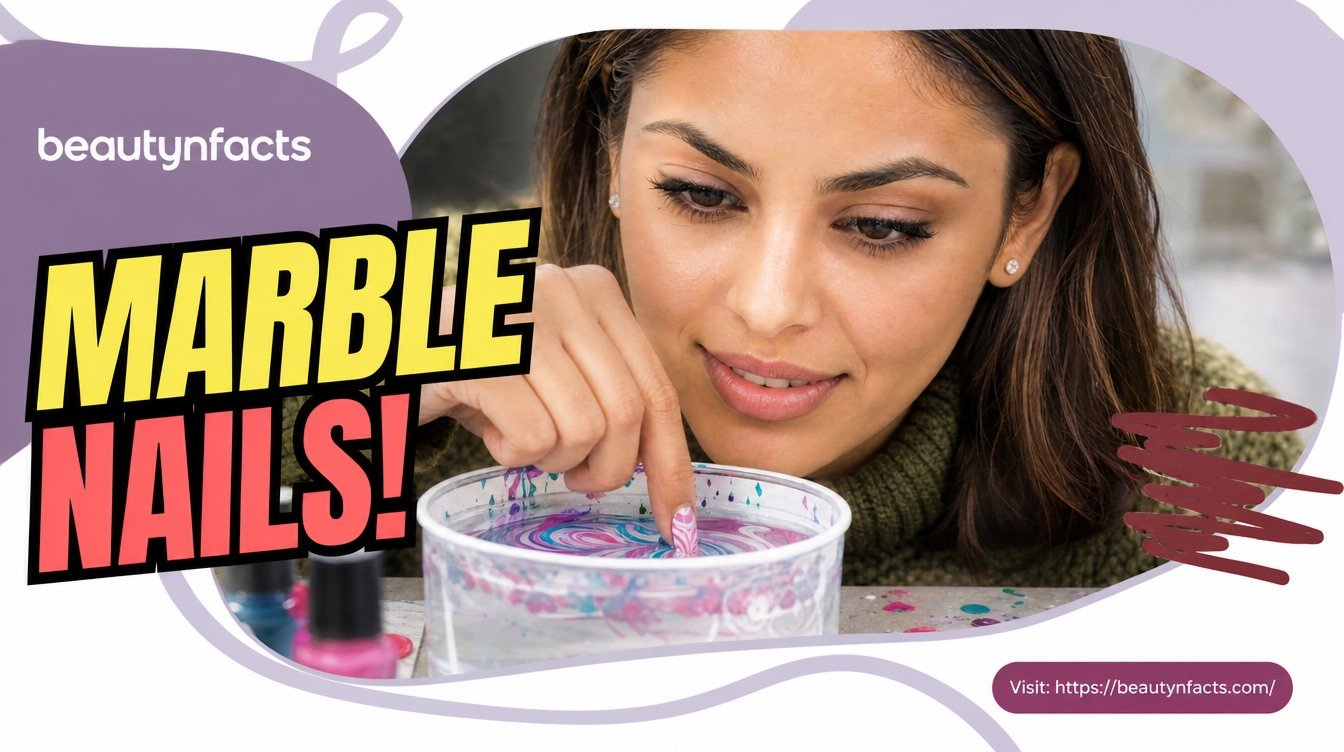
Water marble nail art looks impossibly intricate in finished photos and is famously frustrating on first attempts, because three small variables decide whether your polish floats and swirls beautifully or sinks straight to the bottom of the cup. Water marble nail art is forgiving once you get the water temperature, polish brand, and cup size right. This guide walks through water marble nail art step by step with the exact water specifications, the polishes that consistently float, and the design tricks that turn any color stack into a wearable manicure.
Reviewed by the BeautynFacts editorial team. Last updated: May 2026.
How to Do Water Marble Nail Art
Few nail techniques stop people mid-scroll the way water-marble nail art does. The swirling, marbled patterns look impossibly intricate, yet the entire process relies on tools you likely already own. A cup of water, a few polish bottles, and a steady hand are all you need to produce designs that rival professional salon work. This guide covers every stage of the process. It opens with the science behind why the technique works, moves through product selection and nail preparation, then delivers a detailed step-by-step application walkthrough. It also addresses the most common mistakes and how to correct them. Beyond the artistry, you will find practical guidance on nail health, safe product removal, and the differences between nail product types, including regular polish, gel, acrylic, and dip powder. Strong, healthy nails hold any design better and recover faster between manicures. Whether you are picking up a nail tool for the first time or you have tried water marbling before and hit frustrating roadblocks, this guide gives you a clear, complete path from bare nail to finished masterpiece. Gather your supplies, find a well-lit workspace, and read every section before you begin. Preparation is essential for success.
What Is Water Marble Nail Art?
The Basic Concept
Water marble nail art is a technique where nail polish is dropped onto the surface of still water to create floating, ring-shaped patterns. A fine tool then drags through those rings to form swirls, feathers, spider webs, and other designs. The nail is pressed face-down into the pattern. The polish adheres to the nail surface and transfers the design with remarkable precision. The result is a seamless, one-of-a-kind piece of nail art that cannot be replicated exactly twice.
The technique has existed in nail art communities for decades and gained widespread popularity through social media in the 2010s. Its appeal is rooted in unpredictability. Every design is slightly different, even when the same colours and drag movements are used. That organic variation is the defining quality of the style.
The Science Behind the Technique
Understanding why water marbling works helps you troubleshoot when it does not. Nail polish floats on water because of surface tension and density differences. Most nail polishes are less dense than water and contain solvents that do not mix with water. When a drop of polish hits the surface, it spreads outward in a thin circular film. The next drop pushes the first ring outward, and the pattern builds concentrically.
Surface tension is the critical factor. Water molecules attract each other strongly at the surface, creating a thin elastic layer. Nail polish solvents, primarily ethyl acetate and butyl acetate, reduce the local surface tension where they land. This causes the polish to spread into the surrounding water surface. If the water is too cold, surface tension increases and polish will not spread well. If the water is too warm, polish can skin over too quickly and drag instead of flowing cleanly.
Room-temperature water, between 20 and 24 degrees Celsius (68 to 75 degrees Fahrenheit), provides the ideal balance. Polish flows freely without drying too fast.
Why This Technique Stands Out
Water marble designs are completely unique to each session. No stamping plate, stencil, or sticker produces the same fluid, organic result. Colours blend at the edges in ways that mimic natural stone, oil slicks, and watercolour paintings. This makes the technique endlessly versatile. Bold, contrasting designs or soft, tonal ones are both achievable depending on colour choices and drag patterns.
The technique works on natural nails, nail tips, and press-ons. It requires no UV lamps, no mixing powders, and no professional training. The learning curve is real, but the supplies are accessible and affordable. Most people achieve presentable results within their second or third session.
Choosing the Right Nail Polish for Water Marble Nail Art
Regular Polish vs. Gel vs. Acrylic vs. Dip Powder
Not all nail product types work for water marbling. Understanding the differences saves you time and wasted materials.
Regular nail polish is the correct choice for this technique. It is the only type that floats and spreads on water correctly. Regular polish contains fast-evaporating solvents that allow it to form a thin film on the water surface. It transfers onto the nail without requiring a UV lamp to cure. This is the product to use for the marbling step itself.
Gel polish does not work for water marbling. Gel formulas are too viscous and require UV or LED curing to harden. They do not spread properly on water and will not transfer cleanly with the dipping method. If your nails are already coated in cured gel, you can apply a water marble design on top using regular polish, then seal it with a regular or gel top coat. The marbling process itself always requires regular polishing.
Acrylic nails can serve as a canvas for water marble art. The acrylic enhancement provides a flat, durable surface. You still apply the marble design using regular polish on top of the finished acrylic surface. Acrylic powder and liquid monomer play no role in the marbling process itself.
Dip powder nails can also act as a surface canvas. Like acrylics, dip powder creates a hardened, smooth nail that accepts regular polish well. The water marbling step is always done with regular polish placed over the completed dip surface.
The Best Polish Consistency for Water Marbling
Polish consistency matters more than brand. Thin, fluid polishes spread best. Thick, goopy polishes sink to the bottom of the cup or ball up on the surface. If your polishes have thickened from age, add two to three drops of nail polish thinner, not remover, to restore workable consistency. Nail polish thinner contains the same solvents as the original formula. Nail polish remover contains acetone or alcohol, which breaks down the formula and ruins it permanently.
Always test a polish on water before committing to a full design. Drop one drop into your cup. If it spreads into a clean circle, you can move it with a toothpick, and it will work. If it sinks or balls up, it is too thick or incompatible with the technique.
Glitter polishes and holographic polishes can create striking water marble effects but behave differently. The glitter particles tend to cluster rather than spread evenly. Use them as accent colours within a design rather than as the primary base rings for best control.
Color Combinations That Work
Colour contrast determines visual impact. High-contrast combinations produce the most dramatic results. Deep navy and gold, black and white, and burgundy and cream all deliver strong visual separation in the pattern. Tonal combinations within the same colour family, such as three shades of rose or layered muted blues, create softer, more editorial designs.
Limit your palette to two to four colours per design, especially when learning. More colours make patterns harder to control and can produce muddy results where colours blend into brown or grey. Three colours typically produce more dynamic rings and more interesting drag patterns than two or four. Use an odd number for best visual results.
Tools and Materials You Need
Essential Supplies
Gather everything before you sit down. Stopping mid-process to search for a supply ruins the design because polish begins to dry on the water’s surface within seconds of application.
- Two to four bottles of regular nail polish in chosen colors
- A small cup or shot glass filled with room-temperature water
- A toothpick, fine needle, or dotting tool for dragging patterns
- Tape or liquid latex to protect the skin surrounding the nails
- Nail polish remover and cotton swabs for cleanup
- A base coat appropriate for your nail type
- A fast-drying top coat to seal the finished design
- Paper towels for blotting and disposing of skimmed polish film
The cup should be wide enough to accommodate your largest nail. A shot glass works for most toenails. A wider, shallow dish works better for larger nail beds or when doing thumb nails. Depth should be at least four centimetres so the nail does not contact the bottom during the dip.
Optional Tools That Improve Results
These items are not required but make the process easier and produce cleaner results.
- Liquid latex: Painted around the nail before dipping, it peels away cleanly afterward, taking any excess polish with it. It conforms precisely to the nail border and is easier to use than tape on curved skin.
- A fan brush: Used to skim the water surface and remove dried polish film between nails, giving a fresh surface for each finger.
- Disposable cups: Use a fresh cup for each hand or change the water frequently. Residue from previous nails contaminates the surface and muddies new designs.
- An orange stick wrapped in cotton: Provides precise cleanup along the cuticle border after peeling latex.
- A portable desk lamp: Strong, direct lighting lets you see the pattern on the water surface clearly before deciding where to position your nail for dipping.
Setting Up Your Workspace
Cover your work surface with newspaper or a craft mat. Nail polish remover damages most table finishes. Work near a window or under a bright lamp. Good lighting reveals the full pattern on the water surface before you commit to a dip position.
Keep remover-soaked cotton swabs within arm’s reach. Clean the polish film off the water surface after each nail before starting the next drop sequence. Apply your tape or liquid latex before opening any polish bottle. Rushing the protection step creates a cleanup job that takes longer than proper preparation would have.
Preparing Your Nails Before You Begin
Cleaning and Shaping
Clean, oil-free nails accept polish better and hold designs longer. Begin by removing any existing polish with acetone-based remover. Press a remover-soaked cotton pad against the nail for a few seconds before wiping. This dissolves polish fully rather than smearing it across the nail surface.
Trim nails to your desired length. Water marble designs show best on medium to long nails where the full pattern is visible. Short nails can still carry the design but offer less surface area. File the edges in one direction only to prevent splitting. A medium-grit file works for most natural nail types. Follow with a fine-grit buffer to smooth the nail surface. A smooth surface allows the transferred design to lie flat without lifting or bubbling at high points.
Push cuticles back gently with a rubber cuticle pusher. Do not cut live cuticle tissue. Cuticles protect the nail matrix, which is the growth centre of the nail. Cutting them creates an opening for bacteria and increases the risk of infection.
Base Coat Application
Apply a base coat to all ten nails and allow it to dry completely before beginning the marble process. The base coat serves two purposes. It protects the nail plate from staining, which matters especially with dark and bright polish colours. It also creates a slightly tacky surface that helps the transferred design adhere firmly.
Choose a base coat suited to your current nail condition. A strengthening base coat benefits nails that are thin or prone to breaking. A ridge-filling base coat smooths out surface irregularities and provides a more even foundation. Allow at least three to four minutes of drying time. A damp base coat under a water marble layer causes lifting within hours of application.
An optional but effective addition is a white or pale nude polish layer over the dry base coat. This acts as a reflective background that makes marble colours appear brighter and more saturated after transfer. Soft pastels and sheer colours benefit most from this white underlayer.
Protecting the Skin Around Your Nails
The dipping step coats everything within the cup, including surrounding skin. Protecting that skin before dipping saves significant cleanup time. Apply liquid latex to the skin immediately surrounding each nail and allow it to dry fully. It dries clear and slightly tacky. Alternatively, press strips of tape along the nail borders, leaving only the nail plate exposed.
Work one hand at a time. Apply protection to all five fingers before starting the dipping sequence for that hand. Protecting and dipping one finger at a time breaks the workflow and slows the overall process, giving polish more time to dry on the water surface between fingers.
Step-by-Step Guide to Creating Your Water Marble Design
Setting Up the Water
Fill your cup with room-temperature water. Tap water works perfectly. The water depth should be at least four centimetres. Test one drop of each polish colour before committing to your full design. A compatible polish spreads into a clean, even circle within two to three seconds of hitting the surface.
If the polish sinks or fails to spread, add a few drops of thinner to the bottle, wait one minute, then retest. Wipe the water surface clean between tests using a toothpick dragged across the film to gather dried polish, then lift it away to a paper towel. Start each test session with a clean surface.
Dropping and Layering the Polish
Open all polish bottles before you begin. Hold the brush one centimetre above the water surface. Dropping from a greater height causes the drop to push through the surface tension and sink rather than float.
Drop one drop of your first colour into the centre of the water. Watch it spread into a circle. Drop one drop of the second colour directly into the centre of the first ring. The second drop pushes the first outward. Alternate colours, always dropping each one into the very centre of the previous ring. Continue until you have six to eight rings depending on nail size and pattern density.
Work quickly. The polish begins to dry at the outer edges within 30 to 60 seconds, especially in warm or dry conditions. Once outer rings are dry, the tool drags them instead of moving through them cleanly. In early practice sessions, limit yourself to two colours and four rings to reduce pressure and build confidence.
Creating Patterns with Your Tool
Insert your toothpick, needle, or dotting tool into the centre of the bull’s-eye pattern and drag it outward toward one edge of the cup. This creates a teardrop or heart shape in the rings. For a classic swirl, insert the tool off-centre and move it in a slow spiral toward the cup edge.
For a feather design, insert the tool at the outer edge and drag inward at even intervals around the circle, pulling ring points toward the centre. For a spider web, draw a straight line through the centre, cross it with a perpendicular line, then add four to six more lines radiating outward. The intersecting lines through the rings create the web structure.
Keep each drag movement smooth and continuous. Stopping mid-stroke creates a break in the pattern. Rinse the tool tip between drags if polish accumulates. A dirty tool smears colour rather than moving it cleanly through the design.
Transferring the Design and Finishing Steps
How to Dip Your Nail
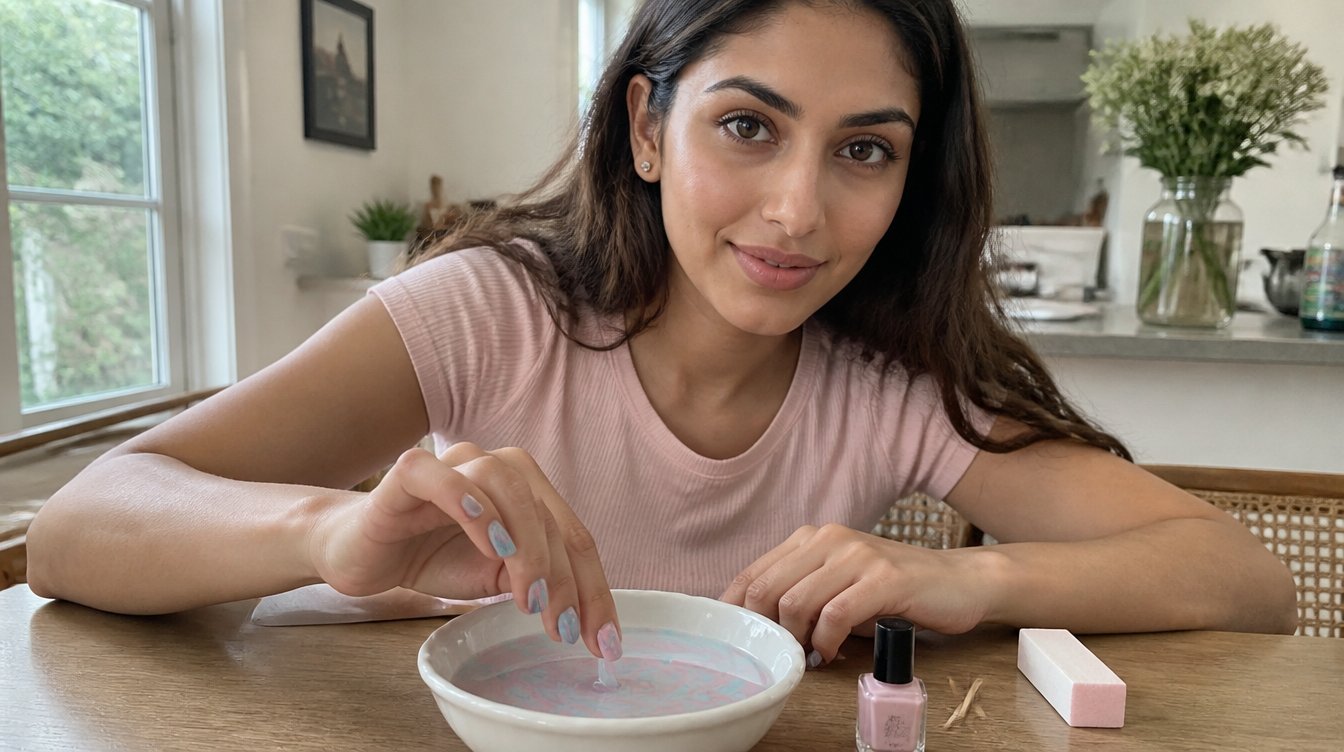
Align your nail above the section of the design you want to capture. The pattern is larger than your nail, so you can select the most appealing portion. Hold your finger at a low angle, nearly parallel to the water surface. Lower it slowly until the nail touches the polish pattern.
While your nail is submerged, use a toothpick to sweep the remaining polish film from the water surface around your finger. Move in a circle around the immersed finger to gather excess polish toward the cup wall. This prevents excess polish from adhering to the skin as you withdraw.
Lift your finger straight up and out of the water. Do not tilt or rotate as you withdraw. Rotating or tilting smears the just-transferred design. Hold the finger still for at least ten seconds while the water film evaporates and the design begins to set.
Cleaning Up the Edges
If you used liquid latex, peel it away while the polish is still slightly tacky. It lifts off in one strip, taking any excess polish with it. Peel at a low angle away from the nail. If you used tape, peel it slowly at a low angle to avoid lifting the design at the nail edge.
Use a cotton swab dipped in acetone to remove remaining polish from the skin. Work carefully at the nail border to avoid touching the design. An angled cotton swab or an orange stick wrapped in cotton provides more precision around the cuticle area than a standard rounded swab.
Allow the design to dry fully before touching anything. Even slight contact with a wet marble layer smears the pattern. Give it at least three to five minutes of air-dry time before applying the top coat.
Applying Top Coat for Longevity
The top coat is not optional. The water marble technique creates multiple thin polish layers that are fragile without a protective seal. Apply one thin coat of fast-drying top coat over the entire nail, including the tip. Cap the free edge by running the brush along the nail tip. This seals the edge and prevents peeling from the tip inward.
Apply a second thin coat after the first has dried for two minutes. Two thin coats provide more protection than one thick coat and are less likely to cause bubbling. A glossy top coat intensifies the depth and shimmer of the marble pattern. A matte topcoat creates a softer, more stone-like effect that works especially well with neutral and earth-tone colour palettes.
Reapply top coat every two to three days to extend wear. Water marble nail art on natural nails typically lasts five to seven days with consistent topcoat maintenance.
Troubleshooting Common Water Marble Problems
Polish Sinking or Not Spreading
This is the most common problem beginners face. It almost always traces to one of three causes: polish that is too thick, water that is too cold, or dropping polish from too far above the surface.
Thin the polish with two to three drops of nail polish thinner and retest. If it still sinks, the formula may simply not be water-marble compatible. Some polishes contain ingredients that prevent floating regardless of consistency. Set them aside and test a different brand or bottle.
Check your water temperature. In cooler climates or air-conditioned rooms, tap water is often below 18 degrees Celsius. Let the filled cup sit at room temperature for ten minutes before testing. Always hold the polish brush one centimetre from the surface so the drop falls gently onto the surface tension rather than breaking through it.
Smudged or Muddy Patterns
Muddy patterns occur when too many colours blend at the drag stage. This happens with colours that are too similar in tone, with too many rings layered, or when the tool moves too slowly and hesitates mid-stroke.
Reduce rings to four to six. Select colours with stronger contrast. Move the tool at a consistent, steady pace. Rinse the tool tip before each new stroke to prevent carrying colour from one section of the design into another. Smudged transfers result from entering the water at too steep an angle. The nail must enter nearly horizontally. A steep entry dips the tip first and peels the pattern rather than lifting it flat.
Lifting and Peeling After Application
Lifting at the edges within 24 hours almost always indicates inadequate preparation. Residual oils or moisture on the nail surface at the time of application cause early adhesion failure. Remove the lifting design completely, prep the nail again with remover, and reapply.
Peeling from the tip indicates the free edge was not capped with a top coat. Reapply the top coat immediately when tip peeling appears, extending slightly over the free edge to reseal it. Bubbling within the design means the base coat or an underlying layer was not fully dry before the marble transfer. Allow complete drying time between every layer. Rushing this step is the single most common cause of bubbled or lifting water marble designs.
Nail Health and Long-Term Care for Nail Art Enthusiasts
Keeping Nails Hydrated and Strong
Healthy nails are the best foundation for any nail art technique. Frequent polish application and removal dehydrate the nail plate and surrounding skin over time. This leads to brittleness, peeling, and breakage that makes applying and maintaining designs much harder.
Apply cuticle oil daily, even when wearing nail art. Cuticle oil typically contains jojoba oil, vitamin E, and almond oil. These ingredients penetrate the nail plate and surrounding skin to restore moisture and flexibility. Apply it to the base of each nail and massage it in. Flexible nails resist breakage far better than dry, rigid ones.
Adequate daily water intake supports nail cell production. Nails are composed of keratin, a structural protein, and their quality reflects both hydration and nutrition. Biotin, found in eggs, nuts, and leafy vegetables, supports keratin structure. Deficiencies in zinc and iron commonly cause ridging, white spots, and slowed nail growth.
Wear gloves for household tasks involving water, cleaning products, or chemicals. Prolonged soaking and detergent exposure strip natural oils from the nail and cuticle. This is especially important when wearing nail art, as repeated wetting accelerates lifting and shortens wear time.
Safe Removal Without Damage
Improper removal causes more nail damage than most application processes. Safe removal habits protect the nail plate across all product types.
For regular polish, including water marble designs, soak a cotton pad with acetone-based remover, hold it against the nail for 15 to 20 seconds, then wipe in one direction. Avoid scrubbing back and forth. Scrubbing strips away more surface keratin than a single clean wipe.
For gel polish removal, never peel or force the product off. File through the shiny top coat layer, apply acetone, wrap the nail in foil, and wait ten to fifteen minutes. Gel that has been properly soaked lifts cleanly. Forcing gel off the nail pulls the surface layer of the nail plate with it, causing thinning and long-term sensitivity.
For acrylic nails, soak in pure acetone for twenty to thirty minutes. The acrylic softens and can be gently pushed off with an orange stick. Never use a metal tool to force acrylics free. The nail underneath acrylic is often thinner than a natural nail and is highly vulnerable to damage at this stage.
For dip powder, file the surface coat lightly first, then soak in acetone for fifteen to twenty minutes. The product will dissolve or lift without requiring force. After removing any nail product, apply cuticle oil immediately and consider a break of two to four days before reapplying any polish. This rest period allows the nail plate to recover its natural moisture balance.
Common Nail Conditions to Watch For
Regular nail art enthusiasts should monitor their nails for early signs of stress or infection.
Onycholysis is the separation of the nail plate from the nail bed. It appears as a white or yellowish area spreading from the tip toward the cuticle. It can result from physical trauma, aggressive removal, or prolonged product wear. Remove all nail products and keep the nail trimmed short while it recovers. Consult a dermatologist if the separation spreads or does not improve within several weeks.
Paronychia is an infection of the skin surrounding the nail. Signs include redness, swelling, warmth, and tenderness along the cuticle or nail fold. It typically results from cutting or tearing the cuticle, which removes the protective barrier against bacteria. Mild cases respond to warm soaks and clean hygiene. Persistent or worsening infections require medical evaluation.
Contact dermatitis around the nails or fingertips can develop from sensitivity to nail polish ingredients, acrylic monomers, or removal solvents. Signs include itching, redness, and dry, flaking skin around the nail area. Identify and eliminate the sensitising product. Many nail polish brands now offer formulas free from common sensitisers, including formaldehyde, toluene, and dibutyl phthalate. Look for labels that specify three-free, five-free, or seven-free formulations.
Nail ridging can be vertical or horizontal. Vertical ridges are common with age and are generally benign. Horizontal ridges, sometimes called Beau’s lines, can follow illness, physical stress, or nutritional deficiency. They grow out over time but may warrant a review of iron, zinc, and protein intake if they appear frequently.
Frequently Asked Questions
Why does my nail polish keep sinking to the bottom of the cup?
Polish sinks for three main reasons: the formula is too thick, the water is too cold, or the drop falls from too far above the surface. Start by adding two to three drops of nail polish thinner to the bottle, mix gently, and retest on fresh water. Ensure your water is at room temperature, approximately 20 to 24 degrees Celsius, not straight from a cold tap. Hold the brush tip one centimetre above the water surface so the drop lands gently on the surface tension layer rather than breaking through it. If the polish still sinks after these corrections, the formula itself is likely incompatible with water marbling. Set it aside and try a different bottle or brand. Some older polishes and certain speciality finish formulas simply do not flow reliably regardless of adjustments.
Can I use gel polish for water marble nail art?
Gel polish does not work as the marbling medium. Gel formulas are far too viscous to spread on water and require UV or LED curing that cannot happen on a water surface. You can, however, apply a water marble design over a cured gel base. Cure your gel base coat without a topcoat, then use regular polish for the water marbling step on top. Finish with either a gel top coat cured under a lamp or a regular fast-drying top coat. This hybrid approach gives you the durability of a gel base combined with the visual effect of a water marble design. The marbling step itself always requires regular nail polish regardless of what sits underneath.
How do I stop the design from smudging when I lift my finger out of the water?
Smudging during withdrawal happens when the finger tilts, rotates, or moves sideways while coming out of the water. The solution is to lift the finger perfectly straight upward. Before withdrawing, use a toothpick to sweep the remaining polish film away from around your submerged finger, moving in a circle close to the nail to gather excess polish toward the cup wall. This prevents the film from wrapping around the nail and skin as you lift. After withdrawal, hold the finger motionless for ten seconds while the water film evaporates and the design settles slightly. Resist the urge to rotate the finger to inspect it immediately. Any rotation at this stage smears the design.
How long does water marble nail art last?
On natural nails, a properly applied and sealed water marble design typically lasts five to seven days. On acrylic or gel nail enhancements, the design may last slightly longer because the underlying surface is harder and less flexible. The two main causes of early failure are tip peeling, prevented by capping the free edge with top coat, and lifting at the cuticle, caused by inadequate preparation or undried base coat. Reapply a fresh thin layer of top coat every two to three days to maintain gloss and protect the design. Avoid prolonged water soaking, harsh household chemicals, and activities that place direct impact stress on the nail tips, such as opening cans or typing forcefully with the nail tips rather than the finger pads.
Is water marble nail art safe for nail health?
Water marble nail art is among the gentler nail art methods because it uses regular nail polish, which removes without prolonged acetone soaking or mechanical force. The main health risks do not come from the technique itself but from application and removal habits. Skipping a base coat allows pigment to stain the nail plate. Removing polish by scrubbing instead of soaking strips of surface keratin. Applying new polish immediately after removal without giving the nail a recovery period leads to progressive dehydration and thinning. Use a base coat on every application, remove gently with a soak-and-wipe method, apply cuticle oil daily, and take periodic breaks of several days between manicures. These habits keep the nail plate in good condition regardless of how often you use the water marble technique.
Conclusion
Water marble nail art rewards preparation, patience, and consistent practice. The core principles are straightforward: use regular nail polish at the right consistency, work with room-temperature water, protect the surrounding skin before dipping, and always seal the finished design with multiple thin coats of top coat. Almost every problem in this technique traces back to one of three variables: water temperature, polish consistency, or dipping angle. When something goes wrong, check those three factors before assuming the technique itself is the issue.
Begin with two colours and simple drag patterns in your first session. Add colours and complexity as your speed builds. Document designs that work by photographing them immediately after application, before any top coat is added, so you can replicate successful colour and drag combinations in future sessions. Pair every manicure session with consistent nail care: daily cuticle oil, gentle removal, and regular rest periods between applications. Healthy nails support better adhesion, longer wear, and cleaner designs at every stage. Master the fundamentals and maintain your nail health, and the results will follow.
RELATED ARTICLES:
Trendy Wedding Nails 2026: The Ultimate Guide to Fashionable Bridal Manicures
How to Care for Your Nails in Winter: Tips for Healthy, Beautiful Nails During the Cold Months
The Influence of Celebrity Nail Trends: Uncovering the Power of A-List Manicures
10 Nail Care Tips for Stronger, Longer, and Healthier Nails!
10 Ways to Make Your Nails Stronger & Healthier
About The Author

COMMENTS