Vegan nail care means removing the surprising number of animal-derived ingredients that hide in conventional polishes, top coats, and cuticle creams,
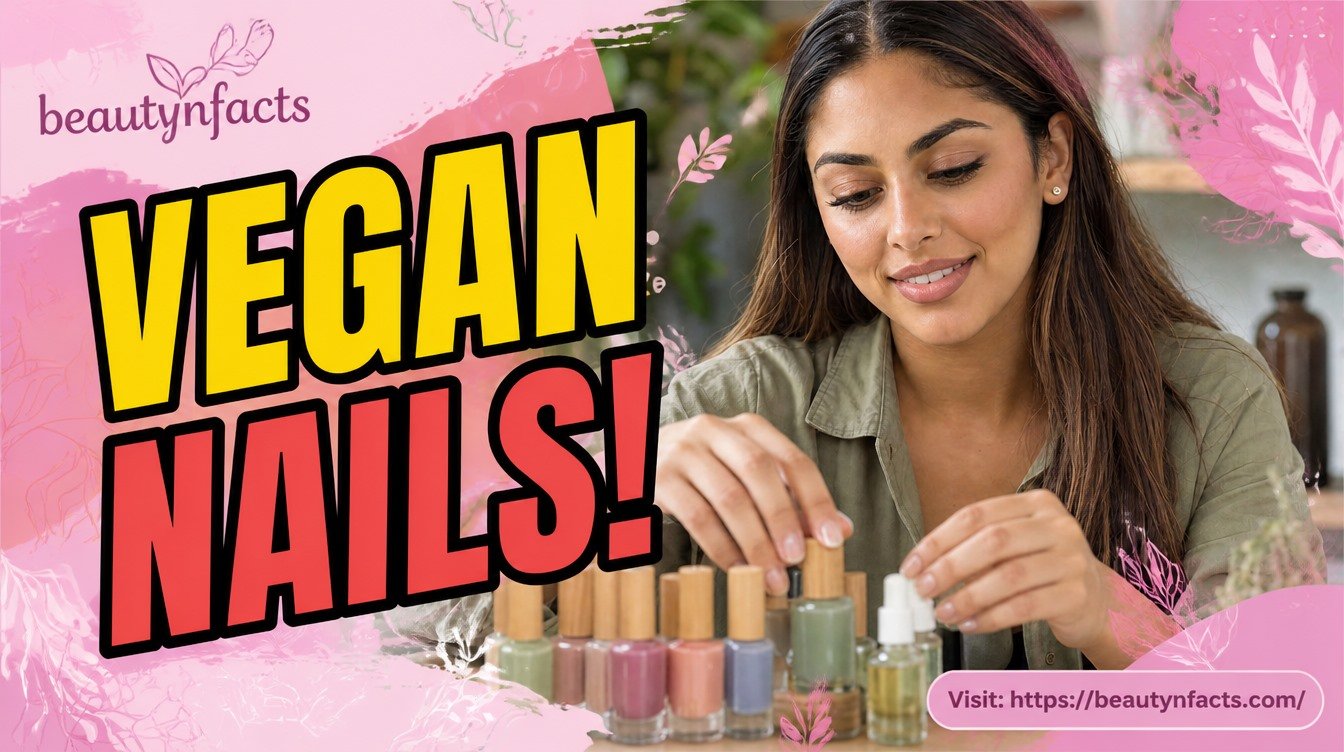
Vegan nail care means removing the surprising number of animal-derived ingredients that hide in conventional polishes, top coats, and cuticle creams, all without sacrificing wear time or shine. Carmine, guanine, beeswax, and casein still appear in mainstream formulas, but plant-based alternatives now match or beat them on performance. This guide covers the labels to look for, the brands that pass cruelty-free verification, and a complete routine that delivers salon-grade results on your fingertips.
Reviewed by the BeautynFacts editorial team. Last updated: May 2026.
Nail Care Vegans: Cruelty-Free Options
Your nail routine tells a story about your values. For millions of women who have chosen a plant-based lifestyle, that story must include every product they use, right down to their nail polish remover. Vegan nail care enthusiasts need more than just pretty colours on their fingertips. They need formulas free from animal-derived ingredients, products never tested on animals, and brands that align with a commitment to cruelty-free beauty. The challenge is real. Conventional nail products hide animal ingredients behind complex chemical names. Gel systems, acrylic powders, and even nail strengtheners can contain substances sourced from fish, insects, and animal fats. This guide cuts through the confusion. You will learn exactly which ingredients to avoid, how to identify genuinely vegan and cruelty-free products, and how to build a complete nail care routine that honours your ethics. You will also get practical guidance on safe application and removal for every nail product type, from everyday polish to gel and dip systems. Healthy, beautiful nails and a clear conscience are not mutually exclusive. This guide gives you both.
What Nail Care for Vegans Really Means
Defining Vegan and Cruelty-Free
These two terms are related but not identical. A product is vegan if it contains no animal-derived ingredients. A product is cruelty-free if neither the finished product nor its individual ingredients were tested on animals. A product can be cruelty-free without being vegan, and it can also be vegan without being cruelty-free. For vegan nail care, you need both.
Many brands claim cruelty-free status but still use ingredients like guanine, which comes from fish scales, or carmine, derived from crushed cochineal insects. Others avoid animal testing but rely on ingredient suppliers that conduct animal tests on their raw materials. True vegan and cruelty-free nail care requires scrutiny at every level of the supply chain.
Third-party certifications help. Look for the Leaping Bunny logo, issued by Cruelty Free International; the PETA Beauty Without Bunnies seal; or the Vegan Society Trademark. These certifications involve independent audits. They verify that no animal testing occurs at any stage, from ingredient sourcing through final product manufacturing.
Why the Distinction Matters for Nail Products Specifically
Nail products present unique challenges compared to skincare or haircare. The nail and beauty industry relies on a range of colourants, film-forming agents, and shimmer-producing compounds that have historically come from animal sources. The nail polish industry in particular used animal-derived pearlescent agents for decades before synthetic alternatives became widely available.
Nail salons rarely stock vegan products by default. The professional nail industry is dominated by a handful of large brands, many of which still use animal testing in markets like China, where animal testing was legally required for imported cosmetics until recently. If you frequent a salon, asking specific questions about product sourcing is essential.
Gel systems introduce additional complexity. Many gel top coats and base coats contain ingredients that may come from animal sources, depending on the manufacturer’s suppliers. The same applies to acrylic powders and dip powder systems. Each product type requires its own vetting process.
The Rise of Ethical Beauty
The vegan beauty market has grown dramatically over the past decade. According to industry research, analysts valued the global vegan cosmetics market at over $15 billion in 2023, and it continues to expand. Consumer demand has pushed major brands to reformulate products and pursue cruelty-free certification. Brands that once relied entirely on animal-derived ingredients have developed plant-based and synthetic alternatives that perform equally well and, in some cases, better.
This shift benefits everyone, not just vegans. Synthetic alternatives to animal-derived ingredients are often more consistent in quality, easier to source sustainably, and less subject to supply chain volatility. The growth of vegan nail care has directly improved the quality and variety of options available to all consumers.
Hidden Animal Ingredients in Nail Products
Common Animal-Derived Ingredients to Avoid
Knowing what to look for on an ingredient list is the first line of defence. Several animal-derived ingredients appear frequently in nail products, often under names that do not obviously signal their origin.
Guanine is one of the most common. It is a crystalline compound derived from fish scales, used to create the iridescent shimmer seen in many nail polishes and eyeshadows. It appears on labels as CI 75170 or simply as guanine. Synthetic alternatives, including mica and bismuth oxychloride, can replicate the same pearlescent effect without harming animals.
Carmine is a red pigment derived from crushed cochineal insects, specifically Dactylopius coccus. It takes roughly 70,000 insects to produce one pound of carmine. It appears on labels as carmine, CI 75470, crimson lake, natural red 4, or E120. Synthetic red dyes and plant-based colourants offer vegan replacements.
Oleic acid is a fatty acid that can come from animal fat, though it can also be derived from plant oils. When sourced from animal tallow, it is not vegan. It functions as a stabiliser and emollient in nail polish formulas and treatments. Without clarification from the manufacturer about its source, assume it may be animal-derived.
Keratin is a protein found in animal hooves, feathers, and horns. It appears in some nail strengthening treatments marketed to repair damaged or brittle nails. Plant-based and synthetic keratin alternatives exist and work effectively, but the label must specify the source.
Lanolin comes from sheep wool. It is an emollient used in some cuticle creams and nail treatments. Beeswax and shellac, derived from bees and lac insects, respectively, also appear in some nail care products, including certain nail polish formulas designed for a high-gloss finish.
How to Read Nail Product Labels
Reading labels requires patience and some knowledge of chemical nomenclature. Most consumers scan a product for recognisable claims like “vegan” or “cruelty-free” and then move on. However, any brand can make these claims regardless of formulation, and they are not always regulated.
Start by checking the ingredient list in full. The International Nomenclature of Cosmetic Ingredients (INCI) system governs how ingredients are listed on cosmetics globally. Familiarise yourself with the animal-derived ingredient names listed above and their alternative labels. Apps like Think Dirty, CosDNA, and PETA’s ingredient search tool can assist in identifying non-vegan ingredients quickly.
Contact brands directly when in doubt. A genuine cruelty-free and vegan brand will readily provide documentation confirming no animal testing and no animal-derived ingredients. You should approach brands that are evasive or provide vague answers with caution.
Certifications That Confirm Vegan Status
Third-party certifications remove much of the guesswork. The Leaping Bunny Program, managed by Cruelty Free International, is considered the gold standard for cruelty-free certification. It requires brands to commit to a no-animal-testing policy at every stage of product development and to conduct annual supplier audits.
PETA’s Beauty Without Bunnies programme maintains two separate lists: one for cruelty-free products and one for vegan products. A brand can appear on one list without appearing on the other. Look specifically for the “vegan” designation rather than just the bunny symbol.
The Vegan Society Trademark is one of the oldest and most stringent vegan certifications globally. It covers both the finished product and every ingredient used in its formulation. Brands carrying this trademark have been audited and confirmed to use no animal-derived ingredients and to conduct no animal testing.
Vegan Nail Polish: Types and What to Look For
Regular Vegan Nail Polish
Standard nail polish, also called traditional or regular polish, is a liquid formula applied with a brush that dries by solvent evaporation. It does not require a UV or LED lamp to cure. Regular polish is the easiest nail product type to source in vegan formulations because many brands have reformulated their lines in response to consumer demand.
When shopping for vegan regular polish, look for formulas marketed as “free from” harmful chemicals alongside vegan certification. The nail polish industry commonly calls these formulations “free” based on how many harmful chemicals it has removed. A 3-free formula excludes formaldehyde, toluene, and dibutyl phthalate (DBP). A 5-free formula additionally excludes formaldehyde, resin and camphor. Higher numbers, such as 7-free, 10-free, and beyond, indicate the removal of additional chemicals, including parabens, xylene, and ethyl tosylamide.
Brands with strong vegan and cruelty-free credentials in this category include Ella+Mila, ORLY (selected lines), Zoya, Tenoverten, Pacifica, and NCLA Beauty. Always verify current certification status directly with the brand, as formulations and certifications can change.
Gel Nail Polish Without Animal Ingredients
Gel polish is a long-wearing formula that cures under a UV or LED lamp to form a durable, chip-resistant finish. It typically lasts two to three weeks without significant wear. Gel systems consist of a base coat, colour coat, and top coat applied in layers with curing between each step.
Gel formulas present more sourcing challenges than regular polish because many professional-grade gel systems are manufactured by companies that sell primarily to salons and may not prioritise vegan certification. However, the at-home gel market has expanded significantly, and several brands now offer fully vegan and cruelty-free gel kits.
Check both the colour formula and the base and top coats separately. The colour may be vegan, but the top coat contains a non-vegan ingredient. Brands known for offering vegan gel options include Orly Gel FX (select shades); Sally Hansen Miracle Gel (verify current formulations); and newer indie brands like Manucurist, which specialises in plant-based gel polish with verifiable cruelty-free sourcing.
Dip Powder and Acrylic: Vegan Options Explained
Dip powder systems involve applying a bonding base coat, dipping the nail into coloured acrylic powder, and sealing with an activator and top coat. They provide durability comparable to gel without UV curing. Acrylic systems use a liquid monomer and acrylic powder that harden through a chemical reaction, building nail extensions or overlays.
Both dip powder and acrylic products can contain non-vegan colourants, particularly animal-derived pigments and pearlescent agents. The powders themselves often incorporate talc, which is generally vegan but may be processed using equipment shared with non-vegan products in some facilities.
Finding certified vegan dip powder brands requires more research. SNS Nails and Kiara Sky are commonly cited in vegan nail communities as cruelty-free, but neither carries a Leaping Bunny or Vegan Society certification as of this writing. Contact the brand directly and request documentation confirming no animal-derived ingredients in both the powder and the accompanying base and top coat liquids.
For acrylic systems, brands that still sell into markets requiring animal testing largely dominate professional-grade products. At-home acrylic kits from smaller brands are a safer bet, but you still need to verify the ingredients.
Safe Application Practices for Vegan Nail Care
Prepping Your Nails the Vegan Way
Proper nail prep is the foundation of any long-lasting nail application. It also protects nail health over time. Begin with clean, dry nails. Remove any existing polish completely using a vegan, acetone-free or low-acetone remover. Acetone-based removers are generally vegan, as acetone is synthetically produced, but check the full ingredient list of the remover product to confirm no animal-derived additives.
Shape your nails with a glass or crystal nail file. These are gentler on the nail edge than metal files, which can cause microtears that lead to peeling. Glass files are fully vegan and significantly more durable than cardboard emery boards. They can be washed and reused indefinitely.
Push back cuticles gently with a wooden or silicone cuticle pusher rather than cutting them. Cutting cuticles removes the protective seal at the base of the nail, which can introduce bacteria and increase the risk of infection. Apply a vegan cuticle oil formulated with plant-based oils such as jojoba, argan, or sweet almond oil. Massage it into the cuticle and surrounding skin to soften and condition before any application.
Buff the nail surface lightly to remove any shine, which helps polish adhere. Wipe the nail with a lint-free pad dampened with a vegan nail cleanser or isopropyl alcohol to remove any remaining oils. Oils on the nail surface are the primary cause of premature lifting and chipping.
Applying Gel Polish at Home Safely
Home gel application has become more accessible with the availability of consumer-grade LED lamps and gel kits. Follow application steps carefully to ensure an even cure and maximum wear.
Apply a thin, even layer of vegan base coat. Cap the free edge of the nail by running the brush along the tip. Cure under your LED lamp for the time specified by the manufacturer, typically 30 to 60 seconds. Apply the first coat of colour in a thin layer, cap the free edge, and cure it. Repeat with a second coat of colour. Finish with a top coat, cap the edge, and cure fully.
Thin coats are essential with gel. Thick applications do not cure evenly, which leads to a soft, uncured layer beneath the surface that causes lifting and premature wear. Keep each coat thin enough to see through.
Avoid getting gel on your skin or cuticles. Gels that cure on the skin can cause contact sensitisation over time, a condition in which repeated exposure leads to an allergic reaction. Use a small brush dipped in vegan nail cleanser to clean up any product on the skin before curing.
Acrylic and Dip Powder Application Tips
Acrylic application involves a liquid monomer and a polymer powder mixed to form a workable bead. Work in a well-ventilated space. Acrylic monomer fumes are irritating to the respiratory system and mucous membranes. Open windows, use a small fan to direct fumes away from your face, or wear a properly rated respirator mask.
Pick up a small bead of acrylic using your brush and place it at the stress zone of the nail, roughly one-third of the way from the cuticle. Work quickly and smoothly before the product sets. Pat and shape the bead into the desired form. Work toward the free edge, then back toward the cuticle. File and buff once fully cured to achieve a smooth finish.
For dip powder, apply the bonding base coat to one nail at a time and dip immediately at a 45-degree angle. Tap off excess powder and allow it to dry briefly before applying the activator. Build layers as desired before sealing with a vegan top coat. Clean up excess powder around the cuticle area with a stiff brush rather than cutting away product, which can damage the natural nail beneath.
Safe Removal Without Compromising Nail Health
Removing Regular Vegan Polish
Removing regular nail polish is straightforward but still requires consideration for nail health. Acetone is the most effective solvent for polish removal and is vegan in its pure form, as it is synthetically derived. However, acetone is drying. It strips natural oils from the nail plate and surrounding skin.
Choose an acetone-based remover that includes conditioning agents such as vitamin E, aloe vera, or plant-based oils to offset the drying effect. Soy-based removers, such as those from Ella+Mila, use ethyl acetate derived from plants as the primary solvent. They work more slowly than acetone but cause less drying.
Saturate a cotton pad with remover and hold it against the nail for a few seconds before wiping. Avoid rubbing aggressively, which damages the nail surface and surrounding skin. Follow removal with a vegan cuticle oil or hand cream to restore moisture.
Gel Removal: The Safe Soak-Off Method
Gel polish bonds to the nail and cannot be wiped off. It must be soaked in acetone until the formula softens and can be gently pushed away. Improper gel removal is one of the most common causes of nail damage, including thinning, peeling, and breakage.
File the top coat surface lightly with a 180-grit file to break the seal. This allows acetone to penetrate the gel layers. Do not file down into the natural nail bed. Soak cotton pads in pure acetone, place one pad on each nail, and wrap each finger in a small square of aluminium foil. Leave the wraps in place for 10 to 15 minutes.
Remove one wrap and test whether the gel has softened. It should look whitish and begin to lift at the edges. Use a vegan wooden cuticle pusher to gently push the softened gel toward the free edge. Never scrape or force it. If the gel resists, re-wrap the nail and soak for an additional five minutes.
Once all gel is removed, buff away any residue gently with a fine buffer. Apply vegan cuticle oil generously and follow with a nourishing hand cream. Give nails at least a few days to recover before reapplying gel, especially if your nails feel thin or sensitive.
Removing Acrylics and Dip Powder Safely
Acrylic removal also requires acetone soaking. File away as much of the acrylic product as possible with a coarse file before soaking to reduce the time nails spend in contact with acetone. Use the same foil-wrap method described for gel, but plan for a longer soaking time, typically 20 to 30 minutes for full acrylic extensions.
For dip powder, the process is similar. File the top seal coat first, then soak in foil wraps with acetone-saturated cotton pads. Dip powder generally softens faster than acrylic, often within 10 to 15 minutes. Gently push away the softened product with a wooden pusher.
After acrylic or dip removal, nails will feel thinner and may appear dull. This phenomenon is normal. The natural nail is intact beneath the product but has been depleted of moisture. Apply a vegan nail strengthener formulated with plant-based proteins or biotin, followed by cuticle oil and hand cream. Avoid harsh chemicals and keep nails shorter while they recover. With consistent care, nail strength typically returns within four to eight weeks.
Nail Care for Vegans: Building a Complete Routine
Daily Nail Hydration and Cuticle Care
Hydration is the single most important factor in nail health. The nail plate contains water, and fluctuations in hydration directly affect its flexibility and strength. Nails that are repeatedly dried out and rehydrated are more prone to breakage and peeling.
Apply vegan cuticle oil at least once daily, ideally twice. Morning and night applications keep the cuticle and surrounding skin supple and reduce the risk of hangnails. Look for oils containing jojoba, argan, rosehip, or sweet almond oil as primary ingredients. These plant-based oils absorb readily and provide sustained moisture without feeling greasy.
Wear gloves when washing dishes or cleaning with chemical products. Hot water and detergents strip natural oils from both the skin and nails. Even short exposures repeated multiple times per day accumulate significant drying damage. Cotton-lined rubber gloves offer protection without chemical exposure from the glove material itself.
Apply a vegan hand cream after every hand wash. Choose a cream containing shea butter, glycerin, or plant-based ceramides to reinforce the skin barrier around the nail. A strong, intact skin barrier prevents moisture loss from the nail plate and surrounding tissue.
Strengthening Weak or Brittle Nails
Weak or brittle nails respond well to targeted treatment. The cause of weakness matters. Soft, peeling nails often result from overhydration or excessive moisture exposure. Hard, brittle nails that snap cleanly are more commonly caused by dehydration or nutrient deficiency. Both benefit from vegan treatment, but the approach differs slightly.
For soft, peeling nails, reduce moisture exposure with gloves and use a nail hardener containing plant-based proteins or cellulose. These form a protective film over the nail surface that reduces water absorption and improves structural integrity. Avoid formaldehyde-containing nail hardeners, which are common in conventional products but are a contact allergen and potential carcinogen.
For hard, brittle nails, prioritise deep hydration with cuticle oil and a nail serum applied directly to the nail plate. Look for formulas containing hyaluronic acid, vitamin E, or biotin. Biotin supplementation has shown modest evidence for improving nail thickness and reducing brittleness in individuals with confirmed biotin deficiency. Choose a vegan biotin supplement derived from fermentation rather than animal sources.
A diet rich in plant-based sources of biotin, such as nuts, seeds, legumes, and sweet potatoes, supports nail health from within. Iron deficiency is another common cause of brittle nails, particularly in women. A plant-based diet requires attention to iron intake and absorption. Consume iron-rich foods alongside vitamin C sources to enhance absorption, and consider having ferritin levels checked if nail weakness persists despite topical care.
Vegan Nail Treatments Worth Using
Beyond cuticle oil and strengtheners, several vegan nail treatments address specific concerns effectively.
A vegan base coat applied before colour polish serves multiple functions. It fills ridges for a smoother appearance, creates a barrier between colour pigments and the natural nail to prevent staining, and improves polish adhesion. Look for base coats labelled ‘ridge-filling’ or ‘nail-strengthening’ and with vegan certification.
Nail serums formulated with plant-based peptides and oils penetrate the nail plate and surrounding skin more effectively than standard oils or creams. Apply them at night when the skin is in repair mode and absorbs active ingredients most efficiently.
Hydrating nail masks are a newer category in vegan nail care. These gel or cream formulas are applied to nails and cuticles, left on for a set period, and then removed or massaged in. They provide an intensive hydration boost useful after gel or acrylic removal, during winter when nails suffer from cold and dry indoor air, or any time nails feel particularly depleted.
Nail Health: Common Conditions and Vegan Solutions
Brittle and Peeling Nails
Onychoschizia, the technical term for nail peeling and splitting, is one of the most common nail complaints. It occurs when the nail layers separate at the free edge, creating a flaky or laminated appearance. Over-exposure to water and detergents is the leading cause. Frequent application and removal of nail polish without adequate recovery time also contributes.
Treat peeling nails by drastically reducing moisture exposure, applying cuticle oil multiple times daily, and keeping nails short to reduce mechanical stress on the free edge. A vegan nail hardener used as a base coat can temporarily bind the layers together while the nail grows out.
Avoid picking or peeling at the separating layers. Pulling apart peeling layers removes layers of the nail plate that cannot be replaced until new growth occurs. Trim peeling edges carefully with sharp nail scissors instead.
Dry Cuticles and Hangnails
Dry cuticles crack, become inflamed, and produce hangnails, which are strips of dry skin that lift away from the cuticle edge. Hangnails are painful and can lead to infection if torn rather than properly trimmed.
Prevent dry cuticles with daily cuticle oil application and consistent hand moisturising. If cuticles are already dry and cracked, apply a thick vegan shea butter or coconut-based cream at night and cover hands with cotton gloves to enhance absorption while you sleep.
When a hangnail appears, trim it cleanly at its base with sanitised nail scissors or cuticle nippers. Never pull or tear a hangnail. Tearing pulls live skin tissue along with the dead skin, creating an open wound. Clean the area with a gentle, vegan antiseptic after trimming.
Nail Fungus and Discoloration
Nail fungus, or onychomycosis, presents as yellowing, thickening, or crumbling of the nails. It is caused by dermatophytes, yeasts, or moulds that infect the nail bed. Risk factors include frequent nail salon visits where equipment is not properly sanitised, prolonged use of nail enhancements that trap moisture, and reduced immune function.
Vegan approaches to mild nail fungus include tea tree oil, which has demonstrated antifungal activity in several studies. Apply undiluted tea tree oil to the affected nail twice daily using a cotton swab. Results take time. You typically need several weeks of consistent application before improvement becomes visible.
Oregano oil, neem oil, and lavender oil also have documented antifungal properties. These can be combined in a carrier oil such as jojoba and applied to affected nails. Persistent or severe fungal infections require medical evaluation. Oral antifungal medications are often necessary for complete resolution of onychomycosis and are compatible with vegan diets.
Nail discolouration unrelated to fungus often results from staining by dark nail polish pigments. A vegan base coat applied before every dark polish application prevents staining effectively. If staining has already occurred, gently buffing the nail surface removes superficial discolouration. Soaking nails in lemon juice diluted with water for five to ten minutes and then gently brushing them with a soft toothbrush can reduce mild staining naturally.
Top Vegan Nail Care Brands to Know
Best Vegan Regular Polish Brands
The vegan regular polish market is well-developed, with strong options across all price points.
Ella+Mila is fully vegan, cruelty-free, and 17-free. Their formula excludes a wide range of potentially harmful chemicals. They offer hundreds of shades, and their soy nail polish remover is a standout product in its own right.
Zoya is one of the longest-standing vegan nail polish brands. They have been formaldehyde-free, toluene-free, and DBP-free since their founding. They hold cruelty-free status with PETA. Their range spans from nudes and neutrals to vibrant colours and glitters, with no animal-derived colourants.
Tenoverten is a clean nail polish brand born from a New York nail salon. Their formulas are 8-free, vegan, and cruelty-free. The brand emphasises minimal ingredient lists and clean aesthetics.
NCLA Beauty offers a wide range of vegan and cruelty-free polishes alongside nail soaks, cuticle oils, and hand creams. Their full nail care line is formulated without animal-derived ingredients and without animal testing.
Best Vegan Gel and Dip Brands
Manucurist is a French brand that has become a leader in plant-based gel nail polish. Their Green Flash gel line uses plant-based ingredients, including wheat proteins, and provides wear comparable to conventional gel systems. Leaping Bunny certifies them as cruelty-free and vegan.
Olive & June is a US-based nail brand offering a full system, including gel top coats and base coats formulated without animal-derived ingredients. They are certified cruelty-free, and their gel collection has expanded significantly recently.
For dip powder, the vegan-certified market remains limited. Recherche Beaute offers a dip system that they claim is vegan and cruelty-free, though independent verification through a major certification body is advisable before purchasing. Research indie brands in vegan beauty communities where members frequently verify and share formulation information directly from manufacturers.
Vegan Nail Tools and Accessories
Tools matter as much as products. Glass nail files, available from brands like Mont Bleu and Bona Fide Beauty, are fully vegan, long-lasting, and gentler on the nail edge than conventional emery boards. They seal the keratin layers at the nail tip rather than tearing them, which significantly reduces peeling.
Wooden cuticle pushers and orange sticks are vegan alternatives to metal pushers. They are gentler on the cuticle and nail fold. Silicone cuticle pushers are also fully vegan and can be sanitised easily between uses.
Vegan nail clippers are constructed from stainless steel with no animal-derived materials in their handles or blades. The primary consideration here is tool quality rather than vegan status, as metal tools contain no animal ingredients by nature. Prioritise sharp, well-constructed clippers that make clean cuts without crushing the nail edge.
UV and LED lamps for gel application are fully vegan in construction. LED lamps cure most modern gel formulas faster than UV lamps and emit a narrower spectrum of light. Both types are safe for home use when used according to manufacturer instructions. Apply a broad-spectrum SPF to your hands before using a UV lamp if you plan multiple lengthy curing sessions, as UV exposure does accumulate over time.
Frequently Asked Questions
Is vegan acetone nail polish remover?
Yes, pure acetone is vegan. It is a synthetic compound produced through industrial chemical processes without any animal involvement. However, many branded nail polish removers add conditioners or fragrances that may include animal-derived ingredients such as lanolin or beeswax. Always check the full ingredient list of any remover product, not just the solvent it uses. Plant-based removers using soy or ethyl acetate are also vegan when their full ingredient lists are verified.
Can I get vegan nail services at a salon?
It is possible but requires research and direct communication with the salon. Most nail salons use professional-grade products from large manufacturers, many of which are not certified vegan or cruelty-free. Some salons, particularly those focusing on clean or organic beauty services, stock vegan-certified products and can confirm their status when asked. Call ahead, ask specifically which brands they use, and verify the vegan status of those brands before your appointment. Bringing your own verified vegan polish is always an option at most salons.
Are gel nails worse for nail health than regular polish?
Gel nails themselves do not inherently damage nails more than regular polish when applied and removed correctly. The damage associated with gel comes almost entirely from improper removal, specifically peeling or scraping the gel off rather than soaking it off with the foil-wrap method. Repeated improper removal causes significant thinning and peeling of the nail plate. With proper removal technique and adequate recovery time between applications, gel nails can be part of a healthy nail routine. Giving nails one to two weeks of recovery between gel applications allows the nail to rehydrate and strengthen.
What vitamins support nail health on a vegan diet?
Biotin, also called vitamin B7, is the most frequently cited nutrient for nail health. It supports the production of keratin, the structural protein of the nail. Vegan sources of biotin include almonds, sunflower seeds, sweet potatoes, and nutritional yeast. Iron supports nail strength and structure. Iron deficiency commonly presents as spoon-shaped nails, called koilonychia. Plant-based iron sources include lentils, spinach, pumpkin seeds, and fortified cereals. Consume them alongside vitamin C-rich foods to maximise absorption. Zinc supports nail growth and repair. Vegan sources include legumes, hemp seeds, and whole grains. Vitamin D, frequently low in vegan diets depending on sun exposure and supplementation, also affects nail integrity. Consider a blood panel to identify any deficiencies driving persistent nail problems.
How do I know if a nail brand is truly cruelty-free and not just claiming to be?
The most reliable method is to check for certification from an independent third-party organisation. Leaping Bunny certification from Cruelty Free International and the PETA Beauty Without Bunnies vegan list both require ongoing commitments and some level of supplier auditing. The Vegan Society trademark requires detailed ingredient documentation from certified brands. Beyond certification, check whether the brand sells in mainland China, as China requires animal testing for most imported cosmetics, and a brand that sells there cannot be genuinely cruelty-free unless its products qualify for specific exemptions. Contact the brand directly and ask for their animal testing policy in writing, including their policy regarding ingredient suppliers. Reputable cruelty-free brands respond clearly and promptly to these questions.
Conclusion
Building a vegan nail care routine takes initial effort, but it becomes second nature quickly. Start with your most-used products: your base polish, remover, and cuticle oil. Please replace these with verified vegan and cruelty-free options first. Then expand to gel systems, treatments, and tools as you use them up.
Know the animal-derived ingredients to avoid, primarily guanine, carmine, keratin, oleic acid from animal sources, lanolin, and shellac. Use third-party certifications as your primary guide when assessing brand claims. Apply and remove nail products safely to protect your natural nails, regardless of which product type you use.
Prioritise daily hydration with plant-based cuticle oils and hand creams. Support nail health from within through a nutrient-complete vegan diet and targeted supplementation where needed. Address common nail conditions such as brittleness, peeling, and fungal issues with evidence-backed vegan remedies before reaching for conventional alternatives.
The vegan nail care market continues to improve in both quality and variety. You no longer need to compromise performance for ethics. Your nails can be strong, healthy, beautifully coloured, and completely cruelty-free. Every product choice you make reinforces a market that is moving in the right direction.
RELATED ARTICLES:
Trendy Wedding Nails 2026: The Ultimate Guide to Fashionable Bridal Manicures
How to Care for Your Nails in Winter: Tips for Healthy, Beautiful Nails During the Cold Months
The Influence of Celebrity Nail Trends: Uncovering the Power of A-List Manicures
10 Nail Care Tips for Stronger, Longer, and Healthier Nails!
10 Ways to Make Your Nails Stronger & Healthier
About The Author

COMMENTS