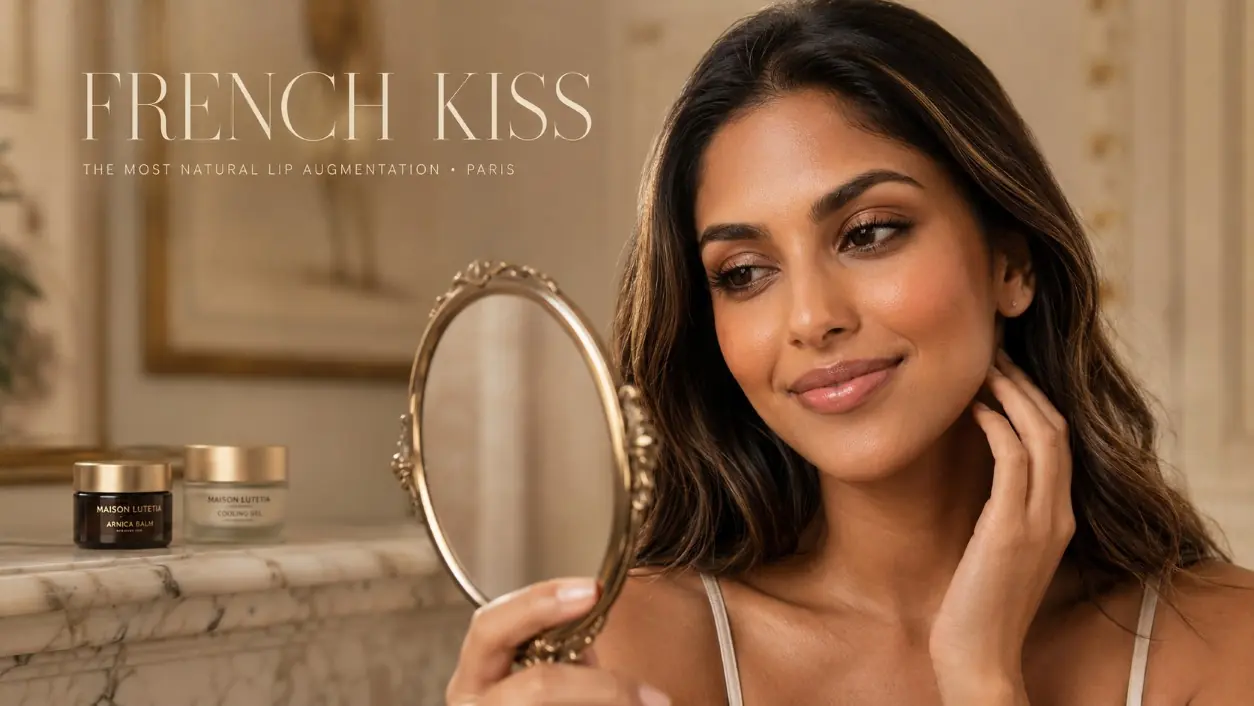
French kiss lip augmentation is a bespoke injection technique born in Paris, designed for subtlety rather than dramatic Instagram volume. After testin
French kiss lip augmentation is a bespoke injection technique born in Paris, designed for subtlety rather than dramatic Instagram volume. After testing it at Maison Lutetia, I recognised myself in the mirror, only softer and more rested. This honest account covers how the method works, insights from aesthetic doctor Dr Sarah Fadli, and how it differs from louder lip filler trends. If you are curious about natural hyaluronic acid results, read on.
There is a particular kind of magic that happens when you glance in the mirror and recognise yourself, only softer, more rested, and somehow more alive. That is precisely the sensation I experienced after testing the French Kiss lip augmentation, a bespoke injection technique born in the heart of Paris. As a thirty-year-old woman who has always gravitated towards minimalist beauty and, until now, has kept a respectful distance from aesthetic medicine, I surprised myself by booking a consultation at Maison Lutetia. The promise did not mean fuller lips in the Instagram sense of the word. The promise was subtlety, restoration, and the kind of refined enhancement the French have been quietly perfecting for decades.
What follows is an honest, detailed, and science-informed account of my experience, complete with insights from Dr Sarah Fadli, the aesthetic doctor behind the technique, and a comprehensive breakdown of how this method differs from the louder, more dramatic lip trends circulating online. Whether you are lip filler curious, researching hyaluronic acid injections for the first time, or simply fascinated by how Parisian doctors approach facial harmony, this deep dive will walk you through every consideration, from anatomy and products to aftercare and longevity. My goal is simple: to give you the most thorough, trustworthy, and genuinely useful guide to understanding the French kiss before you even think about scheduling a consultation yourself.
Why I finally considered lip augmentation at thirty
For most of my twenties, my lips never crossed my mind. They were fine. They were symmetrical enough, pink enough, and cooperative enough to wear a bold red on a Friday night without needing a liner. Then, slowly, almost imperceptibly, things began to shift. The upper lip seemed to thin out. The corners curled downward when my face was at rest, giving me what friends jokingly called my concentration frown. My cupid’s bow, once gently defined, appeared flatter in photographs. I started reaching for glosses more often, hoping the optical trick of shine would restore what I felt I was losing.
What I did not know at the time is that these changes are entirely normal and well-documented in dermatological literature. From our mid-twenties onwards, the body gradually produces less hyaluronic acid, a naturally occurring molecule that keeps our skin and lips plump, hydrated, and elastic. Collagen production also slows, and the fat pads in the face begin to migrate and redistribute. The orbicularis oris, the muscle that encircles the mouth, works thousands of times a day through speaking, eating, and expressing, and this repetitive movement gradually creates fine vertical lines and a softening of the lip border.
Understanding this anatomy matters, because it changes the conversation around lip enhancement. I was not chasing trendy volume. I was hoping to gently restore what time had quietly edited away. That distinction, between augmentation and restoration, is precisely where the French Kiss philosophy lives.
The BeautynFacts editorial team reviewed this article. Last updated: May 2026.
The place: Maison Lutetia and the French philosophy of aesthetic medicine
Tucked into the refined 17th arrondissement of Paris, Maison Lutetia feels less like a clinic and more like a private atelier dedicated to the art of subtle beauty. The interiors lean towards warm neutrals, vintage art, and soft lighting, a deliberate departure from the clinical coldness typically associated with aesthetic medicine. Celebrities, public figures, and discerning Parisiennes frequent the address precisely because the team there has built a reputation for treatments that enhance without announcing themselves.
Dr Sarah Fadli, the aesthetic doctor who guided my consultation, embodies this philosophy. She speaks about faces the way a sculptor might speak about marble, with reverence for the material she is working with. The French school of aesthetic medicine favours the idea that less is more, a cultural sensibility that prizes naturalness over spectacle. Where certain trends have normalised overfilled, pillowy, duck-like lips across social media, the French approach treats this aesthetic as the antithesis of elegance.
“Maison Lutetia is the temple of soft, non-invasive aesthetic medicine for French-style results,” Dr Fadli explained during our consultation. We seek natural results, avoiding the ostentatious injections seen on social networks, where all faces end up looking alike. The goal of our aesthetic medicine is to preserve and enhance the charm of each patient over time. The lips must be treated with expertise and gentleness in order to support and slow down the process of skin ageing.”
Why the French approach resonates globally
The French kiss technique has drawn international attention not because it creates the biggest lips but because it creates the most believable ones. In a cultural moment where audiences have become increasingly adept at spotting overdone work, the craving for discretion has grown. Women flying in from London, New York, Dubai, and Milan are seeking treatments that soften the visual cues of ageing without erasing the personality that makes a face distinctive. The French Kiss slots perfectly into that desire.
What exactly is the French kiss technique?
The French Kiss is not a single product or a single injection point. It is a layered, highly customised approach that treats the lips as a three-dimensional structure rather than a flat canvas for inflation. The method was developed exclusively at Maison Lutetia and is protected as a signature of the clinic. It uses multiple grades of hyaluronic acid, sometimes within the same session, to address hydration, border definition, shape, and volume independently.
During the procedure, Dr Fadli uses a flexible microcannula introduced through a single discreet entry point at the side of each lip. Unlike a needle, which punctures tissue repeatedly in a straight line, a cannula is blunt-tipped and glides through the natural planes of the lip, depositing product with precision while minimising trauma. This is one of the reasons the technique rarely produces bruising and almost always avoids the classic post-filler look of visible nodules or swelling clusters.
“A different product crosslinking can be used depending on the desired rendering,” Dr Fadli explained. “It is possible to moisturise and line the lip with a malleable fluid hyaluronic acid. For more volume, a denser hyaluronic acid helps project the mouth slightly and bring softness to the features. It is thanks to the three-dimensional property that the difference between hyaluronic acids is made.”
The three dimensions of a beautiful lip
Dr Fadli described how she mentally maps each lip before injecting. First, there is the horizontal dimension, the width of the mouth and the outline of the vermillion border. Second, the vertical dimension is the height from the base of the nose to the top of the upper lip and from the lower lip to the chin, which governs proportion. Third, there is projection: how far the lips advance from the plane of the face in profile. Each of these requires different densities of hyaluronic acid and different injection depths. A lip that simply receives volume without considering all three dimensions will inevitably look inflated rather than refined.
Why cannulas matter more than most people realise
The decision to use a cannula rather than a needle is not a stylistic flourish. It has real clinical consequences. Studies published in aesthetic medicine journals have repeatedly shown that cannula-based injections reduce the risk of vascular compromise, the rare but serious complication in which filler accidentally enters a blood vessel. Cannulas also reduce bruising, swelling, and post-treatment downtime significantly. For a working professional who cannot afford to spend a week hiding behind sunglasses, the result is transformative.
The consultation: why this step is non-negotiable
Before a drop of hyaluronic acid entered my lips, Dr Fadli spent nearly forty minutes examining my face, asking about my medical history, listening to my aesthetic concerns, and photographing me from multiple angles. She asked me to smile, to pucker, to speak naturally, and to relax completely because lips behave differently in each of these states, and a skilled injector must consider all of them.
She reviewed my lifestyle, including how much water I drink, my sleep patterns, whether I smoke, my sun exposure habits, and my skincare routine. She asked about medications, supplements, and recent dental work. She checked for any history of cold sores because hyaluronic acid injections can occasionally reactivate the herpes simplex virus in those who carry it, and a prophylactic antiviral is typically prescribed in such cases.
We also discussed my motivation openly. She asked me to describe, in my words, what I hoped to feel when I looked in the mirror afterwards. My answer was simple: I wanted to look like I had slept ten hours and drunk three litres of water. She smiled. That, she said, was the right answer.
Red flags during a consultation
Throughout my research, I have learned that a rushed consultation is one of the most reliable indicators of a poor outcome. Any practitioner who does not thoroughly examine your anatomy, ask about your full medical history, or take the time to understand your goals is not practising to the standard that this kind of procedure requires. Similarly, any clinic that promises a specific volume of product prioritises commerce over care, regardless of your individual needs. The French Kiss philosophy rejects this approach entirely.
The science of hyaluronic acid and why it works
Hyaluronic acid, often shortened to HA, is a glycosaminoglycan molecule naturally present throughout the human body. It is particularly abundant in the skin, joints, and connective tissues, where it binds water and maintains volume and elasticity. A single gramme of hyaluronic acid can hold up to six litres of water, which is why it has become the gold standard in both topical skincare and injectable aesthetics.
In injectable form, hyaluronic acid is made in a laboratory using bacterial fermentation and then cross-linked, which is a chemical process that binds the molecules together in different densities. A lightly cross-linked HA is thin, fluid, and hydrating, which is ideal for delicate hydration of the lip body and surface tissues. A heavily cross-linked HA is thick and structured, making it suitable for creating definition along the vermillion border or for adding projection at the centre of the lower lip.
The body gradually breaks down hyaluronic acid filler through a natural enzymatic process involving hyaluronidase, the enzyme that dissolves HA. This is why results are temporary, typically lasting between six and twelve months depending on the product, the area injected, and individual metabolism. It is also why, in the very rare case of a patient being unhappy with the result, hyaluronic acid is uniquely reversible. A dermatologist can inject hyaluronidase, and the filler will dissolve within hours.
Choosing the right product for the right zone
The brands typically used in French aesthetic clinics, such as Juvederm Volbella, Restylane Kysse, Teosyal Kiss, and Belotero Balance, each have specific rheological properties. Some are designed to integrate softly into thin tissue. Others provide structural support. Dr Fadli selected a fluid, low-density product for the body of my lip and a slightly firmer product to gently redefine my Cupid’s bow. This layered approach is a hallmark of the French kiss and is essentially impossible to replicate with a single-syringe treatment.
What the procedure actually feels like
The moment I had been quietly dreading arrived, and it turned out to be far less eventful than I had imagined. A generous layer of topical anaesthetic cream was applied to my lips and surrounding skin, and I was asked to relax for about twenty minutes while it took full effect. Most modern hyaluronic acid fillers also contain lidocaine within the product itself, providing additional numbness the moment the first small amount is deposited.
Dr Fadli made two tiny entry points, one at each corner of my mouth, using a fine needle. These were the gateways for the cannula. I felt brief pressure, similar to someone pressing a cotton bud against my skin. Then she threaded the cannula gently through the tissue, depositing micro-droplets of product along the way. The sensation was strange but not painful, more a feeling of light movement inside my lip than anything resembling an injection. Throughout the session, she paused to massage the lips gently, ensuring the product was distributed evenly and checking the shape in a handheld mirror with me.
The entire process lasted around twenty-five minutes. When she had finished, I looked in the mirror and, to my genuine surprise, I still looked like myself. I looked like a slightly better-rested, better-hydrated version of myself, but unmistakably still me. My lips were a touch pink from the cold compress she applied afterwards, but there was no swelling, no bruising, and no visible trace of the cannula entry points.
Managing discomfort and anxiety during the appointment
For anyone who, like me, tends to hold tension in their shoulders during medical procedures, it helps to know a few practical strategies. Arrive well-hydrated and having eaten a full meal, because low blood sugar can make you lightheaded. Avoid caffeine that morning, as it amplifies any jittery sensations. Breathe slowly through your nose. If you are prone to anxiety, ask the clinic about pre-procedure calming options. Maison Lutetia plays gentle music and keeps the lighting soft, both of which make a surprising difference to my comfort.
Immediate aftercare and the first seventy-two hours
The hours after the French kiss are unexpectedly uneventful, which is exactly what I want. Dr Fadli sent me home with a small arnica balm, a cooling gel, and a clear aftercare protocol. For the first twenty-four hours, I avoided hot drinks, alcohol, intense exercise, and direct sun exposure. For the first week, I skipped saunas, steam rooms, flights, and any facial treatments that generate heat or pressure on the lips.
The first evening, my lips felt slightly tingly and full, similar to the sensation after eating very spicy food. By morning, the tingle was gone. A small amount of fullness remained for about three days, which Dr Fadli had predicted and which is entirely normal as the hyaluronic acid fully integrates into the tissue and draws in its hydrating layer of water molecules.
I iced my lips gently for ten minutes every few hours during the first day, which helped reduce any microswelling. I slept slightly propped up on an extra pillow to encourage fluid drainage. I drank plenty of water and avoided salty foods, which can exacerbate any residual puffiness. By day four, my lips had settled into their final shape, and the transformation was complete.
What to avoid in the weeks following treatment
Beyond the initial seventy-two hours, there are longer-term considerations worth following. Aggressive exfoliation of the lips should be paused for two weeks. Dental procedures involving significant pressure on the mouth should be scheduled at least three weeks before or after filler. Lip masks and scrubs can resume after about a week but should be reintroduced gently. Sun protection on the lips becomes more important than ever since UV exposure accelerates the breakdown of hyaluronic acid and can shorten the lifespan of your results.
The results: one week, one month, six months
At the one-week mark, my lips looked like the best possible version of themselves. The upper lip had regained its gentle definition. The corners of my mouth lifted almost imperceptibly, erasing the downturned resting expression that had begun to bother me in photographs. My cupid’s bow was subtly restored, visible but not sharp. When I smiled, nothing changed about the natural way my face animated. When I spoke, no one seemed to notice anything unusual. But in photographs, under varying light, I noticed a quiet new confidence in my face.
At one month, I returned for a brief follow-up. Dr Fadli examined my lips, took new photographs for comparison, and gave me the option of a small top-up for perfectionist purposes. I declined. The beauty of a gradual approach is that it leaves room for patience. You can always add later. You cannot easily subtract.
At six months, the results remained beautifully present. The hyaluronic acid was beginning its slow, gradual breakdown, but the effect was still clearly there. Dr Fadli’s philosophy is to schedule maintenance sessions once the results have softened significantly, usually somewhere between eight and twelve months after the initial treatment, rather than topping up prematurely and risking accumulated volume over time.
Who is and who is not a suitable candidate for the French Kiss?
The French Kiss is particularly well suited to women, and increasingly men, between the ages of twenty-five and sixty who are seeking restoration or refinement rather than dramatic transformation. Ideal candidates have realistic expectations, healthy lip tissue, and no active oral or skin infections. They are typically non-smokers or light smokers, since smoking accelerates HA breakdown and impairs healing. They are interested in looking like themselves and are open to the idea that smaller, more frequent adjustments produce better long-term outcomes than single large sessions.
Certain individuals should postpone or avoid lip filler entirely. Pregnant and breastfeeding women are not treated, simply because there is insufficient research on these populations. Those with active cold sores should wait for complete healing. Patients with autoimmune conditions, bleeding disorders, or allergies to hyaluronic acid or lidocaine require a more cautious case-by-case assessment. Individuals with a history of hypertrophic scarring or keloids should disclose their condition during consultation.
The psychological dimension of cosmetic treatments
One of the most underdiscussed elements of aesthetic medicine is the psychological preparation involved. A reputable clinic will always assess whether a patient’s motivations are rooted in self-care or in distress. If someone is seeking treatment to please a partner, to match a filtered version of themselves, or to resolve a deeper body-image concern, filler is not the answer. The French kiss philosophy is explicitly against chasing perfection. It is about honouring the face you already have.
Comparing the French Kiss to other lip augmentation approaches
To fully appreciate why this technique has become so celebrated, it helps to compare it against the wider landscape of lip enhancement methods available today. The most common alternative is the traditional needle-based injection using a single hyaluronic acid product delivered in larger boluses at multiple points along the lip. This approach can produce beautiful results in skilled hands but carries a higher risk of bruising, product migration, and the dreaded sausage-like overfilled appearance when executed without refinement.
Another popular method is the lip flip, which uses small amounts of botulinum toxin to relax the muscle around the upper lip, creating a subtle outward curl. This is an excellent option for patients who want enhanced lip visibility without any added volume, but it does not hydrate or reshape the lip. It is sometimes combined with hyaluronic acid for comprehensive results.
More invasive options include lip lifts, a surgical procedure that shortens the distance between the base of the nose and the top of the upper lip, and fat transfer, in which a patient’s own fat is harvested and injected. These procedures produce permanent or semi-permanent results but involve longer recovery, higher costs, and greater risk. Newer biostimulatory injectables such as polynucleotides or PRP are being explored for lip rejuvenation, though they address hydration and skin quality rather than volume.
Why reversibility matters
One of the understated advantages of hyaluronic acid over permanent fillers or surgical options is reversibility. If a patient decides, for any reason, that they want to return to their baseline, a simple injection of hyaluronidase will dissolve the filler within hours. This safety net is one of the reasons dermatologists worldwide consider HA to be the most patient-friendly injectable on the market.
Understanding the cost and value of a bespoke treatment
The French Kiss, because it uses multiple products and requires considerable time and expertise, typically costs more than a standard lip filler appointment. In Paris, prices at Maison Lutetia range depending on the complexity of the treatment plan, with sessions generally falling between 450 and 800 euros. Similar technique levels in London, New York, or Los Angeles can range significantly higher.
While the price may seem expensive, it is worth considering that cut-price lip filler is one of the most frequently regretted purchases in the aesthetic industry. Poorly executed filler often requires dissolution and correction, which costs more in the long run than having the work done properly the first time. The real value of the French kiss lies not in the product itself but in the training, experience, and artistic eye of the practitioner. You are paying for judgement, not just hyaluronic acid.
How to find a practitioner who practises this philosophy
Even if travelling to Paris is not in your plans, the principles behind the French Kiss can be replicated by skilled injectors anywhere in the world. What matters is identifying the right practitioner. Look for a licensed medical doctor or dermatologist with extensive experience specifically in lip augmentation. Examine their portfolio carefully, paying particular attention to the subtlety of before and after photographs. A skilled injector will have images that make you wonder whether anything was done at all.
Ask questions during your consultation. What products do they use, and why? Do they use cannulas or needles, and in what situations? How do they approach patients who want gradual results? What is their dissolution and correction protocol if you are unhappy? A confident, ethical practitioner welcomes these questions. A defensive one is a warning sign.
Read patient reviews carefully. Look for specific mentions of natural results, pain management, and the clinic’s willingness to take time. Avoid any place that relies heavily on promotions or package deals, as these tend to incentivise volume over artistry.
Beyond the lips: complementary treatments that support natural beauty
Lip augmentation does not exist in isolation. Dr Fadli emphasised that lips are part of the lower face ecosystem and that beautifully balanced lips can sometimes be supported by other subtle adjustments elsewhere. A small amount of filler along the chin can correct proportion and create the illusion of a lifted lower face. Light botulinum toxin along the jawline can slim a heavy masseter. Radiofrequency skin tightening can firm the skin around the mouth, which thins with age.
Skincare at home also plays a profound role in maintaining lip health and filler longevity. Daily hydration, nightly use of a gentle lip balm with ceramides or peptides, weekly exfoliation with a non-abrasive formula, and regular SPF application on the lips all help keep the tissue healthy and ready for future treatments. Professional lip treatments at a spa, including gentle oxygen facials or lactic acid lip peels, can extend the freshness of filler results.
The role of nutrition and lifestyle
Emerging research continues to reinforce the link between nutrition and skin quality. Diets rich in vitamin C, omega-3 fatty acids, and antioxidants support collagen synthesis and reduce inflammation, both of which contribute to healthier lips. Sleep, stress management, and hydration form the unsexy but undefeated foundation of facial beauty. No filler can compensate for chronic dehydration or sleep deprivation, and a healthy lifestyle always lays the foundation for the best aesthetic results.
What I learned about myself through this experience
Going into this treatment, I had anticipated feeling different afterwards. More polished, perhaps, or more conventionally attractive. What I did not anticipate was how much the experience would teach me about the relationship between small enhancements and self-acceptance. The French Kiss did not change my face. It simply dialled down the volume on a feature that had started to distract me, freeing my attention for everything else.
I think this approach is the philosophy at the heart of French-style aesthetic medicine. It is not about becoming someone new. It is about removing the quiet static that prevents you from hearing yourself clearly. When done well, cosmetic treatments should not announce themselves. They should simply be the scaffolding that supports your own natural beauty, the way a well-tailored white shirt supports an elegant wardrobe.
Frequently asked questions about the French Kiss
Is the French kiss painful?
The sensation is best described as strange rather than painful. Thanks to the generous application of topical anaesthetic cream, the lidocaine within the hyaluronic acid itself, and the use of a blunt-tipped cannula rather than a needle, most patients report only mild pressure during the procedure. Some experience a light tingling afterwards, but significant pain is uncommon. Compared to a cleaning at the dentist, the French Kiss is considerably more comfortable. That said, everyone’s pain tolerance is different, and if you are particularly sensitive, discussing additional numbing options with your practitioner in advance is entirely reasonable.
How long do the results of a French kiss last?
Most patients enjoy visible results for between eight and twelve months, though the duration varies based on individual metabolism, lifestyle, the specific products used, and the amount injected. Lips, because they are constantly in motion through speaking, eating, and expressing, tend to metabolise hyaluronic acid slightly faster than more static areas of the face. Smokers, frequent flyers, and those with high-intensity exercise routines may notice shorter longevity. Maintenance sessions are typically recommended once the original result has softened significantly, allowing for gradual, controlled enhancement over time rather than accumulating excess volume.
Will people be able to tell I have had lip filler?
When performed using the French Kiss method, the goal is explicitly that no one should be able to tell. The combination of cannula-based delivery, multiple HA densities, and a conservative volume philosophy means that results integrate seamlessly into your existing anatomy. Friends, family, and colleagues typically comment that you look well-rested, hydrated, or refreshed without being able to pinpoint why. If a treatment produces results that look obviously filler-enhanced, it has not been executed with the principles of this technique in mind.
Can I wear lipstick and eat normally after the treatment?
For the first twenty-four hours, it is best to avoid lipstick, lip liner, and lip gloss to reduce any risk of introducing bacteria to the tiny entry points. You can eat as soon as you like, but avoid very hot foods and drinks for the first day, as well as spicy foods, which may irritate tender tissue. Hard or crunchy foods that require aggressive mouth movement are also worth avoiding briefly. By day two, most patients can resume their full routine without any restrictions, including full makeup application.
What are the risks and potential side effects?
Minor and temporary side effects may include slight swelling, light bruising around the injection points, tenderness, and mild asymmetry that typically resolves within a few days. More significant complications are rare but can include infection, prolonged swelling, nodule formation, and, very rarely, vascular events. The use of a cannula significantly reduces the risk of vascular complications. Choosing a qualified medical practitioner with extensive injectable experience further minimises the risk. Hyaluronic acid is also fully reversible using hyaluronidase, offering additional reassurance.
How should I prepare for my appointment?
In the week leading up to your treatment, avoid blood-thinning substances such as aspirin, ibuprofen, fish oil, vitamin E, and high doses of turmeric unless medically required, as these can increase bruising risk. Alcohol should be avoided for at least forty-eight hours before and after the procedure for the same reason. Arrive well-hydrated and with clean skin. Bring a list of any medications or supplements you take, and be prepared to discuss your goals and any concerns openly. If you have a history of cold sores, request a prophylactic antiviral prescription in advance.
Can the French kiss be combined with other treatments on the same day?
Yes, and it often is. Many patients schedule complementary treatments such as chin refinement, gentle skin boosters, or light botulinum toxin in the same appointment to create comprehensive, harmonious results. Dr Fadli emphasises that lip enhancement is always more successful when viewed in the context of the entire face rather than in isolation. Your practitioner will help you map out an ideal sequence, balancing the day of treatment without overwhelming your healing capacity.
What should I do if I am unhappy with the result?
First, give yourself at least two weeks before making any judgements. Immediate post-treatment swelling and settling can distort your initial impression, and most concerns resolve naturally as the filler integrates. If, after this period, you remain unhappy with the shape, volume, or symmetry, contact your practitioner for a review appointment. Adjustments, minor top-ups, and, in rare cases, dissolution using hyaluronidase are all available options. A reputable clinic will stand behind their work and support you through any necessary corrections.
Final thoughts and your next steps
The French Kiss taught me that aesthetic medicine, at its best, is not about transformation. It is about translation. It takes what you already are and expresses it more clearly, more confidently, and with a little more grace. The technique represents the best of what modern injectable science can offer when paired with artistic restraint and cultural sensibility. It is a treatment that trusts the patient’s natural beauty and respects the viewer’s intelligence.
If you are considering lip augmentation for the first time, the best thing you can do is slow down. Research thoroughly. Seek out practitioners who speak the language of refinement rather than volume. Ask pointed questions. Visit multiple clinics if necessary. Look at portfolios carefully, paying particular attention to results that feel more like whispers than declarations. Remember that the best lip filler in the world cannot compensate for a poor practitioner, while a gifted injector can achieve remarkable results even with a modest product.
Above all, approach this decision from a place of curiosity and care for yourself rather than dissatisfaction. Cosmetic treatments work most beautifully when they support an already healthy sense of self, when they add rather than replace, and when they echo your personality rather than override it. The French Kiss, in its very name, captures this spirit: an intimate, whispered enhancement that honours the face it meets. Whether you try it or not, its philosophy—that beauty lives in subtlety, that restoration trumps reinvention, and that the most powerful aesthetic choices are those people cannot quite put their finger on—is worth carrying with you into every mirror you meet.
RELATED ARTICLES:
What lip colour best suits you, based on your hair tone? Find Out!
Milk Tea Lips & Blurred Edges 2025: The Work-Ready Lip Care Look That Lasts Through Coffee
Lip Oils vs Lip Gloss: Which One is the Best for You?
How to Keep Your Lips Looking Young: Anti-Aging Lip Care Tips
The 10 Most Common Lip Care Mistakes: How to Fix Them
About The Author

COMMENTS