
Black eyeliner is one of those makeup choices that gets blamed for ageing the face, when in reality the problem usually lies in the placement and thic
Black eyeliner is one of those makeup choices that gets blamed for ageing the face, when in reality the problem usually lies in the placement and thickness, not the colour. Black eyeliner can absolutely sharpen and define an eye at any age; the wrong placement is what reads harsh and adds years. This guide walks through black eyeliner with the expert verdict on whether it actually ages your face, the placement rules that fix the issue, and the formulas that flatter mature eyes.
Reviewed by the BeautynFacts editorial team. Last updated: May 2026.
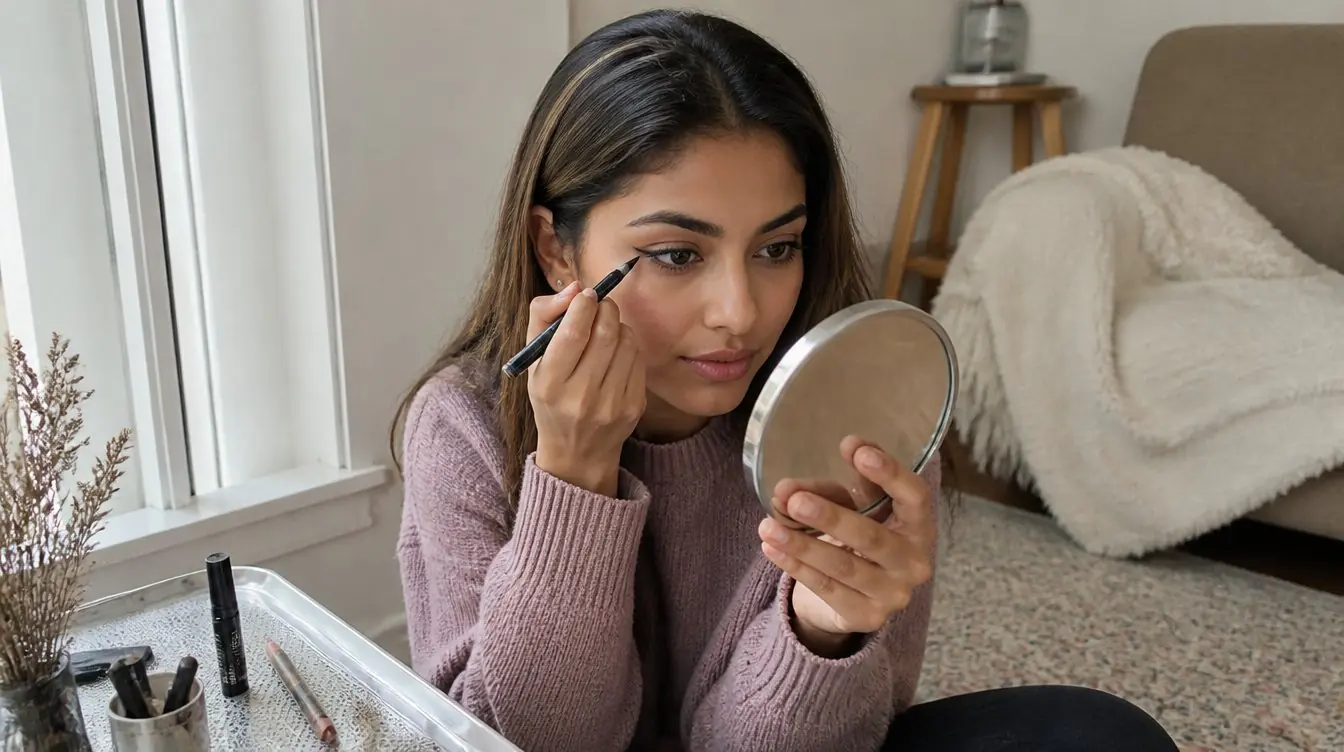
Does black eyeliner make you look older? Here we give you the answer
Black eyeliner is one of the most debated products in the beauty world. Women reach for it instinctively, yet many hesitate out of fear that it will add years to their face. This fear is not entirely unfounded, but it is also not the full picture. The truth lies somewhere in the middle, and understanding exactly where makes all the difference. The question of whether black eyeliner makes you look older depends almost entirely on how, where, and with what you apply it. Get those three things right, and black liner becomes one of the most powerful tools for defining and brightening your eyes at any age. Get them wrong, and yes, it can amplify shadows, deepen lines, and pull your features downward. This article breaks down the science, the history, the formulas, the techniques, and the combinations that determine which outcome you get. By the end, you will know exactly how to use black eyeliner in a way that keeps your look fresh, modern, and completely age-defying. Whether you are 22 or 55, this guide gives you everything you need to wear black liner with confidence.
The history of black eyeliner and why it has lasted thousands of years
Ancient origins: from kohl to kajal
Black eyeliner is not a modern invention. Its roots stretch back more than five thousand years to ancient Egypt, where both men and women applied kohl around their eyes as part of daily life. Kohl was made from galena, a naturally occurring lead sulphide mineral ground into a fine powder and mixed with animal fat or oil. The result was a dense, pigmented paste applied with a stick carved from wood, bone, or ivory.
Ancient Egyptians believed kohl had protective powers. They used it to shield the eyes from the harsh desert sun and to ward off evil spirits. But the aesthetic effect was equally important. The thick, defined line around the eye created a dramatic, elongated shape that signalled beauty, status, and power. Queen Nefertiti and Cleopatra became immortalised in art with bold, wing-tipped black liner that remains recognisable today.
Kohl spread across the ancient world through trade routes. The Indian subcontinent developed its own version called kajal, typically made from lampblack, camphor, and ghee. Kajal was used on infants, children, and adults alike, and it remains a culturally significant beauty product in South Asia and the Middle East. Persian and Arab women also adopted elaborate eye-lining traditions that influenced cosmetic practices across centuries.
The evolution of black liner in modern beauty
The shift from traditional kohl to commercially produced eyeliner began in the early twentieth century. Max Factor and Elizabeth Arden were among the first to introduce pencil-format eyeliners designed for stage performers, whose heavy makeup needed to read clearly under bright theatrical lighting. By the 1950s, eyeliner had moved from the stage into everyday women’s makeup routines.
The 1960s marked a turning point. Models like Twiggy and Jean Shrimpton wore graphic black liner with exaggerated lower lash lines and pale lips, turning the product into a symbol of youth and rebellion. The decade also saw the rise of liquid liner, which allowed for the sharp, precise wings that became a defining look of the era.
Since then, black eyeliner has passed through punk subculture, grunge, the smoky eye trend of the 2000s, and the clean minimalism of the 2020s. In every era, it has adapted without disappearing. Today, it exists in pencil, liquid, gel, felt-tip, and cream forms, each suited to different skills, preferences, and skin types. Its longevity is a testament to one simple fact: when used correctly, black eyeliner transforms the eyes in a way no other product can replicate.
Why the ageing debate emerged
The concern that black eyeliner ages the face grew louder as the beauty industry began marketing specifically to women over 40. Anti-ageing skincare became a dominant category in the 1980s and 1990s, and makeup advice shifted accordingly. Makeup artists began recommending softer, lighter shades for mature eyes, warning that dark liner would draw attention to wrinkles, bags, and sagging lids.
This advice was not baseless. Heavy, incorrectly applied black liner does have the potential to exaggerate certain features associated with ageing. But the blanket recommendation to avoid black liner entirely oversimplified the issue. The problem was never the colour itself. The problem was the application technique, the formula, and the accompanying products. Modern makeup artistry has since refined these distinctions, giving women of every age a clear roadmap for wearing black liner without looking older.
The science of color contrast and how it affects perceived age
How the eye reads contrast in makeup
Colour contrast is a fundamental principle in both art and visual perception. When two high-contrast elements are placed next to each other, the boundary between them becomes more pronounced. In the context of eye makeup, applying a very dark colour directly against the skin sharpens every line, crease, and texture in that area.
Research in visual perception consistently shows that sharp, high-contrast edges draw the eye and hold attention longer than soft transitions. This is why a thick, sharply drawn black liner immediately commands attention. The eye goes straight to it. Whatever is nearby, including fine lines around the eye, crow’s feet, or under-eye shadows, gets pulled into that focal zone as well.
As skin ages, the texture around the eye changes. Collagen production decreases, fat pads redistribute, and the skin becomes thinner and more prone to crepiness. These changes are entirely natural, but they do mean that the skin in the eye area becomes less of a smooth canvas. High-contrast dark liner applied directly on this skin type magnifies those textural differences more than it would on a smoother surface.
The role of placement in visual perception
Where you place black liner changes how the eye reads the entire face. Liner applied along the waterline (the inner rim of the lower eyelid) tends to close the eye and make it appear smaller and heavier. Liner applied on the outer lower lash line at an angle that follows the natural downward curve of an ageing eye can pull features downward visually, which is associated with looking tired or older.
Conversely, liner placed along the upper lash line only, with a slight upward flick at the outer corner, mimics the eye’s natural youthful position. This placement lifts the eye visually and creates the impression of a more alert, open gaze. The science here connects to research on facial attractiveness: faces perceived as younger typically have eyes with a slight upward angle at the outer corners, a larger visible iris, and a more open white area above the lower lid.
This means black liner is not inherently ageing. Its placement either works with or against the natural geometry of a youthful eye shape. Understanding this distinction is the first step toward using it strategically.
What color psychology says about black near the face
Black is the darkest colour on the visible spectrum. It absorbs light rather than reflecting it. When it appears near the face, particularly near the eyes, it creates shadows and depth. These shadows can work in your favour when they simulate the natural depth of a well-defined eye or against you when they compound existing shadows such as dark circles or hollowness under the eyes.
Studies on colour psychology in cosmetics suggest that dark eye makeup can increase perceived eye size when applied correctly, which is generally associated with youth and attractiveness. The same studies note that the association between dark eyes and beauty has cross-cultural roots, connecting back to the evolutionary biology of healthy, large eyes as a marker of reproductive fitness and good health.
The key takeaway from colour psychology is that black liner amplifies whatever is already present. On well-prepared, hydrated skin with careful placement, it amplifies definition and intensity. On tired, dry, or poorly prepped skin with careless placement, it amplifies fatigue and age.
The specific conditions that make black eyeliner age the face
Line thickness and its visual effects
Thick lines are the most common culprit in age-amplifying eyeliner looks. A line that measures more than two or three millimetres at its thickest point begins to visually compress the eye. It reduces the amount of visible lid space and makes the eye look smaller and heavier. On younger, tighter skin, this heaviness can read as bold and intentional. On skin that has begun to lose elasticity, the same thickness creates a dragging effect that pulls the lid downward.
The solution is not to abandon the liner but to refine the line. A precise, thin line along the upper lash line maintains definition without the weight. If you love a more dramatic look, build width gradually toward the outer corner only, so the bulk of the line is at the outermost point rather than distributed across the entire lid. This technique maintains the illusion of an open, lifted eye while still delivering a bold result.
Surrounding the entire eye with liner
Lining the entire eye, both upper and lower, all the way around, is a classic technique that dates back to the Egyptian kohl tradition. In ancient times and on certain skin types and eye shapes, it works beautifully. For women with smaller eyes or eyes that have lost definition, however, this technique can make the eye appear smaller, closer-set, and more shadowed than it actually is.
When liner runs along the entire lower waterline in black, it eliminates the visible pink or white of the inner rim, which is one of the visual cues that gives the eye an awake, open appearance. Beauty professionals often recommend white or nude liner on the lower waterline instead, which reflects light inward and creates the opposite effect of enlarging and brightening the eye.
If you prefer the look of lower liner, apply it only to the outer third of the lower lash line in a smudged, soft form. This creates definition without closing the eye entirely. Use a softer shade like charcoal, brown-black, or dark plum along the lower line while reserving the true black for the upper lid only.
Pairing with heavy overall makeup
Black eyeliner becomes ageing not on its own but in combination with certain products and techniques. Pairing it with thick, full-coverage foundation, heavy powder, deeply contoured cheeks, and bold dark lips concentrates a lot of visual weight on the face. Each element competes for attention. The result can read as harsh, overdone, or dated.
The best pairing for black liner at any age is a light- to medium-complexion base that keeps the skin looking natural, a neutral or rosy cheek, and a soft or nude lip. This combination lets the eyes take centre stage without the rest of the face feeling weighty. As a general rule: if the eyes are dramatic, everything else should recede. Balance is the foundation of a modern, youthful look.
Skin preparation: the step that changes everything
Cleansing and hydrating the eye area properly
The condition of your skin before you apply any makeup determines the quality of the final result. This principle is nowhere more true than around the eyes. The skin in this area is the thinnest on the face. It contains fewer oil glands than the rest of the face, which makes it prone to dryness. It is also subject to constant movement from blinking, squinting, and facial expressions, which means it creases easily.
Begin every eye makeup application with a thorough cleanse. Remove all traces of previous makeup using a gentle micellar water or an oil-based cleanser that dissolves mascara and liner without tugging. Tugging on the delicate eye skin repeatedly over time contributes to the formation and deepening of lines. Pat the area dry rather than rubbing.
Follow with an eye cream or eye gel containing humectants such as hyaluronic acid and glycerin. These ingredients draw moisture into the skin and create a smoother, plumper surface for makeup application. Ingredients like peptides, retinol (in lower concentrations formulated for the eye area), caffeine, and vitamin C also support collagen production and reduce the appearance of puffiness and discolouration over time. Apply the product with a gentle tapping motion using the ring finger, which naturally applies less pressure than other fingers.
Primers and setting products for long-lasting results
An eye primer is not optional if you want black liner to stay precise and youthful-looking throughout the day. Without primer, liner migrates into creases, smudges onto the under-eye area, and fades unevenly. These effects are precisely what makes eyeliner look ageing: creased liner draws attention to the fold of the lid, and smudged under-eye liner compounds the look of dark circles.
A good eye primer creates a smooth, even surface on the lid. It fills in fine lines temporarily, provides a tacky base that anchors the liner in place, and controls oil production that would otherwise cause the product to slide. Apply a small amount to the entire lid and blend it up to the brow bone. Allow it to set for at least 30 seconds before proceeding.
For maximum longevity, set the primer with a very thin layer of translucent or skin-toned powder. This also helps prevent creasing throughout the day. If you use a gel or cream liner, setting it with a matching eyeshadow powder directly on top of the wet liner seals the edges and prevents smudging. This technique is called baking the liner and is widely used by professional makeup artists for photo shoots and events.
Choosing the right formula for your eyelid type
Not every eyeliner formula works equally well on every eyelid type. This is one of the most overlooked factors in the ageing eyeliner equation. Using the wrong formula on your specific lid type is a guaranteed path to smudged, creased, or faded liner that looks messy and aged by midday.
Oily lids need a waterproof or long-wear gel liner in a pot, applied with a firm brush. These formulas cure to a semi-matte finish and resist the oils produced by the skin. Pencil liners on oily lids smudge within hours. Liquid liner can also work on oily lids if it is specifically formulated as long-wear or waterproof.
Dry or mature lids do better with a creamy pencil liner or a soft gel pencil that glides on without pulling. Harsh tugging during application is especially problematic on dry skin because it temporarily distorts the skin and can result in an uneven line. A creamy formula also smudges more easily when blending, which is an advantage for creating softer, more diffused looks that are flattering on mature skin.
Hooded lids, where the brow bone overlaps the lid crease, require a waterproof formula because the upper part of the lid meets the skin of the brow bone when the eye is open. Any formula that is not fully waterproof will transfer to the brow bone and create a smudged, heavy effect. Liquid liner and waterproof gel liner perform best in this situation.
How to choose the right black eyeliner for your eye shape
Understanding different liner formulas and their effects
The black eyeliner market offers a wider range of formulas than ever before, and each one produces a distinct effect. Knowing what each formula does helps you select the one that best suits your goal.
Liquid eyeliner in a pen or bottle with a fine brush tip delivers the sharpest, most precise lines. It creates high-contrast, graphic looks that photograph beautifully. Because the formula dries hard, it does not smudge once set. This formula suits confident hands, as mistakes are difficult to correct. It is ideal for a clean cat eye or a precise upper lash line. The matte or semi-glossy finish gives the liner a crisp, intentional quality.
Gel liner in a pot applied with an angled brush offers more control than liquid liner for beginners while still delivering a sharp result. It has a slightly longer open time than liquid, meaning it stays workable for a few seconds before setting. This makes it easier to correct mistakes and to create tapered, gradated lines. Gel liner tends to have a slightly softer finish than liquid, which is more flattering on mature skin.
Pencil liner in both standard and retractable formats is the most user-friendly option. A kohl-type pencil smudges beautifully for a softer, smoky effect. A harder pencil draws cleaner lines but requires a very sharp tip to avoid dragging. Pencil liner suits beginners and those who prefer a more lived-in, natural result. It also tends to be the most comfortable to apply to the waterline.
Felt-tip liner pens combine the ease of a pen with the precision of a liquid liner. They work well for winged liner and are popular for their convenience. The tip size varies by brand, so choosing a fine-tip version is key for detailed work on mature or hooded lids.
Techniques for different eye shapes
Eye shape determines the most flattering liner placement and style. There is no single correct technique, but there are guidelines that work with the natural architecture of each eye type.
Almond eyes are considered the most versatile shape because the slightly upswept outer corner already creates a naturally lifted appearance. Almost any liner style works on almond eyes, from a simple upper lash line to a full cat eye. Even a subtle lower lash line works without closing the eye.
Round eyes benefit from liner that elongates the shape horizontally. A thin line along the upper lid that extends into a small wing at the outer corner draws the eye outward and creates the illusion of length. Avoid thick liner on the inner corner, as it emphasises the roundness rather than elongating it.
Close-set eyes gain from liner that begins at the centre of the upper lid rather than the inner corner. Keeping the inner corner clean or using a very thin line there, then thickening toward the outer corner, visually widens the space between the eyes.
Wide-set eyes benefit from liner that starts at the inner corner and remains consistent in weight across the lid, without an exaggerated wing that would push the eyes even further apart.
Special considerations for droopy and hooded lids
Droopy or hooded lids require the most strategic approach to black liner. When the upper lid skin falls over the lash line, liner applied in the standard position along the lid becomes hidden when the eye is open. The result is a heavy-looking lid with no visible liner above it, which can read as tired and aged.
The solution is to apply liner higher than the actual lash line, following the natural arc of the lid’s visible area when the eye is fully open. This technique is sometimes called a ‘floating liner’ or ‘invisible liner’ when used with a light base. The line appears to float above the lashes but is actually placed exactly where the lid is visible. It creates the impression of a defined eye without the heaviness of liner disappearing into the fold.
Another effective technique for droopy lids is a crescent-shaped liner that follows the curve of the lid rather than extending straight across. This curved line works with the anatomy of the lid and avoids pulling the eye shape downward. The outer end of the line should turn upward, not downward, which maintains the visual lift of the eye.
Application techniques that take years off your look
Tightlining for subtle definition
Tightlining is one of the most powerful and underused eyeliner techniques for achieving defined eyes without a visible line. The technique involves applying liner directly to the upper waterline, the tiny rim between the lashes and the eyeball on the upper lid. This fills in the gaps between lashes, making them appear thicker and the eye more defined without any visible liner on the skin of the lid.
The result is a naturally intensified eye that looks as though you simply have very full, dark lashes. Because there is no line drawn on the lid itself, there is nothing to crease, smudge, or emphasise fine lines. For women who want the effect of black liner without any of the potential ageing pitfalls, tightlining is often the best starting point.
Apply tightlining with a very soft kohl pencil or a creamy gel liner. Gently lift the upper lid and press the liner between the lashes into the waterline. It is easier to do in small sections rather than all at once. The key is a comfortable, light touch rather than pressure, as the waterline is sensitive.
Smudging for a softer, more modern finish
A hard, sharp edge to liner is a choice, not a requirement. Smudging transforms even a basic pencil line into a diffused, smoky effect that is both modern and forgiving. Soft edges reduce contrast, which means they draw less attention to surrounding lines and texture. This makes smudged liner a particularly flattering choice for mature skin.
Apply a pencil or gel liner along the upper lash line and immediately use a small smudge brush, a cotton swab, or your fingertip to blur the edge upward. Work quickly before the formula sets. The goal is a gradient from dark at the lash line to nothing two to three millimetres above it. This creates depth and definition without a harsh boundary.
You can add a matching dark eyeshadow over the smudged liner to blend it further and increase its staying power. Patting shadow directly onto wet liner seals it and extends the gradient effect. Choose a matte dark brown or black shadow rather than a glittery or shimmery one, as glitter tends to fall below the eye and compound the look of dark circles.
The cat-eye technique adapted for mature and hooded eyes
The classic cat eye is one of the most flattering liner styles for lifting the eye and creating a youthful, graphic look. However, the standard version designed for the runway often translates poorly to mature or hooded eyes. The extended wing can droop if it follows the natural downward angle of an ageing outer corner, which creates the opposite of the intended lifting effect.
The adaptation is simple but makes a significant difference. Begin the wing from a point that is slightly higher than the outer corner of the eye, angling upward toward the tail of the brow rather than following the natural angle of the lower lash line. This creates an upward vector that visually lifts the outer corner regardless of its actual position.
Keep the wing short on hooded lids, as a longer wing will disappear into the fold when the eye is open. A short, sharp uptick at the outer corner creates the cat-eye effect without requiring real estate on the lid that is not visible. Test the length with your eye open rather than closed. The final wing should be visible with the eye in its natural open position.
Color combinations that keep black liner looking fresh and youthful
The best companion shades for black eyeliner
Black liner works with a wider range of companion shades than most people realise. The key is understanding which combinations create balance and which ones overload the eye.
Neutral, matte eyeshadows in taupe, warm beige, soft brown, and rose-brown complement black liner without adding visual weight. These shades blend seamlessly with the skin and create a transition zone between the liner and the bare lid. They provide depth at the outer corner and highlight the inner corner and browbone, creating dimension without drama.
Soft, warm shimmers on the centre lid or inner corner, applied conservatively, reflect light into the eye and create a brightening effect. Gold, champagne, and rose gold work particularly well with black liner on all skin tones. The reflective quality of shimmer counteracts the light-absorbing quality of black, creating a balance that feels both polished and fresh.
Deep jewel tones such as navy, forest green, plum, and burgundy pair well with black liner on the lower lash line as an alternative to extending the black all the way around. These colours add richness and depth while softening the intensity of the black upper liner. They also tend to be more flattering on the lower lid than pure black, which can be too heavy there.
What to avoid pairing with black liner
Certain combinations consistently produce an ageing effect regardless of how well the liner itself is applied. Recognising these pairings helps you avoid them.
Very dark, matte eyeshadow all over the lid paired with black liner eliminates dimension and creates a flat, heavy look. Shadow should always include at least some variation, whether through shade gradient or selective placement. A single dark shade from lash line to brow bone with black liner underneath creates a heaviness that reads as dated and tired.
Glittery or chunky shimmer, as opposed to fine shimmer, draws attention to texture rather than disguising it. Large glitter particles settle into creases and fine lines and catch light in a way that emphasises texture. Save dramatic glitter for the inner corner only, where the skin is smoother and more taut.
Heavy, full-coverage foundation paired with thick black liner creates an overall heaviness that is one of the most common ageing makeup combinations. The foundation eliminates the skin’s natural light and shadow, and the thick liner creates a dominant feature. Together, they can make the face look flat and the eye look small and heavy. Lighter skin coverage allows natural luminosity to show through and creates a more modern, youthful finish.
Day versus evening looks: calibrating intensity
Daytime calls for restraint. A thin line along the upper lash line with smudged or blended edges is sufficient for a polished, defined daytime look. Pair it with mascara on the upper lashes only, a light neutral shadow, and a peachy or berry-tinted lip. The overall impression is put-together without being overdone.
Evening allows for more intensity, but the increase should be strategic. Thicken the upper liner slightly toward the outer corner, add a small wing, and use a deeper eyeshadow on the outer v-shape. Apply mascara to both upper and lower lashes. A bold lip can work in the evening with liner, but choose a well-defined matte lip colour rather than a heavily glossed one, as high-gloss dark lips with black liner reads as the most potentially ageing combination.
Whichever intensity you choose, always check your look with your eyes open and at a distance of at least 30 centimetres from the mirror. Close-up application can distort your perception of how much product you have used. Stepping back gives you a truer picture of the overall balance and proportion of your look.
Common black eyeliner mistakes and how to correct them
Skipping primer and underpreparing the skin
The single most common mistake that leads to ageing eyeliner looks is skipping skin preparation. Applying any makeup, including liner, to dry, unprimed skin results in uneven application, premature fading, and creasing. All three of these outcomes make the eyes look older and less polished.
The fix is straightforward: always apply an eye cream and let it absorb for at least five minutes before applying primer. Then apply the primer and allow it to set before any shadow or liner. This three-step prep routine takes fewer than ten minutes and dramatically improves the longevity and quality of everything applied on top.
If you are short on time, at minimum apply primer directly to the lid before liner. Even one step of preparation is significantly better than none. Keep a small eye primer in your bag for touch-ups if liner begins to crease throughout the day.
Using an incorrect or expired formula
Eyeliner has a shelf life, and using expired product is a surprisingly common cause of poor results. Expired pencil liner becomes dry, drags on the skin, and applies unevenly. Expired liquid liner thickens, applies choppily, and loses its water-resistant properties. Expired gel liner hardens in the pot and no longer glides smoothly.
Most eyeliners have a period-after-opening symbol on their packaging, typically indicating 12 or 24 months. Beyond this point, the formula has degraded, and the product should be replaced. Using fresh, well-formulated product makes a visible difference in application quality and final appearance.
Beyond expiration, the wrong formula for your lid type, as discussed in the earlier section on formulas, is equally problematic. Revisit that guidance and match your formula choice to your specific lid type and concerns.
When to consider alternatives to black
Black is not always the optimal choice, and being open to alternatives is a mark of a sophisticated makeup approach. On very fair, cool-toned skin, black liner can be so high-contrast that it feels harsh rather than defined. A very dark brown or charcoal liner creates nearly the same effect with slightly less intensity and often feels more natural.
For women whose eyes are showing more redness from allergies, irritation, or fatigue, black liner can intensify rather than counteract that redness. In this situation, a warm-toned liner in dark brown or bronze can define the eye while its warmth counters the redness visually.
On days when the goal is fresh and natural rather than defined and dramatic, consider using a tinted brow gel and mascara only, without any liner. This look lets the skin be the star and removes any risk of liner-related ageing entirely. Black liner is a powerful tool, but it is not required for every look.
Frequently asked questions about black eyeliner and ageing
Does black eyeliner make eyes look smaller?
It depends on where you apply it. Black liner along the upper lash line, especially with a small outer wing, actually makes the eye appear larger and more defined by creating a visual contrast that frames the iris. The eye-shrinking effect happens when black liner is applied to the lower waterline or used heavily on the entire lower lash line without any brightening products. To keep the eye looking open and large, use black only on the upper lid and swap it for a nude or white liner on the lower waterline.
Can women over 50 wear black eyeliner?
Absolutely yes. Age is not a barrier to wearing black liner. The techniques that work best for women over 50 include tightlining to add definition without a visible line, smudging to soften the edge and reduce contrast, and applying liner to the upper lash line only with a subtle outer wing that lifts the eye. The preparation steps, including eye cream and primer, become even more important as skin matures. With the right formula and technique, black liner remains a flattering and powerful tool at any age.
What is the best eyeliner formula for mature eyelids?
Creamy gel pencils and soft kohl pencils are typically the most comfortable and flattering on mature eyelids because they glide on without tugging or dragging. They also smudge easily, which allows for a softer finish that is more forgiving of skin texture. If you prefer a sharper line, a gel liner in a pot applied with a firm, angled brush gives precision without the harshness of a liquid liner. Waterproof formulas are recommended regardless of formula type, as they resist migration into fine lines around the eye throughout the day.
How do I stop my eyeliner from creasing into fine lines?
Creasing is almost always a preparation problem rather than a product problem. The solution begins with thorough eye preparation: apply eye cream, allow it to absorb fully, then apply an eye primer before any shadow or liner. Setting the primer with a thin layer of translucent powder reduces oil and creates a smooth base. Choosing a waterproof or long-wear liner formula also significantly reduces creasing. If creasing persists, check whether your eye cream is too heavy or applied too close to the lid. Thick, occlusive eye creams can prevent primer and liner from adhering properly, causing them to slide into creases. Switch to a lighter gel-texture eye cream for daytime use when you plan to wear eye makeup.
Is smudged liner more flattering than sharp liner for ageing skin?
In most cases, yes. Smudged or diffused liner creates a softer contrast between the liner and the skin, which draws less attention to fine lines and texture in the surrounding area. It also tends to read as more modern and less severe than a hard, sharp line. That said, a sharp liner applied in a thin line with a matte finish is not inherently unflattering on mature skin. The sharpness becomes problematic only when paired with a thick line or applied on unprimed, textured skin. Both styles can work: the key is preparation, thinness, and placement rather than the edge quality of the line itself.
Conclusion: your complete guide to wearing black liner at any age
Black eyeliner does not make you look older. Poor technique, inadequate preparation, and the wrong formula do. The distinction is critical because it puts the outcome entirely in your hands. Black liner has survived five thousand years of beauty history for a reason. It defines, intensifies, and transforms the eyes in a way that no other product can fully replicate. Understanding the science behind contrast and placement allows you to use it strategically rather than fearfully.
The core lessons from this article are these: Prepare your skin with eye cream and primer before every application. Choose a formula matched to your lid type. Apply liner to the upper lash line and use tightlining for subtle days. Smudge for softness when you want to minimise texture. Angle any wing upward rather than following a downward outer corner. Pair black liner with light-handed overall makeup rather than a heavily loaded face. And check your full look with both eyes open at a distance before you walk out the door.
Your next steps are practical. Start by auditing your current eyeliner formula against the guidance in this article. If it is expired, replace it. If it is the wrong type for your lid, experiment with the recommended alternative. Practise tightlining in a calm setting before attempting it on a rushed morning. Try the smudging technique with a cotton swab on your next makeup day. Small, deliberate changes in technique produce visible improvements quickly.
Black liner is not your enemy. It is one of the most versatile, effective, and timeless tools in your makeup collection. Wear it with knowledge, and it will always make you look more defined, more striking, and completely ageless.
RELATED ARTICLES:
Coloured Eyeliners: Try Emerald Green, Gold, Deep Plum, and Peach for a Pop of Colour to Your Eyes
Master the Art of Floating Eyeliner: Stunning Floating Eyeliner Techniques You Need to Try Now!
Blue Eyeshadow Makes a Comeback: How to Wear 2026’s Coolest Eye Color Trend
Makeup for Glasses: Eye Looks That Stand Out Behind Lenses
Sunken Eyes: No More Causes, Remedies, and Treatments That Work
About The Author

COMMENTS