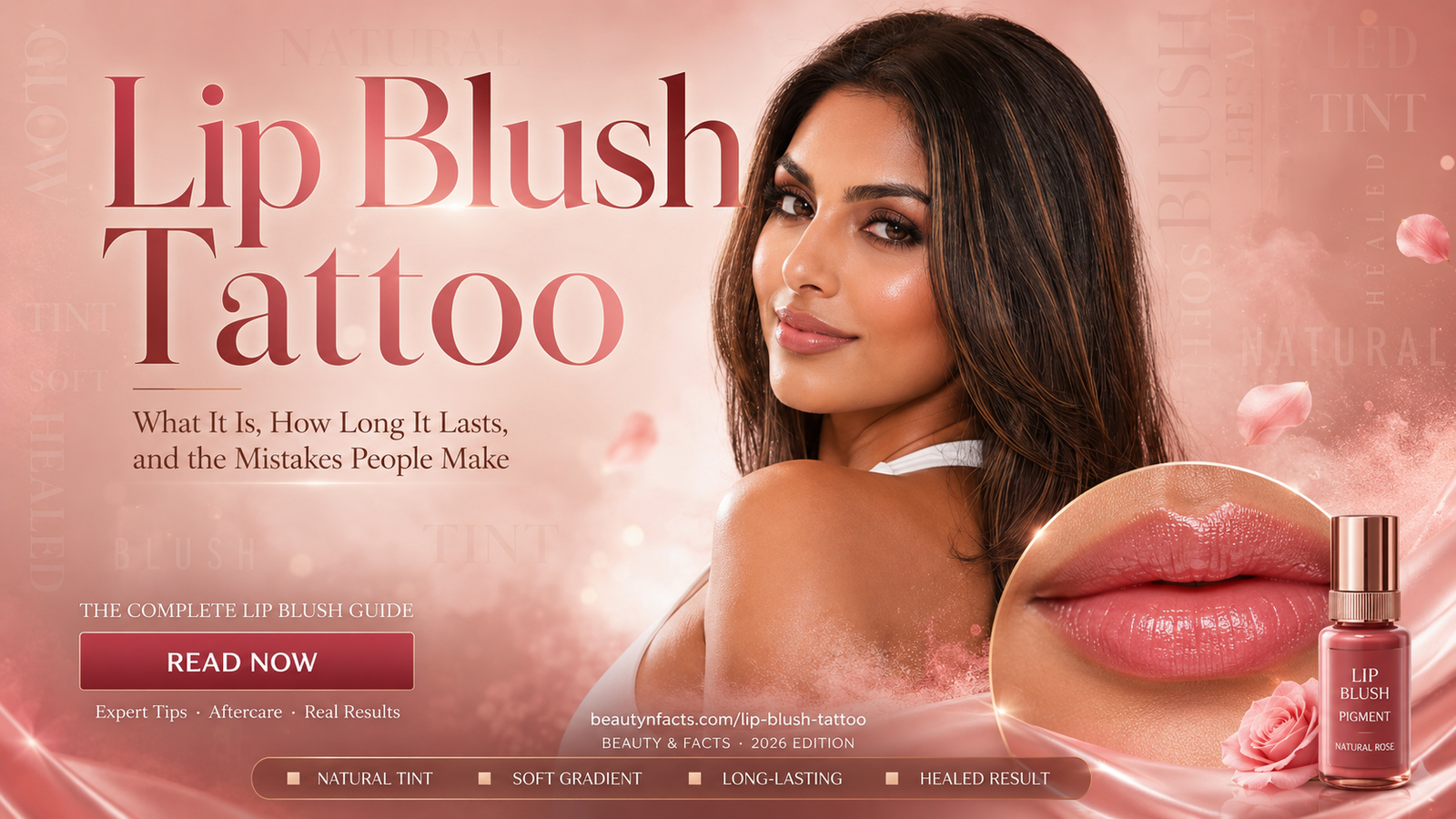
Lip blush tattoo is the soft, semi-permanent lip tint that has quietly become the most asked-about cosmetic tattoo of 2027. It is not a bold lipstick
Lip blush tattoo is the soft, semi-permanent lip tint that has quietly become the most asked-about cosmetic tattoo of 2027. It is not a bold lipstick effect, and it is not a lip filler. It is a subtle layer of pigment deposited into the lip with a fine needle that wakes up the natural lip colour, evens out tone, and gives the lip a defined, healthy-looking shape that stays for one to three years. This guide covers what a lip blush tattoo actually is, how a session works, the healing process week by week, how long it lasts, what it really costs, and the mistakes that send people back for unhappy corrections.
Reviewed by the BeautynFacts editorial team. Last updated: June 2026.
What Lip Blush Tattoo Actually Is
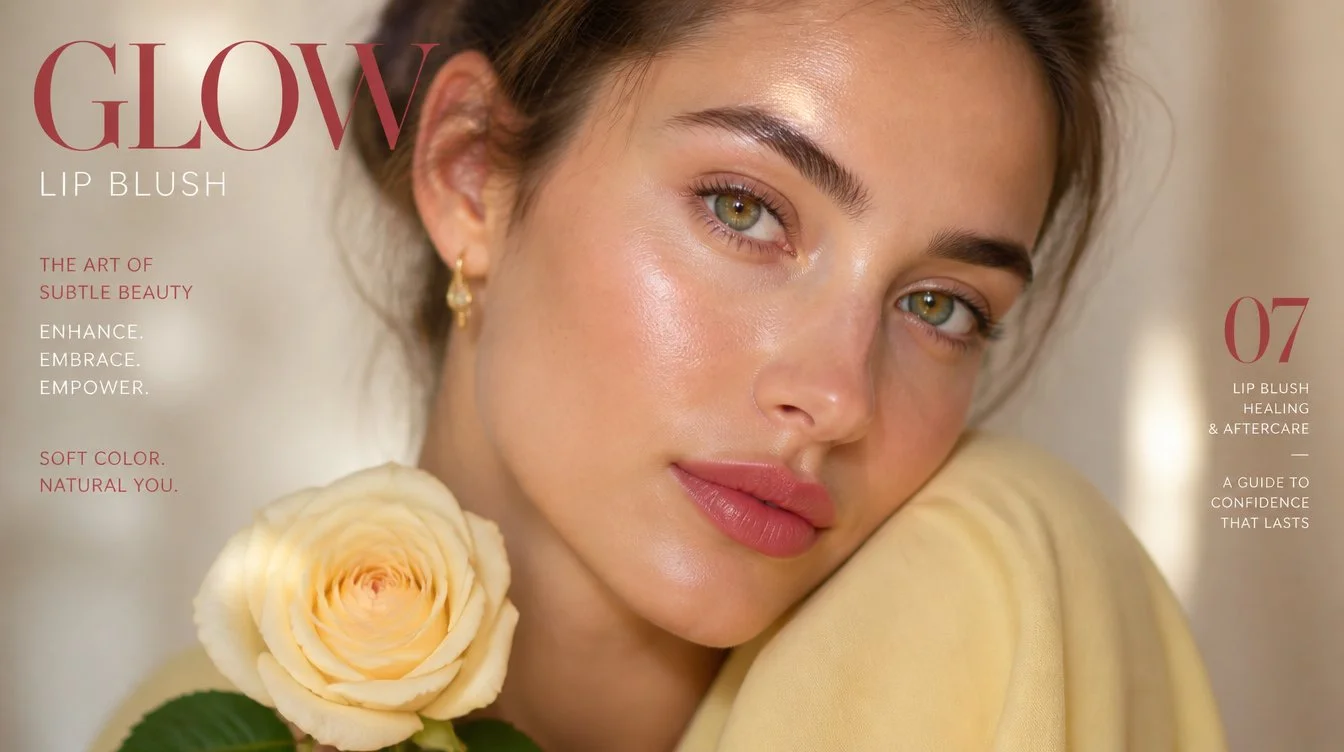
Lip blush tattoo is a form of cosmetic micropigmentation, sometimes called semi-permanent makeup, in which a trained artist uses a small handheld device with a single-use needle cartridge to deposit pigment into the upper layer of the lip skin. The needle moves at a controlled depth, much shallower than a traditional body tattoo, so the pigment sits in the epidermis rather than the dermis. The result is a soft wash of colour rather than a saturated lipstick effect, which is why the procedure is called a ‘blush’ and not a ‘lipstick tattoo’.
The technique is designed to enhance, not replace. Most clients walk in with lips that have lost some colour with age, scarring, or sun exposure, or with lips that read as uneven in tone from one side to the other. Lip blush rebuilds an even base, adds a subtle warm or rose flush, and gives the lip border a softly defined edge. The look reads natural enough that strangers usually do not notice the work; they notice that the person looks rested and put together.
Why the Trend Is Growing in 2026
Three forces are driving the rise. First, the broader move toward subtle, maintenance-style beauty work has made low-key cosmetic tattooing more acceptable across mainstream audiences who would never consider a bold lip filler. Second, technique has improved sharply in the last three years. Modern lip blush artists use finer needles, lower-saturation pigments, and a softer hand than the heavier permanent lipstick procedures that defined the 1990s and 2000s. The current generation of work heals to a soft natural finish rather than the dark, uneven outlines of the older style. Third, social media has made before-and-after content easy to find, which has shortened the trust gap that used to keep clients out of the chair.
Lip Blush vs Other Lip Procedures
The category gets confused with three other lip treatments, and the differences matter for what to book.
Lip Blush vs Lip Filler
Lip filler is a hyaluronic acid injection that adds volume by physically plumping the lip tissue. It changes the shape and size of the lip and lasts six to twelve months on average. Lip blush adds no volume at all; it only changes the colour and visual border definition. Many clients eventually do both, because filler addresses size and blush addresses tone, and the two procedures solve different problems. If your lips already have the shape you want and you only want better colour, lip blush is the answer.
Lip Blush vs Permanent Lipstick
Permanent lipstick is the older, heavier style of lip tattoo from the 1980s and 1990s. It used larger needles, denser pigment, and a bolder finish that looked like makeup all the time. Lip blush is the modern evolution: lighter pigment density, softer edges, and a healed result that reads as a natural lip tint rather than applied lipstick. Most reputable artists today no longer offer the permanent lipstick style at all.
Lip Blush vs Lip Tint or Stain
A lip tint or lip stain is a temporary cosmetic product that you apply at home and that washes off within a day. Lip blush deposits pigment into the lip skin itself and lasts one to three years. The visual effect is similar, but the maintenance is completely different. Tints suit people who like variety and change; lip blush suits people who want one consistent baseline colour they do not have to think about every morning.
How a Lip Blush Session Works
A standard appointment runs two to three hours. The artist starts with a consultation in which they review your medical history, examine your lip colour and tone, and discuss the shade and shape you want. Pigment is mixed on the spot to match your natural undertone with a slight warm or pink lift. Most artists use a digital outline to map the lip border before any needle work begins, which lets you approve the shape before pigment goes in.
The actual tattoo phase takes 45 to 90 minutes. A topical numbing cream is applied for 20 minutes before the needle work starts, and a secondary lidocaine gel is used during the session to keep the area comfortable. The needle moves at a high frequency to deposit pigment in small clusters, and the artist works in passes rather than one continuous fill. Most clients report mild pressure rather than sharp pain once the numbing has set.
The Pigment Choices and Shade Theory
Colour choice is where the procedure either succeeds or quietly fails. The right pigment for lip blush is not the colour you see in the bottle; it is the colour the pigment heals to, which is typically two to three shades softer and slightly cooler than the wet appearance. A good artist starts with your natural lip colour, identifies its undertone, and selects a pigment that lifts and evens that tone rather than overriding it. Cool undertones flatter best in soft rose and dusty pink pigments. Warm undertones light up under peachy nude and warm berry pigments. The most common mistake is choosing the pigment based on a wet swatch rather than the healed projection, which is why experienced artists show you a chart of healed before-and-after photos.
The Healing Timeline Week by Week
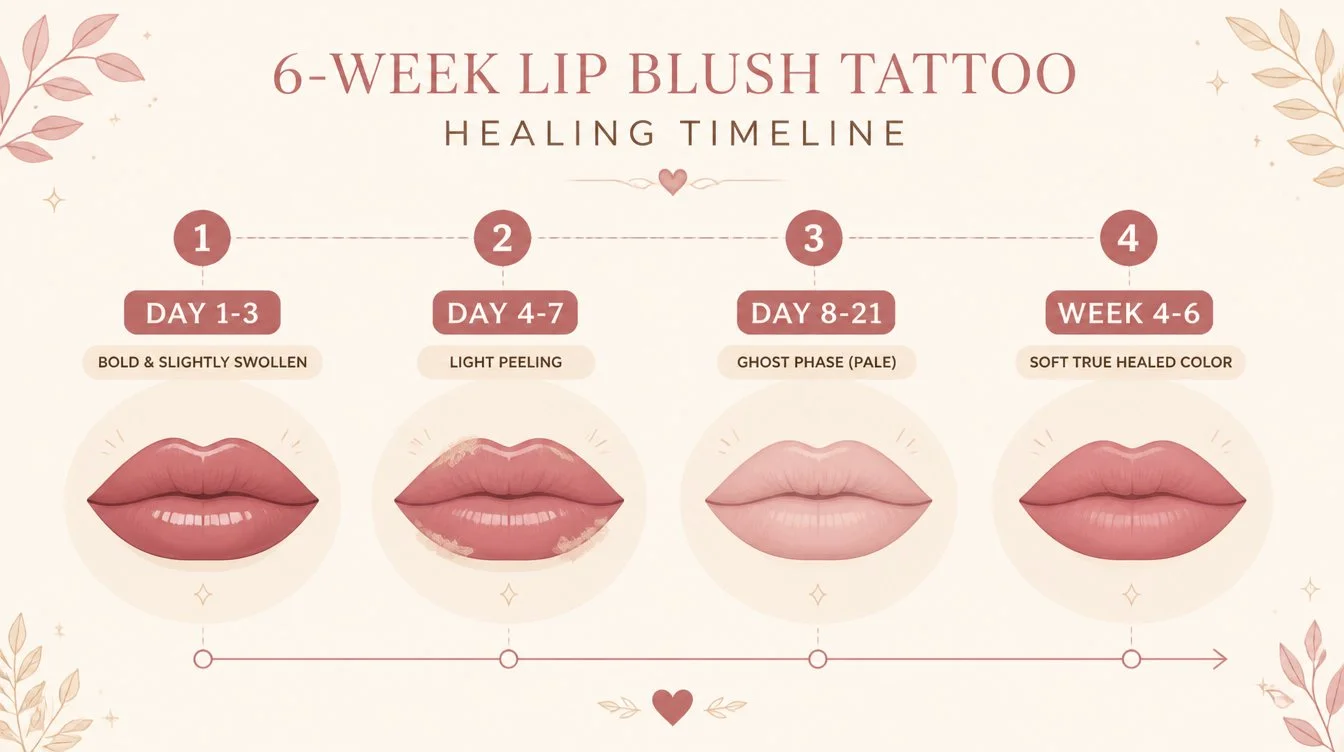
Healing is the part of the procedure that surprises most first-time clients. The freshly tattooed lip looks two to three shades darker and bolder than the final result for the first week, then peels and lightens significantly before settling into the true healed colour around week six. Knowing what each phase looks like prevents the panic that sends people back to ask for a second pass too early.
Days One to Three
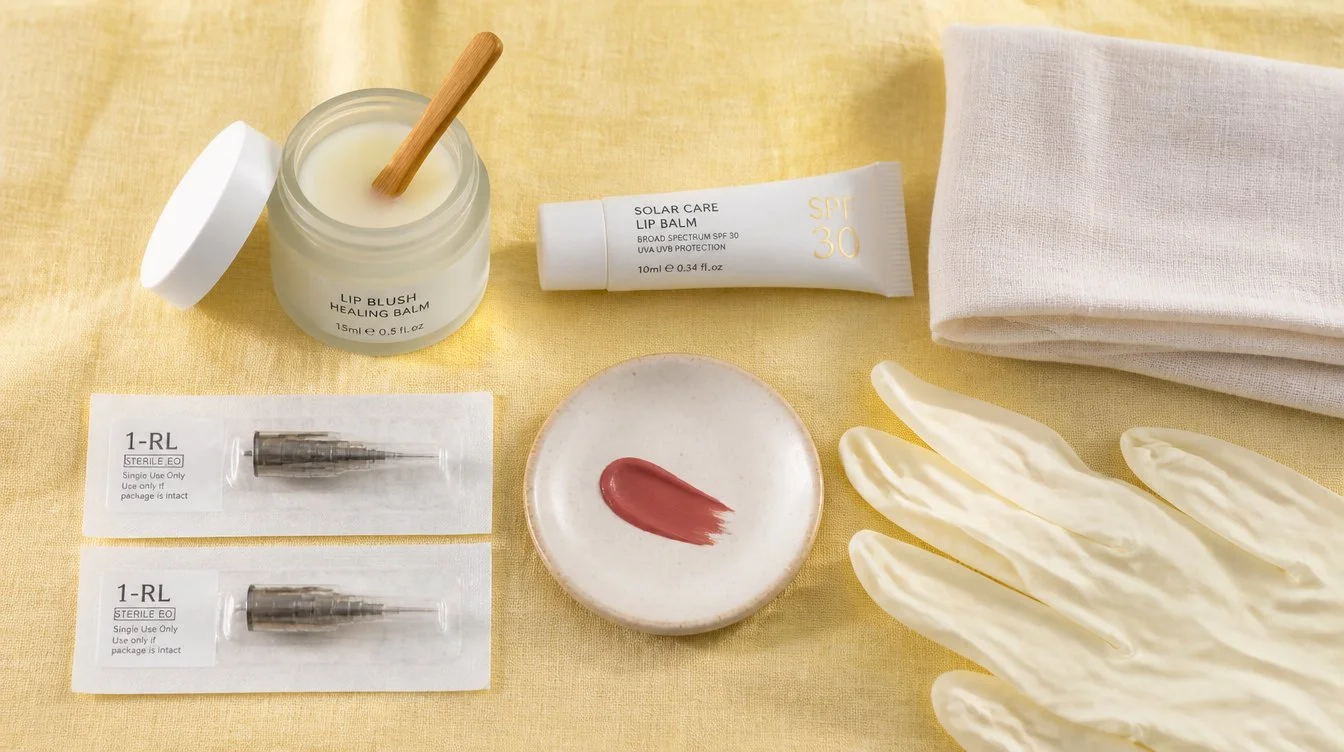
The lip is slightly swollen, and the colour reads dark and saturated. There is no scabbing yet, but the lip can feel tight and dry. Apply the recommended healing balm every two hours and avoid touching the lip, kissing, or eating anything spicy or salty. Drink through a straw and use a clean cloth to dab rather than wipe.
Days Four to Seven
Light peeling begins. The lip looks patchy as the top layer flakes off in small pieces. Do not pick or peel the flakes; let them release on their own. The colour underneath looks dramatically lighter, which is normal. By day seven, most of the peeling is complete and the lip looks faded compared to the day-one appearance.
Days Eight to Twenty-One
The pigment goes into what artists call the ghost phase. The lip looks much paler than expected because the new skin layer is opaque and the pigment is still settling. Many first-time clients panic during this phase and assume the work did not take. Wait it out; the colour comes back as the skin layer thins and matures.
Weeks Four to Six
The true healed colour emerges. The lip now reads as a soft, natural tint with an even tone and a defined border. This is the result you live with until your next touch-up. If the colour is still uneven or too light at the six-week mark, this is the right time for the included perfecting session, not earlier.
How Long Lip Blush Lasts
The honest answer is one to three years, with most clients sitting somewhere in the middle. The variability comes down to four factors: skin type, sun exposure, lifestyle, and pigment choice. Oily skin breaks down pigment faster than dry skin because the natural oils carry pigment particles out of the epidermis more quickly. Heavy sun exposure fades pigment significantly; daily SPF on the lip extends the wear by months. Smokers and frequent alcohol drinkers see faster fading because both habits affect skin cell turnover and circulation. Lighter pigment shades fade earlier than warmer or deeper shades because the lower particle density gives the immune system less to dilute over time.
Most clients book a refresh appointment between 18 months and two years. The refresh is shorter and cheaper than the original session because the artist is building on existing pigment rather than starting from scratch.
The Mistakes People Make
Most lip blush regret comes from the same four mistakes. Knowing them ahead of time prevents most of the problems clients report.
Picking the Pigment in the Booth Mirror
The wet swatch on the lip looks bold and saturated, which makes people request a softer pigment than they actually want. Six weeks later, when the result heals to a fraction of the wet colour, the lip reads barely tinted. Trust the artist when they recommend a slightly warmer or deeper pigment than you think you want; the heal-down is real.
Skipping the Six-Week Perfecting Session
Almost every lip-blush package includes a touch-up at six to eight weeks. This is not optional polishing; it is part of the procedure. The first pass deposits pigment that heals unevenly, and the perfecting session evens out gaps and corrects any spots where the pigment did not take. Skipping it almost always leads to disappointment with the result.
Going Outside Without SPF
Lip blush fades fast in sun. A daily SPF lip balm is the single most important thing you can do to protect the investment. Clients who use sun protection consistently report results that last close to three years; clients who do not often see significant fading by month 12.
Choosing the Cheapest Artist
Lip blush done badly is much harder to fix than to do right. Poor colour choices, uneven application, and overly deep needlework can leave the lip with a bluish or greyish tone that requires costly laser removal or saline lightening. Spend the money on a certified, experienced artist with healed-result photos in their portfolio, not a cheaper option without that track record.
Pain, Numbing, and Aftercare
The lip is a sensitive area, but modern lip blush is far more comfortable than first-time clients expect. Pre-procedure numbing with a topical anaesthetic cream brings the sensation down to mild pressure for most clients. Secondary numbing gel applied during the session keeps the comfort level stable for the full 60 to 90 minutes of needle work. Most clients rate the experience as a four to six out of ten on a pain scale, which is well inside the comfort range for an elective cosmetic procedure.
Aftercare is simple but strict for the first 10 days. Apply the supplied healing balm every two hours. Avoid spicy and salty food. Do not soak the lip in water. No swimming or saunas. No kissing. No makeup on the lip area. No sun exposure without an SPF balm once the peeling phase is complete. Most clients return to normal social activity within a week.
Who Lip Blush Suits Best
The procedure suits clients who want consistent everyday colour without the maintenance of daily lipstick application. It is particularly popular with people who have lost natural lip colour with age, with clients whose lip border has softened or become uneven, and with people whose skin tone makes their natural lip look washed out next to the rest of the face. It also works well for clients with active lifestyles, sports, or work routines that make reapplying lipstick impractical.
Lip blush is not suitable for everyone. Pregnant or breastfeeding women, people with active cold sore outbreaks, anyone on blood thinners without medical clearance, people with autoimmune conditions affecting healing, and clients with known pigment allergies should defer the procedure or skip it entirely. A qualified artist will screen for all of these during the consultation and will turn clients away rather than work on an unsuitable case.
Costs and What Goes Into Them
Lip blush pricing varies more by artist experience and city than by any other factor. In major metro areas, expect a range of about 500 to 1200 US dollars for the initial session, which usually includes the six-week perfecting touch-up. Refresh appointments at 18 to 24 months typically run 250 to 500 US dollars. Lower prices below 400 dollars often indicate either an apprentice artist, lower-grade pigments, or both, and the risk of needing corrective work later usually wipes out any upfront saving.
What you are paying for is the artist time, the consultation, premium single-use needle cartridges, certified medical-grade pigment, the studio overhead, and the included touch-up. The cheapest line items, the pigment and the needle, are not the place to save money; the most expensive line item, the artist’s time and skill, is what drives a good result.
How to Choose an Artist
The single best predictor of a good lip-blush outcome is the artist. Three checks separate the strong artists from the weak ones. First, healed-result photos: ask to see before-and-after photos taken at the six-week mark, not on the day of the procedure. Day-one photos always look bold and impressive; six-week photos show what you actually live with. Second, certification: in most countries, lip-blush artists must hold a cosmetic tattoo or micropigmentation certification from a recognised training body. Ask to see it. Third, hygiene protocol: the studio should use single-use needle cartridges, fresh gloves for each client, a barrier-protected machine grip, and a clean treatment area. Walk away from any artist who reuses needles or who works in a visibly cluttered space.
Beyond the technical checks, comfort matters. The consultation is the time to assess whether the artist listens to you, explains the shade theory and healing timeline, and is willing to say no to a request that will not work for your skin or lip type. A good artist turns away unrealistic requests rather than chasing the booking; that judgement is what protects you from a result you do not want.
Frequently Asked Questions About Lip Blush Tattoo
What is a lip blush tattoo, and how is it different from a regular lipstick tattoo?
A lip blush tattoo is a modern semi-permanent cosmetic procedure that deposits a soft layer of pigment into the upper layer of the lip skin to enhance the natural colour and define the lip border. It is different from the older permanent lipstick style because it uses finer needles, lower pigment density, and a softer technique, so the healed result reads as a natural lip tint rather than applied makeup. Permanent lipstick from the 1990s often looked bold and uneven as it aged. Modern lip blush is designed to fade evenly into a soft, healthy-looking lip colour over one to three years.
How does lip blush tattooing compare to lip filler?
Lip blush and lip filler solve different problems, and many clients eventually do both. Lip filler is a hyaluronic acid injection that adds volume by plumping the lip tissue, changing the size and shape of the lip for six to twelve months. Lip blush adds no volume; it changes only the colour and visual border definition of the lip and lasts one to three years. If you want fuller lips, filler is the answer. If your lip shape already works for you and you only want a more even, healthier-looking colour without daily lipstick, lip blush is the right choice.
How much does a lip blush tattoo cost?
In major metro areas in the United States and similar markets, the initial lip blush session runs about 500 to 1200 US dollars, which usually includes the six-week perfecting touch-up. Refresh appointments at 18 to 24 months typically run 250 to 500 US dollars. Pricing below 400 dollars often points to an apprentice artist or lower-grade pigments, and the risk of needing corrective work later usually erases any savings. The most expensive part of the price is the artist’s time and skill, which is also the most important factor in a good healed result.
What does the lip blush healing process look like?
Healing follows a predictable pattern. Days one to three look bold and slightly swollen. Days four to seven bring light peeling and a patchy appearance as the top skin layer flakes off. Days eight to twenty-one are the ghost phase, where the colour looks much paler than expected. Weeks four to six show the true healed result as a soft natural tint with an even tone. The six-week mark is when the included perfecting session evens out any gaps. Total healing is about six weeks from start to final colour.
How long does lip blush tattoo last?
Most clients keep their lip blush result for one to three years before booking a refresh, with around two years being the average. Wear time depends on skin type, sun exposure, lifestyle, and pigment shade. Oily skin and heavy sun exposure both speed up fading. Daily SPF on the lip is the single most effective way to extend the result and can add close to a year of wear time compared to skipping sun protection. Lighter pigment shades fade earlier than warmer or deeper shades.
Does lip blush tattooing hurt, and is it safe?
Most clients rate the discomfort as a four to six out of ten thanks to pre-procedure numbing cream and a secondary numbing gel used during the session. The sensation reads as pressure or vibration rather than sharp pain. Safety depends on the artist and the studio: certified artists who use single-use needle cartridges, medical-grade pigments, and proper hygiene protocols have a very low complication rate. The procedure is not safe for pregnant or breastfeeding women, people with active cold sores, those on blood thinners without clearance, or anyone with known pigment allergies; a qualified artist will screen for these in consultation.
RELATED ARTICLES:
- Pearl Pigment Lip Balm: The 2026 Y2K Lip Trend Everyone Is Wearing
- Hyaluronic Acid for Lips: How It Plumps and Hydrates
- Lip Oils vs Lip Gloss: Which One Is Right for Your Routine
About The Author

COMMENTS